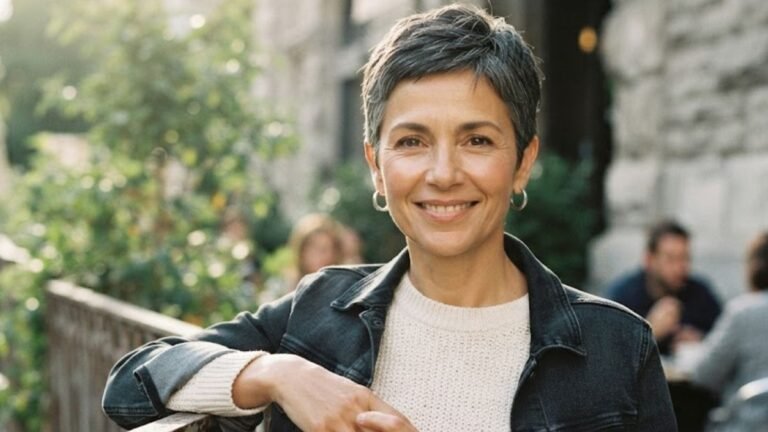

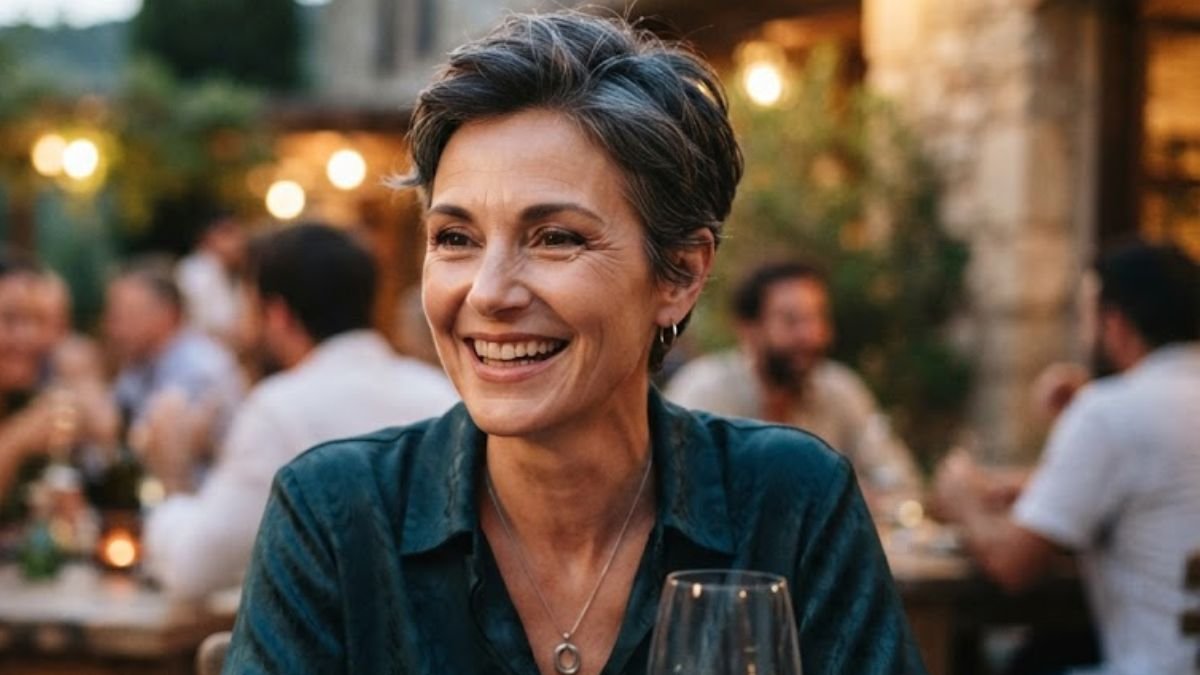
Low maintenance pixie cuts for women over 50 only live up to the name when they are cut correctly. A poorly executed pixie needs constant product, daily styling, and frequent salon visits just to stay recognizable. The right pixie, built around the changes in texture and density that come after 50, grows out gradually, holds its shape between trims, and takes under five minutes to style each morning.
The 17 variations below cover silver, grey, and colored hair; straight, wavy, and coily textures; and everything from soft, understated shapes to bolder, fashion-forward cuts. Every one of them is chosen to keep daily effort to a minimum.
Classic Low Maintenance Pixie Cuts for Women Over 50
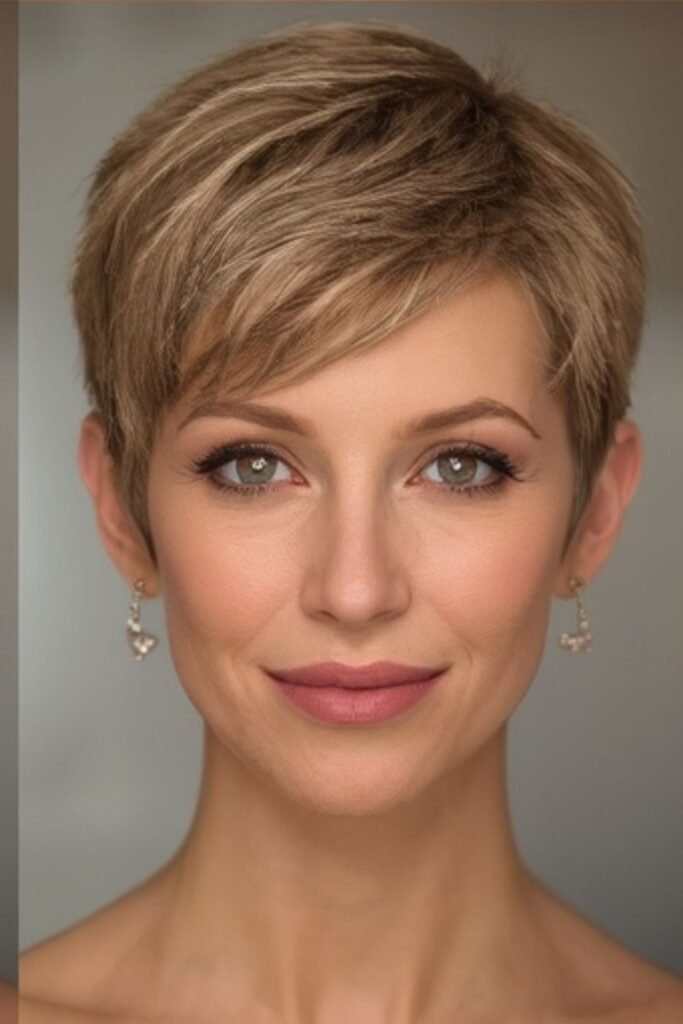
Soft Classic Pixie with Side Sweep
The classic pixie for women over 50 differs from a younger version in one key way: the crown is left longer than the sides and back so it can be swept to one side. That asymmetry breaks up the forehead and adds diagonal movement at the top. A pixie cropped to one length all over tends to look more severe on a mature face than one with a longer, directional top.
Work a small amount of pomade or wax through the crown on damp hair, sweep it to one side, and hold it with a blow-dryer on medium heat for thirty seconds. The sweep sets into shape and holds through the day without more product. If you are weighing other short options, these short haircuts for women over 60 use the same longer-on-top approach.
Classic Silver Pixie
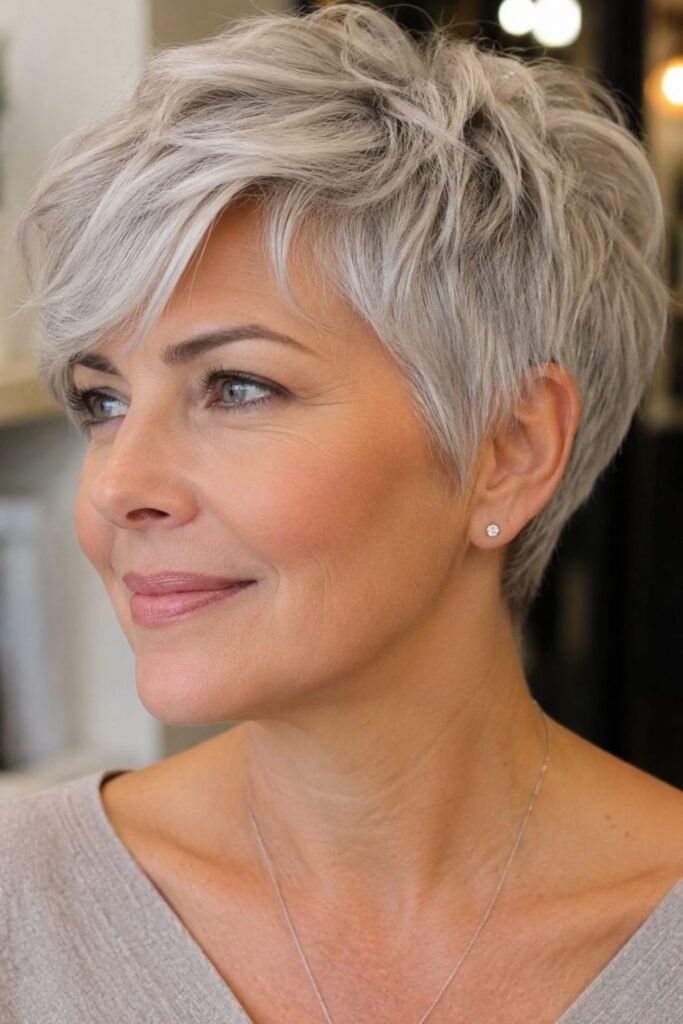
A classic pixie on natural silver or grey hair is one of the most cohesive short styles for women over 50, because the silver tone and the clean, cropped shape support each other. The silver looks like a chosen color, the pixie looks like a chosen cut, and together they look considered without looking fussy. For more ways to wear your natural shade, see these grey hair ideas for women over 50.
Silver hair benefits from a weekly purple or blue toning shampoo to prevent yellowing from mineral buildup and heat. A moisture-rich conditioner through the mid-lengths and any longer crown sections prevents the dryness that coarser silver hair develops. A matte or light-hold wax styled through the crown on damp hair and dried with a low-heat blow-dryer is a complete daily routine for this cut.
Pixie with Soft Fringe
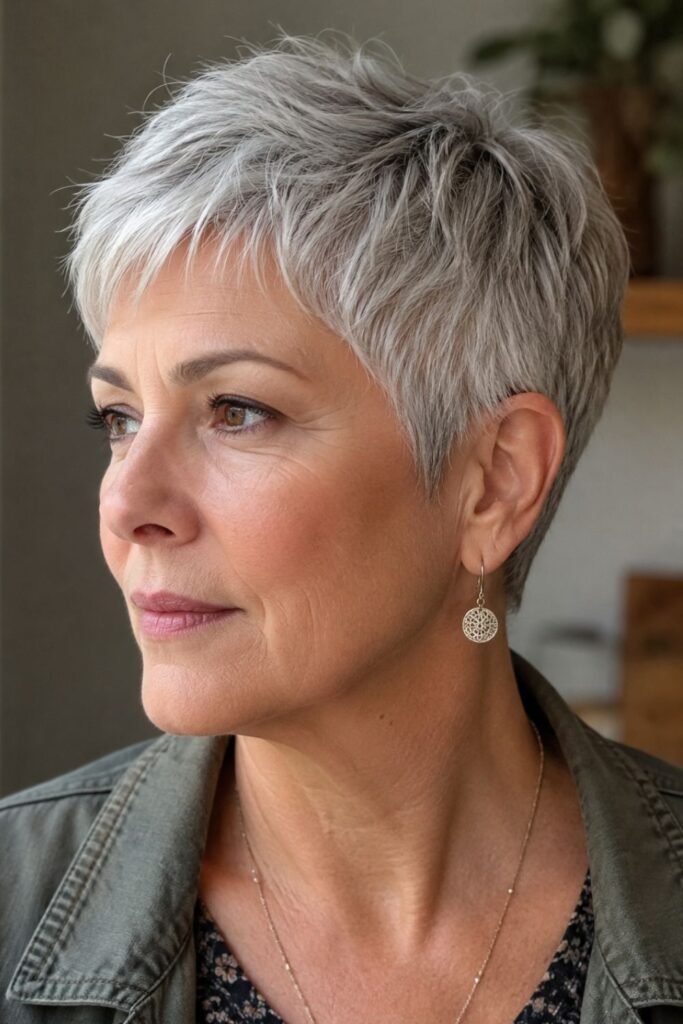
A pixie with a soft, side-swept fringe adds face framing at the forehead that a bare-forehead pixie lacks. On women over 50, the fringe is most flattering at eyebrow length or longer and swept to one side. A fringe cut straight across creates a horizontal line that can emphasize forehead width.
The fringe section grows faster than the rest of the pixie and may need a quick trim every three to four weeks to stay at the intended length. Ask your stylist to cut the fringe at the same appointment as the full pixie trim and factor this into the overall trim schedule. Styling takes under sixty seconds: a small amount of pomade on the fingertips, swept through the fringe section in the intended direction, set with a blow-dryer for thirty seconds.
Pixie with Tapered Nape
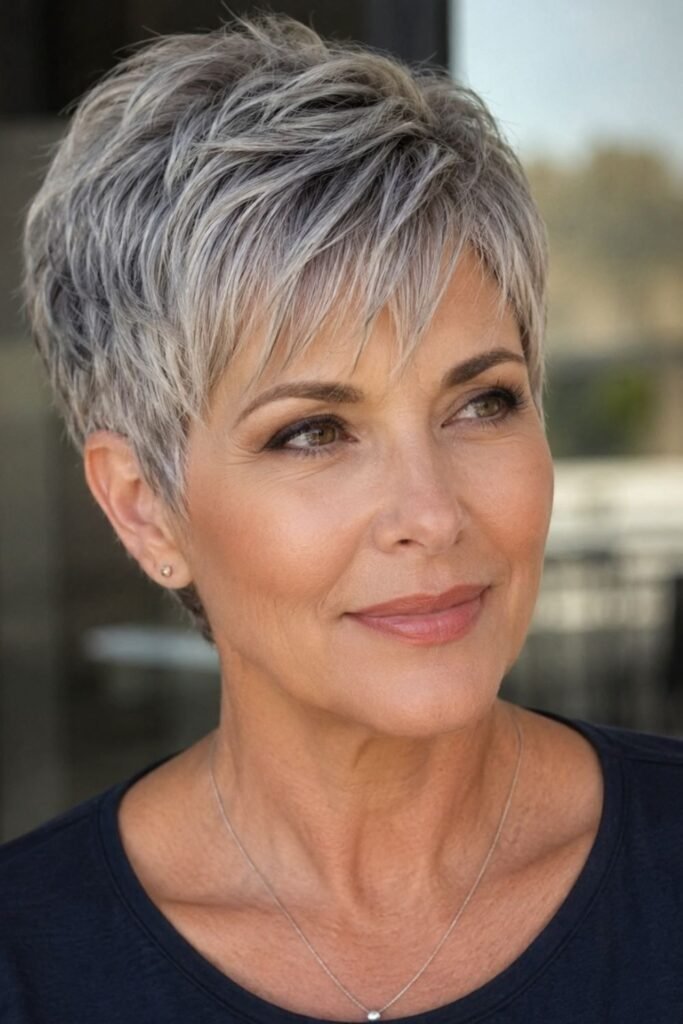
A pixie with a tapered nape, cut very close at the nape and gradually lengthening toward the crown, is the lowest-maintenance pixie construction for women over 50. The close taper grows out cleanly, so you avoid the bulky, overgrown look that a blunt nape develops between trims.
The tapered nape suits most face shapes because it elongates the back of the neck and draws the eye upward toward the crown. Ask your stylist to taper the nape with clippers, using a guard that matches how close you want it, then blend upward with scissors. Many salons offer a quick neckline tidy between full cuts, which stretches the time until your next full trim.
Textured Pixie Cuts for Women Over 50
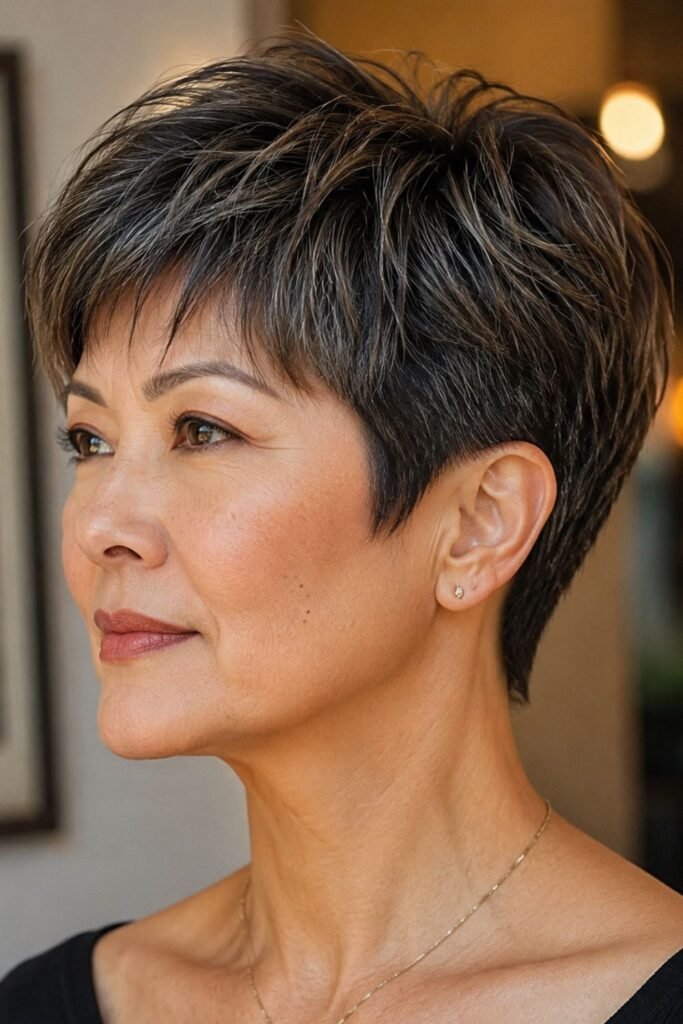
Textured Crown Pixie
A pixie with a deliberately textured crown section, achieved through point-cutting and styling with a matte paste or texturizing spray, adds visual weight at the top of the head that counteracts the crown thinning that many women experience after 50. The texture creates the appearance of fullness through separation and movement, even where density has dropped.
Apply a matte paste through the dry crown section and work it upward from root to tip with the fingertips, creating separation between sections. A quick blast with a diffuser on low heat sets the texture without stiffening it. The result is a crown that looks deliberately styled without turning spiky or product-heavy, and it holds through a full day without touch-ups.
Pixie Shag
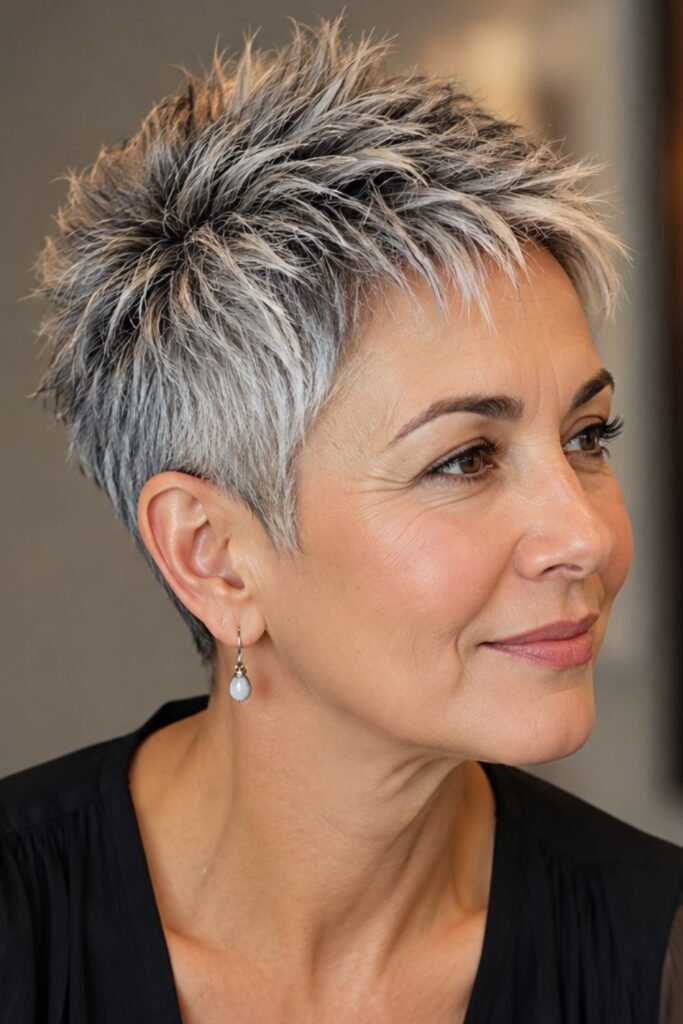
The pixie shag is a longer pixie with shag-style layering through the crown and sides. The crown sits at two to three inches, and the sides and back are cut shorter and textured. It has more movement and softness than a classic pixie while staying short enough to be truly low maintenance.
The pixie shag suits wavy and textured hair particularly well because the natural movement fills out the shag layers without a styling step. On straight hair, a texturizing spray worked through damp hair and diffused on low heat creates the same effect. If you want a little more length around the ears, these long pixie cut ideas keep the same soft texture.
Wavy Textured Pixie
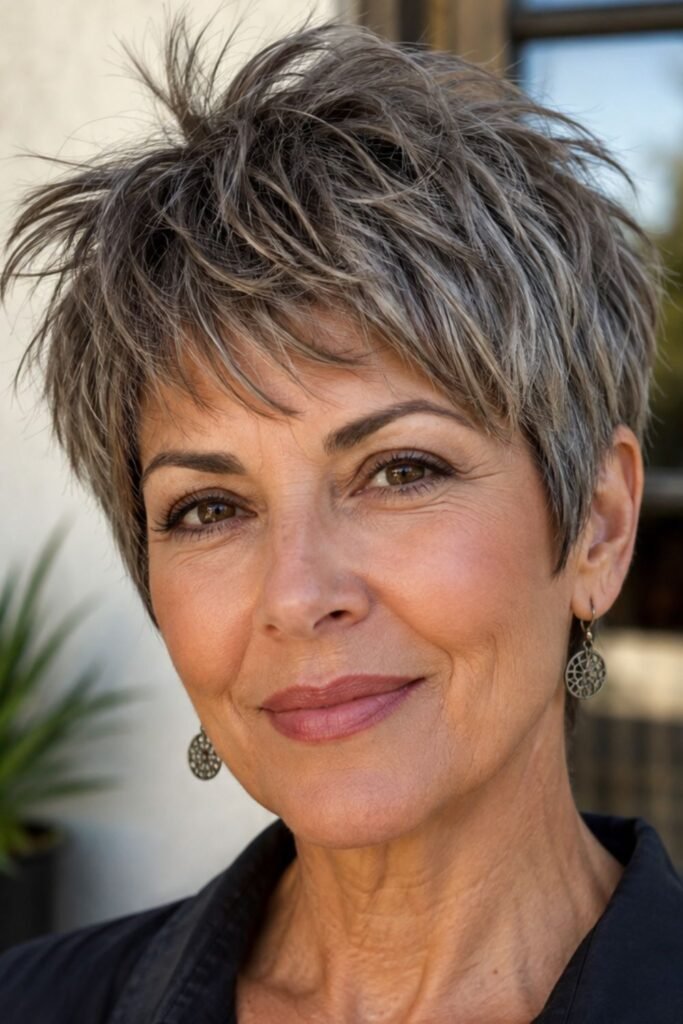
A pixie on naturally wavy hair over 50 needs less daily effort than one on straight hair, because the wave pattern creates movement and volume at the crown without product or heat. The wave fills out the longer top section and adds the diagonal, slightly asymmetrical shape that keeps a pixie looking modern.
Apply a curl cream or wave spray to damp hair, scrunch through the crown section, and allow to air-dry or diffuse on low heat. The wave sets itself into the pixie shape without requiring a round brush or directional styling. On humid days, a light anti-frizz serum through the crown section before air-drying keeps the wave definition without the frizz that humidity adds to wavy hair at any age.
Pixie on Natural or Textured Hair
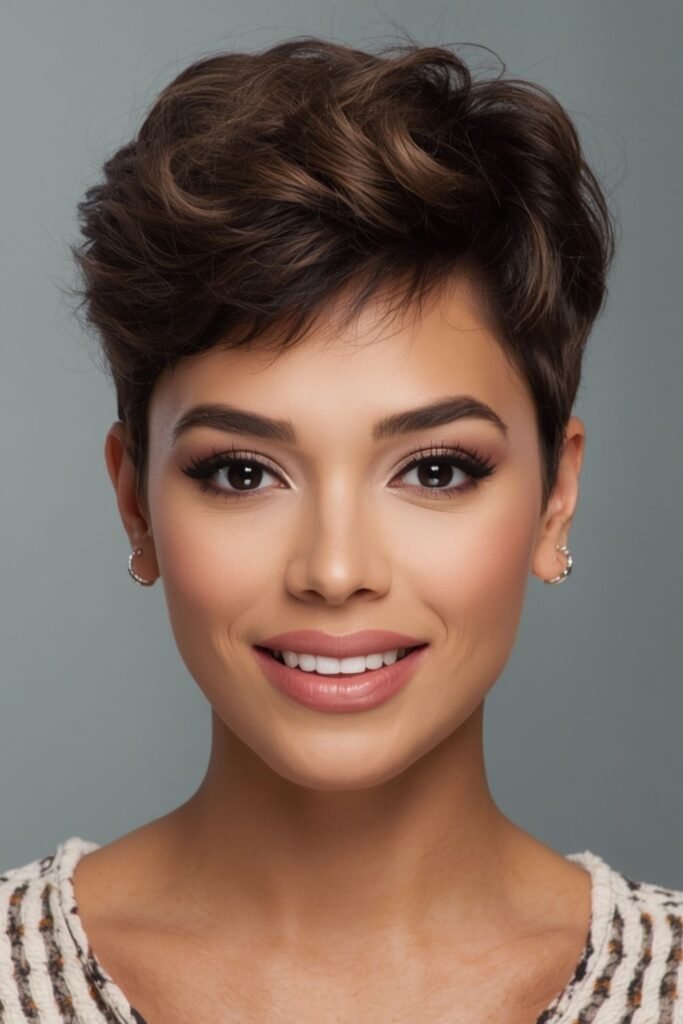
A pixie on type 3 or type 4 natural hair over 50 looks very different from one on straight or wavy hair, because the curl and coil pattern creates volume and texture at every length, including very short lengths where straight hair would lie flat. A short natural pixie lets the coils spring upward from the crown into a shaped silhouette that needs almost no daily styling. Ask for the cut to be shaped on dry hair so your stylist can see where each coil sits.
A curl cream or defining gel applied to damp hair and scrunched through the crown section, then allowed to air-dry or diffused on low heat, is a complete daily routine for a natural pixie over 50. The coils define themselves with product and time. A lightweight oil through the dry crown adds shine and reduces the dryness that short natural hair over 50 can develop between wash days.
Pixie Cuts by Color for Women Over 50
Pixie with Caramel Highlights
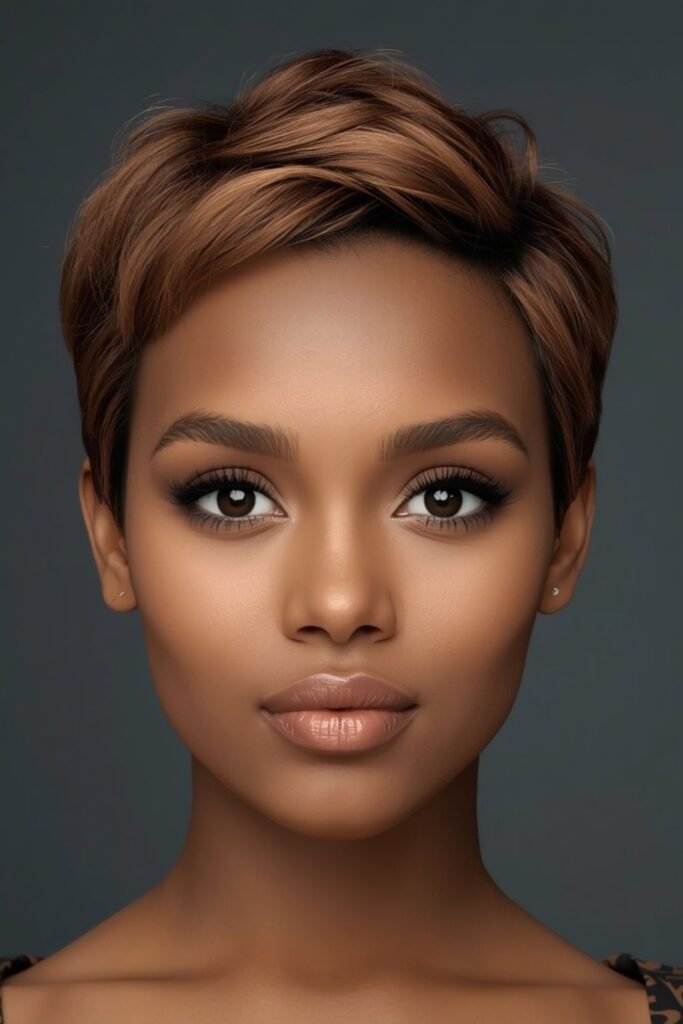
Color on a pixie over 50 adds dimension that makes the cut look more deliberate and the crown texture easier to see. This guide to caramel highlights on brown hair covers placement in detail. On a pixie, highlights concentrated through the crown and any longer fringe catch light at the most visible points. Ask your colorist for fine, closely spaced highlights, since chunky sections can look uneven on hair this short.
Color upkeep on a pixie is simpler than on longer hair because every trim removes older, faded color, and there is less hair to treat at each appointment. A gloss or toning treatment every six weeks between highlight appointments keeps the caramel tone warm and shiny without a full reapplication.
Silver Pixie with Warm Undertones
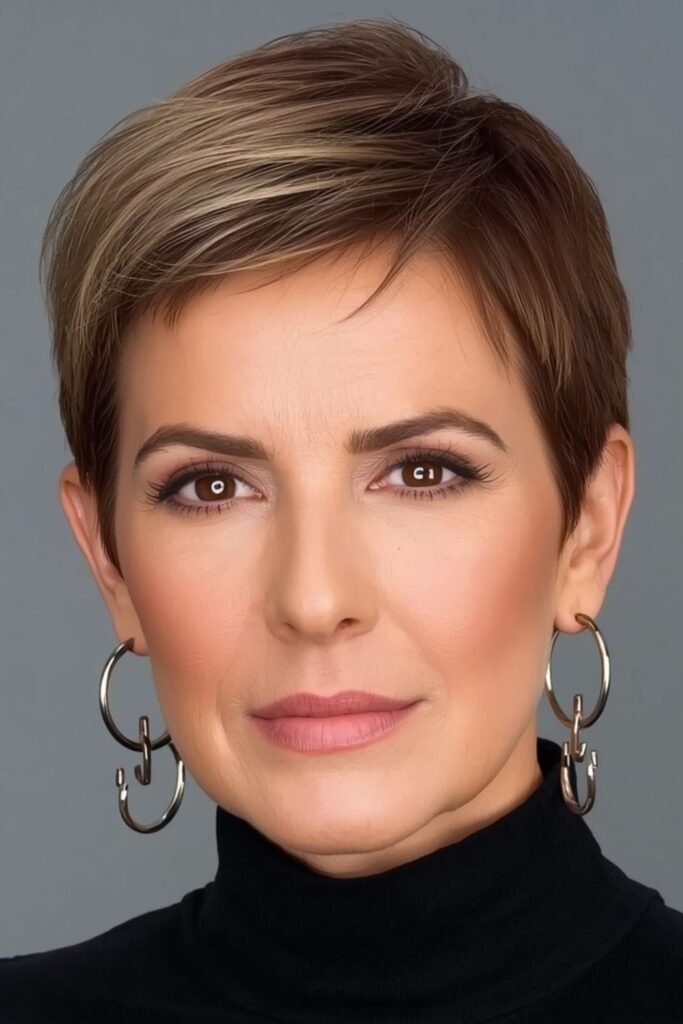
A silver pixie that leans warm, toned with a champagne or warm pearl gloss, avoids the harshness a cool, blue-silver shade can create against skin that has lost some of its earlier warmth. Warm silver looks like a chosen color direction, which changes how the whole style comes across.
Ask your colorist for a warm toning gloss over your natural silver base. The gloss adds shine and shifts the tone without any lightening or permanent color commitment. It fades over six to eight weeks and can be refreshed at each trim appointment, which keeps the color maintenance integrated with the cut maintenance for the most time-efficient salon routine.
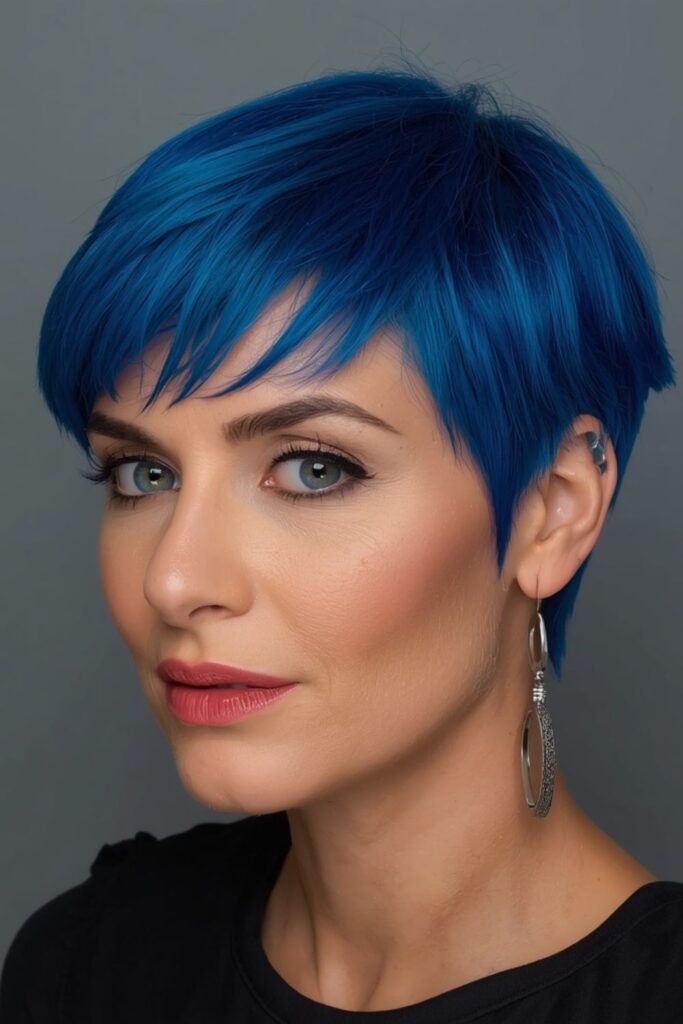
Bold Colored Pixie
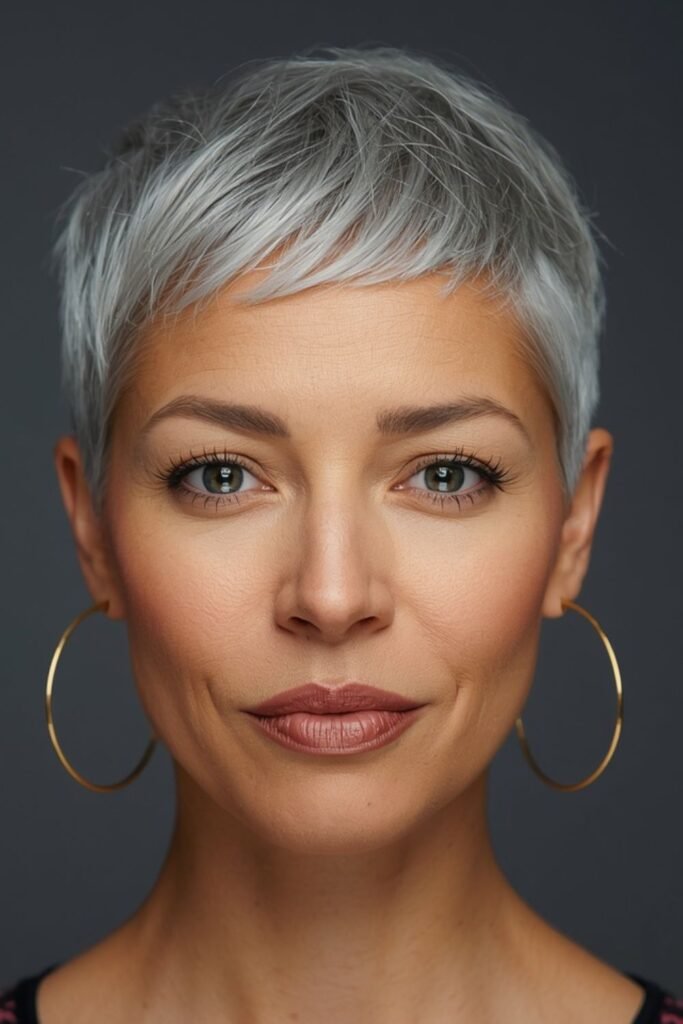
A pixie over 50 in a bold color such as dark cherry red, deep plum, or vivid copper is striking because the short cut puts the color front and center. There is no length to distract from it, so the color and the cut work as one complete statement. These dark cherry red hair color ideas show how rich the shade can go while still flattering mature skin.
Bold color on a pixie over 50 requires a committed maintenance schedule because the short length means regrowth at the parting becomes visible faster than on longer hair. Grey or silver regrowth against a vivid color shows clearly within four to six weeks. Discuss the maintenance commitment honestly with your colorist before choosing a bold shade, and factor the color appointment cost into the overall budget alongside the trim schedule.
Pixie Styles for Specific Needs Over 50
Pixie for Fine or Thinning Hair
A pixie is one of the best cuts for fine or thinning hair over 50, because the short length removes the weight that pulls fine hair flat, and layering at the crown creates volume that fine hair struggles to achieve at longer lengths. Leave the crown long enough to style upward. A uniformly close crop can expose the scalp instead of covering it.
Ask for a crown section at one and a half to two inches on fine or thinning hair, with the sides and back cut shorter so the crown section stands out visually. A volumizing mousse applied at the crown on damp hair and blow-dried upward with a small round brush or the fingers builds lift that fine strands cannot produce through density alone. A dry shampoo at the roots between wash days restores volume without washing.
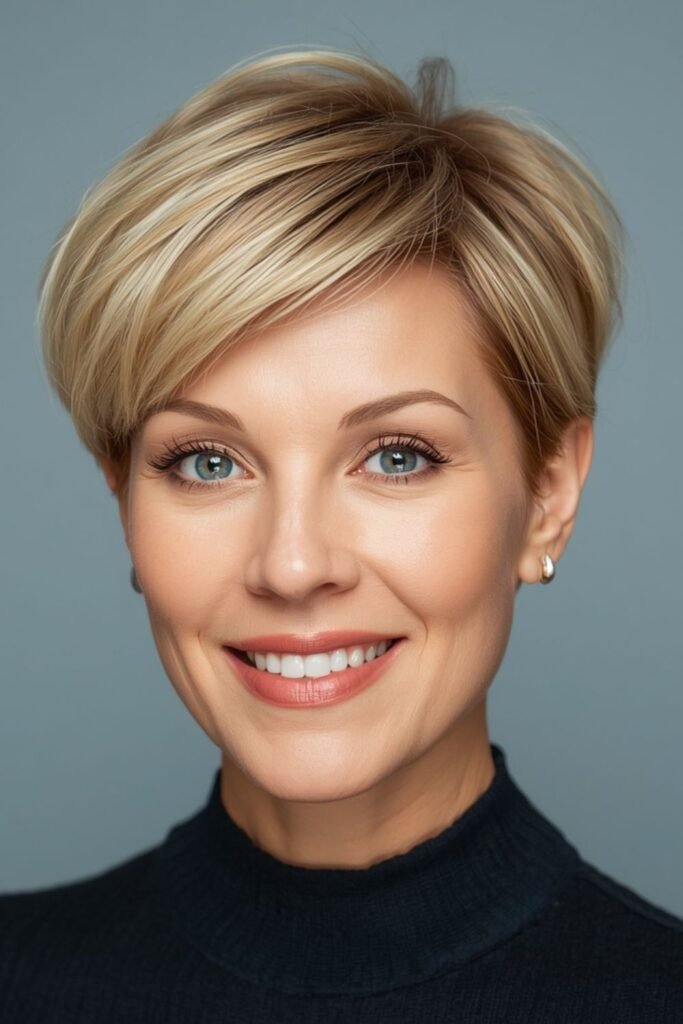
Pixie for Thick Hair Over 50
Thick hair over 50 in a pixie needs thinning through the interior sections to prevent the sides and crown from pushing outward and creating a round, helmet-like silhouette. Thinning shears used through the interior remove bulk while preserving the surface length, allowing the pixie to sit close to the head without weight pushing it out at the sides.
Ask your stylist to use thinning shears through the sides and to point-cut the crown section so the surface has texture and does not sit in a solid block. On thick hair over 50, a matte paste instead of a pomade or gel controls the crown without adding the shine that makes thick hair look heavy. A small amount goes a long way on thick strands.
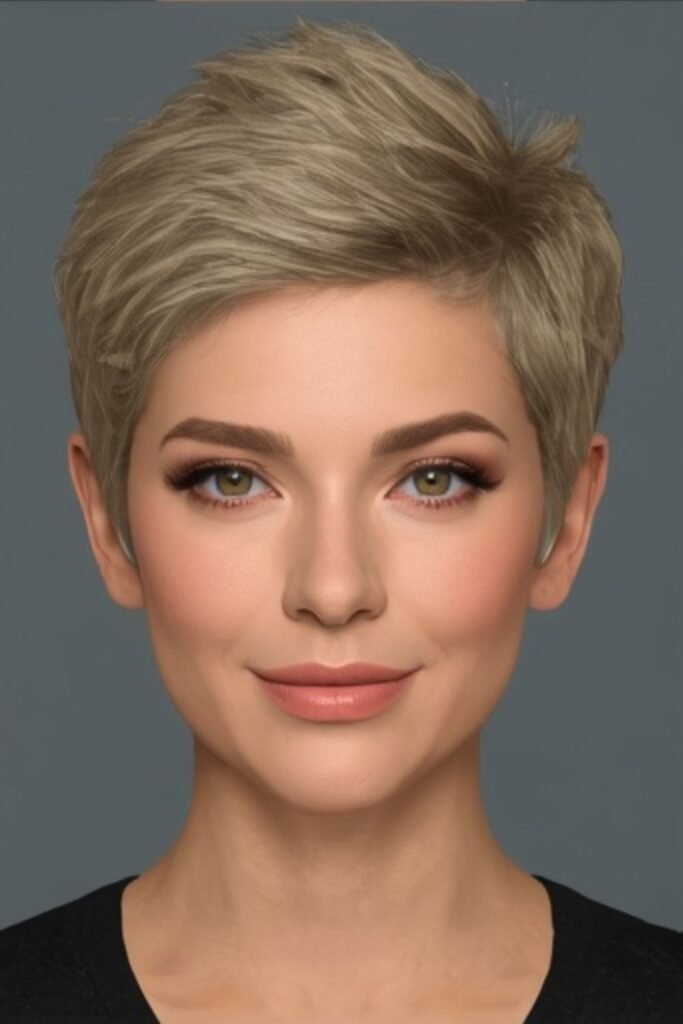
Pixie for Round Face Shapes Over 50
A pixie on a round face over 50 works best with height at the crown and minimal volume at the sides. The height lengthens the face and draws the eye upward. A side-swept fringe adds diagonal movement at the forehead that further reduces the apparent width. Avoid pixie cuts that add fullness at the ears or temples, since that adds width exactly where you want less.
Style the crown upward and away from the head each morning. A small amount of volumizing mousse at the crown roots before blow-drying provides lift that lasts through the day. Keep the sides close to the head with a little paste pressed flat with your palms, and ask your stylist to keep the hair around the ears short and tapered.
Occasion and Styled Pixie Looks Over 50
Pixie Dressed Up with a Jeweled Pin
A pixie over 50 dressed for an occasion needs only one well-chosen accessory to look formal. A small jeweled pin at the crown or side, a cluster of delicate gold bobby pins at the temple, or a thin embellished headband just behind the hairline turns the daily pixie into an occasion look with no change to the cut or styling technique.
A jeweled pin on a pixie should be placed at the point of maximum crown volume so it sits visibly on top of the style. Pins buried in flat hair look like an afterthought. Placed at the crown where the hair is styled upward, the pin looks like a deliberate styling choice. Use a pin with a backing that grips short hair rather than a smooth slide that moves freely.
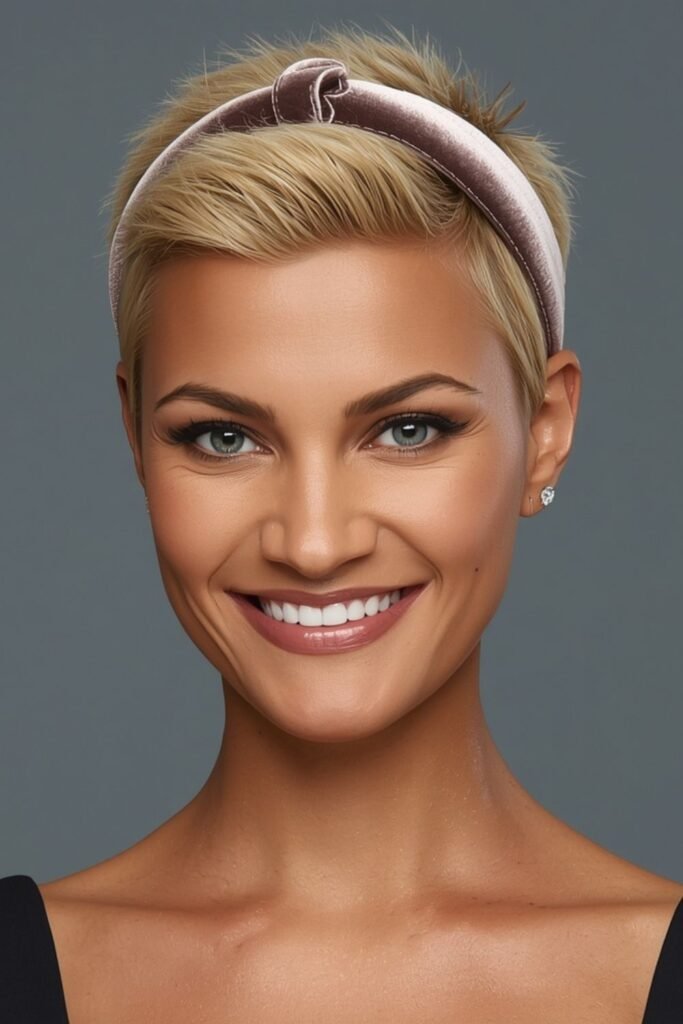
Pixie with a Thin Velvet Headband
A thin velvet headband placed just behind the hairline on a pixie over 50 frames the face and adds a color detail that photographs well, from a casual dinner to a formal event. The headband sits on the crown section and is visible from the front without disrupting the pixie shape at the sides or back. Slide it on after styling so the crown keeps its lift.
Choose a headband roughly one to two centimeters wide so it does not overwhelm the short pixie length, since a wide band can swamp the cut. Deep jewel tones in velvet, such as navy, burgundy, forest green, and plum, look beautiful against both silver and colored pixie hair and suit autumn and winter occasions particularly well.
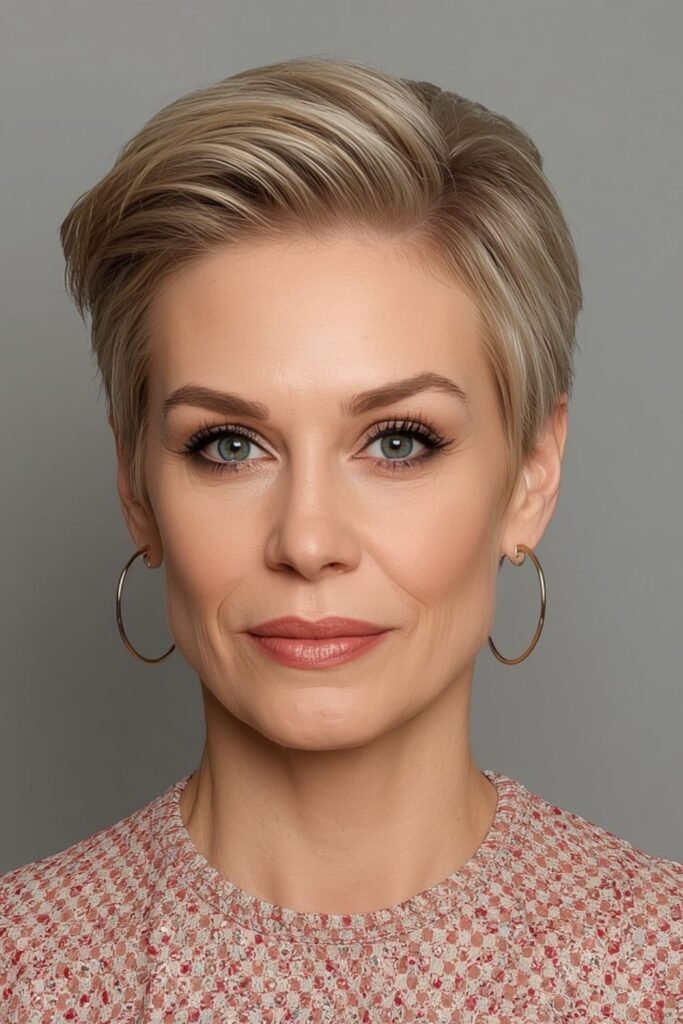
Sleek Pixie for a Formal Event
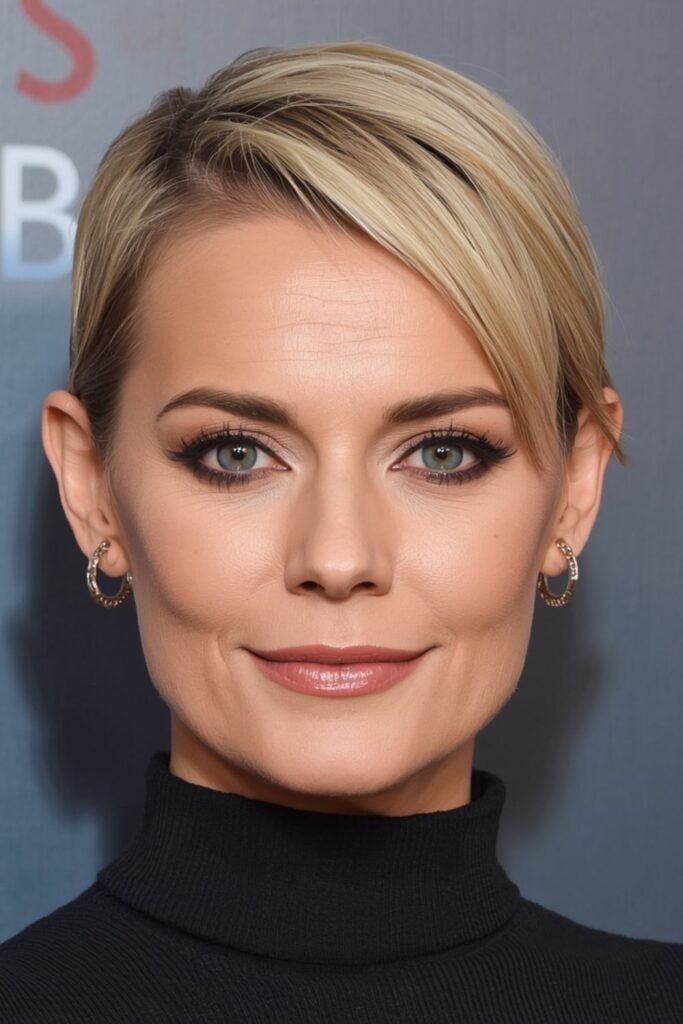
A sleek, smoothed pixie is the most formal version of the cut for women over 50. Style it with a pomade that adds shine, direct the sides flat against the head, and sweep the crown back and slightly upward. It suits black-tie events, weddings, and any occasion where the dress code calls for something polished. Pair it with statement earrings, since the sleek shape leaves the ears and jawline fully on show.
Apply a shine pomade through the damp crown section and smooth downward at the sides using a fine-tooth comb. Blow-dry the crown section slightly upward before smoothing back so it keeps some height. A light-hold finishing spray over the completed style keeps the surface smooth through a full evening without producing the stiff, helmet appearance that a strong-hold spray creates.
What Makes a Pixie Low Maintenance Over 50
The Cut Has to Grow Out Gradually
A pixie that looks intentional only when freshly cut is a high-maintenance pixie regardless of how easy it is to style each morning. The cuts on this list are built to grow out gradually and hold their recognizable shape for five to six weeks between trims. Ask your stylist specifically about the grow-out behavior of the style you choose as well as how it looks when freshly done.
The Styling Routine Should Take Under Five Minutes
The daily styling routine for a low-maintenance pixie over 50 should be: apply a small amount of product to damp or dry hair, direct with fingers or a brush, set with a quick blast of a blow-dryer if needed, and stop. Any pixie that requires more than that on a regular basis is either cut incorrectly for your hair type or styled with more product steps than the cut actually needs.
The Trim Schedule Is Part of the Maintenance
A pixie cut over 50 needs trimming every four to six weeks to stay low maintenance. Wait longer than six weeks and the cut starts to lose its shape, with the sides, nape, and fringe looking overgrown. Booking trims in advance is the single habit that keeps a pixie easy to live with.
Frequently Asked Questions
Does a pixie cut suit women over 50?
Yes, and often better than at younger ages. The pixie cut is one of the most flattering short styles for women over 50 because it removes the weight that changing hair density struggles to support, frames the face cleanly without covering it, and grows out more gracefully than many other short styles. The key is a cut built around the specific texture and density changes that occur after 50, not a generic pixie copied from a photo.
What face shapes suit a pixie cut over 50?
Oval face shapes suit almost every pixie variation. Heart and diamond face shapes suit pixies with a side-swept fringe that narrows the forehead visually. Round face shapes suit pixies with crown height and minimal side volume. Square face shapes suit pixies with soft, textured ends and a side-swept or asymmetrical top section that adds diagonal lines to soften the horizontal jawline. Oblong face shapes suit pixies with a fringe that adds horizontal width at the forehead.
How often does a pixie need trimming over 50?
Every four to six weeks. This is more frequent than medium or long haircut maintenance, but the trim itself is shorter and less expensive than a full cut appointment for longer hair. Many stylists offer a quick tidy trim for less than a full cut price, which keeps the pixie looking intentional between full appointments. The nape and fringe sections grow fastest and may need attention on the shorter end of the four to six week range.
Can a pixie cut look feminine over 50?
Yes. Softness comes from specific choices: a tapered nape instead of a blunt one, a side-swept fringe, a longer textured crown in place of a close crop, and accessories like jeweled pins or velvet headbands when the occasion calls for it. The pixie shag and the wavy textured pixie are the softest, most feminine variations on this list.
What is the easiest pixie to maintain over 50?
The tapered nape pixie and the pixie shag are the two lowest-maintenance constructions on this list. The tapered nape grows out cleanly without the bulkiness that a blunt nape cut develops between trims. The pixie shag has enough length and texture that it tolerates two to three weeks of grow-out before needing attention. Both suit a trim schedule of five to six weeks and require under three minutes of daily styling.
Final Thoughts
The best low maintenance pixie cuts for women over 50 suit your hair as it is now, with its current texture and density. The 17 variations here show that an easy cut can still be interesting, with plenty of room for color, texture, and accessories.
Choose based on your real morning routine, how often you can get to the salon, and your hair’s current texture and density. Bring reference photos from the side and back as well as the front. If you are not ready to go quite this short, these bob haircuts for older women offer a similarly easy routine with more length.