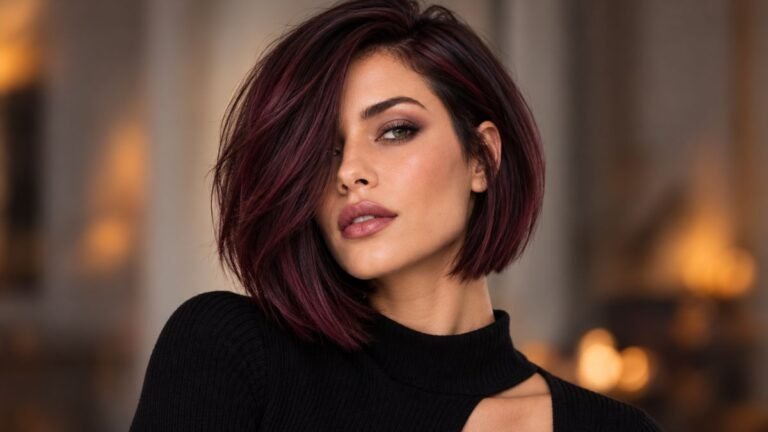

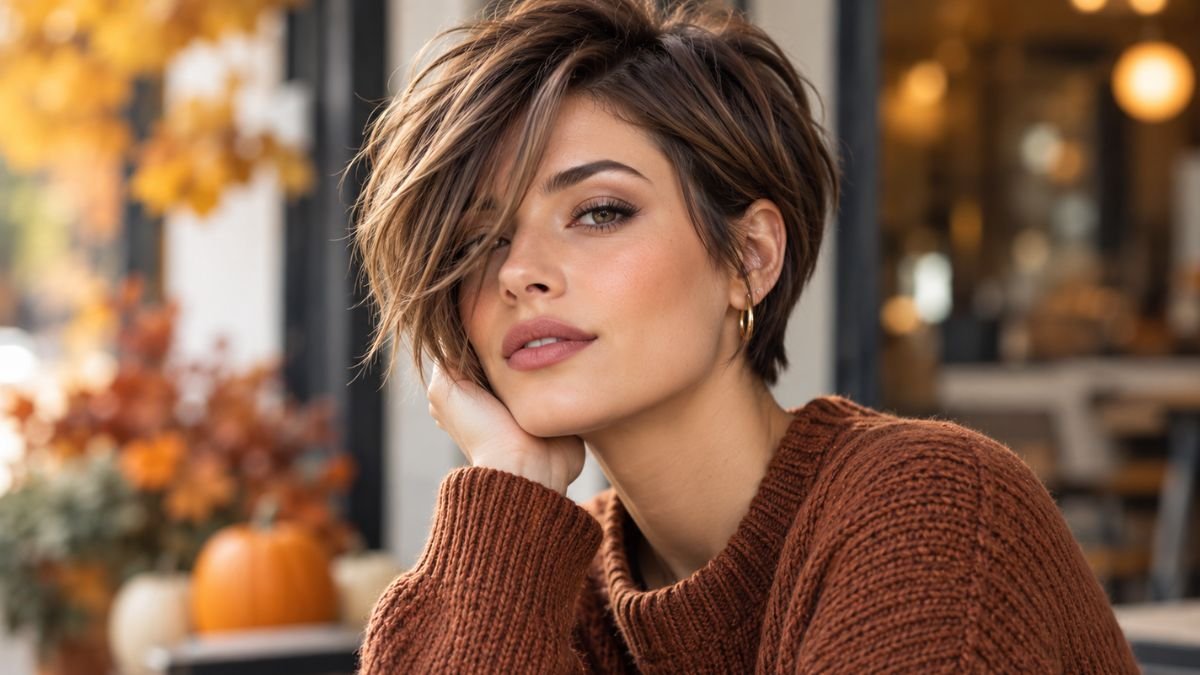
The long pixie is one of the easiest ways to move into short hair without losing all of the styling flexibility that comes with length. It keeps more hair through the crown, fringe, a nd sides than a classic close crop, while the back stays compact enough to feel light for fall.
That makes the cut a strong match for Fall 2026, when hair trends are moving toward softer crops, natural texture, easy movement, and less rigid styling. The important caveat is maintenance: a long pixie can reduce daily styling time, but the shape still benefits from regular trims. “Low-maintenance” describes the day-to-day routine better than the salon schedule.
Current trend context: Allure’s Fall 2026 report emphasizes comfort, natural texture, and a pixie shag, while Vogue’s curtain crop report documents a softer, grown-out crop with curtain-like front length. Marie Claire’s pixie styling guide also describes pixies as low-maintenance in daily styling while noting the need for regular upkeep.
Quick Guide: Choose the Long Pixie by Hair Behavior
| Hair Situation | Strong Direction | Why It Works | Watch For |
| Fine or low-density | Rounded long pixie | Preserves fullness through the perimeter | Too much thinning |
| Thick hair | Internally textured long pixie | Removes bulk without losing shape | Over-texturizing the ends |
| Wavy hair | Tousled or curtain long pixie | Works with natural bend | Forcing a pin-straight finish |
| Curly/coily | Curl-led or tapered long pixie | Accounts for shrinkage and pattern | Cutting only on stretched hair |
| Growing out a short pixie | Ear-length or bottleneck-fringe pixie | Turns transitional length into a deliberate shape | Leaving the nape unshaped |
Soft Curtain Long Pixie
This is the closest long-pixie interpretation of Fall 2026’s curtain crop. The extra front length gives the cut a relaxed, grown-out feel while the short back keeps it clearly in pixie territory.
Best for: Straight to wavy hair, especially if you want softness around the face.
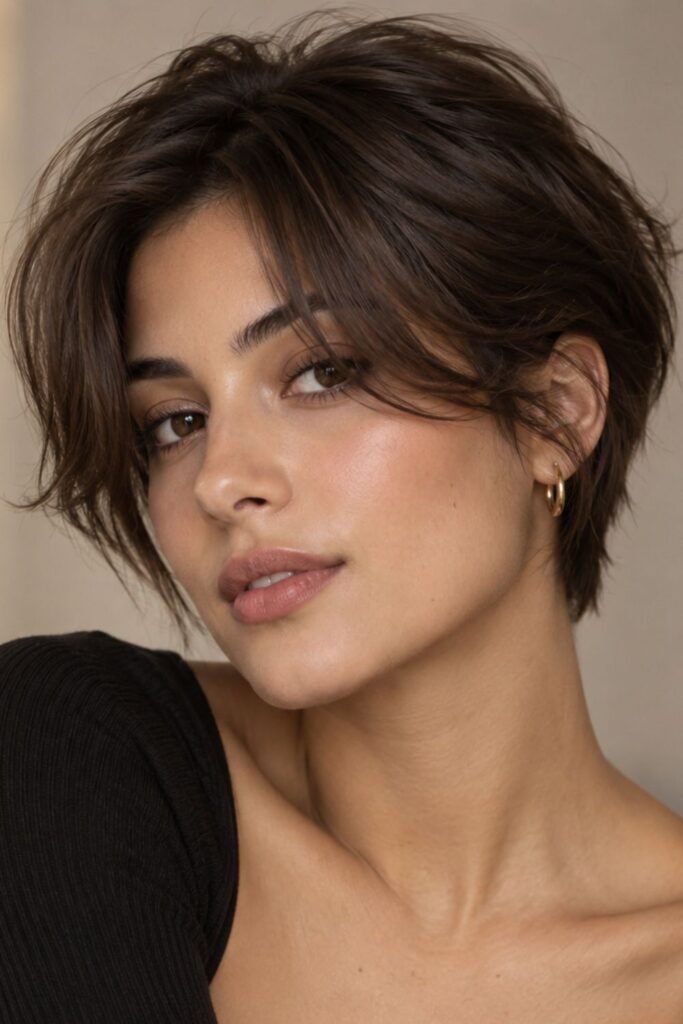
Side-Swept Long Pixie
A side-swept fringe gives a long pixie more styling flexibility than a very short crop. It can be brushed smooth, tucked, or loosened without changing the cut itself.
Best for: Fine to medium straight or wavy hair.
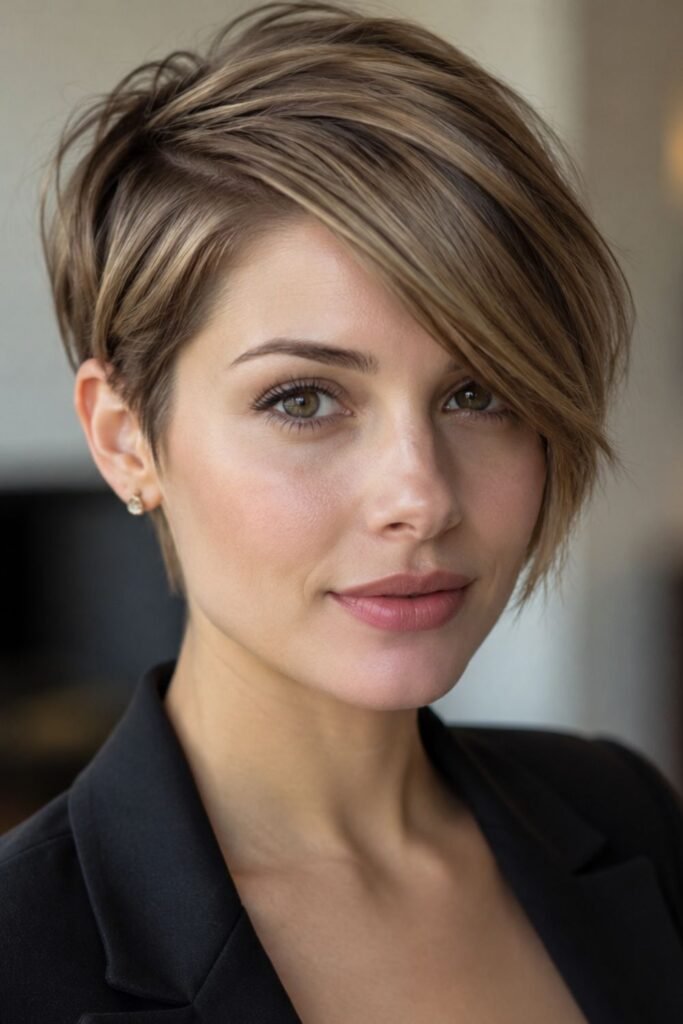
Pixie Shag With Diffused Layers
Allure identifies the pixie shag as part of Fall 2026’s softer, easier haircut direction. Keeping the layers diffused makes it more wearable than a sharply choppy shag.
Best for: Wavy hair and medium density that benefits from movement.
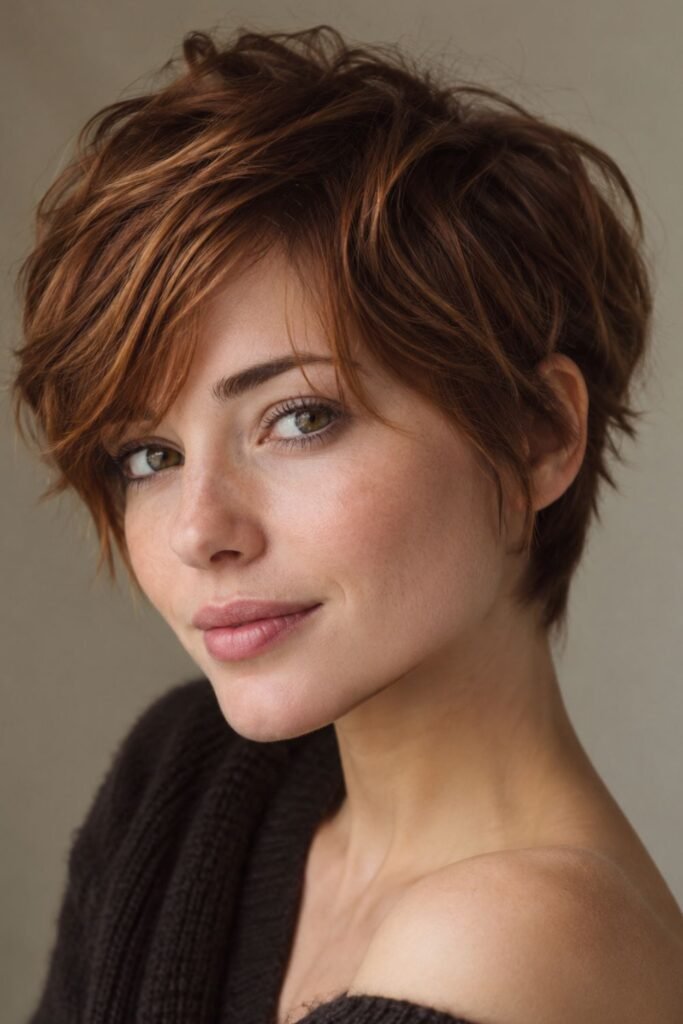
Long Pixie With Whisper Fringe
Whisper fringe gives the front shape without creating the maintenance burden of dense blunt bangs. The lighter fringe also grows into the rest of the pixie more naturally.
Best for: Fine to medium hair and straight-to-wavy textures.
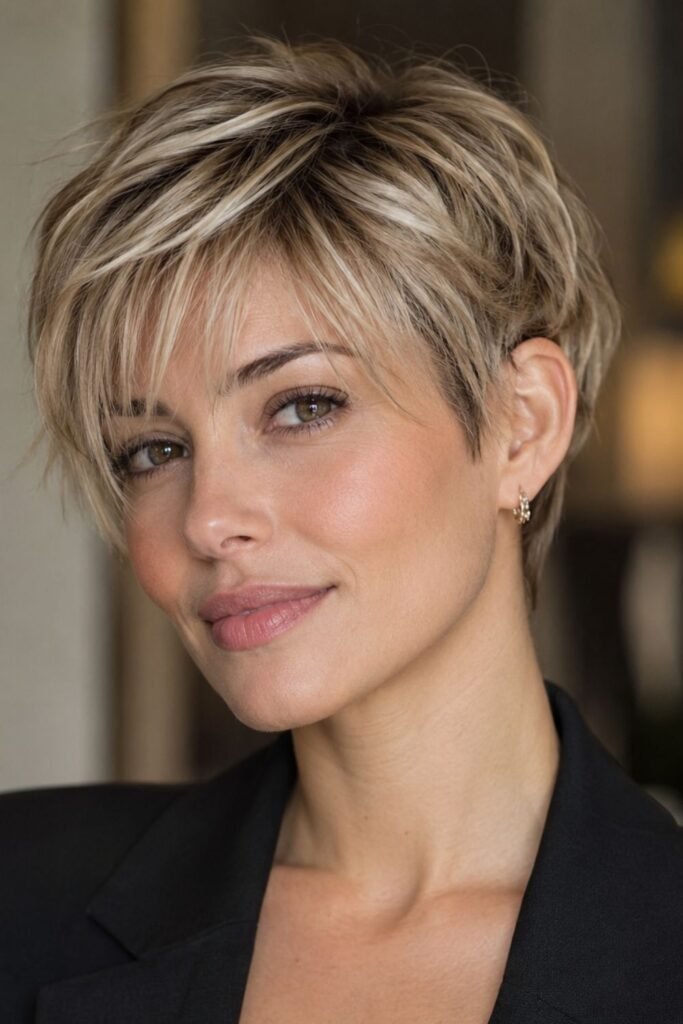
Rounded Long Pixie for Fine Hair
Fine hair often needs preserved density rather than aggressive texture. A rounded silhouette makes the top look fuller while the longer fringe adds styling range.
Best for: Fine or lower-density straight hair.
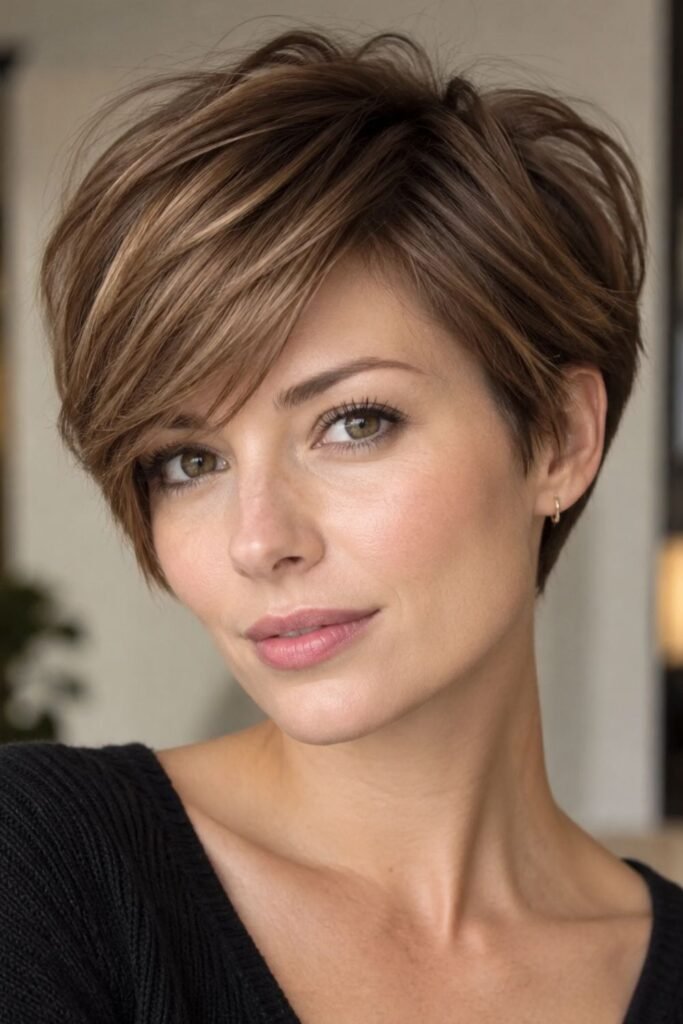
Textured Long Pixie for Thick Hair
Thick hair can make a long pixie feel bulky unless weight is removed inside the shape. Internal texture creates movement without making the ends look thin.
Best for: Thick straight or wavy hair.
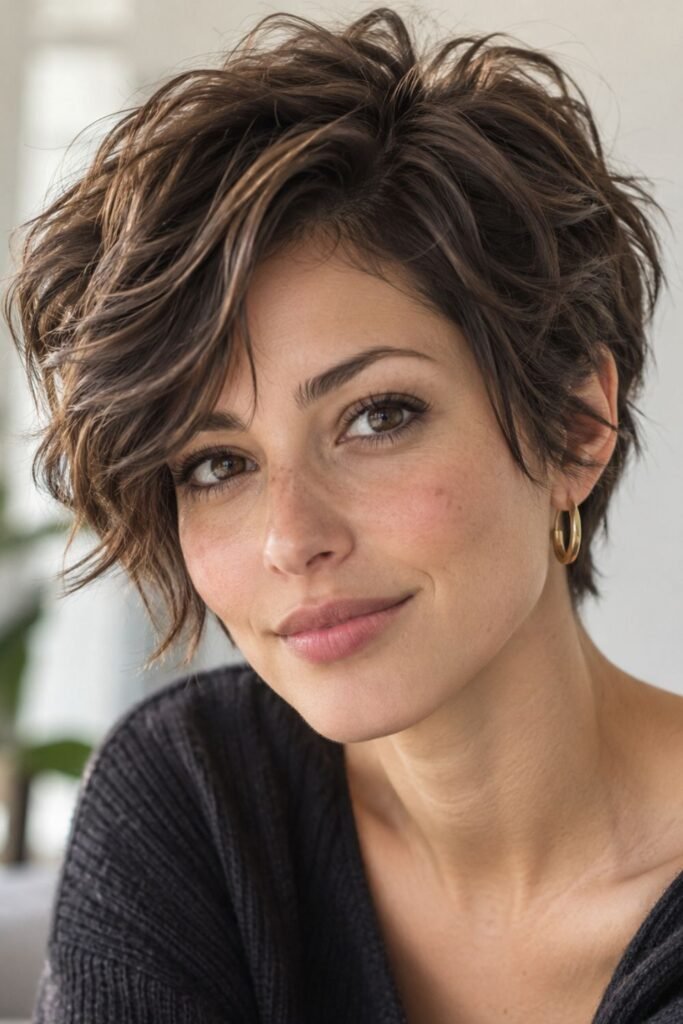
Curly Long Pixie
Natural curl gives a long pixie built-in volume and movement. The cut needs enough length to account for shrinkage, especially through the fringe and crown.
Best for: Curly hair with medium to high density.
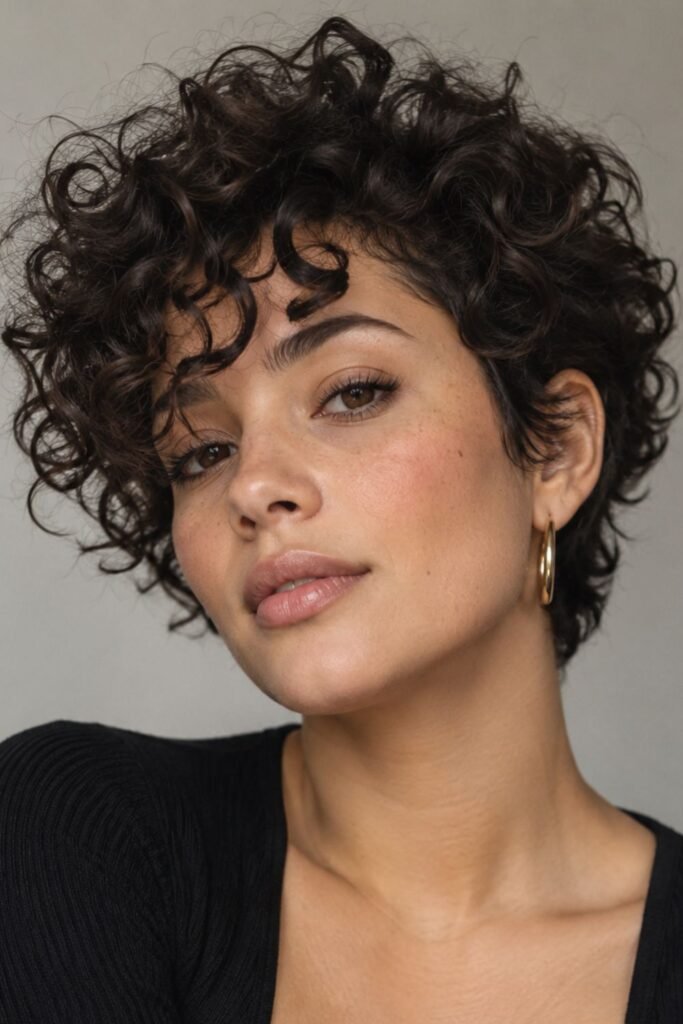
Coily Long Pixie With Tapered Nape
Leaving more length through the top and sides keeps the cut versatile for coils, twists, defined texture, or a soft stretched finish.
Best for: Coily hair and anyone wanting short hair without a close crop.
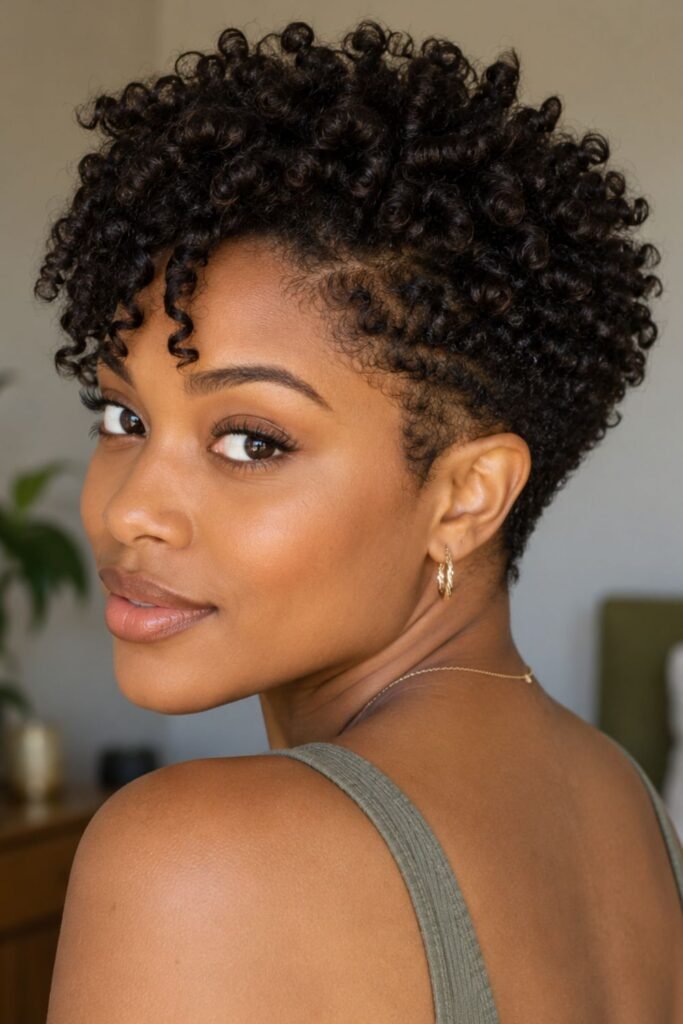
Long Pixie With Ear-Length Sides
Ear-length sides make a pixie feel less exposed and create a smoother transition if you are cutting down from a bob or growing a shorter pixie out.
Best for: Straight, wavy, or lightly curly hair.
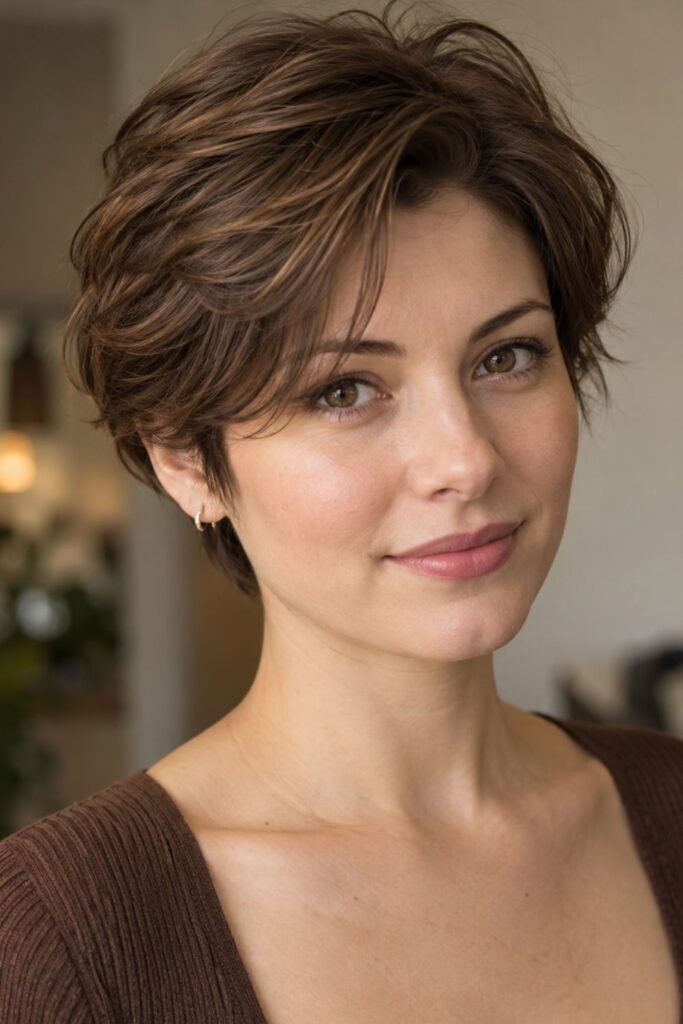
Slicked-Back Long Pixie
A slicked-back finish changes the mood without changing the haircut. It is useful for work, evenings, or days when you want the fringe completely off the face.
Best for: Straight and wavy textures with sufficient front length.
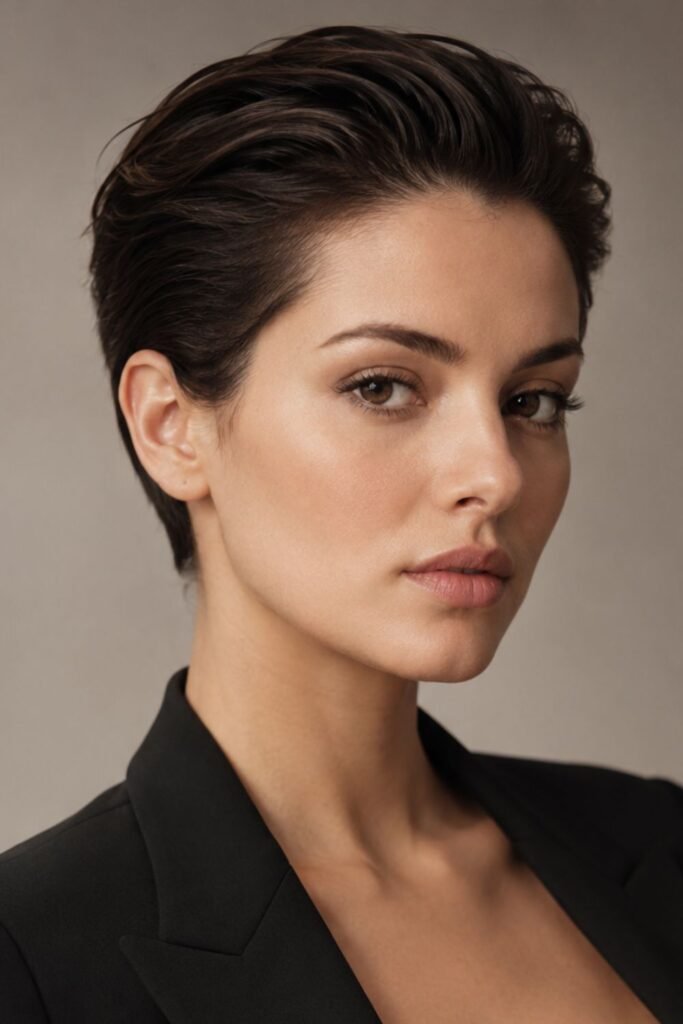
Tousled Long Pixie With Piecey Ends
This is the most casual version. A little separation shows the layers while preserving the soft, comfortable direction seen across Fall 2026 hair trends.
Best for: Straight to wavy hair and medium density.
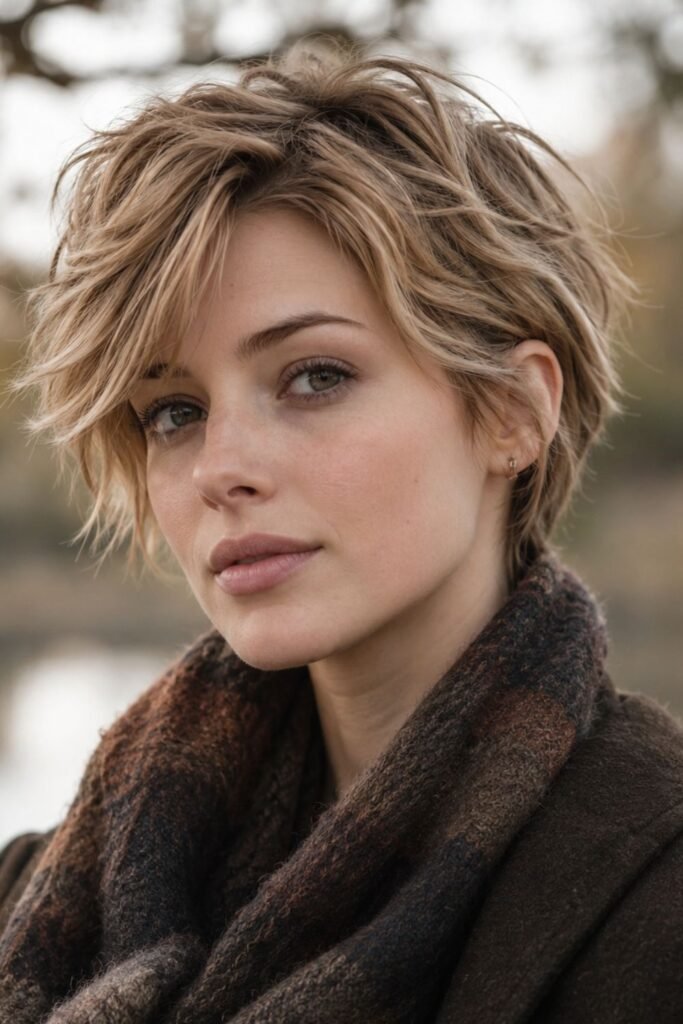
Long Pixie With Deep Side Part
A deep part changes balance and root lift without requiring additional cutting. It also works well when one side naturally has more density or stronger growth direction.
Best for: Fine to thick straight and wavy hair.
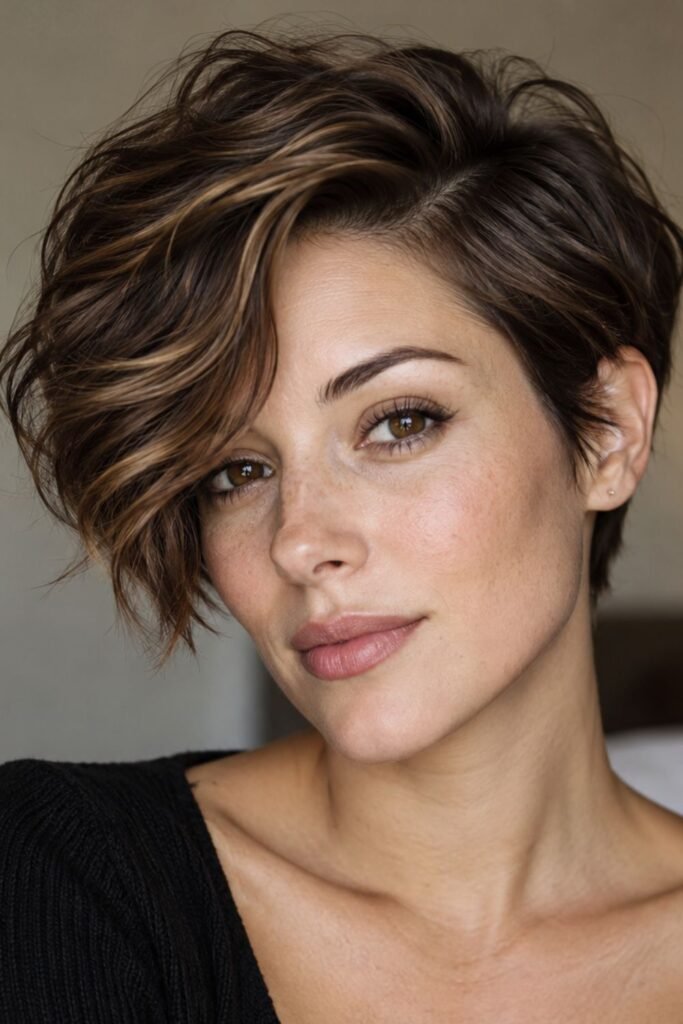
Long Pixie With Soft Tucked Sides
Tuckable sides give the cut two distinct silhouettes: softer when worn forward, cleaner when tucked. That flexibility is one reason longer pixies can feel easier day to day.
Best for: Straight, wavy, and fine-to-medium hair.
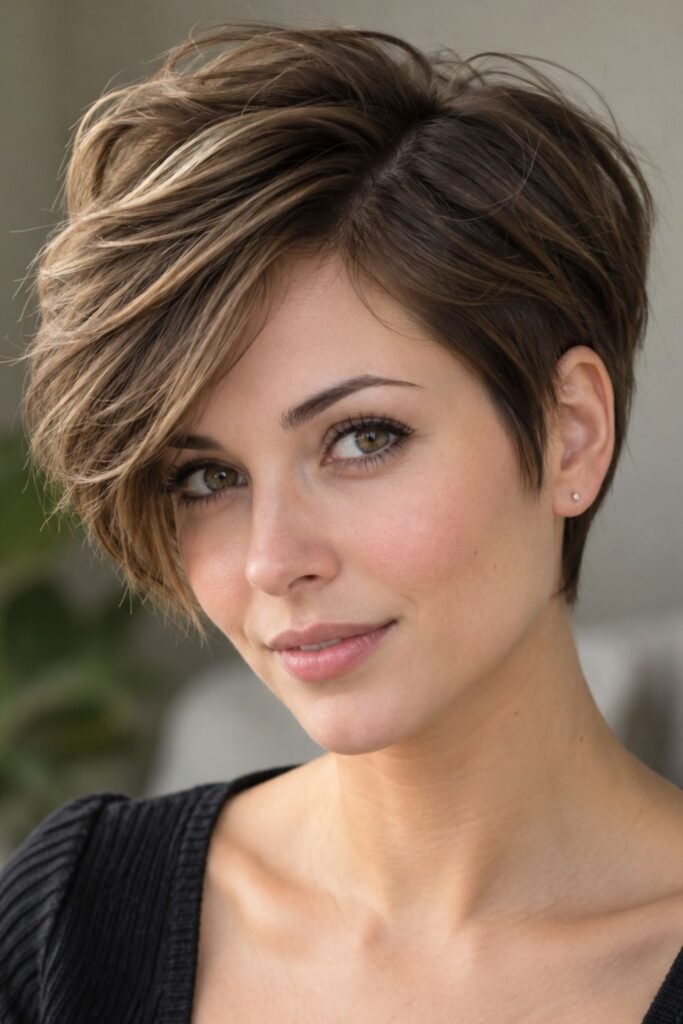
Grown-Out Pixie With Bottleneck Fringe
This combines the long-pixie shape with bottleneck fringe geometry. It is especially useful during grow-out because the front can lengthen without losing an intentional outline.
Best for: Straight to wavy hair with enough front density for fringe.
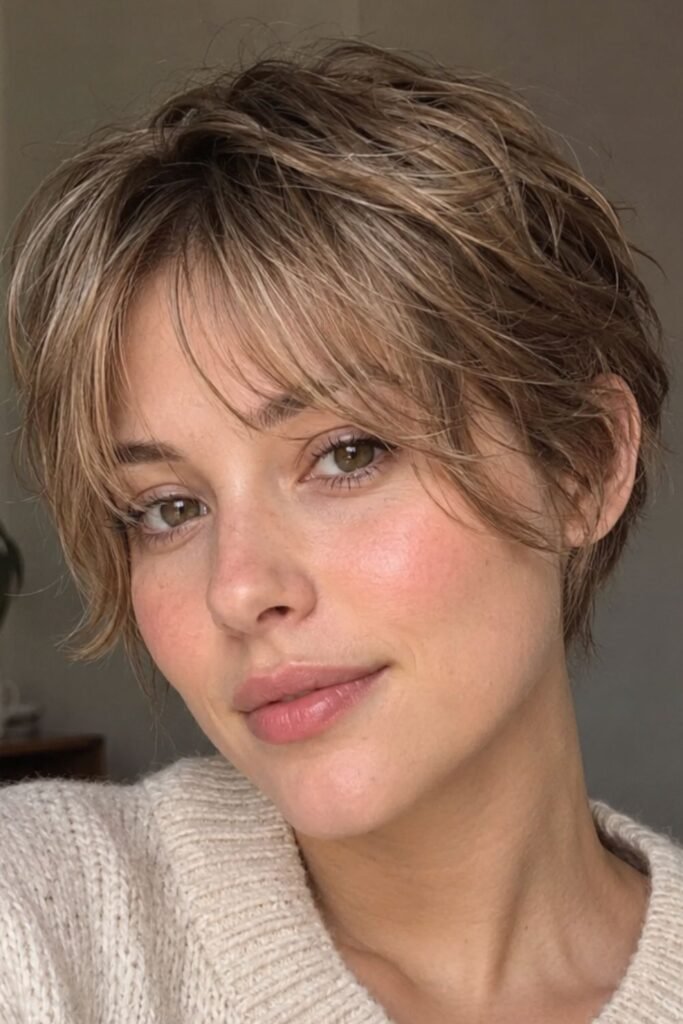
Low-Contrast Long Pixie With Natural Texture
This is the genuinely lower-styling version because the cut is designed around the hair you already have. It reduces the need to force the texture into a different direction every morning.
Best for: Anyone whose priority is practical daily styling.
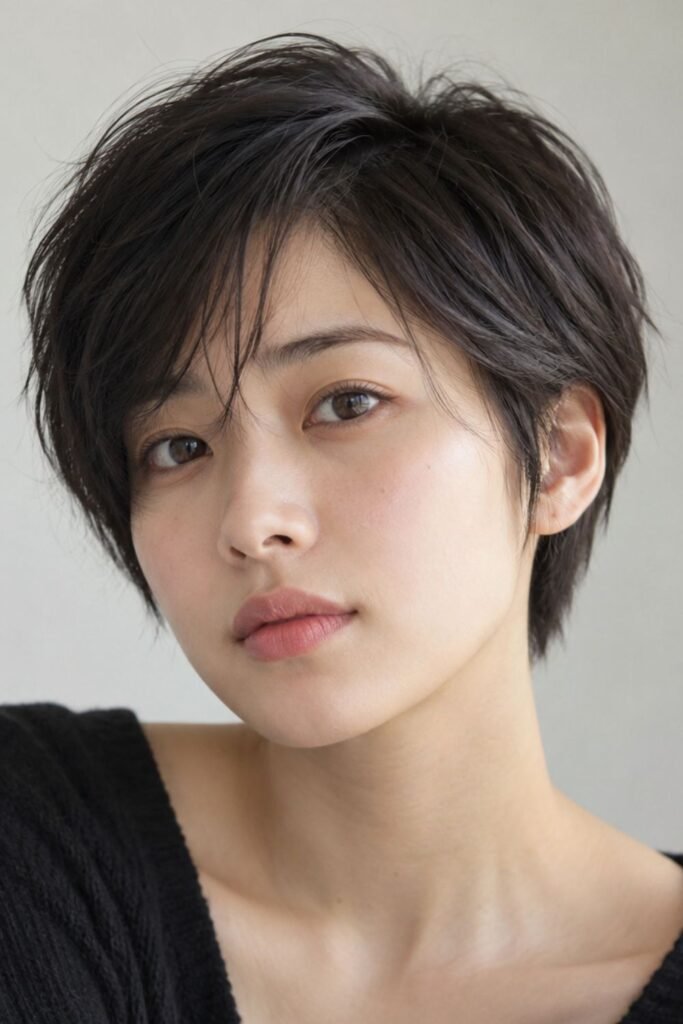
Is a Long Pixie Really Low Maintenance?
It can be lower maintenance in daily styling because there is less hair to dry, detangle, curl, or straighten. The longer top also gives more flexibility than a close crop, so you can sweep, tuck, part, or air-dry it instead of rebuilding one exact shape every morning.
Salon maintenance is different. Short shapes reveal growth quickly, especially around the ears and nape. A long pixie generally tolerates grow-out better than a shaved or tightly cropped pixie, but it still needs trimming when the outline starts to lose balance.
What to Ask for at the Salon
Use measurements and visual references instead of asking only for “a long pixie.” Tell your stylist how much fringe you want, whether you want the ears exposed or partly covered, how compact the nape should be, and whether the crown should sit smooth or carry visible texture.
Also explain how you normally style your hair. A cut intended for air-drying should be built around your natural growth pattern, cowlicks, curl pattern, and density. A cut designed for a round-brush finish can use different weight distribution.
How to Style It With Less Effort
Start with the cut rather than the product. If the shape respects your natural texture, styling can be as simple as a lightweight cream, mousse, or texture spray followed by air-drying or brief blow-drying at the fringe and crown. Heavy wax can make long pixies collapse, especially on fine hair.
For straight hair, a small round brush or flat brush can redirect the fringe. Wavy hair often needs only scrunching and selective smoothing. Curly and coily versions benefit from product distribution through defined curl groups rather than flattening the entire cut.
Useful Redounds Reads
For a more dramatic short-pixie direction, see Redounds’ shaved-side pixie guide. For a softer in-between shape, Redounds’ bixie haircut ideas cover the transition between pixie and bob. Redounds also has dedicated pixie ideas for Black women with texture-specific options.
Frequently Asked Questions
What is a long pixie cut?
A long pixie keeps more length through the top, fringe, and often the sides than a classic pixie, while the nape remains short enough to preserve a cropped silhouette. It can overlap visually with a bixie but usually stays shorter through the back.
Is a long pixie lower maintenance than a bob?
Daily styling can be faster because there is less hair to dry and shape. Salon maintenance may be more frequent, though, because growth around the nape and ears changes the silhouette quickly.
How often does a long pixie need trimming?
There is no universal schedule. Many people find the shape starts to change noticeably after several weeks. Trim when the fringe, ears, or nape stop sitting the way the cut was designed rather than following a rigid date.
Can fine hair wear a long pixie?
Yes. Fine hair often benefits from a stronger perimeter and restrained layering. Too much thinning can make the crown and sides look sparse, while a rounded or side-swept shape can preserve visual density.
Can thick hair wear a long pixie?
Yes. Thick hair usually needs internal weight removal so the cut does not become bulky. The outside shape should remain controlled while the interior is lightened enough to move.
Does a long pixie work on curly hair?
Yes. The cut should account for shrinkage and curl pattern, especially through the fringe. Longer curl groups through the top usually make the shape easier to control than an ultra-short crop.
What is the difference between a long pixie and a bixie?
A bixie sits between a bob and pixie and usually carries more length around the nape and sides. A long pixie keeps the back more cropped while concentrating its extra length through the crown, fringe, or temples.
Can I air-dry a long pixie?
Often yes, especially when the cut is designed around your natural texture. Air-drying works best when the stylist accounts for cowlicks, density, curl pattern, and the direction the fringe naturally wants to fall.
The Practical Takeaway
A long pixie is most useful when you want the lightness of short hair without giving up every styling option. Keep enough length where your texture needs movement, preserve density where your hair is fine, and let the nape stay compact. The easiest version is the one designed around how your hair already behaves.