
Curtain bangs hairstyles have stayed in steady demand because they are forgiving. The bangs frame the face without covering it, they grow out gradually instead of awkwardly, and they suit most hair textures and face shapes without a long daily styling routine. The versions below pair the cut with specific lengths, textures and color placements so you can see exactly how each one sits.
These 15 styles show how curtain bangs behave on long, medium and short hair, what they do for different face shapes, and how to keep them in shape between trims. If long hair is your starting point, our curtain bangs ideas for long hair go deeper on that length alone. The details here are enough to walk into a salon with a clear brief.
Curtain Bangs on Long Hair
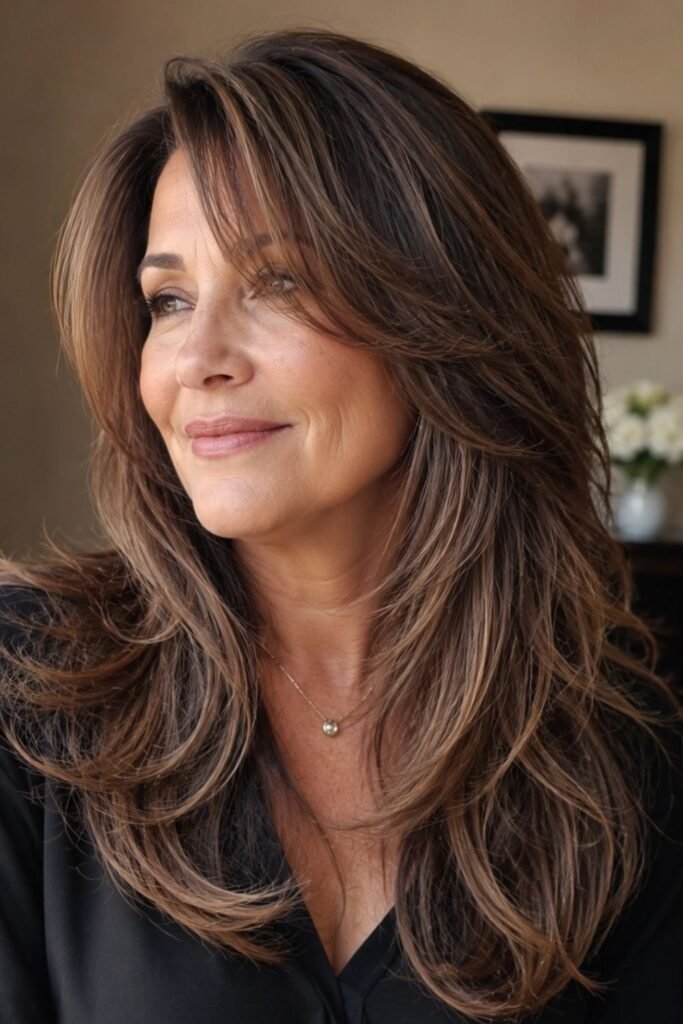
Long Layers with Curtain Bangs and a Side Part
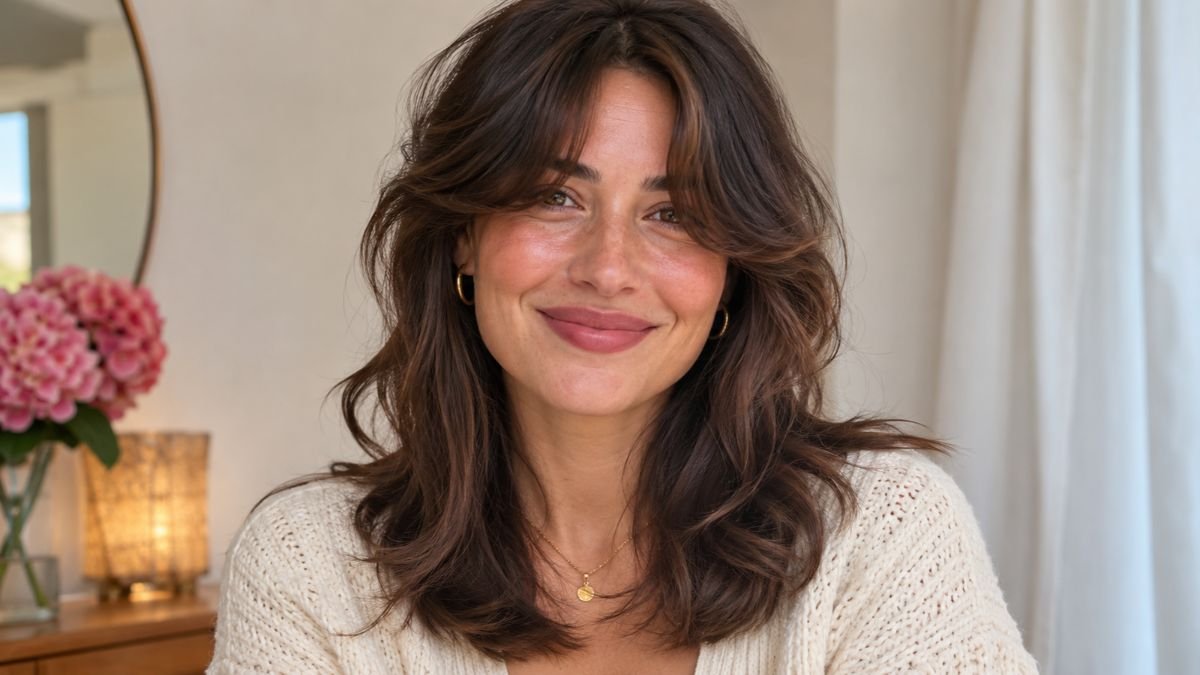
Long layers with curtain bangs and a side part is one of the easiest ways to wear the cut on longer hair. The bangs split unevenly from the part, so the longer side sweeps across the brow and melts into the face-framing layers below, while the shorter side flicks back toward the temple. There is no hard line where the bang stops and the layering begins.
A side part is the better choice for round and square faces because it adds a diagonal line and softens width at the forehead. Ask for the shortest bang piece to sit at the cheekbone and the longest layers to start at the collarbone. Blow-dry the part area with a round brush lifting at the root, then curl the ends of the front layers away from the face. A light shine spray keeps long brunette lengths like these looking glossy rather than flat.
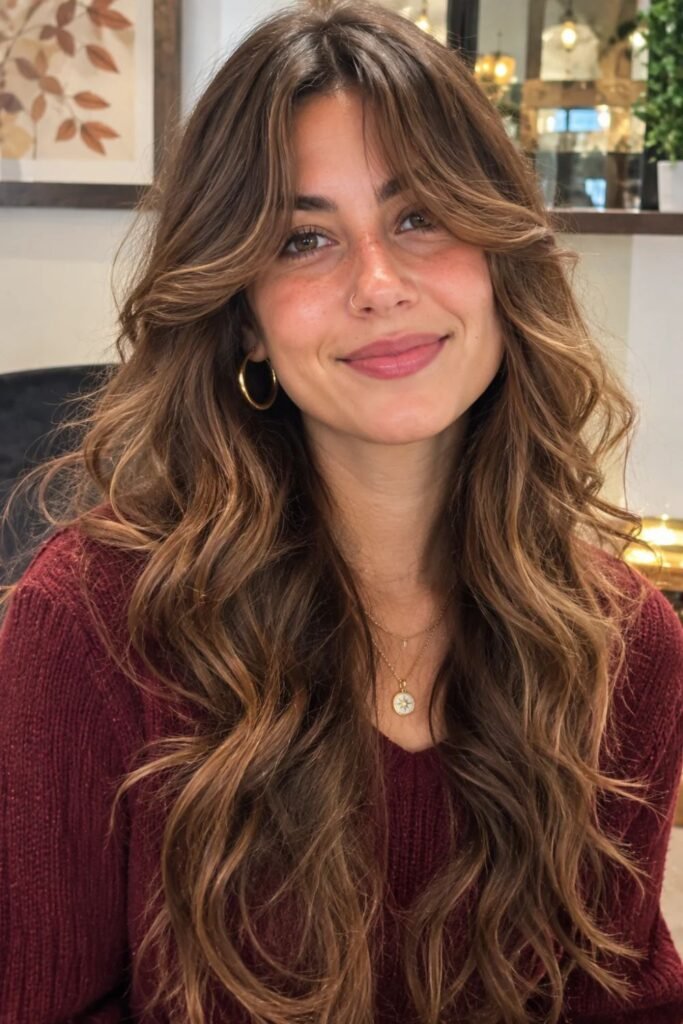
Long Wavy Hair with Curtain Bangs
Wavy hair and curtain bangs are a natural pairing because the wave through the bang section creates the outward sweep automatically, without the need for a round brush or curling iron each morning. The bang lies flatter at the root and curves outward at the end following the hair’s natural movement.
Diffuse damp hair with a curl cream or wave mousse, including the bang section. Once dry, use your fingers to separate the bang down the center and encourage each side to fall outward. A small amount of lightweight pomade on the fingertips smoothed along the bang ends prevents frizz and keeps the sweep clean through the day.
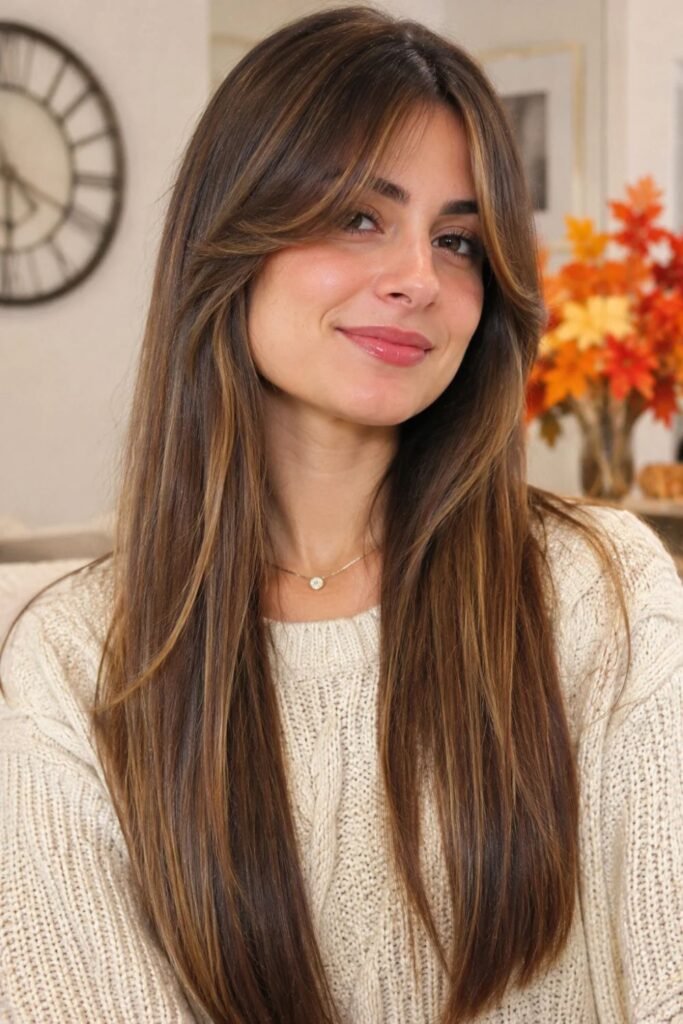
Long Straight Hair with Curtain Bangs
Straight hair with curtain bangs requires a round brush or a small-barrel iron to create the outward sweep, because straight strands fall flat rather than curving naturally. The styling step takes under three minutes once practiced: wrap each side of the bang around a round brush and direct the airflow outward and downward as you dry, or wrap each side briefly around a three-quarter-inch barrel curling iron.
The result on straight hair is the cleanest version of curtain bangs because no texture competes with the sweep. The bangs lie smooth and curve outward evenly on both sides. This version suits women who already blow-dry their straight hair every day, since the bang adds almost no time to an existing routine. On second-day hair, mist the bang with water, re-dry it over the round brush for thirty seconds, and the shape comes straight back.
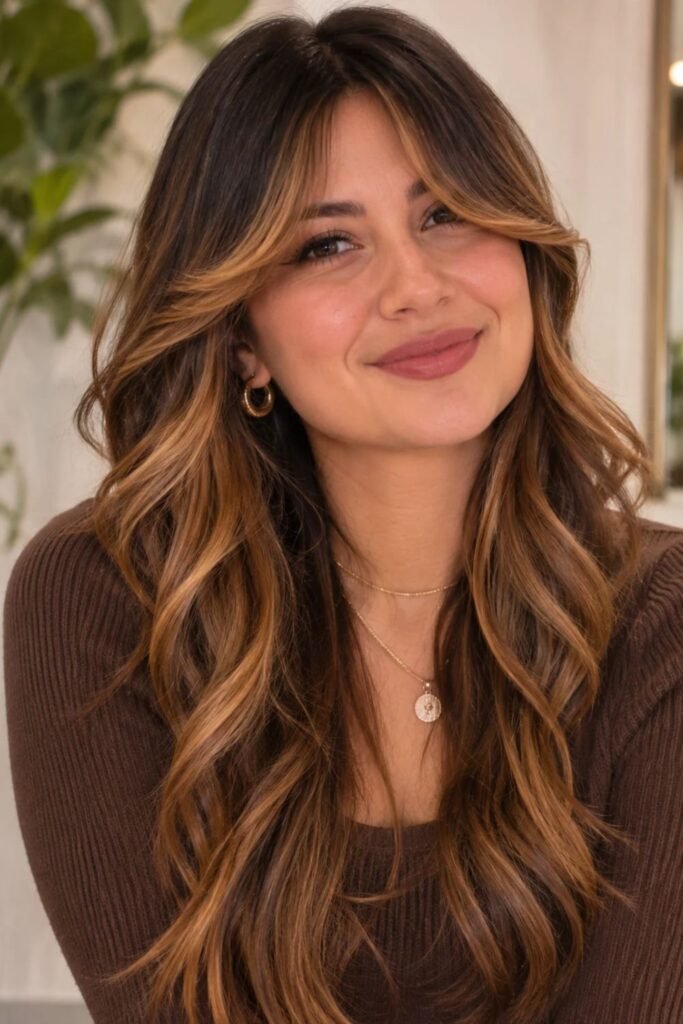
Long Hair with Curtain Bangs and Caramel Highlights
Curtain bangs with caramel highlights placed specifically in the bang section and face-framing layers brighten the front of the face and make the bang more visible in photographs. The highlights catch light through the part of the hair closest to the face, which is exactly where curtain bangs sit. Caramel highlights on brown hair covers placement, tone, and maintenance in detail: for curtain bangs specifically, ask your colorist to concentrate lighter pieces in the bang section and the first two inches of face-framing layer on each side.
Keep the rest of the hair slightly deeper than the bang section so the highlights frame the face rather than distributing evenly throughout. A toning gloss every six to eight weeks maintains the warmth of the caramel tone between full color appointments.
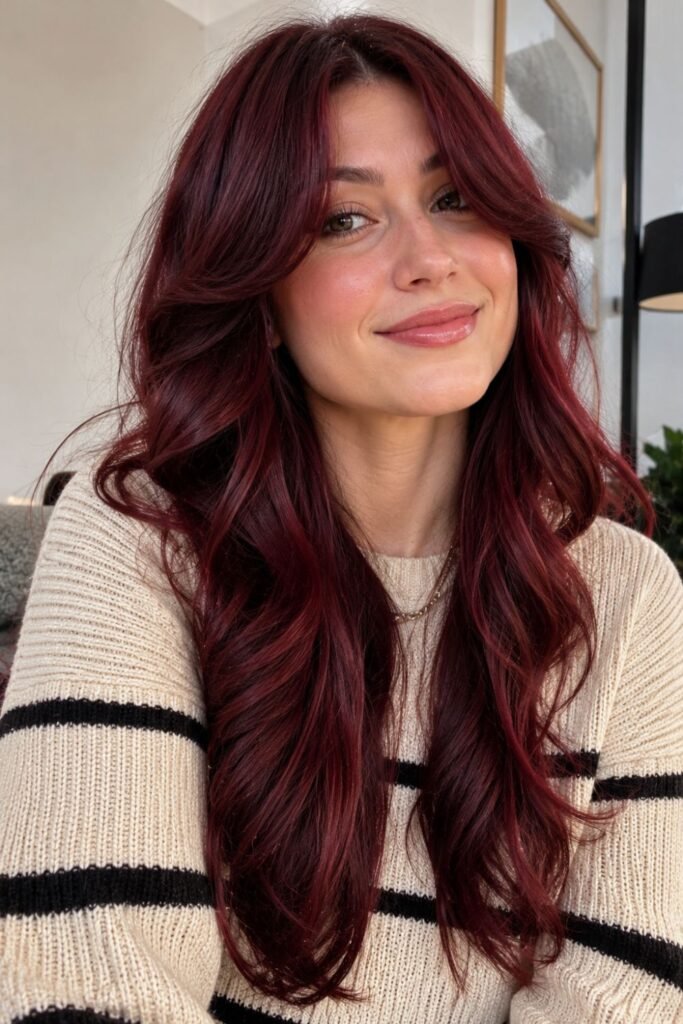
Long Hair with Curtain Bangs and Dark Cherry Red
A dark cherry red color applied through long hair with curtain bangs creates a rich, dimensional look where the bang section catches light differently than the lengths below. The depth of the cherry shade makes the face-framing quality of curtain bangs more visible because there is enough contrast between the lit and shadowed areas of the bang to give it dimension in photographs.
Cherry red fades faster than natural shades, so a color-preserving shampoo used cold or at a low temperature significantly extends the life between appointments. A color-depositing conditioner in a matching red tone, used once a week, maintains the vibrancy between salon visits without requiring a full color reapplication.
Curtain Bangs on Medium Hair
Lob with Curtain Bangs
A lob at collarbone length with curtain bangs is one of the most consistently flattering medium-length haircuts because the lob adds width at the jaw and shoulders while the curtain bangs add width at the forehead and cheekbones, creating a balanced silhouette for most face shapes.
The curtain bang on a lob should be blended into the face-framing layers of the cut rather than sitting as a separate section. Ask your stylist to point-cut through the ends of the bang so it has the same soft, wispy quality as the lob ends rather than a blunt finish that looks disconnected from the rest of the cut. This is the detail that most distinguishes a well-executed lob with curtain bangs from a rushed one.
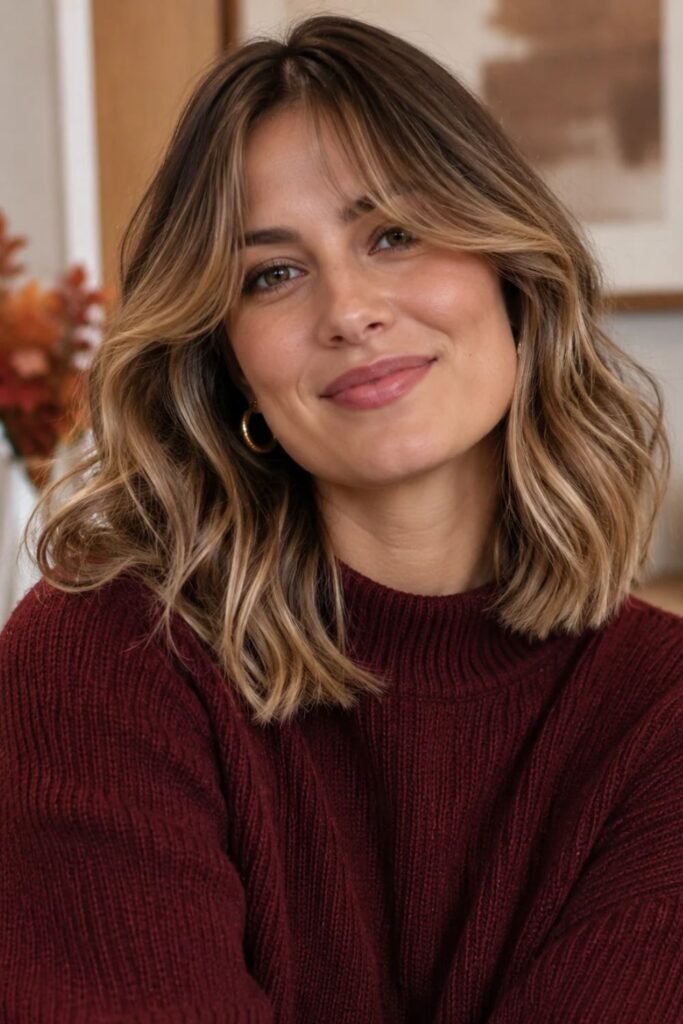
Shoulder-Length Bob with Curtain Bangs
At shoulder length, curtain bangs shorten the perceived length of the face and add horizontal width at the top, which makes this combination well-suited to long and narrow face shapes. The bang sits at roughly nose to lip length and sweeps outward from a center or slightly off-center part.
The shoulder-length bob with curtain bangs works for everyday wear and for occasions. Worn straight and smooth it reads as polished. Worn with a loose wave through the lengths it reads relaxed and textured. To switch between the two, keep a one-inch flat iron on hand: flick the ends outward for a sleek finish, or twist one-inch sections around the plate for bends. Trim every six to eight weeks so the bob keeps a crisp line at the shoulder.
Medium Shag with Curtain Bangs
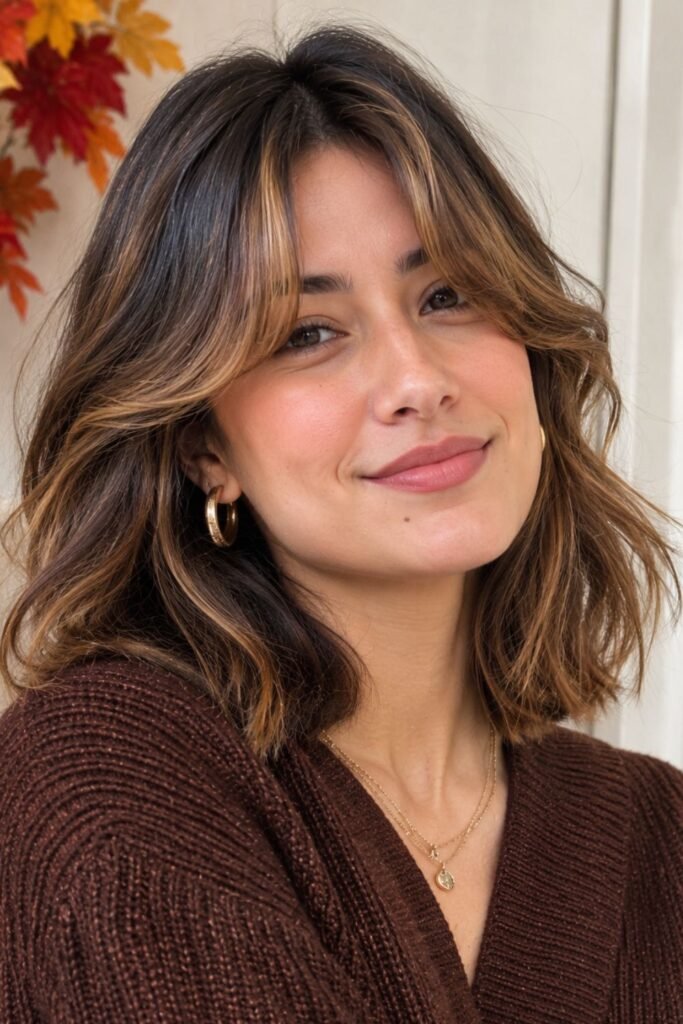
Curtain bangs on a medium shag cut are built into the structure of the style rather than added as a separate element. The crown layers of the shag and the curtain bangs share the same length and blend seamlessly, so there is no clear division between where the bang ends and the face-framing layers begin.
This version produces the most low-maintenance curtain bang because the shag layering gives the bang section natural texture and movement that requires no daily styling on wavy or lightly textured hair. On straight hair, a small amount of texturizing spray through the bang section and a finger-separation of the center part is all it takes each morning.
Curtain Bangs on Natural or Textured Hair
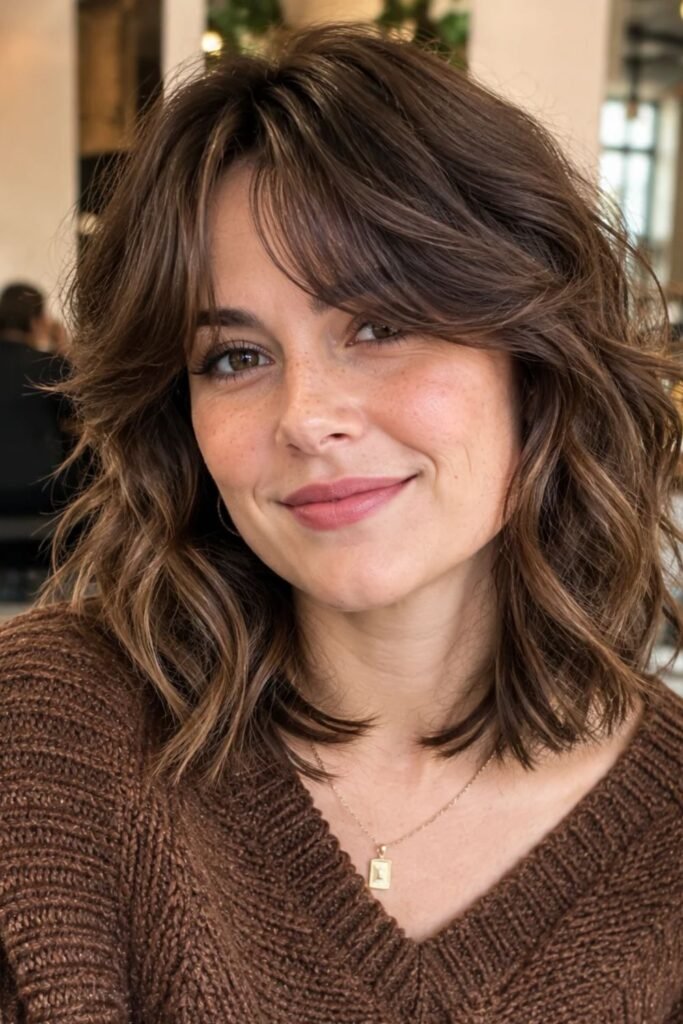
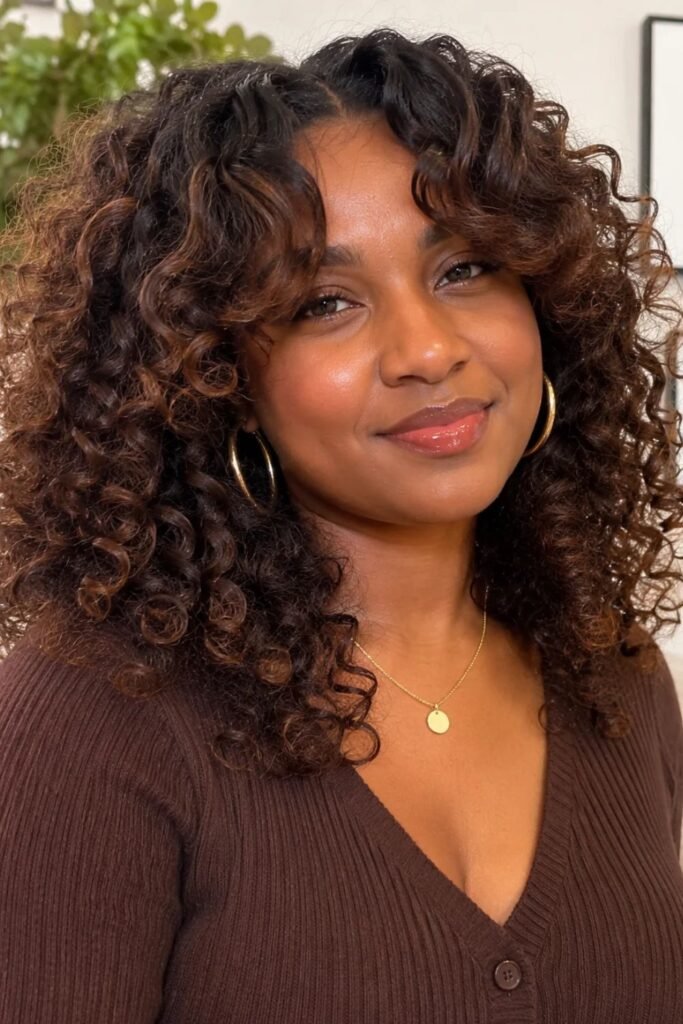
Curtain bangs on natural and textured hair need to be cut on dry, fully styled hair rather than on wet hair, because the curl and coil pattern determines where the bang actually sits once dry. Bangs cut on wet textured hair almost always come out shorter than intended due to shrinkage. A stylist experienced with natural hair will trim the bangs dry and in their natural state. Winter hairstyles for Black women include curtain bang variations on natural and textured hair alongside other face-framing styles suited to a range of natural hair types.
Style curtain bangs on natural hair by applying a defining cream through the bang section, separating it down the center, and encouraging each side outward with the fingers while diffusing. The result is a soft, defined sweep that suits the texture rather than fighting it. Avoid flat-ironing curtain bangs on natural hair for daily wear, which creates heat damage on the most delicate, frequently styled section of the hair.
Curtain Bangs on Short Hair
Curtain Bangs on a Short Bob
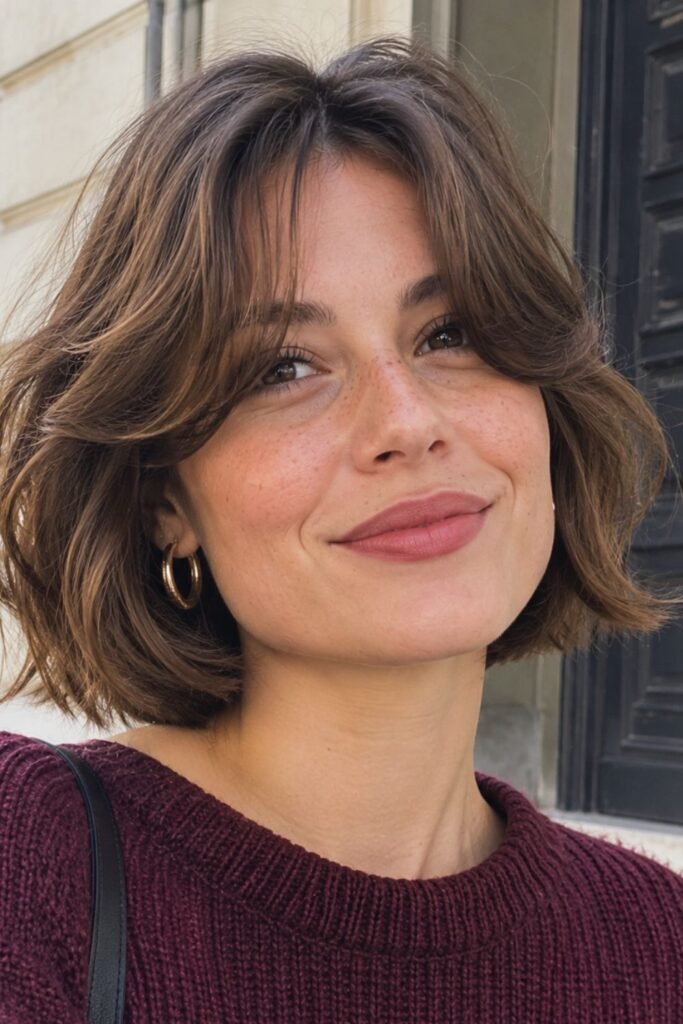
Curtain bangs on a chin-length or shorter bob create a French-girl aesthetic that reads as deliberately considered without being fussy. The bang sits slightly longer than the bob length at the sides, sweeping outward and downward to meet the jaw-length layers below.
At this length, the curtain bang needs to be trimmed more frequently than on longer hair because the growth is more visible in a shorter cut. Every four to five weeks maintains the shape. A small round brush and a blow-dryer handle the styling each morning in under two minutes on a short bob with curtain bangs.
Curtain Bangs on a Pixie Cut
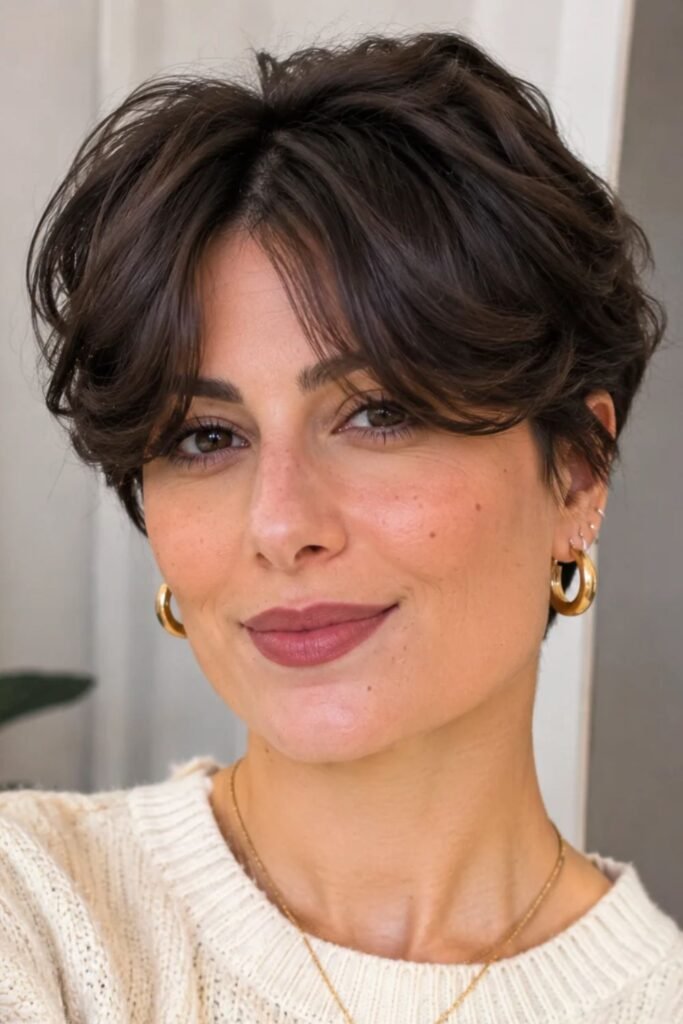
Curtain bangs on a pixie cut are shorter than on any other length, sitting between the eyebrows and the nose tip and sweeping outward to frame the upper face. They add softness to a pixie that a standard straight fringe or bare forehead does not, without requiring the commitment of a full fringe.
Styling a pixie with curtain bangs takes under sixty seconds: apply a small amount of pomade or wax through the bang section, separate the center with a fingernail, and direct each side outward and slightly downward. The bang stays in place through the day without additional product. A light-hold spray can be added for humidity or wind.
Styled and Occasion Curtain Bangs
Curtain Bangs Pinned Back for an Occasion
One of the practical advantages of curtain bangs over a full fringe is that they can be pinned back cleanly for occasions where you want the forehead fully open. Two small bobby pins placed behind each side of the bang, hidden beneath the top layer of hair, give a clean, face-open look that reads as deliberate rather than pinned out of the way. Long hair updos and half-up styles show how curtain bangs integrate into pinned and updo styles at various lengths, which is worth reviewing before any occasion where you want the bangs to work with the style rather than simply out of sight.
For a more intentional pinned-back look, use small pearl or rhinestone pins placed visibly on one side rather than hiding the pins. The decorative pin becomes part of the style rather than a workaround. This reads particularly well at weddings, dinners, and formal events.
Curtain Bangs Styled with Waves for an Evening Look
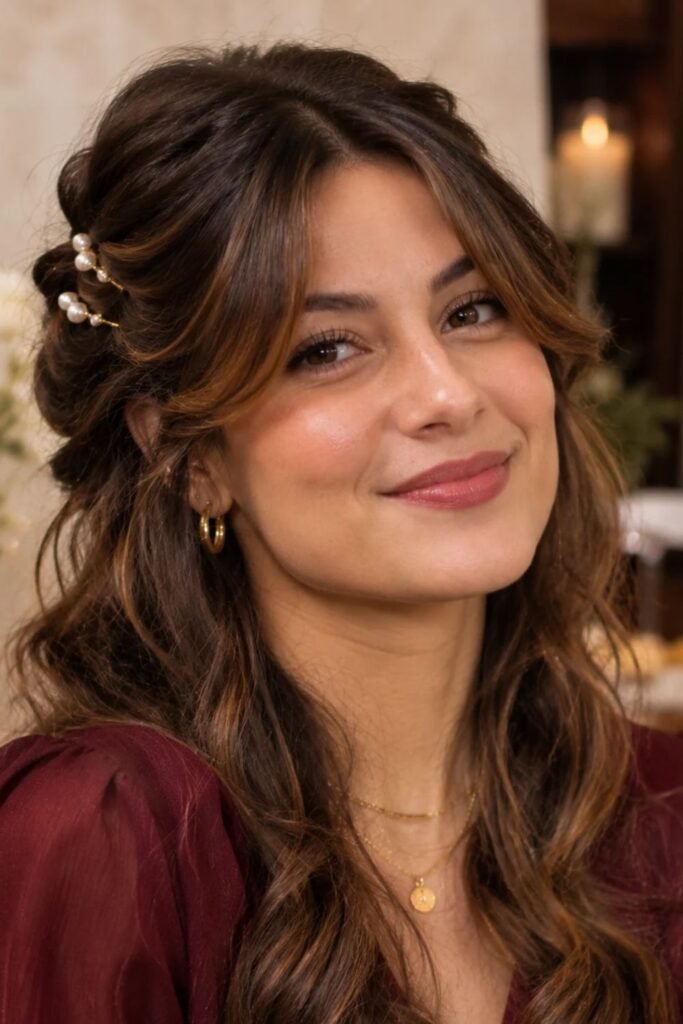
Curtain bangs styled with a small-barrel iron create a defined outward wave through the bang section. Paired with loose waves through the lengths, they become a deliberate part of an evening look. The waved bang sits higher and fuller than a flat-dried bang and photographs with more definition, which helps under low restaurant or event lighting.
Wrap each side of the bang around a three-quarter-inch barrel, directing the curl outward and slightly upward, and hold for five seconds. Release and allow to cool fully before touching. The wave should curve away from the face, opening the forehead, not toward it. A light-hold spray sets the wave once cooled.
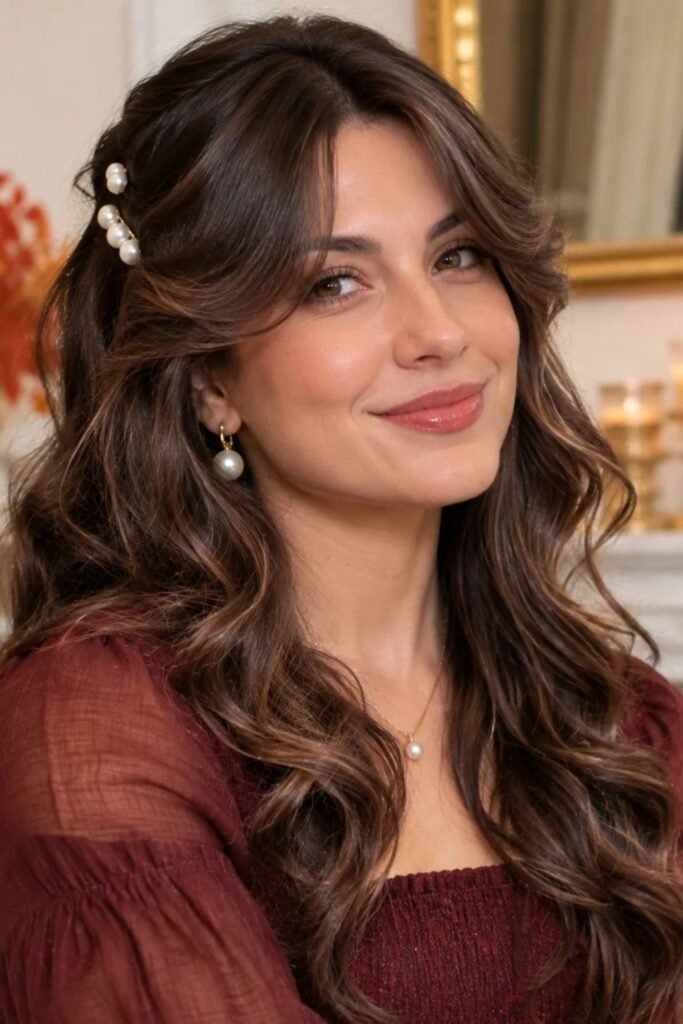
Curtain Bangs with a Half-Up Style
Curtain bangs work well in a half-up style because they stay loose at the front while the rest of the hair is gathered at the crown. Pull the top section back from temple to temple and secure it with a claw clip, a velvet bow or a small elastic hidden under a twisted strand. Leave the curtain bangs completely free to frame the face. With everything else pulled away, the bangs become the focal point of the look.
This is the quickest way to take curtain bangs from daytime to evening. The half-up itself takes thirty seconds, so spend the extra minute on the bangs: re-dry them over a round brush and finish with a flexible-hold spray. For more volume at the crown, backcomb the section lightly before clipping it. Our Thanksgiving hairstyles for women include more half-up shapes that pair well with a fringe.
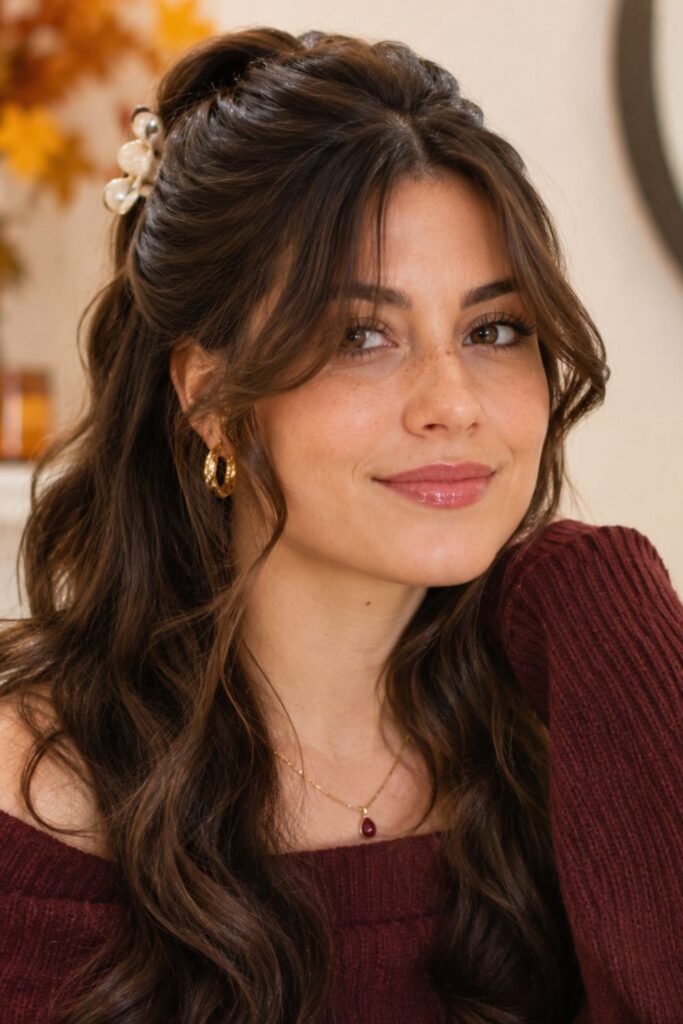
Curtain Bangs Grown Out as Face-Framing Layers
Curtain bangs grow out more gracefully than any other bang style because the length and sweep direction transition naturally into face-framing layers. After roughly three to four months, the bangs become the front layers of the haircut and the forehead is gradually revealed as they lengthen. Soft, lengthening bangs like these suit a relaxed, feminine wardrobe and look best with loose waves through the rest of the hair.
There is no awkward grow-out phase with curtain bangs the way there is with a blunt fringe. Each week of growth just adds a bit more length to the sweep. The only maintenance decision is whether to trim them back to bang length or let them continue into layers. Either direction is valid and neither requires a specific appointment to manage.
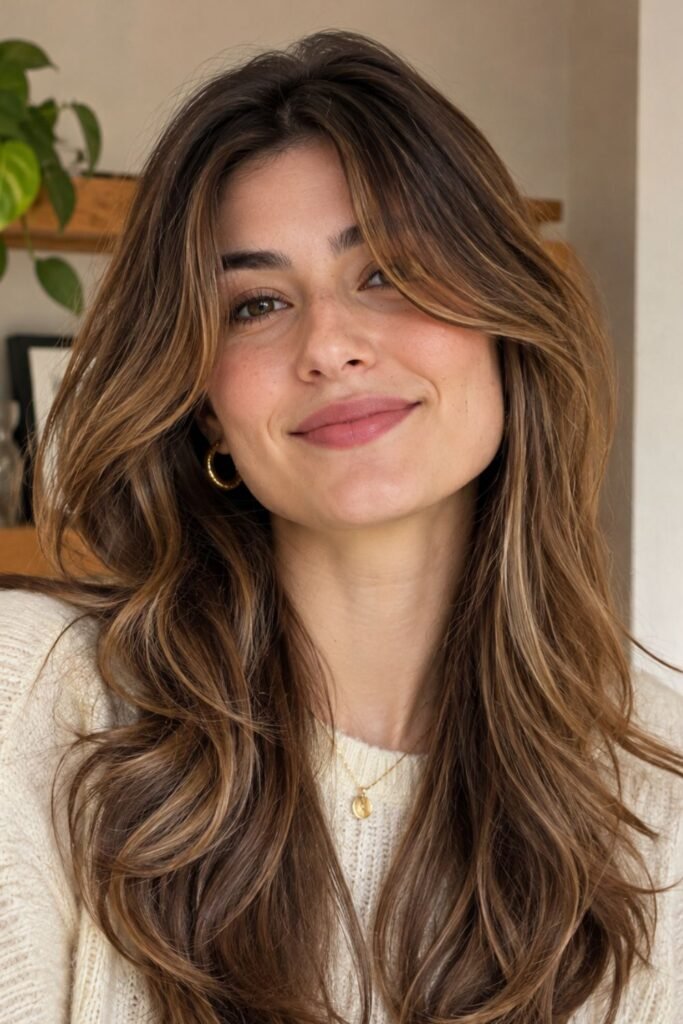
How to Ask for Curtain Bangs
Specify the Length You Want
Curtain bangs can sit anywhere from the eyebrow to the lip, and each length reads differently. Eyebrow-length bangs cover more of the forehead and suit women who want a stronger framing effect. Nose-length bangs are the most versatile and are the easiest to style. Lip-length bangs are the longest and most grown-out-looking, blending quickly into face-framing layers. Bring a reference photo showing exactly where the bang length sits on the face.
Ask for Point-Cut Ends
The soft, wispy finish of curtain bangs comes from point-cutting through the ends rather than cutting straight across. A blunt-cut curtain bang looks heavier and sits differently than a point-cut one. Ask your stylist specifically to point-cut the ends of the bang, even if they do not mention it. This is the single detail that most affects whether curtain bangs look current or dated.
Know Your Trim Frequency Before You Commit
Curtain bangs need trimming every four to six weeks to maintain their shape. On shorter hair the growth is more visible and the trim is needed at the four-week end. On longer hair the bang grows into the face-framing layers more gradually and can go to six weeks. If you know you will not get back to a salon that frequently, ask your stylist to cut the bang slightly longer so you have more time before the growth reads as overgrown.
Frequently Asked Questions
What face shapes do curtain bangs suit?
Curtain bangs suit most face shapes, which is part of why they became so widely popular. Oval and heart face shapes are the most straightforward fit. Long and narrow face shapes benefit from the horizontal width curtain bangs add at the forehead. Round face shapes work best with a slightly off-center part rather than a hard center, which creates vertical line and avoids adding more apparent width. Square face shapes benefit from the softness curtain bangs add to the upper face.
How long do curtain bangs take to grow out?
Curtain bangs grow out gradually into face-framing layers over roughly three to four months, depending on your individual growth rate. Unlike a blunt fringe, there is no single awkward stage because the sweep direction of the bang means each week of growth just adds length to a section that already falls away from the face. Most women either trim them back at four to six weeks or let them continue into layers, both of which are natural progressions.
Can I cut curtain bangs at home?
Yes, with caution. Curtain bangs are among the more forgiving bang styles to trim at home because the soft, wispy finish is easier to achieve than a precise blunt cut. Separate the bang section at the center part, comb each side downward, and use sharp scissors to point-cut upward into the ends rather than cutting straight across. Remove less than you think you need to. You can always take more off; adding length back is not possible.
How do I style curtain bangs in the morning?
On straight hair: wrap each side around a small round brush while blow-drying and direct the airflow outward. On wavy or curly hair: apply a defining cream through the bang section, separate at the center, and direct each side outward with the fingers while diffusing. Either approach takes under three minutes. A light-hold spray or small amount of pomade on the fingertips smoothed along the ends prevents frizz and maintains the sweep through the day.
Do curtain bangs work with glasses?
Yes. Curtain bangs sit above the frames when cut to eyebrow or nose length, so they frame the forehead without competing with the glasses. The outward sweep of the bang draws attention to the eyes, which works with rather than against most frame shapes. Avoid very long curtain bangs at lip length if you wear thick or heavy frames, where the bang length and the frame can visually crowd the mid-face.
Final Thoughts
Curtain bangs hairstyles remain one of the most practical fringe choices because they frame the face without the commitment and daily effort of a blunt fringe, and they grow out gracefully instead of demanding an emergency trim every few weeks. The 15 variations here show how widely they adapt across lengths, textures and color treatments.
Ask for point-cut ends, bring a reference photo showing the exact length you want, and tell your stylist how much time you realistically have for morning styling. Those three things are enough to get a result that works for your actual life.