
A bob is not seventeen different haircuts. It is one shape with five decisions inside it, and once you know what those decisions are, you can adapt any photo you like to your own hair rather than hoping your stylist guesses correctly.
Celebrity stylist Gregory Patterson, who has worked with Meryl Streep and Emma Stone, describes the bob as a timeless, classic shape that “typically sits anywhere from the shoulders to just above the jawline.” He adds that it “can be custom tailored to suit the needs, vibes and textures of many beautiful heads of hair.” That tailoring is the whole game.
The five decisions are length, hemline weight, graduation, fringe, and colour. Below, seventeen bobs organised by which of those choices defines them.
Why the Bob Holds Up After 60
“There’s a reason the bob has never gone out of style: it’s elegant, fresh, polished but never stiff,” says Elliot Bute, stylist at Hershesons Fitzrovia. He notes that for women over 50, a well-executed bob “flatters, uplifts, and simplifies, all while making a confident statement.”
Kamila Pruszek, co-owner of Blue Tit Portobello, makes a practical point about the classic version. It works beautifully without bangs and looks chic with a middle part, which gives you the flexibility to flip your hair from side to side for texture and volume. Tucked behind the ears, she says, it highlights the face and neck.
One piece of advice before you book. Ohio-based hairstylist Dana Bowen recommends doing your research first and bringing reference pictures to the consultation. A photograph plus the vocabulary in this article will get you considerably further than either alone.
Decision One: Length
Nape-Length French Bob
The shortest bob on this list, finishing at the nape with a slightly tousled finish and usually a middle part. Minimal styling by design.
The French bob’s advantage for mature hair is that it removes almost all weight from the ends, which is where fine hair collapses first. Air-dry with a lightweight mousse and tuck a strand behind one ear.
Bear in mind this length exposes the neck entirely. Some women love that; if you would rather not, move down this list.
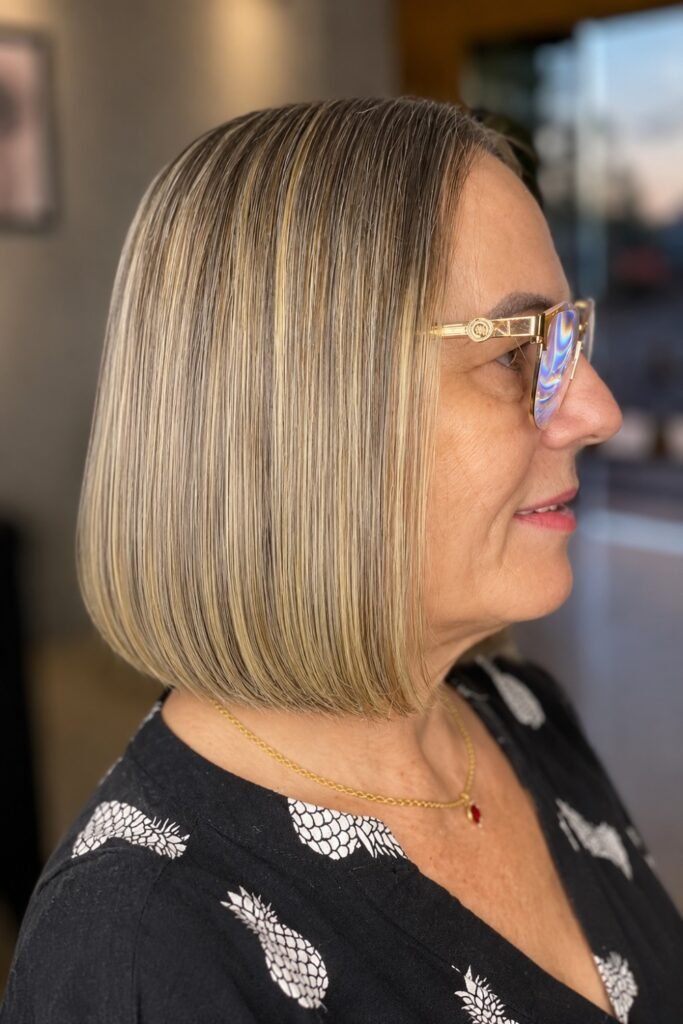
Chin-Length Bob
The reference point. Finishes at the chin, sharpening the jawline and putting a horizontal line right where the face benefits from definition.
This is the most requested bob length across every age group, and for good reason. It is short enough to feel like a change and long enough to tuck, part, or wave.
Because it is such a broad category, we cover it separately and in depth. Our guide to chin-length blunt bob hairstyles breaks down twelve variations of this one length, including which suits each face shape.
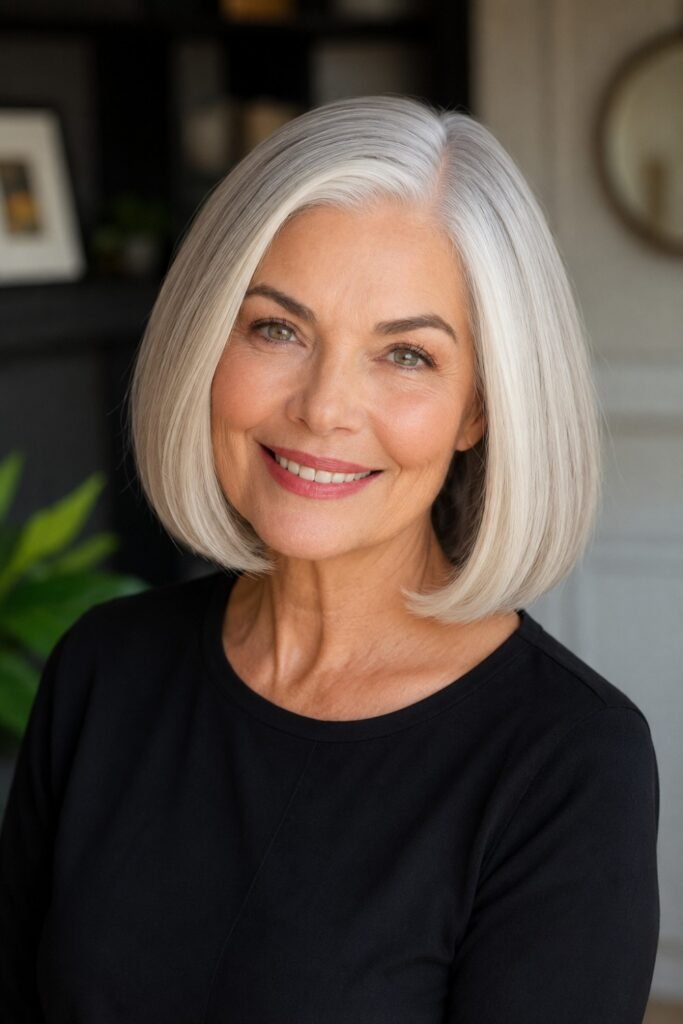
Jaw-Length Bob
A centimetre or two longer than chin-length, sitting at the jaw rather than above it. A small difference with a noticeable effect.
The jaw length is more forgiving than chin-length because it does not draw a hard line across the widest part of the lower face. If you have tried a chin bob and found it emphasised something you would rather it did not, this is the adjustment.
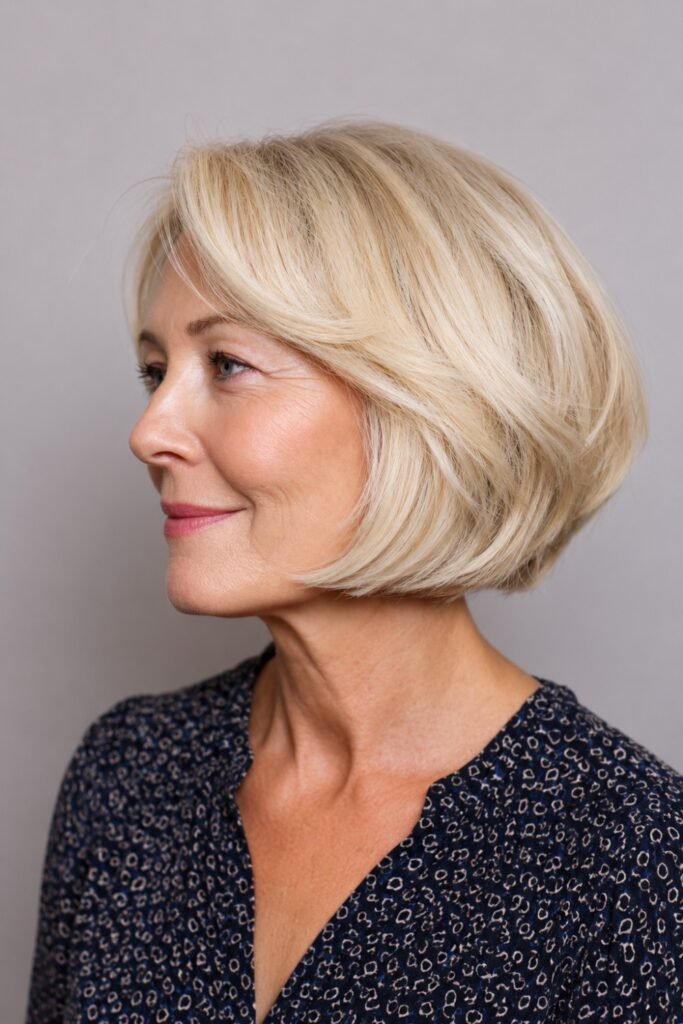
Collarbone Lob
The longest option that still counts as a bob, grazing the collarbone with enough length to pull back if needed.
Worth considering if you are moving from long hair and not ready to commit. It also carries wave and layering better than shorter lengths, since there is more room for the shape to develop.
For anything past this point you are into medium territory, which our medium length layered haircuts selection covers properly.
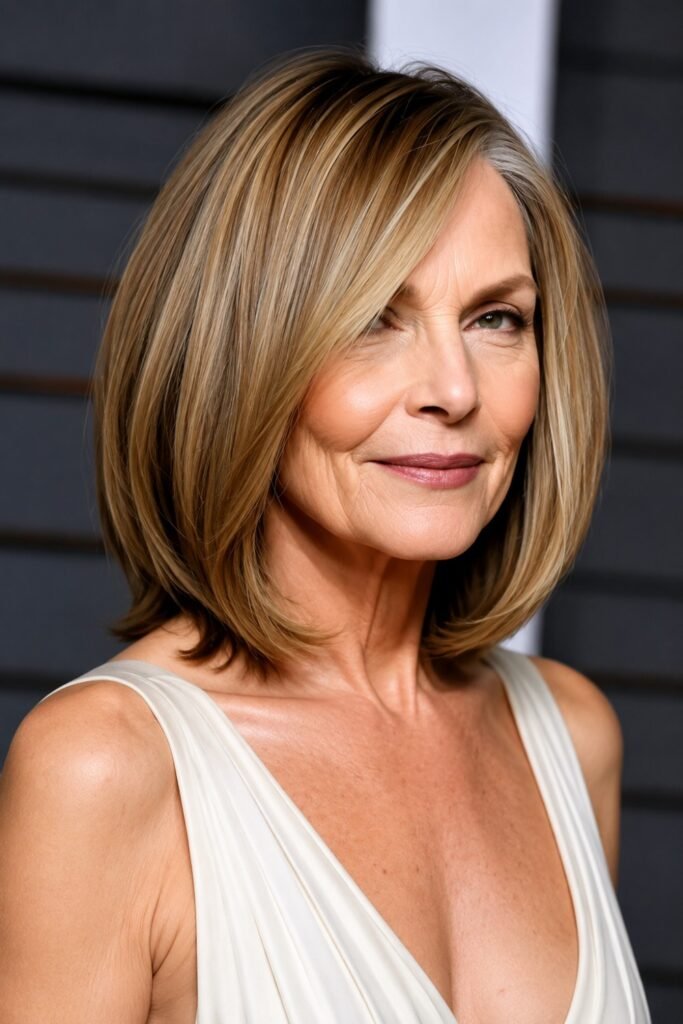
Decision Two: Hemline Weight
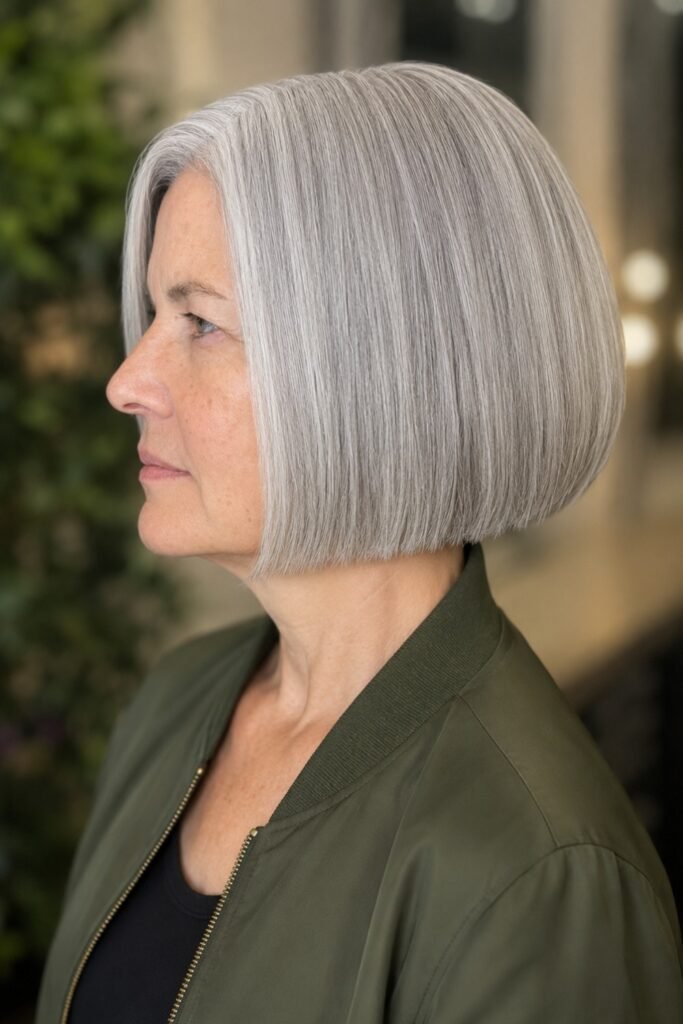
Blunt Heavy Hemline
Cut straight across with all the weight left in the ends. No thinning, no texturising, no feathering.
This is the single most effective structural trick for fine hair. A solid hemline reads as density because the eye interprets a hard edge as thickness. Remove weight from the ends and the same hair immediately looks sparser.
The trade-off is movement. A blunt bob sits rather than swings, which is a matter of taste.
Feathered Soft Hemline
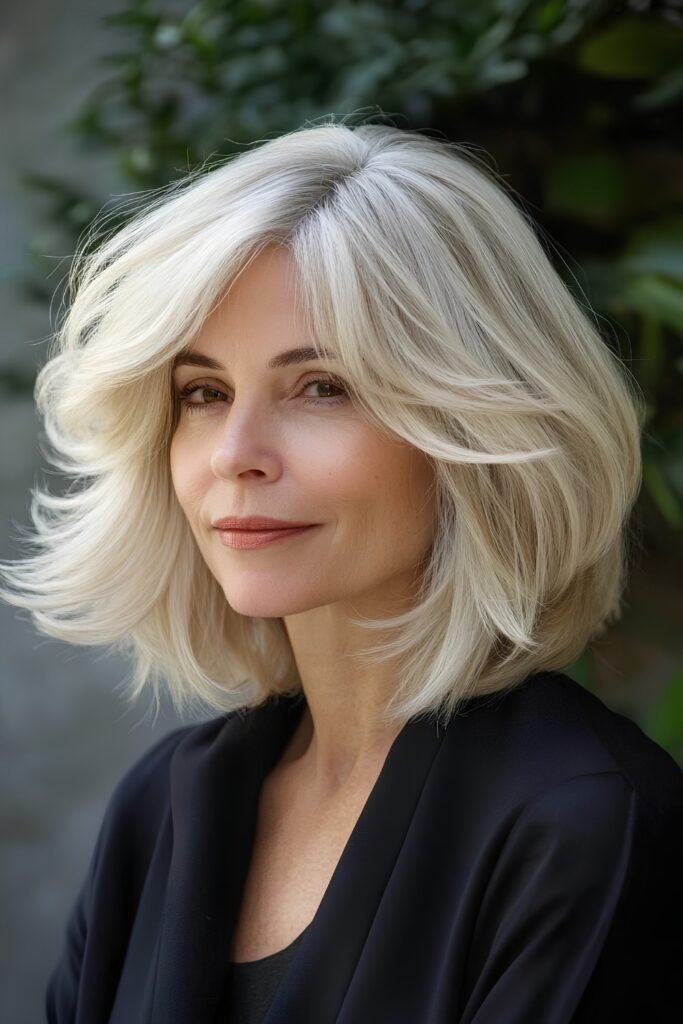
The opposite decision. Ends cut with a feathering technique so they finish soft and wispy rather than solid.
Better suited to thick or coarse hair, where a blunt hemline can turn the whole shape into a triangle. Feathering removes bulk without removing length.
On fine hair, feathering is usually a mistake. It takes away the one thing that was creating the impression of fullness.
Graduated Bob With Stacked Back
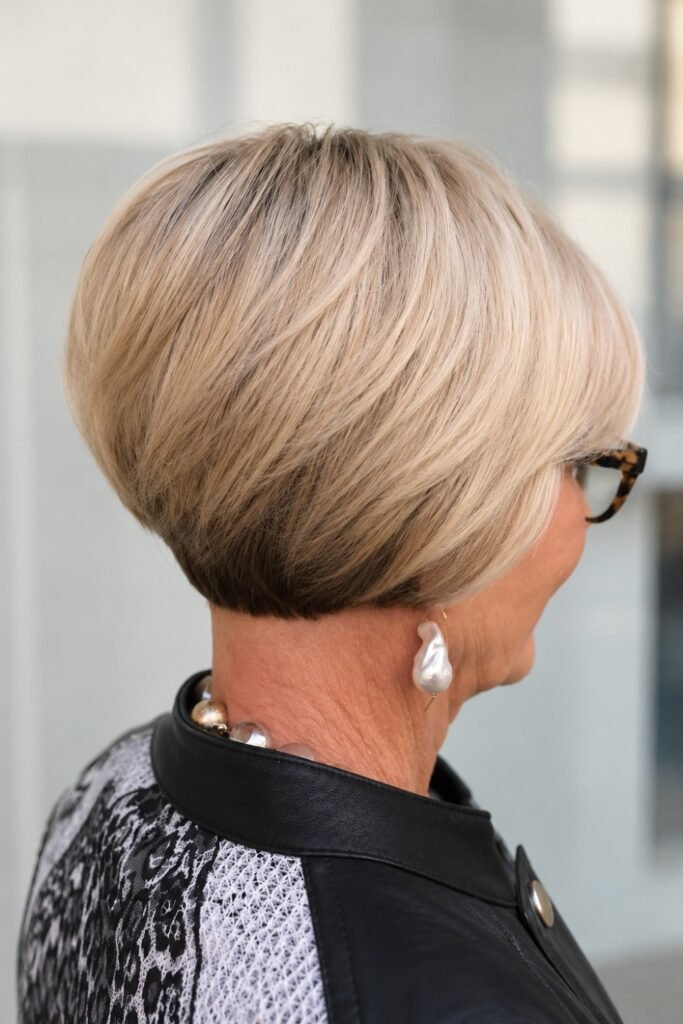
Layers cut progressively shorter toward the nape so the back builds into a rounded, lifted shape while the front stays longer.
The nape is where mature hair most commonly loses density first, and graduation addresses that directly by concentrating what is there into a fuller shape. It is the most structurally clever option on this list.
Requires a round brush at the back to hold the curve. If you want this shape explored properly, our short bob haircuts guide goes further into the graduation angle and how far to take it.
A-Line or Inverted Bob
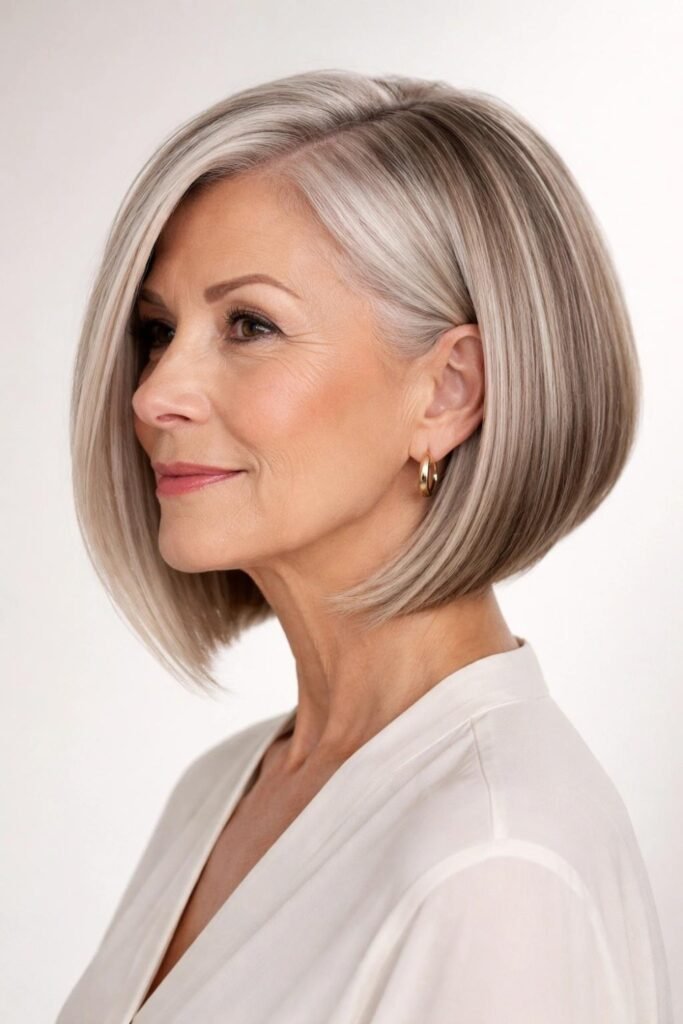
Shorter at the back, longer at the front, with the difference exaggerated enough to read as deliberate.
The forward angle draws the eye down and forward, which lengthens the look of the face and neck. That makes it a useful choice for rounder face shapes.
Expect to blow-dry this one. The angle needs the ends tucked inward to work, and it will not do that on its own.
Decision Three: Texture
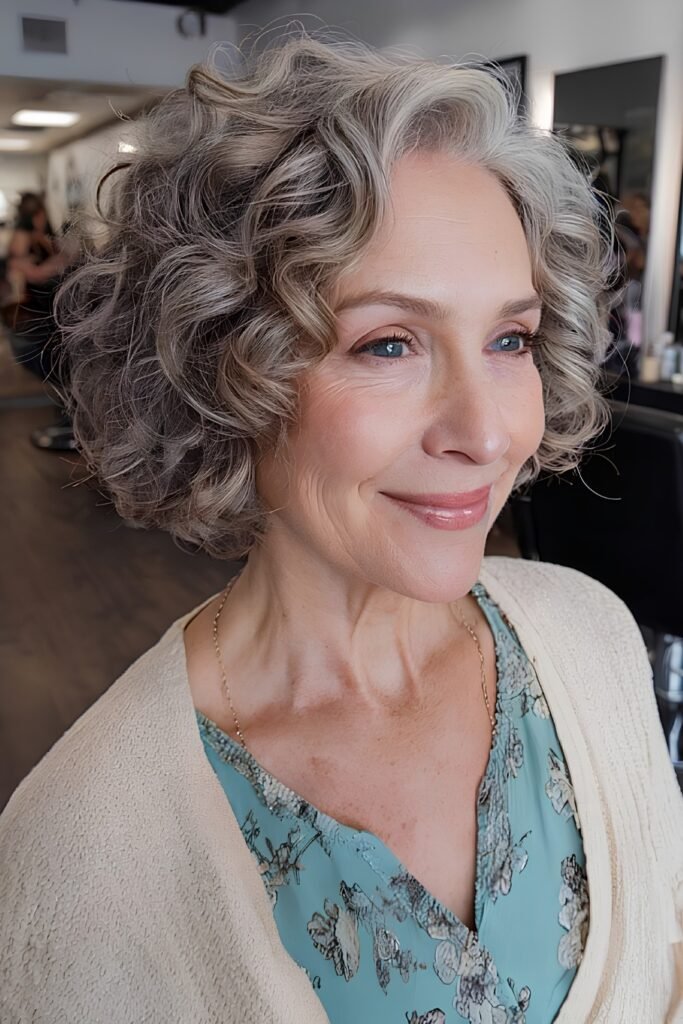
Layered Curly Bob
Cut on dry hair, with layers placed to let each curl form at its natural diameter rather than compress under the weight of the section above it.
Grey curly hair often changes texture as pigment goes, becoming coarser and drier. A bob cut for the hair you had ten years ago will not sit the way you expect. Ask your stylist to cut this one dry.
Curl cream and a diffuser on low. No round brush required, which is the appeal.
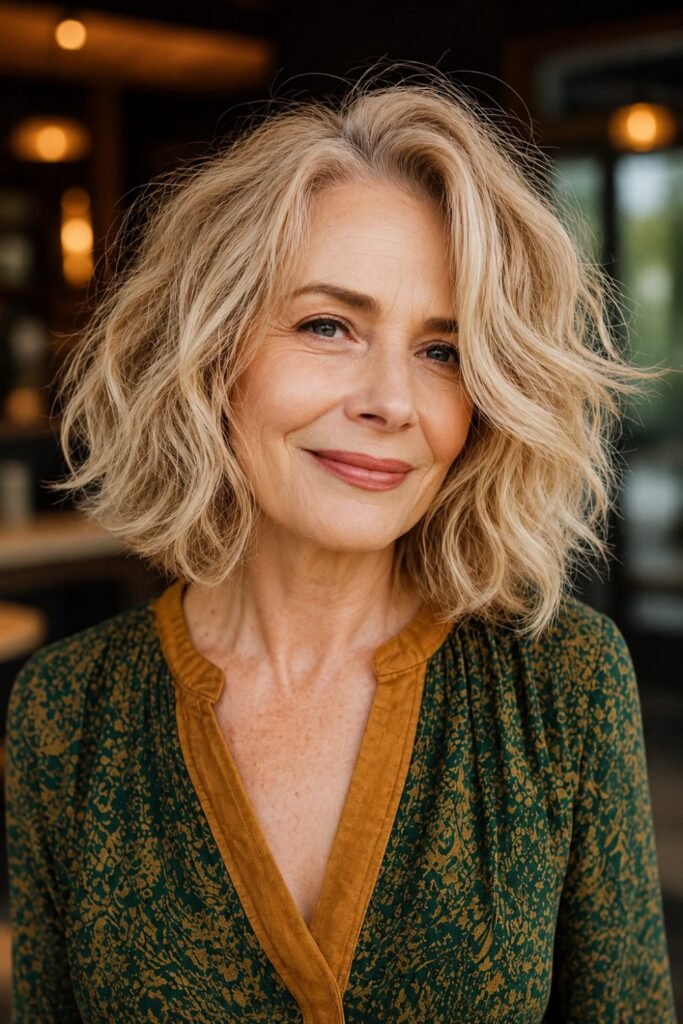
Tousled Wavy Bob
Soft layers cut to encourage natural wave, finished deliberately undone rather than smooth.
The lived-in look is doing real work here. A wave adds apparent volume that a straight bob at the same density cannot, and it hides the flatness at the crown that many women find frustrating.
Suits butter blonde, warm brown, and honey tones particularly well, since the movement shows off tonal variation.
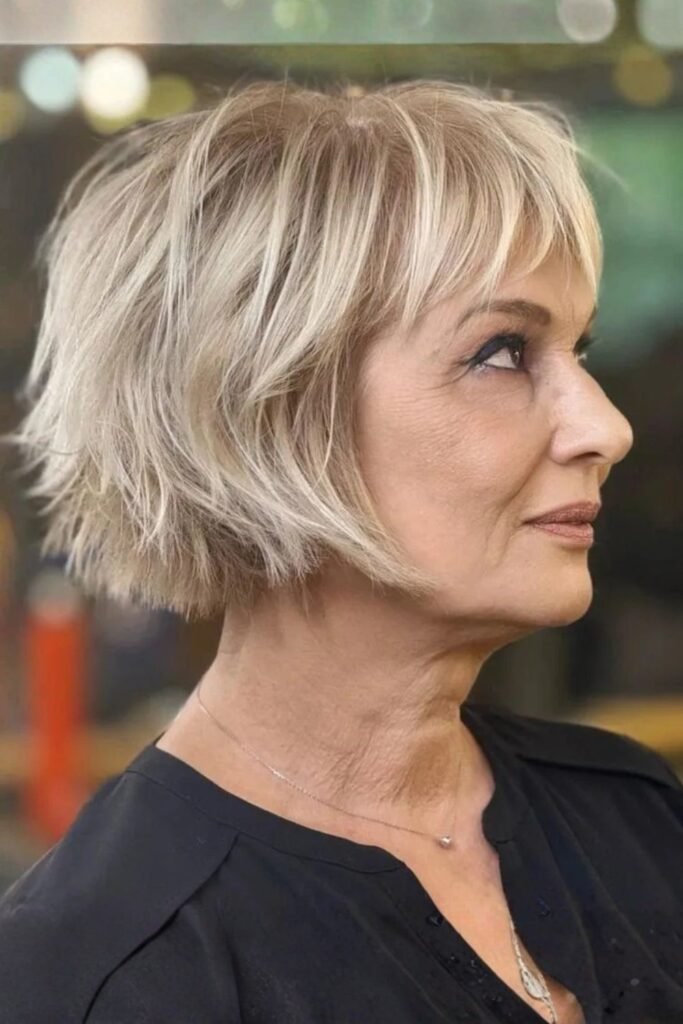
Choppy Textured Bob
Uneven, razor-cut layers with visible separation between sections.
The separation is the point. Gaps between pieces read as fullness, which makes this a good option for hair that has thinned. It also looks intentional rather than tidy, which some women want and others firmly do not.
Lower maintenance than it appears. Mousse, scrunch, and leave it.
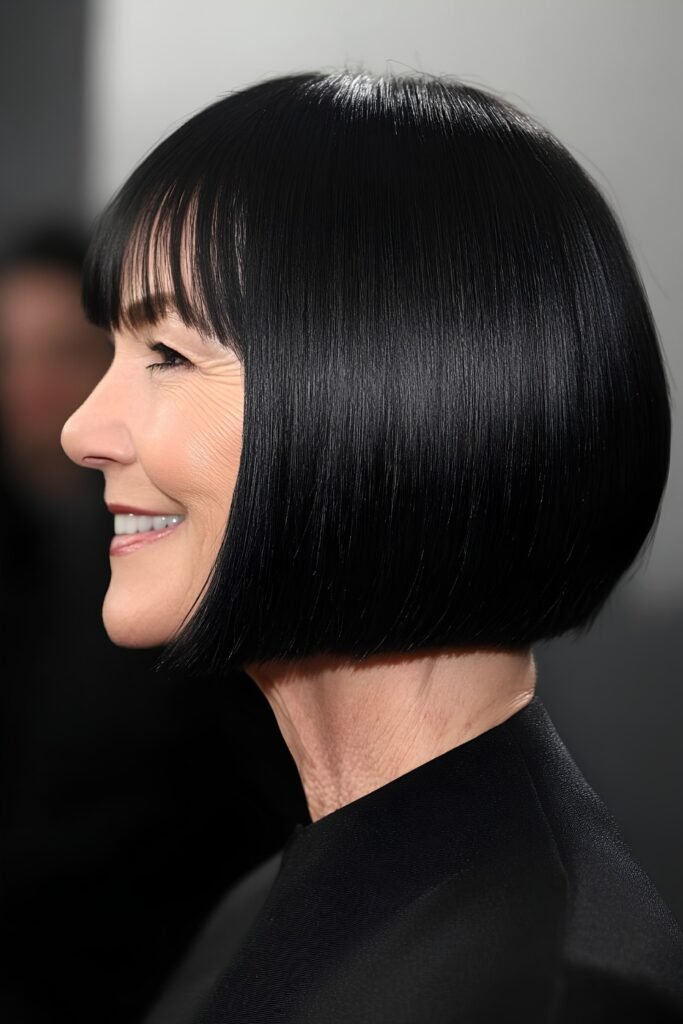
Sleek Smooth Bob
Straightened, glossy, and minimally layered. The most polished option on the list.
Sleek is unforgiving. It shows every uneven end and every dull patch, which means it demands good condition and regular trims. It also demands a flat iron and a shine serum most mornings.
If your hair is naturally straight and in good condition, nothing else here looks quite as expensive.
Decision Four: Fringe
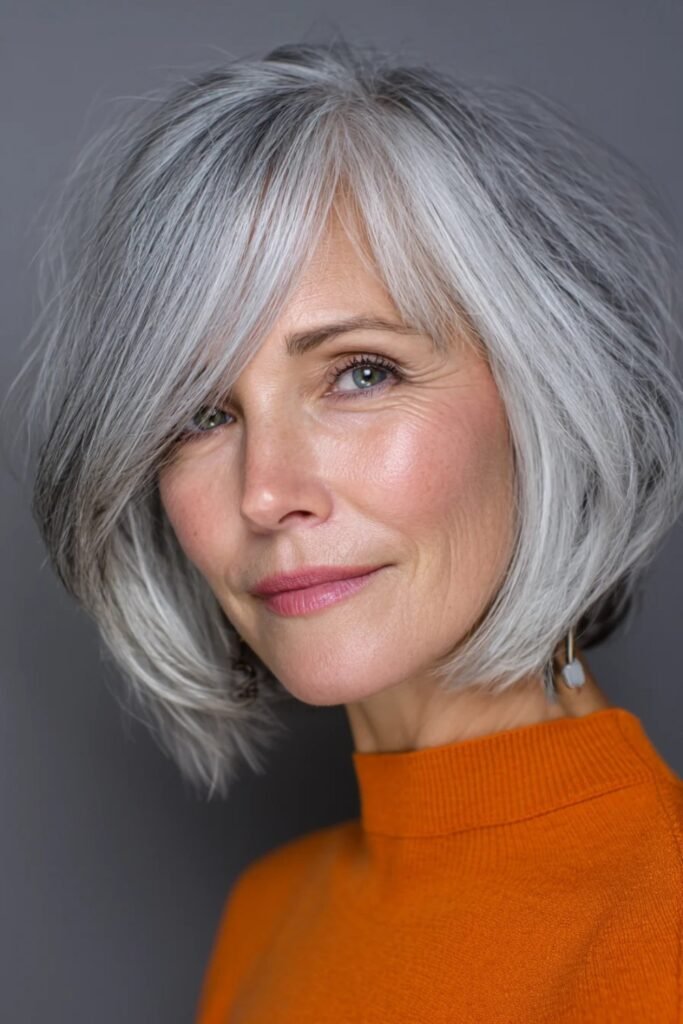
Side-Swept Bangs
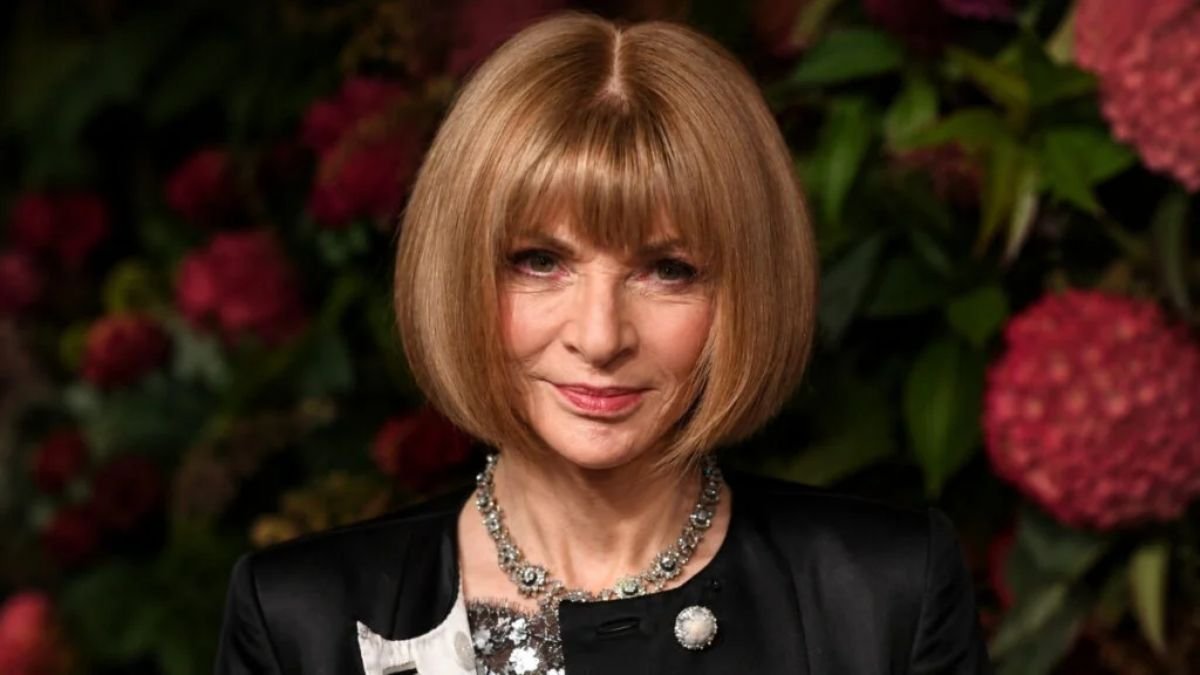
Cut on a diagonal and swept across the forehead. The most forgiving fringe option available.
Side-swept bangs work at almost any length and grow out without a difficult stage, since they simply lengthen into a face-framing piece. They also break up the forehead without the commitment of a straight fringe.
The best side is usually the one your hair naturally parts to. Fighting that creates a daily argument.
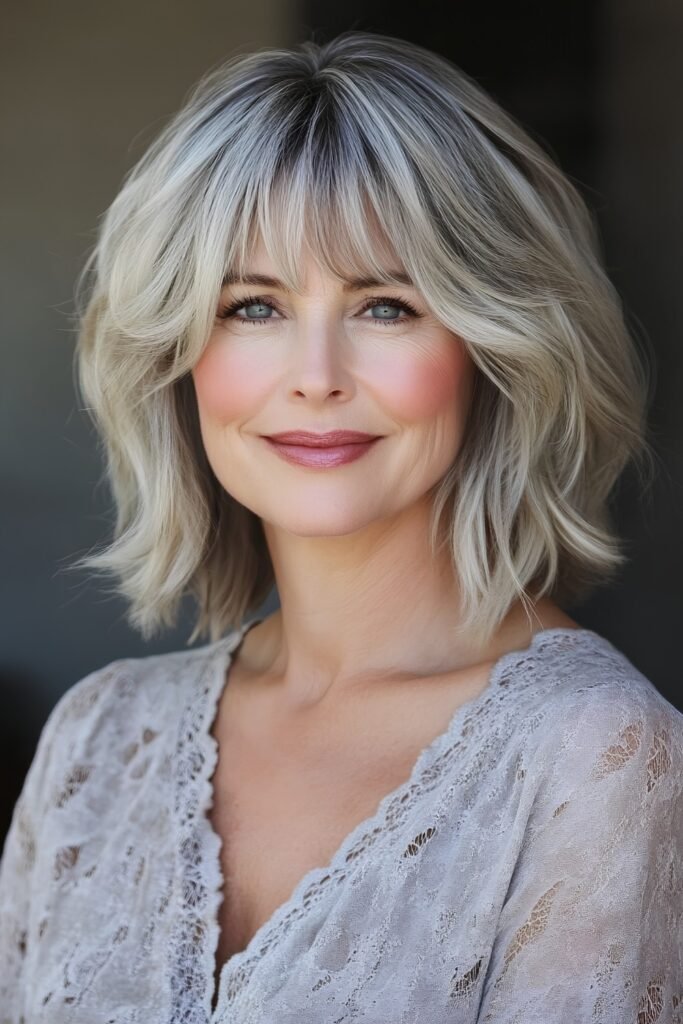
Curtain Fringe
Parted in the centre and falling on both sides, framing the face rather than covering the forehead.
More open than a full fringe and considerably easier to live with. It also suits women who want softness around the face without hiding it.
Needs trimming roughly every six weeks to keep the shape, though it looks acceptable throughout the grow-out.
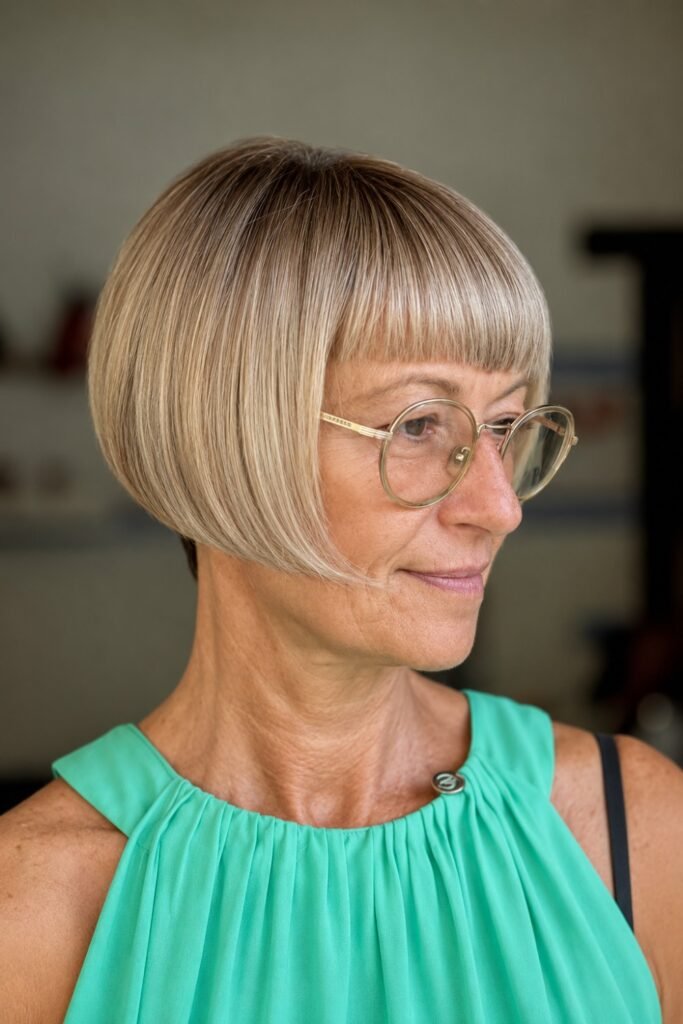
Blunt Bangs
Cut straight across, sitting on or just above the brow. The boldest fringe decision here.
A blunt fringe genuinely does cover the forehead, which some readers specifically want. It also frames the eyes and gives the whole bob a sharper, more deliberate look.
Be realistic about upkeep. Four weeks and a blunt fringe is a different fringe. If you are not going to keep that appointment, choose a side-swept version.
Decision Five: Colour
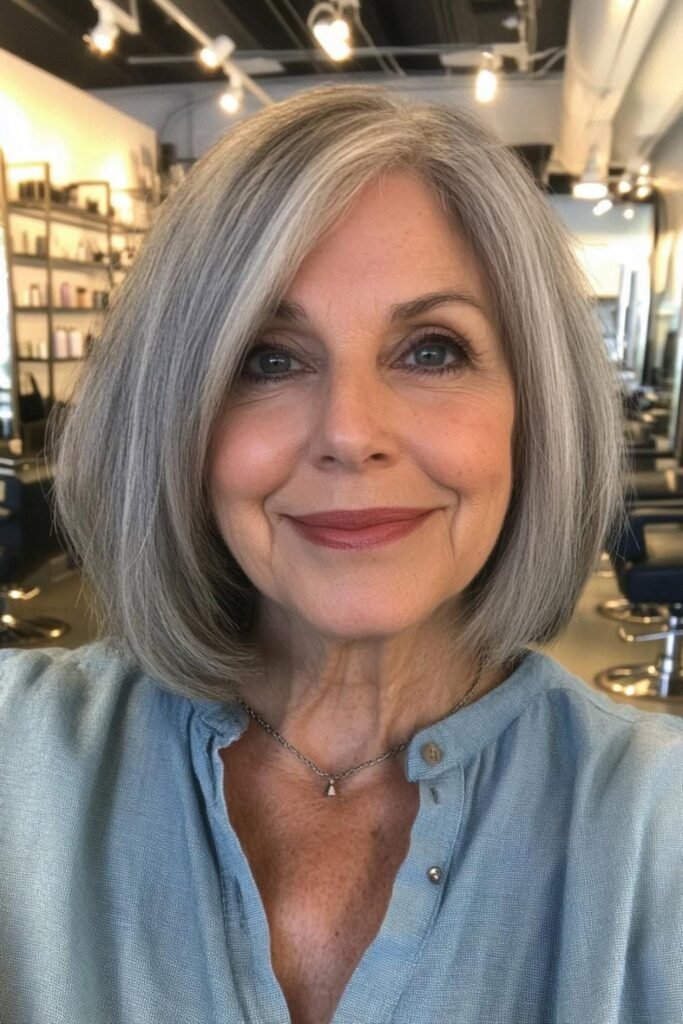
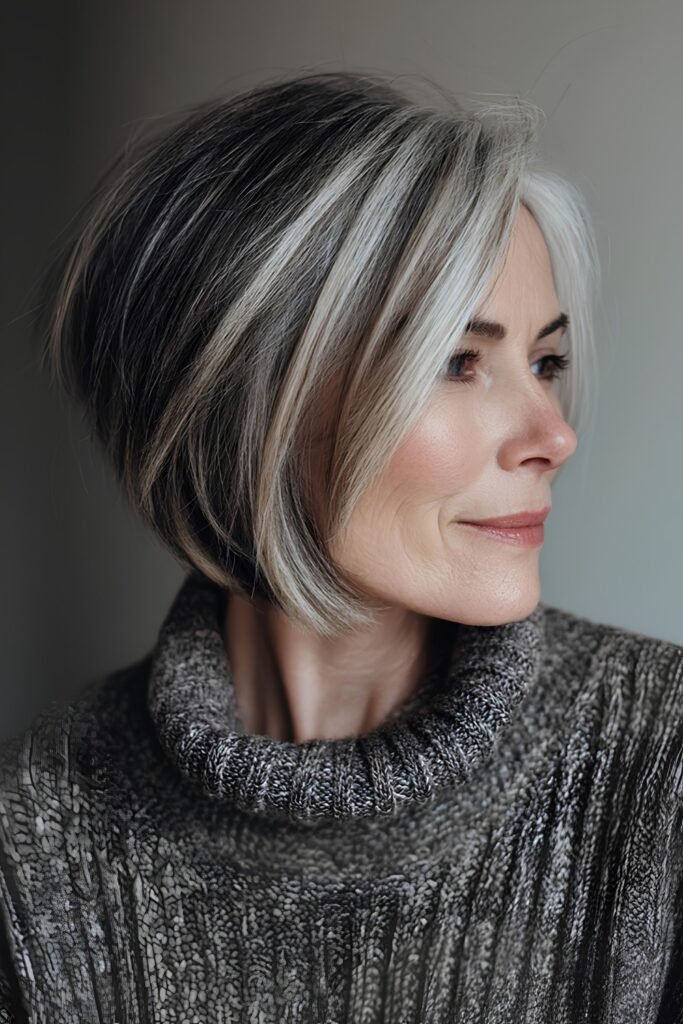
Natural Salt-and-Pepper Bob
Natural grey and darker hair left as it is, worn on a well-cut bob with soft layers.
Salt-and-pepper carries tonal variation that no single-process colour reproduces. The mix of light and dark strands creates depth through the shape without any colour appointment at all.
A clear or pearl gloss every couple of months adds the shine that unpigmented hair loses. That is the only colour work this option needs.
Shadow Root With Balayage
A darker root melting into lighter mid-lengths and ends, with no hard regrowth line to chase.
This is the most practical colour decision on the list. It adds visible depth to hair that has lost pigment, and it stretches the interval between appointments dramatically because there is nothing sharp growing out.
Cool tones sit more convincingly over grey than warm ones. Ash, silver, and soft beige read as intentional; brassy blonde over grey rarely does.
Putting the Decisions Together
Most readers will find their answer in two or three of the five. If your hair is fine, the length matters less than the hemline: keep it blunt and heavy. If your hair is thick or coarse, feathering and graduation will do more for you than any length change.
If you want the lowest possible upkeep, pair a jaw or collarbone length with a side-swept fringe and a shadow root. Nothing in that combination has a hard line to maintain.
If you want maximum polish, a sleek chin-length bob with a blunt hemline is the sharpest look available, at the cost of a flat iron most mornings and a trim every four weeks.
Common Questions
What bob length is most flattering after 60?
There is no single answer, because length interacts with jawline, neck, and density rather than with age. Chin-length sharpens the jaw. Jaw-length is more forgiving if you would rather not draw a line across the widest part of the lower face. Collarbone length suits anyone moving down from longer hair and carries wave better.
Does a bob work on fine or thinning hair?
Yes, and it is one of the better options. The key decision is the hemline: keep it blunt and heavy, since a solid edge reads as density. Graduation at the back also concentrates the hair you have into a fuller shape. Avoid feathered ends, which remove the weight creating the impression of fullness.
How often will I need a trim?
Every four to six weeks for most bobs. Blunt hemlines and blunt fringes are at the shorter end of that range, since both depend on a precise line. Choppy, layered, and wavy versions hold their shape longer because there is no hard edge to lose.
Should I get bangs with a bob?
Only if you will keep the appointments. A blunt fringe changes character within four weeks. Side-swept bangs and curtain fringes are far more forgiving and look acceptable at every stage of growing out, which makes them the sensible default unless you specifically want the forehead covered.
Can I keep my grey with a bob?
Easily, and it often looks better than colouring it. Salt-and-pepper carries natural tonal depth through a layered shape. If the grey looks dull rather than bright, that is usually a shine issue rather than a colour one, and a clear gloss addresses it without any commitment to ongoing colour.
Final Thoughts
The bob has lasted a century because it adapts. Bute is right that it flatters, uplifts, and simplifies — but it only does those things when the version matches the hair.
Work out your length, then your hemline weight, then whether you want a fringe. Take those three answers to your stylist alongside a reference photo, as Dana Bowen suggests. That conversation produces a bob built for your hair rather than a bob that happened to look good on someone else