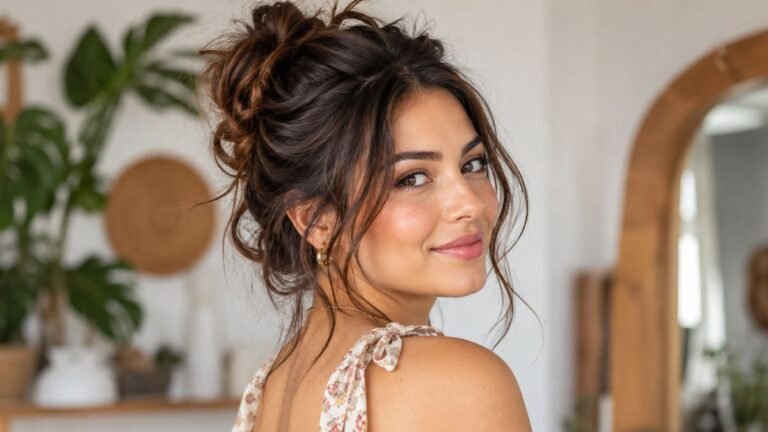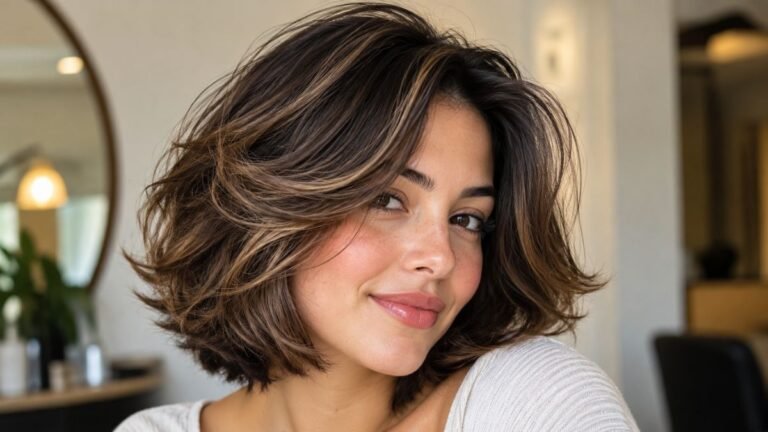

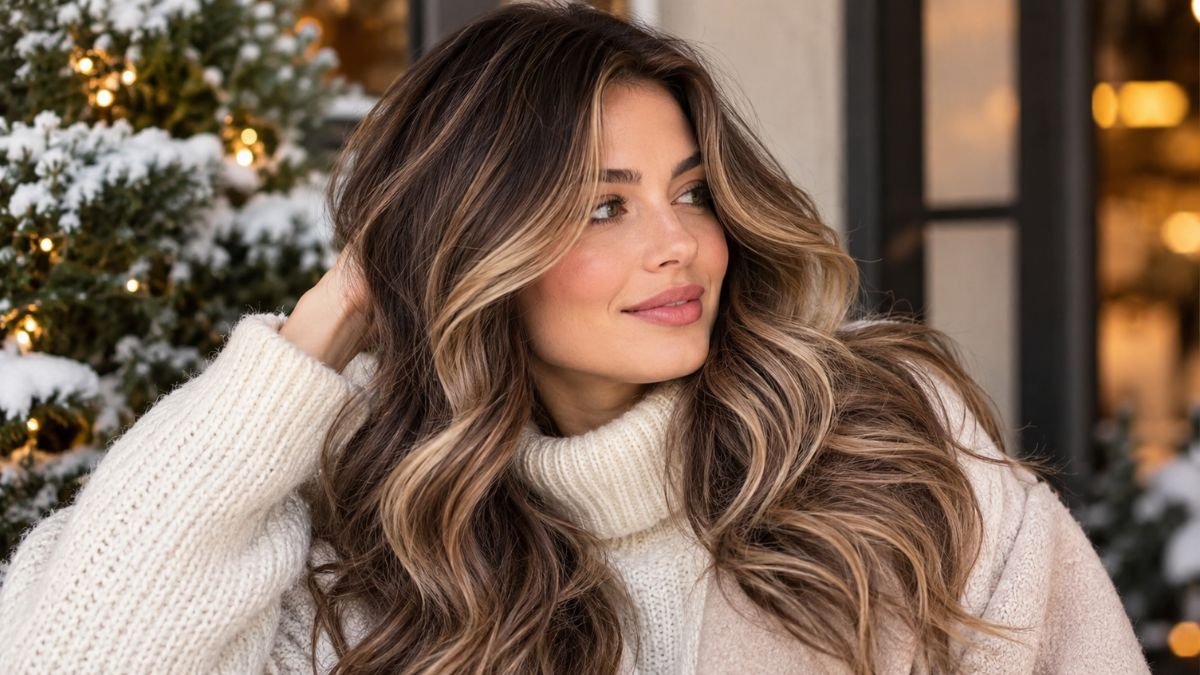
Winter 2026 hair color trends lean toward rich brunette depth, refined beige blondes and soft, deliberate contrast. The most flattering shades rarely rely on one flat color. They use gloss, careful highlight placement and a root that makes sense for your natural starting point.
Woody browns, cocoa, espresso, almond blonde and finely blended beige tones are all strong choices this season, along with deeper reds. The right pick comes down to your current level, the condition of your hair and how much upkeep you can commit to.
Below are 15 shades with the exact language to bring to your salon consultation, plus who each one suits best.
Cashmere Cocoa Brunette
A medium cocoa brown with a subtle beige reflect and low-contrast depth. The result looks soft and expensive in winter light, and it flatters both fair and olive skin. Ask your colorist for a neutral-warm cocoa gloss over an existing medium-brown base, with very fine highlights no more than two levels brighter than your natural color. Because the contrast is so low, regrowth blends easily and the color can go eight to ten weeks between appointments. A color-safe shampoo and a monthly gloss at home keep the cocoa from fading brassy.
Best for: Natural brunettes who want softness without a major lift.
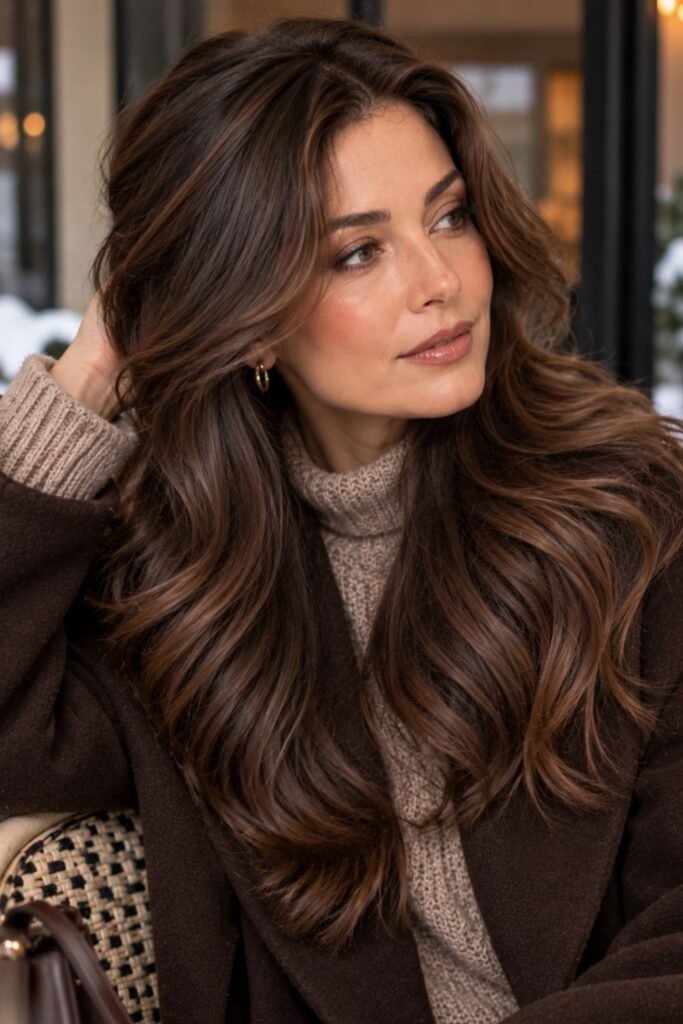
Velvet Espresso
A glossy, deep brown that stays brown instead of reading as flat black. Light catches warm chocolate tones in daylight, while indoors the shade looks dark and polished. Request a deep neutral espresso base with a warm chocolate reflect, or ask for a demi-permanent gloss if your hair is already dark and you only want more richness and shine. Demi formulas fade gradually without a harsh line, which makes this an easy color to live with. A weekly hair mask helps dark shades keep their mirror-like finish through dry winter months.
Best for: Dark brunettes who prefer a subtle change.
Teak Brunette
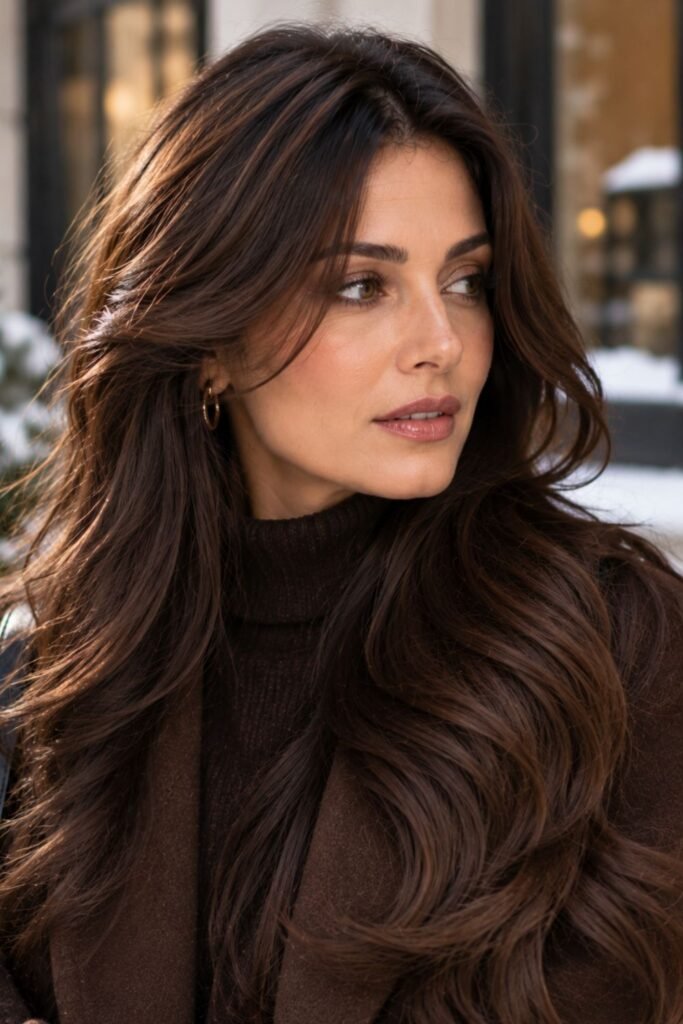
Golden-amber reflections scattered through a woody medium brown give this shade its warmth. It reads natural, as though the hair caught a little late-summer sun and kept the glow into winter. Ask for understated honey balayage kept within two levels of your base, then a warm translucent gloss to tie the tones together. Hand-painted pieces should start a few centimeters from the root so grow-out stays soft. This shade suits warm and neutral skin tones and looks best in loose waves or blowouts that show off the dimension.
Best for: Medium brown hair that needs natural-looking dimension.
Romantic Gothic Brown
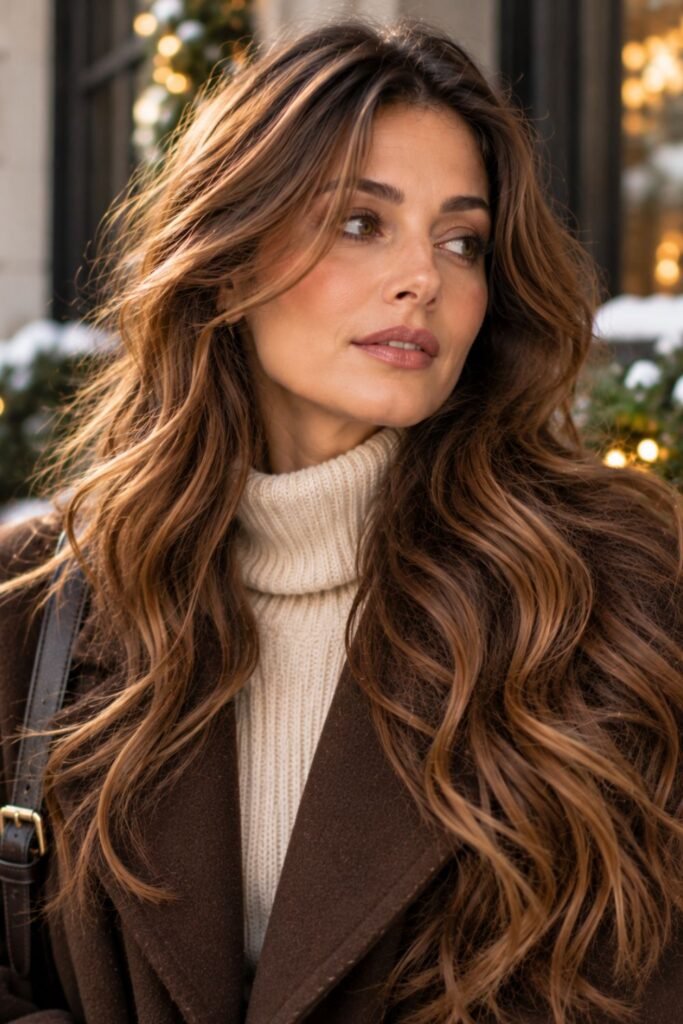
A nearly black brown with a cool, polished surface. It feels moody and dramatic while staying softer on the skin than true blue-black dye. Ask for a rich dark-brown single process and specify that you don’t want blue-black undertones. Check the swatch in daylight before your colorist applies it, because very dark shades can look different under salon lighting. This color is easiest on hair that is already dark, since it needs no lightening. Dark shades can be hard to lift later, so think it through if you plan to go lighter next year.
Best for: Naturally dark hair and low-contrast color changes.
Frosted Hazelnut
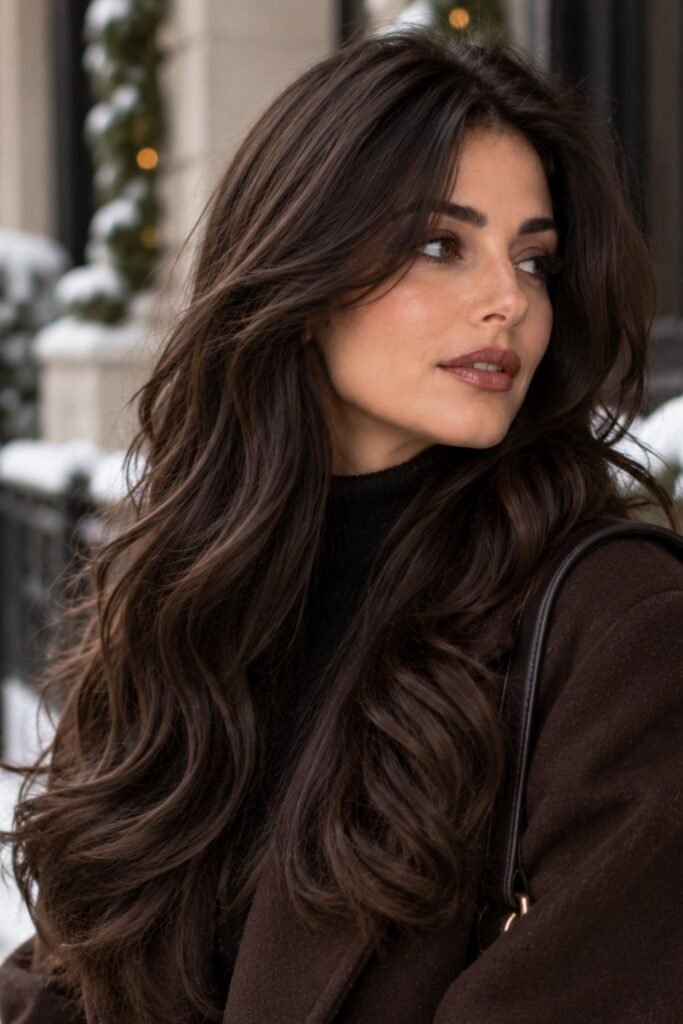
Cool hazelnut ribbons over a brunette foundation add light to dark hair without turning it blonde. The cooler tone looks fresh against winter coats and works well for anyone who finds caramel too warm. Keep the root natural and ask for scattered cool-beige pieces around the face and through the midlengths. A toner is usually needed to keep the ribbons from turning orange as they fade. Blue or purple shampoo once a week helps, but don’t overuse it or the hazelnut can start to look dull.
Best for: Brunettes who want light without becoming blonde.
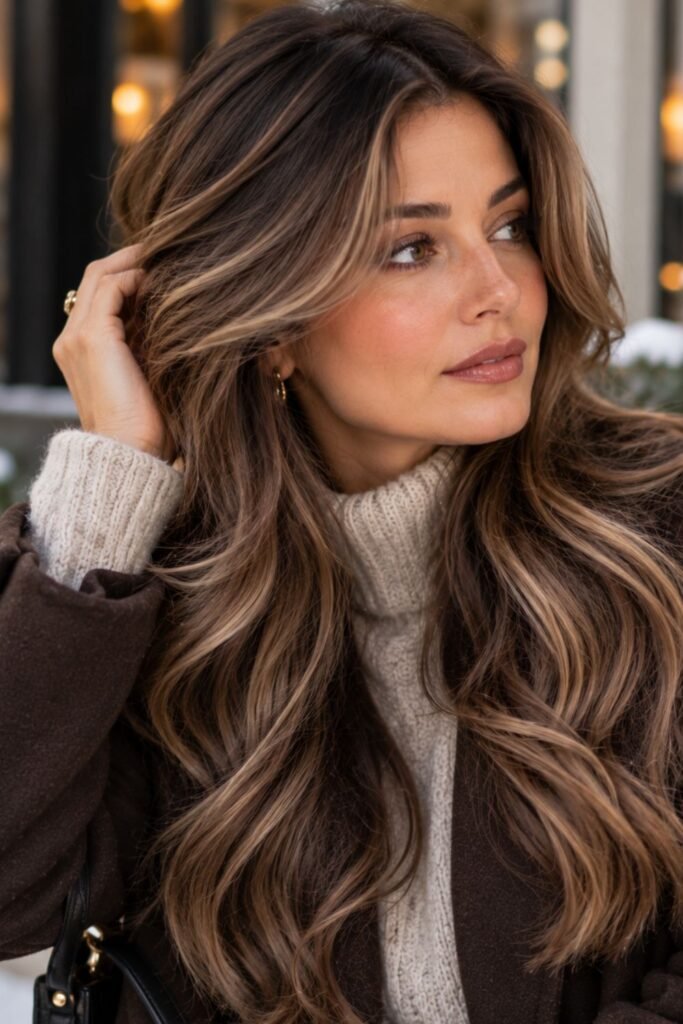
Teddy Brown
A warm, quiet mix of cocoa and caramel that looks cozy and soft. There are no obvious streaks; instead, the caramel tones show up as the hair moves. Ask for soft caramel-brown dimension through the midlengths and ends, with babylights or a gloss instead of chunky foils. Style the hair in loose bends or a bouncy blowout to show the reflect, and long layers like a butterfly haircut show it even better. Teddy brown suits warm and neutral skin tones and fades gracefully toward a lighter caramel.
Best for: Warm or neutral brunette bases.
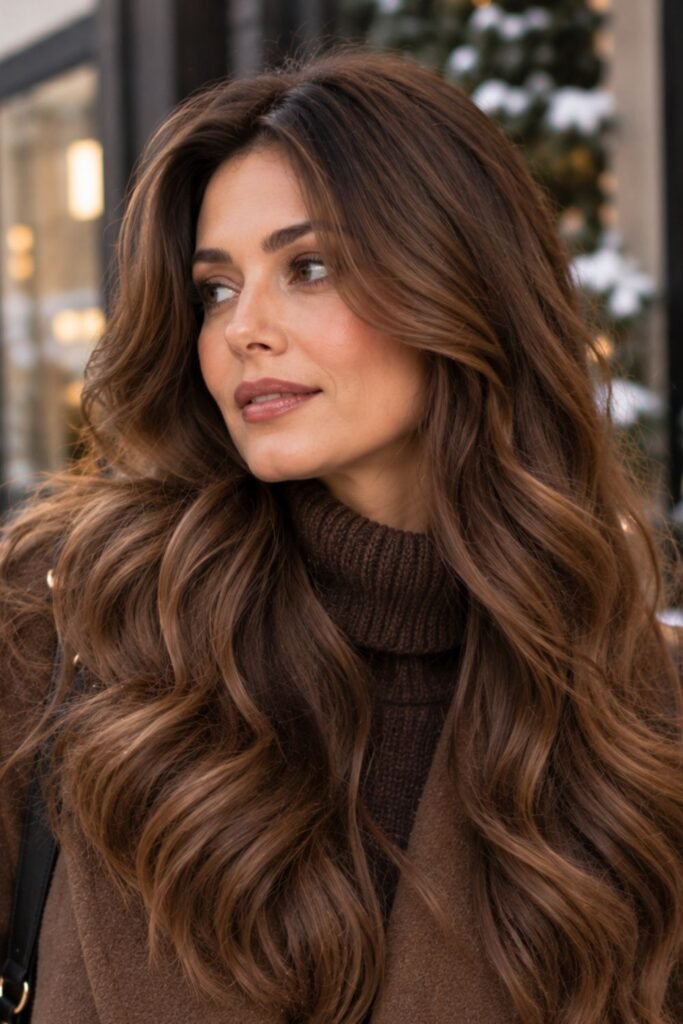
Black Cherry
Dark brown with a discreet burgundy-violet glow that appears mainly in daylight or under bright lights. It gives a visible seasonal change while still looking grown-up and wearable at work. Keep the base deep and ask for a controlled red-violet reflect throughout, avoiding bright cherry panels. Red pigments fade faster than browns, so plan a gloss refresh every four to six weeks and wash with cool water and a color-depositing conditioner in between. Black cherry suits cool and neutral undertones and looks especially rich on straight, glossy hair.
Best for: Brunettes who want a visible seasonal change.
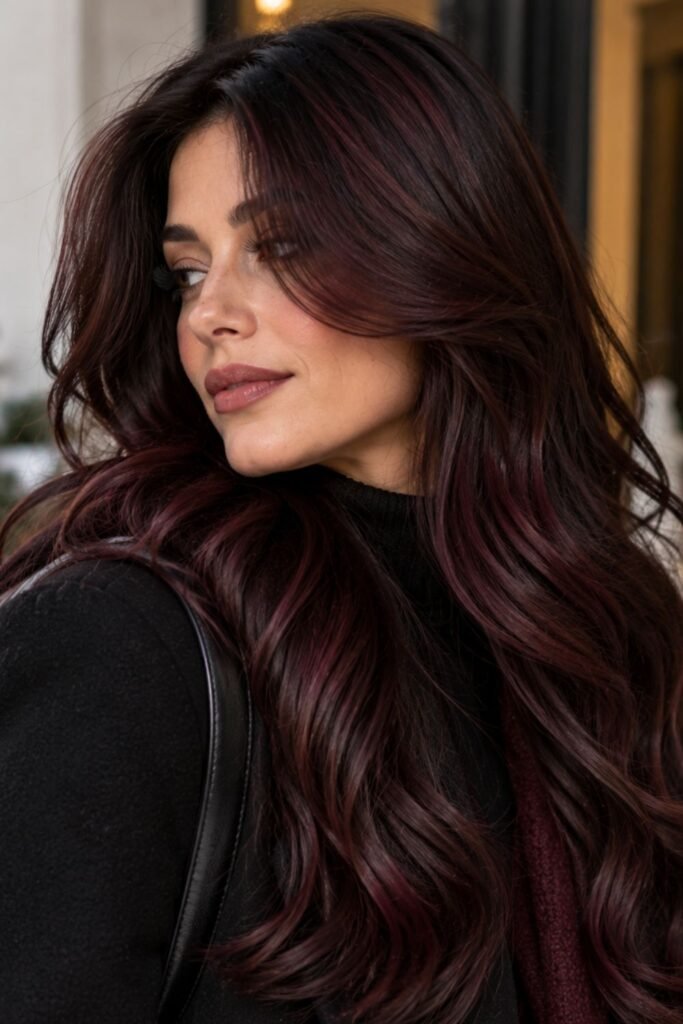
Chestnut Red
A brown-based red with muted copper warmth. It sits between auburn and brunette, so it feels bold without the upkeep of bright red. Ask for a chestnut foundation with a restrained copper-red tone, and request a strand test on porous ends first, since dry ends often grab red pigment and turn darker than the roots. Chestnut red flatters warm and olive complexions. For more warm shades in this family, see our amber and sienna hair color ideas.
Best for: Medium brown and existing auburn hair.
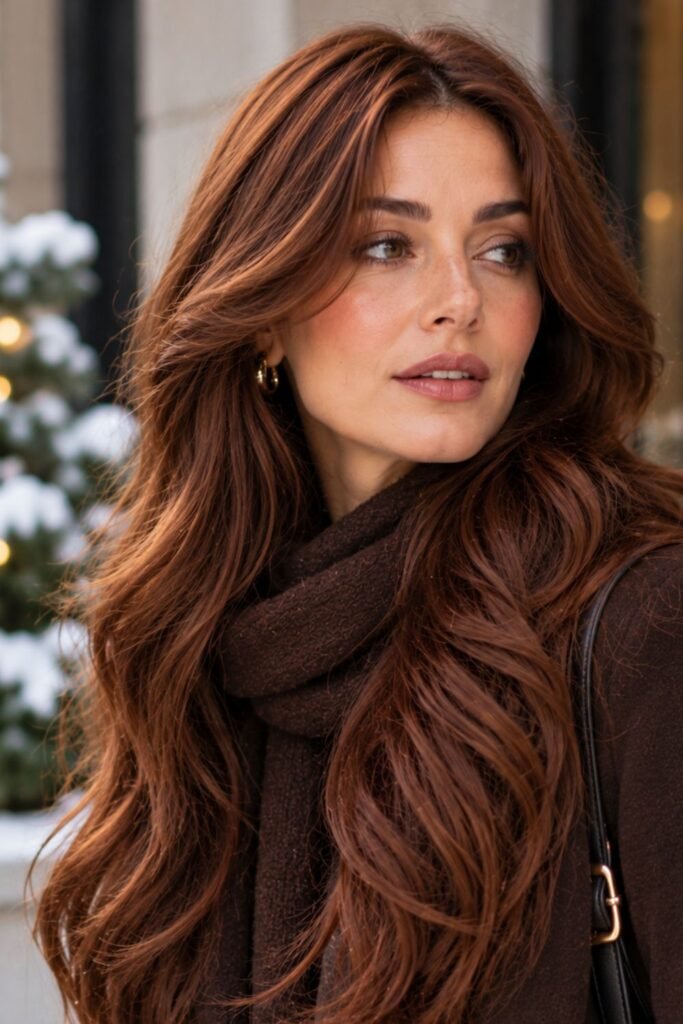
Golden Mean Beige Blonde
Fine beige blonde strands woven through a deeper dark-blonde base create a bright but blended result. The natural depth underneath keeps the color from looking flat or brassy. Request very fine highlights with plenty of natural base left between them, and avoid an opaque all-over pale blonde. A neutral beige toner finishes the look. Because the root stays close to your own color, grow-out is soft and you can stretch appointments to ten or twelve weeks. This shade suits neutral and warm skin tones particularly well.
Best for: Dark blondes who want blended brightness.
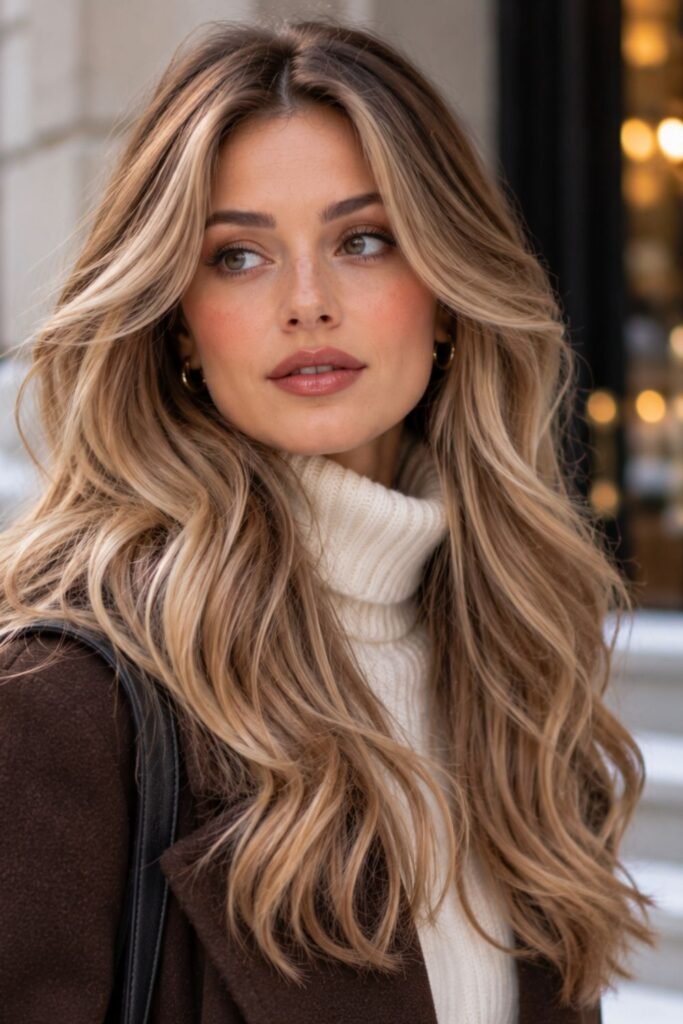
Buttered Almond Blonde
A creamy beige-gold blonde with subtle honey depth. It is warmer than icy blonde but more refined than yellow gold, which makes it one of the easiest blondes to wear through winter. Keep a natural root, add delicate blended highlights, and ask your colorist to tone the lengths toward almond. A gloss every six to eight weeks keeps the creamy finish. It also looks great on shorter cuts; our messy blonde bob haircuts show how warm blondes move in a textured bob.
Best for: Existing blondes seeking a softer grow-out.
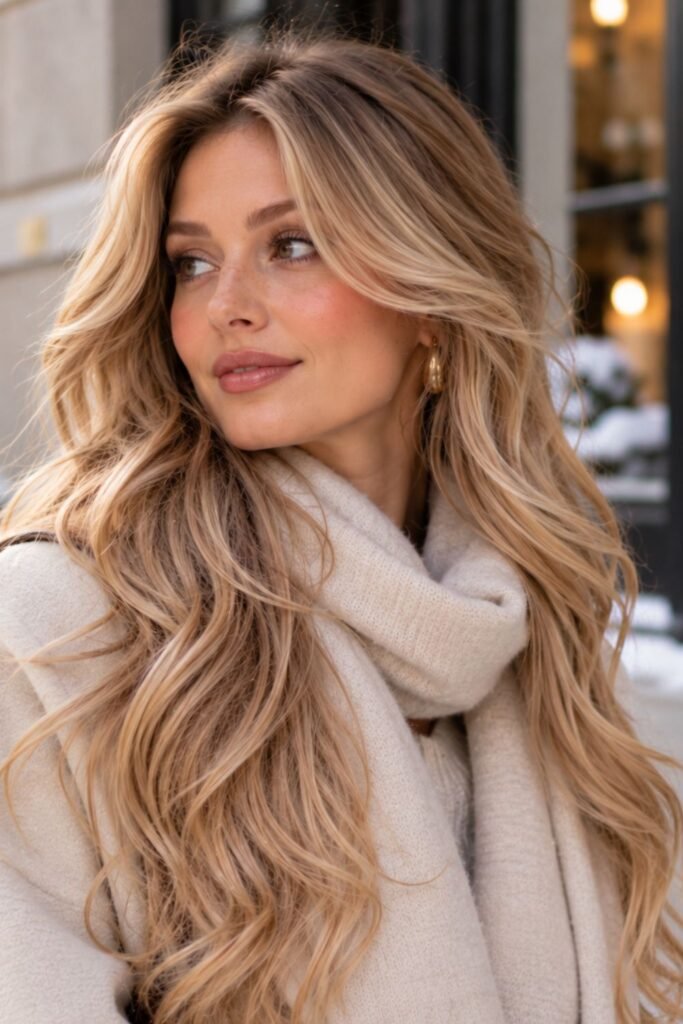
Winter Vanilla Blonde
A soft ivory blonde that sits between icy platinum and yellow gold. It looks bright and clean against dark winter coats and suits fair to light-medium skin. Ask for a pale champagne-ivory tone with a diffused root so the regrowth line stays soft. Talk through the lift required and the upkeep before you book: this shade usually needs toning every four to six weeks and a bond-building treatment to protect the hair. Use heat protection every time you style, because pale blondes show damage quickly.
Best for: Hair that is already light blonde.
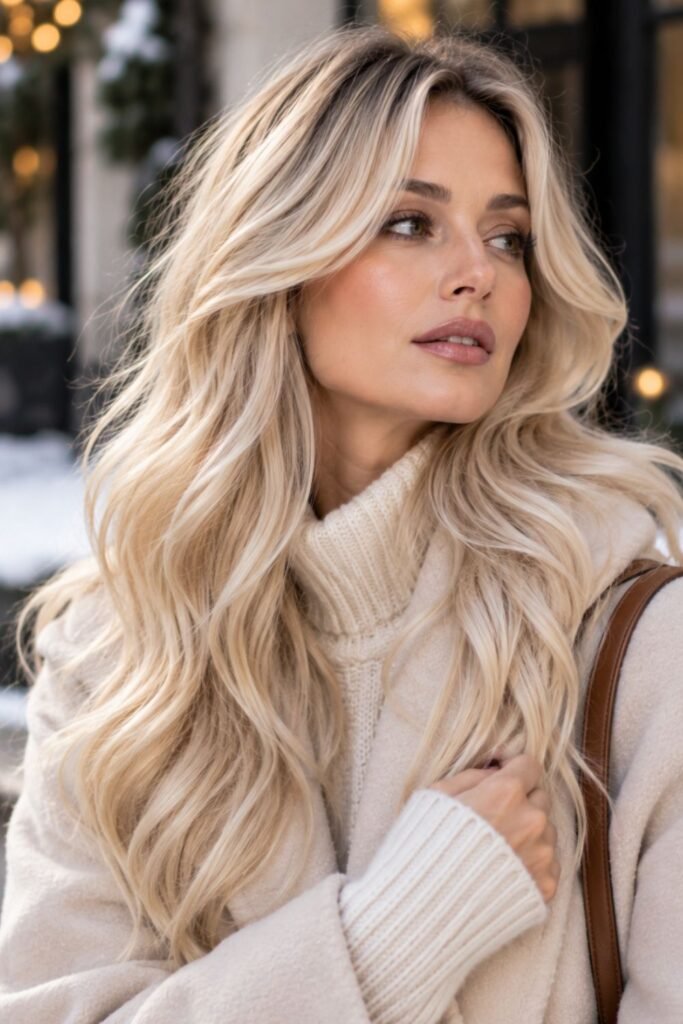
Mushroom Blonde
Earthy taupe and beige ribbons over a dark blonde base give a cool, muted finish. It is a good option if warm tones make you look flushed or if brassiness is a constant battle. Ask for low-contrast taupe babylights and a balanced neutral toner, and say clearly that you don’t want the result to look gray. The ashy tone fades warmer over time, so a toning shampoo once a week helps. Mushroom blonde suits cool and neutral skin tones and pairs well with gray, black and camel outerwear.
Best for: Dark blonde or light brown hair with cool-neutral preferences.
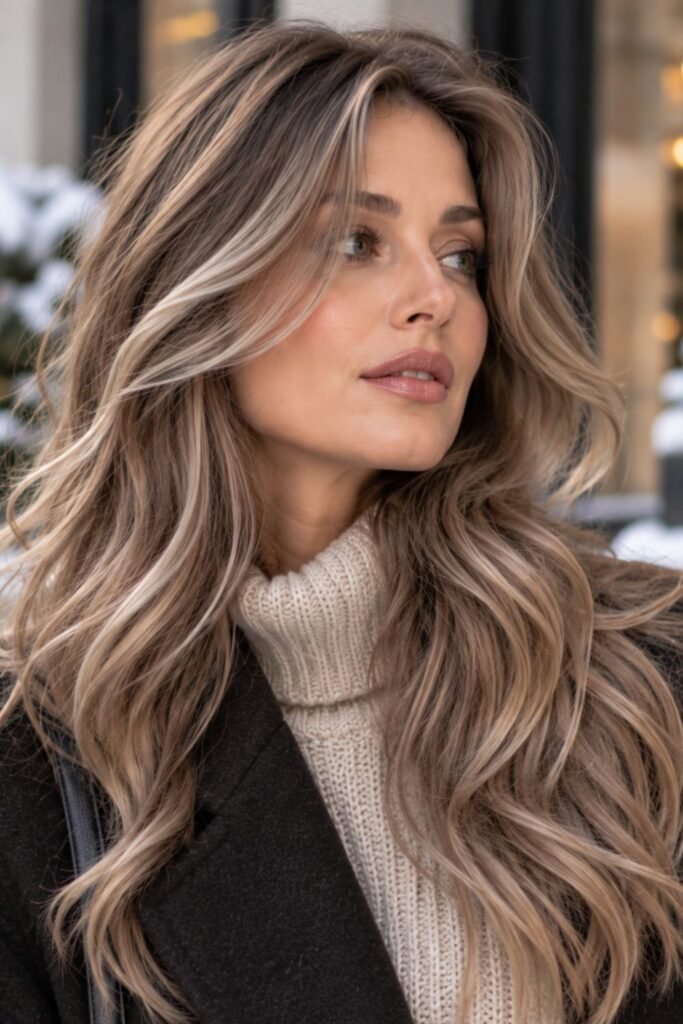
Iced Chestnut Blonde
Soft beige, pale honey and champagne pieces over a light-brown base create a gentle bridge between brunette and blonde. It is a smart first step if you want to go lighter gradually. Ask for cool-beige highlights blended into the warmer chestnut depth, with no harsh horizontal line where the color starts. Face-framing pieces add brightness without committing the whole head. Expect to build lightness over two or three appointments if your base is darker. A purple-toned conditioner used every other wash keeps the beige from turning orange.
Best for: Light brunettes transitioning toward blonde.
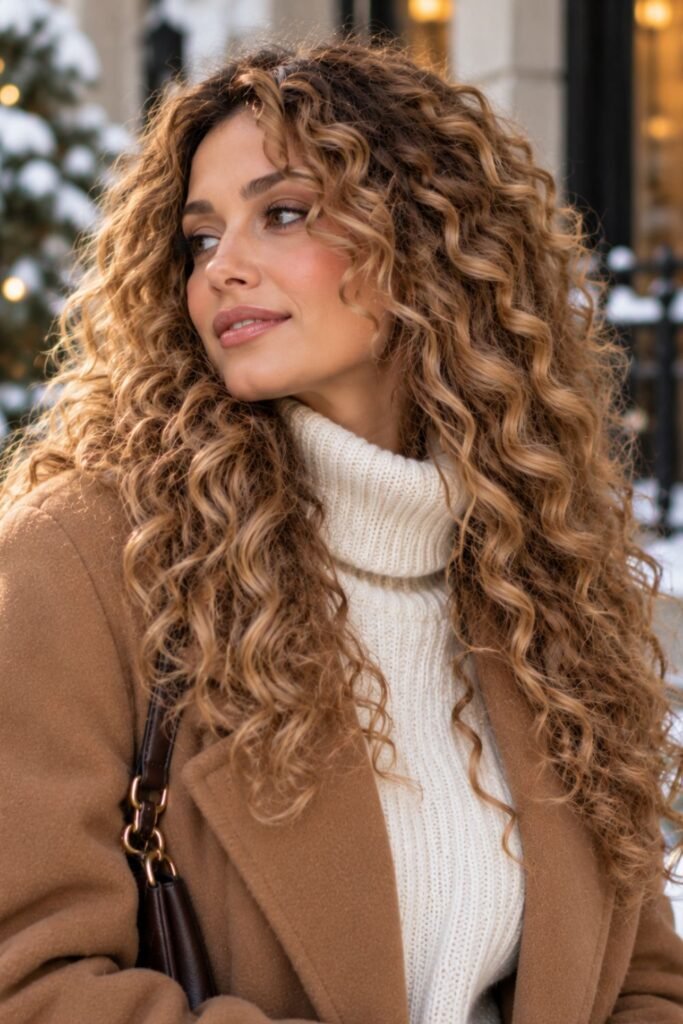
Honey Glow Blonde on Curls
Golden highlights placed to follow visible curl groupings, so each piece of color shows clearly after shrinkage. The warm tone brightens dark curls and makes the curl pattern look more defined. Ask for selective honey-gold pieces painted onto curls in their natural shape, ideally by a colorist who works with textured hair regularly. Curly hair is more prone to dryness after lightening, so use a deep conditioner weekly and limit how many pieces you lighten. Honey suits warm and deep skin tones beautifully.
Best for: Curly and coily dark blonde or brunette hair.
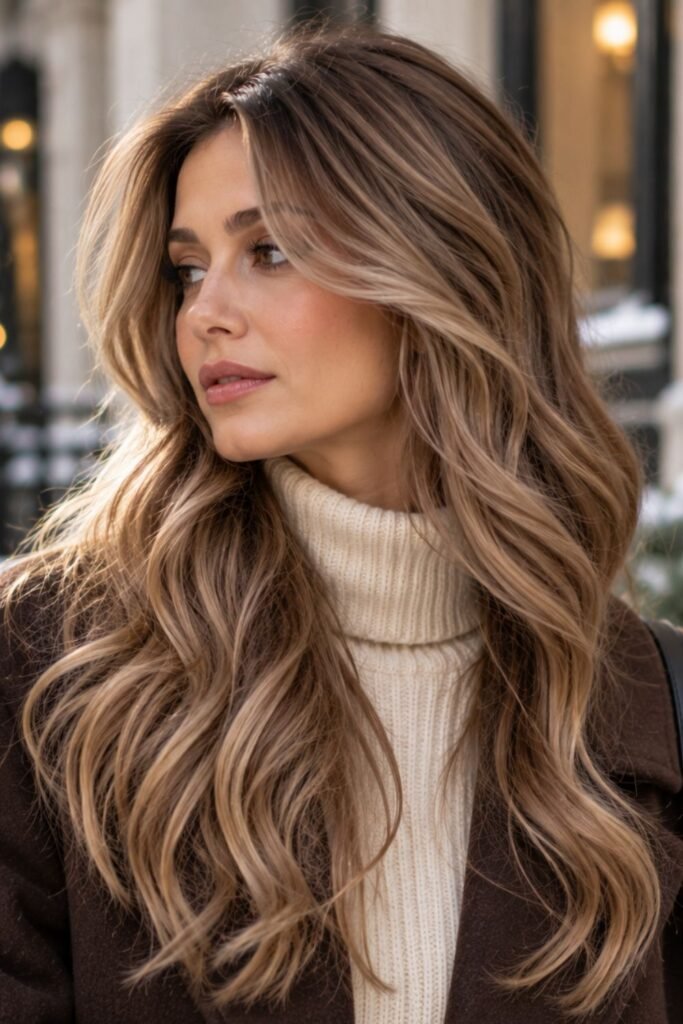
Cowboy Beige
A burnished dark blonde with golden light over a brown base. It has a lived-in, sun-touched warmth that suits relaxed winter style, from shearling jackets to denim. Ask for softly hand-painted highlights while keeping brunette depth at the root, and avoid all-over bleach. A golden-beige gloss blends everything together. Grow-out is soft, so this color works well for low-maintenance clients. If you want to push the warmth further into red territory, our copper pumpkin hair color ideas show the next step.
Best for: Dark blondes and lighter brunettes seeking warmth.
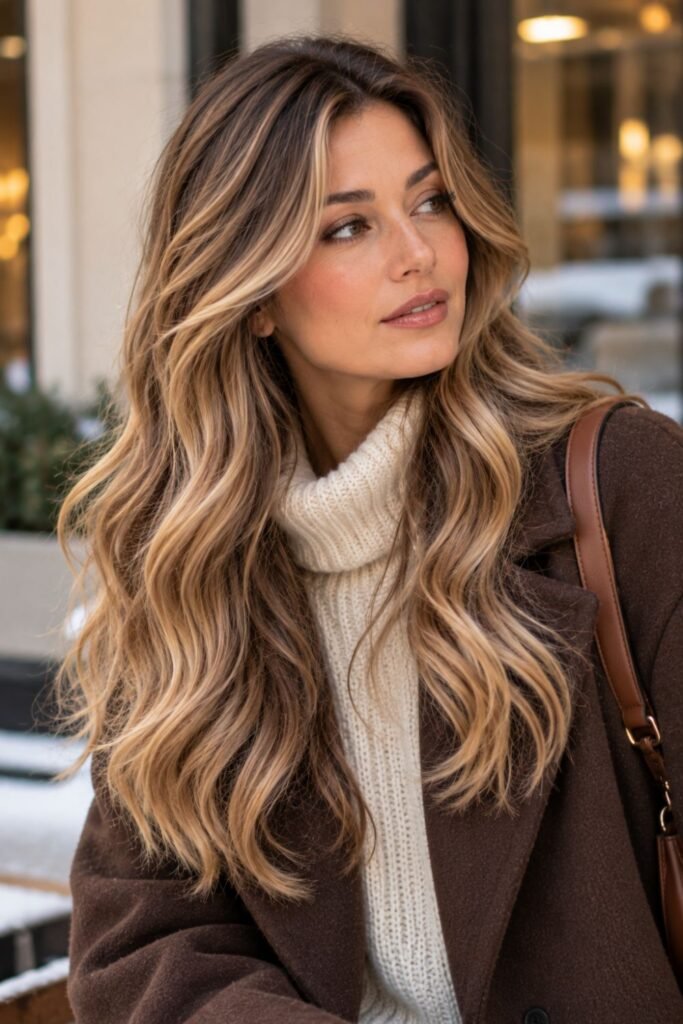
Which of the Winter 2026 Hair Color Trends Suits You?
| Starting color | Consider | Maintenance note |
| Dark brunette | Espresso, gothic brown, black cherry | Gloss may be simpler than lifting |
| Medium brunette | Cashmere cocoa, teak, hazelnut | Highlights require some lightening |
| Dark blonde | Golden mean, mushroom, cowboy beige | Retained roots ease grow-out |
| Light blonde | Winter vanilla, buttered almond | Toning and root care are important |
| Curly/coily brunette | Honey glow, teddy brown | Place highlights with curl shrinkage in mind |
Salon Consultation Tips for Color, Condition and Grow-Out
Bring two photographs of the same target shade in different lighting, then discuss your natural level, previous dye, porosity, and how often you can return. Beige blondes may require significant lightening on dark hair; depositing a brunette gloss is a different service with different risks. A strand test may be useful for previously colored or fragile lengths.
Frequently Asked Questions
What hair colors are trending for winter 2026?
Glossy espresso and cocoa brunettes, woody browns, muted red-browns and dimensional beige and almond blondes are among the strongest shades this winter. The common thread is blended tone with soft contrast.
Is beige blonde warm or cool?
Beige blonde is usually balanced between warm gold and cooler ash. The exact formulation varies: almond leans warmer, while mushroom and pearl beige read cooler.
Can dark brunettes become beige blonde in one visit?
Some may require multiple lightening sessions, especially with previous dark dye. A professional colorist should assess condition, history, and achievable lift before promising a result.
Which brunette shade has the easiest grow-out?
A gloss close to your natural brunette level usually gives a softer regrowth line than significantly lighter highlights or a dramatic permanent base change.
Is black cherry a red or brunette color?
Black cherry is generally a very dark brunette or blackened base with a burgundy-violet reflect. The red becomes more apparent in brighter light.
How do I keep blonde from turning too yellow?
Use the toner and care routine your colorist recommends, protect hair from excessive heat, and book gloss refreshes as needed. Overusing purple shampoo can leave some beige shades dull.
Will highlights show on curly hair?
Yes, but placement matters. Highlights that follow visible curl groupings are easier to see after shrinkage than extremely fine sections scattered without regard to texture.
How often should winter hair color be refreshed?
It depends on the formula, natural root contrast, porosity, and washing routine. Gloss-only brunette services and pale blondes generally have different maintenance needs; agree on a schedule with your colorist.
Final Thoughts on Winter 2026 Hair Color Trends
The best winter 2026 hair color trends are the shades that still look intentional as they grow. Deep brunettes can lean on gloss and a restrained reflect, while beige blondes benefit from root depth and careful toning. Decide first how much change and upkeep you want, then choose a shade within that range and bring clear reference photos to your appointment.