


The butterfly cut is built around one structural idea: a shorter crown section that sits separately from the longer lengths below, so the hair falls in two distinct tiers that move independently. When the crown lifts and the lengths fall beneath it, the shape from the back resembles a pair of wings, which is where the name comes from.
Butterfly haircuts for long hair are especially useful because they build real volume at the crown while keeping length at the ends, something standard long layers rarely manage. The 17 variations below show how the cut adapts to different textures, partings, color treatments, and styling approaches, with notes on who each one suits and how to ask for it.
Classic Butterfly Haircuts for Long Hair
Long Butterfly Cut with Curtain Bangs
Curtain bangs are the most natural companion to a butterfly cut on long hair because both are structured around the same visual logic: shorter sections framing the front of the face that blend downward into longer lengths below. The curtain bang sweeps to either side of the center part and connects to the shorter crown section of the butterfly cut without a visible transition.
This combination suits oval, heart, and long face shapes best. The curtain bang narrows the upper face while the lifted crown adds width at the top, which balances the proportions. Ask for the bangs to start at cheekbone length so they can be tucked behind the ears on off days. If you like to wear your hair up for events, these long hair updos and half-up styles show how the same layers look when pinned.
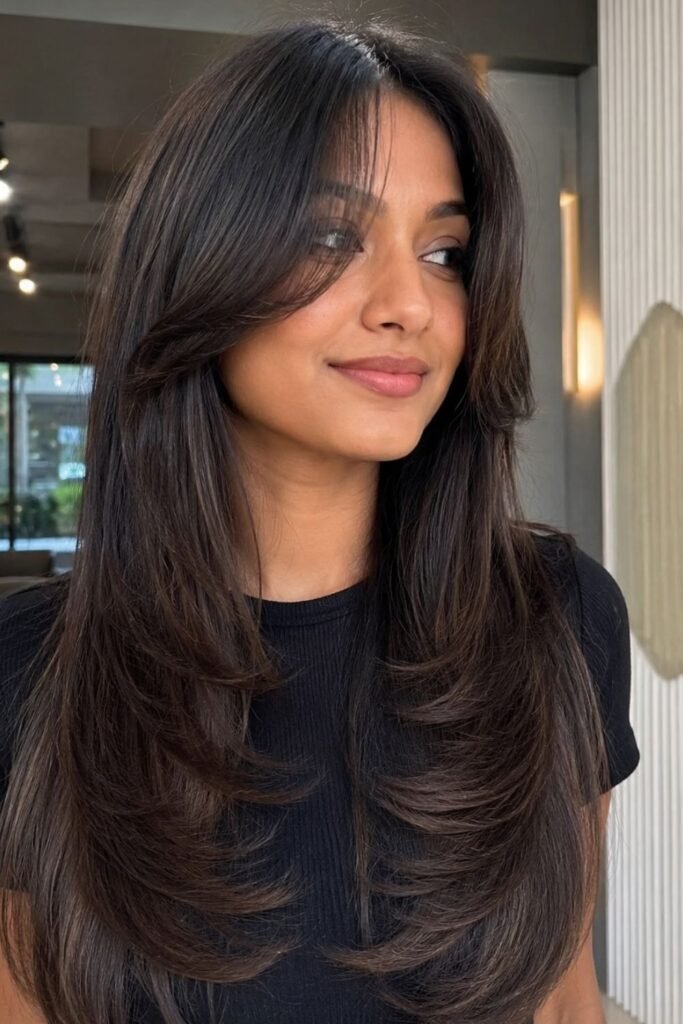
Long Butterfly Cut on Straight Hair
On straight hair, the butterfly cut requires a styling step to read correctly because straight strands do not create movement independently. The crown section needs to be lifted away from the head while blow-drying, using a round brush or a diffuser, to achieve the separation between the two tiers that defines the butterfly cut silhouette.
A volumizing mousse applied at the roots on damp hair before blow-drying is the most practical daily product for straight hair in a butterfly cut. Once dry, a light texture spray through the crown section separates the layers and maintains the lifted quality through the day. Without this step, straight hair in a butterfly cut can sit flat and the two-tier effect is lost.
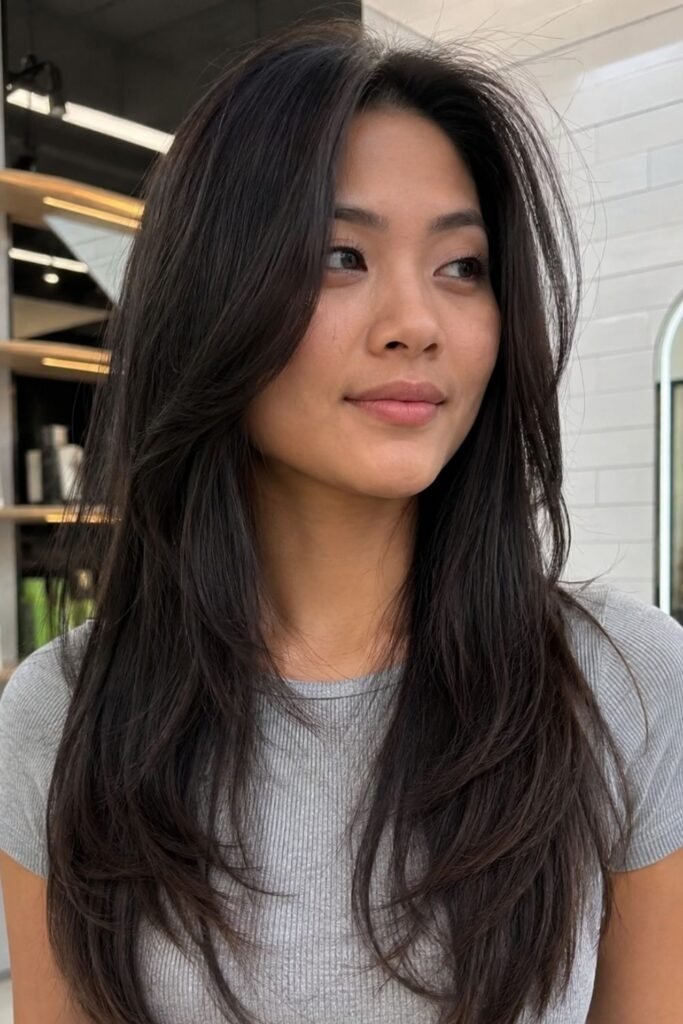
Long Butterfly Cut on Wavy Hair
Wavy hair shows the butterfly cut silhouette most clearly without any heat styling. The natural wave in the crown section creates lift on its own, and the longer lengths below develop movement and texture that sharpen the two-tier shape. If your waves drop by the afternoon, ask your stylist to keep the crown layers slightly shorter, since shorter layers carry less weight and hold their bend longer.
Scrunch a wave cream or mousse through damp hair, clip the crown sections upward while drying to encourage separation from the lengths below, then release the clips once eighty percent dry. The crown lifts naturally and the longer lengths fall below it. Air-drying takes longer but produces a softer, more lived-in result than diffusing.
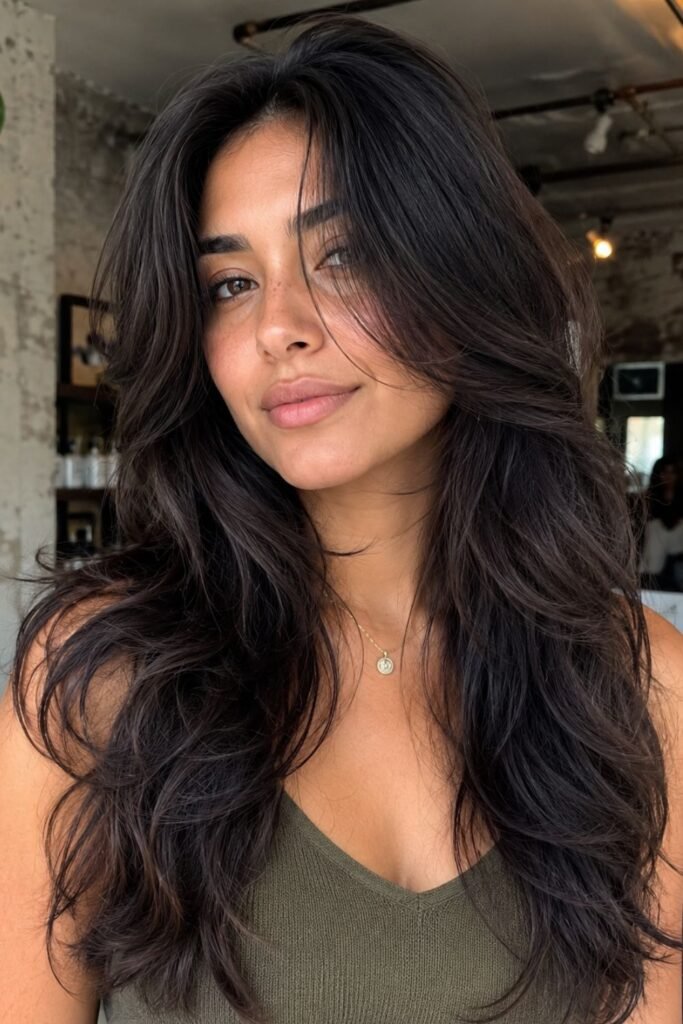
Long Butterfly Cut on Curly Hair
Curly hair in a butterfly cut requires cutting in the hair’s natural dry state so the stylist can see exactly where the curl pattern lands at each layer before making decisions. What appears to be a collarbone-length crown section on wet hair may sit at the jaw or above once fully dry and curled. This is a non-negotiable conversation to have before the cut begins.
The butterfly cut on curly hair produces a dramatic volume effect at the crown because the shorter curls spring upward and outward while the longer curls below elongate downward. The result is a full, structured silhouette that straight and wavy hair need a diffuser and product to replicate. Use a curl cream through all sections before diffusing on low heat for definition without frizz.
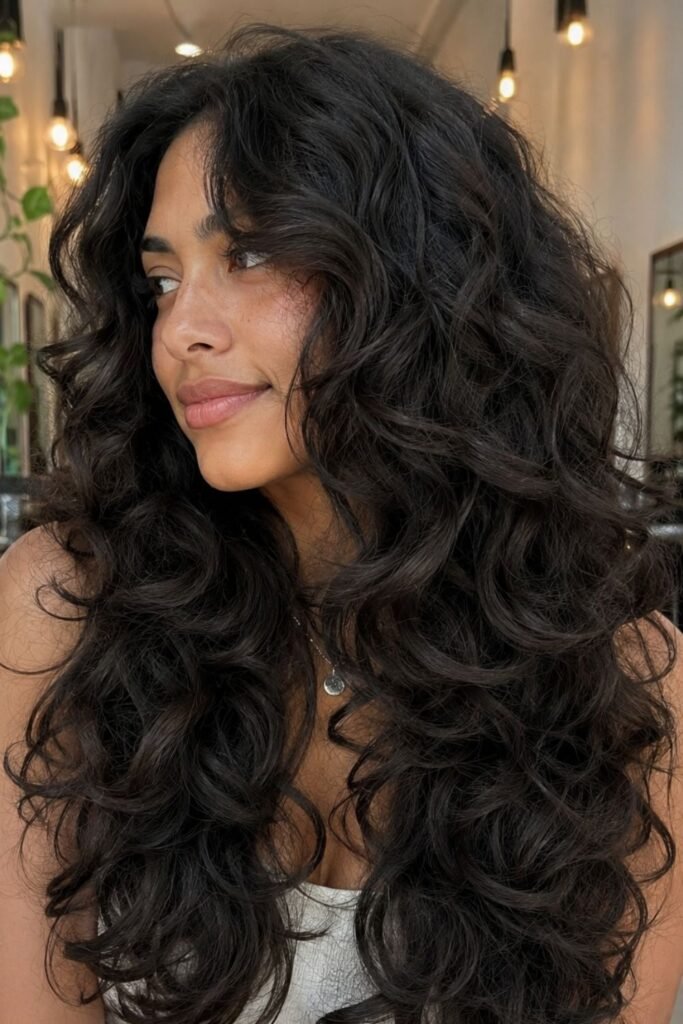
Butterfly Cuts with Color on Long Hair
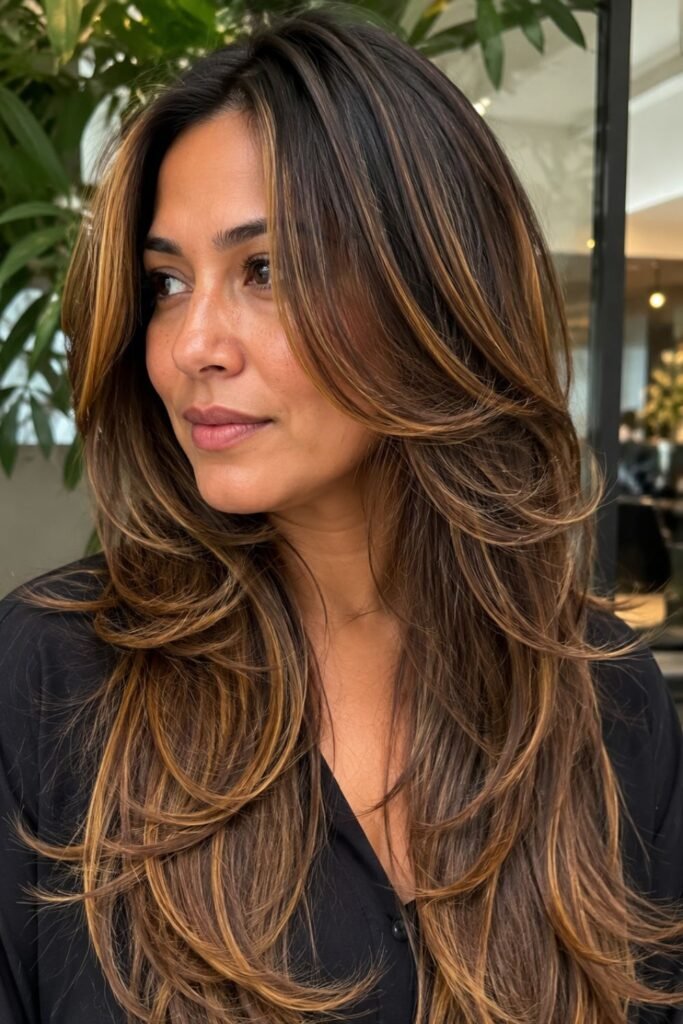
Long Butterfly Cut with Caramel Highlights
Highlights placed through the crown section of a butterfly cut emphasize the separation between the two tiers, because the lighter color in the shorter layers contrasts with the deeper lengths below. This guide to caramel highlights on brown hair covers placement and tone selection in detail. For a butterfly cut specifically, ask your colorist to concentrate the highlights in the crown section and the face-framing pieces so the color reinforces the structure of the cut.
A balayage application suits the butterfly cut better than foil highlights because it follows the natural movement of the hair and blends softly through the layer transition rather than creating uniform bands of color that can look stripy where the crown section meets the longer lengths.
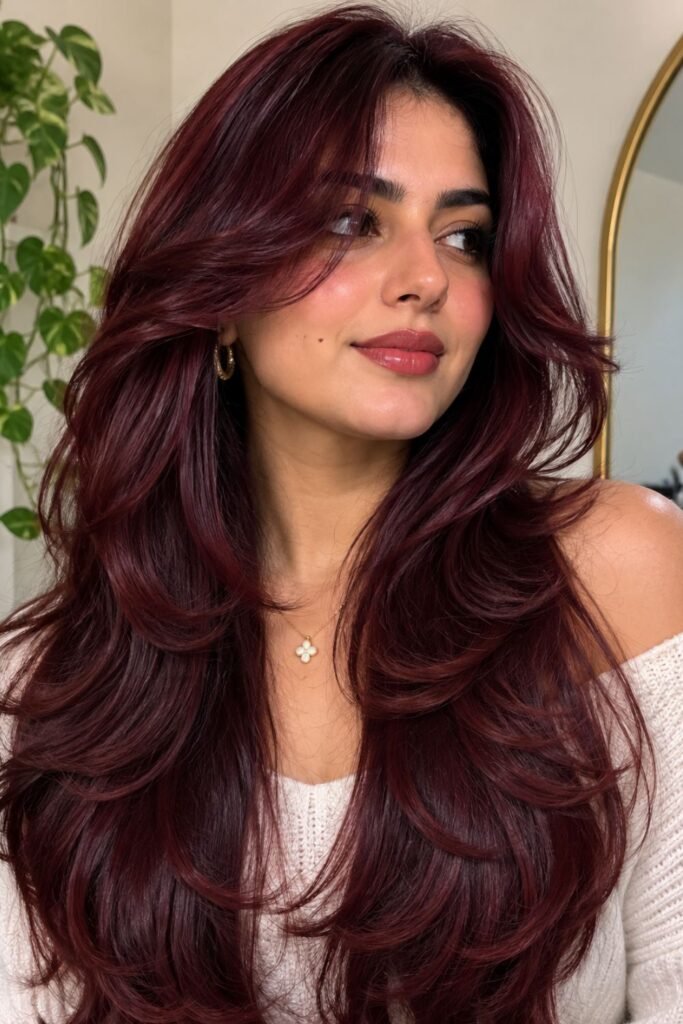
Long Butterfly Cut with Dark Cherry Red
A dark cherry red color on a long butterfly cut makes the two-tier structure visually dramatic because the depth of the shade creates shadow between the crown section and the longer lengths, making the separation read clearly even in photographs. The red catches light differently at each tier, which gives the cut more dimension than the same shape in a flat, single-process color.
Cherry red on a butterfly cut works best when the color runs through the full length, so both the crown section and the longer lengths share the same shade. This keeps the visual emphasis on the structural division of the cut, and no color transition competes with the shape.
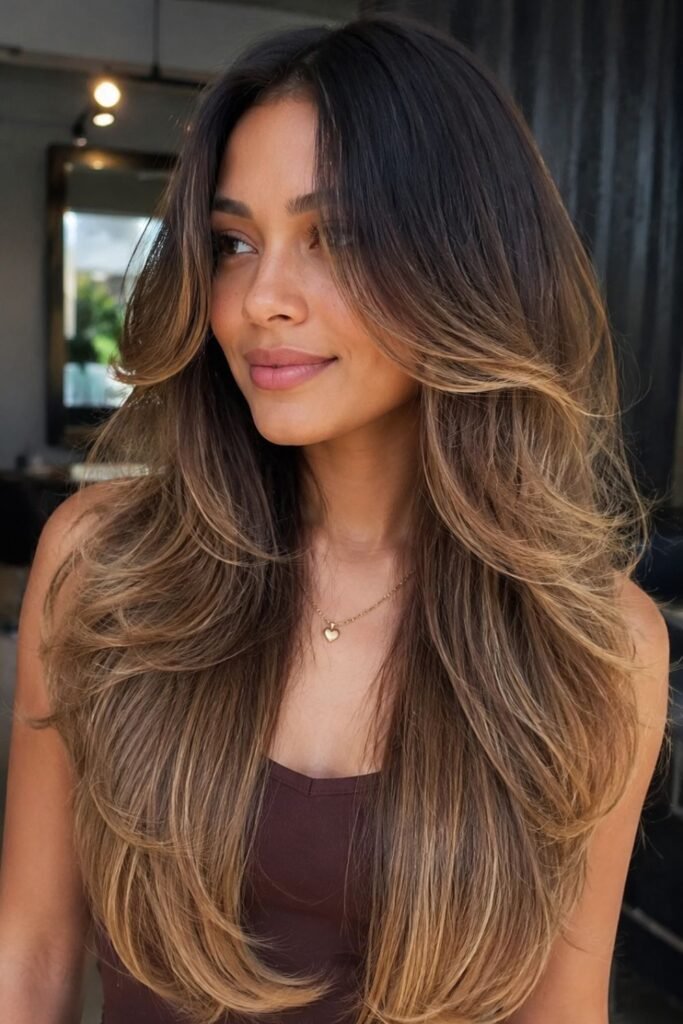
Long Butterfly Cut with Ombre Color
An ombre treatment on a long butterfly cut, moving from a deeper root through the mid-crown to lighter ends, creates a color story that follows the two tiers of the cut. The longer lengths carry the lightest color, so they stand apart from the darker crown and reinforce the butterfly effect through color as well as shape. Ombre is also forgiving on regrowth, which makes it a good choice if you only want to see a colorist two or three times a year.
Ask your colorist to place the transition point in the mid-lengths, below the crown section boundary. A hard color line exactly where the tiers meet can make the cut look disconnected. A soft, feathered ombre through the crown looks more intentional, and a blue or purple toning shampoo once a week, depending on how light the ends are, keeps the lighter lengths from turning brassy.
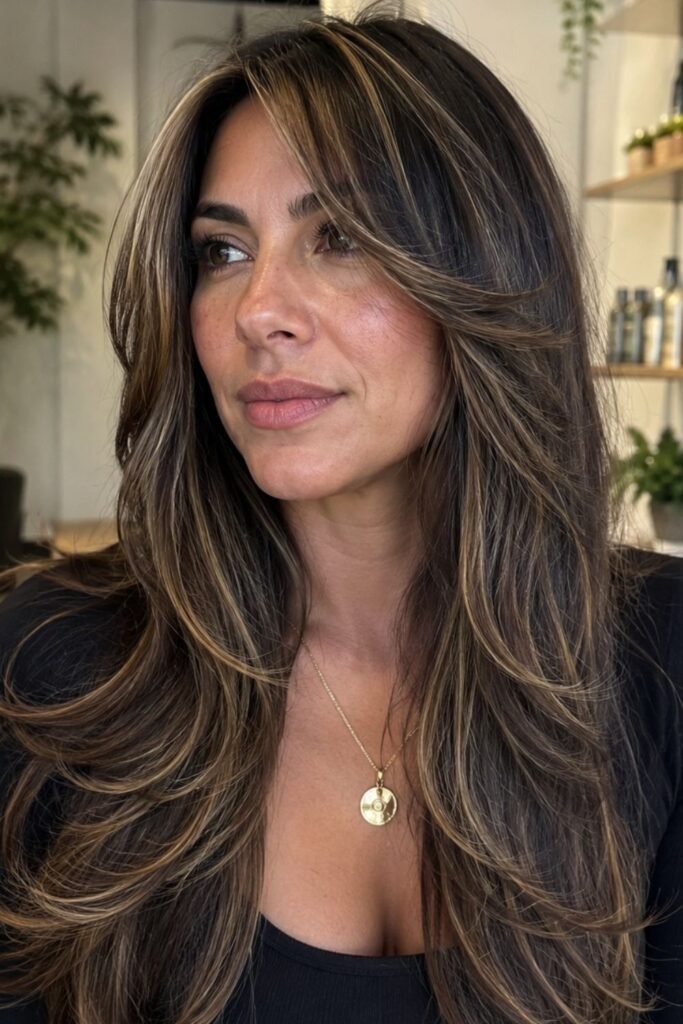
Long Butterfly Cut with Face-Framing Highlights
Face-framing highlights on a butterfly cut, placed specifically in the crown section and the pieces closest to the face, brighten the front of the face and draw attention to the eyes. For women who want color without committing to a full application, face-framing highlights on the butterfly cut are the most targeted and low-maintenance option.
Ask for money pieces, which are two highlight sections framing the face at the parting, combined with lighter color through the crown section. This keeps the maintenance focused on the front where the regrowth is most visible and the color impact is highest. A toning gloss applied every six to eight weeks keeps the highlights fresh between full color appointments.
Butterfly Cut Variations by Parting and Shape
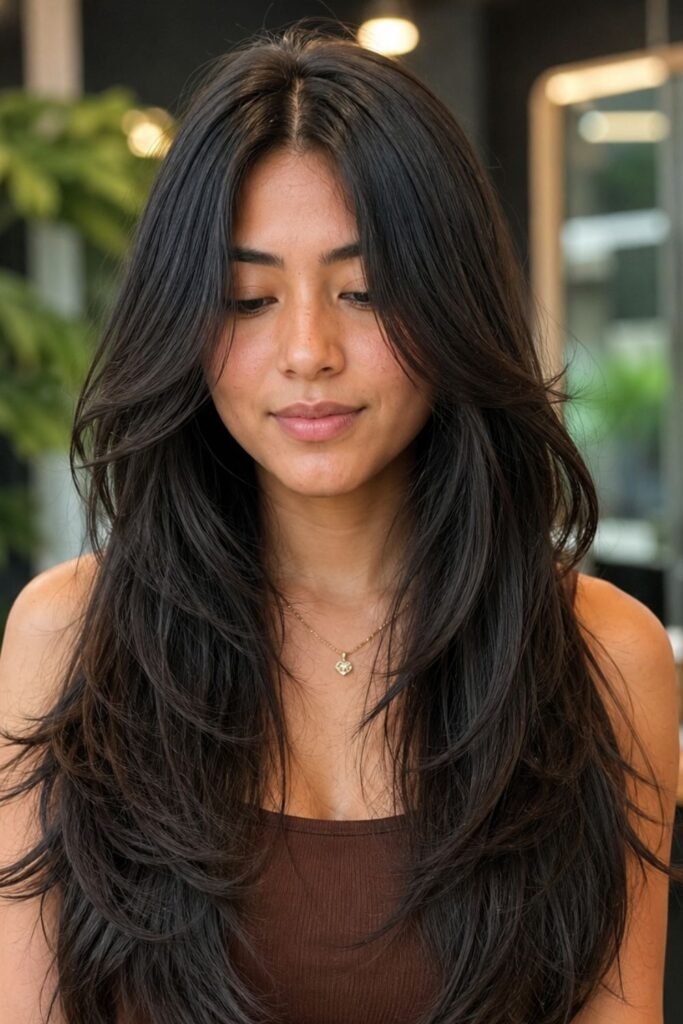
Long Butterfly Cut with Center Part
A center part on a long butterfly cut divides the crown section symmetrically and creates the most balanced version of the butterfly silhouette. When the crown layers lift on both sides of the center part, the visual resemblance to butterfly wings is clearest. This parting suits oval and long face shapes most naturally.
Train the center part consistently for at least two weeks before it falls cleanly without product. Apply a light-hold pomade along the parting line each morning and comb through while the hair is still slightly damp. Once established, a center part on a butterfly cut requires no additional product to stay in place.
Long Butterfly Cut with Deep Side Part
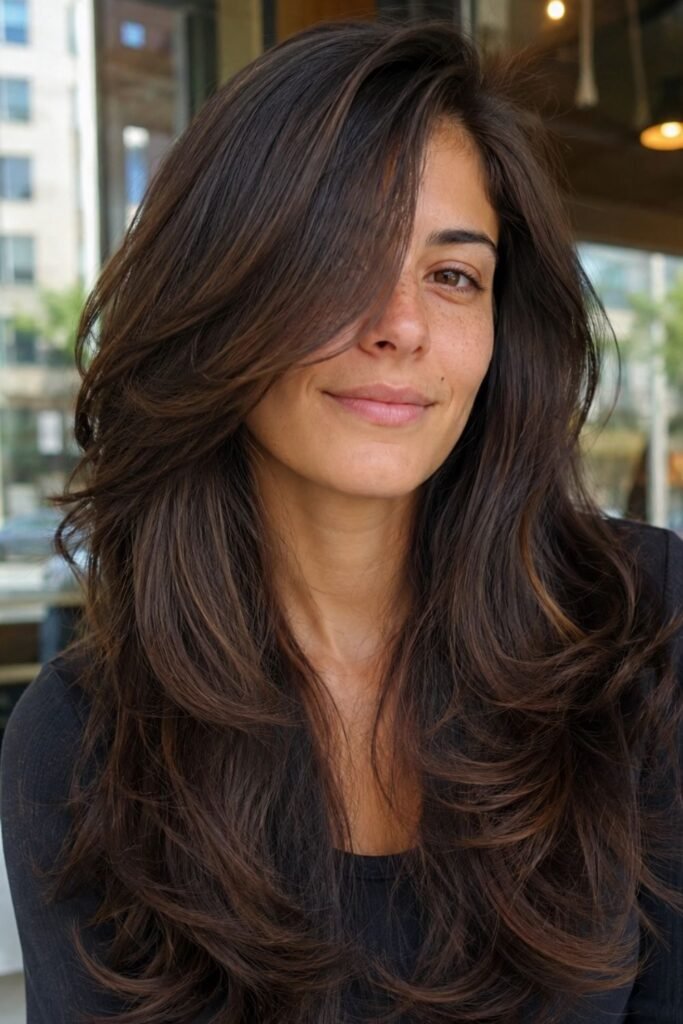
A deep side part on a butterfly cut shifts the crown volume to one side, creating an asymmetrical version of the silhouette that looks more dramatic than the symmetrical center-part version. The crown layers on the heavier side lift outward, and the longer lengths fall to one side below them. To set the part, blow-dry the crown in the opposite direction first and then flip it over, so the root lifts higher and holds through the day.
The deep side part suits round and square face shapes well because the asymmetry and diagonal lines break up the width of the face. On these face shapes, a center part with a butterfly cut can emphasize width, so the side part is usually the more flattering default.
Long Butterfly Cut with Wispy Bangs
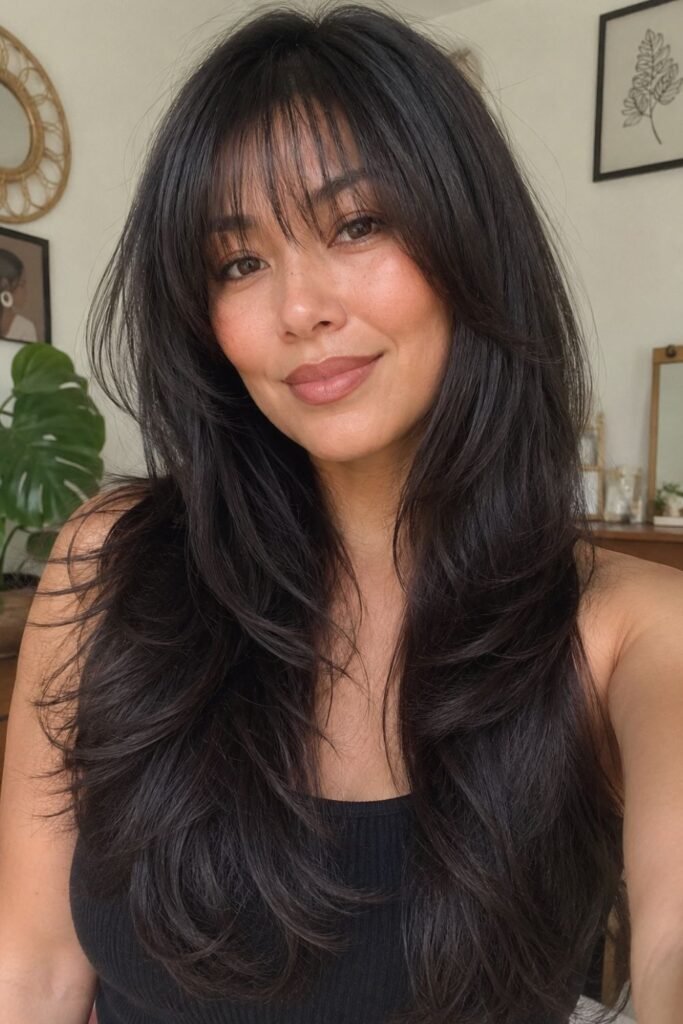
Wispy bangs on a long butterfly cut sit at nose to lip length and blend into the crown section instead of forming a separate panel across the forehead. The result is a fringe that moves with the rest of the hair and softens the forehead without the weight of a blunt bang. For more fringe ideas in this soft style, browse these layered wispy bangs.
Wispy bangs on a butterfly cut suit heart and diamond face shapes because they fill in the upper face and balance a wider forehead or cheekbones. Ask your stylist to blend the bangs into the crown section, so there is no visible line between the bang and the rest of the shorter crown layer.
Long Butterfly Cut with No Bangs
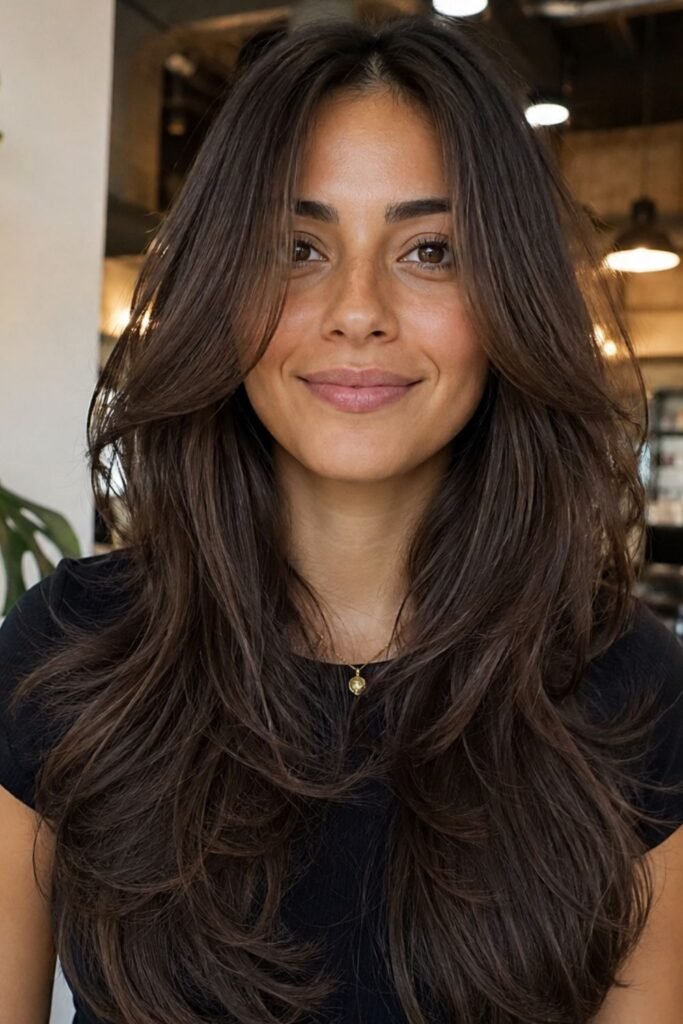
A butterfly cut without any fringe keeps the face fully open and puts all the emphasis on the crown-to-length transition at the back. This suits women who already get plenty of face framing from the shorter crown layers and do not want extra length at the front.
The no-bang version works particularly well when the crown section includes face-framing layers that end at the cheekbone or jaw, because those pieces frame the face without a separate fringe. It is also the easiest version to maintain: there are no bang trims between appointments, and the front grows out evenly. Sweep the front layers away from the face with a round brush to show off the shape.
Styled Versions of the Long Butterfly Cut
Long Butterfly Cut Worn Half-Up
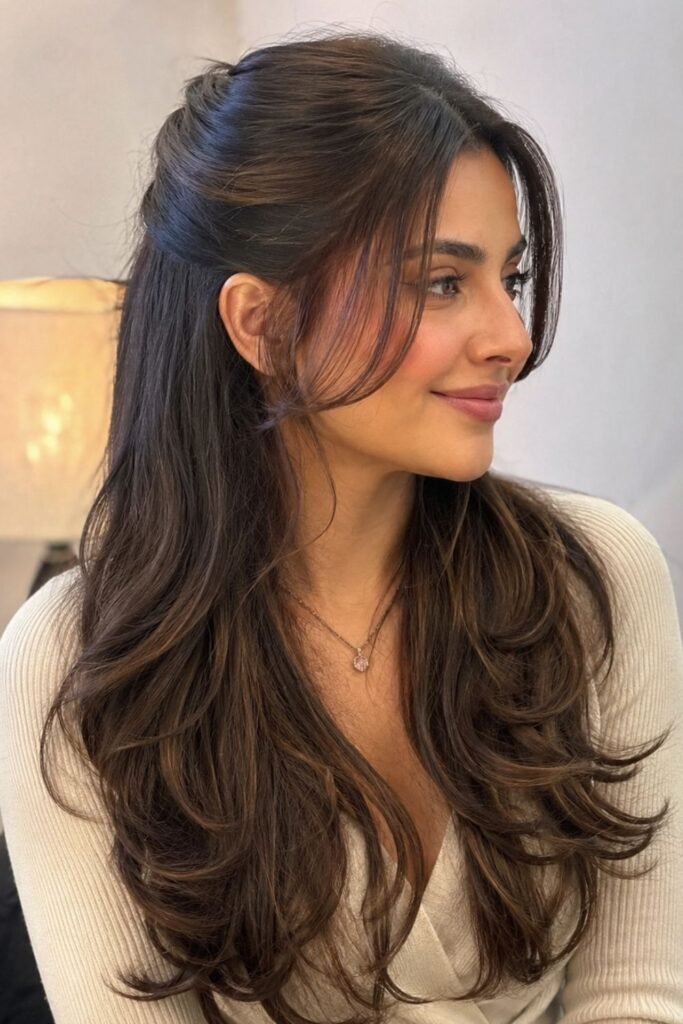
A long butterfly cut pulled into a half-up style, with the crown section gathered loosely at the back of the head and the longer lengths falling below, makes the two-tier structure of the cut more visible from the front because the gathered crown creates a clear distinction between the shorter upper section and the loose lengths below.
Use a claw clip rather than a tight elastic for the half-up section so the crown retains its volume. Pull the section back loosely and allow the face-framing layers to fall forward at the temples. The half-up style works better on butterfly cuts at medium to long lengths where the crown section has enough length to gather without pulling the shorter layers too tightly.
Long Butterfly Cut Air-Dried
An air-dried long butterfly cut is the version that most clearly shows what the cut actually does without intervention. Apply a curl cream or wave spray to soaking wet hair, scrunch through the lengths, clip the crown sections upward at the root while drying, and remove the clips once the hair is eighty percent dry. The crown lifts and the lengths fall below it.
The product choice matters significantly for an air-dried result. A gel applied through damp hair and scrunched out once dry, a technique sometimes called the cast method, gives wavy and curly butterfly cuts the most defined result. A lighter wave spray suits straight-to-wavy hair that does not need strong hold but benefits from some texture.
Long Butterfly Cut Styled with Waves
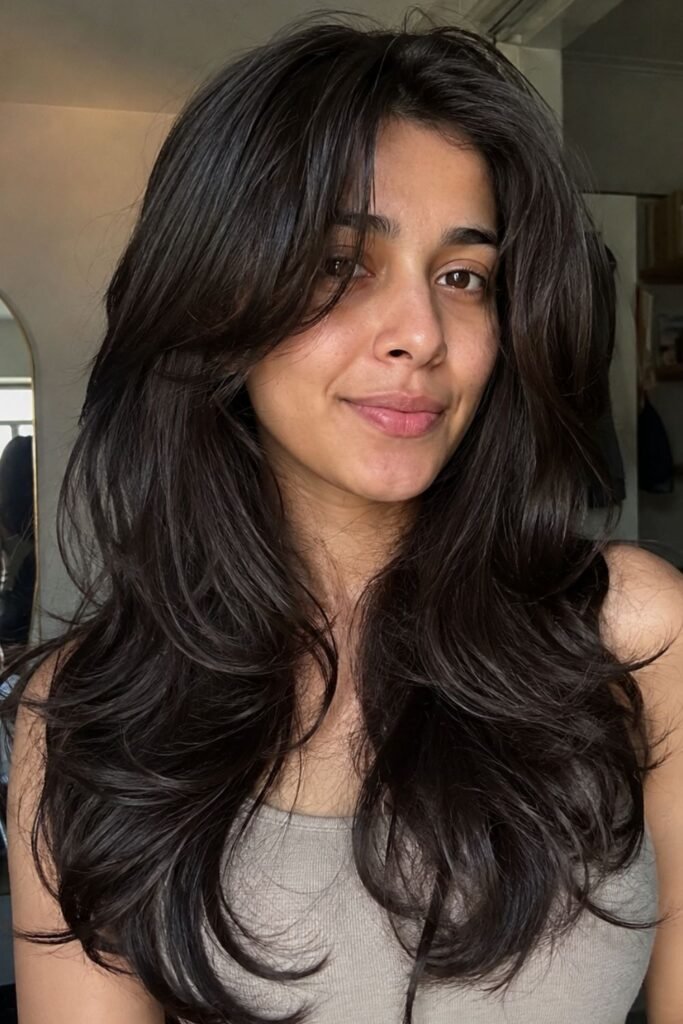
Styling a long butterfly cut with a 1.25 to 1.5 inch curling iron creates soft waves through both tiers of the cut. The crown section waves sit close to the head and frame the face, while the longer lengths below develop more movement and sweep. Together they create a full, textured silhouette that looks styled without looking overdone. Alternate the curl direction on each section so the waves separate instead of clumping together.
Curl the crown section first, then move to the longer lengths below. The crown waves cool while you work on the lengths, which means they are set by the time you style the front. Apply a light-hold finishing spray over the completed style and avoid touching the waves for at least ten minutes so they have time to fully cool and set.
Long Butterfly Cut for an Occasion
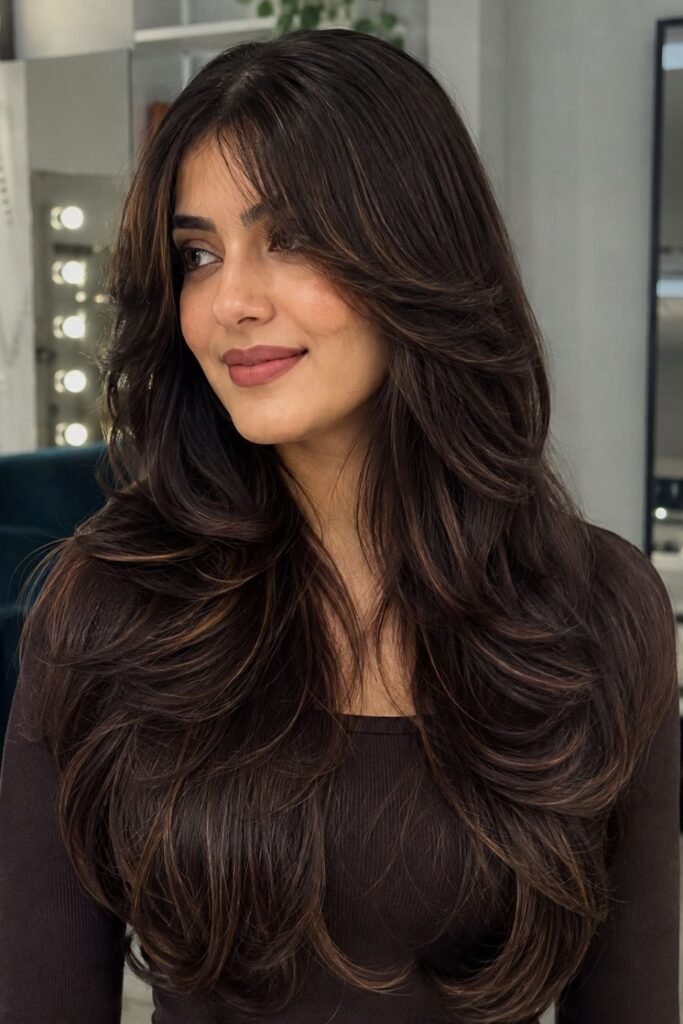
For a formal occasion, style a long butterfly cut with the crown section pinned into a loose updo and the longer lengths left down or lightly waved. This hybrid style works with the structure of the cut. The crown section, which is already shorter and easier to manage, pins neatly into a chignon or twist at the back of the head while the longer lengths flow below. Prep the crown with a little dry shampoo or texture spray first so the pins grip.
This works best when the crown section is long enough to gather without pulling the shorter layers down uncomfortably. A butterfly cut where the crown section sits between the jaw and the collarbone is the most versatile for this kind of occasion styling.
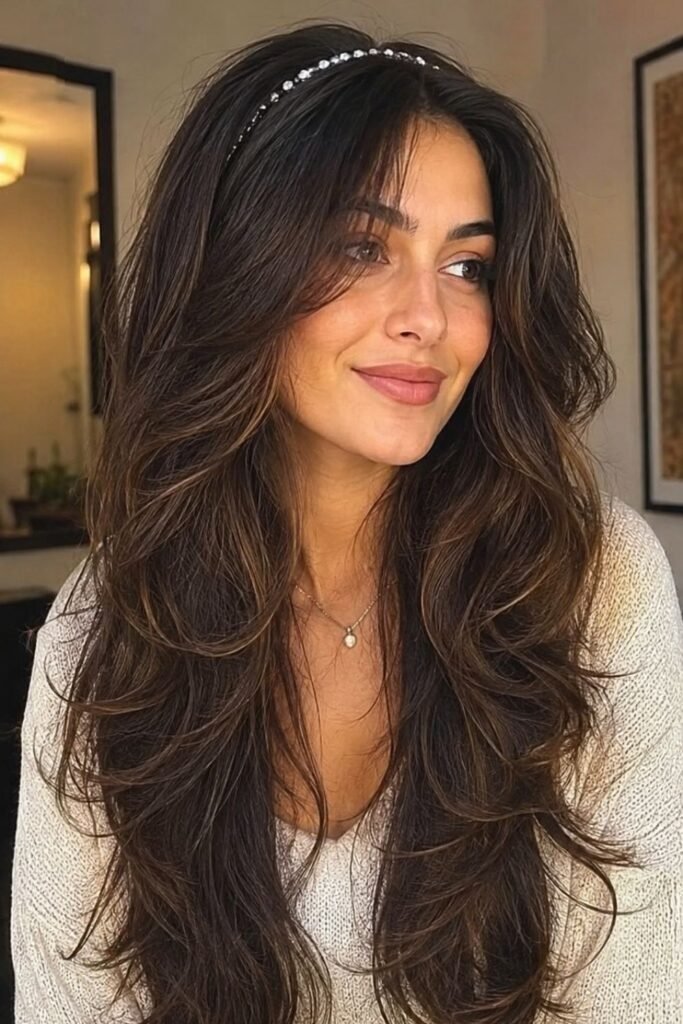
Long Butterfly Cut with a Headband
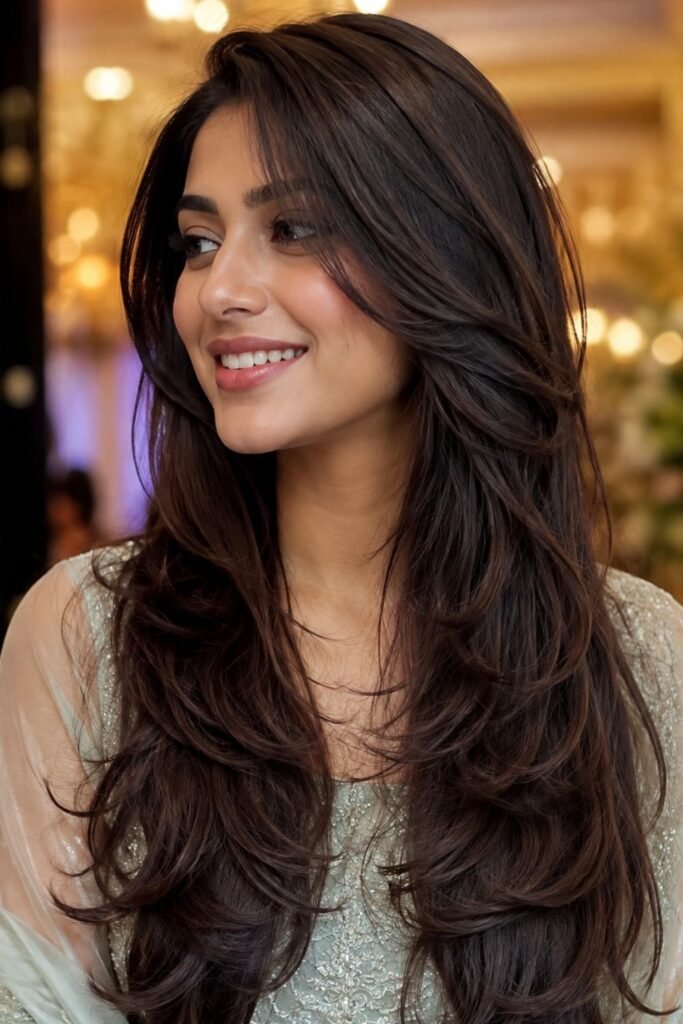
A long butterfly cut worn with a thin velvet or embellished headband placed just behind the crown section is one of the fastest ways to dress the cut up without heat styling. The headband sits at the boundary between the shorter crown layers and the longer lengths, the exact point that defines the butterfly cut, so it makes the two-tier effect easier to see. Tease the crown lightly at the root before placing the band to keep height in front of it.
A thin headband reads as more modern and less costume-y than a wide one on a butterfly cut. Push the headband slightly back from the hairline so the face-framing layers fall forward around it instead of being swept back with it. This keeps the crown volume intact and the framing pieces where they belong.
How to Ask for a Butterfly Cut on Long Hair
Explain the Two-Tier Structure Clearly
Not every stylist uses the term butterfly cut, and those who do may interpret it differently. The clearest way to describe it is: a shorter crown section that sits separately from the longer lengths below, creating a visible layer division rather than a gradual blend from root to tip. Bring reference photos from the back and the side as well as the front, because the back is where the butterfly effect reads most clearly.
Decide How Short You Want the Crown Section
The crown section of a butterfly cut can sit anywhere from chin length to collarbone length on long hair. A shorter crown section creates a more dramatic two-tier effect but is harder to pin back or style into updos. A longer crown section is more versatile and grows out more gracefully, but the butterfly silhouette is less pronounced. Tell your stylist which you are prioritizing.
Ask About the Transition Point
The point where the crown section meets the longer lengths below is the most technically important decision in a butterfly cut. A hard, disconnected transition reads as a drastic change and is difficult to grow out. A blended transition, where the stylist uses point-cutting to soften the line between the two tiers, produces a modern result that also grows out more naturally. Ask explicitly for a blended transition unless you specifically want a high-contrast effect. If you want movement with no visible layer line at all, look at ghost layers haircuts, which hide the shorter pieces underneath.
Frequently Asked Questions
What is the difference between a butterfly cut and a wolf cut?
The wolf cut distributes layers throughout the hair with concentrated volume at the crown, creating one continuous layered silhouette from root to tip. The butterfly cut creates two distinct tiers: a shorter crown section and longer lengths below, with a visible transition between them rather than a graduated blend. The butterfly effect is more structural and more visible from the back than the wolf cut.
Does the butterfly cut work on fine hair?
Yes. Fine hair benefits from the butterfly cut because the crown section adds volume where fine hair typically sits flattest, and the layering through the longer lengths removes weight that fine hair cannot support. The key is asking for a blended transition between the tiers, which avoids a sparse appearance at the transition point on finer hair.
How long does hair need to be for a butterfly cut?
The butterfly cut works most effectively on hair that is at least collarbone length, because the longer tier needs enough length to fall visibly below the crown section and create the two-tier effect. Hair shorter than collarbone length does not have enough length differential between the tiers for the butterfly silhouette to read clearly.
How often does a butterfly cut need trimming?
Every eight to ten weeks. The crown section, which is the shortest part of the cut, grows out the fastest and begins to lose the clear separation from the longer lengths after about ten weeks. The transition point also softens as the crown section grows, which reduces the visual impact of the butterfly effect over time.
Can I style a butterfly cut without heat?
Yes. Wavy and curly hair produces the butterfly cut silhouette naturally without heat through diffusing and air-drying with a wave cream or curl cream. Straight hair is harder to air-dry into a butterfly cut because the crown section needs lift that straight strands do not create independently. A volumizing spray and root clips while air-drying can help, but straight hair generally needs at least a brief round-brush lift at the crown to achieve the full effect.
Final Thoughts
Butterfly haircuts for long hair work because they fix two common complaints about long layers: a flat crown with no separation from the lengths below, and long hair that hangs heavily and moves as a single mass. The two-tier structure gives long hair shape and lift without sacrificing length.
Bring reference photos from multiple angles, be clear about how short you want the crown section, and ask for a blended transition. The rest follows from the cut itself.