
The idea that women over 50 should cut their hair short is a preference, and nothing more. Long hair after 50 works well when the cut is right. Trouble starts when long hair has no layers: as density and texture change, an unlayered cut sits flat and heavy and starts to look tired.
Layers fix that directly. They remove weight from the mid-lengths, build movement at the crown, and give long hair enough structure to look deliberate instead of simply grown out. These 17 long layered hairstyles for women over 50 show how the cut works across different textures, colors, and occasions, with notes on what to ask your stylist and how to style each one at home.
Long Layered Hairstyles for Women Over 50 with Face-Framing
Long Layers with Curtain Bangs and Off-Center Part
Curtain bangs on long layered hair handle two common concerns at once: they soften the forehead and add face-framing detail to a long style that could otherwise look plain. An off-center part adds asymmetry that keeps the forehead from looking wide, and the bang sweeps to each side without covering the face.
Ask your stylist to blend the curtain bang into the face-framing layers so there is no visible line where one ends and the other begins. Cut the bang to sit between the nose and the lip, long enough to sweep away without daily effort. For more ways to wear this pairing, from everyday to dressed up, see these New Year hairstyles for long hair.
Long Face-Framing Layers with Side Part
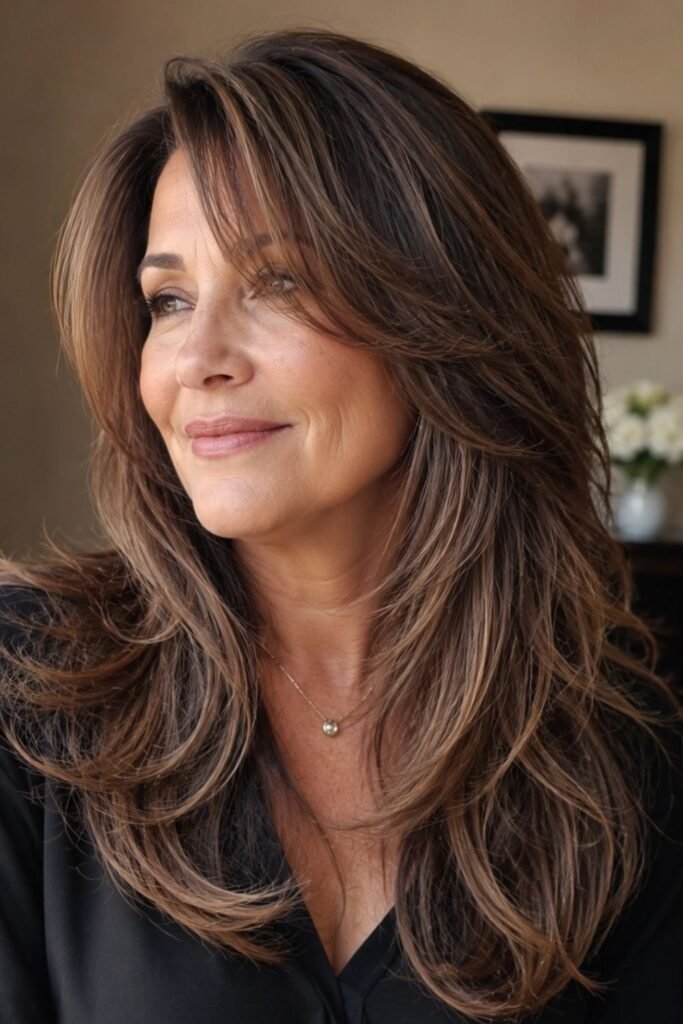
Face-framing layers that start at the cheekbone and taper toward the chin create a V shape that draws the eye to the mid-face instead of the jaw or forehead. For women over 50, starting the layers at the cheekbone works better than starting at the temple, because it adds width where the face tends to lose volume with age and leaves the forehead alone.
Commit to the side part and train it. A deep part shifts crown volume to one side and hides the thinning at the parting that often shows up after 50. Apply a light-hold pomade along the part each morning while the hair is slightly damp, and within two or three weeks the part will fall into place without any product.
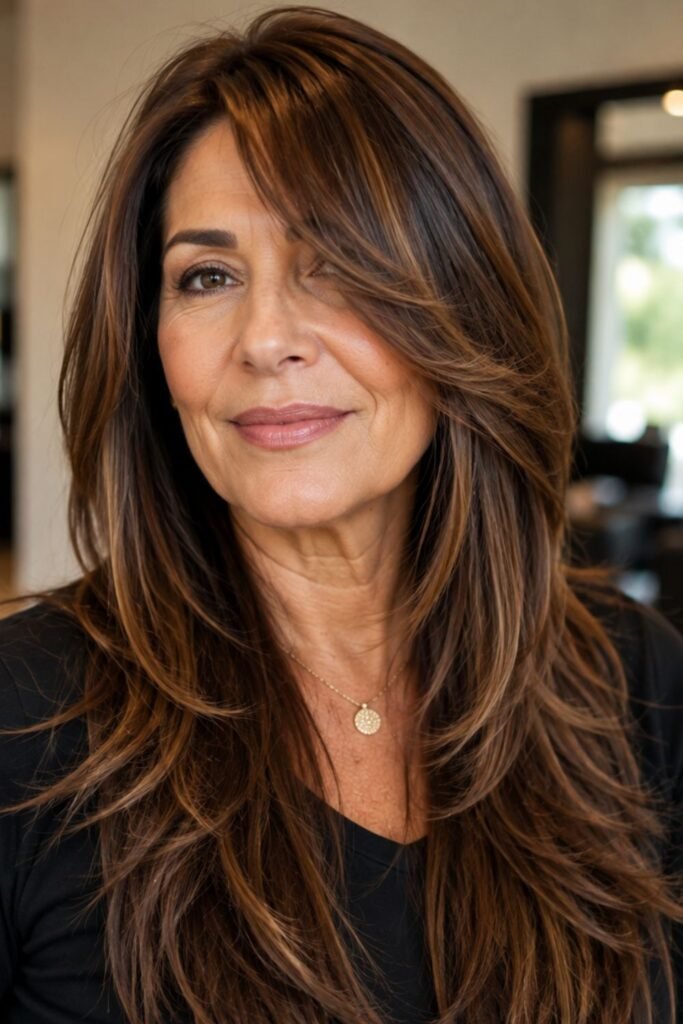
Long Layers with Wispy Ends
Wispy, point-cut ends take away the blunt, heavy finish that makes long hair look dated. A blunt line across the ends needs a lot of density to look intentional, and many women over 50 have less of it than they used to. Point-cutting spreads the weight of the ends into a softer edge that moves with the hair.
Ask your stylist to point-cut through the last two to three inches of every section, including the face-framing pieces. The difference shows after the very first blow-dry. If the stylist starts cutting straight across the ends, pause and ask about point-cutting before they go further.
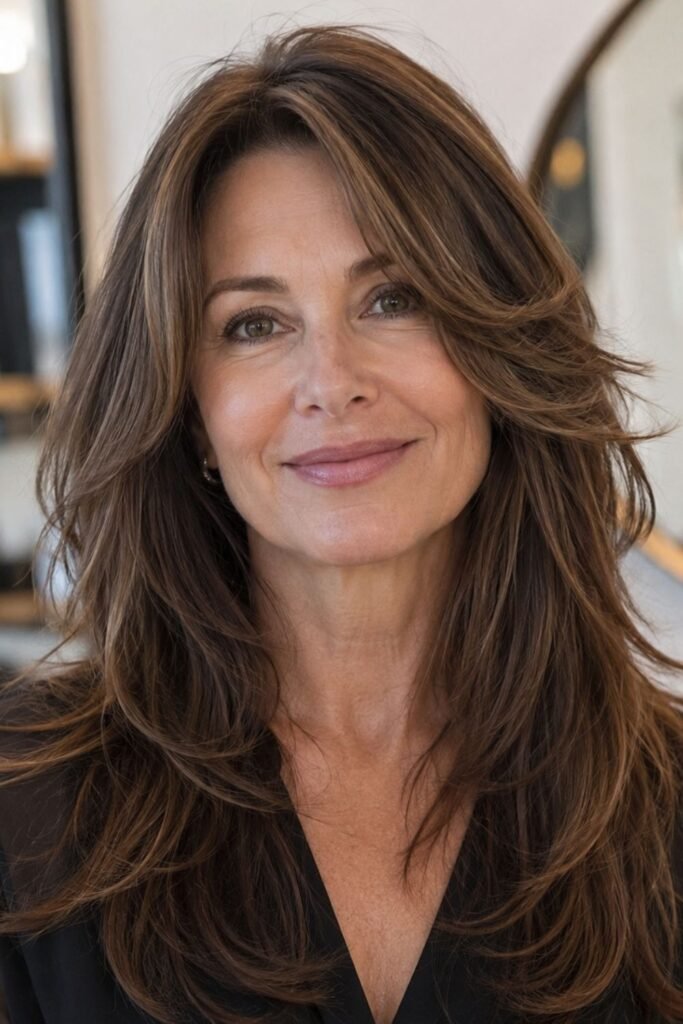
Long Layers with Soft Curtain Bang on Fine Hair
Fine hair over 50 needs layers that start lower than they would on thick hair, around the collarbone instead of the shoulder, so the interior layers add movement without letting the scalp show through. A soft curtain bang cut to nose length adds density at the front, where fine hair looks thinnest.
Work a volumizing mousse into damp roots before blow-drying. Dry the crown upward and away from the head with a round brush to build the lift that fine strands cannot create on their own, then finish with a light-hold spray that sets the shape without weighing it down.
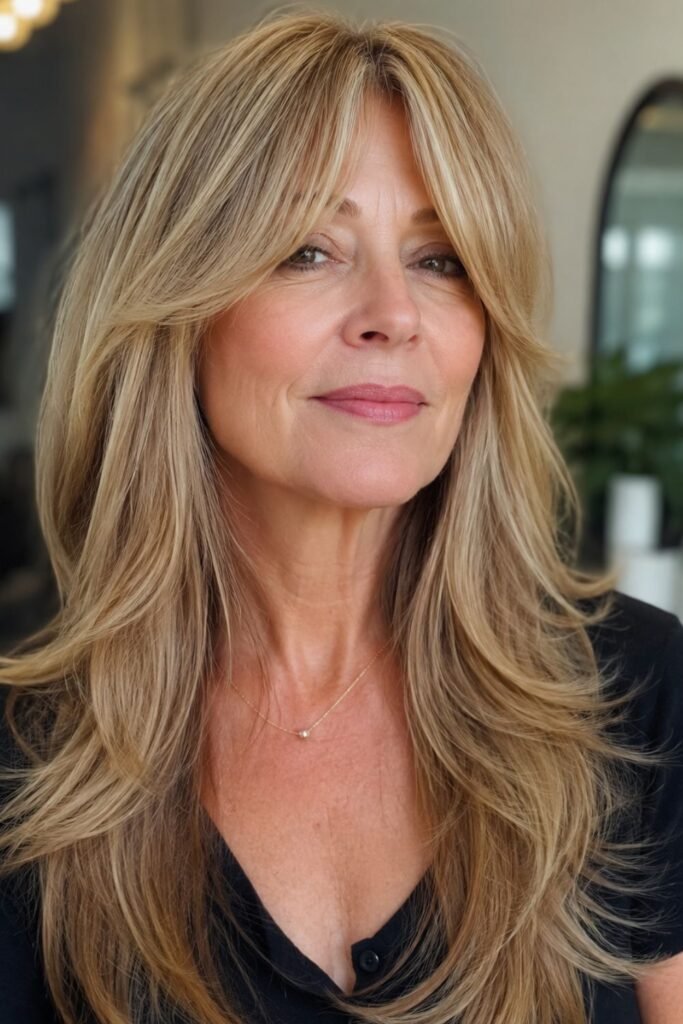
Long Layered Styles by Color
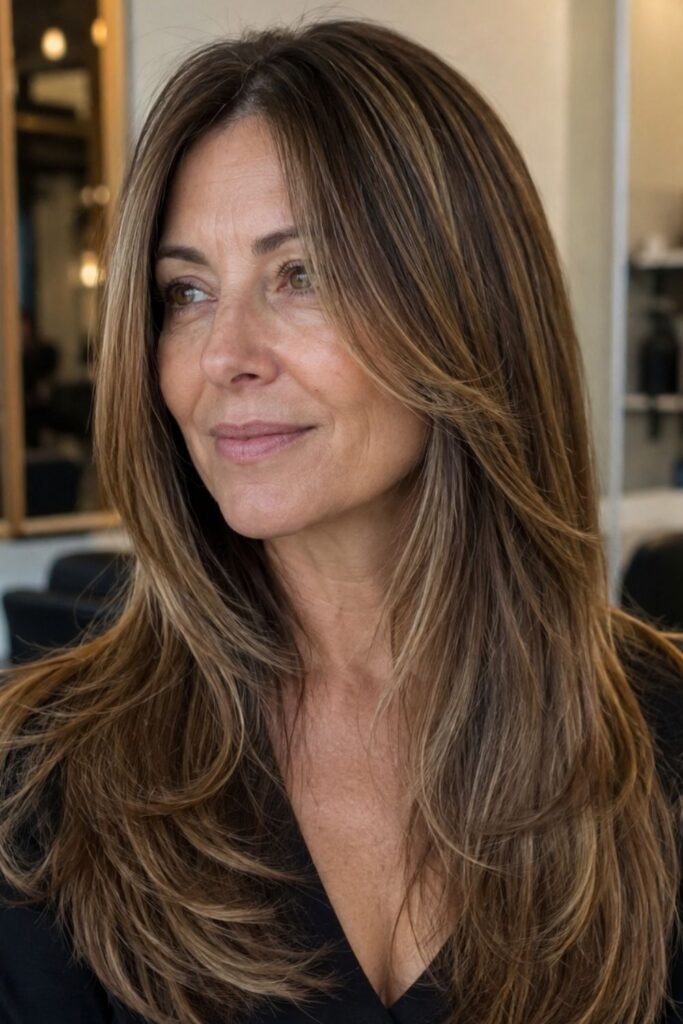
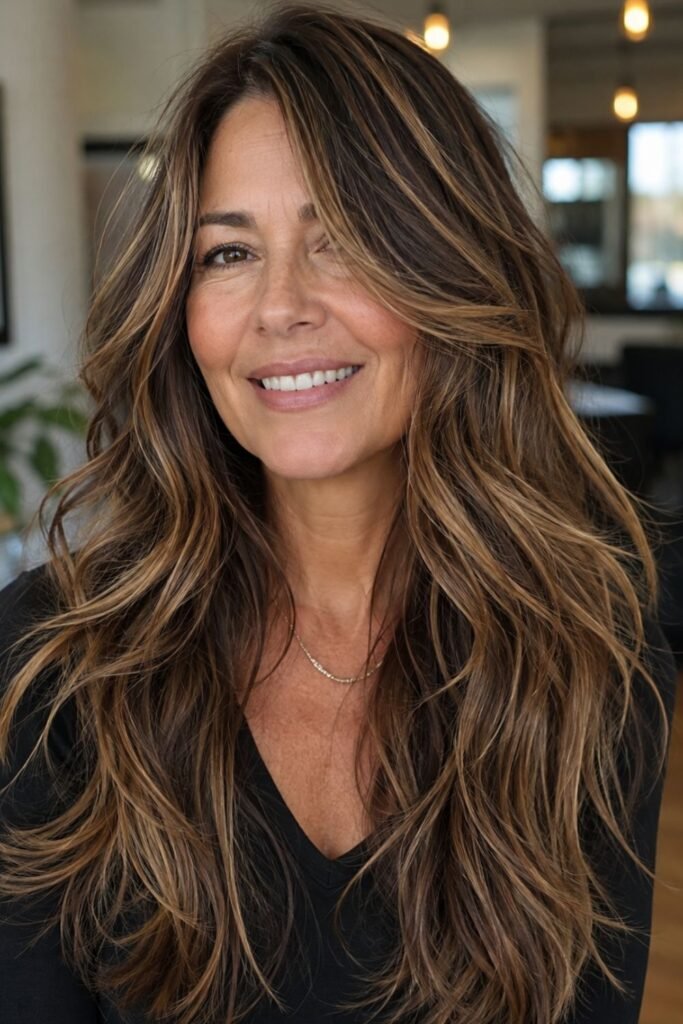
Long Layers with Caramel Highlights
Highlights make the layers in long hair visible, adding the dimension that lets movement show even in flat light. Our guide to caramel highlights on brown hair covers placement in detail. For long layered hair over 50, ask for highlights concentrated in the face-framing layers and through the crown, where they catch the most light and draw attention upward, away from the jaw and neck.
Balayage follows the natural movement of the layers and blends more softly than foils, which can leave stripy bands of color when long hair moves. It is also easier to maintain, with touch-ups every twelve to sixteen weeks compared with six to eight weeks for traditional foil highlights.
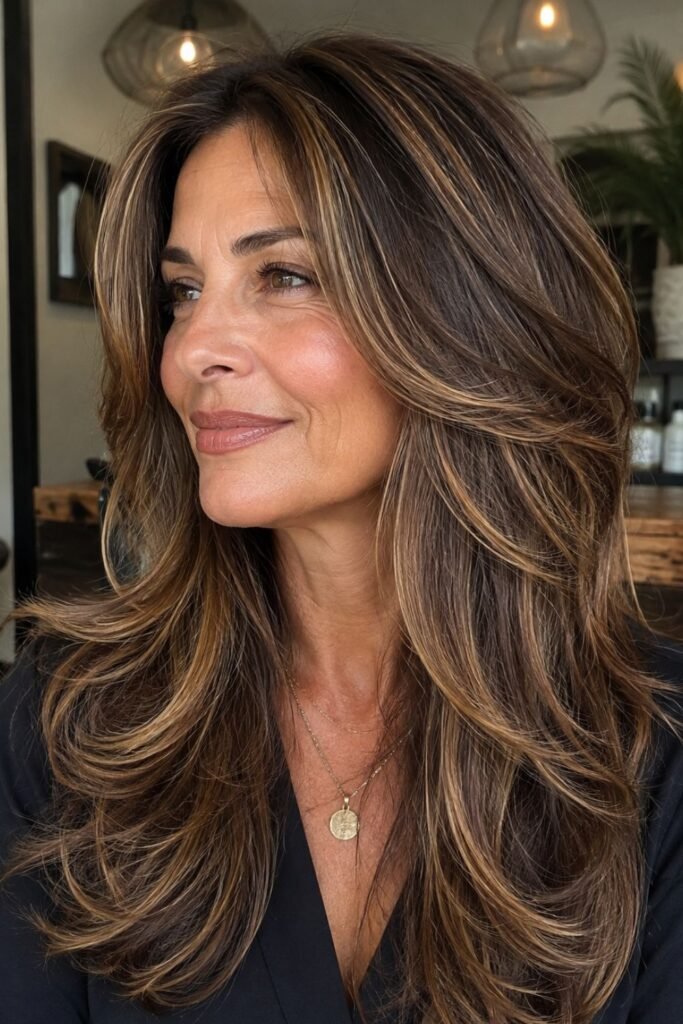
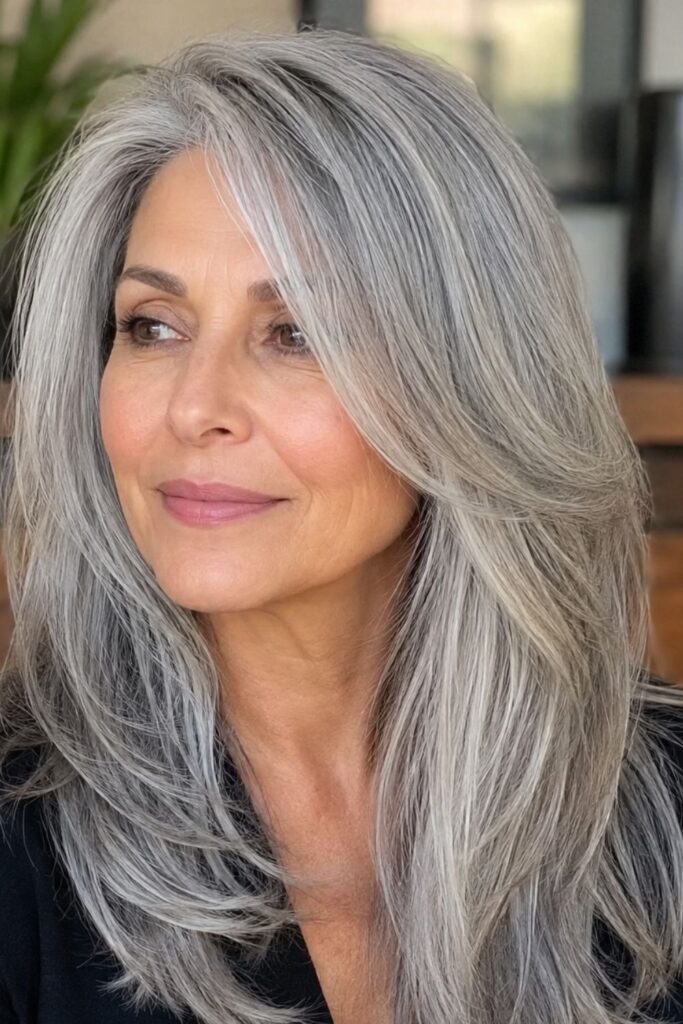
Long Silver Layers with Deep Side Part
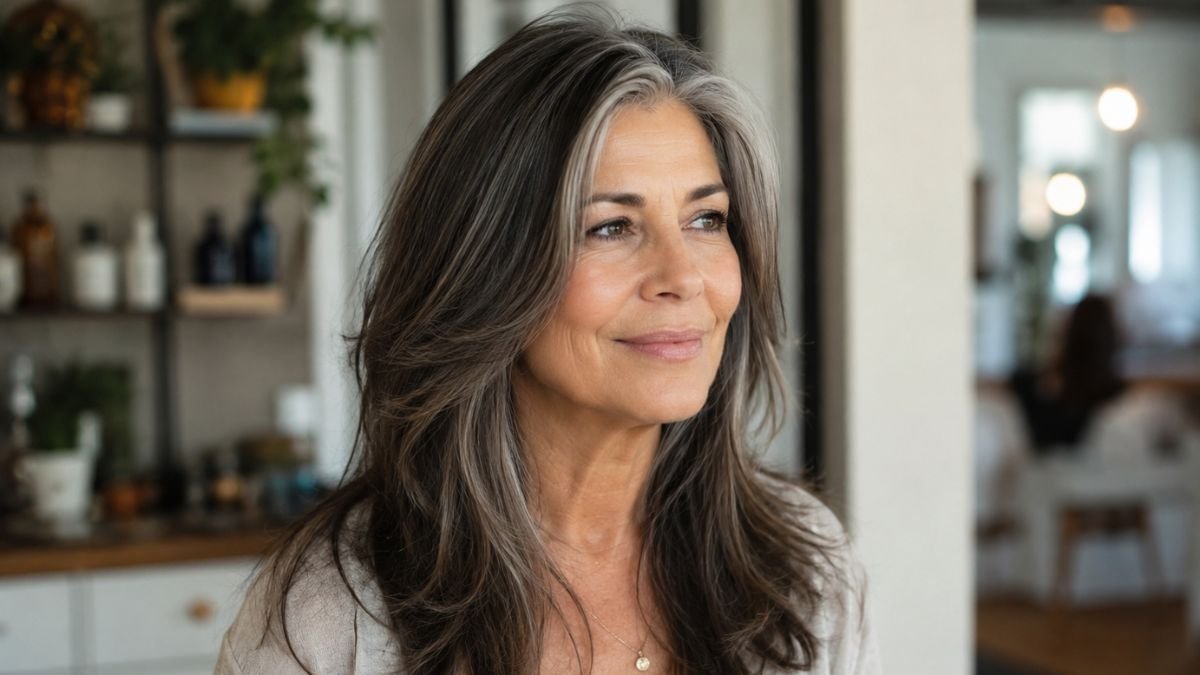
Long silver hair past the collarbone, with internal layering and a deep side part, is one of the most striking choices for women over 50. Silver reflects light along each layer, so the movement of the cut shows clearly. The deep part also moves crown volume to one side and offsets the flat look that thinning at the crown can cause.
Silver and white hair is more porous than pigmented hair, so use a purple or blue toning shampoo once a week to stop hard water and heat from turning it yellow. A rich conditioner through the mid-lengths and ends counters the dryness that coarser silver hair tends to develop and keeps the layers soft and defined.
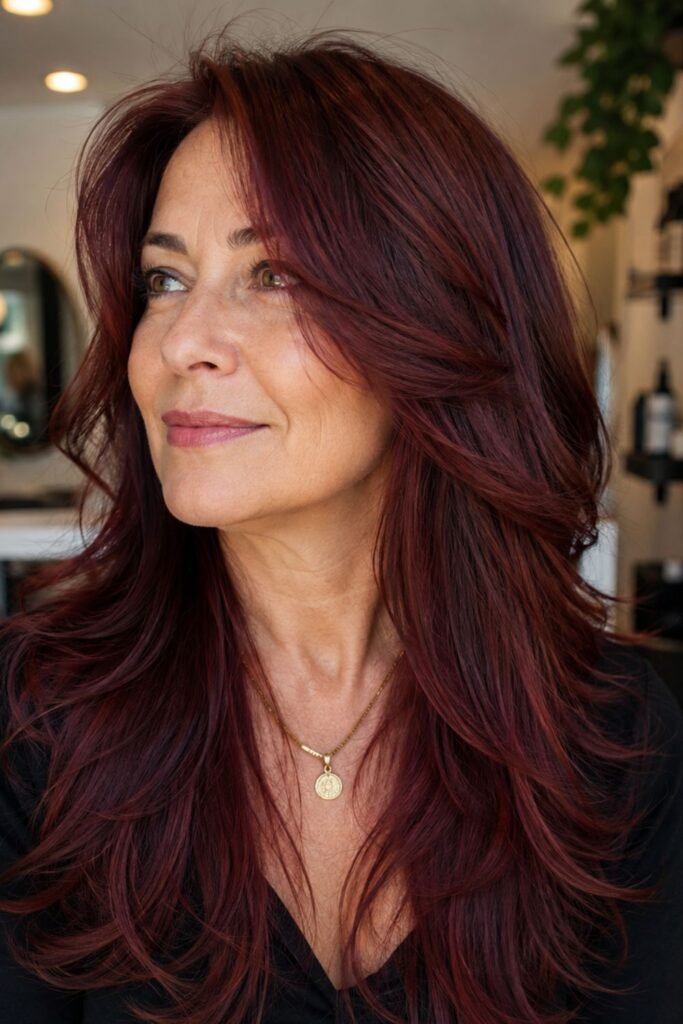
Long Layers with Dark Cherry Red
A dark cherry red through long layers is a confident, modern choice for women over 50 who want their length to look current. The depth of the shade creates shadow between the layers, so each one is visible from across a room, and the red picks up light along the lengths to show off the movement of the cut.
Over silver or grey hair, cherry red looks vivid and almost jewel-toned, quite different from the same formula on brown or black hair. If much of your hair is grey, talk this through with your colorist and ask for a strand test before a full application.
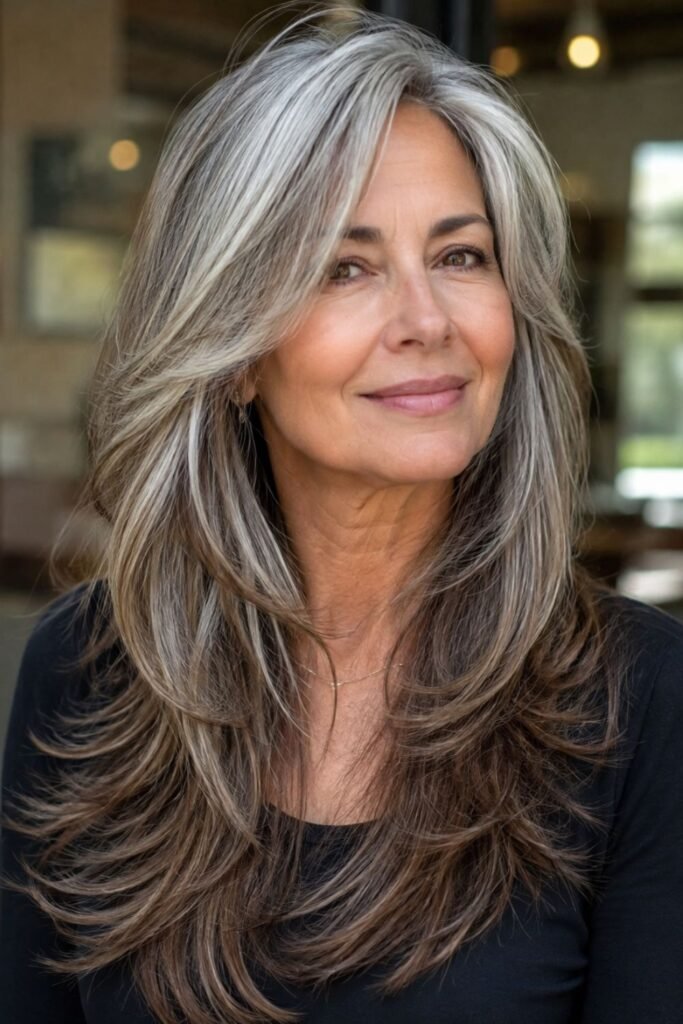
Long Silver and Brunette Blend
A planned blend of natural silver regrowth and brunette lengths, transitioning without harsh box color or a sharp line, gives a two-tone effect that looks modern and chosen. The silver at the root brightens the face, and the brunette through the lengths adds warmth to balance the cooler tone at the crown.
Ask your colorist for a shadow root if you want the transition to look intentional. The technique blends a slightly darker tone at the part into the lighter silver, softening the line into a smooth gradient. Plan on a gloss every eight to ten weeks to keep the brunette from turning brassy as the silver grows in.
Long Layered Styles by Texture
Long Layers on Straight Hair
Straight hair over 50 needs the most daily styling in a long layered cut, because there is no natural wave or curl to fill out the layers. The step that matters most is a round brush blow-dry on the crown and face-framing sections: aim the airflow down the hair shaft and roll the brush outward to lift the roots and give the ends a slight inward curve.
Volumizing mousse at the roots before blow-drying adds grip and lift. On days without time for a full blow-dry, spray dry shampoo at the roots, mist a light texturizing spray through the mid-lengths, and diffuse on low heat for two minutes. That is enough to bring back volume and movement in the layers.
Long Layers on Wavy Hair
Wavy hair is the lowest-maintenance texture for long layers over 50, because the wave fills out the cut and creates movement on its own. Placement matters. Layers cut too high on the head create uneven volume that the wave exaggerates, while layers starting at the collarbone and below blend smoothly into the wave pattern.
Apply a curl cream or wave mousse to damp hair, then diffuse on low heat while scrunching upward through the layers to encourage the wave along the full length. Once dry, a few drops of lightweight oil on the ends add shine and definition without weighing the waves down through the day.
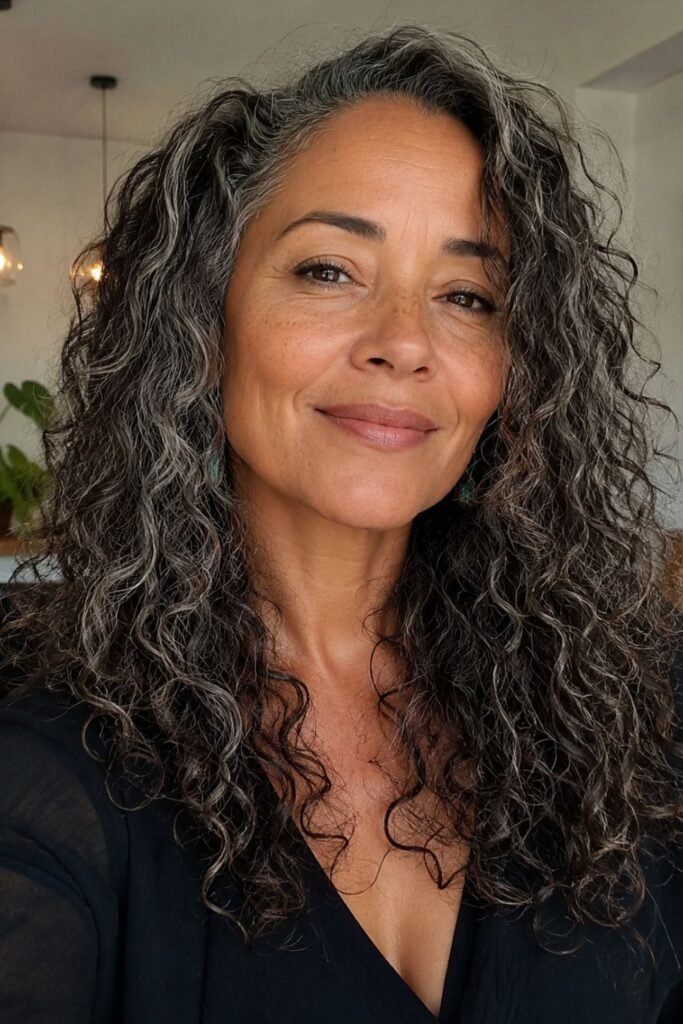
Long Layers on Natural or Textured Hair
Long layered cuts on natural and textured hair follow the same rule as curly cuts at any age: the stylist should cut on dry, natural hair to see where each section lands after shrinkage. On type 3 and type 4 hair, texture often becomes finer or drier after 50, which changes how the layers hold their shape. These winter hairstyles for Black women include moisture and styling guidance for type 3 and type 4 textures that applies directly to long layered natural hair.
Deep condition every one to two weeks, since scalp oils travel less easily along long, coily strands as you get older. Apply a leave-in conditioner through the mid-lengths and ends before any styling product to keep the layers moisturized and defined.
Long Layered Styles for Occasions
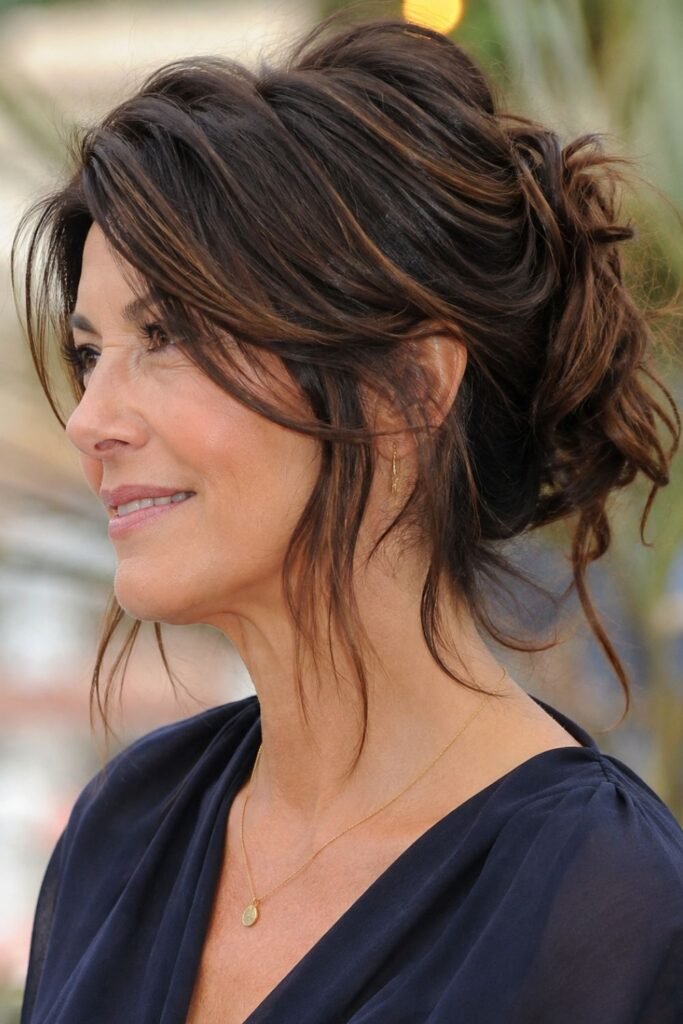
Long Layers Worn in a Loose Updo
The loose updo is the most versatile occasion option for long layers: a chignon or twisted bun at the nape, with the face-framing layers left loose at the temples and a few pieces pulled free from the bun. Those loose front layers do most of the work, adding a softness around the face that a tight, smooth updo cannot. For more ways to pin a bun that keeps its volume, browse these long hair updos and half-up styles.
Use bobby pins that match your hair color so they disappear into the style. On finer hair, cross the pins in an X instead of laying them flat, since a single flat pin can slip. Finish with a light mist of spray to smooth the surface while keeping the loose face-framing pieces soft.
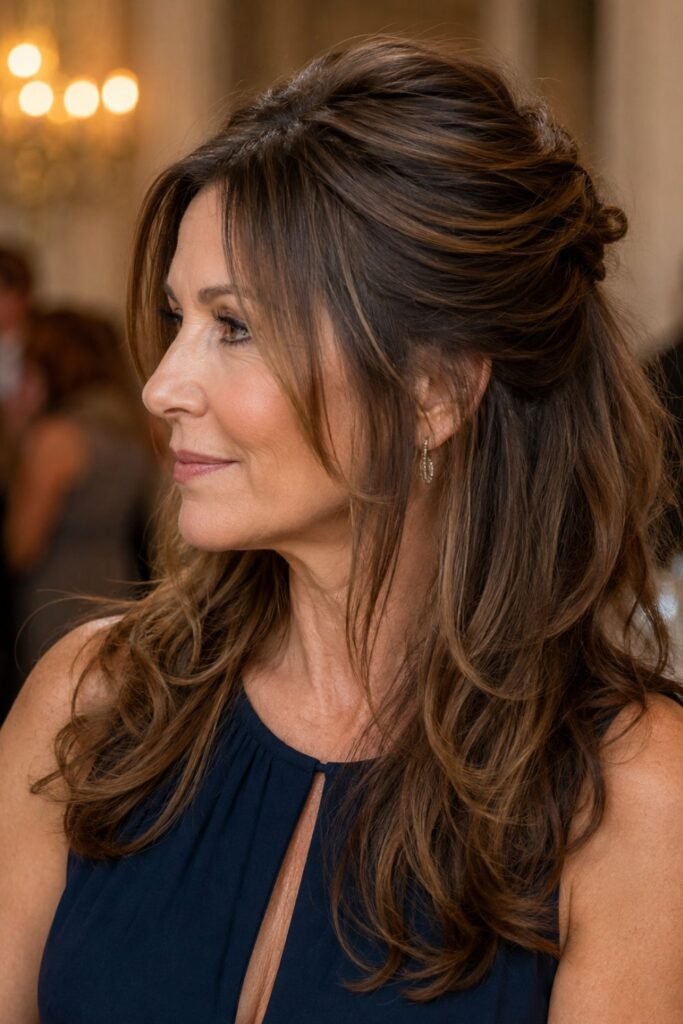
Long Layers in a Half-Up Style for an Event
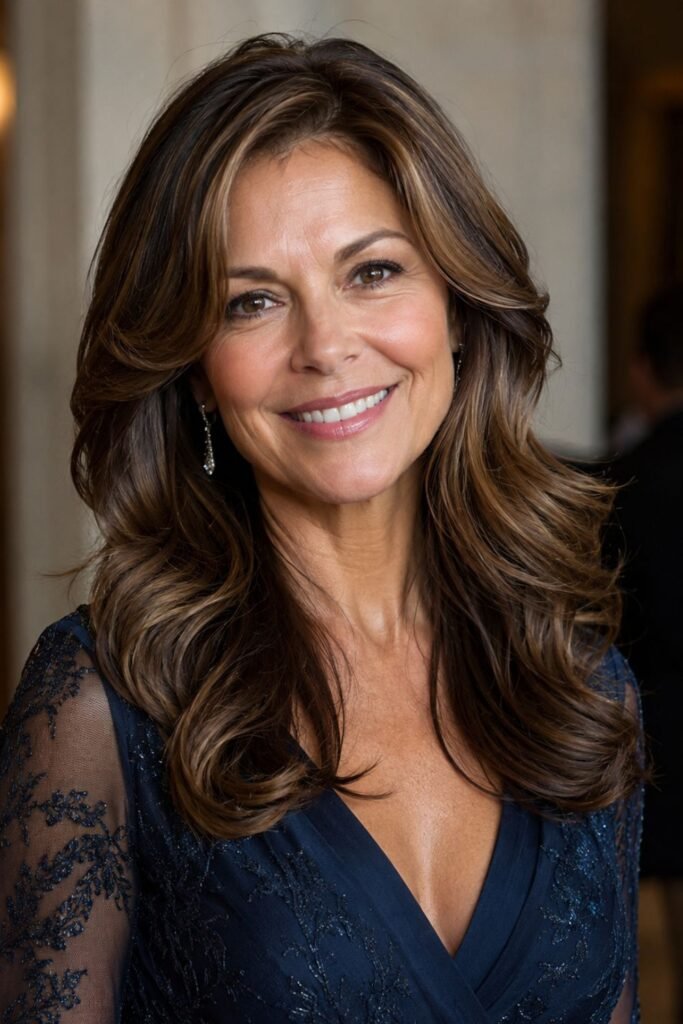
A half-up style, with the crown gathered loosely and the layers falling below, is the easiest occasion look on this list that still looks polished. The gathered crown adds height that lengthens the face, and the loose layers underneath move and catch the light in a way a full updo cannot.
Set soft waves through the lower layers before you gather the crown so the hair below has shape. Secure the top section with a claw clip or ribbon instead of a tight elastic, which can pull at the part and make thinning more visible. Leave two thin pieces out at the temples to soften the front.
Long Layers with Hollywood Waves for a Formal Occasion
Hollywood waves give the most glamorous result on this list. The slow, rolling wave through the full length looks sophisticated and polished, and the layers give the waves their shape by creating movement at each level instead of a single mass of curls. These masquerade hairstyles show how the same technique works alongside other formal long hair looks.
Apply a heat protectant before setting the waves with a large-barrel iron. Work in sections no wider than two inches and apply a strong-hold spray before curling each section. Allow each wave to cool fully before brushing through once in the direction of the wave. The brushing step is what creates the Hollywood wave shape rather than separate curls, and it only works correctly when the spray has dried first.
Long Layered Styles with Accessories
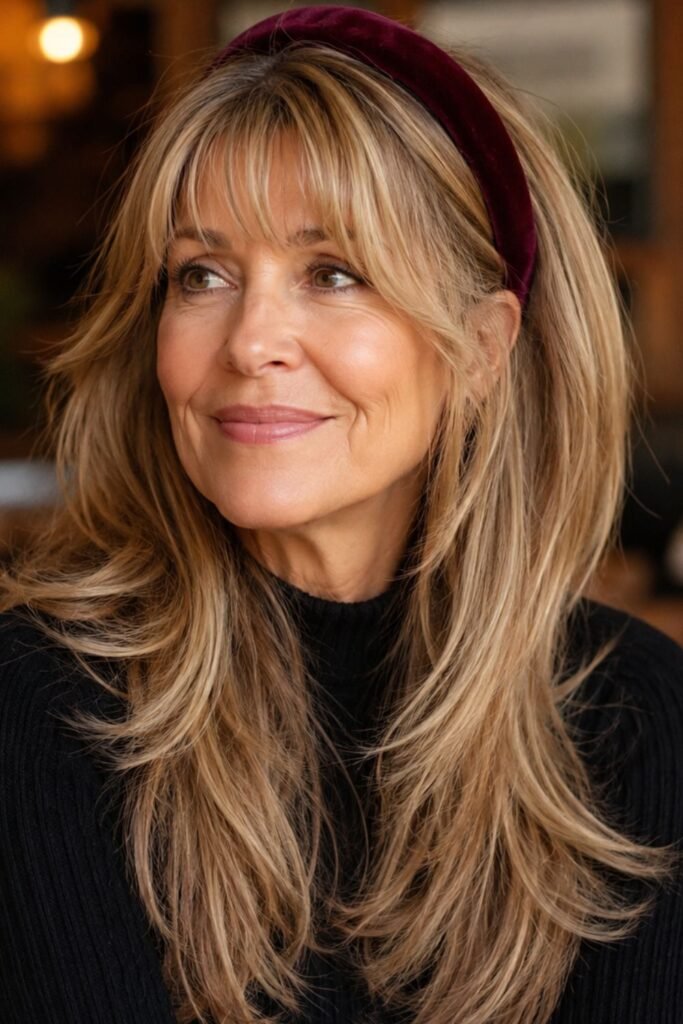
Long Layers with a Velvet Headband
A wide velvet headband placed just behind the hairline turns long layers into a finished look with no styling time beyond the blow-dry. The headband adds color, frames the face, and keeps hair back through a long day or evening without any pins. Deep jewel tones such as burgundy, navy, and emerald work well against silver, brunette, and red hair alike.
If your hair is fine or slippery, choose a band with small grip teeth on the inside. Velvet holds better than satin or fabric-covered styles and is worth the small price difference. Put the headband on after styling so the crown keeps the lift from the blow-dry instead of being pressed flat.
Long Layers with a Jeweled Hair Pin at the Crown
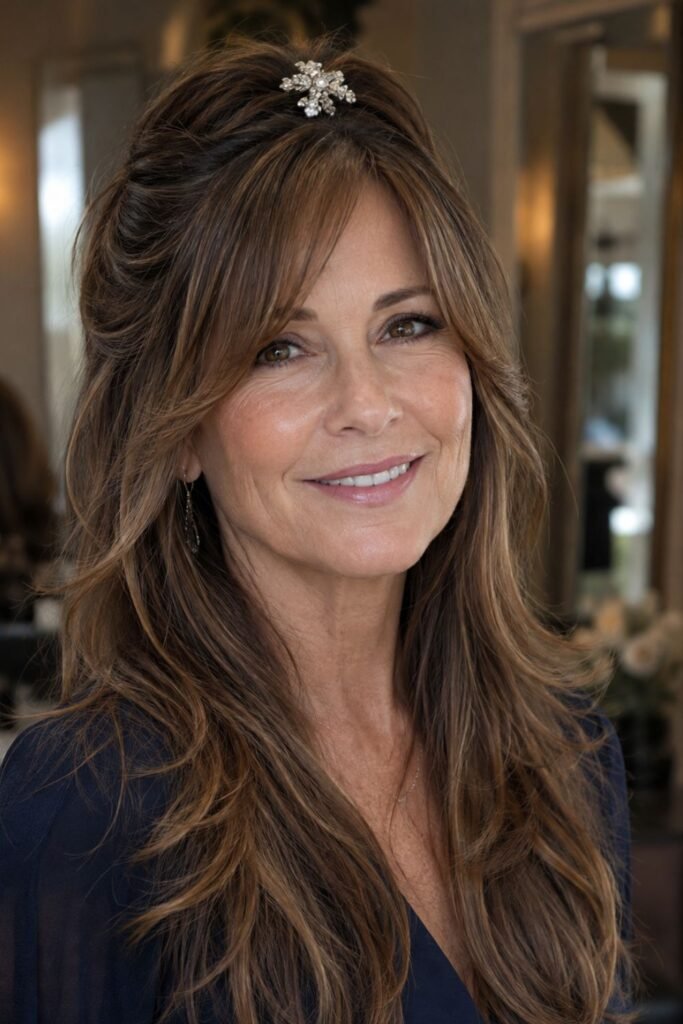
A single jeweled or decorative pin at the crown, holding a small twist or pinned flat against the hair, makes everyday long layers look dressed for an occasion. The pin draws the eye up to the crown, the fullest part of the style. Pearl pins look classic with silver hair, while gold or crystal designs add warmth to brunette and red shades.
Use a pin with a backing that grips the hair rather than a slide that can move. On fine hair over 50, a pin backed with a small bobby pin underneath holds more securely through a full evening. The pin should be placed at the point of maximum volume at the crown so it sits visibly on top of the style rather than being buried in flat hair.
Long Layers Worn Simply with a Natural Finish
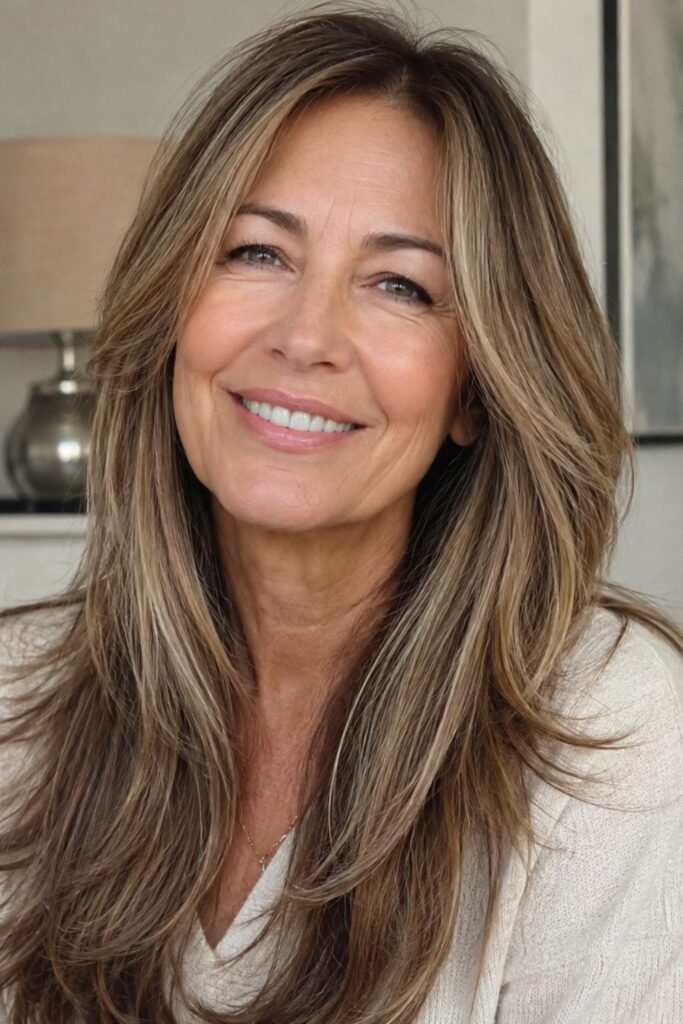
Long layered hair worn naturally, blow-dried with a round brush for volume and finished with a light serum for shine, is a complete look on its own. The layers do the visual work. Many women over 50 feel pressure to add accessories or elaborate finishing steps to long hair, as if the length and layers need help. They do not. A good cut in good condition carries the style by itself.
Work a fingertip-sized amount of lightweight serum or oil through the ends after blow-drying to bring out shine. Rub it between your palms and smooth it lightly over the surface of the lengths, keeping it away from the roots, where it would add weight exactly where you need volume.
What Long Layered Hair Needs to Work Over 50
Interior Layers Rather Than Surface Layers
Surface layers remove length from the outer part of the hair, which is the most visible section and the one that sets the overall shape. Interior layers are cut into the underneath sections, so they remove weight and add movement without touching the surface length. If you want to keep the look of length while gaining movement, ask your stylist for interior layers by name.
Regular Trims to Maintain the Layer Shape
Long layers on women over 50 need trimming every eight to ten weeks. Without regular trims, the shorter interior layers grow toward the surface layers and the weight distribution changes, eventually producing the same flat, heavy appearance the layers were cut to prevent. A dusting trim, which removes only the split ends without taking length, can be done between full appointments to maintain the ends without affecting the overall style.
Moisture Management Through the Full Length
Long hair over 50 tends to be drier at the ends, because the scalp produces less oil with age and that oil takes longer to travel down long strands. Apply a leave-in conditioner from the mid-lengths to the ends before heat styling, and use a deep conditioning mask for twenty minutes once a week to keep the layers moving well and looking healthy.
Frequently Asked Questions
Can women over 50 wear long hair?
Yes. Long hair after 50 is a personal choice, and it works well when the cut accounts for how hair changes with age. Interior layers, face-framing sections, and point-cut ends adapt long hair to the lower density and new texture many women notice after 50, so the result looks deliberate and modern.
What length is considered long hair over 50?
Any length past the collarbone reads as long hair. The most common long lengths for women over 50 are collarbone to mid-back, where the hair has enough length for layers to develop their full movement without the weight of very long hair pulling the style flat. Hair past the mid-back on women over 50 with reduced density can become difficult to style with enough volume, though it is entirely achievable with the right layering and products.
How do I add volume to long layered hair over 50?
A volumizing mousse applied at the roots on damp hair before blow-drying is the most effective single product. Blow-dry the crown section upward and away from the head with a round brush rather than downward. A dry shampoo at the roots on second-day hair adds texture and grip that restores volume without a full wash. Interior layers cut by your stylist do the structural work that products alone cannot fully replicate.
Does long hair make women over 50 look older?
Not when it is cut well. Long hair without layers, color dimension, or regular trims can look dated. Long layered hair with face-framing sections, healthy ends, and a little styling looks confident at any age. The cut and the condition of the hair matter more than the length.
What are the best products for long layered hair over 50?
A volumizing or thickening shampoo used at the roots, a conditioner applied only from the mid-lengths to the ends, a leave-in conditioner for moisture through the lengths, a volumizing mousse or spray at the roots before blow-drying, and a lightweight finishing serum or oil on the dry ends are the five products that make the most consistent difference for long layered hair over 50. Avoid heavy creams or pomades applied to the surface, which flatten the layers and remove the volume the cut creates.
Final Thoughts
Long layered hairstyles for women over 50 let you keep your length and still get the volume and movement that changing hair needs. The layers lift and shape the hair as density shifts, and the length stays intact, so the style always reads as your choice.
Ask for interior layers that begin at the collarbone, point-cut ends throughout, and face-framing sections that start at the cheekbone. Trim every eight to ten weeks. Keep the ends moisturized. Those four decisions produce the result regardless of which specific style from this list you choose.