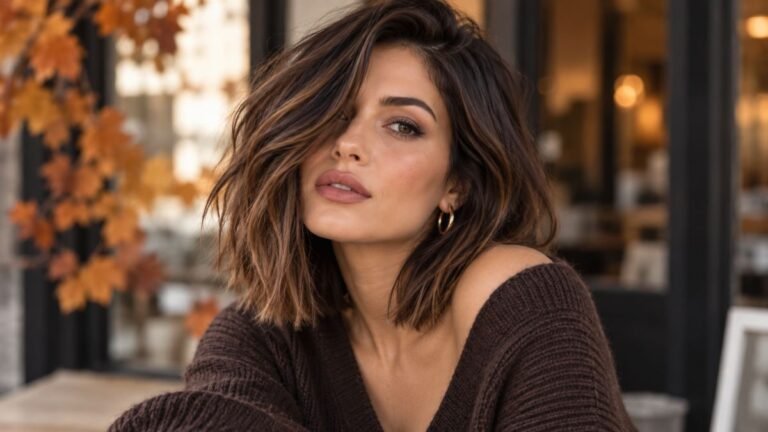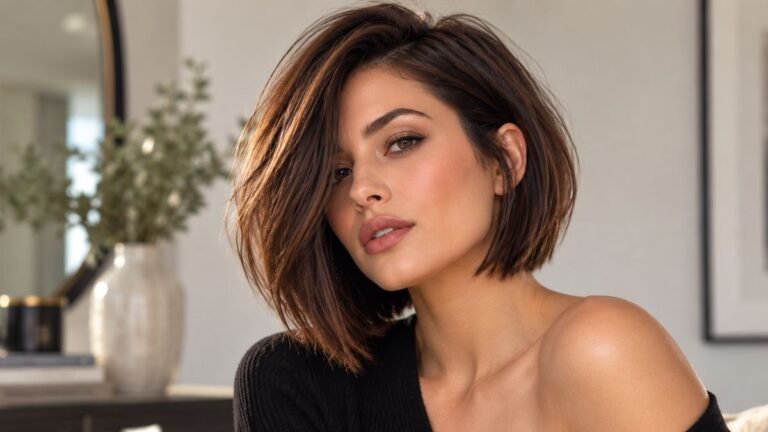

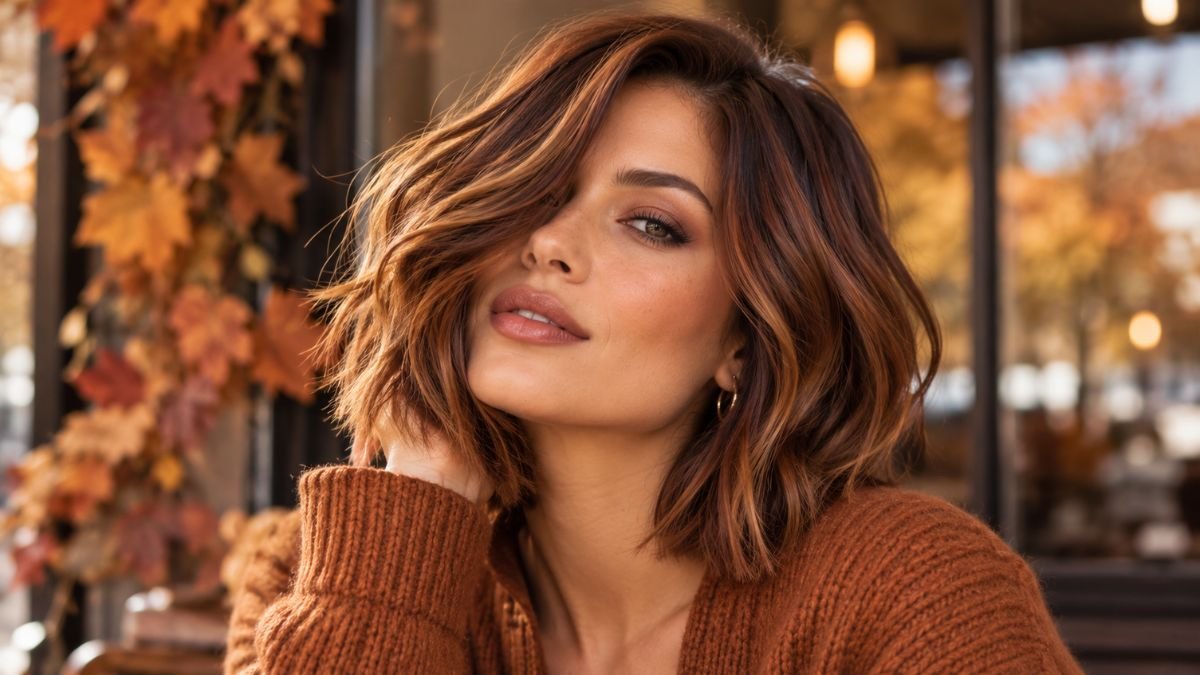
Amber and sienna hair color are two of the warmest, most wearable directions for fall 2026. Amber shows up as golden ribbons and face-framing light, while burnt sienna brings a deeper red-brown that feels richer than bright copper. Together they cover a wide range, from glowing brunette to muted copper-red.
Each of the 16 ideas below explains what to ask your colorist for, who the shade suits, and how much upkeep to expect, so you can choose between a quick gloss and a full color change.
For more inspiration, Allure’s Fall 2026 hair trends report and Summer 2026 color report, along with Vogue’s 2026 hair color forecast, all feature warm golden and red-brown shades.
Quick Guide: Amber or Sienna?
| If You Want | Best Direction | Overall Effect | Watch For |
| Golden light | Amber highlights or amber bronde | Luminous, reflective warmth | Going too pale and losing autumn depth |
| A red-brown shift | Burnt sienna or sienna melt | Muted, earthy copper-red | Bright orange or overly saturated red |
| Low-contrast brunette | Candlelit sienna brunette | Soft, expensive-looking dimension | Highlight stripes |
| A fall transition from blonde | Sienna reverse balayage | More depth with some retained brightness | Darkening porous blonde too abruptly |
| Minimal commitment | Gloss or warm ends | Seasonal tone without a full recolor | Expecting permanent color from a sheer gloss |
Amber Glow Balayage
Amber highlights are one of the clearest warm directions this fall. Here, hand-painted golden pieces sit on a light-to-medium brunette base, which keeps the gold grounded and makes it look luminous instead of summery. Ask your colorist for soft balayage that starts a few inches below the root and grows brighter toward the ends and around the face, toned to a honey-amber reflect. Because the base stays brunette, grow-out is soft and most people can stretch appointments to every three or four months with a gloss in between. For a similar golden-brown mix, browse our tiger eye hairstyle ideas.
Best for: Light-to-medium brunettes who want warmth without becoming blonde.
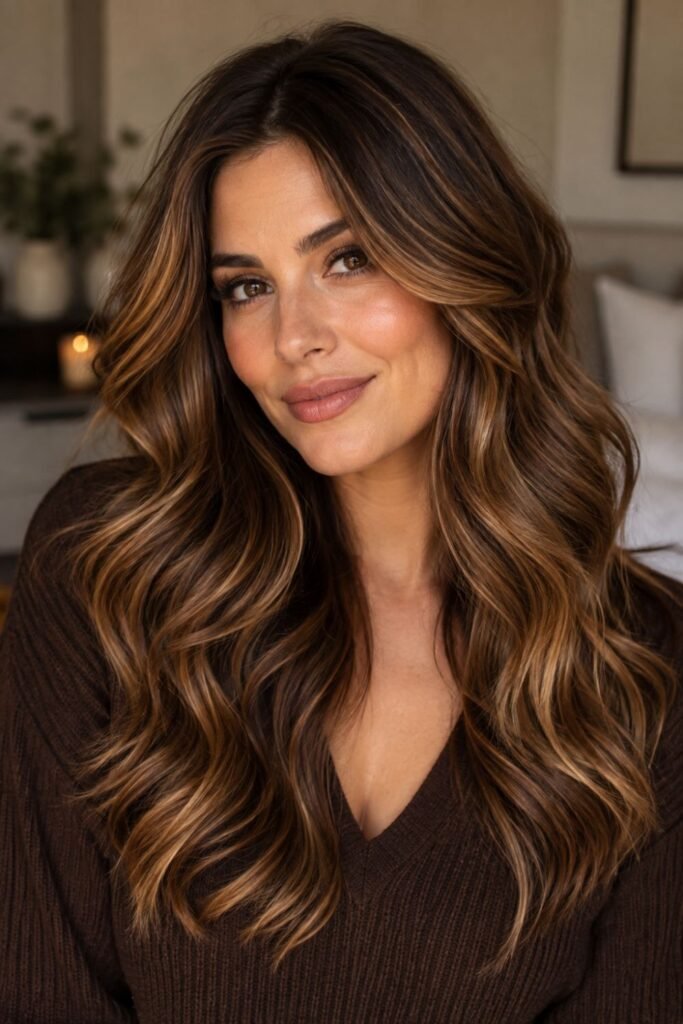
Burnt Sienna Brunette
Burnt sienna is more restrained than vivid copper. A rich brown base gives the color depth, while a muted red-copper reflect shows up mainly when light hits it. Ask for an all-over or root-to-ends tint about one level warmer than your natural shade, with a red-gold tone instead of a violet-red. It suits warm and neutral skin tones especially well and flatters hazel, green, and brown eyes. Red pigment fades fastest, so wash with cool water, use a color-safe shampoo, and book a gloss every six to eight weeks to keep the tone rich.
Best for: Natural brunettes who want a red shift without a bright-red result.
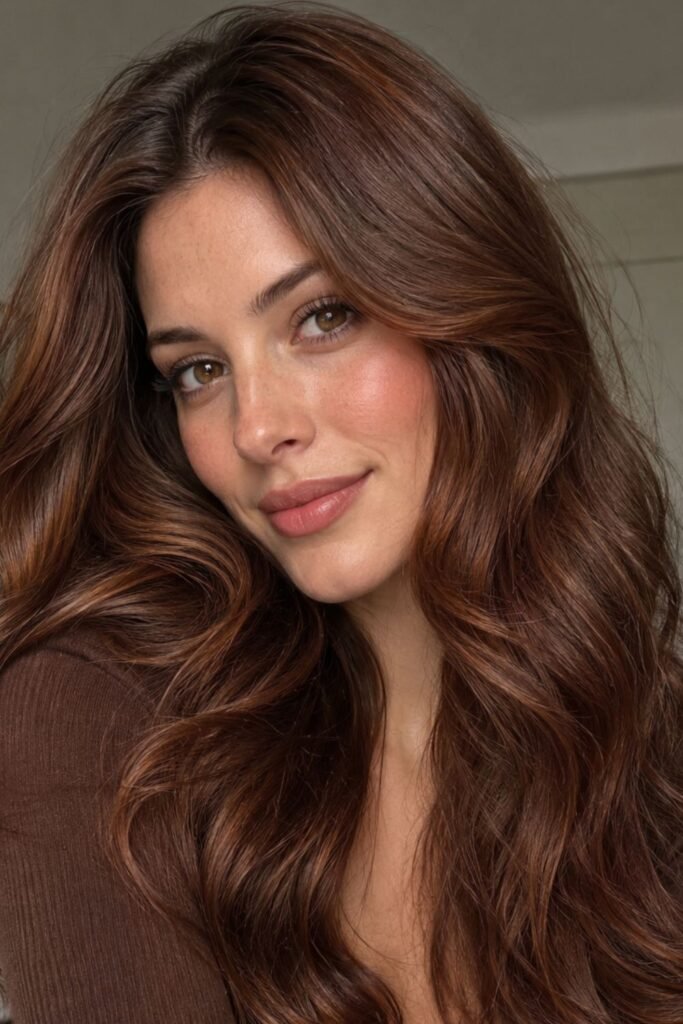
Candlelit Sienna Brunette
This shade combines the soft, low-light look of candlelit brunette with sienna warmth. The contrast stays low: fine babylights and lowlights only one or two levels apart from the base, toned in a muted copper-brown. That subtle placement makes the color look expensive and keeps it easy to wear at work or on camera. Ask your colorist for low-contrast warm dimension and bring photos taken in natural light. Maintenance is easy because there are no obvious lines as roots grow, and a sienna gloss every couple of months refreshes the glow.
Best for: Medium brunettes who prefer low-contrast dimension.
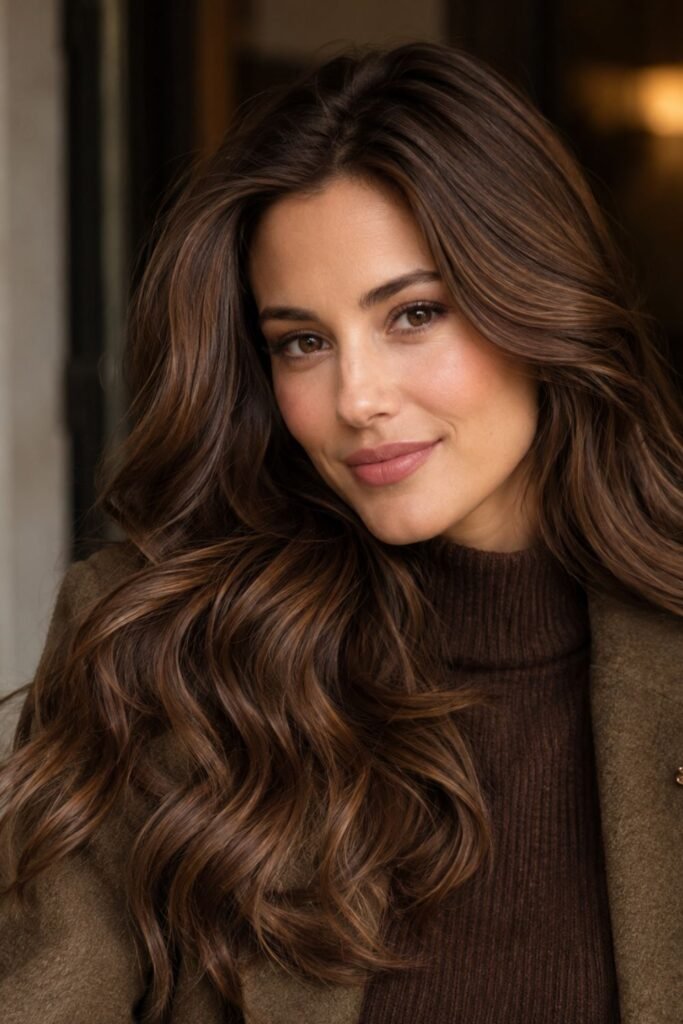
Amber Face Frame on Deep Brown
A brighter front section gives amber maximum visibility without lightening the whole head. Your colorist paints two to four face-framing pieces, often called a money piece, two or three levels lighter than a deep brown base and tones them golden amber. The dark surrounding hair makes the gold look richer and lights up the complexion. It is a smart first step for anyone curious about warm color, since only a small area is lightened. Touch-ups are quicker and cheaper than a full balayage, and the pieces can be glossed darker if you change your mind.
Best for: Brunettes who want a noticeable but localized fall update.
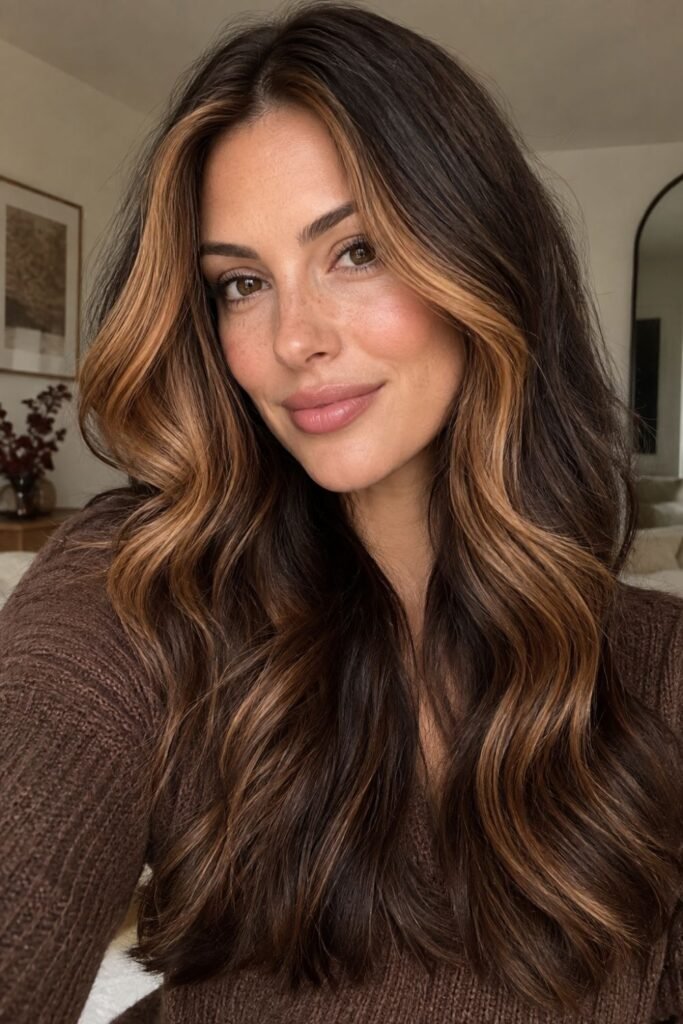
Sienna Copper Melt
A melt makes sienna easy to wear on naturally darker hair. The colorist keeps your natural root, then blends into a sienna-copper midlength and slightly brighter copper ends with no visible line between them. Warmth runs through the lengths while the root depth allows a graceful grow-out. Dark brunettes usually need gentle lightening on the lengths before the copper shows, so expect one longer appointment. If you want to go brighter later, our copper pumpkin hair color ideas show the next step up. A copper-depositing conditioner used weekly slows fading.
Best for: Medium-to-dark brunettes transitioning toward copper.
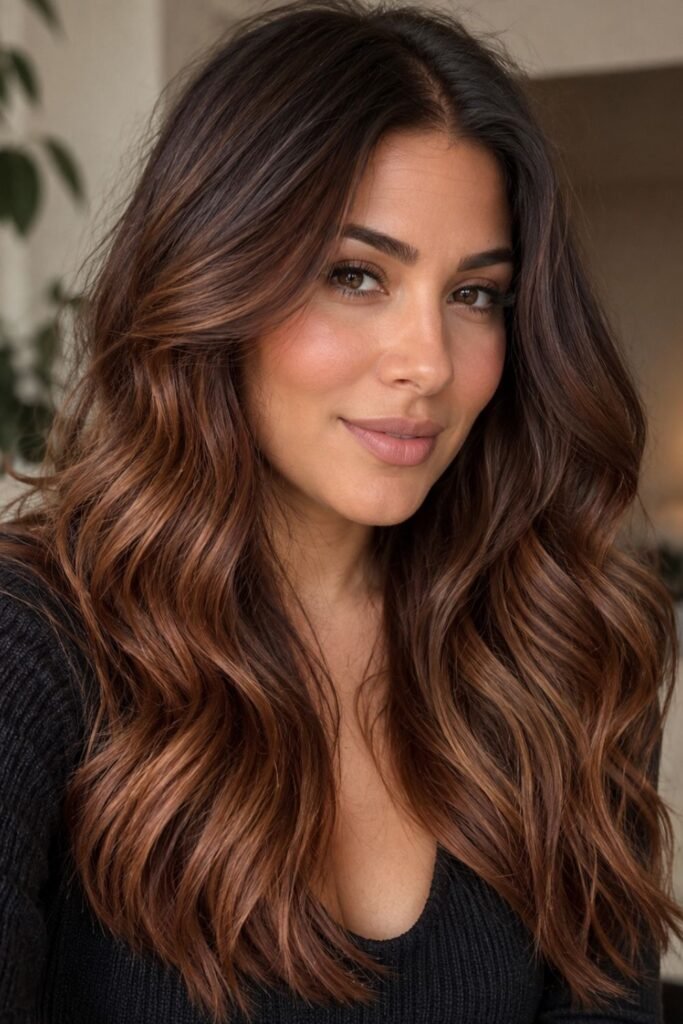
Golden Amber Bronde
Colorists are working amber undertones into bronde shades this fall. This version mixes dark blonde and light brown with a golden amber toner, adding warmth while keeping the brightness bronde wearers like. Ask for fine highlights with a few lowlights, then a gloss in a warm gold tone instead of an ash one. It flatters warm and neutral skin and looks best on hair that is already dark blonde or light brown. Skip strong purple shampoo, which cancels the amber, and use a gloss or tinted mask to keep the golden reflect.
Best for: Dark blondes and light brunettes who want warmth and dimension.
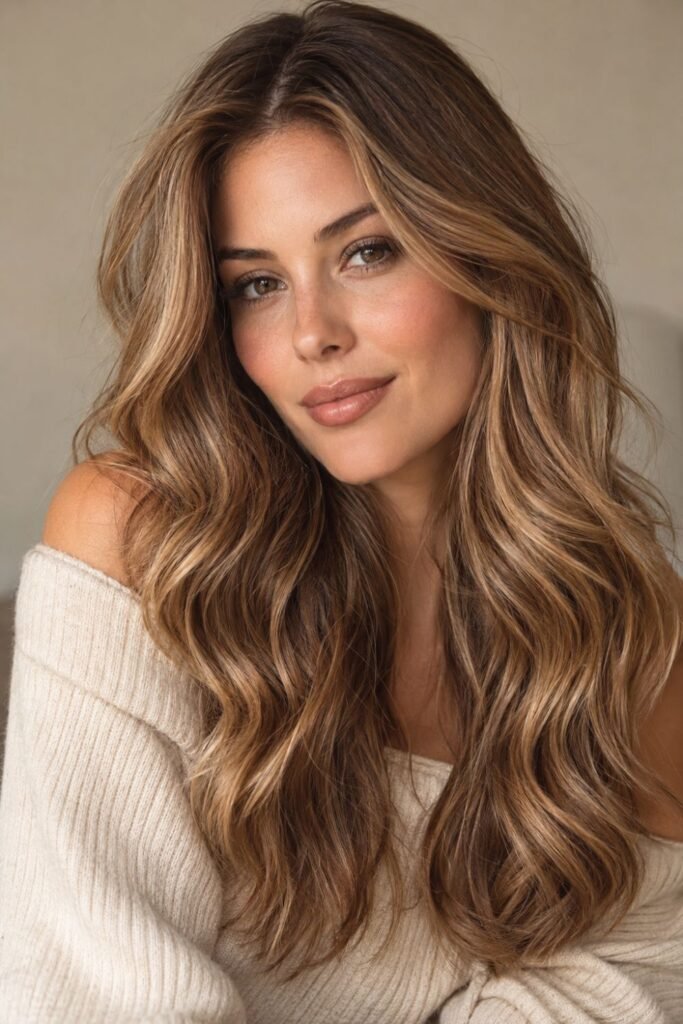
Sienna Ribbons on Chocolate Brown
Fine ribbons of sienna act as a reflect on a chocolate brown base. They stay subtle indoors and show more in natural light. Ask for thin, slightly staggered panels painted through the midlengths and ends, lifted one to two levels and toned copper-brown. The movement works especially well on medium or thick hair, where one solid shade can look heavy. Wear it with loose waves or a smooth blowout to show off the ribbons. Because so little hair is lightened, the look grows out easily and needs only an occasional gloss.
Best for: Medium or thick brunette hair that benefits from movement.
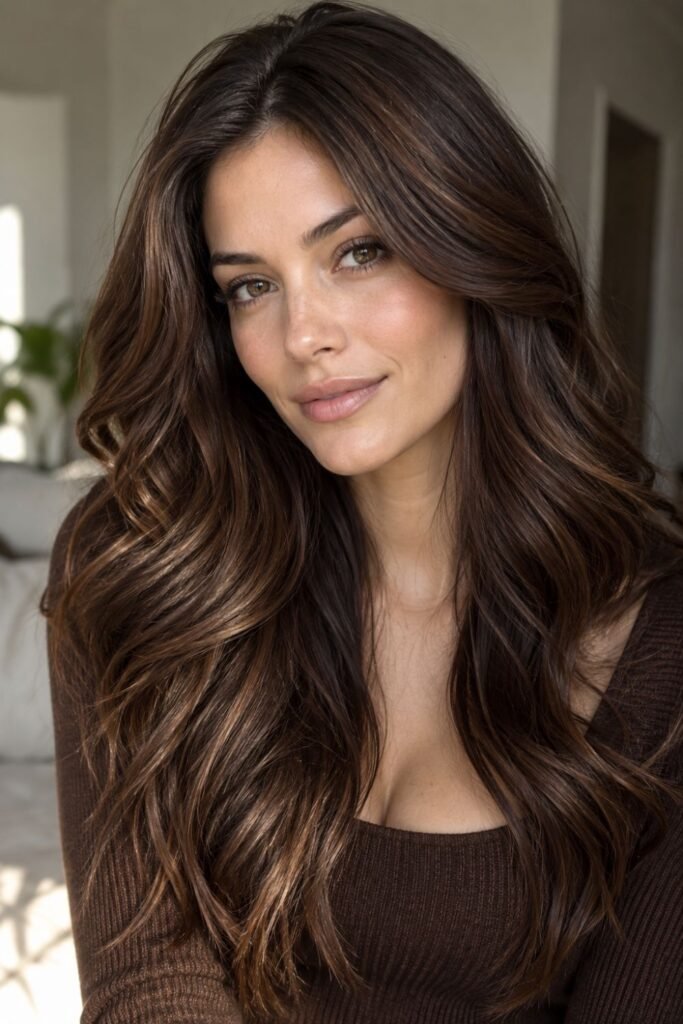
Amber Root Melt
A root melt lets bright summer color shift into a warmer fall palette without full coverage. Your colorist applies a demi-permanent shade at the root, usually a golden brown, blends it down into existing highlights, and tones the lengths amber. Contrast drops as new growth appears, so grown-out balayage looks intentional again. The service is usually quicker than a full highlight and gentle on hair because it uses deposit-only color. Expect the melt to soften over four to six weeks, then repeat it or let it fade naturally.
Best for: Grown-out balayage, bronde, or highlighted brunette hair.
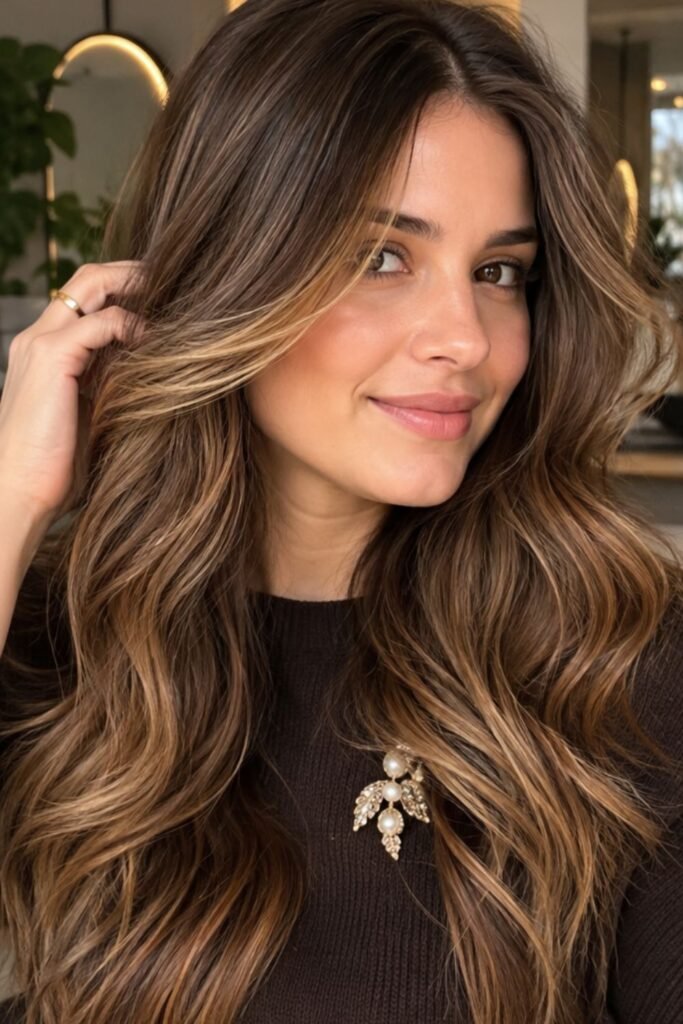
Burnt Sienna Lob
Shorter cuts show off sienna without complicated placement. On a lob, a single rich sienna tint with slight tonal variation at the ends makes the compact shape look polished. Ask for color a touch deeper at the root and warmer through the ends, finished with a high-shine gloss. A blunt or softly layered lob at collarbone length suits fine to medium hair, since the clean edge makes hair look thicker. Style it straight with a flat iron or with loose bends. Trims every eight to ten weeks keep the ends crisp and the color looking fresh.
Best for: Lobs and shoulder-length cuts in fine-to-medium density.
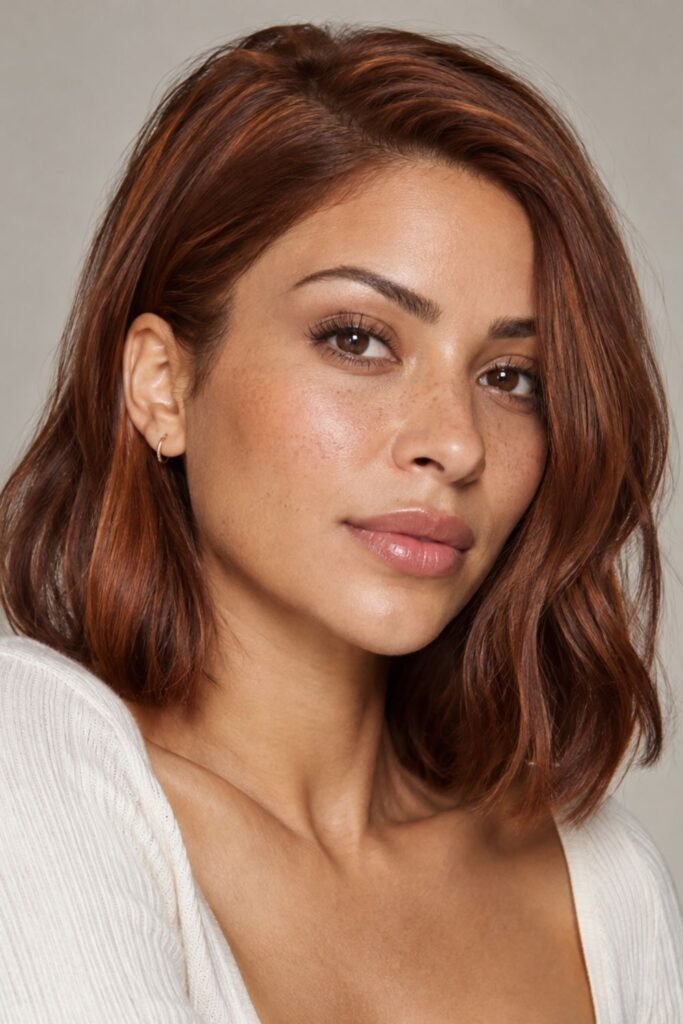
Amber Highlights on Curly Brunette Hair
Texture changes how highlights read. On curls and coils, larger, deliberate amber sections stay visible, while very fine highlights can disappear once the hair shrinks into its pattern. Look for a colorist experienced with textured hair who places color curl by curl or uses the pintura technique, ideally on dry hair so they can see your pattern. Keep lightening gentle and pair it with a bond-building treatment, since curly hair tends to be drier. Deep condition weekly and use a leave-in with UV protection to keep the amber glossy and the curls defined.
Best for: Curly and coily brunettes wanting warm dimension.
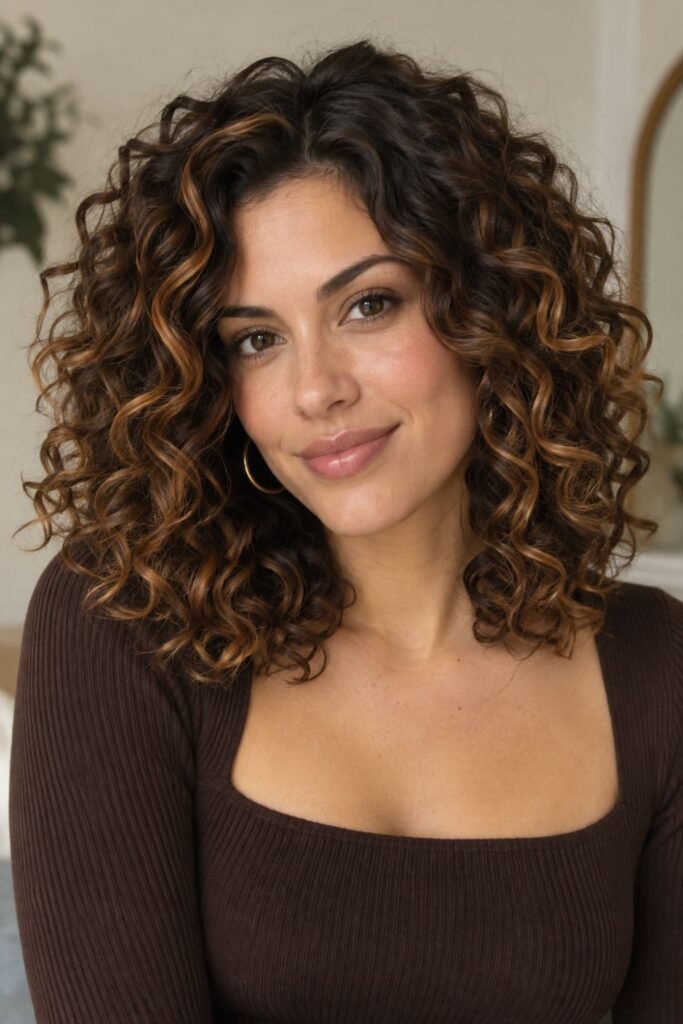
Soft Sienna Bob
A soft sienna tone gives a short bob warmth without making the shape feel busy. The color sits slightly deeper at the root, which adds enough contrast to stop the shade from looking flat. Ask for a single-process sienna with a darker root shadow, or just a gloss if your base is already warm. The look suits short straight or softly wavy hair cut between the chin and jaw, and it works well with a side part. Short hair is trimmed often, so the ends stay healthy and hold color well. Refresh with a gloss every six to eight weeks.
Best for: Short straight or softly wavy hair.
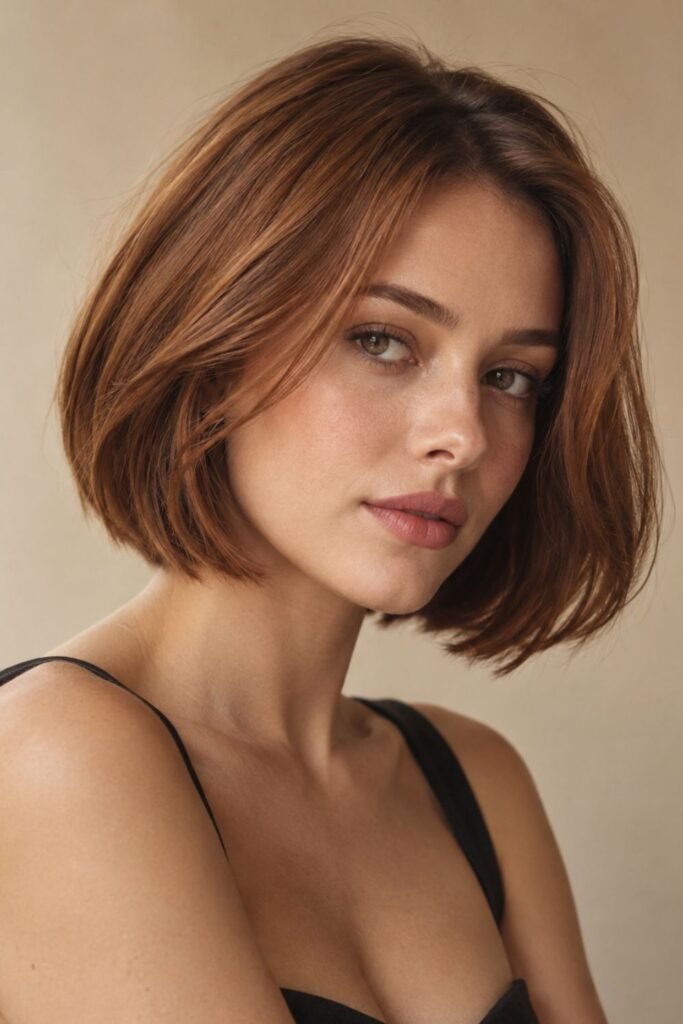
Amber and Chestnut Blend
Chestnut supplies red-brown depth and amber brings golden light. Together they create a warm fall palette that is softer than full copper and brighter than plain brunette. Ask your colorist for a chestnut base with interwoven amber highlights kept close in level, so the two tones blend instead of striping. The combination suits warm brunettes with golden or olive skin and works on most lengths and textures. To keep both tones balanced, use a color-safe shampoo, limit hot tools, and add a warm gloss when the chestnut starts to look dull.
Best for: Warm brunettes who want balanced gold and red-brown tones.
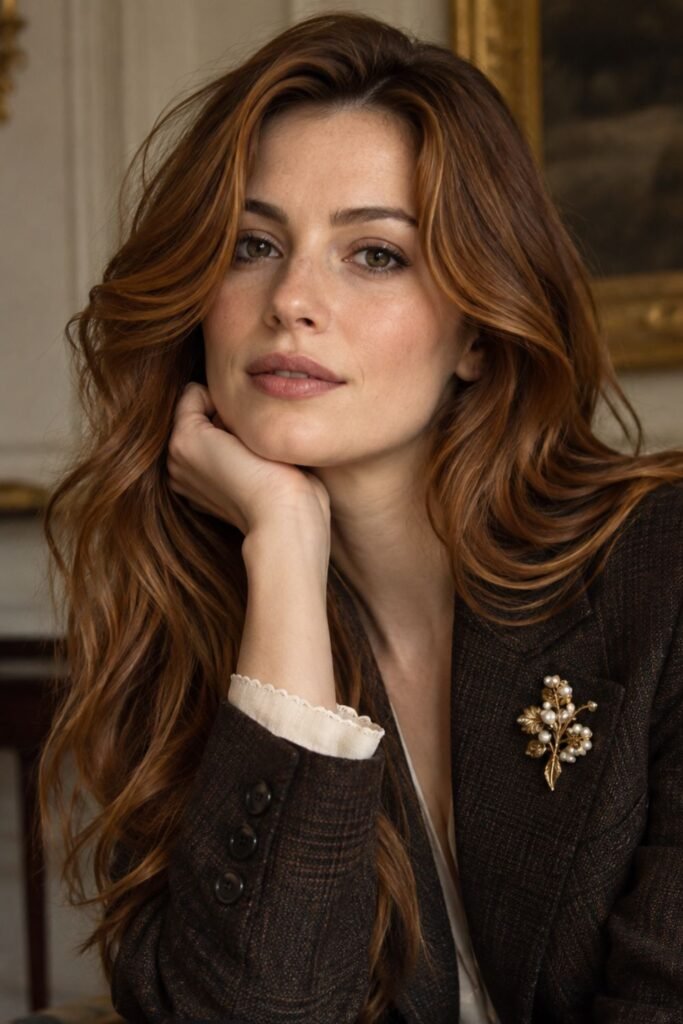
Sienna Reverse Balayage
Reverse balayage helps when summer hair feels too light for fall. The colorist paints darker sienna and brunette lowlights back into blonde or bronde hair, keeping some brightness around the face and ends. The palette becomes warmer and richer without a full color change. Prelightened hair is porous and can grab red tones unevenly, so your colorist may use a filler or work in stages. Ask for the lightest pieces to stay near your face. Wash less often and use cool water so the new depth does not fade back toward blonde.
Best for: Blondes and brondes moving darker for autumn.
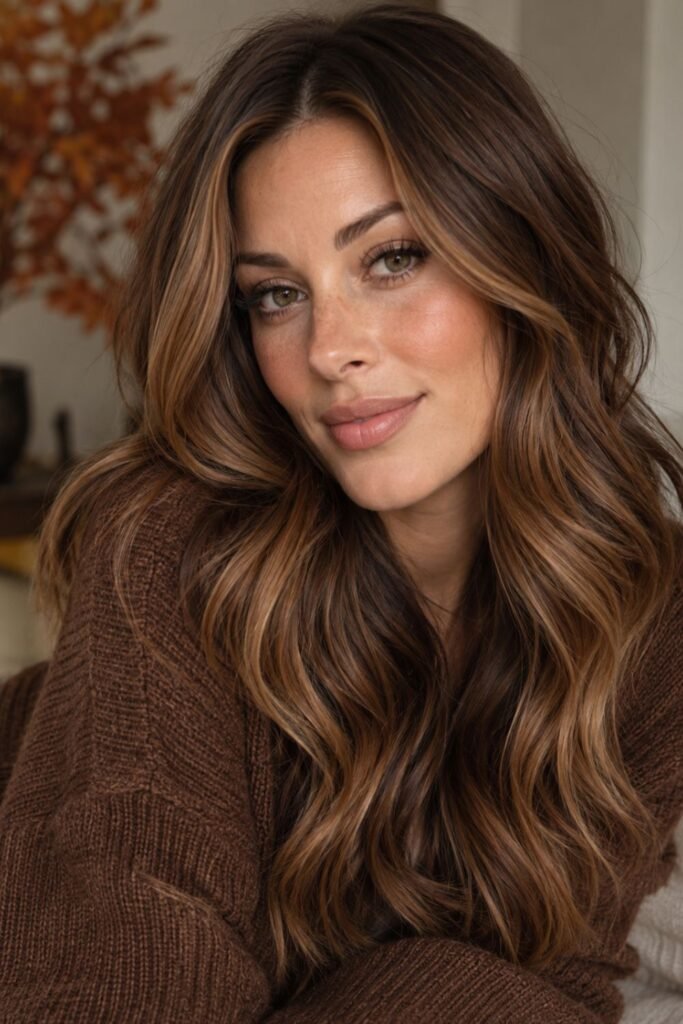
Amber-Infused Gray Blending
Warm lowlights soften the contrast between brunette and emerging gray without committing you to full coverage. Amber works best when it is restrained and placed around your natural silver pattern, so the gray reads as brightness instead of regrowth. Ask for fine golden-brown lowlights and a translucent gloss, with no solid root color. This approach suits anyone with partial gray who wants a softer grow-out line. For more ways to wear silver, see our grey hair ideas for women over 50. Expect touch-ups every two to three months.
Best for: Brunettes with early gray who want dimension in place of opaque coverage.
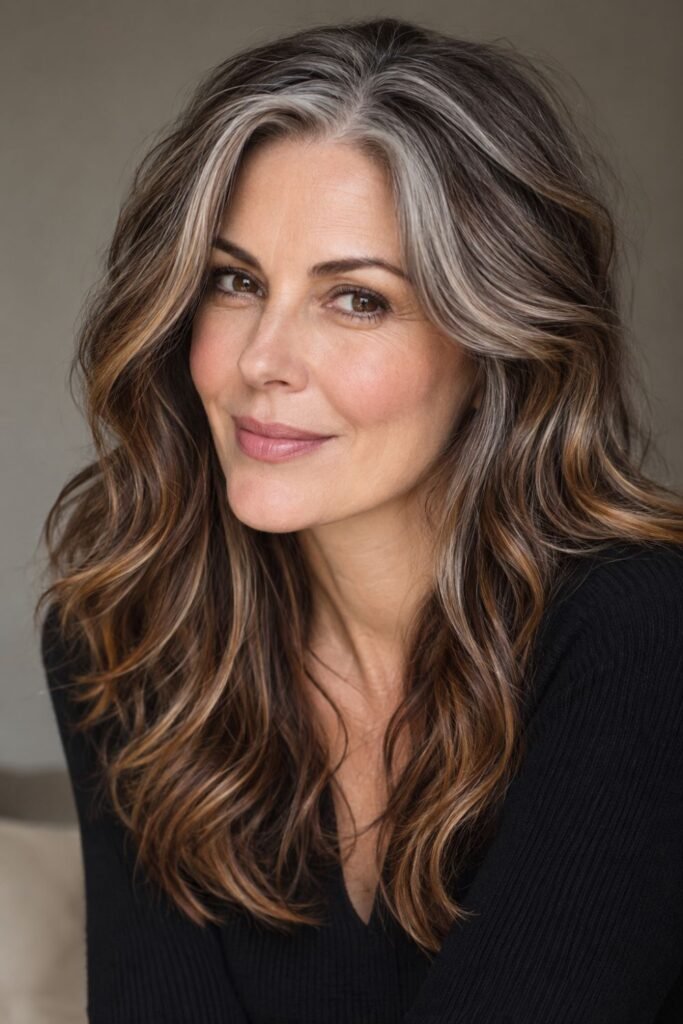
Deep Sienna Gloss
A gloss is the lowest-commitment way to test the sienna family when your base is already warm. It deposits a sheer red-brown tone and adds shine without changing the color placement. Ask for a demi-permanent gloss in a deep copper-brown, applied at the end of a salon visit. It works best on existing brunettes, auburns, and faded copper shades, and it can revive a dull color between bigger appointments. Because it fades gradually over several weeks, it is an easy way to try sienna before committing to a bigger change.
Best for: Existing brunettes, auburns, and faded copper shades.
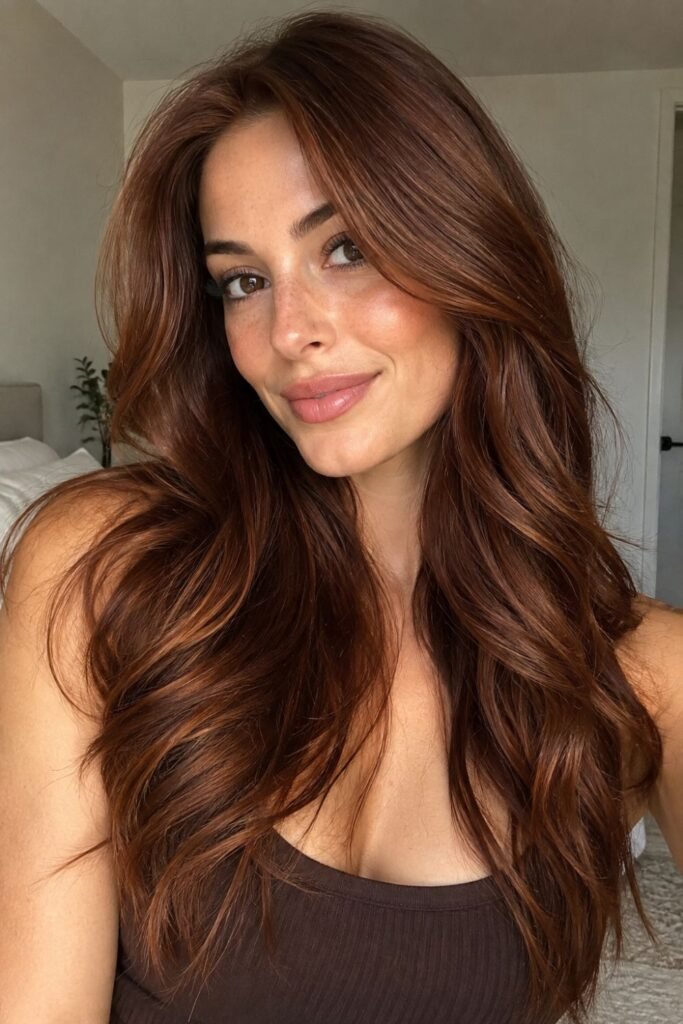
Golden Amber Ends
Concentrating amber near the ends preserves a natural root and makes grow-out easy. The colorist paints the lower third of the hair, blending upward so there is no hard line, then tones the lightened ends golden amber. It keeps a little summer brightness while shifting the overall look warmer, and it shows best on long brunette or bronde hair worn in waves. Regular trims keep the ends healthy, since they hold the most lightener. A hydrating mask once a week stops the amber from looking dry or brassy.
Best for: Longer brunette or bronde hair and lower-commitment color changes.
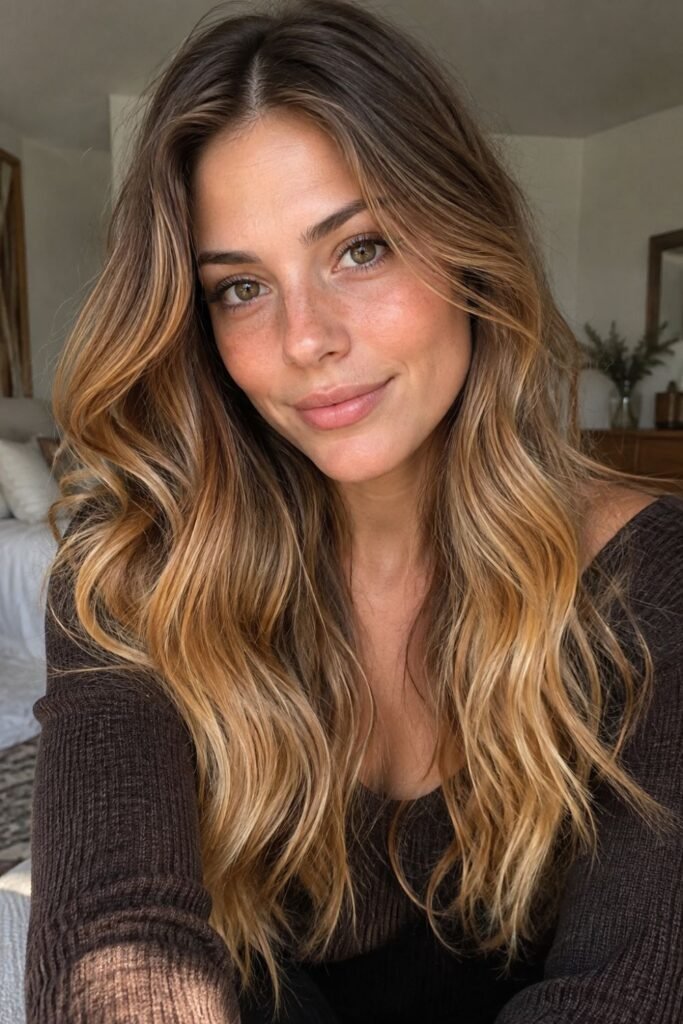
Amber and Sienna Hair Color: What Is the Difference?
Amber hair leans golden, honeyed, and light-reflective. It is often used as a highlight or undertone on brunette, bronde, and blonde hair. Sienna sits deeper and redder, combining brown with muted copper or rusty red. Amber brightens; sienna deepens.
They can also work together. A brunette base with sienna depth and amber face-framing pieces gives warmth at two different levels without needing high contrast.
What to Ask for at the Salon
Bring photos that show both the shade and the placement. “Amber” can mean anything from a soft golden brunette highlight to a much lighter honey bronde, while “sienna” may range from brown-red to visibly copper. Ask your colorist to keep the result dimensional and tailored to your starting level.
If you are moving from blonde to sienna or deep amber, previously lightened lengths may absorb pigment differently from natural hair. A strand test, filler, gloss, or staged darkening may be appropriate depending on porosity and the final depth you want.
Keeping Warm Color Glossy Instead of Brassy
Warmth is the point of these shades, so the goal is to keep it controlled. The real problems are faded red, overly orange ends, and dull porous areas. Color-safe cleansing, heat protection, and occasional salon glossing keep the tone even and reflective.
Avoid automatically reaching for strong blue or purple toning products unless your colorist recommends them for your exact formula. They can mute the amber or sienna tones you paid to create.
Useful Redounds Reads
For a softer warm-brunette route, compare these shades with our caramel highlights on brown hair. If you want a deeper, redder family, our dark cherry red hair ideas show how a cooler red-brown differs from sienna. For a much lighter warm palette, our butter blonde hair ideas sit at the opposite end of the warmth spectrum.
Frequently Asked Questions
Is amber hair more blonde or brunette?
It can sit in either family. Amber is a warm golden undertone rather than one fixed level, so colorists can use it as highlights on brunette hair, as part of bronde, or as a deeper golden blonde.
What color is burnt sienna hair?
Burnt sienna is a muted red-brown with copper warmth. It should read deeper and earthier than bright copper, with brown remaining an important part of the finished color.
Are amber and sienna good fall colors?
Yes. Both align with Fall 2026’s broader move toward warm, dimensional hair. Amber adds golden light, while sienna provides deeper red-brown richness.
Can brunettes try amber without bleaching all their hair?
Yes. Amber can be introduced with face-framing pieces, balayage, or selective highlights. How much lightening is required depends on the starting level and how bright you want the amber to appear.
Can blondes go sienna for fall?
Yes, but very light or porous blonde may need a carefully formulated salon transition. Sienna can grab intensely on prelightened hair, so a controlled gloss, filler, or staged darkening may give a more even result.
Which is lower maintenance, amber highlights or all-over sienna?
Amber highlights with a natural root are generally easier to grow out. An all-over sienna color changes more of the base and may need more frequent tonal refreshes, especially if the starting hair is light.
Do warm hair colors always look orange?
No. Good warm color can be golden, honeyed, copper-brown, chestnut, or red-brown without becoming orange. The balance of base depth, reflect, and gloss determines how refined the warmth looks.
How often should amber or sienna color be refreshed?
There is no universal schedule. Refresh the color when the tone, shine, or contrast no longer looks the way you want. Hair porosity, washing frequency, heat styling, sun exposure, and the original service all affect longevity.
The Practical Takeaway
Amber and sienna hair color work best as flexible families of warmth. Choose amber when you want light and glow, sienna when you want earthy red-brown depth, and combine them when you want both. For fall 2026, aim for a result that is dimensional, glossy, and close enough to your natural base to grow out gracefully.