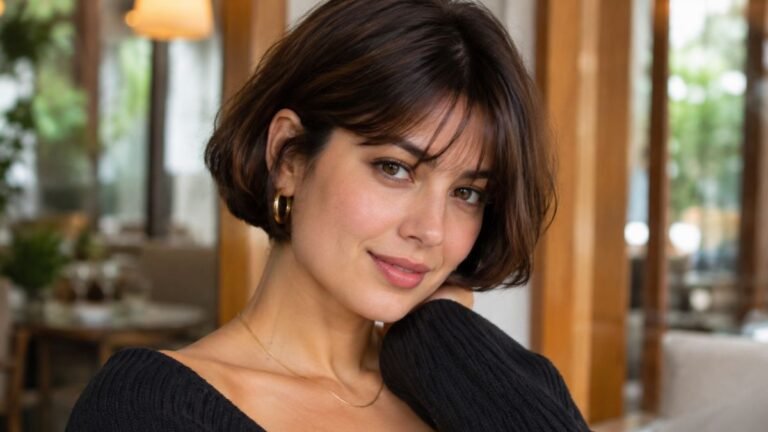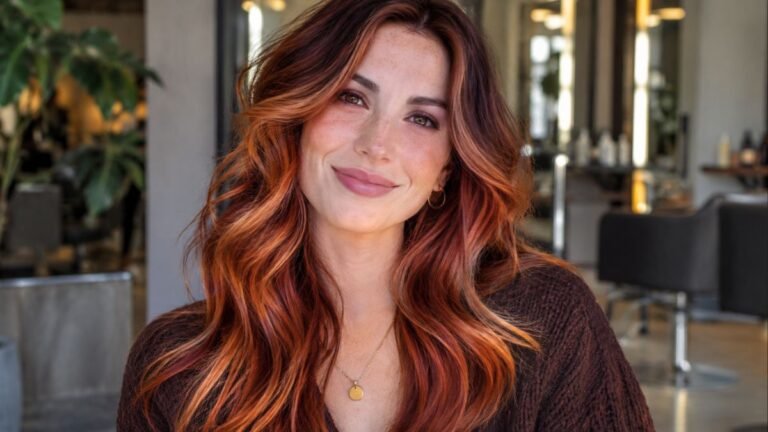

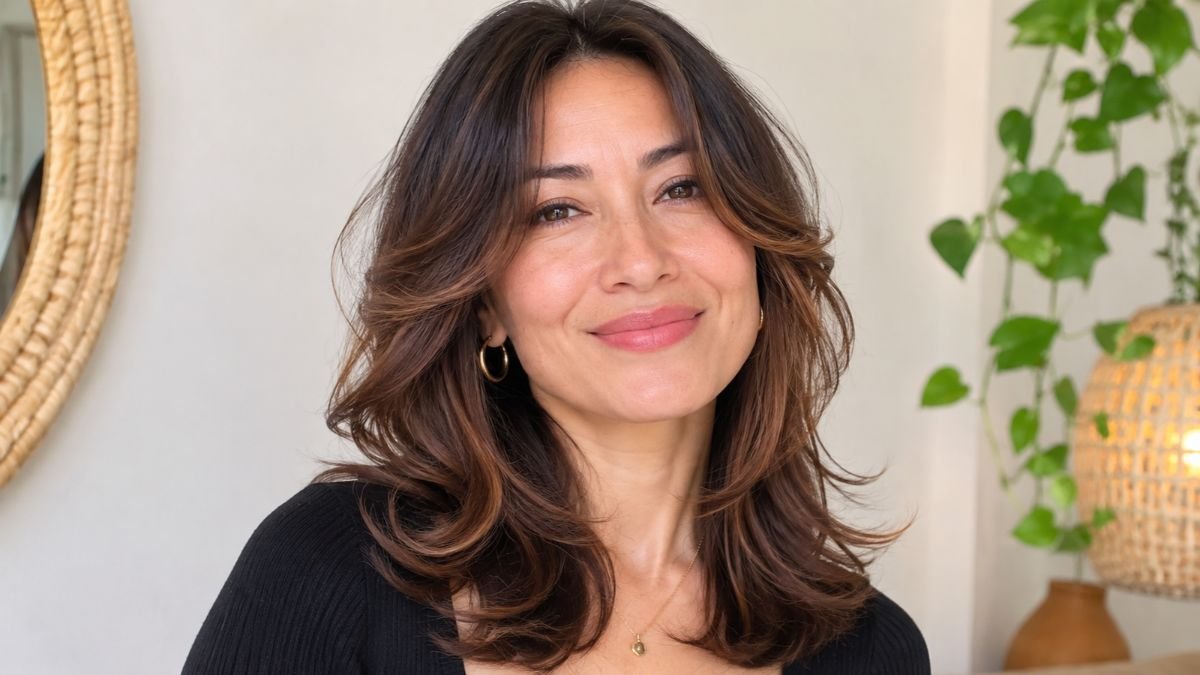
Hairstyles with face framing layers use shorter sections at the front, cut from the temples forward, so they fall alongside the face instead of blending back into the rest of the length. A good frame brightens the face, adds movement and gives you more ways to wear your hair up or down.
These 16 styles show how face framing layers work across different lengths, textures, colors and occasions. Each description is specific enough to take to your stylist, with simple tips for styling the look at home.
Long Hair with Face Framing Layers
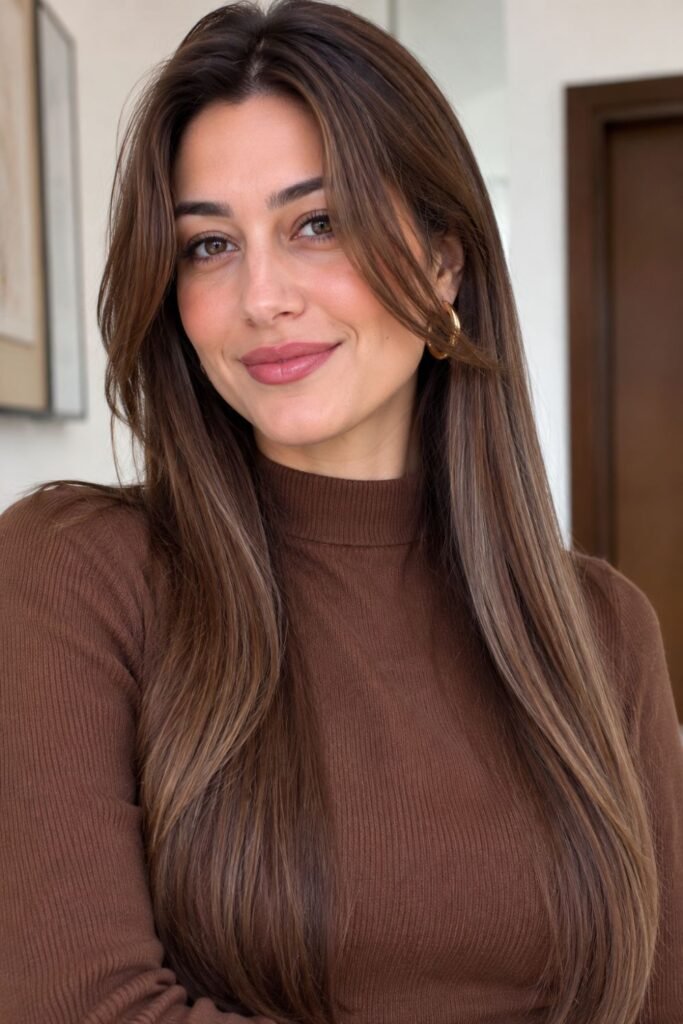
Long Straight Hair with Soft Face Frames
Two soft layers start at the cheekbone and fall to the collarbone, while the rest of the length stays long and nearly one-length. The layers blend into the straight hair so they read as a gentle frame instead of a separate shorter section. Ask your stylist to point-cut the ends of the face frames, since a blunt cut on straight hair can leave a visible step. This suits fine to medium straight hair that looks flat around the face. Style it with a round brush, turning the front pieces away from the face as you blow-dry.
Long Wavy Hair with Curtain Layers
Here the face framing layers are cut in a curtain shape, parted at the center and falling in a soft diagonal from the cheekbone to the collarbone on each side. The wave pattern in those front sections adds easy, romantic movement. Ask for the frames to be cut a little longer than your target length, because waves shorten once the hair dries. Scrunch in a light curl cream and let the front air-dry or diffuse it. If you like this shape, our curtain bangs hairstyles show how to take the same idea shorter.
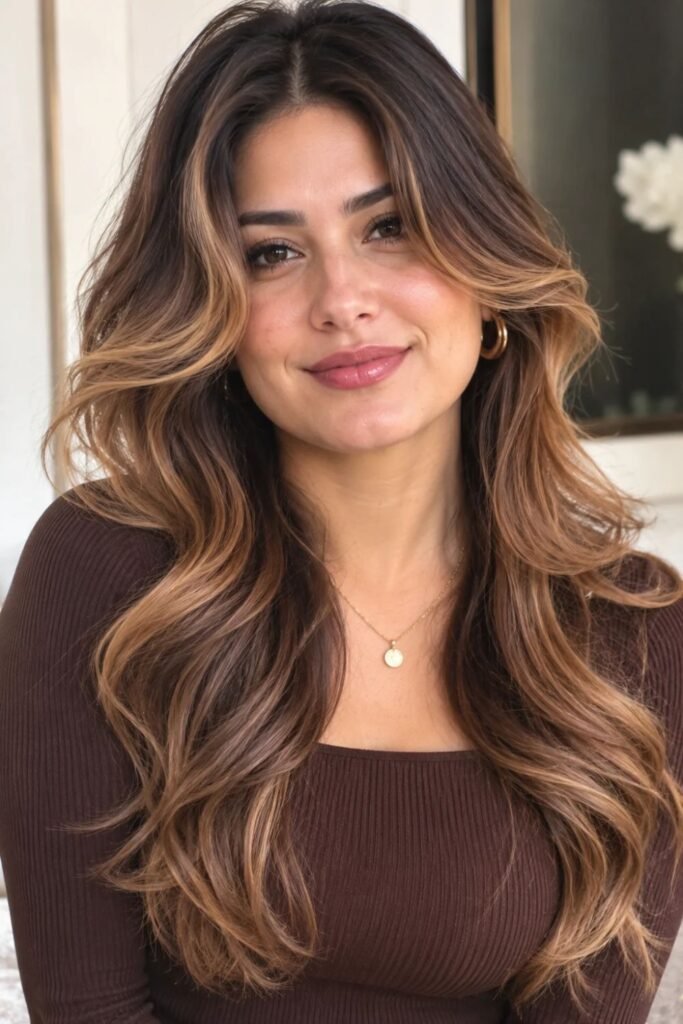
Long Curly Hair with Face Framing Layers
Shorter layers coil alongside the face from the temple toward the chin or collarbone. Curls spring up from their cut length, so a stylist who cuts curly hair dry, curl by curl, can see exactly where each frame will sit. A wet cut on curls often ends up shorter than planned. This suits long curly hair that feels heavy or triangular at the bottom. Apply leave-in conditioner and gel to soaking-wet hair, scrunch, then diffuse on low heat. Refresh the front frames between wash days with a mist of water and a little cream.
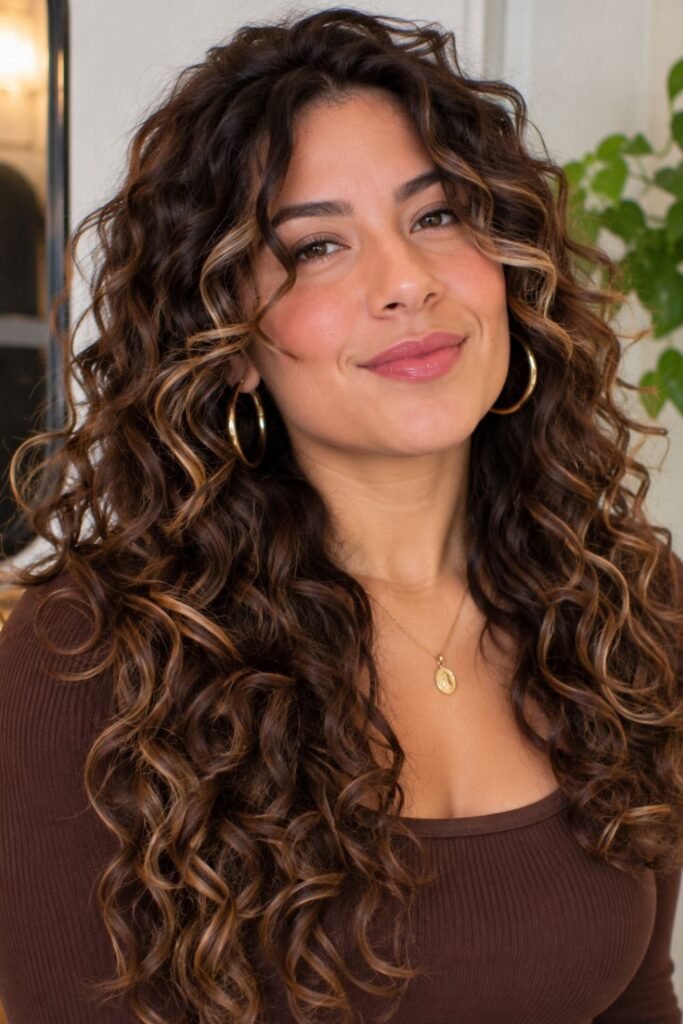
Long Hair with Heavy Wispy Face Frames
These front layers start at the temple and fall to the jaw or collarbone in a wider panel instead of two fine strands. The extra hair covers more of the cheek and creates a bolder frame. Many people with round or wide faces like this cut because the longer, fuller sides draw the eye downward. Ask for the ends to be texturized so the panel stays wispy and light. Blow-dry the front forward first, then back and away from the face, which gives the layers a soft bend without a curling iron.
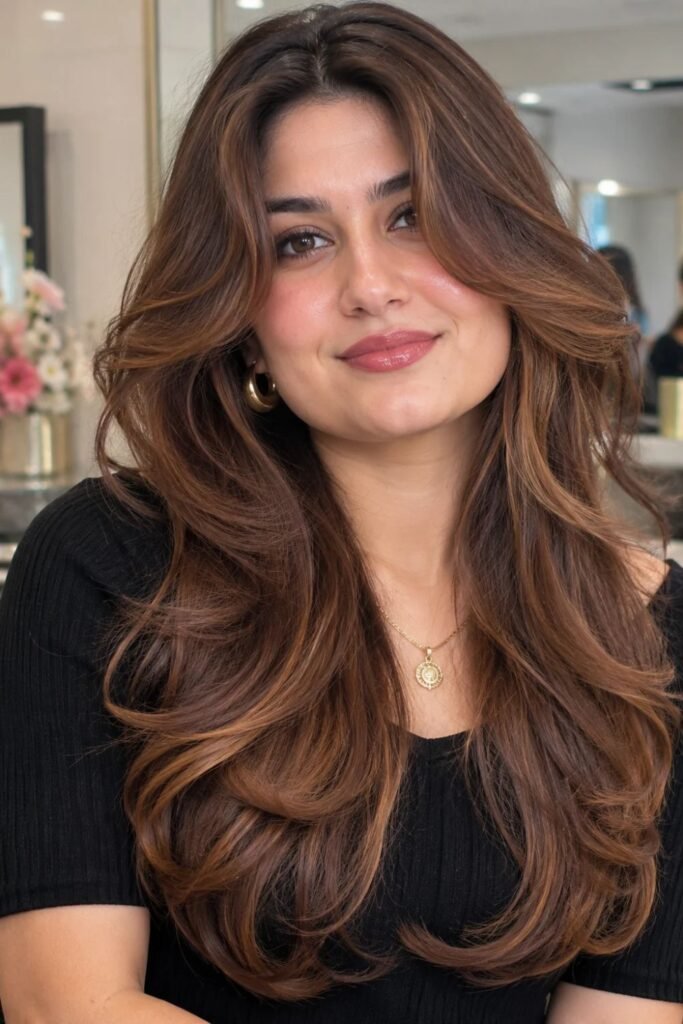
Medium Length with Face Framing Layers
Lob with Face Framing Layers
A collarbone-length bob gets face framing layers that start at the cheekbone and blend into the lob length. A one-length lob looks crisp and structured, while two front layers make the same cut softer and more relaxed. This suits straight, wavy and medium-density hair and is a good step for anyone shortening long hair. Ask for the shortest layer at the chin so it still tucks behind the ear. A flat iron bend through the mid-lengths and a light texture spray keep the front layers moving all day.
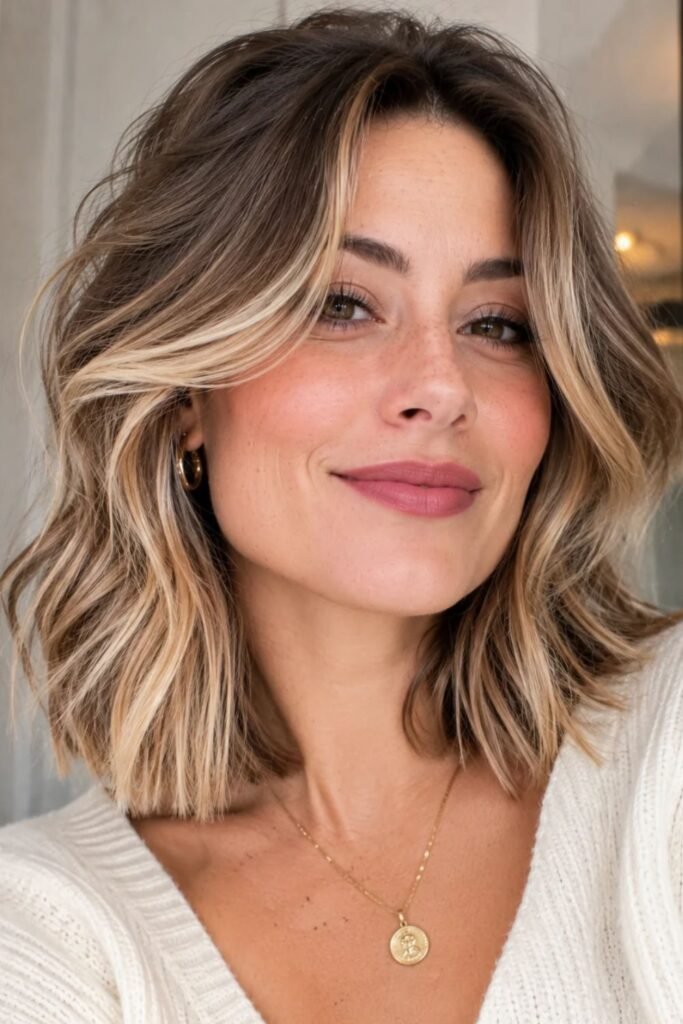
Shoulder-Length Hair with Soft Layers
Shoulder-length hair with face frames cut to the chin or just below the jaw is the subtlest version on this list. The frames sit close to the overall length, so they blend in as soft movement. This suits anyone who wants a gentle frame without an obvious shorter section, and it grows out easily between appointments. Ask for long, blended layers and minimal thinning. Style with a medium round brush, flipping the ends outward or under depending on your mood, and finish with a drop of smoothing oil on the ends.
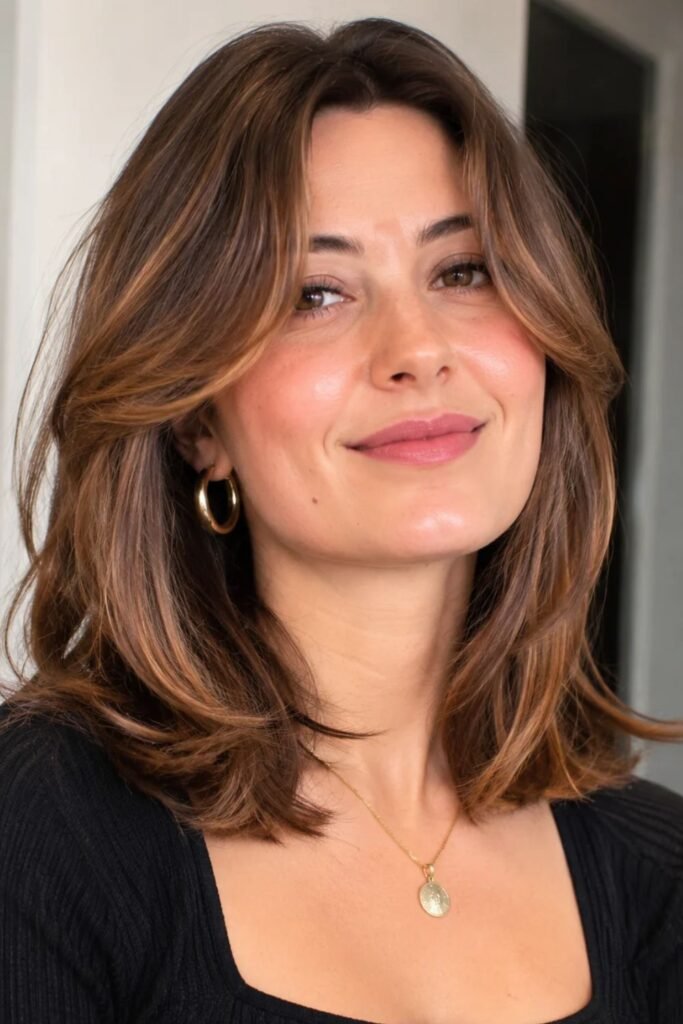
Medium Hair with Money Piece Highlights
Medium-length hair gets face framing layers lightened in a contrasting tone, such as a honey money piece on brunette hair. The brighter front sections pull attention straight to the face. The effect is strongest when the lighter tone stays in the face frames and is not repeated heavily through the rest of the hair. Ask your colorist to start the brightness close to the root of the front sections. Use a purple or blue shampoo once a week if the blonde turns brassy. For softer blending ideas, see our caramel highlights on brown hair.
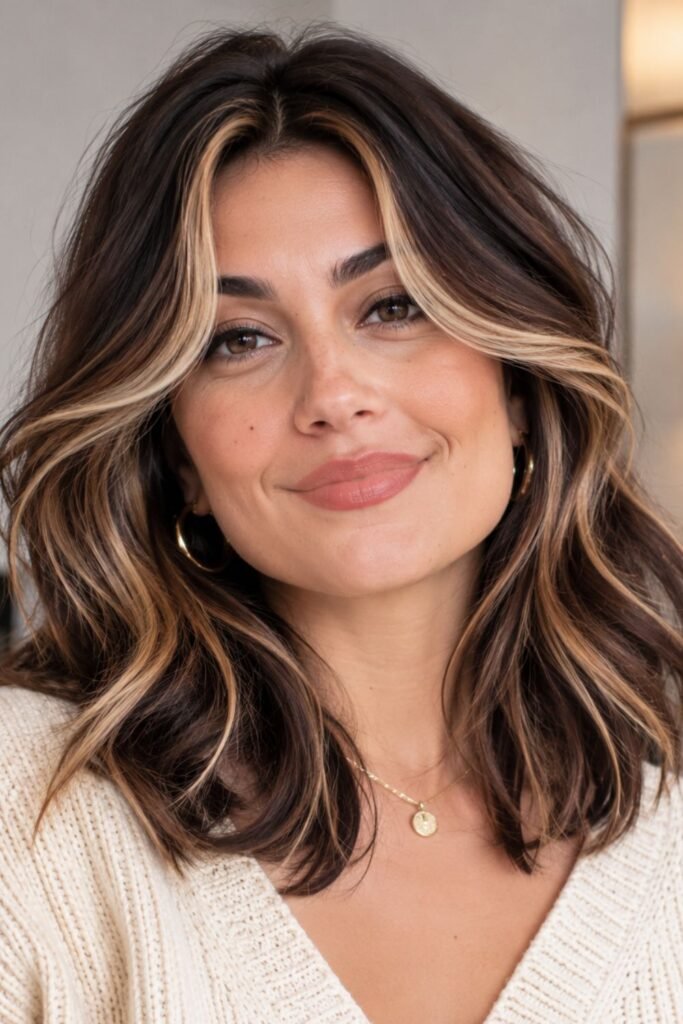
Textured Bob with Face Frames
A shaggy bob with layers throughout and distinct face framing pieces that fall to the cheekbone or jaw. Because the whole cut is layered, the front sections look like part of one deliberate shape. Ask for razor-cut or point-cut ends for the most movement, since a blunt scissor finish makes a textured bob heavier. This suits thick, wavy and straight hair that holds a bend. Work a little sea salt spray through damp hair, rough-dry it with your fingers, then twist a few front pieces around a flat iron for definition.
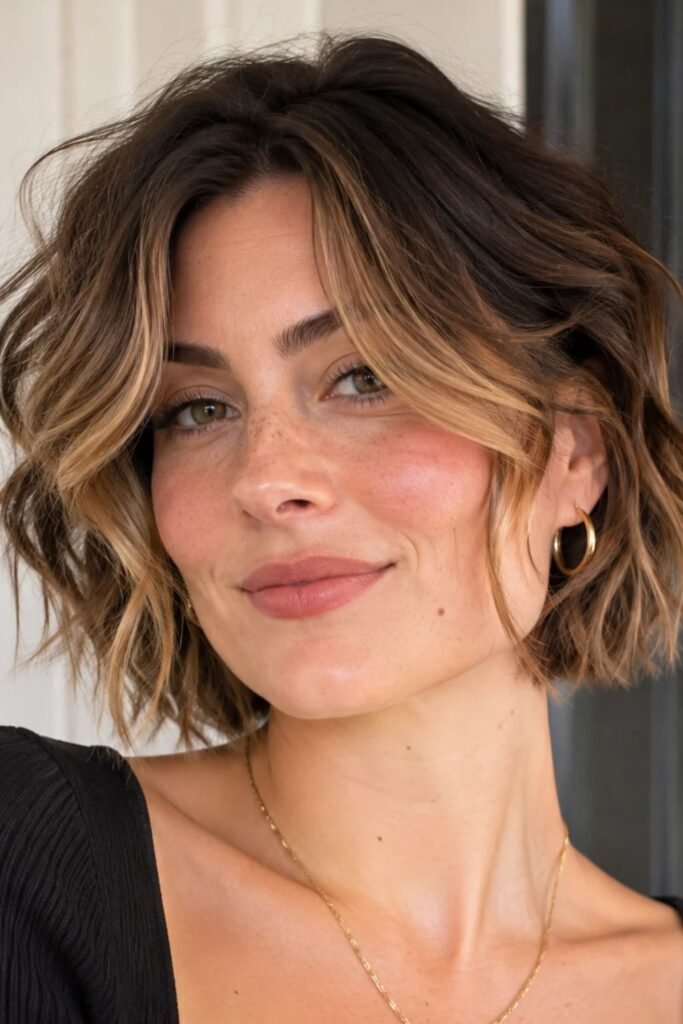
Updo Hairstyles with Face Framing Layers
Low Bun with Face Framing Tendrils
A low bun sits at the nape, with two face framing sections left out on either side of a center part, falling in soft waves to the chin or collarbone. Tendril width sets the mood: fine strands feel romantic and polished, while wider pieces look relaxed and lived-in. Curl the tendrils with a small wand before you pull the rest back, then pin the bun with U-pins so it stays put. This works for weddings, dinners and long workdays alike. For more bun shapes, browse our long hair updos.
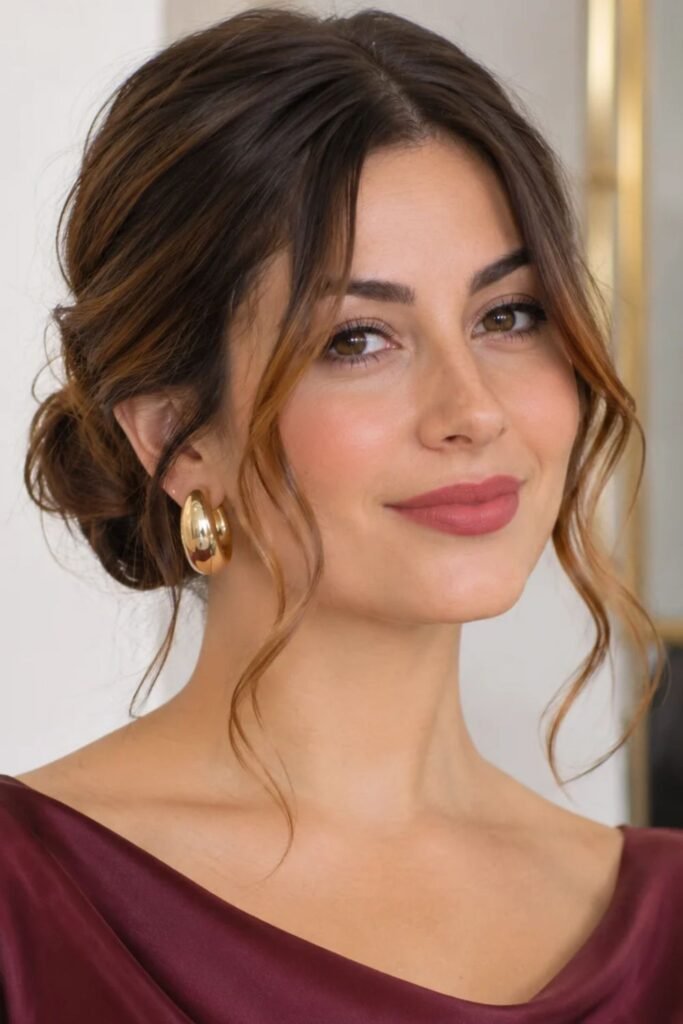
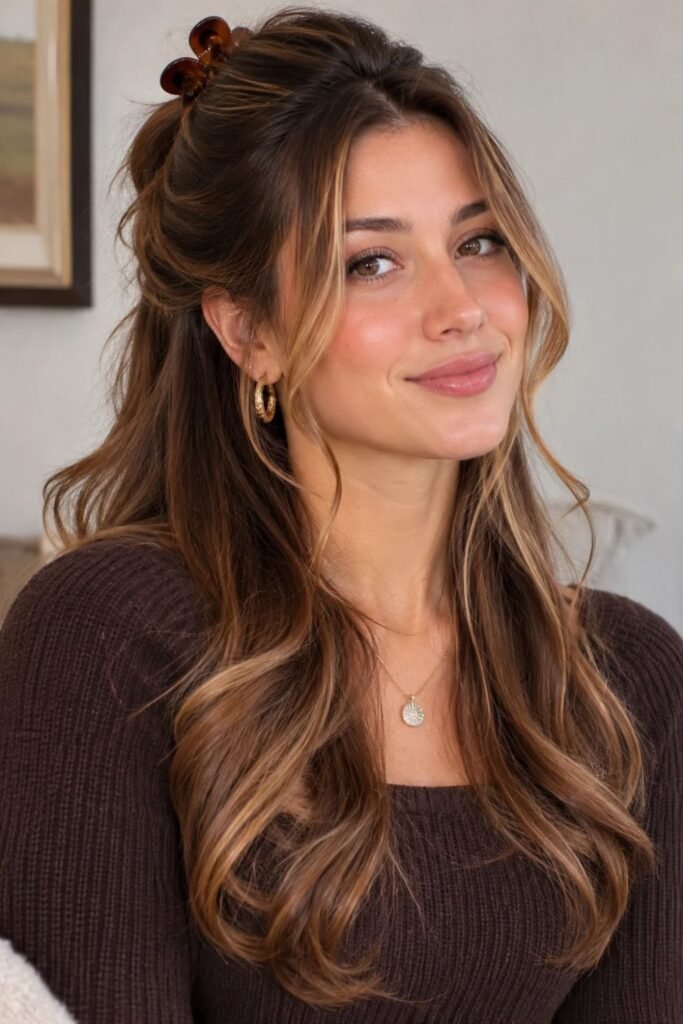
Half-Up with Face Framing Pieces
Gather the crown and back sections into a clip or tie and leave the face framing layers fully down. This is one of the most versatile everyday ways to wear front layers. Leaving the frames out on purpose looks neater than pulling every piece back and letting a few escape. A claw clip, small bow or simple elastic all work here. Bend the frames slightly away from the face with a flat iron before clipping. The style suits most lengths and textures, and it helps growing-out layers look intentional.
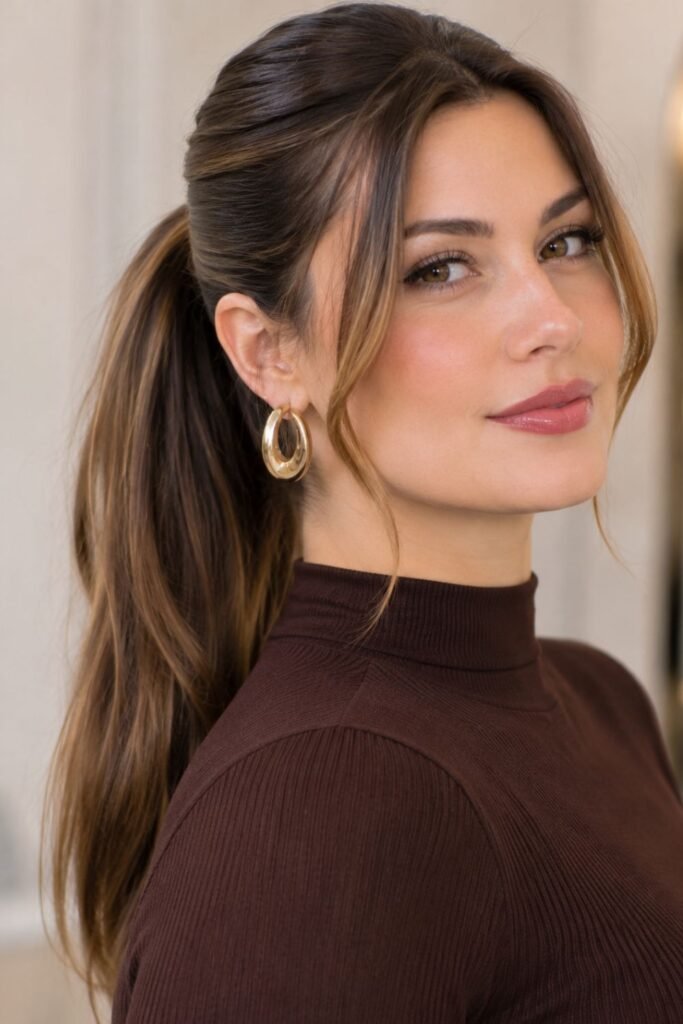
Sleek Ponytail with Face Frame Pieces
Pull the hair into a smooth ponytail at the crown or nape, then leave the face framing layers out on each side of a center part. Smooth them with a light cream so they sweep from the hairline toward the cheekbone before tucking behind the ear. The loose frames soften what can be a severe shape. Brush the base with a boar bristle brush, secure it with a snag-free elastic and wrap a small piece of hair around the tie. Our New Year hairstyles for long hair include more party ponytails.
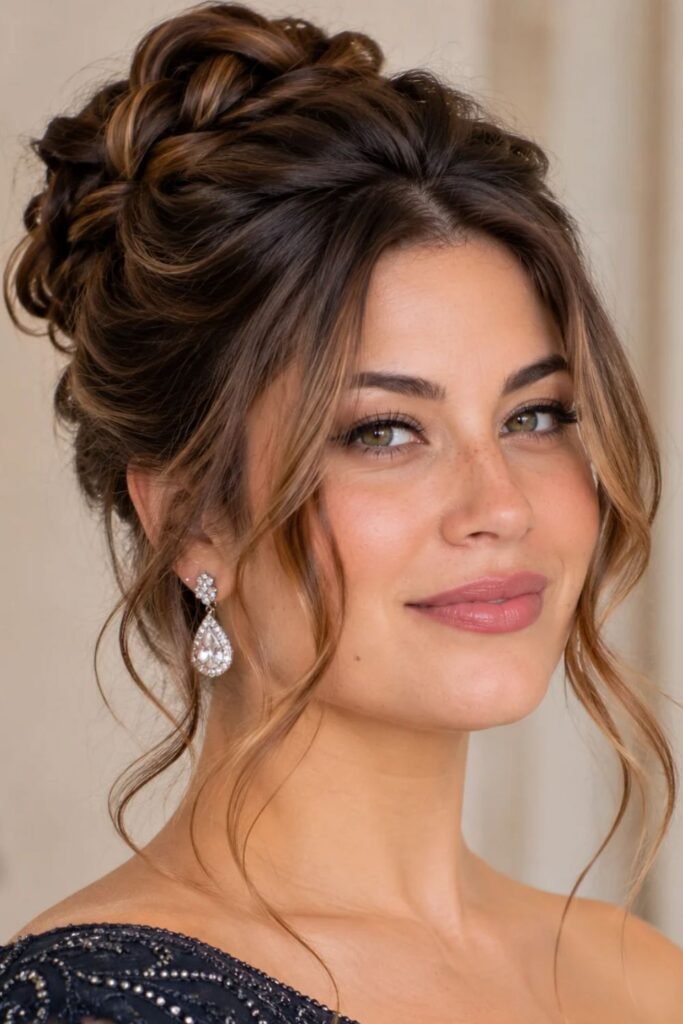
Braided Updo with Face Frame Pieces Left Out
A braided or twisted updo keeps most of the hair secured, while the face framing layers stay down alongside the face. The contrast between the neat braid and the loose front pieces adds interest. Leave pieces wide enough at the temple to look deliberate, so they do not read as hair that slipped out. Braid on second-day hair or add texture spray for grip, and curl the front pieces last. This suits medium to long hair and works for weddings, holidays and any event where you want hair off the neck.
Color and Texture with Face Framing Layers
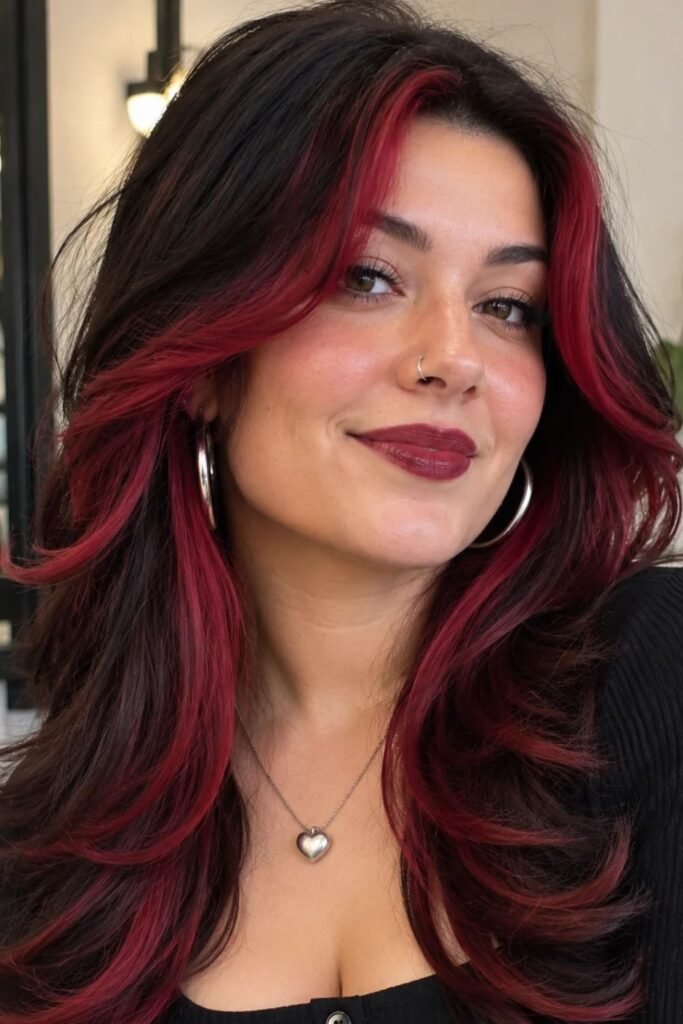
Face Framing Layers with Dark Cherry Red Money Piece
Dark hair gets a deep cherry red tone placed only in the face framing layers, so the color reads as a deliberate accent near the face. The dark base behind it keeps the contrast strong. Ask your colorist whether your base needs lightening at the front for the red to show. Red tones fade quickly, so wash with cool water, use a color-safe shampoo and try a red color-depositing conditioner every few washes. Our dark cherry red hair color ideas show more ways to wear this shade.
Face Framing Layers on Natural Black Hair
Natural black hair gets face framing layers that coil or fall alongside the face from the temple. The front layers soften the overall outline and add shape that a one-length cut does not have. Look for a stylist experienced in cutting natural hair, ideally dry and in its natural state. Diffusing the front sections after applying a curl cream and gel encourages the coils to form and gives the frame more movement. Protect the shape at night with a satin bonnet. For cold-weather ideas, see our winter hairstyles for black women.
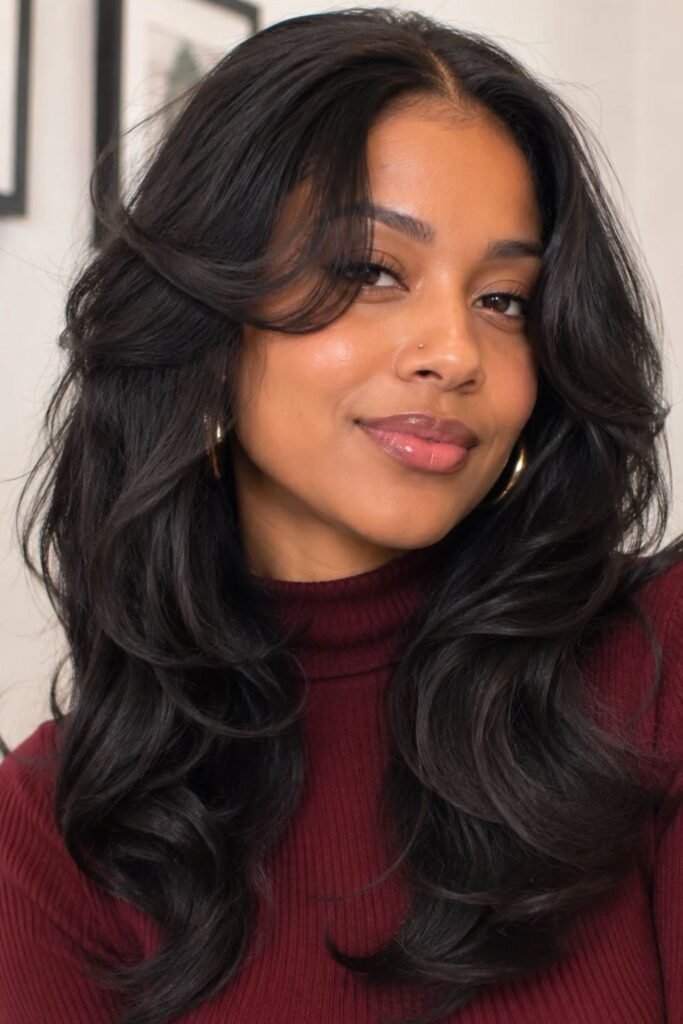
Face Framing Layers with Caramel Highlights Throughout
Caramel highlights run through the length, with slightly lighter pieces placed in the face framing layers. This mimics the way the sun lightens the front of the hair first and adds dimension around the face. Ask your colorist for the face frame sections to be about one shade brighter than the rest. The look suits brunette hair from light brown to deep chocolate. Book a gloss every couple of months to keep the caramel warm and shiny, and use a blue shampoo if the tone starts turning orange.
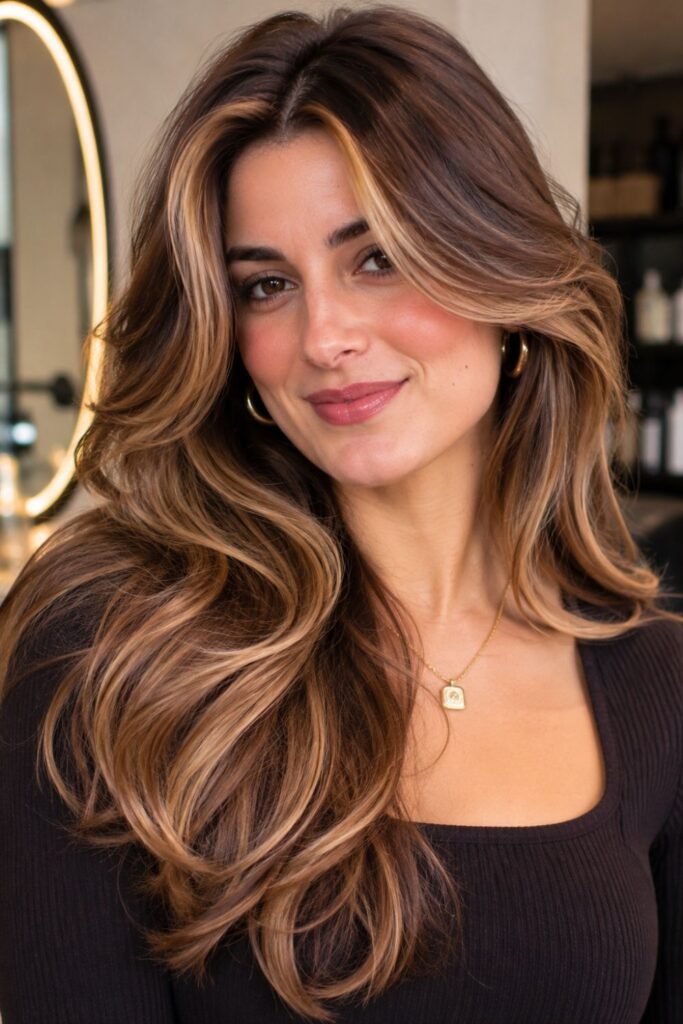
Face Framing Layers for a Formal Evening Look
Long hair goes into a low chignon or sleek updo, while the face framing sections are blow-dried smooth and curled into an S-wave that falls from the temple to the collarbone. The polished waves soften a strict updo and suit black-tie events and weddings. Apply a small amount of shine serum before curling, then set each wave with a clip while it cools. Finish with a light, flexible hairspray. Keep jewelry simple, such as a single drop earring, so the frames stay the focus of the look.
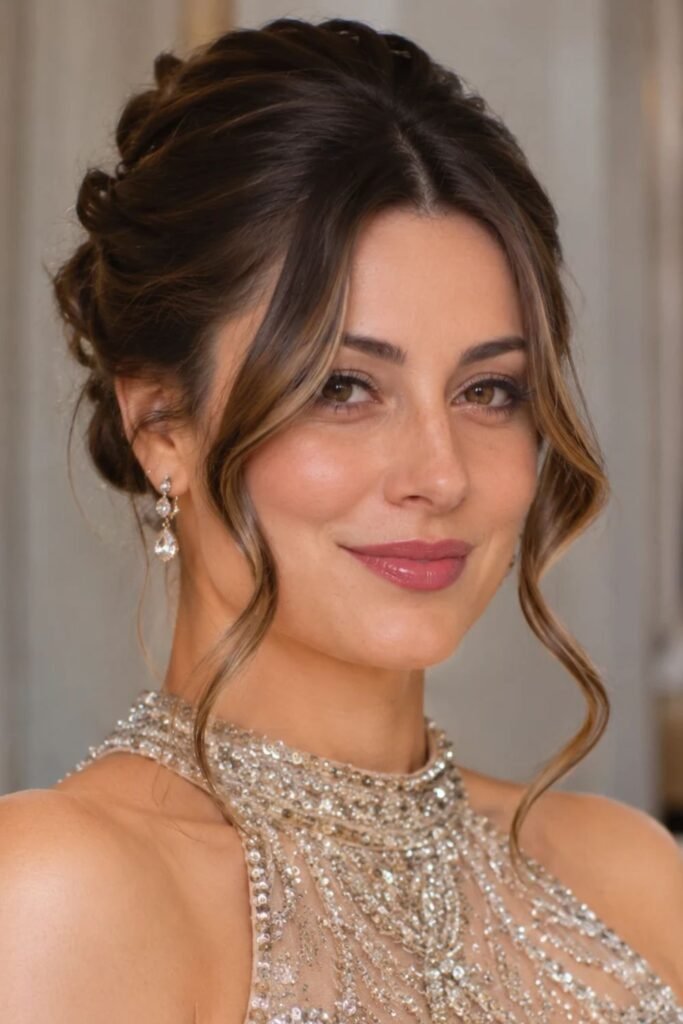
What to Tell Your Stylist About Face Framing Layers
Specify the Starting Point
Face framing layers can begin anywhere from the temple to the ear. A layer that starts at the temple looks bolder and frames the whole face, while one that starts near the ear is subtler and frames only the lower face. Tell your stylist exactly where you want the shortest layer to begin, since this is easy to leave to interpretation.
Specify the Shortest Length
The shortest layer can sit anywhere from the cheekbone to the collarbone. Cheekbone length is the most visible, and collarbone length is the most blended. A frame that ends around the chin or jaw is a comfortable middle ground for many face shapes. Bring a photo to make the length clear.
Ask for Point Cutting or Razoring at the Ends
Blunt ends on face framing layers can look like a step in the hair. Point-cut or razored ends taper into the length behind them for a softer blend. Mention the end technique when you brief your stylist, because it changes whether the layers look choppy or soft.
Frequently Asked Questions
What face shape suits face framing layers best?
Face framing layers can work on every face shape when the length is adjusted. Round faces often suit layers that fall below the jaw. Oval faces suit most lengths. Heart shapes benefit from curtain-style layers parted at the center, and square faces look softer with diagonal layers from the cheekbone down.
Do face framing layers work on fine hair?
Yes, with restraint. Heavy layering can make fine hair look thin at the front. Ask for one soft pair of face frames, cut a little wider and a little longer, so the front keeps its density.
How often do face framing layers need trimming?
Every six to eight weeks keeps the frame at its intended length. Because these are the shortest pieces, growth changes their shape faster than the rest of your hair, which can often wait longer between cuts.
Can face framing layers be cut at home between appointments?
It is best to leave them to your stylist. The starting point and the blend into the length behind need precise technique, and taking off too much at home can be hard to fix. A quick salon fringe or frame trim is usually inexpensive.
Do face framing layers suit hair that is always worn up?
Yes. Many people who wear their hair up most days ask for face framing layers so they have defined pieces to leave out of buns, ponytails and clips. The layers become a styling tool for pulled-back hair.
Final Thoughts
The best hairstyles with face framing layers come down to three decisions: where the layers start, how short the shortest piece is and how the ends are cut. Get those right in your brief and the frame will flatter your face whether you wear your hair down, half-up or in a sleek updo. Save your favorite look from this list and bring it to your next appointment.