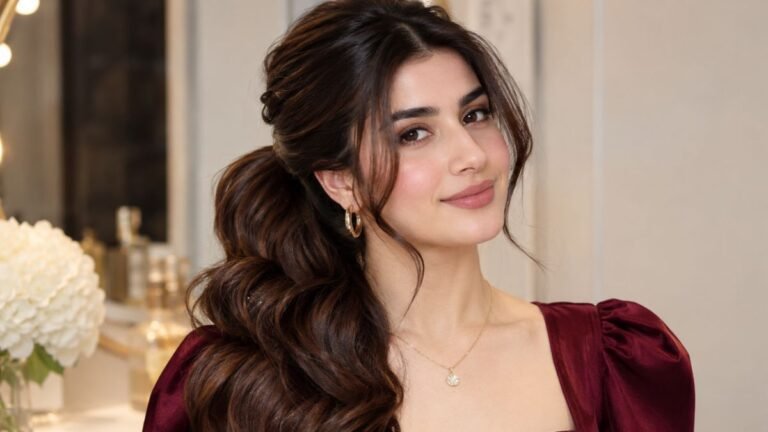

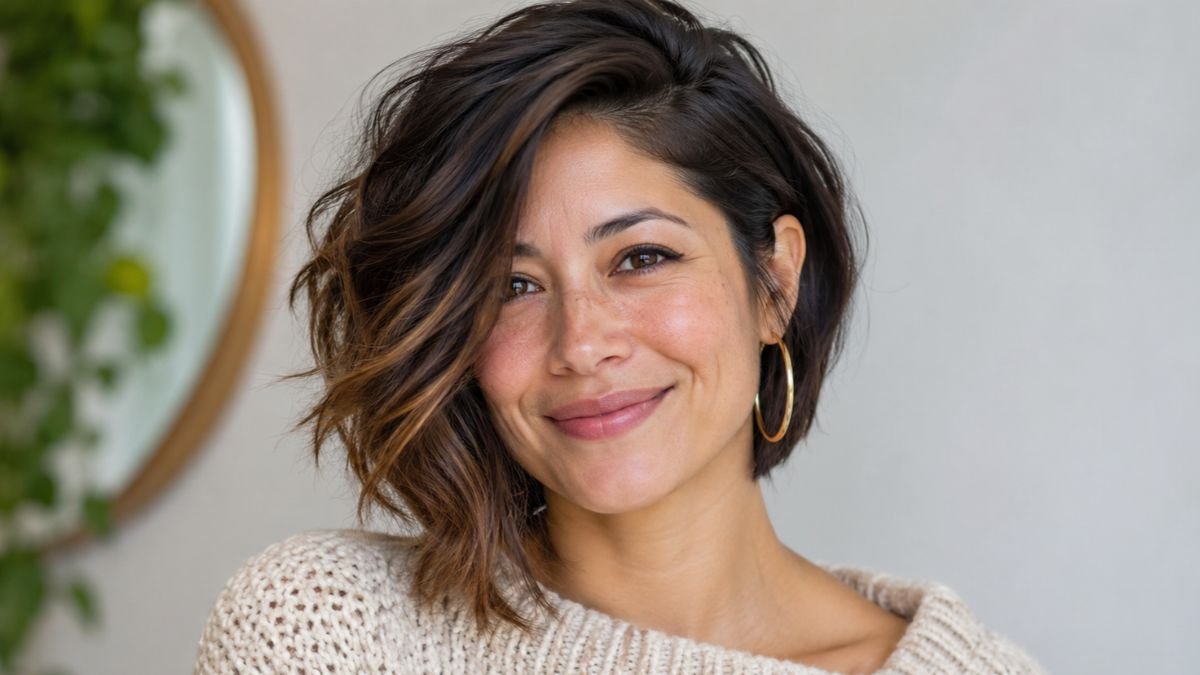
An asymmetric bob haircut is cut longer on one side than the other, so a diagonal line runs from the short side to the long side. That angle is the whole design, and small changes to it, to the ends, or to the color produce very different results.
The 16 ideas below are grouped by length, cut, color, texture and occasion, each with notes on who it suits, how to brief your stylist and how to style it at home. For party and costume versions of the cut, see our Halloween ready asymmetric bob styles.
Classic Asymmetric Bob Lengths
Subtle Asymmetric Bob
Here the two sides differ by only two to three centimeters, so the angle reads as a refined detail rather than a statement. It suits first timers, office settings and anyone growing out a classic bob who wants a little direction. Ask your stylist for a chin length bob with the longer side about one finger width lower, and keep your part on the long side so it falls forward. A light smoothing cream and a round brush blow dry are all it needs. For softness around the face, pair it with wispy curtain bangs cut to blend into the shorter side.

Dramatic Asymmetric Bob
The short side sits at or above the ear while the long side drops to the collarbone, a difference of seven centimeters or more. The steep line is visible from every angle, so this works best for people who enjoy a strong, graphic haircut and have a jaw or cheekbones they like to show off. Ask for a deep side part on the long side and a clean, tapered nape so the angle travels smoothly. Style with a flat iron on the long side and a little pomade to keep the short side tucked. Trims every five weeks keep the line sharp.
Asymmetric Lob
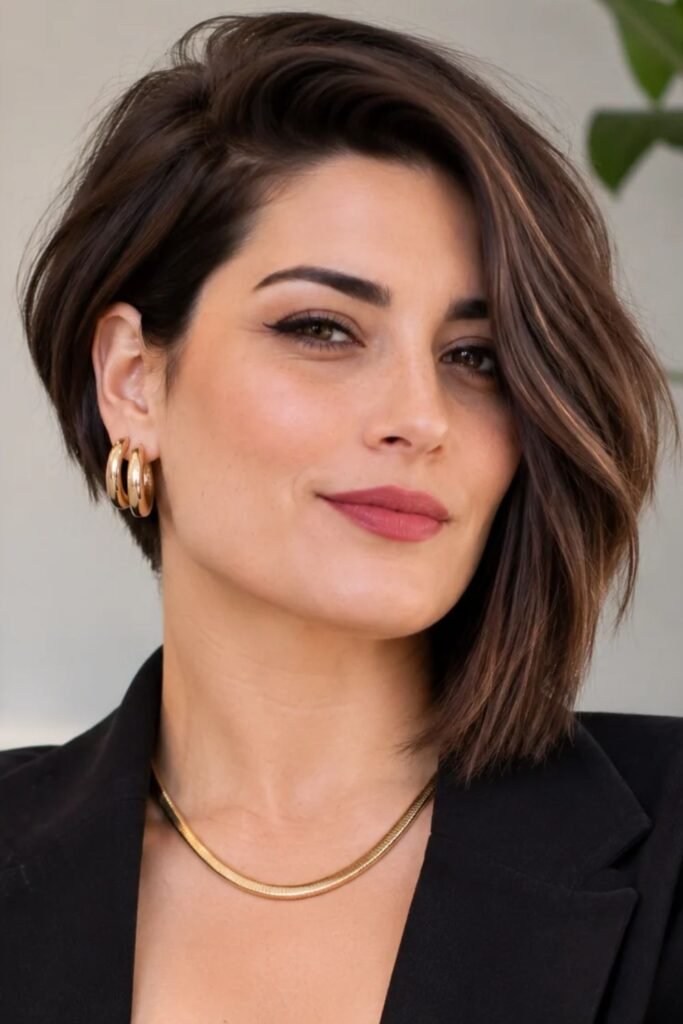
The lob version keeps the short side at the jaw or collarbone and lets the long side fall to mid chest. The extra length turns the angle into movement, which makes it a comfortable choice if you are nervous about going short or still want enough hair for a ponytail. Ask for long layers on the longer side and a blunt base so the ends stay full. Style with loose bends from a 32 mm curling iron, leaving the last few centimeters straight, then finish with a texture spray. It grows out gracefully, so a trim every eight weeks is usually enough.

Asymmetric Bob Variations by Cut
Stacked Asymmetric Bob
A stacked bob is graduated at the back, shortest at the nape and building into longer front sections. The stacking lifts the crown and gives a rounded shape from behind, which balances the sharp front angle and helps fine or flat hair look fuller. Ask for graduation that starts around the occipital bone, with the longer front on your preferred side. Blow dry the back with a small round brush, lifting at the root, then smooth the front. A volumizing mousse at the roots helps the stack hold. Book trims every five to six weeks, since the nape loses shape first.
Textured Asymmetric Bob
This version uses point cutting or a razor through the ends, so the diagonal looks soft and slightly undone instead of sharp. Thick and medium hair benefit most, because the texturizing removes bulk. Ask your stylist to texturize the longer side a little more so it does not look heavier than the short side. At home, rough dry with a sea salt spray and twist a few pieces around a flat iron for a lived in finish. If you like this airy, layered shape, our butterfly bob haircut guide shows a similar approach with more face framing.
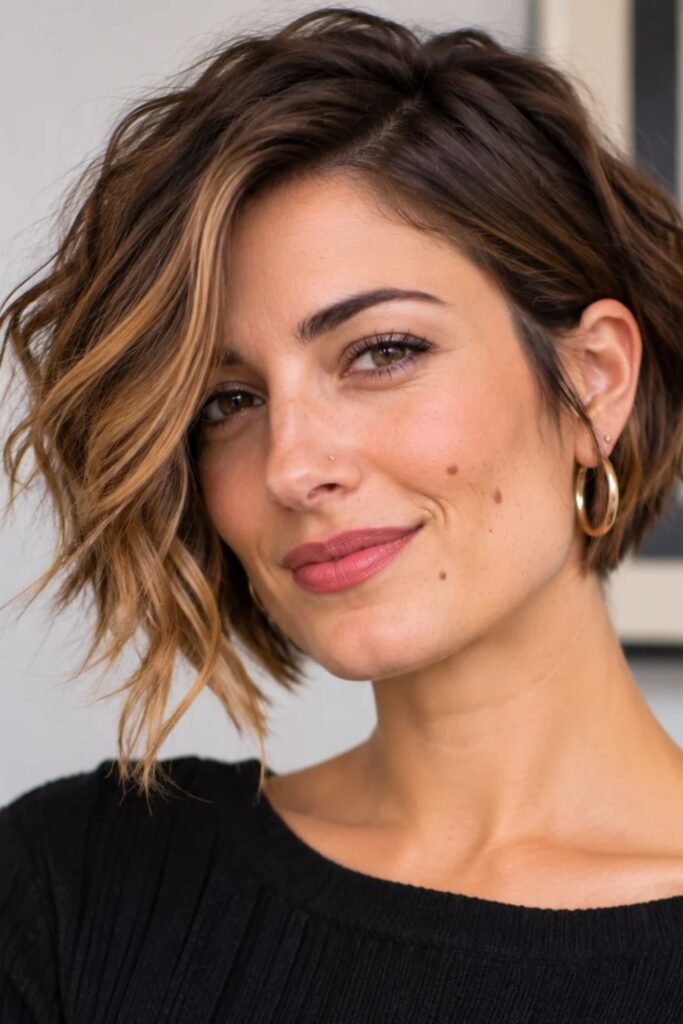
Blunt Asymmetric Bob
A blunt asymmetric bob ends in one solid, precise line with no texture at the ends, so the angle comes entirely from the length difference. It reads as sharp and polished, and it makes fine hair look thicker because the perimeter stays dense. Ask for a one length cut with the hair combed flat and cut with minimal tension, so the line stays even once it dries. Straighten with a flat iron and finish with a shine serum. Blunt lines show growth quickly, so plan on trims every four to six weeks to keep the edge crisp.
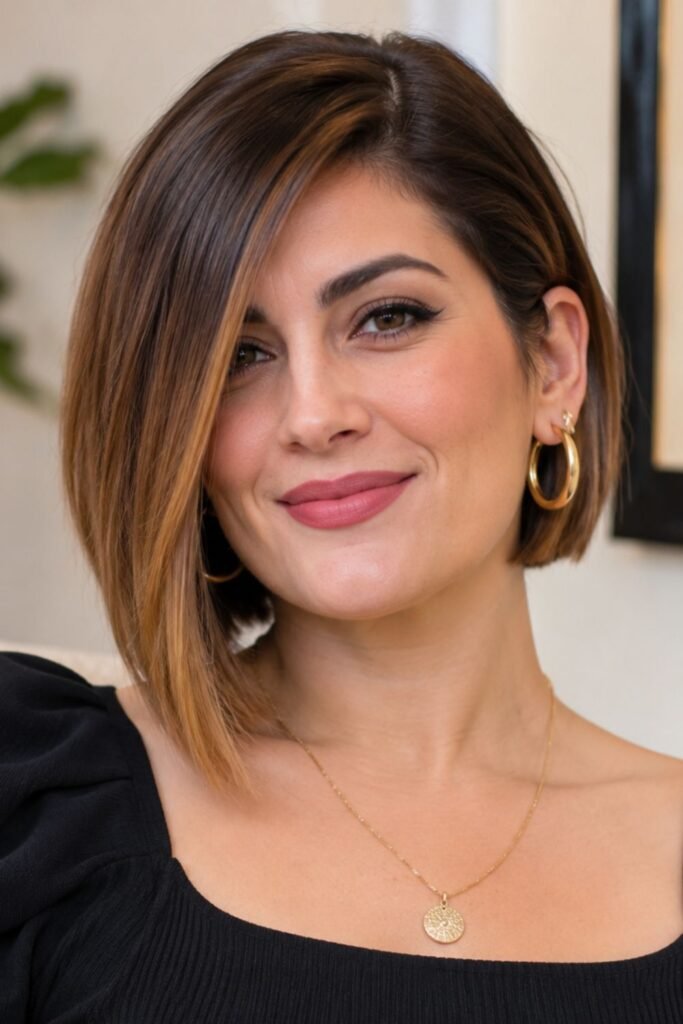
Asymmetric Bob with Undercut
This cut hides a closely clippered or shaved section under the shorter side. Worn smooth, it looks like a sleek diagonal bob. Tucked behind the ear or pinned up, the undercut shows. It suits thick hair especially well because it removes weight, and it is an easy way to try an edgier look you can still conceal for work. Ask for the undercut to stop below the widest part of the head so the top hair covers it fully. Tidy the clippered area every two to three weeks and style the bob with a lightweight smoothing balm.
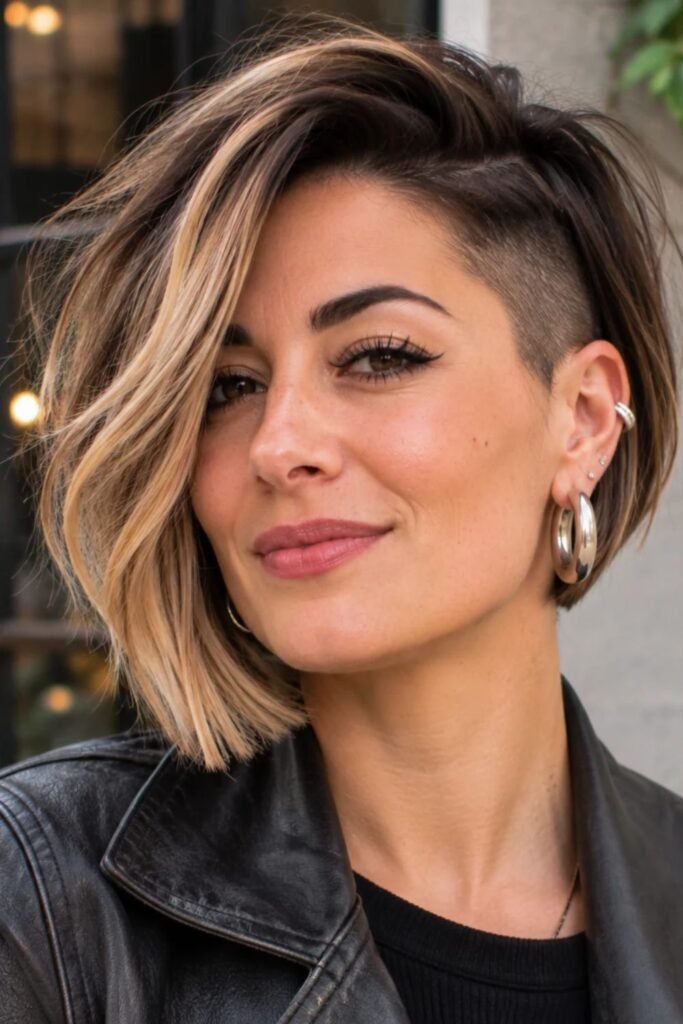
Asymmetric Bob with Color
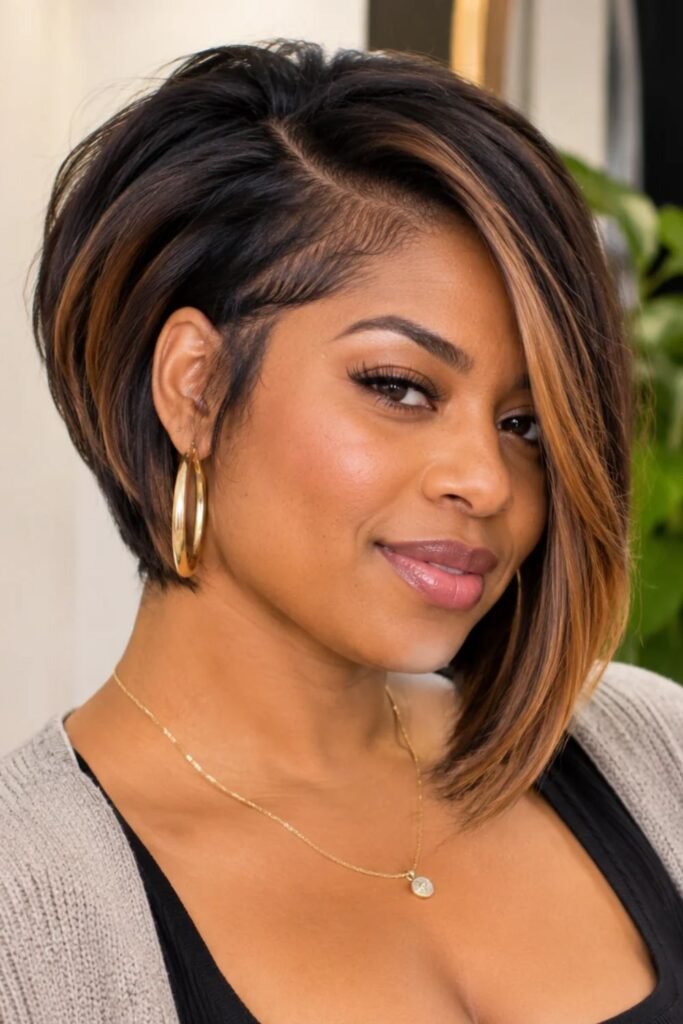
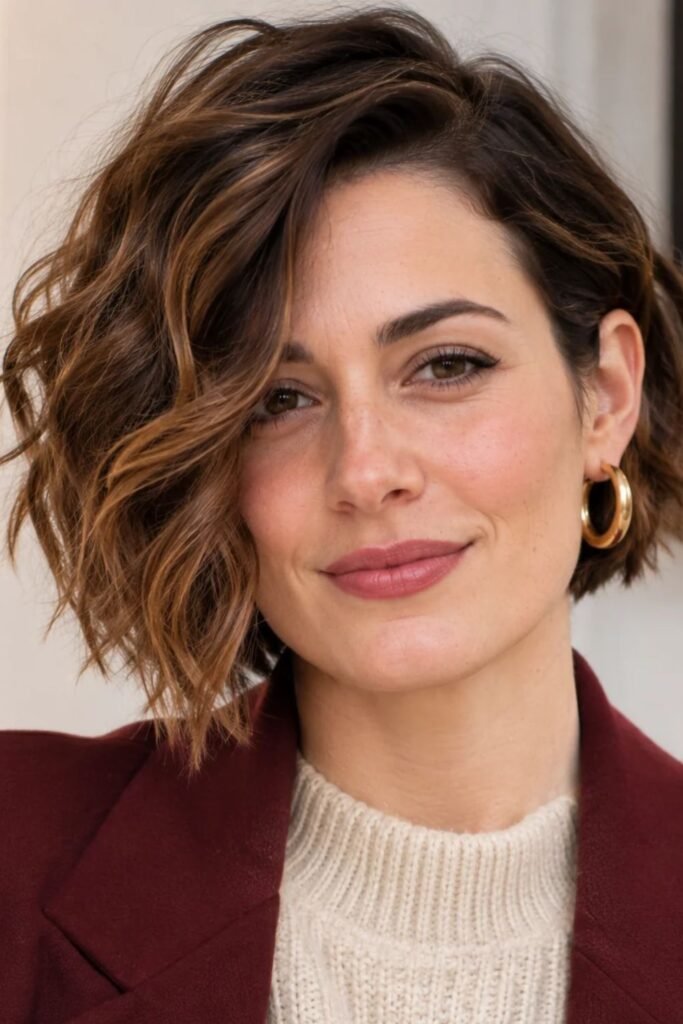
Asymmetric Bob with Caramel Highlights
Caramel highlights placed through the longer side draw the eye along the angle and make the shape look deliberate even when the hair is worn loose. Keep the shorter side close to your natural brown so the color contrast echoes the length difference. Ask your colorist for fine babylights or face framing pieces on the long side only, toned to a warm golden caramel. Use a color safe shampoo and a weekly gloss or mask to keep the warmth from turning brassy. For more shade and placement ideas, browse our guide to caramel highlights on brown hair.
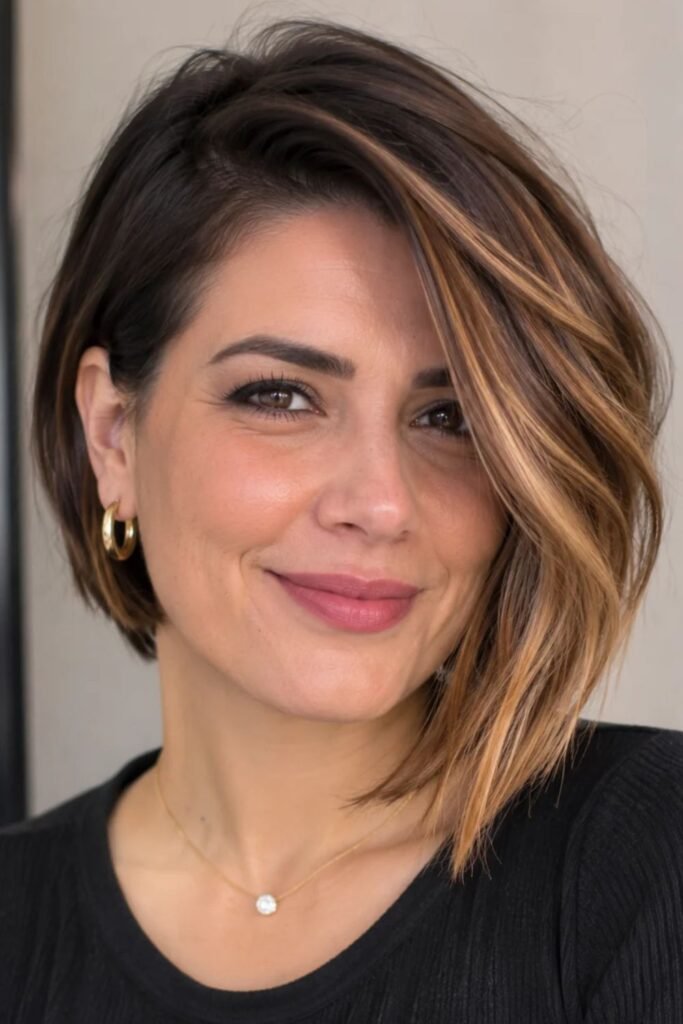
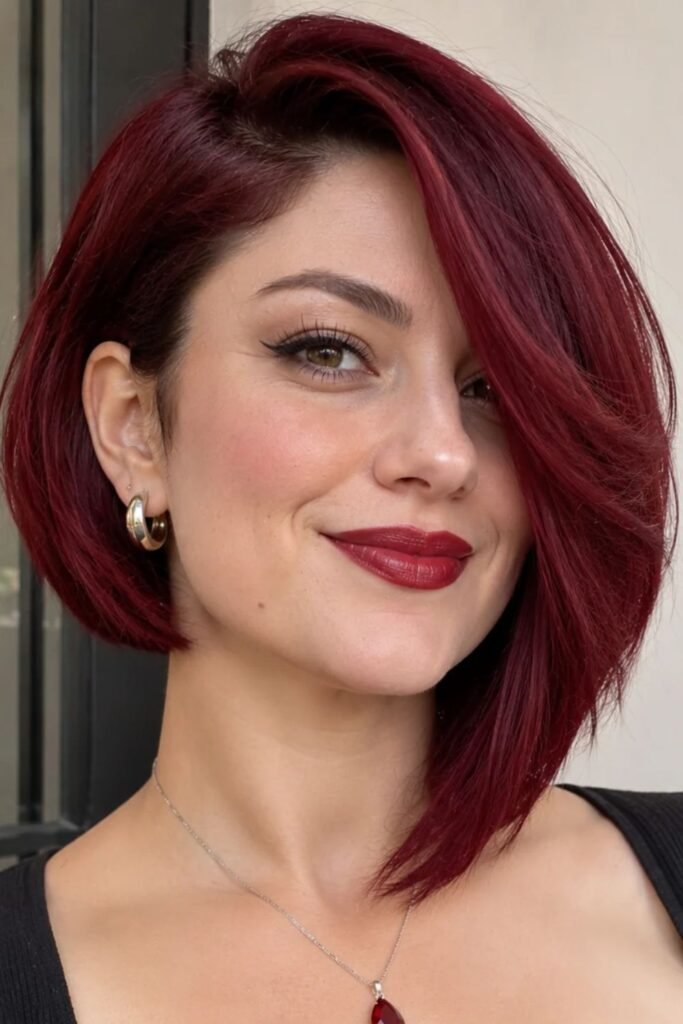
Dark Cherry Red Asymmetric Bob
A deep cherry red all over makes the angle look like a sweep of color across the face, especially on the long side where the hair falls forward. It flatters cool and neutral skin tones and works on medium to dark brown bases without heavy lightening. Ask for a red violet tone with a slightly richer shade through the ends. Reds fade quickly, so wash in cool water, use a color depositing conditioner every week and keep heat styling moderate. Our dark cherry red hair color ideas show deeper and brighter versions of the shade.
Two Tone Asymmetric Bob
Two contrasting colors split along the part line, one on the short side and another on the long side, so the color division follows the haircut. The effect is bold and works best with a consistent side part, since moving the part changes the look completely. Popular pairings include black with silver, brunette with copper, and blonde with pastel pink. Ask your colorist to section cleanly along your natural part and protect the darker side while lightening. Expect root touch ups every six weeks, and use a sulfate free shampoo to slow fading on both shades.
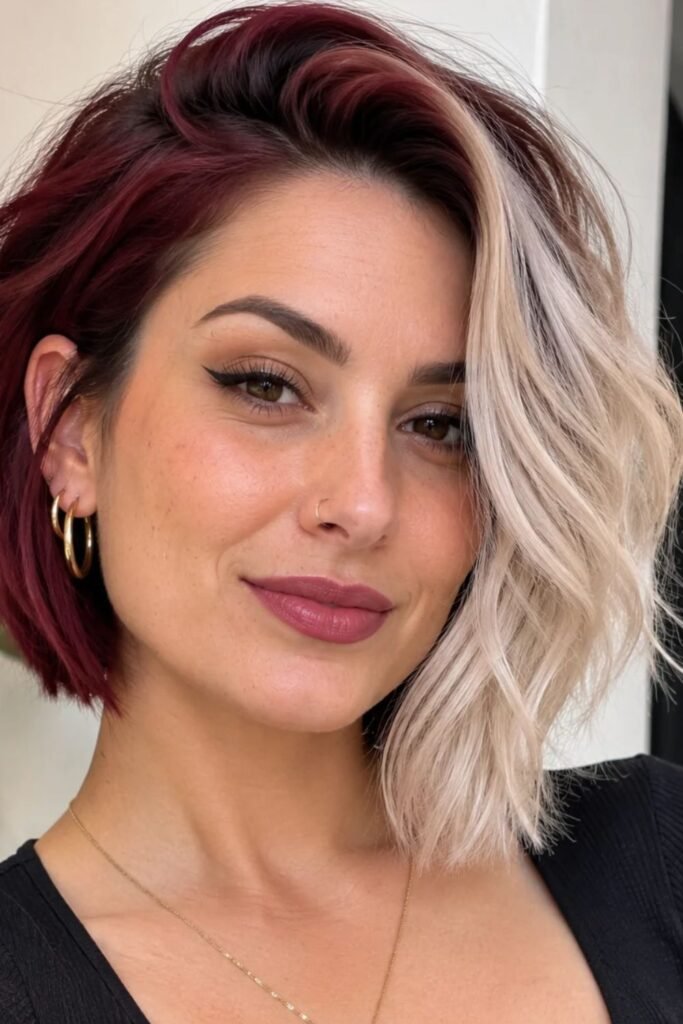
Platinum Asymmetric Bob
Platinum or icy silver makes the angle more visible than any other color, because pale hair shows every millimeter of the perimeter. It looks striking on a blunt cut and suits anyone willing to commit to regular lightening and toning. If you are starting dark, ask for a gradual lift over more than one appointment, with a bond building treatment at each session. Use a purple shampoo once a week to keep yellow tones away, a deep conditioning mask often, and a heat protectant before every blow dry. Plan root touch ups every four to six weeks.

Asymmetric Bob by Hair Texture
Asymmetric Bob on Straight Hair
Straight hair gives the cleanest, most exact angle, so the length difference reads clearly even from across a room. It is the easiest texture to keep sleek, but it shows any uneven drying. Ask your stylist to check the cut dry at the end so the line sits right on your natural fall. Blow dry with a paddle or round brush, directing the long side forward, then finish with a flat iron and a drop of serum. On busy mornings, a smoothing cream on damp hair and a quick pass with the dryer keep the shape from drifting.

Asymmetric Bob on Wavy Hair
Natural waves soften the diagonal into a relaxed, swinging shape and add body that flat straight hair lacks. This version is forgiving as it grows and suits anyone who prefers to air dry. Ask for light internal layers so the waves can form without bulk on the long side. At home, apply a curl cream or mousse to damp hair, scrunch, and let it dry naturally or use a diffuser on low. Refresh second day hair with a spritz of water and a little more product. Trims every seven to eight weeks are usually enough.
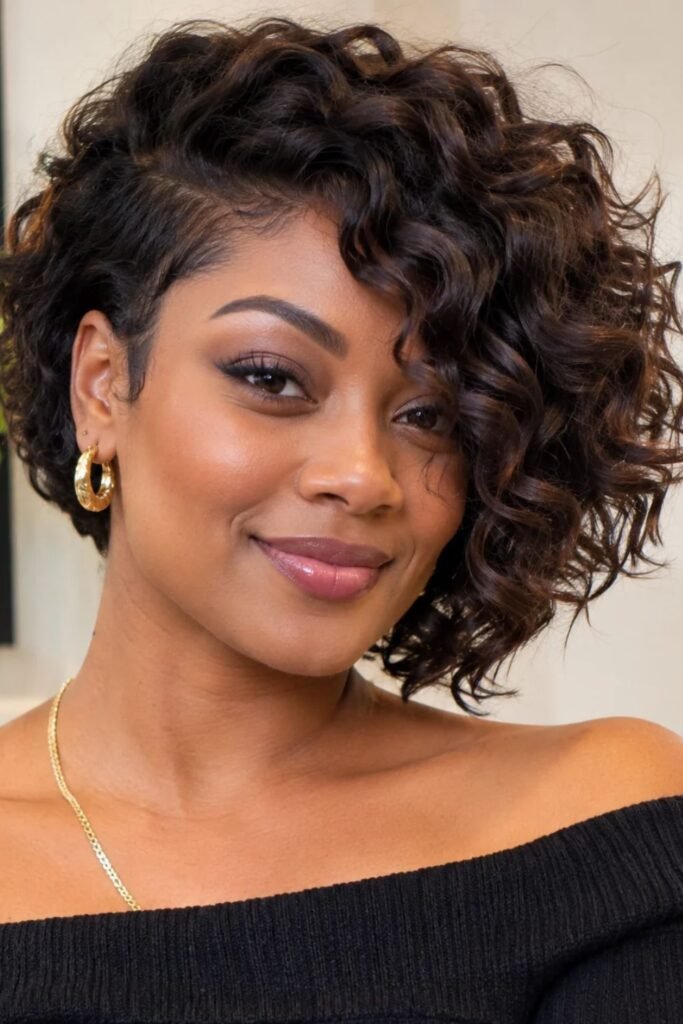
Asymmetric Bob on Curly Hair
Curls create a rounded, voluminous angle rather than a flat line, so the length difference looks softer at first glance. The key is allowing for shrinkage, so book a stylist who cuts curly hair dry, curl by curl, and leaves extra length on the long side. Ask them to shape the short side close to the face and let the long side settle below the chin once the curls spring up. Use a leave in conditioner, a defining gel and a diffuser on low heat. A satin pillowcase protects the shape and reduces frizz between wash days.
Occasion and Statement Asymmetric Bobs
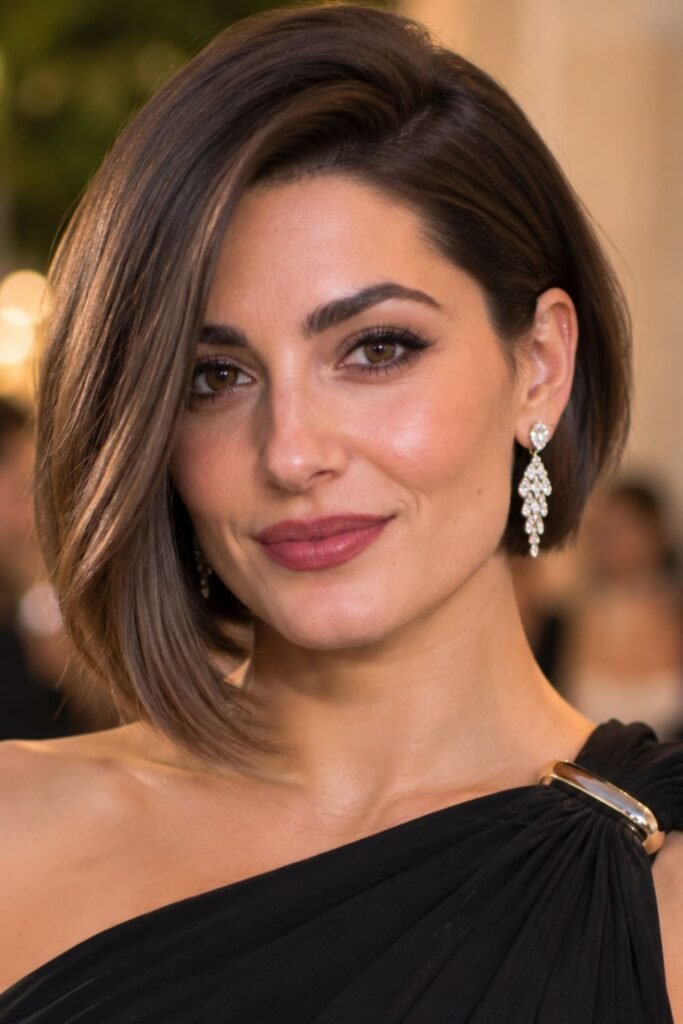
Asymmetric Bob for a Formal Occasion
For an event, blow dry the long side smooth and sweep it forward in a clean curve, then brush the short side back and tuck it behind the ear with a hidden pin. The contrast between sleek and tucked looks composed and works with high necklines and strapless dresses alike. A shine serum or light oil on the long side gives a glossy finish under evening light, and a flexible hold spray keeps the sweep in place. Add a jeweled clip on the short side for extra polish. Our Thanksgiving hairstyles for short hair include more dressed up ideas for this length.
Bold Statement Asymmetric Bob
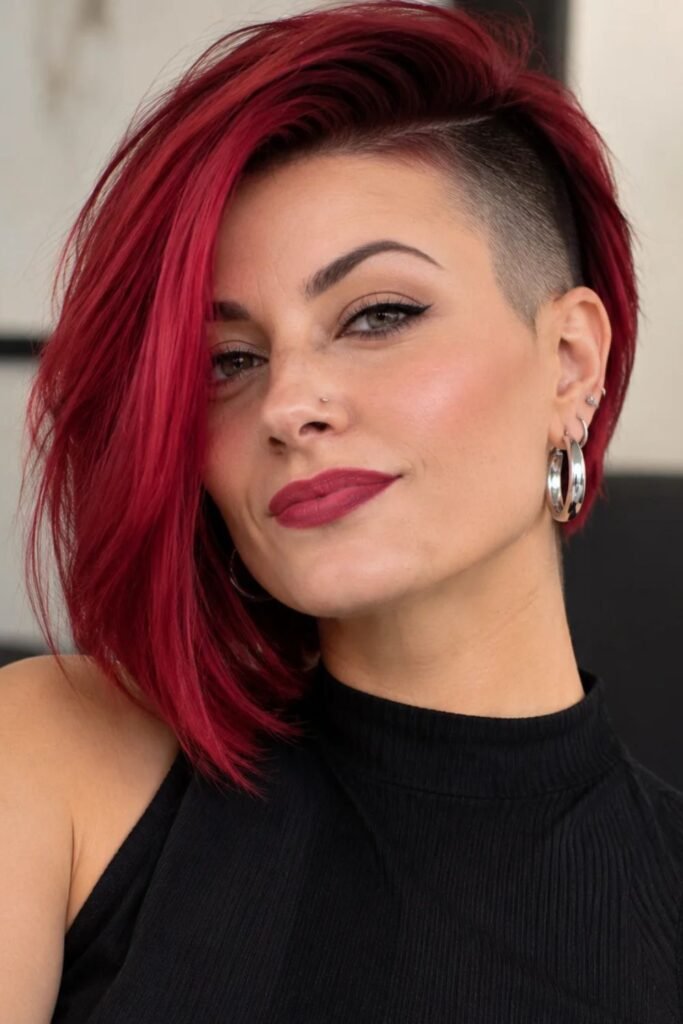
The most dramatic version combines a clippered short side, a long side falling to the collarbone and a vivid color such as electric blue, violet or bright copper. Every element points to the haircut, so it suits people who love a statement and can keep up with color and clipper maintenance. Ask for the brightest shade on the long side, since that is where the eye lands. Keep makeup and accessories simple, perhaps a clean lip and small earrings, so nothing competes with the shape. Refresh the clippered side every two to three weeks.
How to Ask for an Asymmetric Bob Haircut
Specify Both Lengths
Name where the short side should sit and where the long side should fall, using landmarks such as the ear, jaw, chin, collarbone or mid chest. Giving both points removes the guesswork that leads to a cut that is shorter or less angled than you pictured. Bring two or three photos that show the angle you like from the front and the side.
Specify the Diagonal Direction
Decide which side should be shorter before the cut starts. Most people put the long side on the side of their natural part so it falls forward easily, but there is no fixed rule. Point out any cowlicks to your stylist, because a strong cowlick on the long side can push it out of place.
Specify the End Technique
A blunt perimeter looks precise and graphic, while a point cut or razored edge looks textured and soft. Both work with the same lengths, yet they change the character of the cut completely, so say which finish you want and how much time you are willing to spend styling it.
Frequently Asked Questions
What face shape suits an asymmetric bob?
Oval faces can wear any length and angle. Long faces tend to look best in a subtle version that sits at the chin, which adds width. Round faces suit a steeper angle with the long side below the jaw to create length, and square faces benefit from textured ends that soften the jawline.
How often does an asymmetric bob need trimming?
Blunt and dramatic versions need a trim every four to six weeks, since growth quickly blurs the clean line. Textured and wavy versions can usually go seven to eight weeks. The short side tends to need attention first, because a centimeter of growth makes a bigger difference at a shorter length.
Does an asymmetric bob suit fine hair?
Yes. A stacked back builds volume at the crown, and a blunt perimeter keeps the ends dense so fine hair looks thicker. Avoid heavy texturizing, which can make fine ends look sparse.
Can I style an asymmetric bob without heat tools?
Wavy and curly versions air dry well with a curl cream scrunched through damp hair. Straight hair tends to lose its angle when left to dry on its own, so a quick blow dry or a flat iron pass on the long side usually helps.
Is an asymmetric bob high maintenance?
Blunt, dramatic and undercut versions need the most upkeep because they show growth fast. Subtle and textured versions are easier, since a soft edge and a smaller length difference hide growth for longer.
Final Thoughts
An asymmetric bob haircut puts all of its design into one angle. Adjust that angle, the finish on the ends or the color, and the same cut becomes something new, from a quiet office friendly bob to a clippered statement. Choose the length for each side first, then the texture and shade, and bring photos to your appointment. With regular trims and the right styling products, the line stays sharp for months.