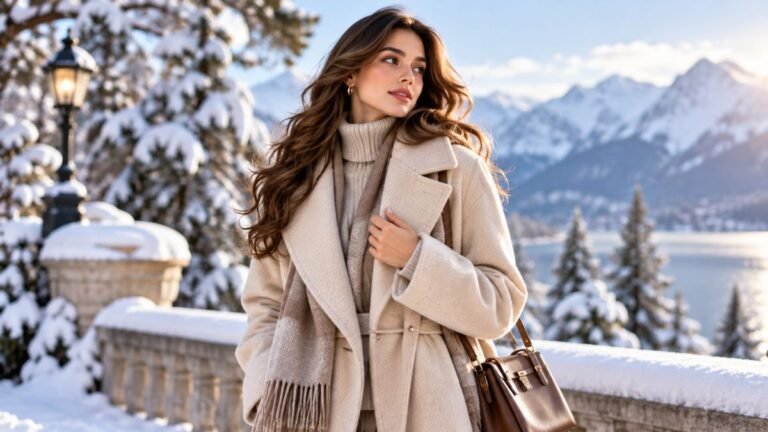

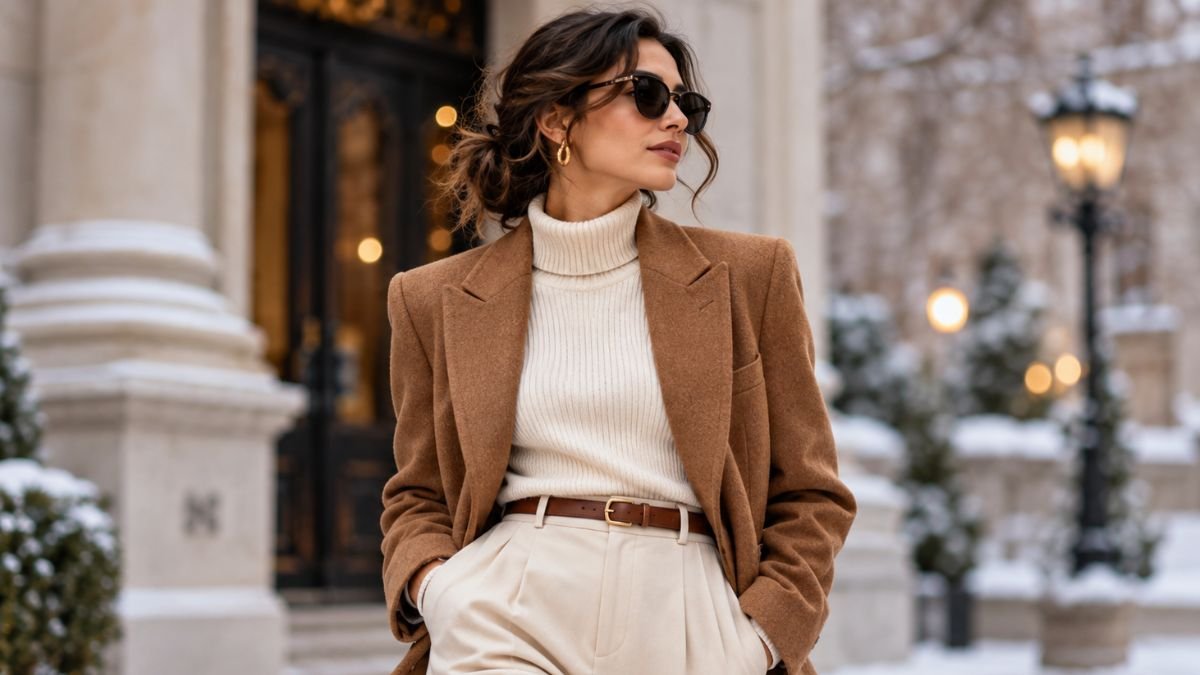
Winter blazer trends for 2026 favor jackets with a deliberate shape over stiff, matching suits. Nipped waists, compact cuts, collarless fronts and expressive details lead the season, alongside familiar textured wool and velvet. A blazer makes a cold-weather outfit look composed, but warmth depends on fabric weight, lining and the layers beneath it. These ten styles show how to wear the new shapes without giving up movement or comfort, and how to pair them with the cozy winter staples already in your closet.
Cinched-Waist Wool Blazer
A defined waist is one of autumn/winter 2026’s clearest tailoring shifts. Choose dense wool or wool-blend cloth, with shaping through the side seams rather than a belt that bunches the fabric. A fine merino roll-neck fits underneath without disturbing the waistline. Check that the jacket closes comfortably when seated.
Ask a tailor to take in the side seams if an off-the-rack jacket feels boxy; it is an inexpensive alteration that makes a big difference. Charcoal, chocolate and camel wool look the most refined. Wear it with straight trousers and loafers for the office, or over a slim knit dress with tall boots on weekends.
Collarless Tailored Jacket
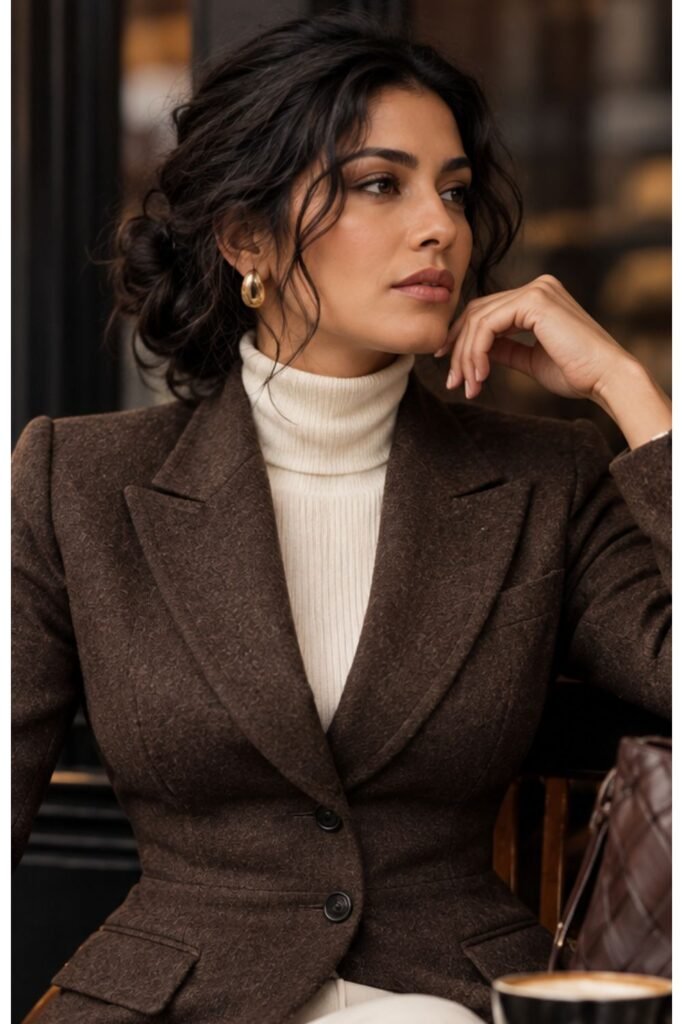
A lapel-free neckline gives a jacket a neat, continuous front. It works especially well over a high-neck knit or crisp shirt because there is no competing collar. Look for a substantial lining and enough room through the upper arm for winter layers.
Collarless jackets suit petite frames because the uninterrupted neckline lengthens the torso. Bouclé, crepe and flannel all work, though bouclé snags easily, so keep bracelets and rings simple. Style it with a pearl stud or slim chain, tapered trousers and pointed flats for a look that reads polished without much effort.
Funnel-Neck Blazer
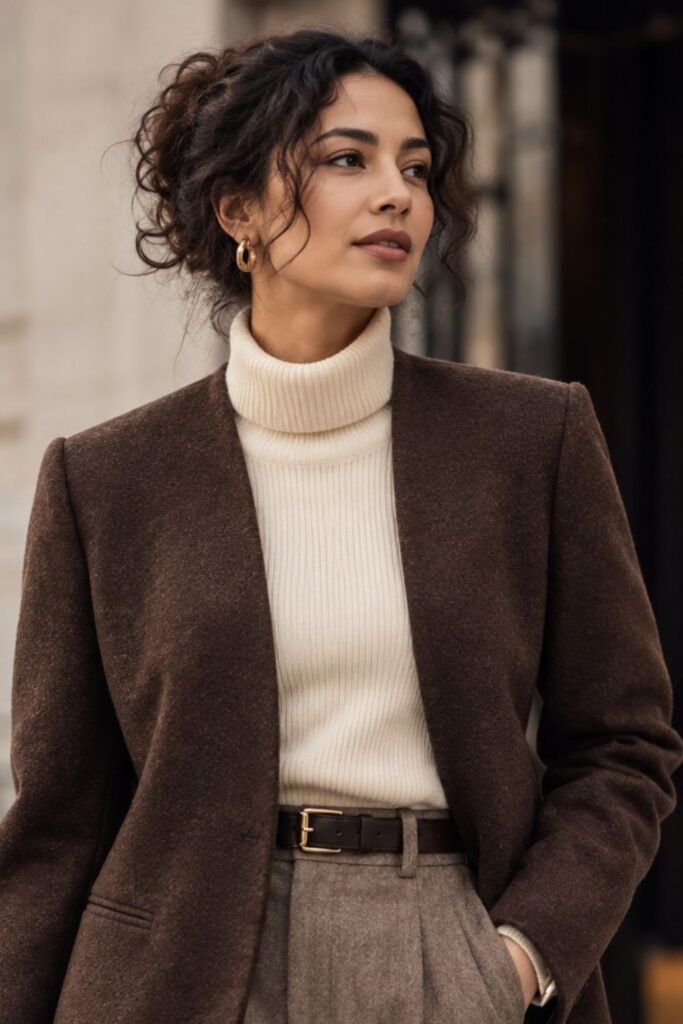
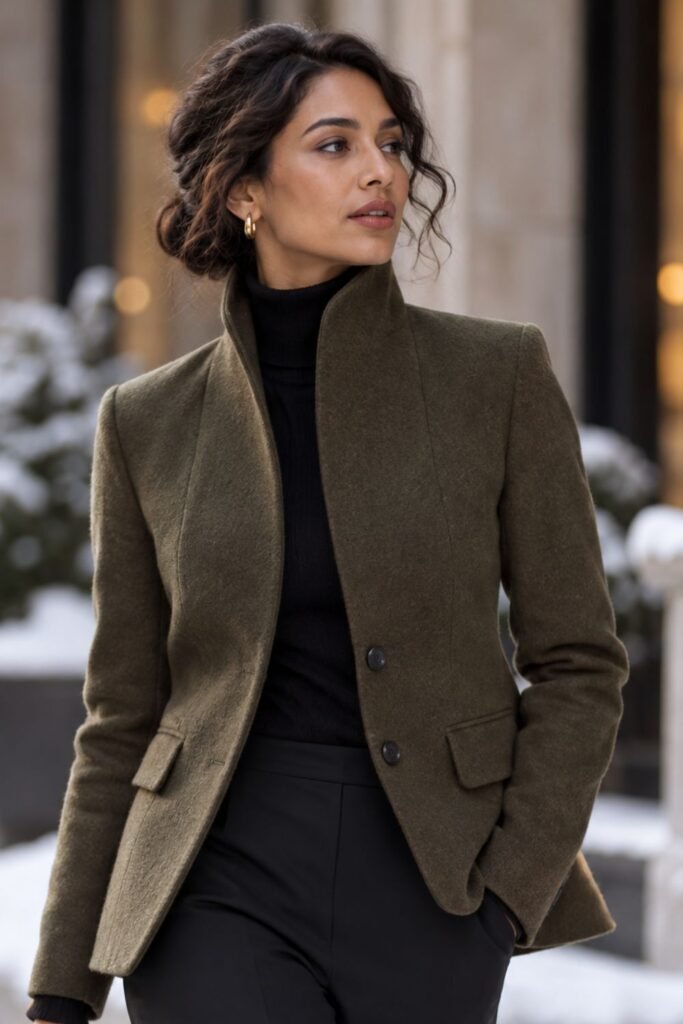
The raised neck offers an architectural alternative to standard lapels and can reduce the need for a bulky scarf on milder days. A close-fitting jersey base preserves the clean silhouette. A high collar alone does not make a jacket weatherproof.
Fit at the neck matters most. The collar should stand close without touching the jaw and leave room for a thin turtleneck if you plan to layer one. Keep the rest of the outfit streamlined with slim trousers, a column skirt or dark straight jeans. Wearing your hair up shows off the neckline best.
Belted Longline Blazer
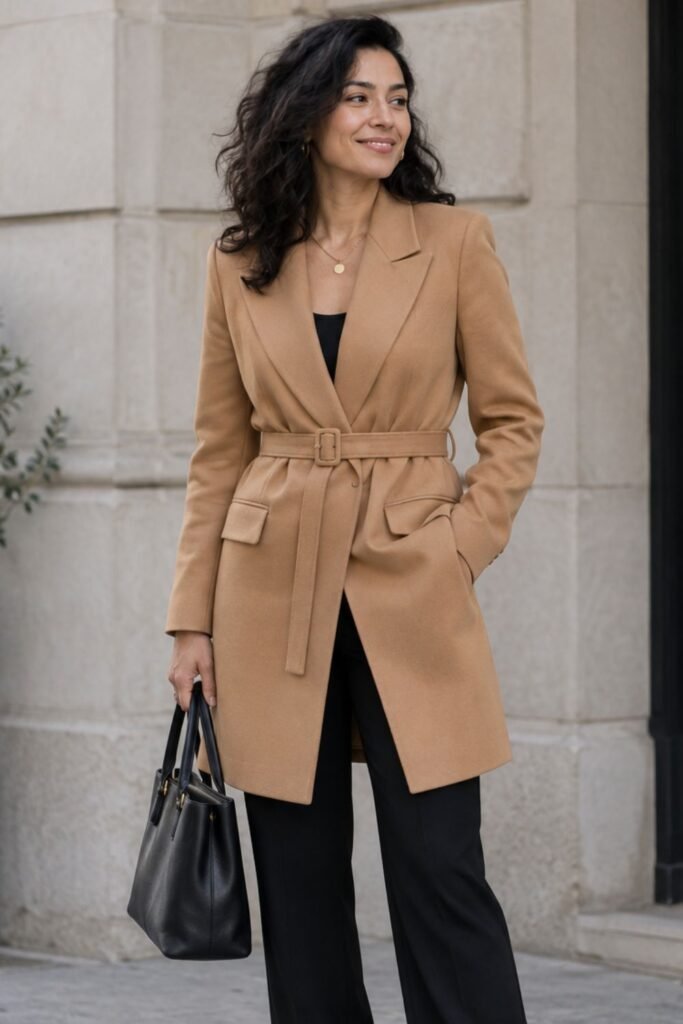
A long blazer with a removable belt can bridge tailored jacket and light outerwear. Leave enough room for a thin sweater and fasten the belt without pulling the lapels apart. Wide-leg trousers create a continuous line, while a shorter skirt changes the proportion.
A length between mid-thigh and knee gives the most coverage and suits average and tall heights. Petite wearers can choose a version that ends just above mid-thigh so the belt still sits at the natural waist. Tie the belt loosely at the back for a relaxed shape, or wear the jacket open over a matching knit set.
Tweed and Herringbone Blazer
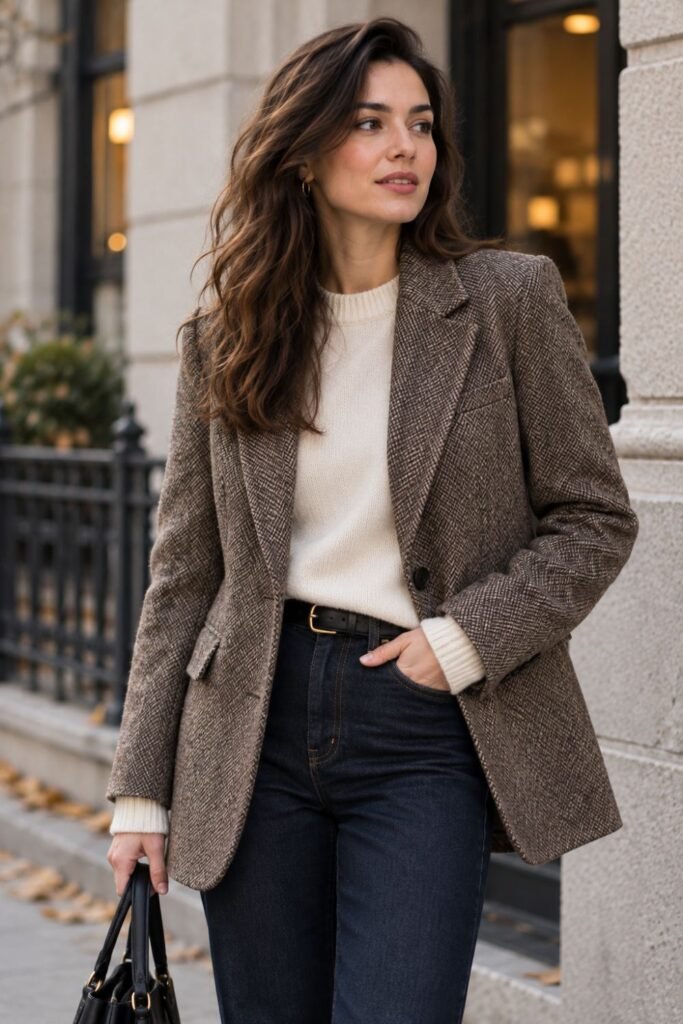
Tweed and herringbone bring visual texture even when the outfit stays neutral. Check the fabric composition and lining rather than assuming every textured jacket is warm. A fine knit and dark denim soften the formality, while a wool coat can go over it when temperatures drop.
Brown, olive and gray tweeds pair easily with denim, while a black and cream weave dresses up well for evening. Because tweed holds its shape, a slightly relaxed cut still looks sharp. For complete cold-weather combinations built around knitwear and boots, browse our cozy winter outfit ideas for women.
Velvet Evening Blazer
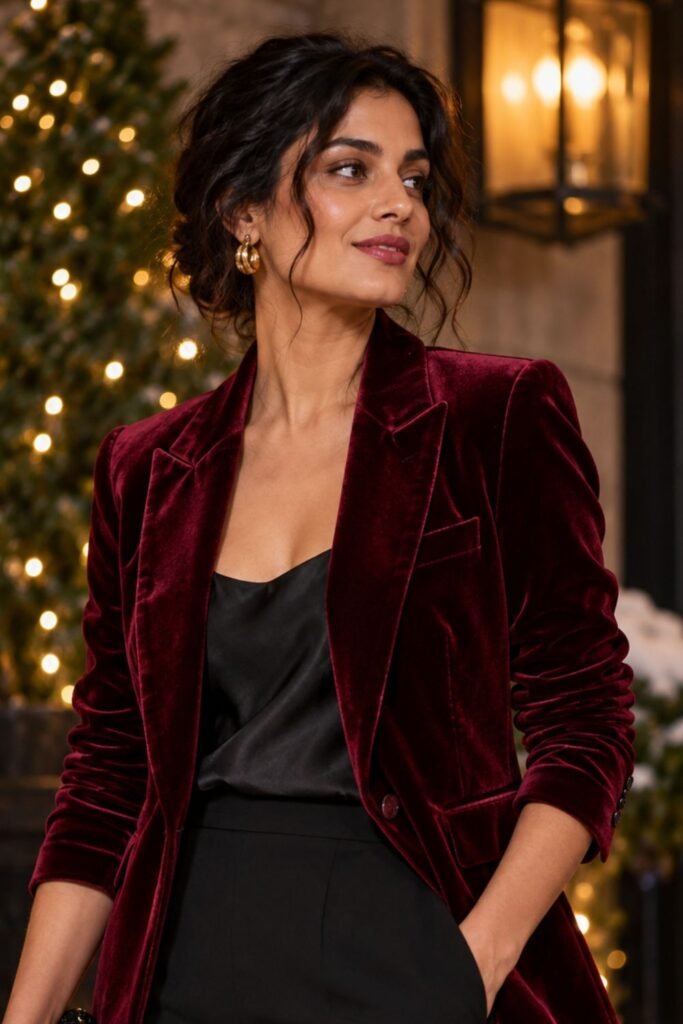
Velvet catches light differently from flat suiting, making a simple jacket suitable for dinner or seasonal gatherings. Burgundy, midnight blue and black feel especially rich. Choose a lining that slides over sleeves; velvet itself does not guarantee insulation.
Velvet crushes easily, so hang it on a wide padded hanger and steam it instead of ironing. Single-breasted, one-button cuts look the most modern. Wear it with a silk camisole and black trousers for dinner, or over a white tee and jeans when you want the jacket to carry the outfit.
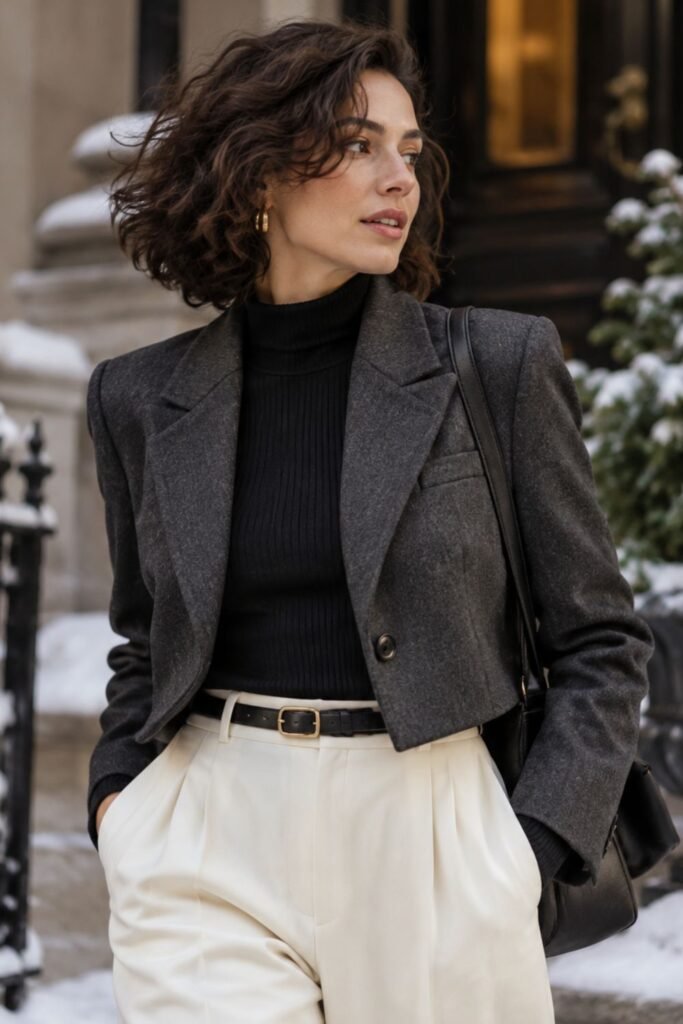
Cropped, Close-Fit Blazer
Shorter jackets are part of the 2026 move toward compact proportions. A cropped blazer works over high-rise trousers or a column skirt, but has less space for a chunky sweater. A fitted thermal or lightweight ribbed knit makes a better base.
Cropped blazers suit petite frames and anyone who wants to highlight a high waistline. Pick a hem that lands at or just above the natural waist, and make sure the sleeves still reach the wrist bone. Outdoors, add a long coat on top so your lower back stays warm on the commute.
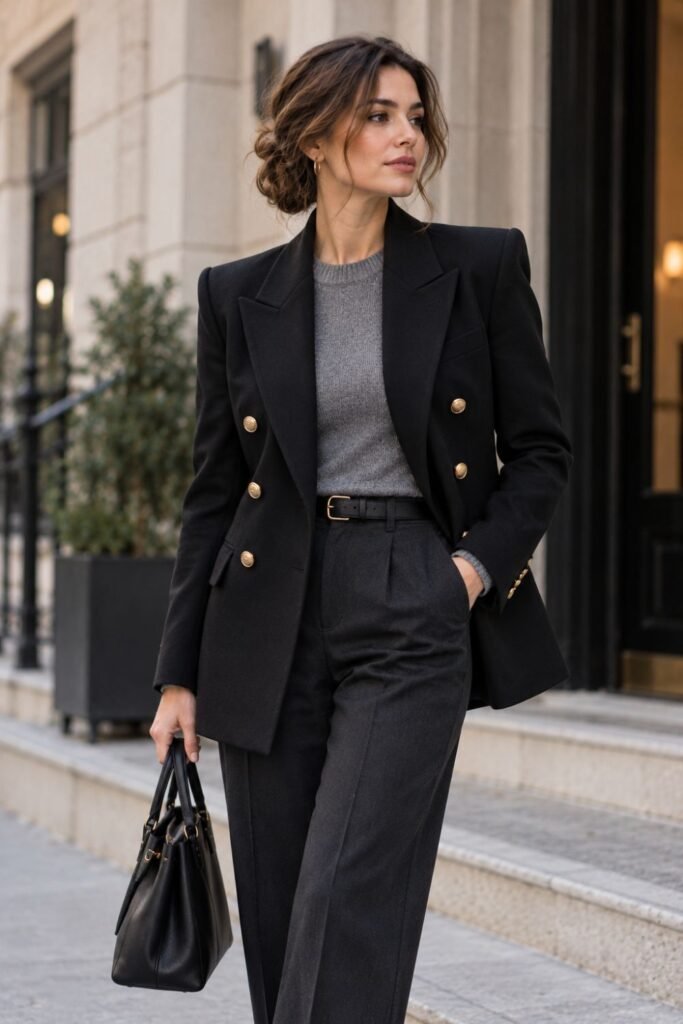
Strong-Shoulder Double-Breasted Blazer
Defined shoulders remain useful even as waist shaping returns. Double-breasted fronts add overlapping fabric at the torso; the fit should remain comfortable across the chest without gaping. Keep the inner layer thin if wearing a coat over the blazer.
Look for a shoulder seam that sits right at the edge of the shoulder bone, with light padding rather than a stiff, boxy frame. Navy, black and pinstripe versions work for the office, and the shape balances wide-leg trousers or a full midi skirt. Our guide to sculpted-shoulder blazers for women covers more variations on this silhouette.
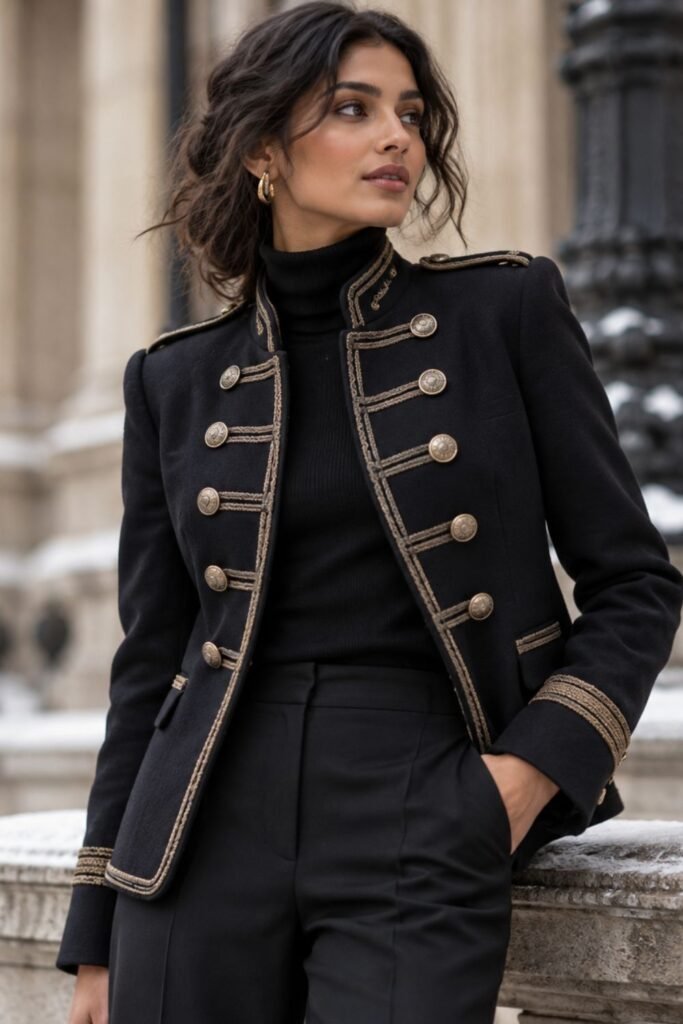
Military-Detail Blazer
Braided trim, high-set buttons and disciplined front panels bring a military reference into tailored dressing. Choose one decorative detail rather than a fully embellished uniform look. A simple black trouser and understated boot keep the jacket wearable.
Navy, olive and black work best with brass or gunmetal buttons. Keep the rest of the outfit plain so the detailing looks intentional: a white shirt, slim black trousers and a low ankle boot. Avoid pairing it with other statement pieces, since too much trim quickly starts to look like a costume.
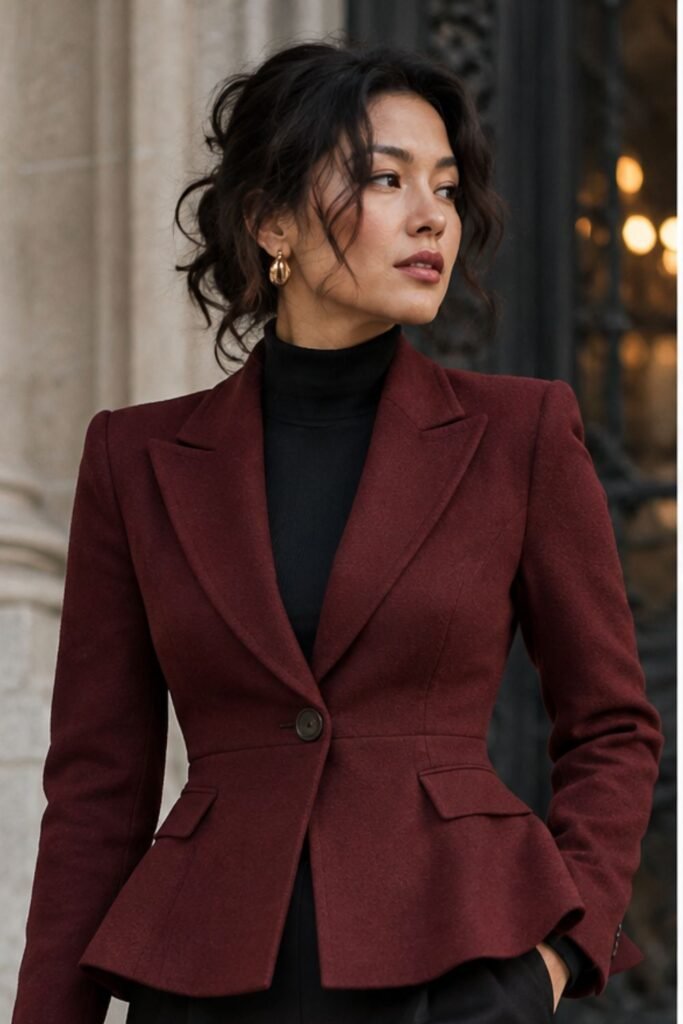
Peplum Tailored Blazer
A fitted torso that releases into a short peplum creates a distinctly different hemline. The flare needs space to sit naturally over trousers or a narrow skirt. Look for smooth lining at the waist and avoid heavy knitwear that changes the intended shape.
Peplum blazers add a defined waist to straight figures and suit hourglass shapes when the flare is short. Wear it buttoned so the shape shows, and choose a solid dark color for winter. It looks polished over slim trousers with heeled boots, or with a pencil skirt and opaque tights for evening.
How to Keep a Winter Blazer Comfortable
Treat a blazer as an insulating middle layer in genuinely cold weather, not a substitute for a weatherproof coat. Start with a thin thermal or fine merino top; leave enough space at the shoulder and armhole to raise your arms. Check the actual fiber content, weave, lining and care label. Wool-rich flannel may feel warmer than a lightweight polyester suiting cloth, but wind and moisture protection depend on the full garment construction.
For a practical layering formula, see our cozy layering outfit ideas, and for everyday proportions try these runway-to-real-life outfit ideas.
Which Winter Blazer Trend Should You Choose?
| Priority | Consider | Check before buying |
| Office layering | Collarless or wool cinched | Sleeve and shoulder room |
| Dinner dressing | Velvet or peplum | Lining and closure |
| Everyday denim | Tweed or cropped | Hem proportion |
| Colder commutes | Longline wool or double-breasted | Coat fit over jacket |
Frequently Asked Questions About Winter Blazers
Are blazers warm enough for winter?
Some lined wool blazers are suitable for mild winter days, but a blazer alone may not protect against freezing temperatures, wind or rain. Add suitable outerwear for the forecast.
What blazer shape is most current in 2026?
Waist-defined tailoring is particularly prominent in autumn/winter 2026 coverage, while collarless, cropped and structured-shoulder alternatives remain relevant.
Can I wear a sweater under a fitted blazer?
Yes, if the sweater is fine-gauge and the blazer has enough room at the arms and chest. Test the fit while sitting and moving.
Is tweed always warmer than regular suiting?
No. Fiber composition, density, lining and garment construction matter more than the surface texture or fabric name alone.
How should a winter blazer fit at the shoulders?
The shoulder should sit in its intended position without collapsing or restricting arm movement. Structured and dropped-shoulder designs have different fit points.
What trousers work with a peplum blazer?
Straight or narrow trousers keep the peplum’s flare visible. Wide trousers can also work if the jacket is short and sharply fitted.
Can a blazer replace a coat?
Only in suitable mild conditions. For prolonged outdoor exposure in cold, wet or windy weather, use appropriate insulated or protective outerwear.
How can I style a blazer casually?
Wear it with dark jeans, a fine knit and flat boots. Textured fabrics or a relaxed fit make the combination less formal.
How to Wear Winter Blazer Trends This Season
The best winter blazer trends are the ones whose cut works with your real layers. Start with fit and fabric, then choose the visual direction: a defined waist for precision, tweed for texture, velvet for evening or a collarless front for quiet simplicity. A well-fitting blazer earns its place by making familiar winter clothes easier to combine.