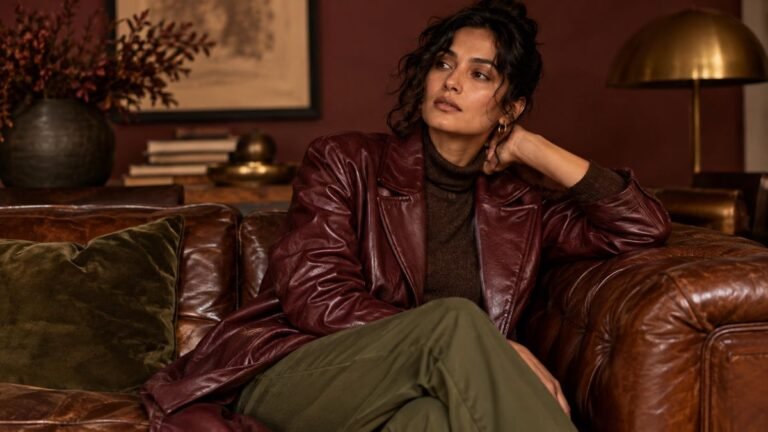

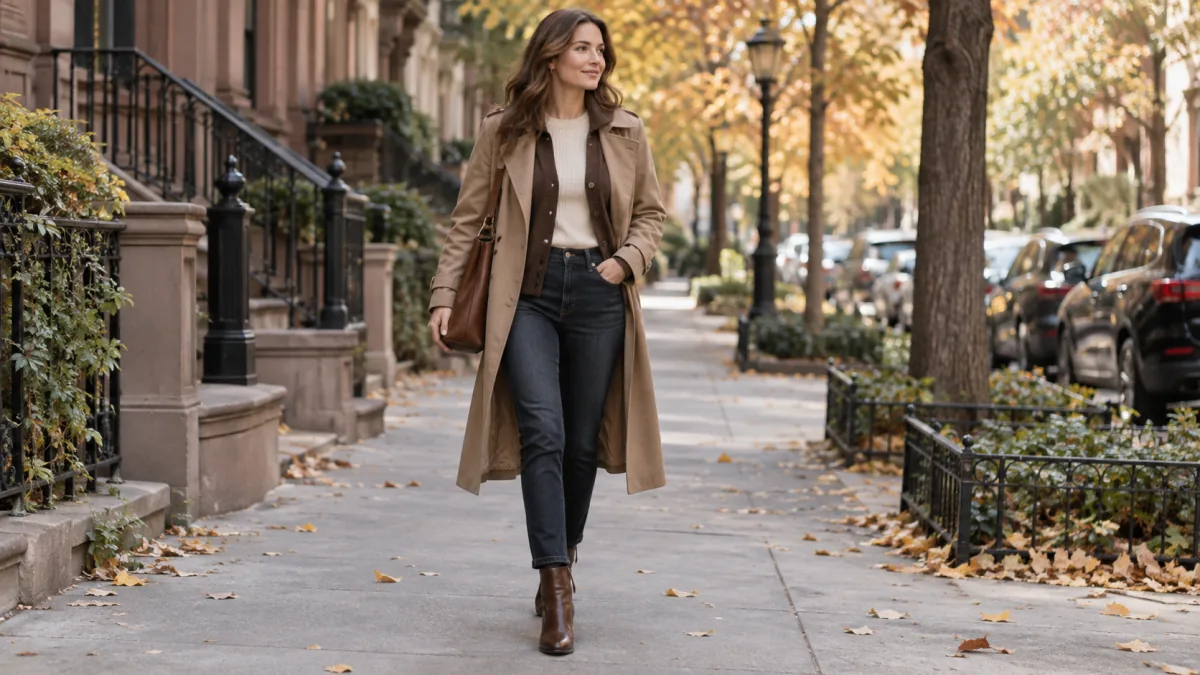
Good fall layering is less about piling on clothes and more about controlling weight, warmth, and proportion. These 16 cozy layering outfit ideas for women for Fall 2026 combine long outerwear, soft cardigans, structured blazers, knits, and transitional pieces you can remove as temperatures change.
A light base, one insulating middle layer, and an outer layer suited to the forecast make an adaptable starting point. Choose enough room to move, and avoid stacking two oversized knits under a narrow coat. Chocolate, olive, burgundy, camel, charcoal, cream, and navy are easy colors to mix across these outfits.
Quick Guide: Build the Outfit in Three Layers
| Layer | Strong Choices | Main Job | Avoid |
|---|---|---|---|
| Base | Fine turtleneck, tee, shirt, thermal, ribbed knit | Comfort and temperature control | Bulky seams or thick sleeves |
| Middle | Cardigan, blazer, vest, overshirt, crewneck knit | Insulation and visible texture | Two oversized middle layers together |
| Outer | Trench, wool coat, barn jacket, suede jacket, mac | Warmth and wind protection; rain resistance depends on construction | Outerwear too tight for the layers beneath |
| Finishing layer | Scarf, socks, gloves, belt | Adjustable warmth and detail | Too many competing accessories |
1. Fine Turtleneck + Long Cardigan + Straight Jeans
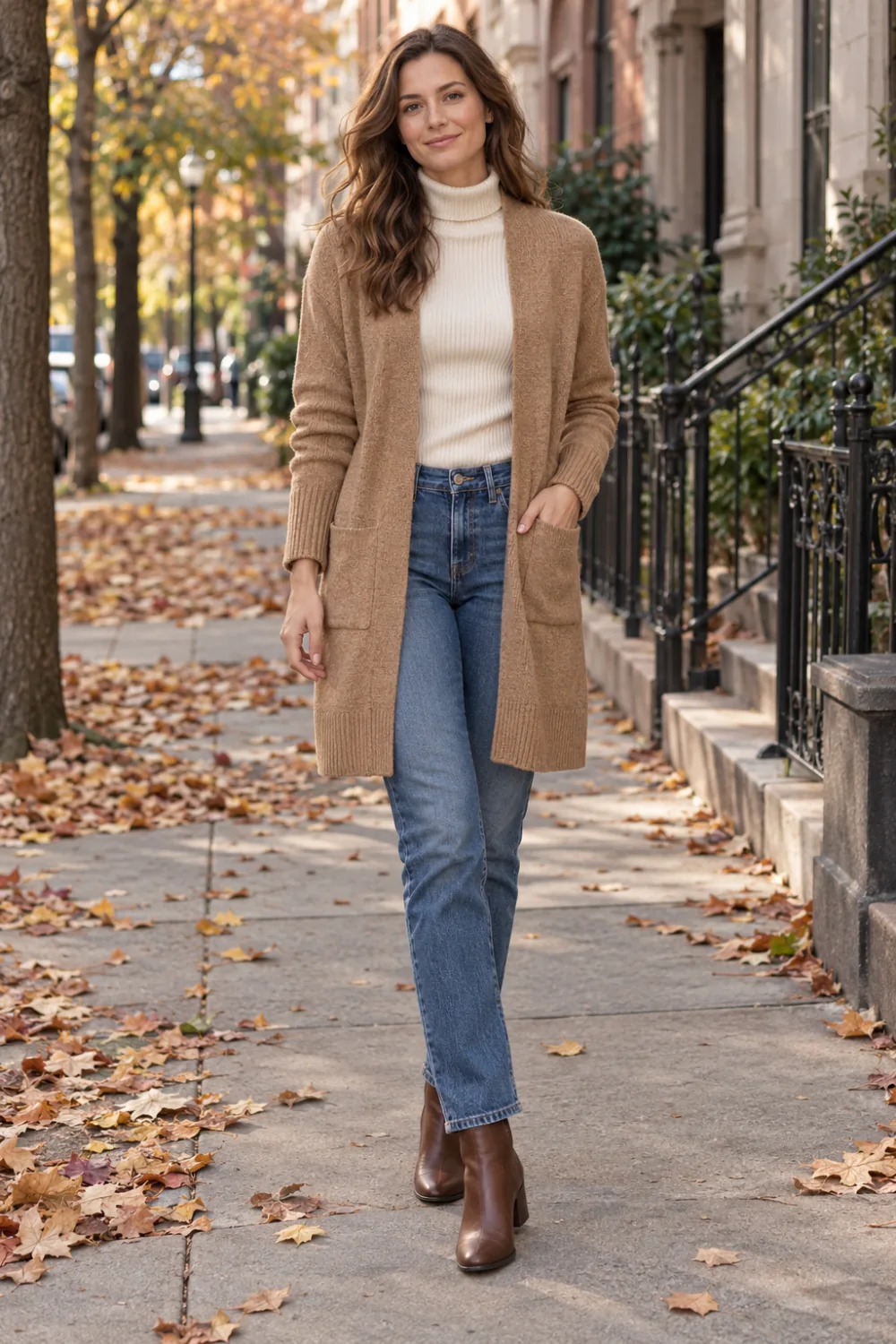
This works because the base layer stays close to the body while the cardigan provides removable warmth. The straight denim keeps the lower half clean and prevents the outfit from becoming bulky.
Best for: Mild fall days, commuting, errands, and casual offices.
2. White Shirt + Crewneck Knit + Trench Coat
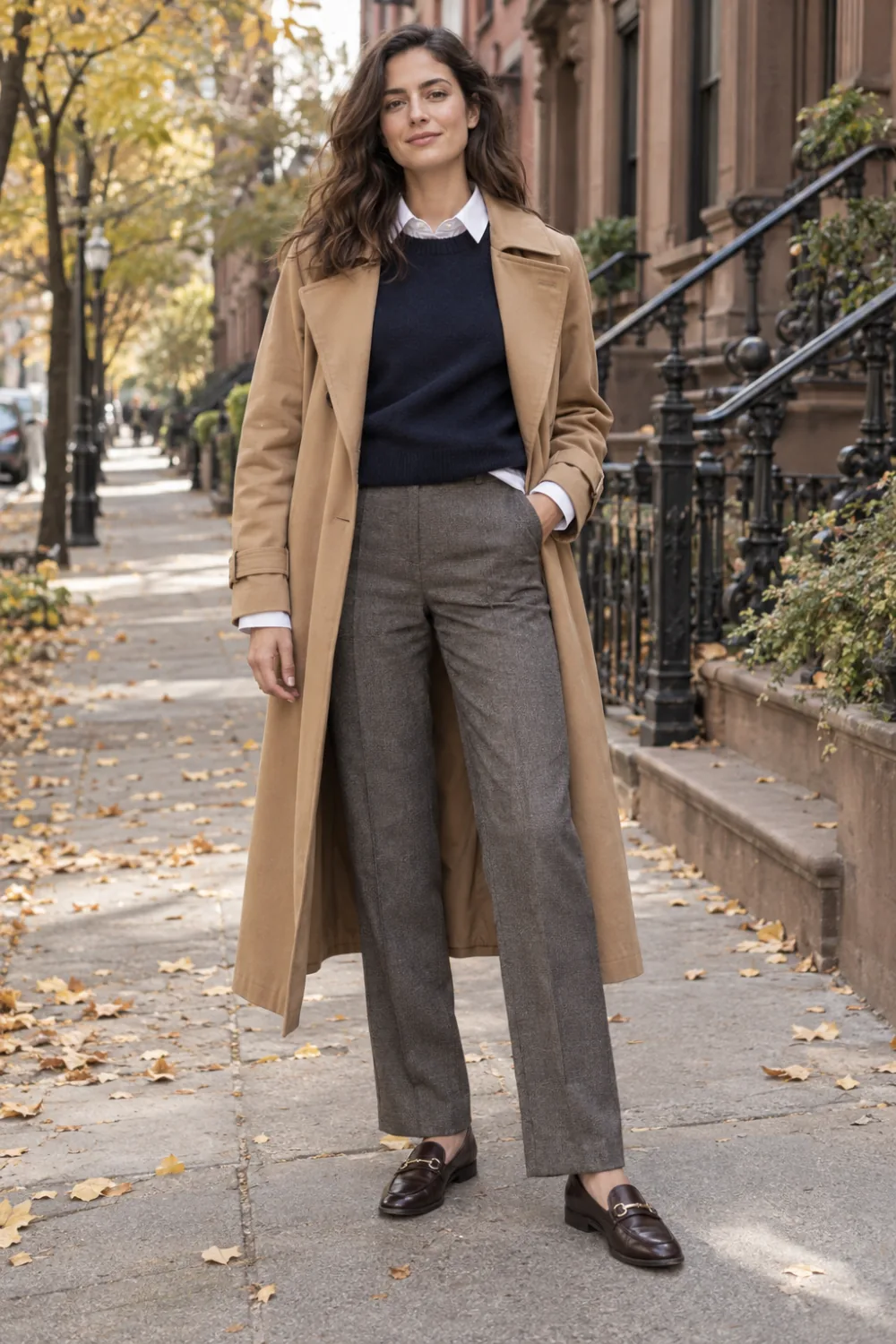
The shirt collar and cuffs create visible structure without adding much thickness. A lightweight trench adds coverage without the weight of a heavy wool coat. For rain, choose a coat labeled water-resistant or waterproof; a classic trench is not automatically rainproof.
Best for: Transitional weather and polished daytime dressing.
3. Ribbed Tee + Sculpted Blazer + Wool Coat
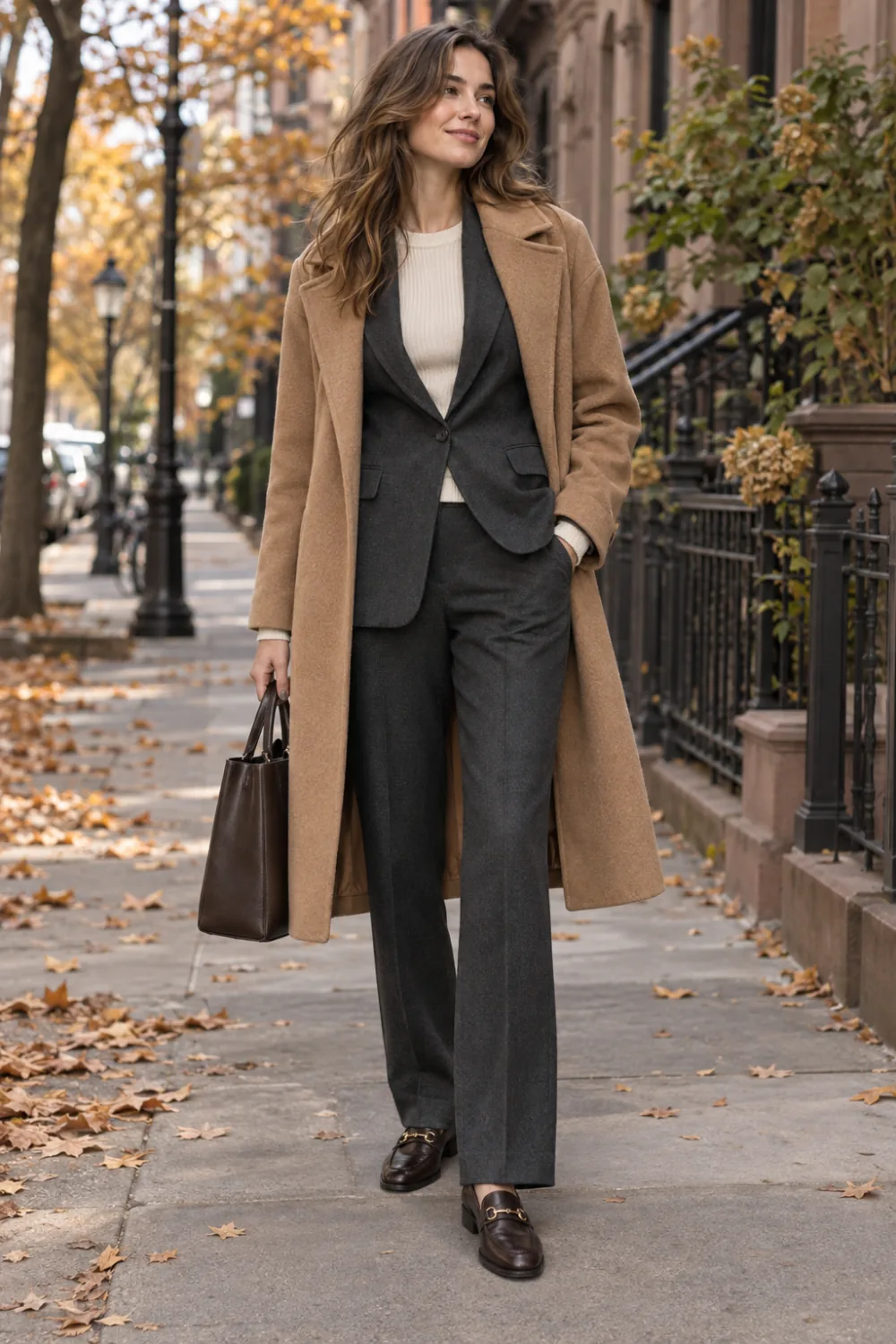
The key is leaving enough room in the coat for the blazer’s shoulders. A lightweight base keeps the torso from feeling overbuilt.
Best for: Cold office commutes and tailored workwear.
4. Slip Dress + Chunky Cardigan + Tall Boots
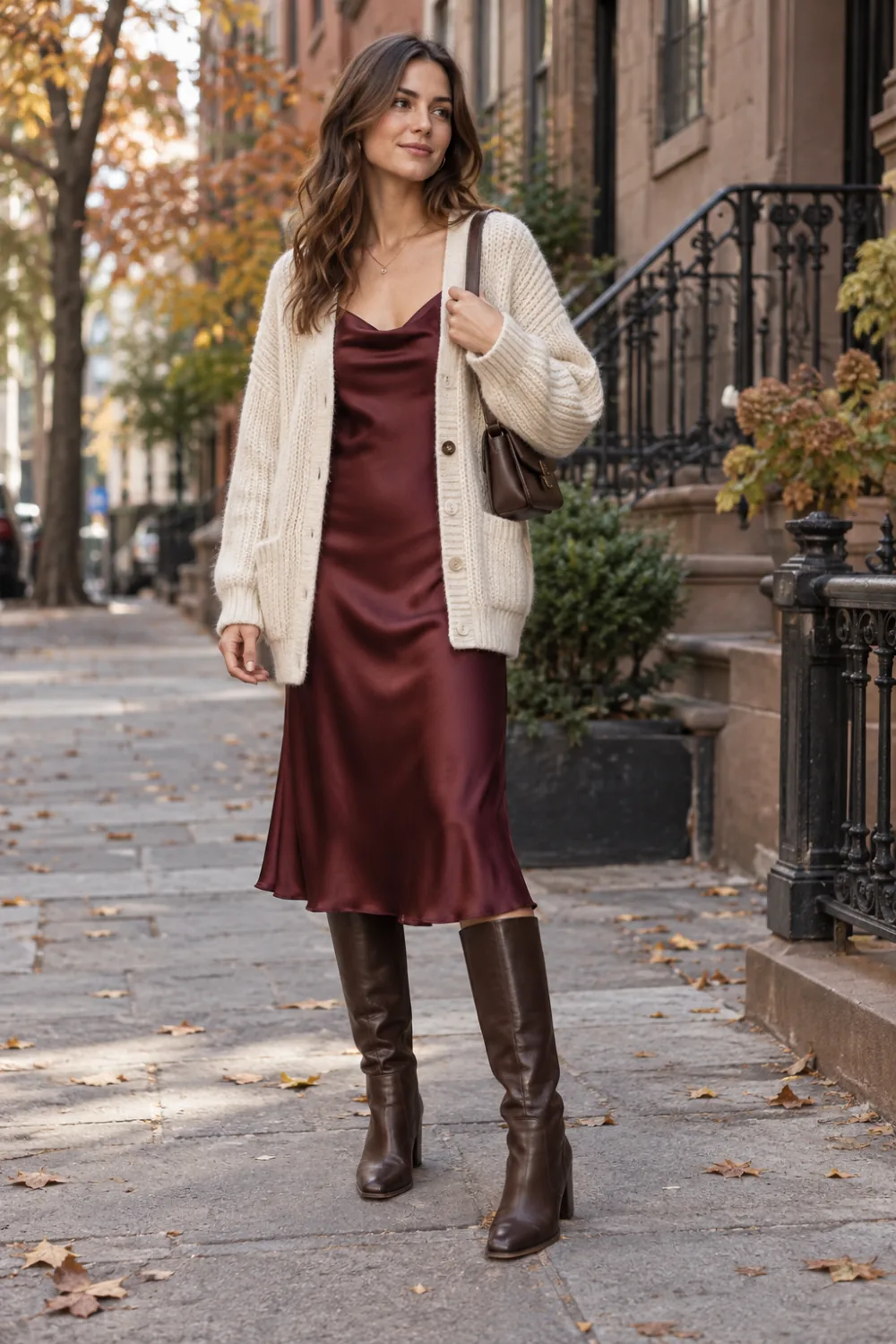
The contrast between fluid satin and textured knit makes the outfit feel layered without needing many pieces. Boots add warmth where the dress leaves the legs exposed.
Best for: Brunch, dinner, and casual evening plans.
5. Knit Vest + Oxford Shirt + Wide-Leg Trousers
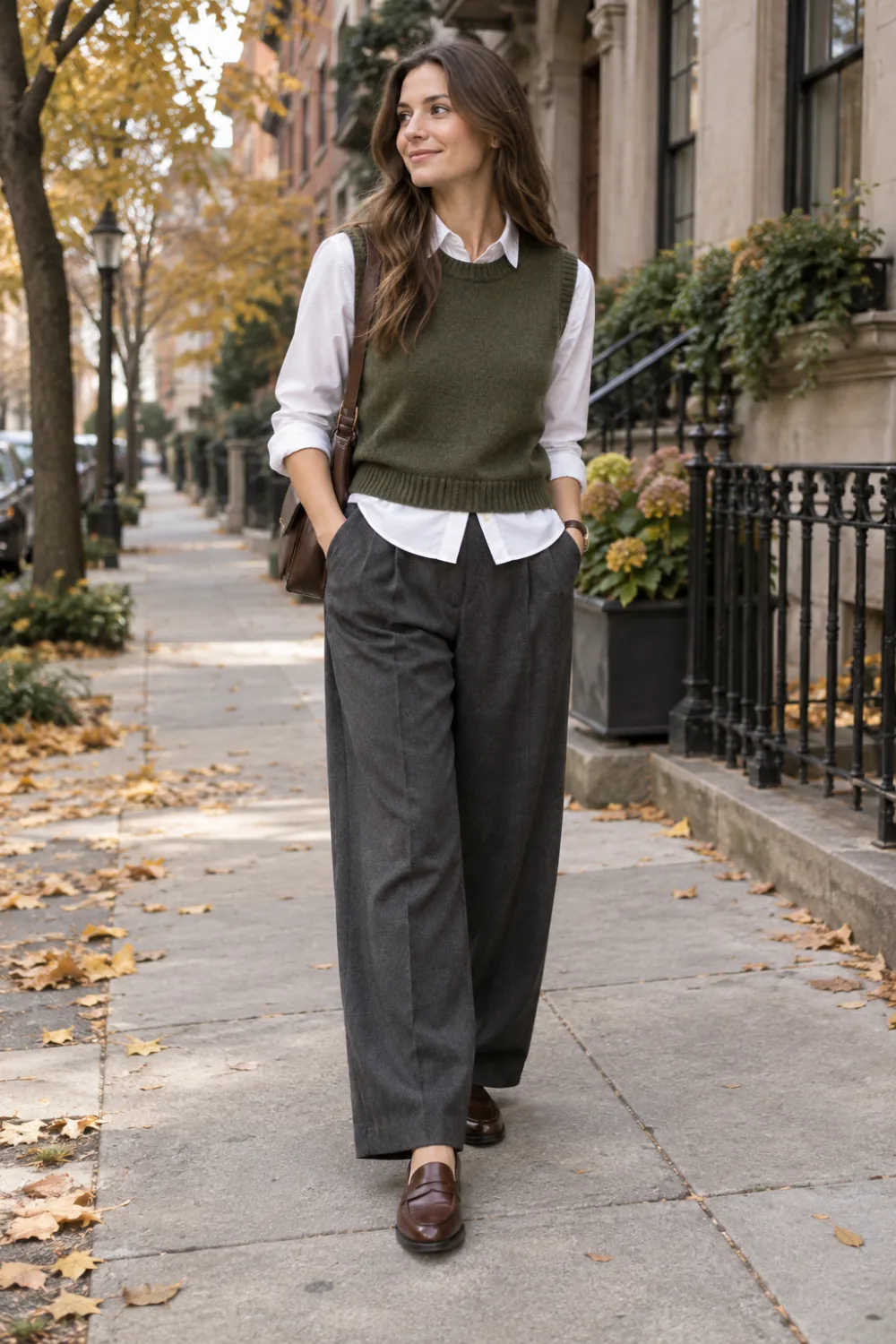
A vest adds core warmth while keeping the arms free. It is especially useful during unpredictable early fall weather when a full sweater can feel too warm.
Best for: Office, university, and indoor-outdoor days.
6. Lightweight Knit + Suede Jacket + Dark Denim
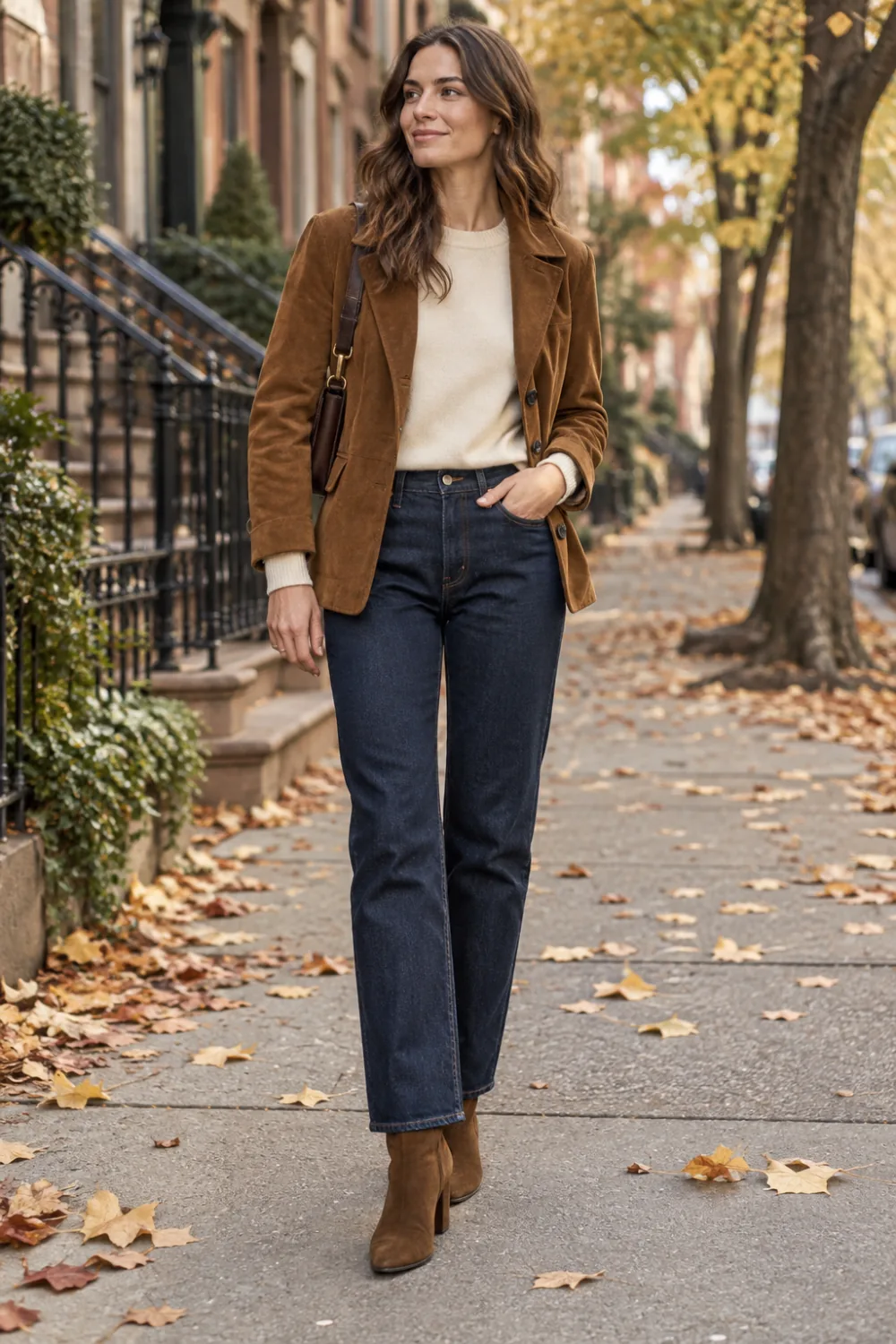
Suede adds autumn texture without the bulk of a padded coat. Save untreated suede for dry weather and follow the garment’s care instructions. A fine knit underneath gives enough warmth for cool mornings and can still work indoors.
Best for: Weekend dressing and transitional fall weather.
7. Fitted Long Sleeve + Barn Jacket + Corduroy Pants
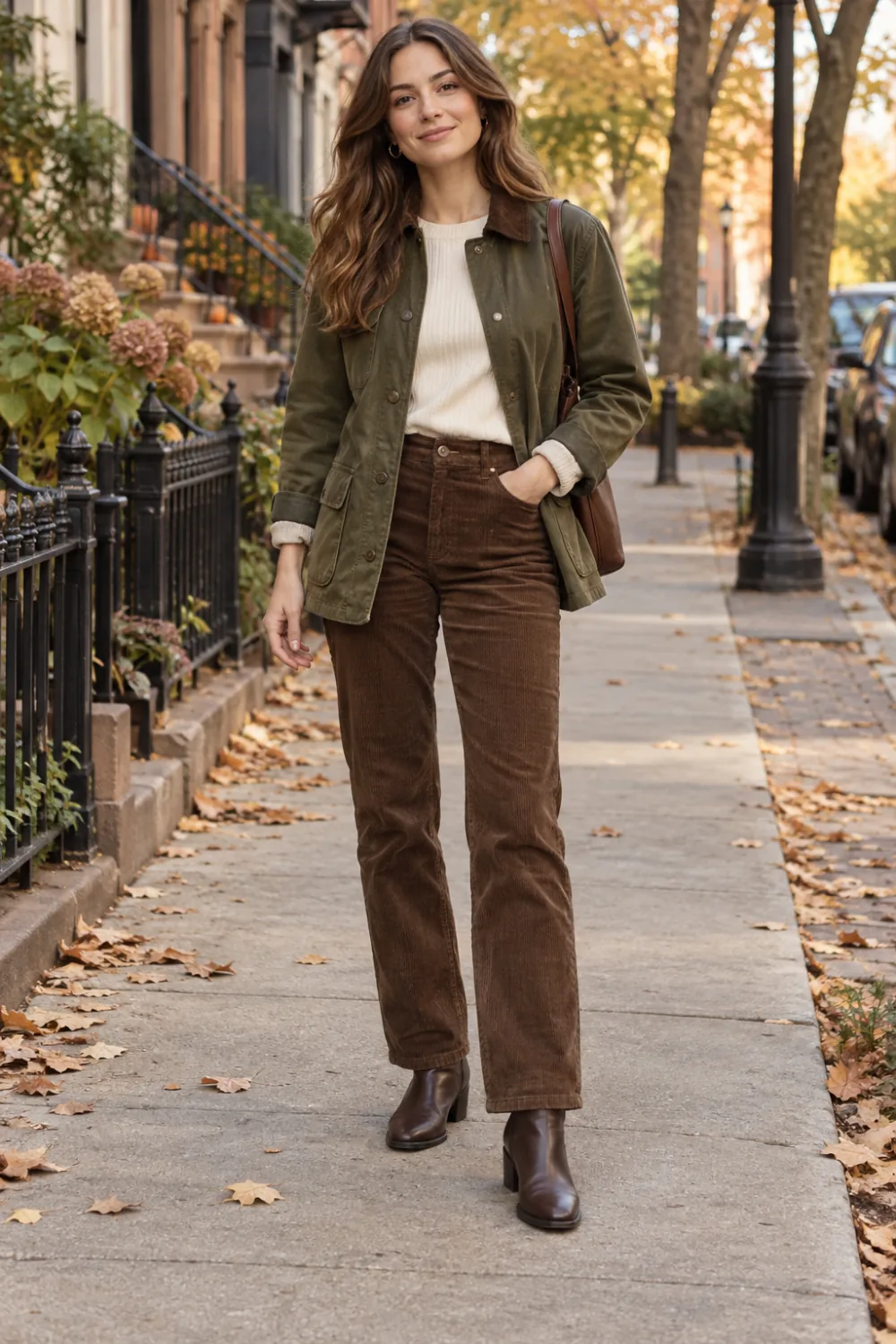
A tightly woven barn jacket can help reduce wind exposure, while heavier corduroy adds warmth. Rain resistance depends on the jacket’s fabric and treatment. Keeping the base fitted prevents the silhouette from feeling too workwear-heavy.
Best for: Errands, outdoor markets, and casual day trips.
8. Mock Neck + Midi Skirt + Long Coat
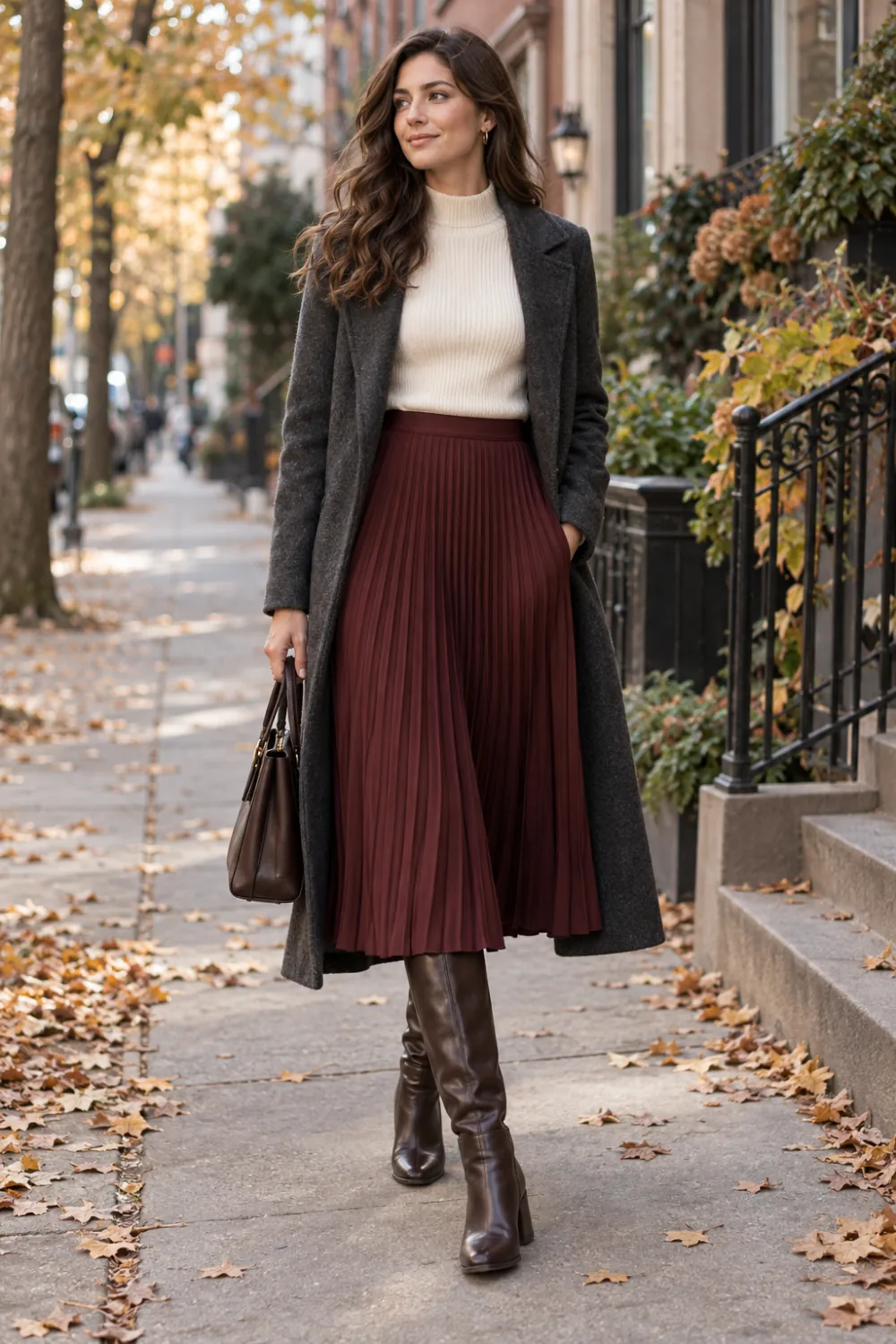
The fitted top offsets the movement of the skirt, while the long coat creates one clean vertical line over both pieces.
Best for: Work, dinners, and dressier daytime plans.
9. Striped Tee + Cardigan + Leather Jacket
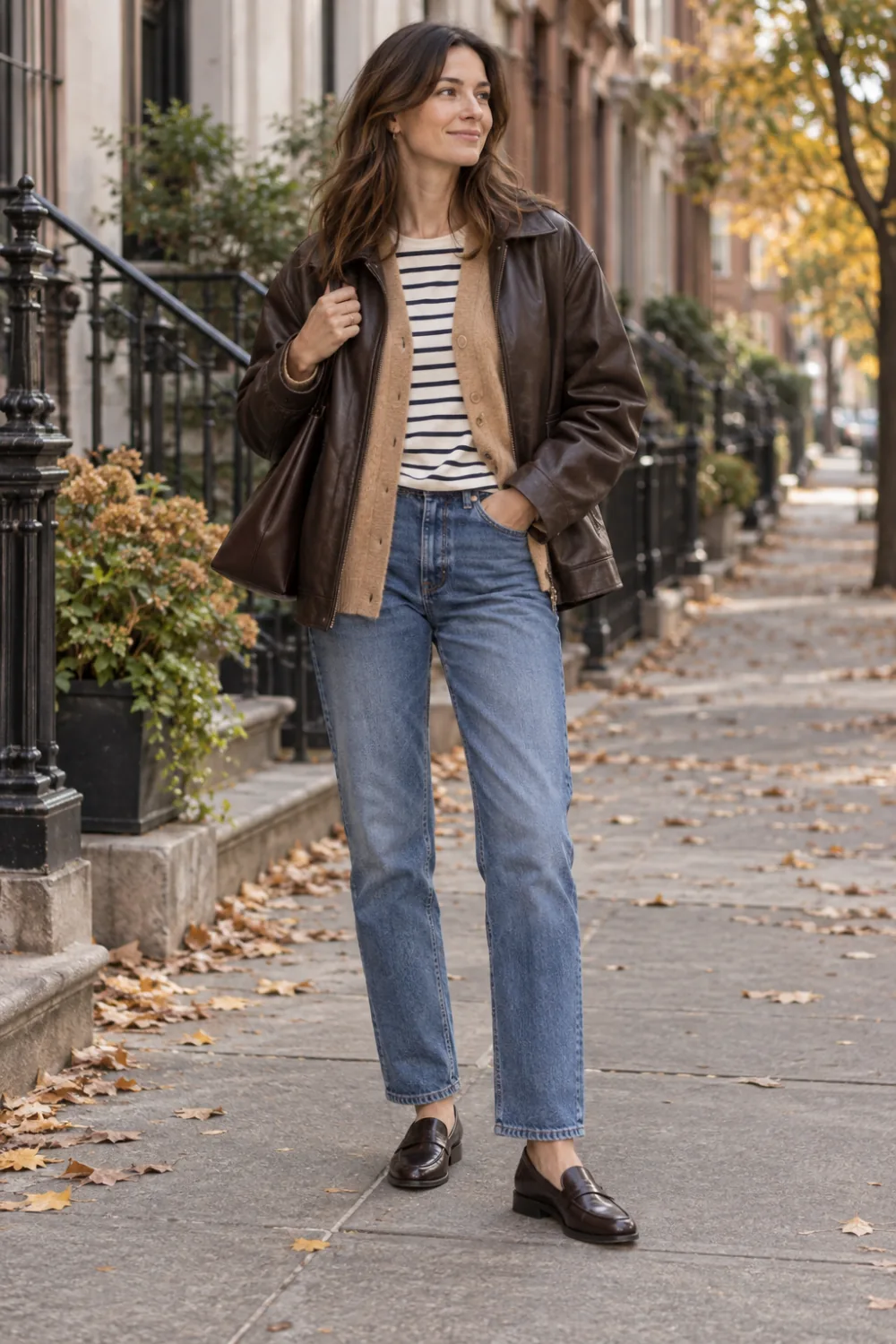
This is a practical three-layer formula because the cardigan can be removed indoors while the leather outer layer adds coverage in cool, breezy weather. Do not assume it is waterproof.
Best for: City weekends and casual fall travel.
10. Thermal Top + Overshirt + Mac Coat
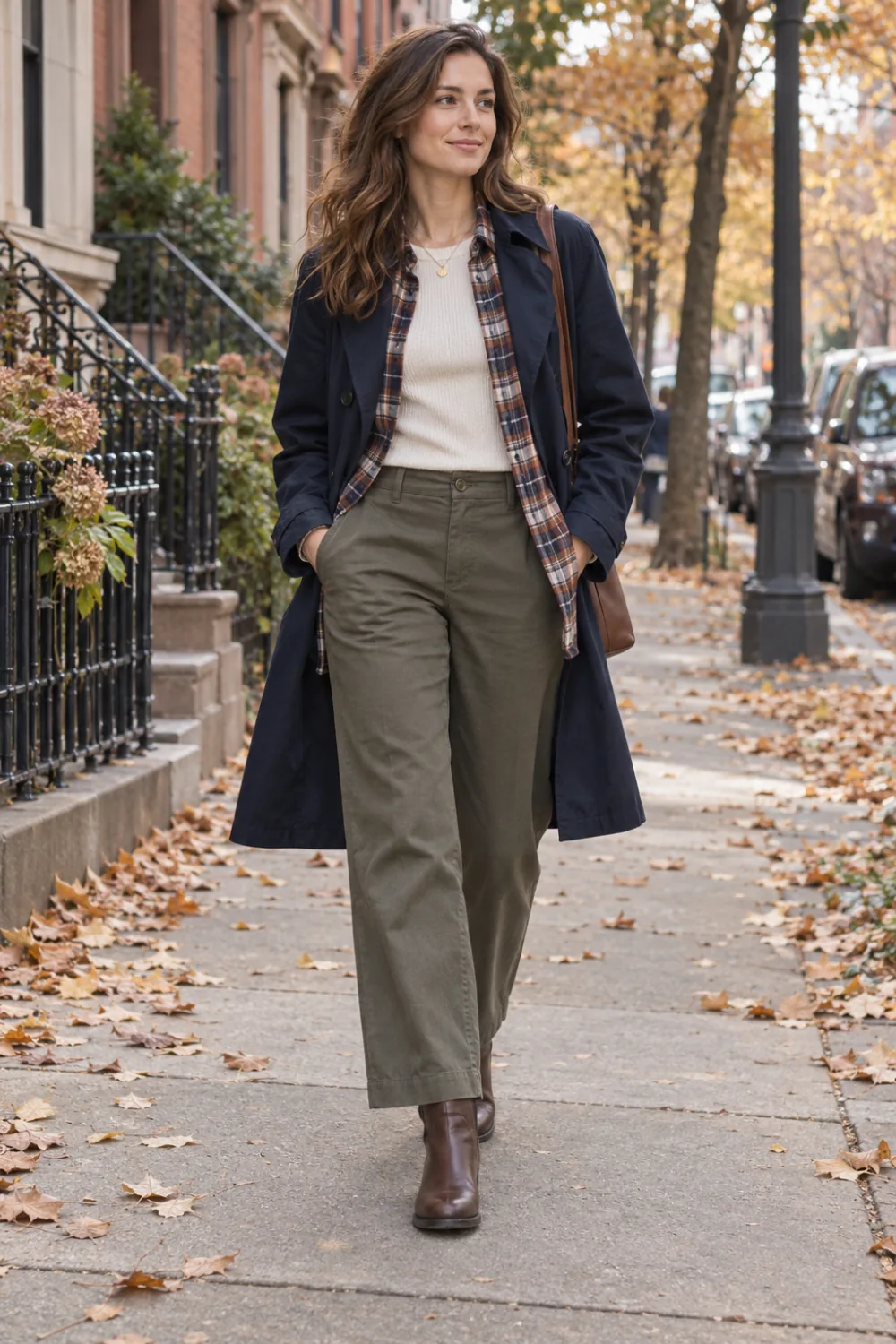
This is one of the most adaptable systems for changing weather. The base handles warmth, the overshirt adds insulation, and a water-resistant mac helps with wind and brief showers. For sustained rain, choose waterproof outerwear with suitable seams.
Best for: Travel, sightseeing, and unpredictable climates.
11. Sweater Dress + Belt + Longline Coat
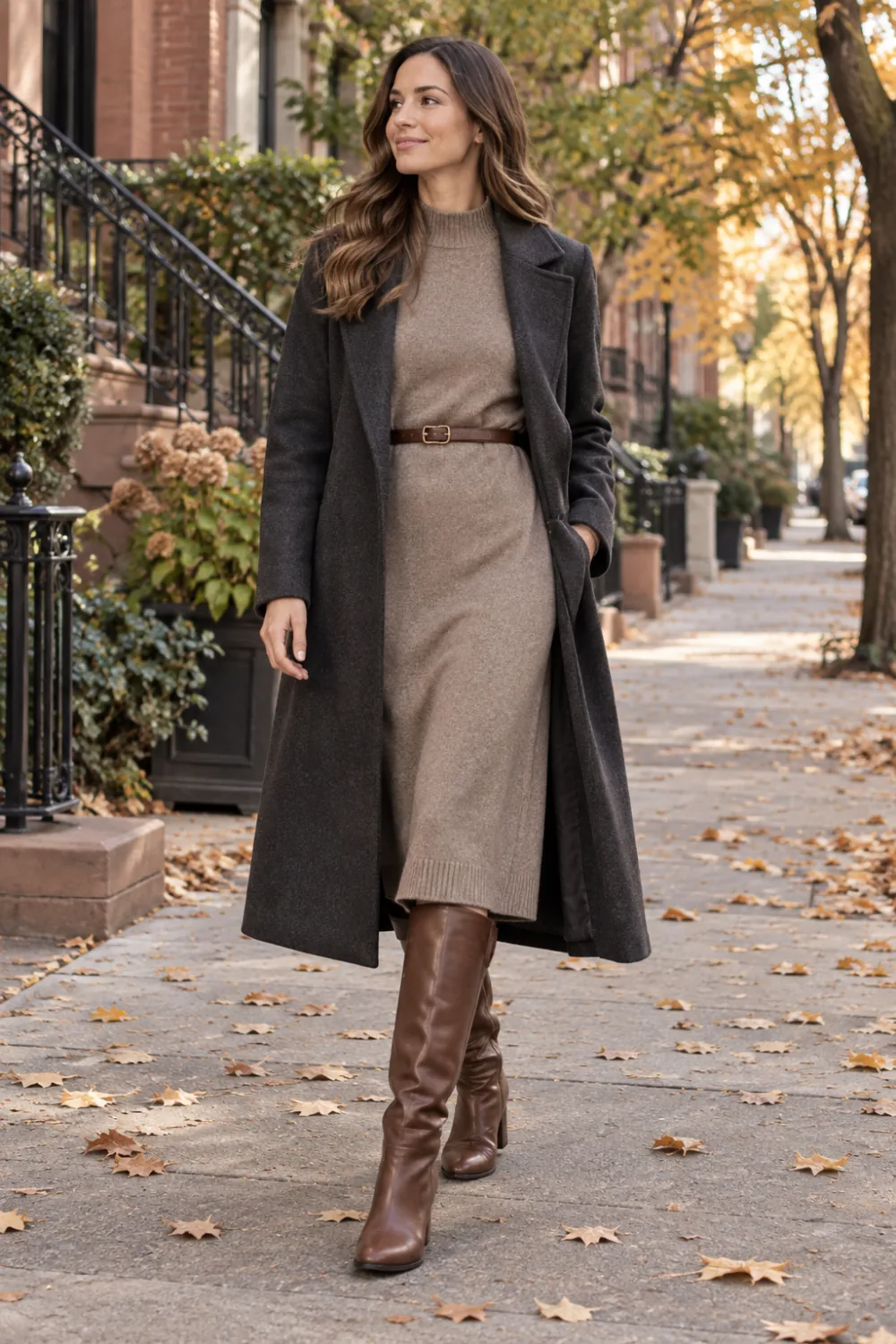
A sweater dress functions as one warm base piece, so the outer layer can stay simple. The belt is optional but can stop a long coat-plus-knit combination from feeling shapeless.
Best for: Workdays, dinners, and cold-weather events.
12. Button-Up + Pullover + Scarf + Jeans
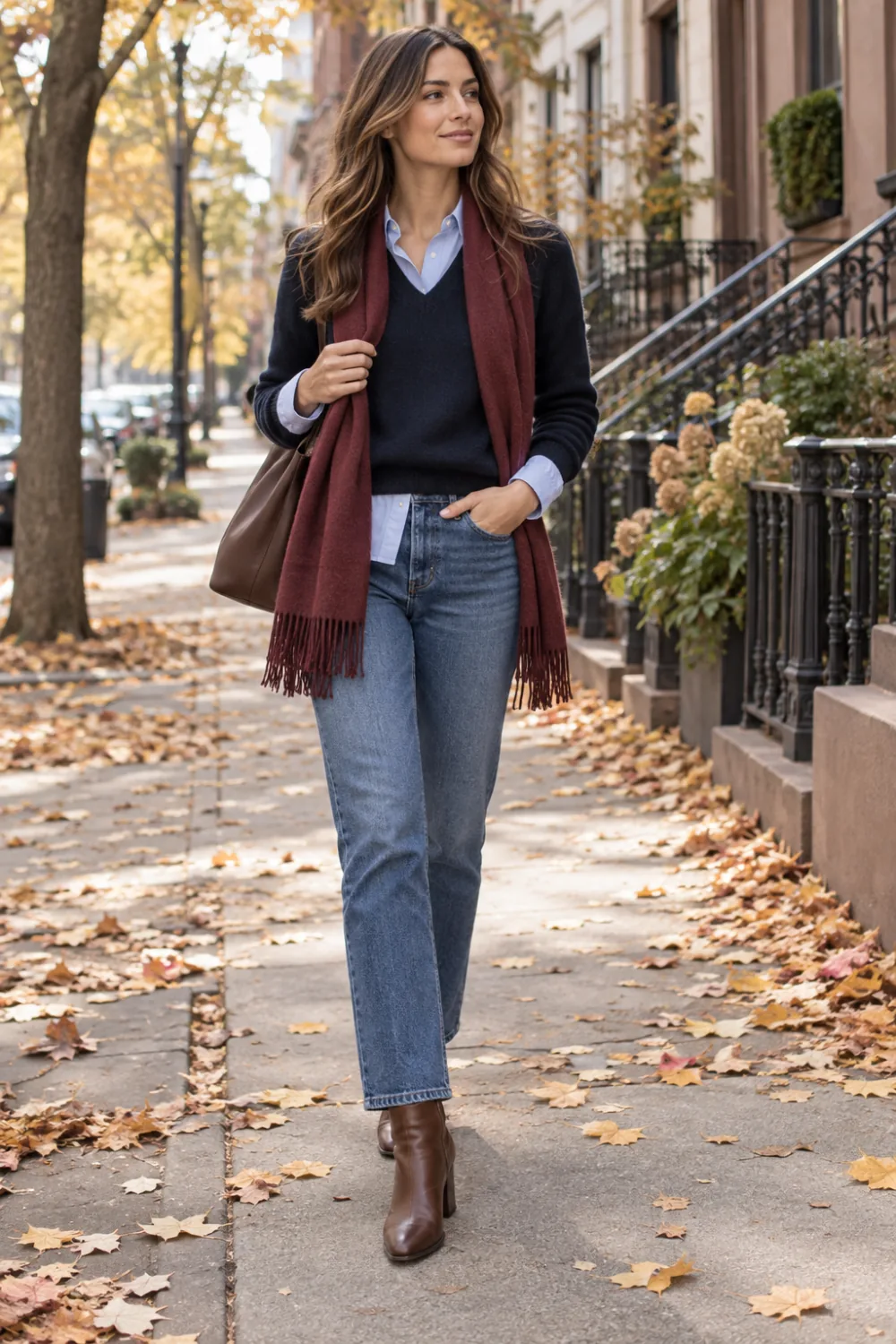
A scarf adds removable warmth without changing the entire outfit. Keep it medium weight so it does not overwhelm the neckline created by the shirt and sweater.
Best for: Everyday fall dressing and casual offices.
13. Satin Skirt + Fine Knit + Cropped Wool Jacket
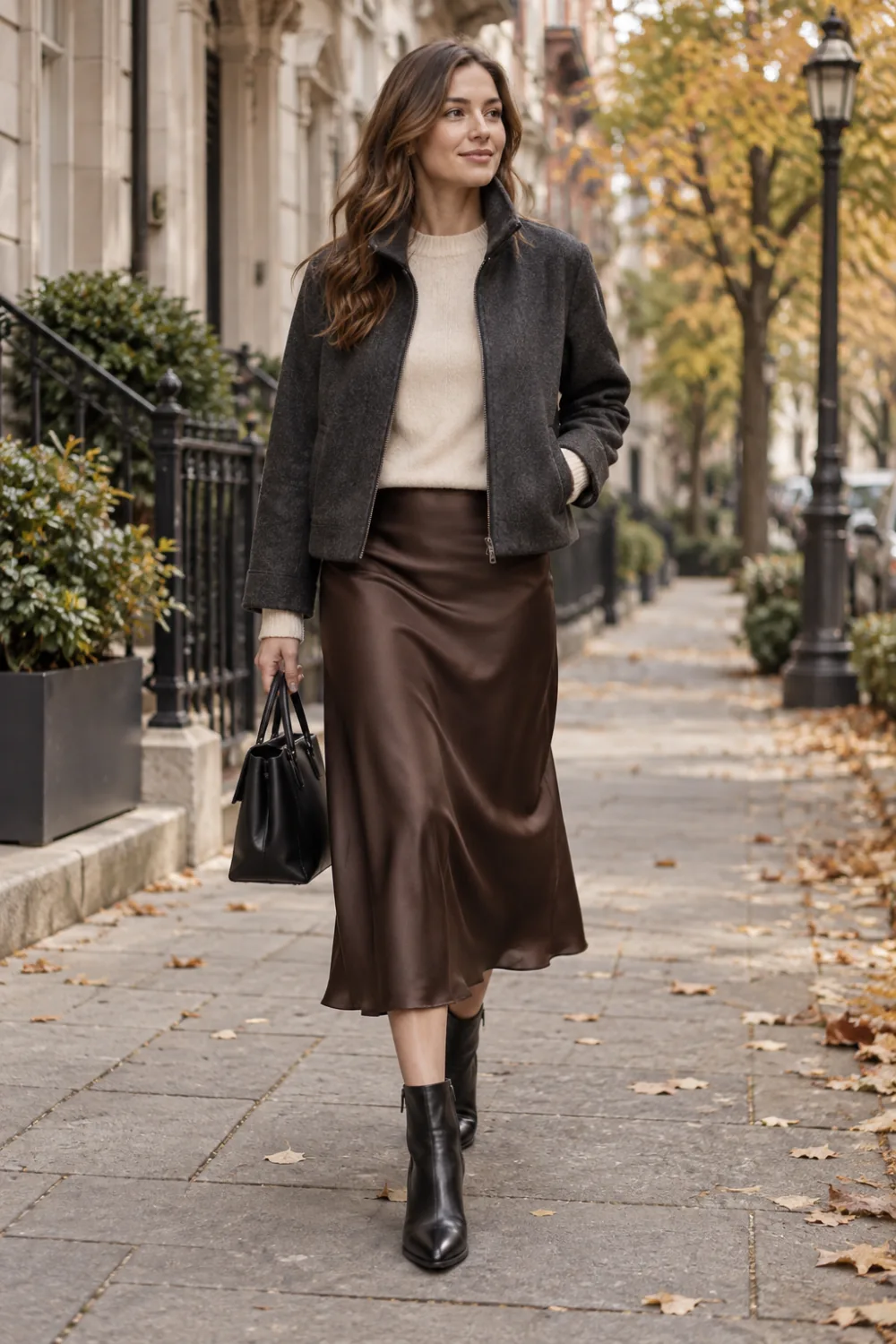
The smooth satin skirt keeps the outfit from becoming too textural, while the cropped jacket protects the upper body without hiding the waistline.
Best for: Lunches, creative offices, and polished weekends.
14. Hoodie + Long Wool Coat + Tailored Trousers
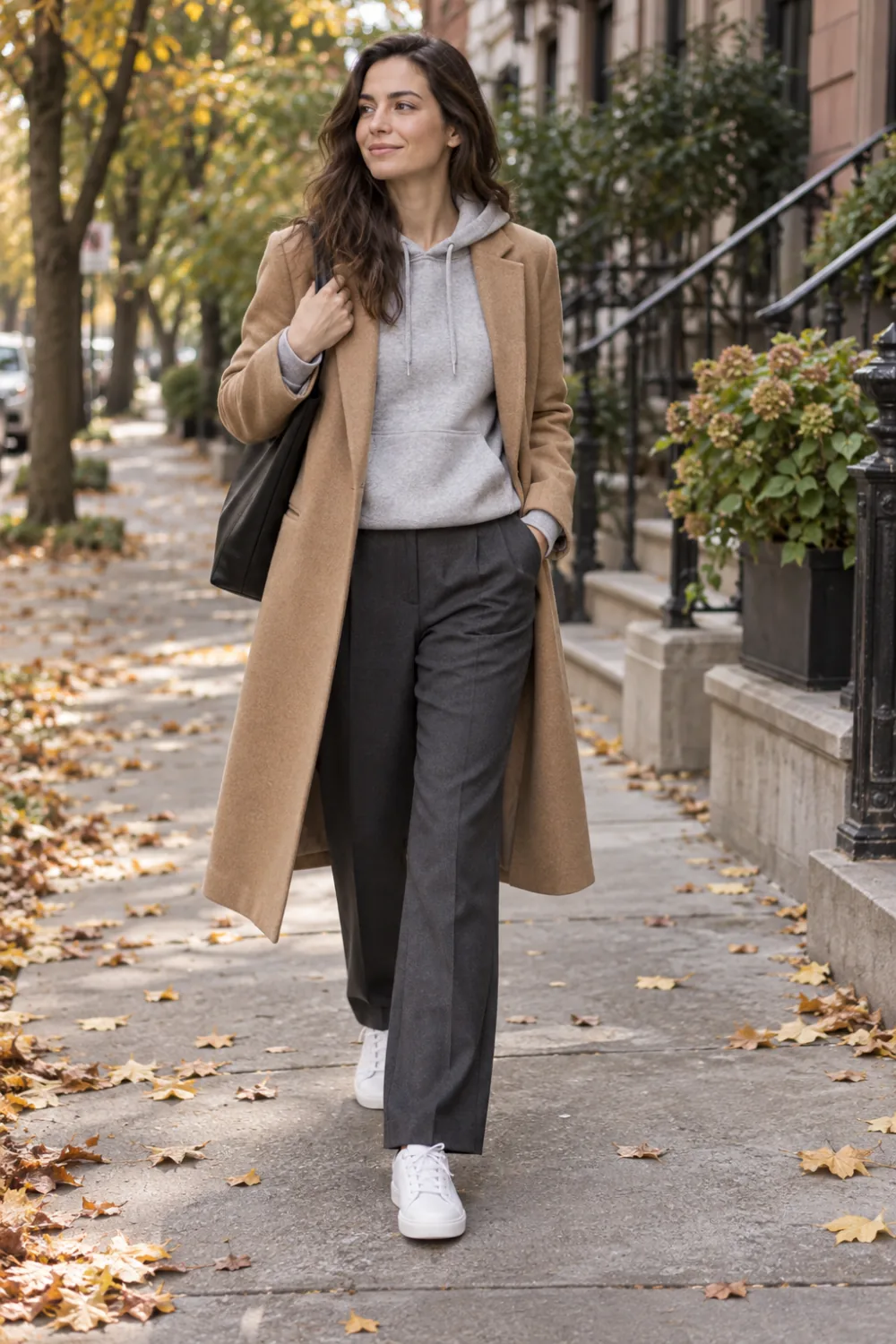
The hoodie adds softness and warmth while the long coat creates structure. Choosing a relatively slim hoodie avoids bunching around the shoulders and sleeves.
Best for: Casual city dressing and travel days.
15. Knit Polo + Utility Jacket + Midi Skirt
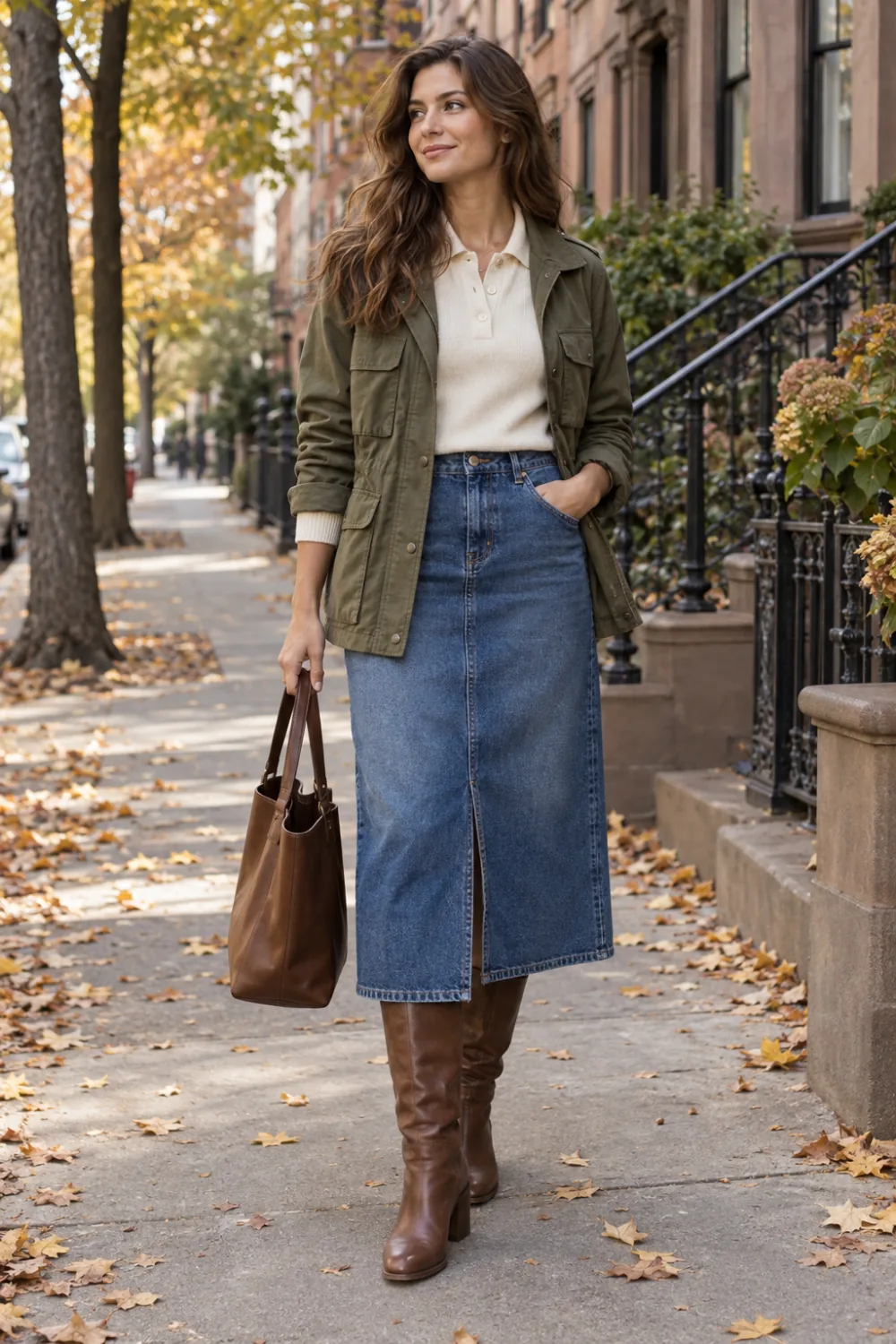
The knit polo gives warmth without a high neckline, while the utility jacket adds shape and practical pockets. A midi skirt keeps the silhouette from becoming too rugged.
Best for: Weekend plans and smart-casual fall outfits.
16. Monochrome Knit Layers + Statement Coat
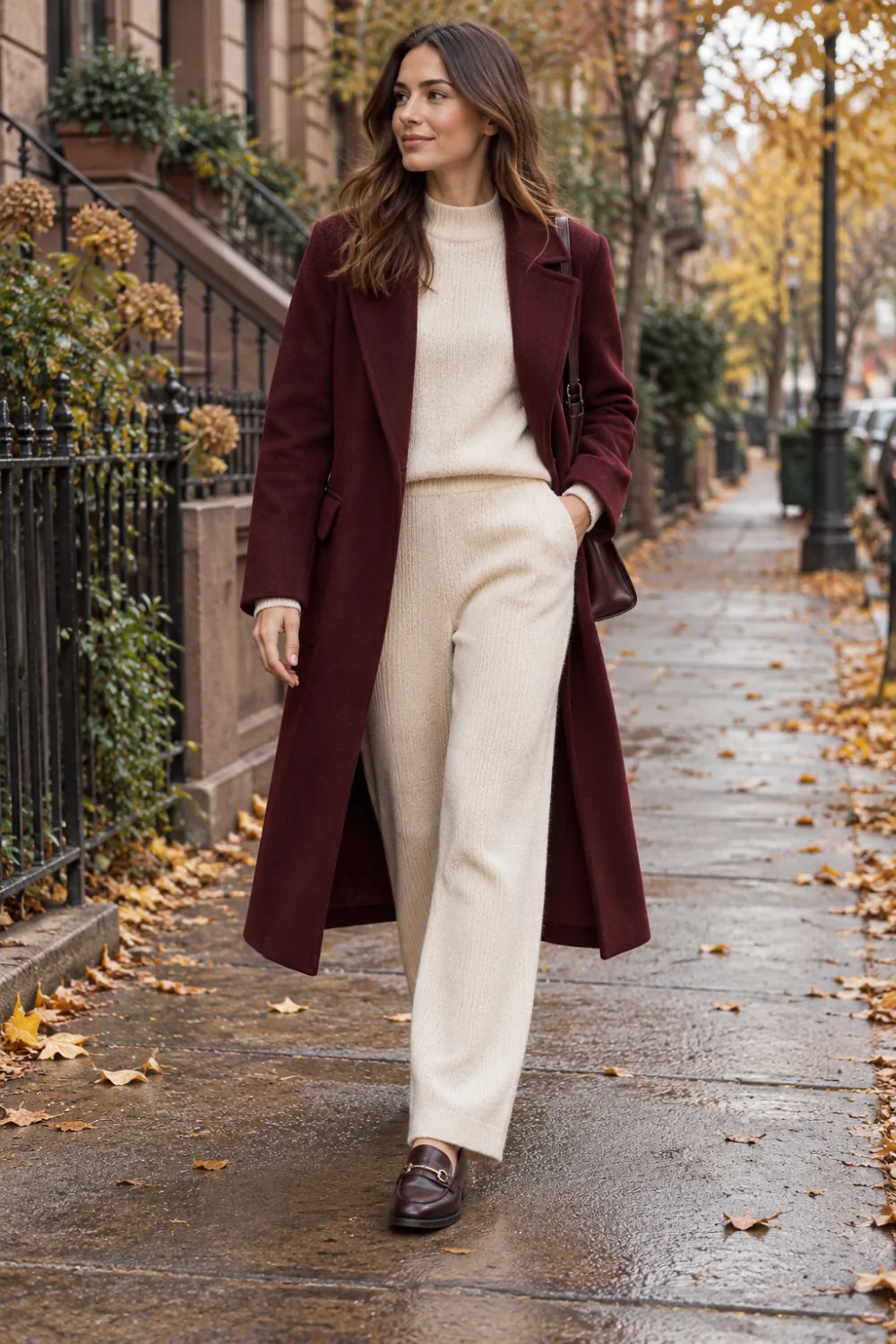
Keeping the inner layers close in color reduces visual clutter and lets the coat carry the outfit. This is useful when you want maximum impact with very little styling complexity.
Best for: Cold-weather events, commuting, and polished everyday dressing.
How to Layer Without Looking Bulky
Start with the thinnest piece closest to the body. Fine merino, ribbed cotton, lightweight thermals, silk shirts, and slim knits take up less space under cardigans and jackets. If your middle layer is oversized, keep the base fitted. If the coat is structured, make sure its armhole and shoulder have enough room for whatever sits underneath.
As a useful starting point, choose a thin base and leave room for a warmer middle layer and outerwear. Fabric weight does not have to increase at every layer; a light rain shell can sit over a warmer knit. A thin shirt under a medium knit under a coat usually behaves better than a thick sweater under a fitted blazer under another fitted coat.
Use Texture to Create Depth Instead of Adding More Pieces
Fall outfits can look layered even when they use only two or three garments. Satin under wool, suede over ribbed knit, denim beside cashmere, and leather over jersey all create visible contrast without extra bulk.
This is especially useful in warmer autumn climates. You can make the outfit feel seasonal through texture and color while keeping the actual insulation light.
What Shoes Work Best With Layered Fall Outfits?
Loafers, ankle boots, tall boots, Mary Janes with socks, and clean sneakers all work, but the shoe should match the weight of the outfit. A long wool coat usually looks more balanced with a substantial loafer or boot than a very delicate sandal, while a lighter trench can still work with slim flats.
Useful Redounds Reads
For more ways to wear a removable middle layer, explore Redounds’ cozy cardigan outfit ideas. For dresses, skirts, and knits suited to weekend plans, browse these fall brunch outfits. For additional sweater-and-skirt combinations, try the jumper outfit styling guide.
Frequently Asked Questions
How many layers should a fall outfit have?
Usually two or three visible clothing layers are enough: a lightweight base, one insulating middle layer, and outerwear. Accessories such as a scarf can add warmth without making the torso bulky.
What should I wear under a cardigan in fall?
Fine turtlenecks, fitted tees, button-ups, ribbed long sleeves, and lightweight thermals all work well. Choose a smooth base so the cardigan can move easily over it.
How do I layer a blazer under a coat?
Choose a coat with enough room through the shoulders and armholes. Keep the base layer thin, and avoid combining a heavily padded blazer with a narrow structured coat.
What is the best layer for mild fall weather?
A cardigan, overshirt, suede jacket, trench, or light barn jacket is often enough. These pieces add adjustable warmth while remaining easy to remove. Wind and rain protection depend on the garment’s construction.
Can I layer oversized pieces together?
Yes, but use different levels of volume. An oversized coat can work over a moderately relaxed sweater, but two very bulky pieces at the same length often feel heavy and restrict movement.
How can I make fall layers look more polished?
Keep one clean vertical line, repeat a color, and limit the number of competing textures. Matching the inner layers tonally is an easy way to make a statement coat or scarf look intentional.
What fabrics are best for cozy fall layering?
Merino, cashmere blends, cotton knits, wool, flannel, corduroy, suede, leather, satin, and denim all work well. The best combination depends on temperature and whether you need insulation, wind protection, or simply visual texture.
How do I layer for warm afternoons and cold mornings?
Use a breathable fitted base, a removable knit or overshirt, and lightweight outerwear. This gives you multiple temperature options without requiring one heavy piece all day.
The Practical Takeaway
The best Fall 2026 layering outfits are adjustable. Keep the base thin, let one middle layer provide warmth or structure, and choose outerwear with enough room to move. When the proportions and fabric weights are doing the work, you can stay cozy without looking or feeling overloaded.