


Winter skincare for mature women starts with one simple fact: cold outdoor air and dry indoor heat pull moisture from the skin, and skin that has changed with age holds on to water less easily than it once did. The result can be tightness, flaking, stinging, itching, and fine lines that look more pronounced from late autumn until spring.
The most effective winter routine for skin over 50 is usually the simplest one. Dermatology guidance consistently puts gentle cleansing, richer moisturizer, daily sun protection, and fewer irritating actives ahead of aggressive exfoliation. The aim is a comfortable, intact skin barrier, with targeted treatments for uneven tone, fine lines, and texture added only as far as your skin tolerates them.
Dermatologist-backed context: The American Academy of Dermatology (AAD) notes that skin becomes drier with age because it is thinner and loses water more easily. It recommends gentle fragrance-free cleansing, warm rather than hot water, short showers, and a creamy moisturizer applied while skin is still slightly damp (see the AAD guidance for skin in your 60s and 70s). Cleveland Clinic’s winter dry-skin advice also emphasizes moisturizer, humidification, and adjusting shower habits as temperatures drop (read Cleveland Clinic’s winter dry-skin tips).
Quick Guide: A Simple Winter Skincare Routine for Mature Women
| Step | Morning | Evening | Winter Adjustment |
| Cleanse | Gentle cleanser or rinse if appropriate | Gentle fragrance-free cleanser | Avoid hot water and harsh foaming cleansers |
| Treat | Optional vitamin C or targeted serum | Retinoid only if well tolerated | Reduce frequency if stinging or peeling develops |
| Moisturize | Cream moisturizer | Richer cream; ointment on very dry spots | Apply while skin is slightly damp |
| Protect | Broad-spectrum SPF 30+ | Not needed at night | Sunscreen remains daily in winter |
Switch to a Gentle, Fragrance-Free Cleanser
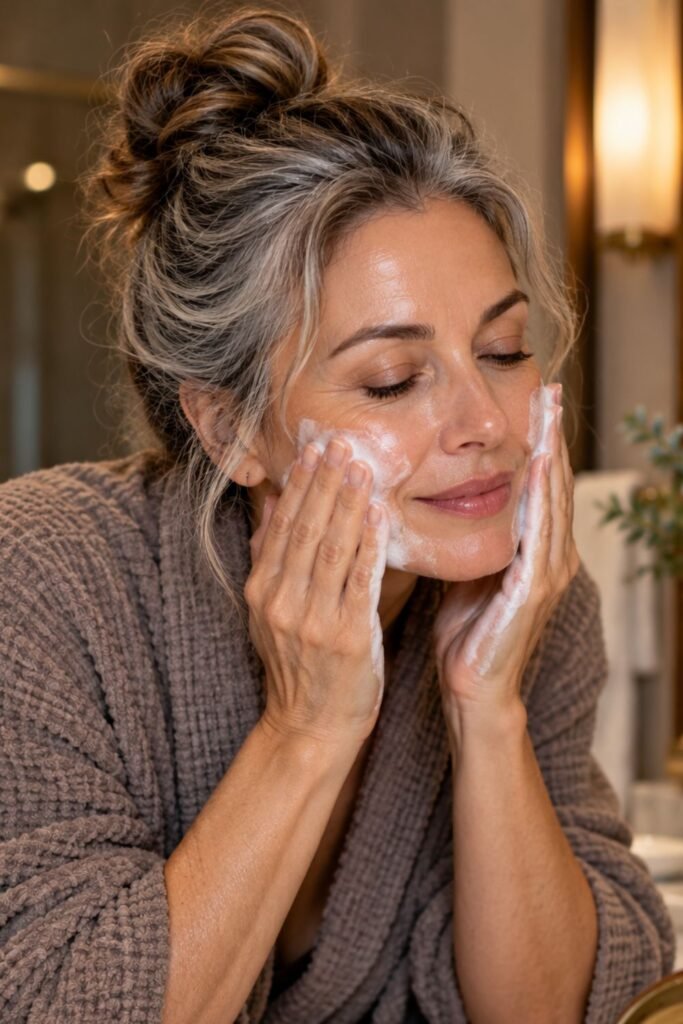
Mature winter skin rarely benefits from squeaky-clean washing. The AAD recommends mild, fragrance-free cleansers because traditional soaps and deodorant bars can be too drying. Look for a cream, milk, or lotion cleanser that leaves skin feeling soft afterward. Use lukewarm water, massage the cleanser in gently, and rinse without scrubbing. If your skin feels comfortable in the morning, a splash of water may be enough, with a proper cleanse saved for the evening to remove sunscreen and makeup. A cleanser that stings, foams heavily, or leaves a tight, squeaky feel is a sign to switch.
Move From Lotion to a Cream, or an Ointment When Needed
As skin becomes drier, texture matters. The AAD notes that creams hold more moisture than lotions, and ointments are the most occlusive option for very dry areas. For many women over 50, a cream-based facial moisturizer is a better winter default than a light gel or watery lotion. A thicker formula that sits in a jar or tube without pouring usually offers more protection. Reserve ointments such as plain petrolatum for stubborn patches around the nose, the corners of the mouth, or flaky cheeks, and apply a thin layer at night so it can work without feeling heavy under makeup.
Apply Moisturizer While Skin Is Still Slightly Damp
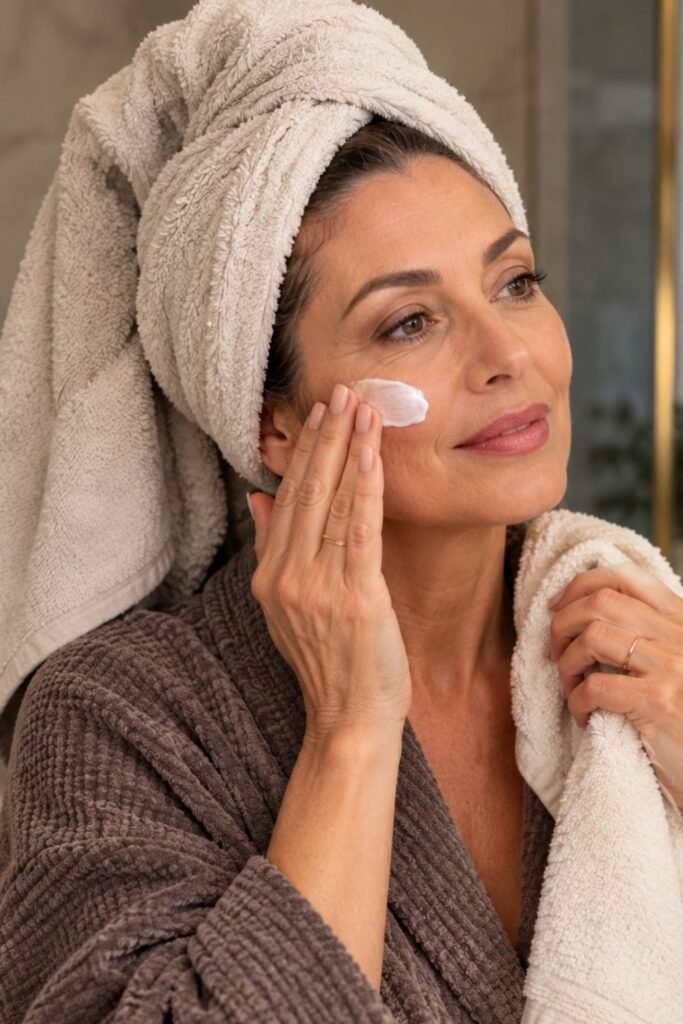
Moisturizer works best when it traps water already present in the skin. After cleansing or bathing, pat the skin dry with a soft towel and apply moisturizer within a few minutes, while a little moisture remains. This simple timing change can make the same cream feel noticeably more effective. The habit works for the body too: keep a body cream next to the shower and apply it before you get dressed. Many dewy Korean makeup looks start from the same idea, with well-hydrated skin under a light base, which is why prep matters as much as the products on top.
Look for Barrier-Supporting Moisturizing Ingredients
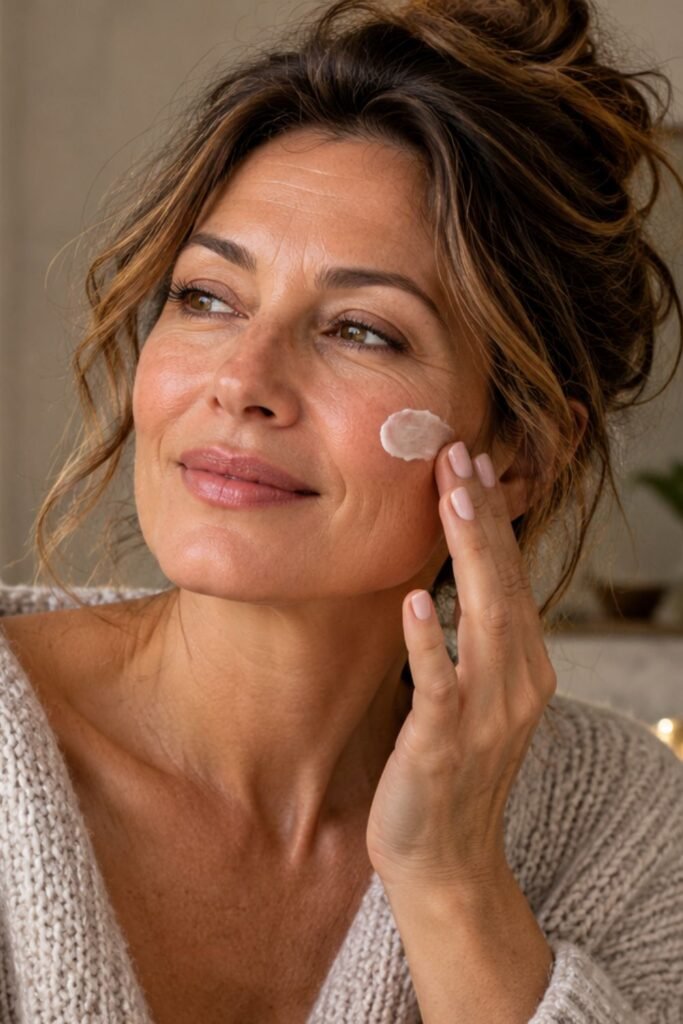
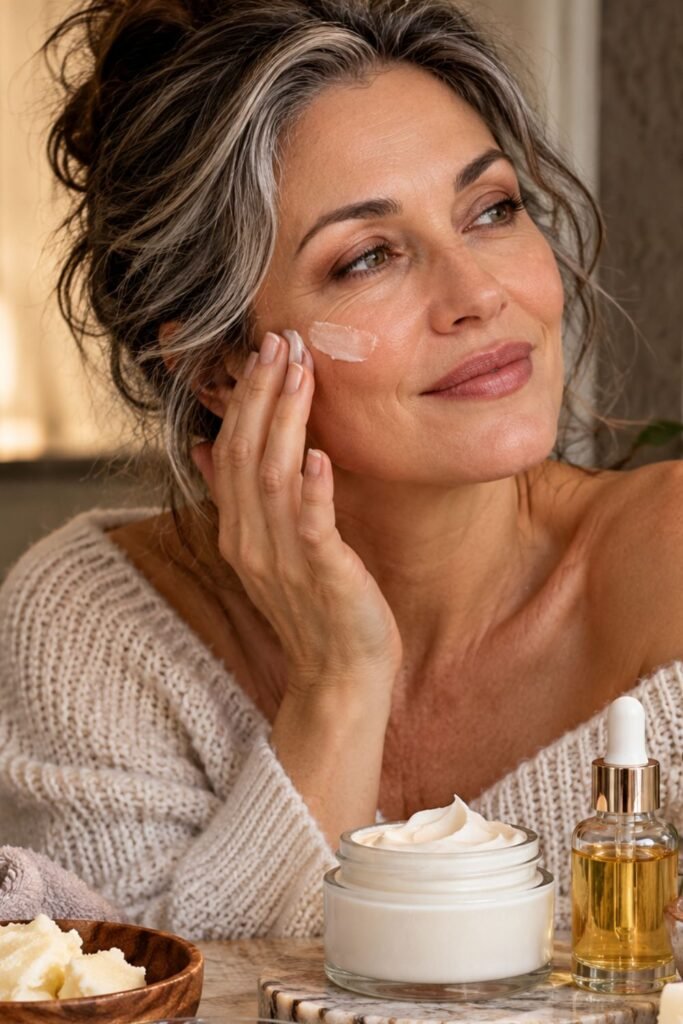
Useful ingredients for dry skin include glycerin, hyaluronic acid, petrolatum, dimethicone, mineral oil, lanolin, jojoba oil, and shea butter. They play slightly different roles: glycerin and hyaluronic acid draw water into the skin, while petrolatum, dimethicone, and mineral oil help seal it in. You do not need all of them in one product. Choose a formula your skin tolerates and that feels comfortable enough to use twice a day, every day. Consistency does more for a dry winter barrier than any single ingredient, so a reliable drugstore cream you enjoy using can outperform an expensive jar you save for special occasions.
Keep Sunscreen in the Routine Every Day
Winter does not cancel ultraviolet exposure. The AAD recommends broad-spectrum, water-resistant sunscreen with SPF 30 or higher, including for mature skin. Sun protection also remains the foundation of an evidence-based anti-aging routine, because UV exposure contributes to fine lines and uneven tone all year. Snow reflects sunlight, so time outdoors on bright winter days still counts. Apply sunscreen as the last step of your morning routine, cover the face, ears, neck, and backs of the hands, and reapply if you spend extended time outside. A moisturizing sunscreen can double as your day cream on milder days.
Scale Back Retinoids if Winter Makes Them Sting
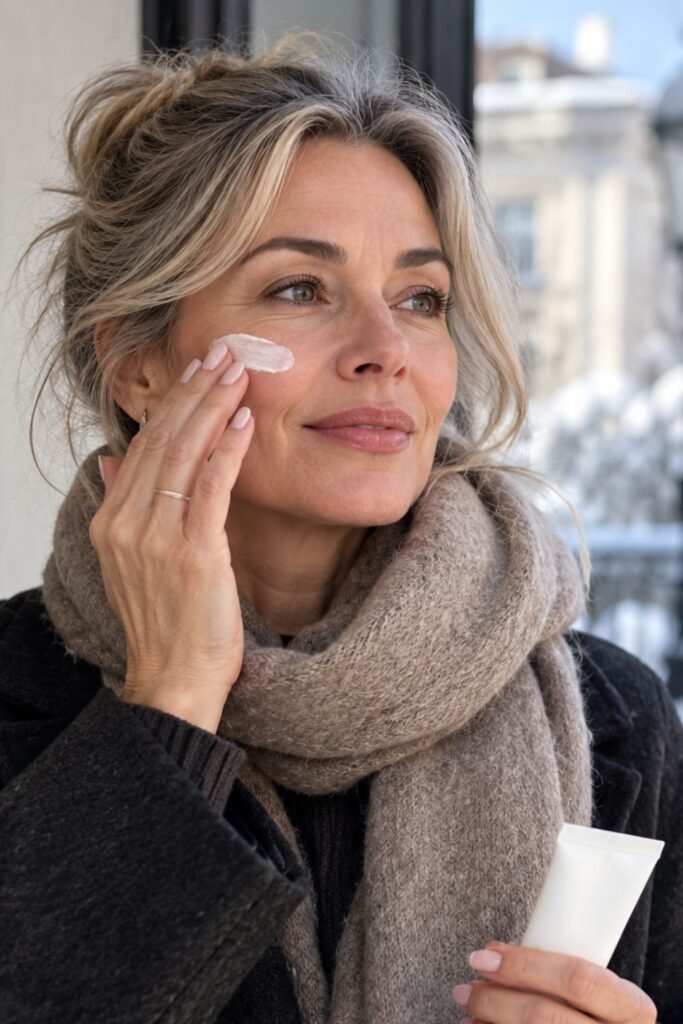
Retinoids can improve fine lines, uneven tone, and texture, but they can also be drying. The AAD’s winter guidance suggests using retinoids less often or at a lower concentration when cold weather makes skin more reactive. In practice, that might mean moving from nightly use to two or three nights a week, or applying moisturizer first to buffer an over-the-counter retinol. Watch for early warning signs such as stinging on application, redness around the nose, or peeling at the corners of the mouth. If you use a prescription retinoid, discuss persistent irritation with your dermatologist rather than changing the prescription on your own.
Do Not Exfoliate Away Winter Flaking
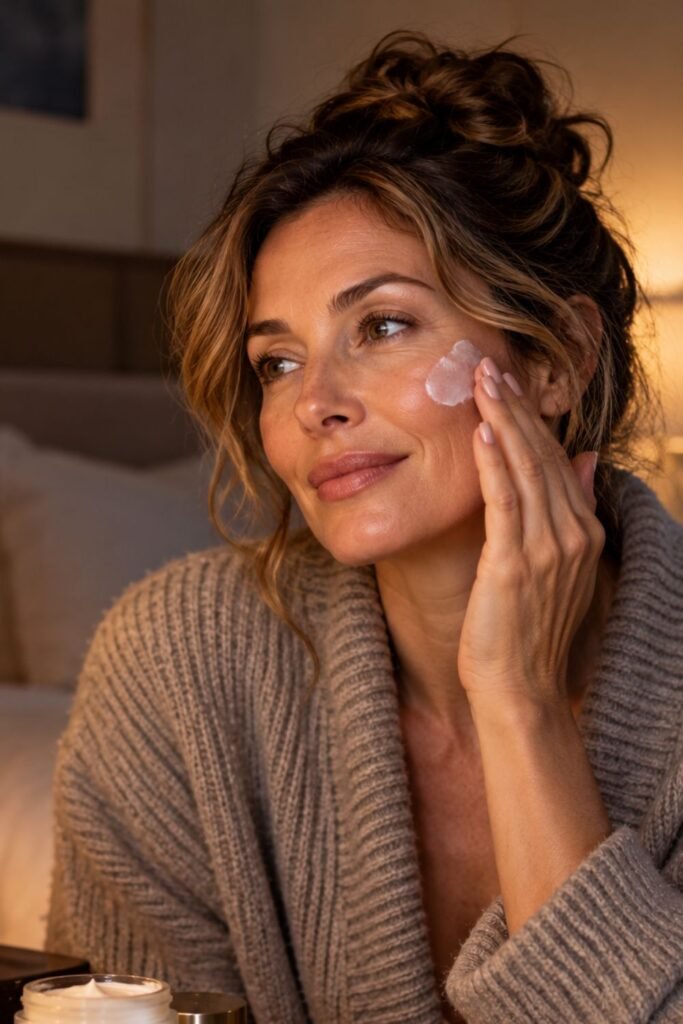
Flaking can tempt you to scrub harder, but dermatologists warn that exfoliating already-dry winter skin can strip more moisture and increase irritation. Grainy scrubs, cleansing brushes, and peel pads can leave mature skin raw and more sensitive to cold wind. If the skin is peeling, burning, or tight, prioritize barrier care before adding acids or scrubs. Surface flakes often soften after a few days of richer moisturizer applied to damp skin. If makeup catches on dry patches in the meantime, press a little cream onto those spots before foundation and leave them alone otherwise.
If You Use Acids, Reduce Frequency Instead of Layering More
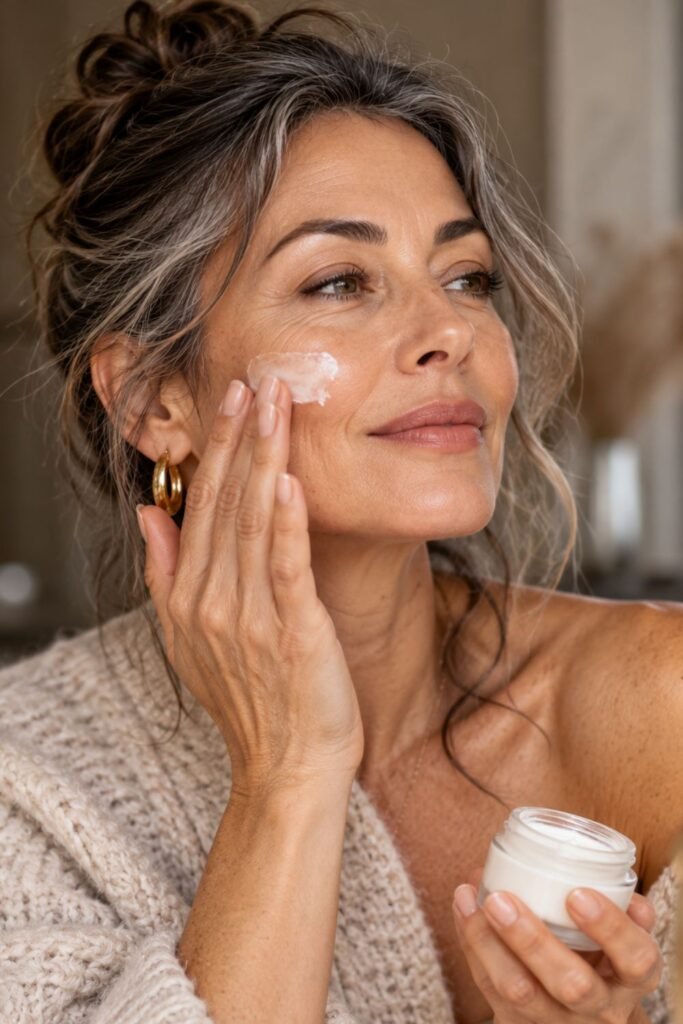
Glycolic acid, salicylic acid, lactic acid, and other exfoliating acids can be useful for some skin concerns, but winter is often a good time to simplify. Use fewer active nights and avoid stacking multiple irritating products at once. A practical approach is to choose one acid product, use it once or twice a week, and keep it on different nights from your retinoid. Skip acid toners, peel pads, and acid cleansers that duplicate the same job. If your skin starts to sting with a moisturizer it normally tolerates, pause the acids completely until it feels calm again.
Use a Humidifier in Dry Indoor Air
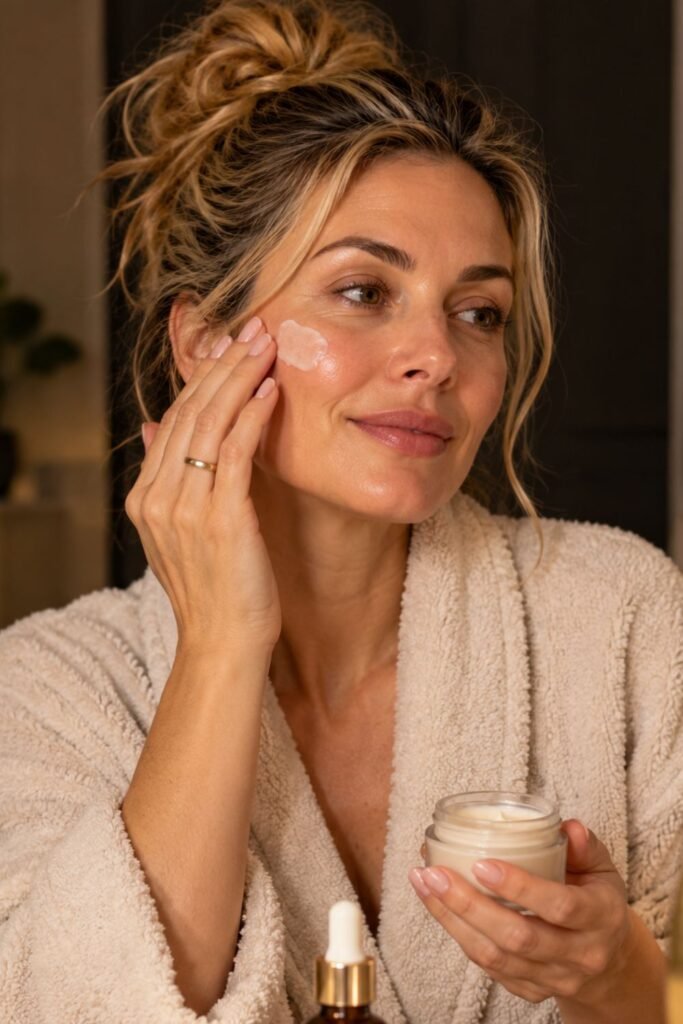
Heating systems lower indoor humidity, which can worsen moisture loss. The AAD and Cleveland Clinic both recommend humidification as part of dry-skin care. A small humidifier in the bedroom is often the most useful placement, since you spend several hours there every night. Keep the device clean according to its instructions so it does not become a source of mold or microbes, and change the water as directed. If you notice condensation on windows or walls, the room is likely too humid, so turn the setting down. Used alongside a rich night cream, it helps skin wake up feeling less tight.

Shorten Hot Showers
Long, hot showers strip natural oils. Dermatology guidance commonly recommends lukewarm water and limiting showers to roughly five to ten minutes when dryness is a problem. Use a gentle, fragrance-free body wash only where you need it, then pat skin dry and apply body cream straight away. Avoid washing your face under the full shower stream, which tends to run hotter than the water you would choose at the sink. Lukewarm water is kinder to hair as well, which helps if you like to keep a polished blowout looking smooth between salon visits.

Treat the Neck, Chest, and Hands Like Part of the Routine
Mature skin concerns are not limited to the face. Apply moisturizer and sunscreen to the exposed neck, upper chest, ears, and hands, using the leftover product on your fingers. Hands may also benefit from a thicker cream after every wash, and keeping a tube by the sink makes this easy to remember. Shorter cuts such as these bob haircuts for older women leave the neck more exposed to cold wind, so that area deserves the same care as your cheeks. Scarves and the cozy layered outfits of colder months can rub against dry skin, so soft cotton or cashmere next to the neck is kinder than scratchy wool.

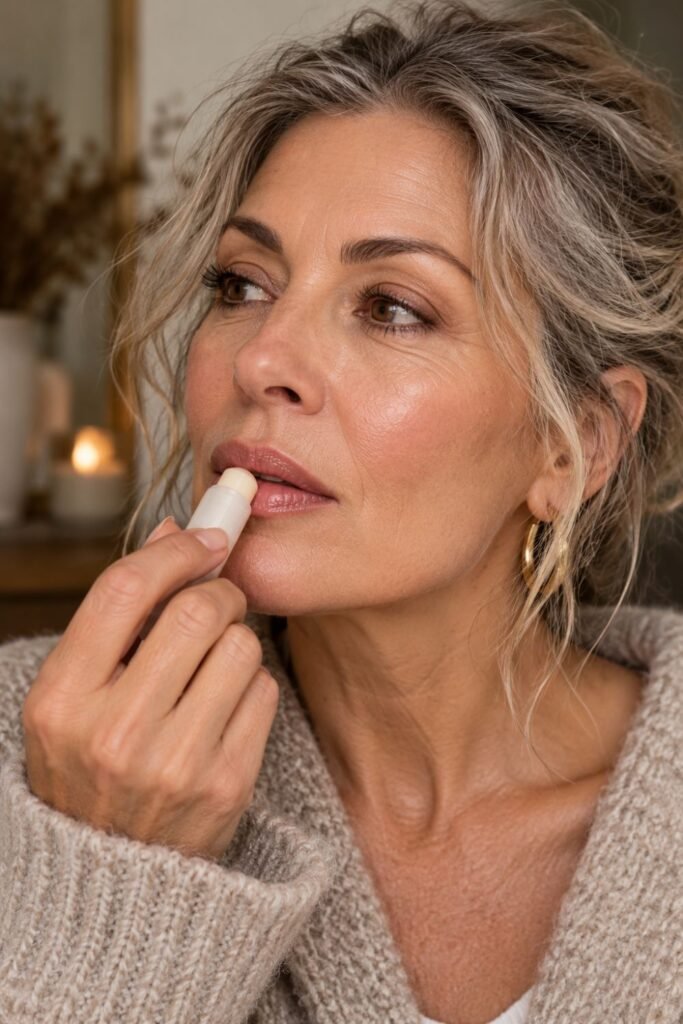
Protect Lips With a Simple Occlusive Balm
Dry lips often respond well to plain petrolatum or a bland lip balm. If a product stings or tingles, the AAD recommends switching to one that does not irritate. Ingredients that create a cooling or tingling feeling, such as menthol, camphor, or strong flavorings, can make chapped lips feel worse in cold weather. Apply balm before bed, before heading outside, and whenever lips feel tight. For daytime, a lip balm with SPF adds sun protection. Avoid licking or peeling flaking lips; a thick layer of balm overnight usually softens the flakes so they come away on their own.
Be Careful With Fragrance and Essential Oils
Fragrance can irritate already-dry skin. For a winter routine, fragrance-free products are generally a safer choice, especially if the skin is itchy, reactive, or prone to eczema. Read labels closely: products marked ‘unscented’ can still contain a masking fragrance, while ‘fragrance-free’ means no fragrance has been added for scent. Essential oils such as lavender, peppermint, and citrus oils are natural, yet they can still irritate sensitive skin. If you love a scented product, keep it for less reactive areas, or spray perfume on clothing instead of dry skin.
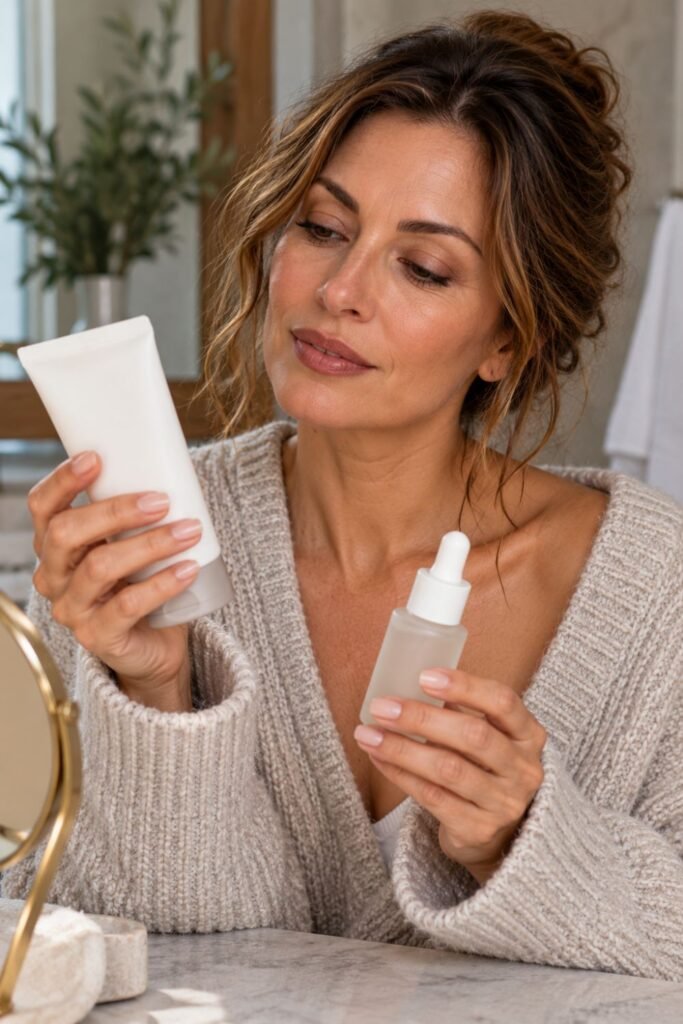
Menopausal Skin May Need More Moisture Than Before
The AAD notes that declining estrogen during menopause can reduce the skin’s ability to hold water. If a moisturizer that worked for years suddenly feels insufficient, moving to a richer cream and simplifying irritating steps can be a sensible adjustment. Many women notice the change first on the cheeks, around the eyes, and on the shins and forearms. Try adding a second thin layer of moisturizer at night, or using a cream cleanser in place of a gel. If dryness comes with new itching, sensitivity, or other changes that concern you, mention it to your doctor or dermatologist so they can look at the full picture.
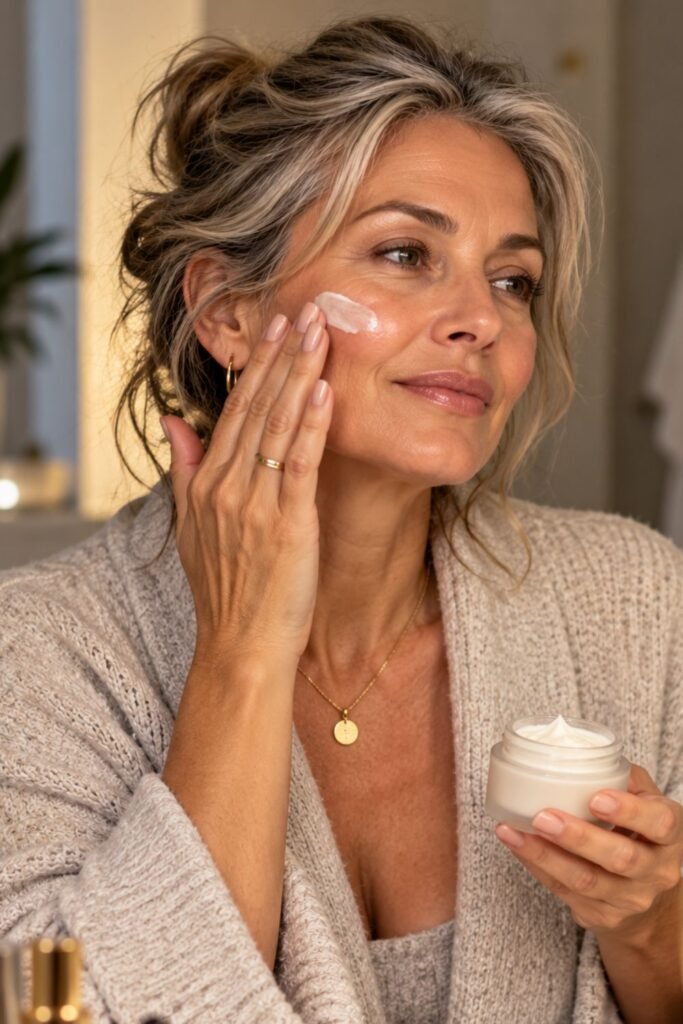
Introduce One Anti-Aging Product at a Time
The AAD advises focusing on one concern rather than starting several anti-aging products at once. Multiple new actives can irritate the skin and make dryness look worse. Pick the concern that bothers you most, such as fine lines or dark spots, and choose a single product for it. Use it consistently for several weeks before judging the result, since most skincare products take time to show visible change. Testing a new product on a small patch of skin for a few days first helps you spot a reaction early. Add a second new product only once the first feels fully comfortable.
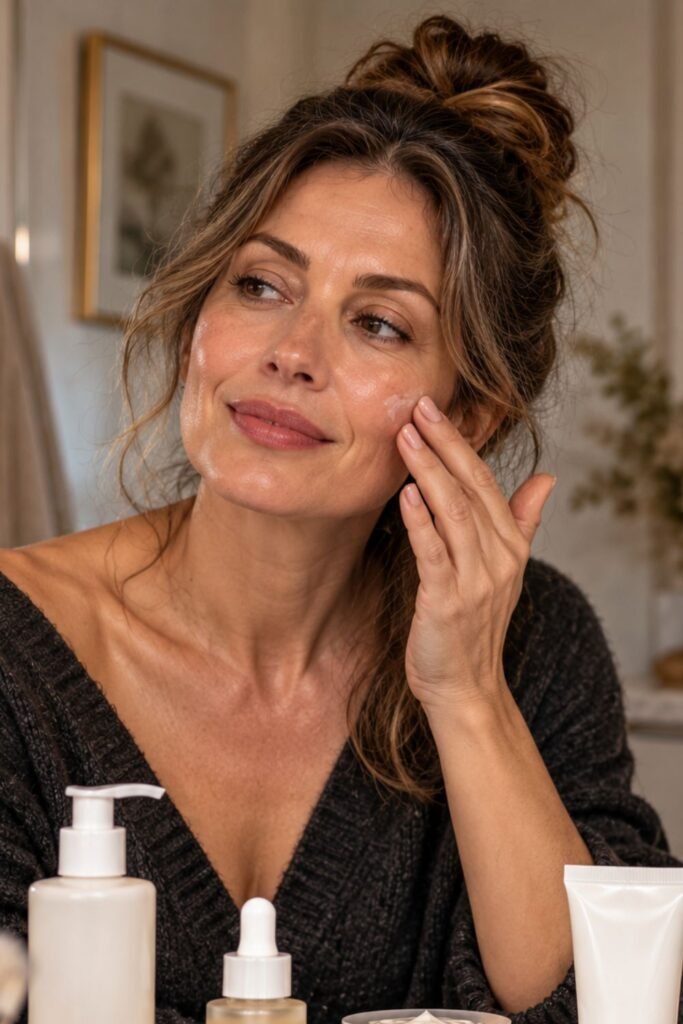
Know When Dryness Is More Than Seasonal
Cracking, bleeding, persistent stinging, painful dryness, a spreading rash, or symptoms that do not improve with gentle care deserve medical evaluation. Dryness can also be influenced by medications or underlying health conditions, particularly later in life. Before your appointment, jot down when the problem started, which products you use, and any recent medication changes, since this helps your doctor or dermatologist find the cause. Itching that keeps you awake, patches that look infected, or dryness alongside other new symptoms are good reasons to book sooner instead of waiting for spring.

A Practical Morning Routine
Keep mornings short: cleanse gently if needed, apply one targeted antioxidant or hydrating serum if your skin tolerates it, follow with a cream moisturizer, then finish with broad-spectrum SPF 30 or higher. If your sunscreen is already sufficiently moisturizing, you may not need a separate heavy layer underneath. If you wear makeup, a sheer cream base sits more comfortably on dry winter skin than heavy powder, and these nude makeup looks for every skin tone show how little product you need.
A Practical Evening Routine
Cleanse gently, use your retinoid or other treatment only on the nights your skin tolerates it, then apply a generous cream moisturizer. On very dry areas, a small amount of petrolatum-based ointment can help seal in moisture. If the skin is actively stinging or peeling, simplify the routine and pause irritating products until the barrier settles.
What About Vitamin C, Peptides, and Hyaluronic Acid?
Vitamin C can support concerns such as uneven tone and photoaging, while hyaluronic acid can help hydrate when used under an appropriate moisturizer. Peptides are common in mature-skin products, but they should be treated as optional rather than the foundation of the routine. Sunscreen, moisturizer, gentle cleansing, and a well-tolerated retinoid have stronger roles in an evidence-based anti-aging plan.
What Mature Skin Usually Does Not Need More of in Winter
More scrubs, more acids, hotter water, more fragrance, and more new products are rarely the answer to seasonal tightness. Winter is often the season to subtract. If the skin feels comfortable, supple, and non-stinging, the routine is doing its most important job.
Frequently Asked Questions
Why does mature skin get drier in winter?
Age-related skin changes reduce water retention, and winter brings lower outdoor humidity plus dry indoor heating. Together, those factors make tightness, flaking, and itching more common.
What moisturizer is best for mature skin in winter?
A fragrance-free cream is a strong starting point. Very dry areas may benefit from an ointment because ointments hold water more effectively than lighter lotions.
Should women over 50 use retinol in winter?
Retinoids can still be useful, but winter dryness may require less frequent use or a lower-strength product. Persistent irritation should be discussed with a dermatologist.
Do mature women still need sunscreen in winter?
Yes. Dermatologists recommend broad-spectrum SPF 30 or higher year-round. Sun protection remains important for skin-cancer prevention and reducing additional photoaging.
Should I exfoliate flaky winter skin?
Not aggressively. Scrubbing or frequent acids can worsen dryness and irritation. Restore moisture first, then reintroduce exfoliation cautiously if needed.
Is hyaluronic acid enough for dry mature skin?
Usually not by itself. Hyaluronic acid is a humectant, so it is best followed by a cream or ointment that helps trap moisture in the skin.
Can menopause make winter dryness worse?
Yes. The AAD notes that falling estrogen can reduce the skin’s ability to hold water, making dryness more noticeable during and after menopause.
When should I see a dermatologist about winter dryness?
Seek medical advice for painful cracking, bleeding, persistent stinging, a rash, severe itch, or dryness that does not improve with gentle cleansing and regular moisturizer.
The Practical Takeaway
Winter skincare for mature women works best when every step protects the skin barrier. Use a gentle cleanser, a richer moisturizer, daily SPF 30 or higher, lukewarm water, and a humidifier if indoor air is dry. Keep retinoids and acids at the frequency your skin comfortably tolerates, and treat persistent redness, cracking, pain, or rash as a reason to see a dermatologist.