
Naturally curly hair looks its best when nobody tries to tame it. The most flattering hairstyles for naturally curly hair start with a cut that accounts for shrinkage, products that define without stiffening, and a routine built around your actual curl pattern instead of one borrowed from straight hair.
These 15 styles cover type 2 waves through type 4 coils, at short, medium, and long lengths, for everyday wear and special occasions. Each one comes with notes on how to ask for the cut, which products to reach for, and how to keep the shape between wash days.
Everyday Hairstyles for Naturally Curly Hair
Defined Wash-and-Go
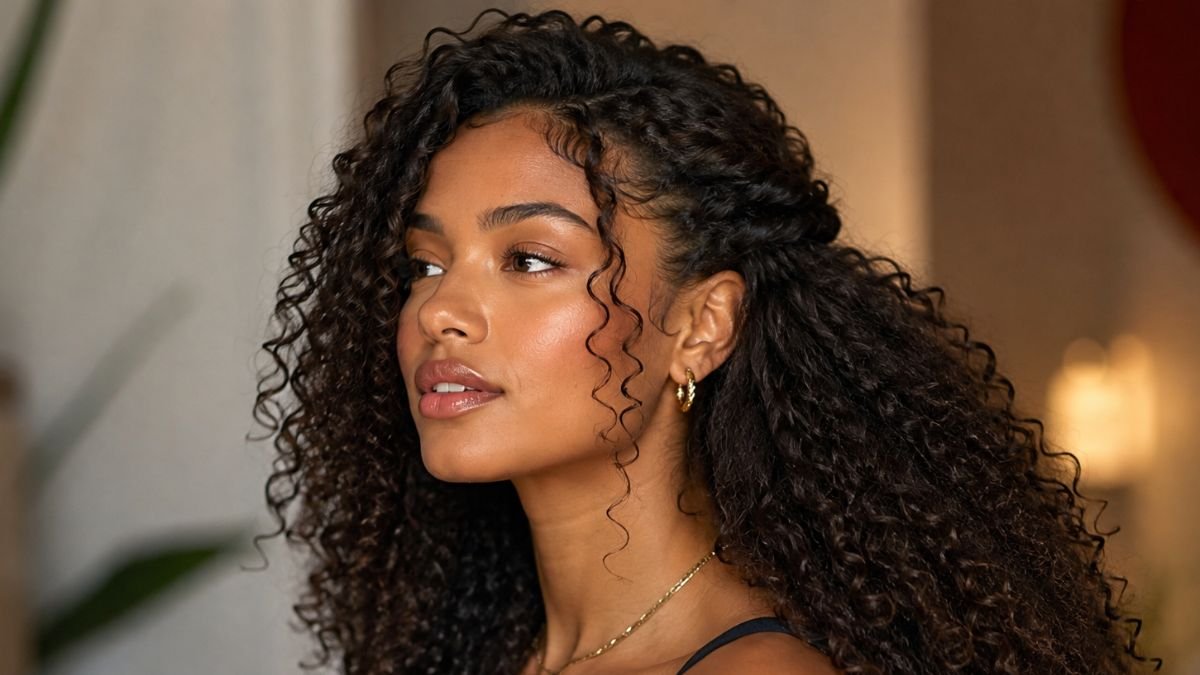
A wash-and-go is the foundation style for naturally curly hair because it asks only one thing: that you apply product to soaking wet hair, leave it alone while it dries, and do not touch it until it is fully dry. The result is the curl pattern in its most defined state.
Apply a curl cream or gel to soaking wet hair using the prayer hands method, smoothing each section downward without disturbing the curl clumps. Diffuse on low heat or air-dry completely. Once dry, scrunch out any cast from the gel using a drop of oil on the palms. For texture-specific product picks on type 3 and type 4 hair, our guide to winter hairstyles for Black women covers wash-and-go technique in more detail.
Diffused Volume Style
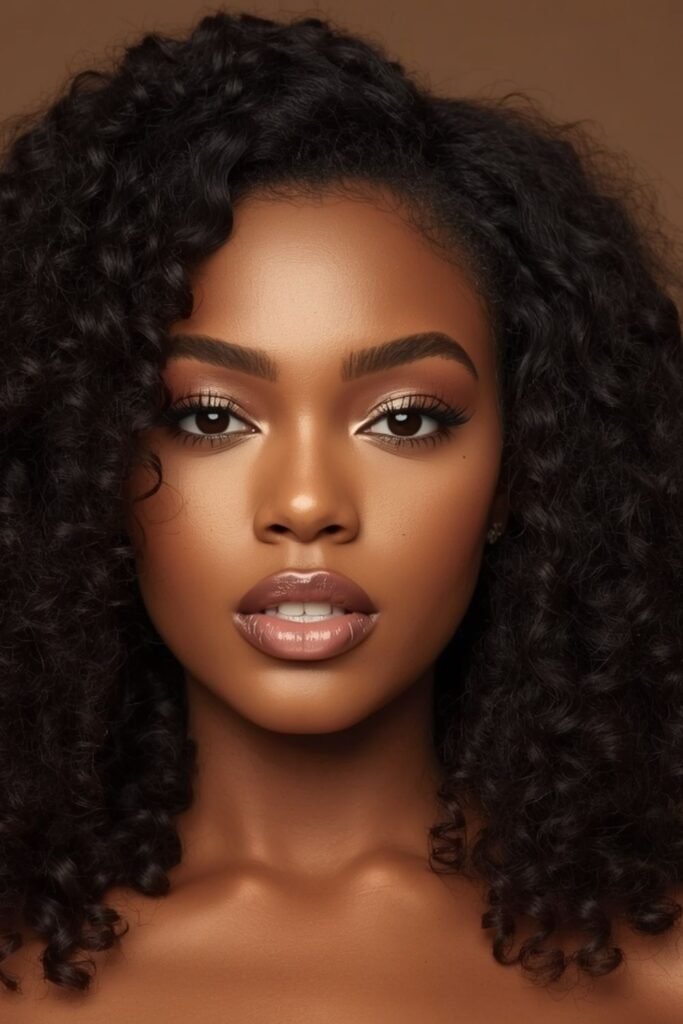
Diffusing on low heat with the hair flipped forward into the diffuser cup, allowing the curls to sit in the cup rather than being blown around, produces significantly more volume than air-drying on naturally curly hair. The heat encourages the curl to spring upward and outward while the cup shape supports it during the drying process rather than pulling it downward with gravity.
Apply a lightweight mousse or curl cream to soaking wet hair before diffusing. Work in sections from the nape upward, spending about forty-five seconds on each section before moving to the next. Once the hair is about eighty percent dry, flip upright and finish the crown sections. The crown volume produced by this method is what most curly hair routines spend multiple products trying to replicate.
Curly Bangs with Long Length
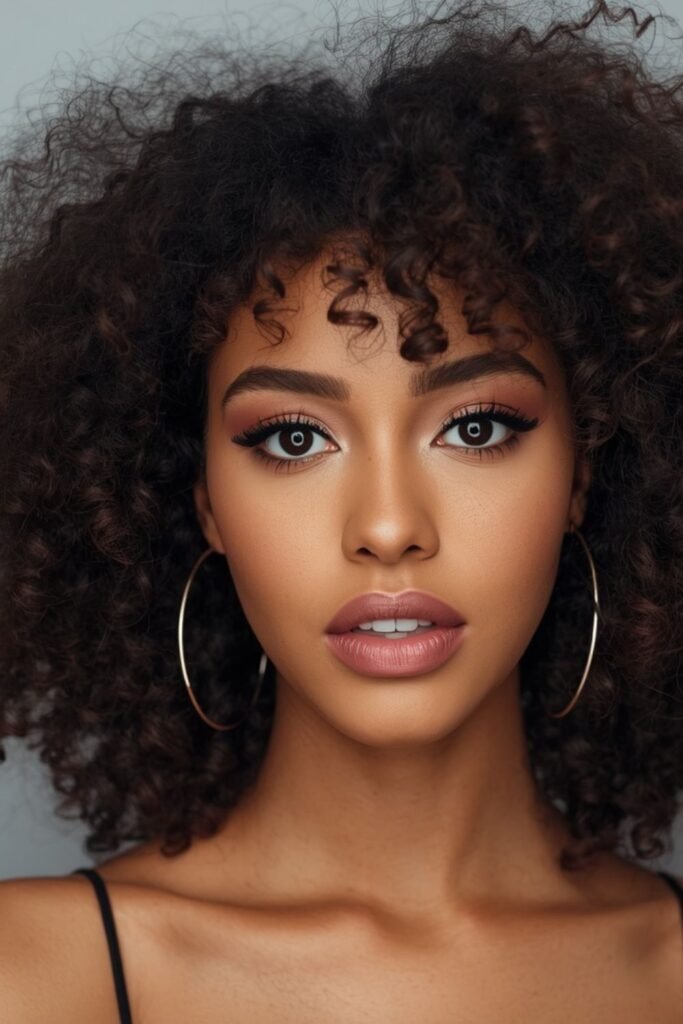
Curly bangs on long naturally curly hair add a face-framing element that changes how the curl pattern reads from the front. Rather than all the curls falling back from the face, the bang section springs forward and frames the forehead and eyes, giving the style a defined front focal point.
Curly bangs must be cut dry and in their natural state. Cutting on wet curly hair produces a bang that sits significantly shorter than intended once the shrinkage occurs as it dries. Ask specifically for a stylist experienced with curly hair who understands how to account for curl shrinkage at the bang length before any scissors are used. A bang that sits at nose length wet may end up above the eyebrow once dry.
Side-Parted Curls
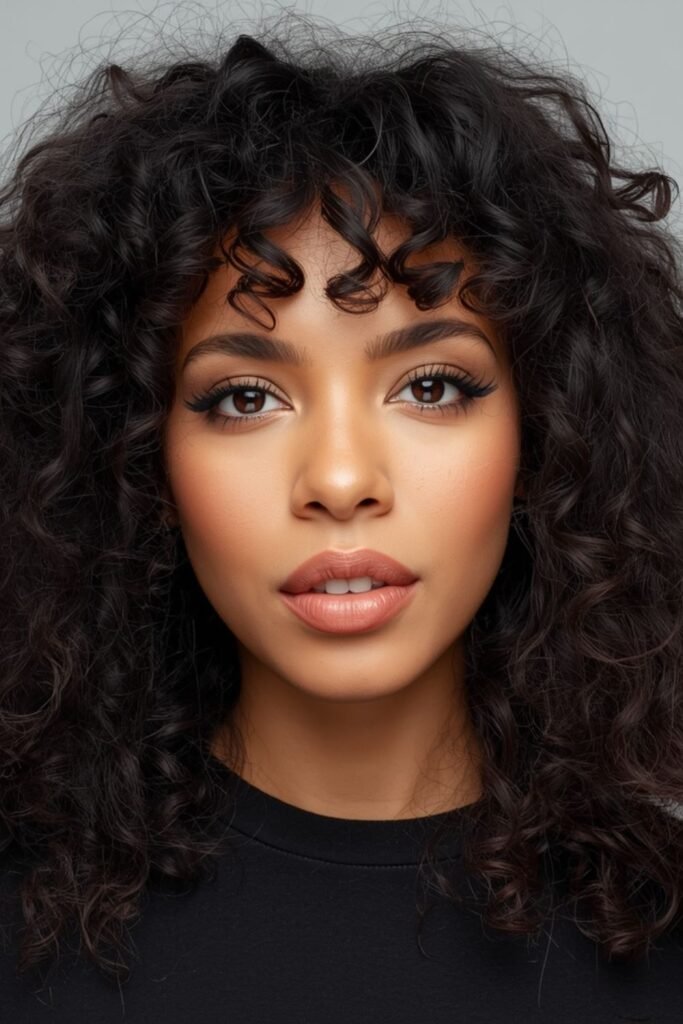
A deep side part on naturally curly hair shifts the volume to one side and creates an asymmetrical silhouette that looks deliberately styled. On type 2 and type 3 curls, the side part falls naturally once the hair is dry if you set the part on wet hair while applying curl cream. On type 4 hair, use a tail comb to establish the part while the hair is wet and loaded with product, then clip the crown to hold the parting in place while it dries.
The side part works especially well for women with round or square face shapes because it adds a vertical line and asymmetry that balances the face width. Avoid a hard center part on these face shapes, which divides the curl volume symmetrically and emphasizes face width.
Curly High Puff
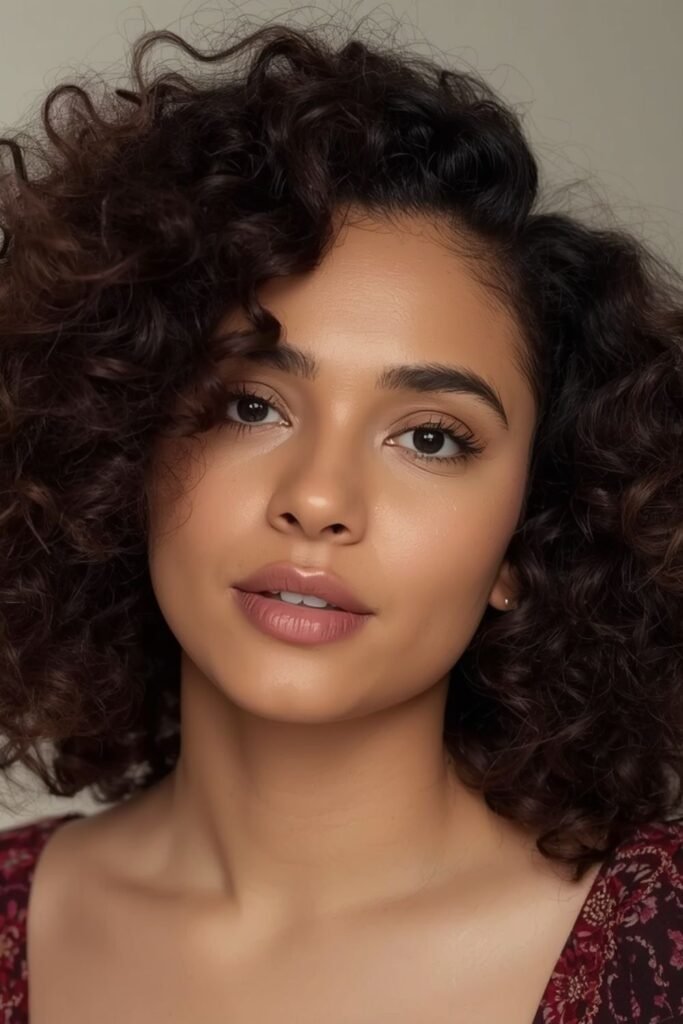
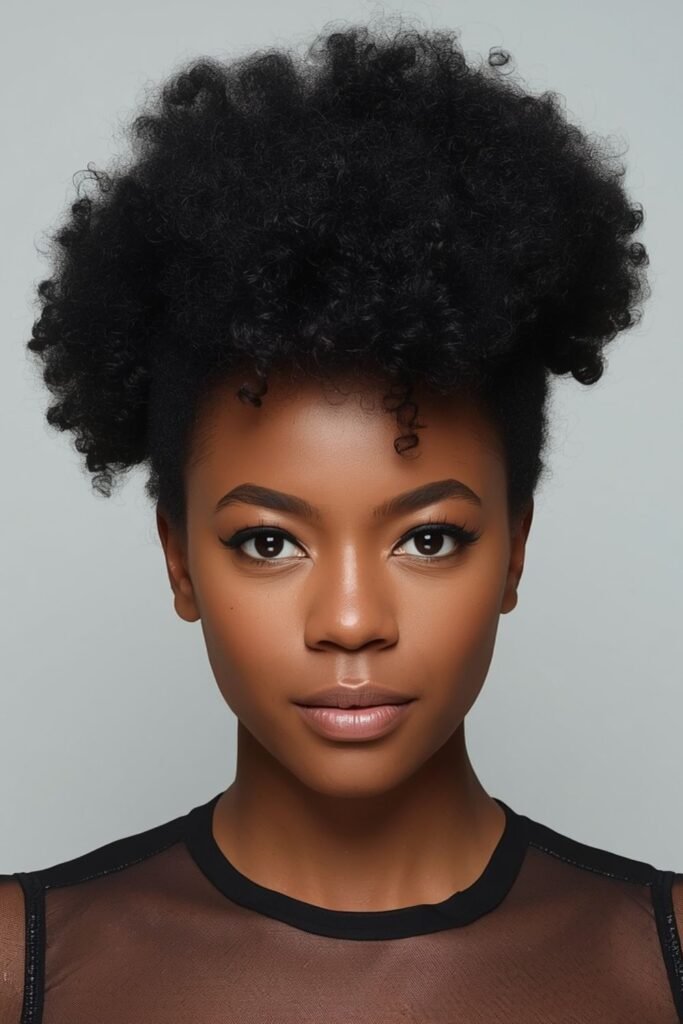
A high puff, gathered at the crown and secured with a soft scrunchie or hair tie, is the most practical everyday protective style for naturally curly hair because it takes under two minutes, requires no heat, and keeps the length away from the face and neck while still showing the full curl texture and volume.
Stretch the curl slightly before gathering if you want more height and length at the puff. Do not use a regular elastic, which can snap and break curly hair at the hairline. A wide satin scrunchie or a soft coil hair tie distributes the tension more evenly and reduces breakage. A small amount of edge control along the hairline and a light press with a damp cloth smooths the front without product buildup.
Cut-Based Styles for Naturally Curly Hair
Curly Bob
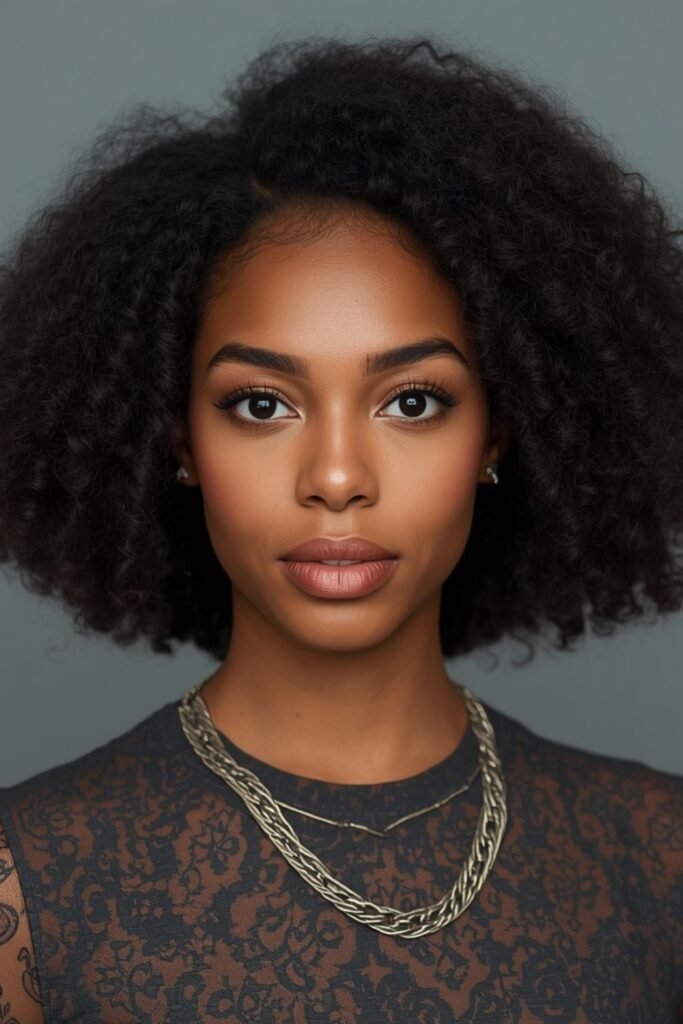
A curly bob sits at a different length when dry than when wet, which is why a straight bob simply adapted to curly hair rarely holds its shape. A curl-specialist stylist cuts the bob dry so the finished length lands where intended after shrinkage, and the outline stays the same every time the hair dries.
Ask for a DevaCut or a dry curly cut specifically. The stylist should cut each curl individually in its natural spiral rather than sectioning and cutting straight across. This approach gives the bob its shape without creating a uniform blunt edge that looks uneven on curly hair once the curls spring to different lengths.
Long Curly Layers
Long curly hair with internal layers cut for the curl pattern moves and bounces with far more life than long curly hair left uncut or cut with straight-hair layering techniques. The internal layers remove weight from the mid-section so the curls spring up and out instead of stretching downward under their own weight. If you want this cut to carry into evening events, these New Year hairstyles for long hair show how layered curly length looks when dressed up.
Layers on long curly hair should start no higher than the collarbone. Layers that begin at the crown or temple on long curly hair can create triangle-shaped volume that reads as top-heavy rather than balanced. The internal layering below the collarbone reduces weight evenly and allows the curls to sit in their natural shape throughout the full length.
Curly Shag
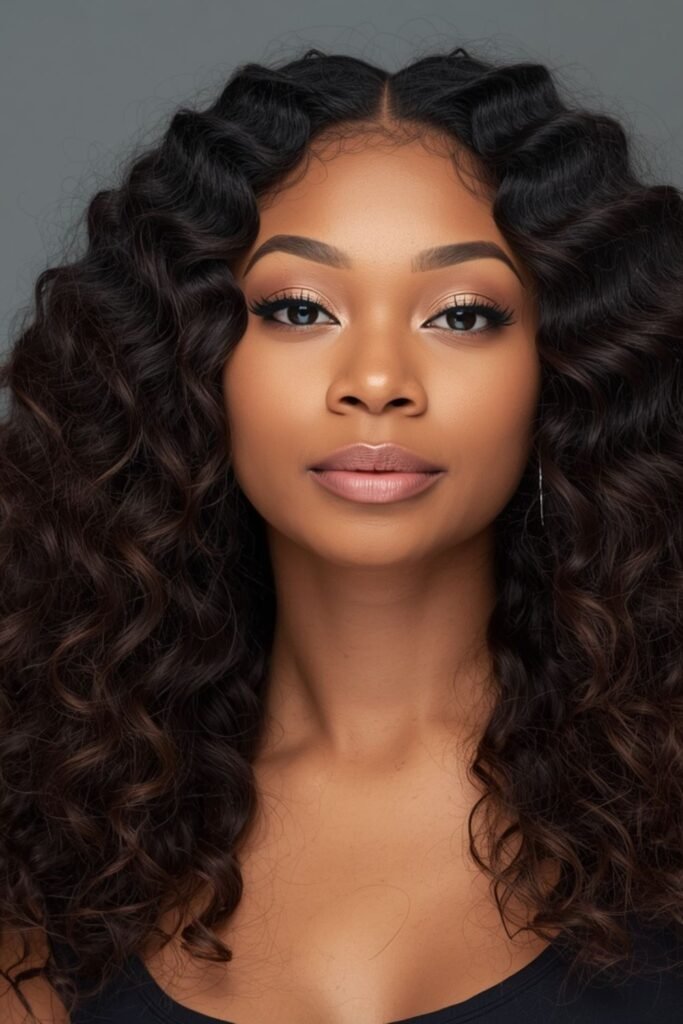
A curly shag cut on naturally curly hair produces more volume and movement than on any other texture because the layering of the shag distributes the curl pattern through multiple tiers that move independently. The crown layers spring upward and outward, the mid-length layers curve outward at the face-framing position, and the longer layers below develop a sweeping curl that reads as full and textured from every angle.
Ask for a curly-specialist stylist for this cut. A shag cut on curly hair requires a precise understanding of how each section will shrink when dry, which determines where the layers land in the finished style. A shag cut on wet curly hair without this knowledge produces unpredictable results that are difficult to correct.
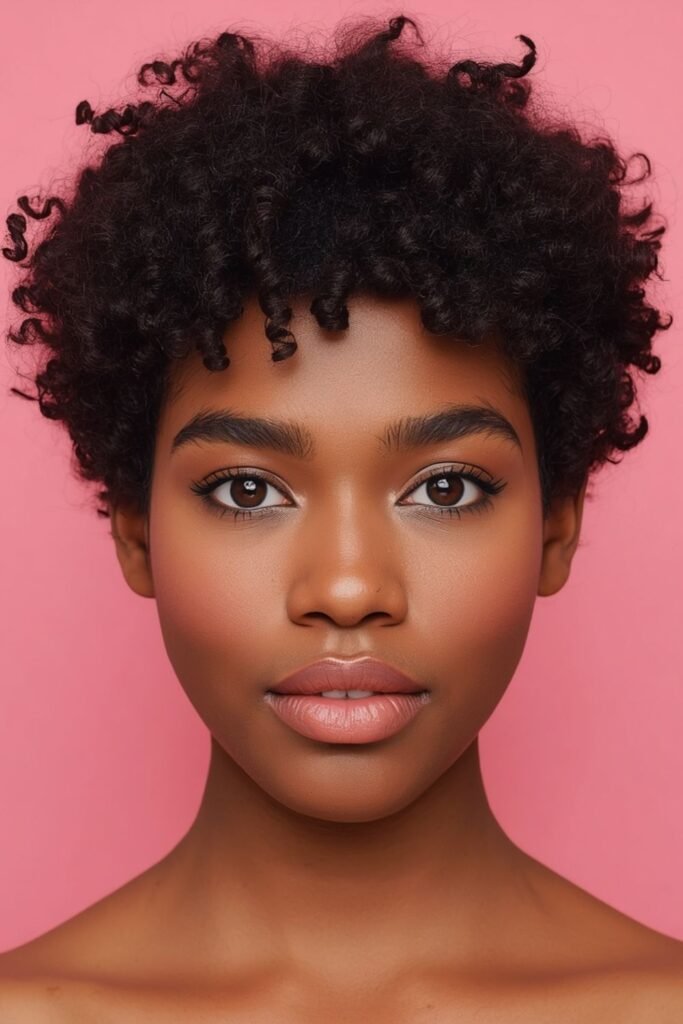
Short Curly Pixie
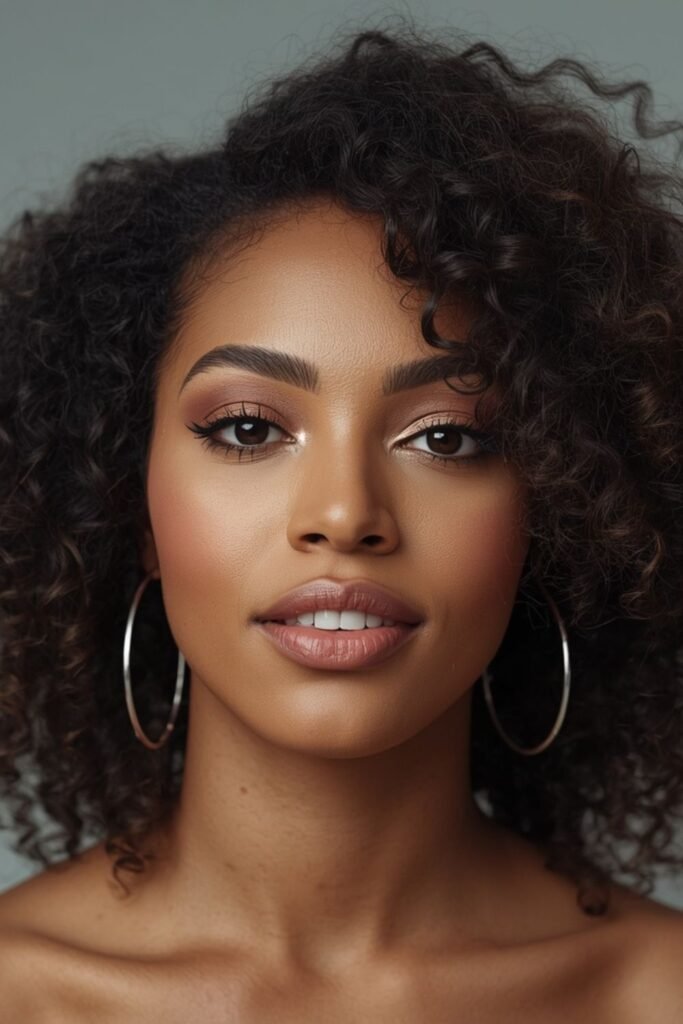
A curly pixie is cut to follow the natural curl pattern instead of being cropped uniformly short, so the shape grows with the curl spring. The crown section sits slightly longer so it can develop a curl that frames the top of the head, and the sides taper gradually so the transition from curl to skin looks smooth.
The curly pixie is the lowest-maintenance style on this list once the cut is established. The curls define themselves without significant product, and the short length dries quickly. A small amount of curl cream through the crown section and a diffuse on low heat is a full morning routine. A monthly trim maintains the shape as the curls grow.
Color Styles for Naturally Curly Hair
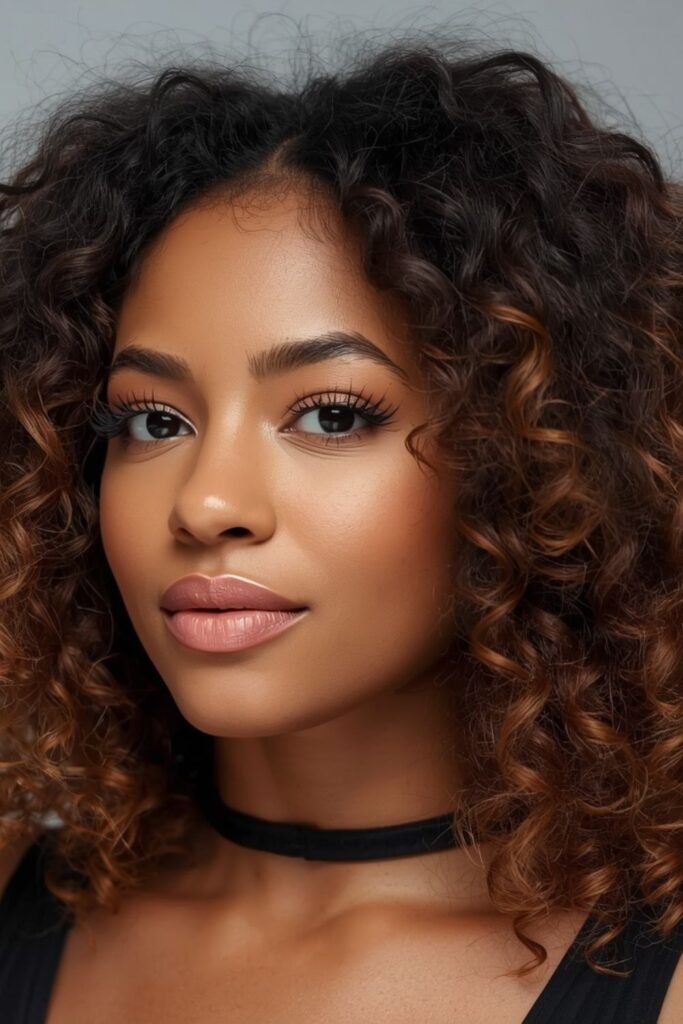
Curly Hair with Caramel Highlights
Highlights on naturally curly hair make the curl pattern far more visible, because the contrast between the highlight and the base shade creates light and shadow at every curve of each spiral. Our guide to caramel highlights on brown hair covers placement and tone selection in detail. For curly hair specifically, a balayage application that follows the natural fall of each curl section adds brightness where the curl catches light and avoids bands of color that cut across the curl at random intervals.
Fine, closely spaced highlights on curly hair read more naturally than chunky sections because the curl already creates texture and movement. Large highlight sections on curly hair can look uneven as the curl springs each section to a different length. Ask your colorist for a hand-painted approach that sweeps lightly across the outer surface of each curl section.
Curly Hair with Dark Cherry Red
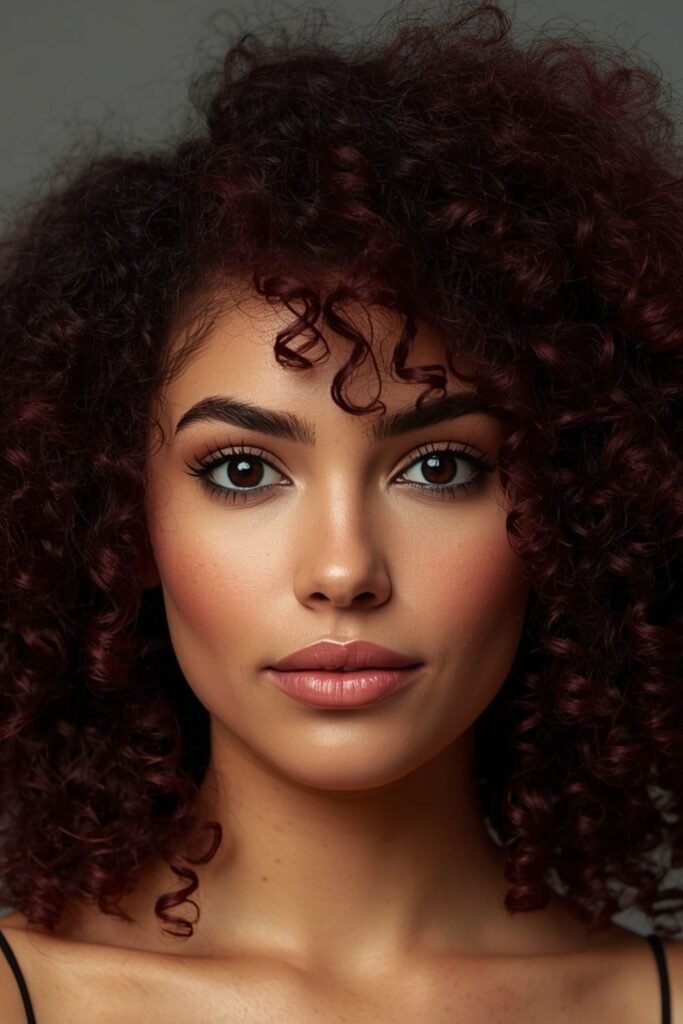
A dark cherry red color through naturally curly hair is one of the most visually striking combinations because the depth of the cherry shade emphasizes the shadow between curls while the red catches light through the outer surface of each spiral. The result is a color that appears to shift between burgundy and bright red depending on how the light hits the curl, a dimension that straight hair cannot achieve with the same color.
On natural hair, especially type 4 coils, cherry red applied over a lightened base produces a vivid, clear tone. On unlifted dark natural hair, the red reads as a deep burgundy tint that is visible in sunlight and richer in indoor light. Both results are beautiful and worth discussing with your colorist based on your commitment to the lightening process.
Occasion Styles for Naturally Curly Hair
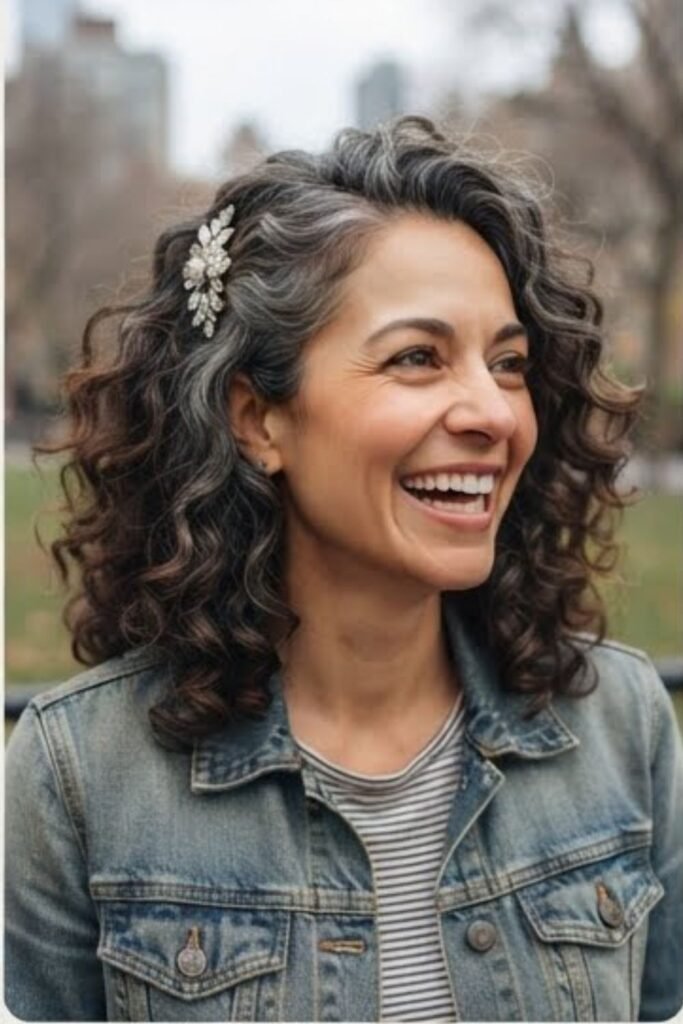
Curly Half-Up with a Jeweled Clip
A half-up style on naturally curly hair gathered loosely at the crown and secured with a jeweled claw clip or rhinestone clip is an occasion-ready look that takes under five minutes and leaves the full curl texture visible. The clip holds the crown section and becomes the focal point of the style, so the quality and detail of the clip matters as much as the styling. Our roundup of long hair updos and half-up styles includes pinning and clipping techniques that translate directly to curly hair, including how to secure the section without flattening crown volume.
Gather the crown section loosely so the curl volume is not compressed. Use a clip large enough to hold the section without straining, because a small clip on a full section of curly hair slips out through an evening. Leave the face-framing curls free at the temples and cheeks so they frame the face and soften the transition from the pinned crown to the loose curls below.
Curly Low Bun with Loose Pieces
A low bun gathered at the nape on naturally curly hair, with several curls pulled loose at the face and temples, creates a formal occasion style that uses the curl texture rather than smoothing it away. The loose pieces frame the face and prevent the bun from reading as severe or tight.
Use a satin scrunchie or coil hair tie rather than a standard elastic, which can snag and break curly hair at the gathering point. The bun should be pinned loosely enough to retain the volume of the gathered curls rather than compressed flat. A light finishing oil through the loose face-framing pieces defines the curls and eliminates frizz without weighting them down.
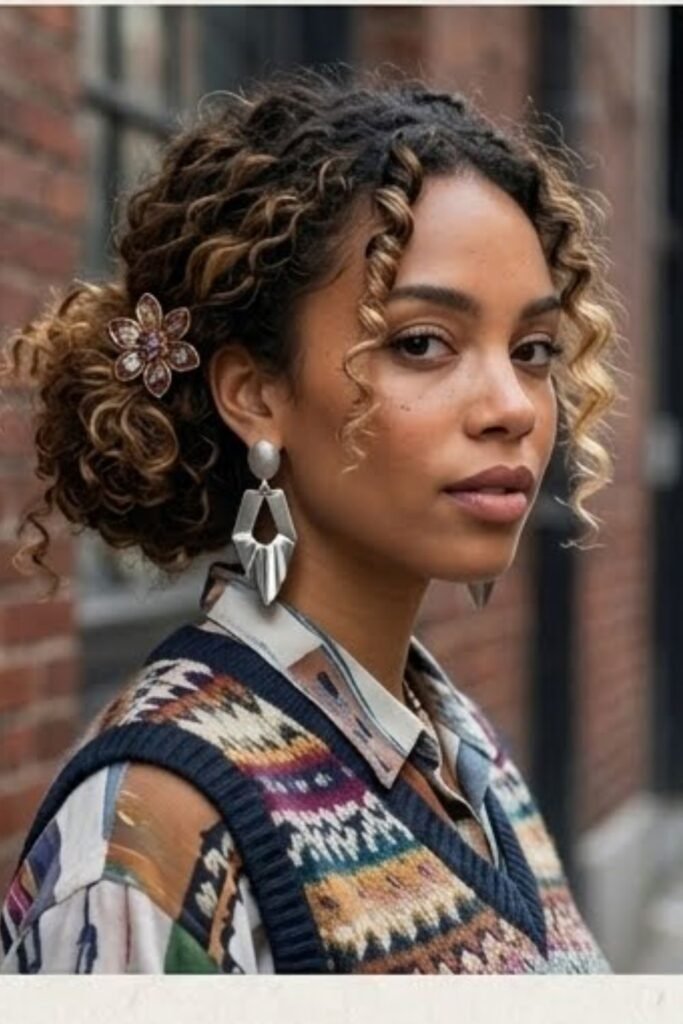
Braided Style on Natural Curls
Braids on naturally curly hair, whether two-strand twists, cornrows, or box braids, are protective styles that also serve as complete hairstyles in their own right. On curly hair, the natural texture adds grip to the braid sections and reduces the need for product to hold them in place. For a wider range of options, these trendy natural hair braids come with guidance on preparation, tension, and edge care across curl types.
Install braids on freshly moisturized hair rather than dry hair to reduce tension at the roots and prevent breakage at the hairline. Ask your braider to avoid pulling tightly at the edges, where natural curly hair is most fragile. A lightweight braid spray or oil applied along the length of each braid after installation keeps the style looking fresh and prevents the dry, dull appearance that unmoisturized braids develop within a week.
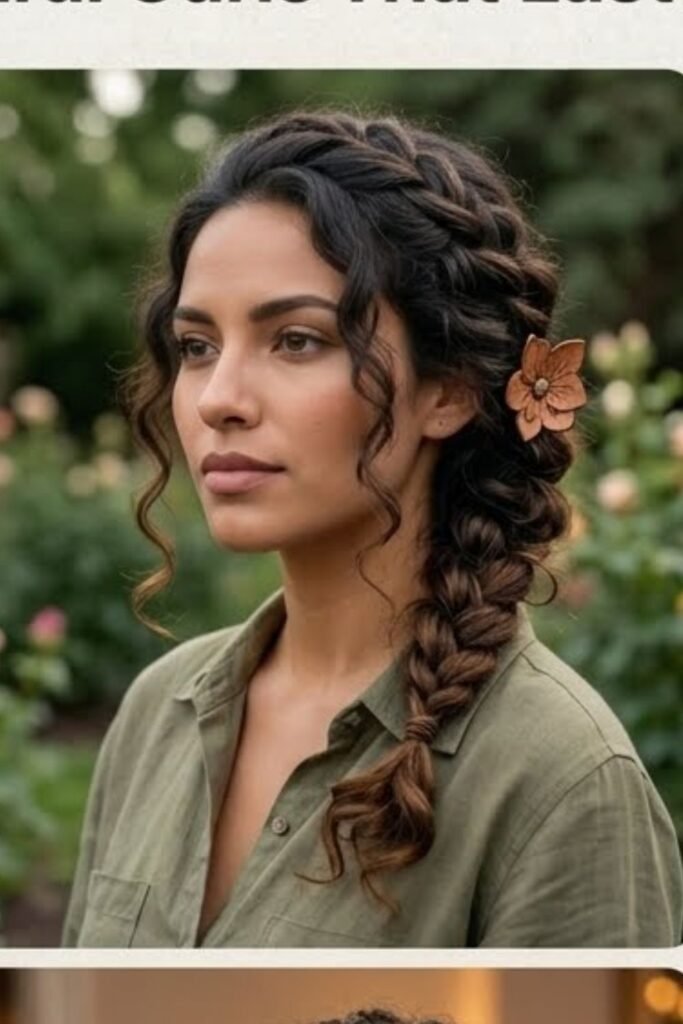
Curly Updo for a Formal Occasion
A formal updo on naturally curly hair is most flattering when it is built loosely rather than smoothed flat. Gathering the curls at the nape into a voluminous chignon, leaving a generous number of curls loose at the face and crown, and pinning with jeweled picks rather than compressing with clips produces an updo that reads as formal through its structure while still showing the curl texture throughout.
Apply a light-hold finishing oil through all sections before gathering so the curls are defined and frizz-free going into the updo. Pin the bun loosely at the nape with several large bobby pins rather than a single tight elastic. Leave at least three to four curls loose at the face and allow them to curl naturally rather than manipulating them into a specific direction. The natural curl direction at the face always reads more authentic than a shaped tendril.
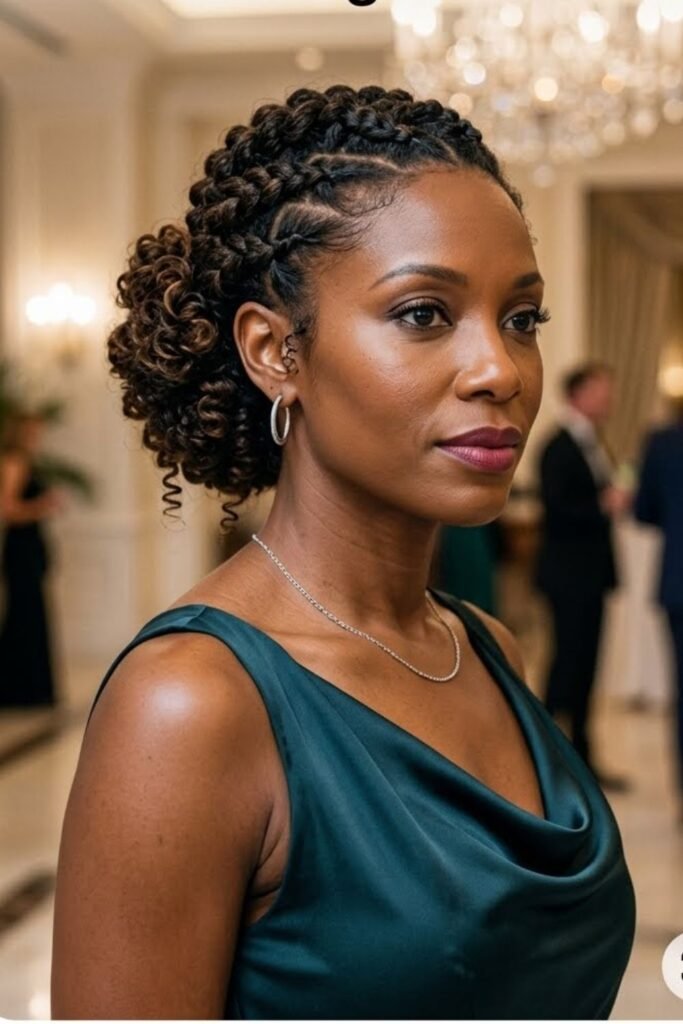
The Curly Hair Principles That Apply to Every Style
Cut Curly Hair Dry
Every curly hair style on this list holds its shape most reliably when the cut was done on dry hair in its natural curl state. A stylist who cuts curly hair wet is guessing at where each section will land once dry, because curl shrinkage varies between individuals and even between different sections of the same head. A dry curly cut removes that variable and produces a shape that is consistent every time the hair dries.
Apply Product to Soaking Wet Hair
Curl cream, gel, and mousse all work by coating the hair while it is still saturated with water, which helps the curl clump together and dry in a defined pattern. Applying product to damp or dry curly hair distributes it unevenly and produces frizz rather than definition. Wet your hair thoroughly before applying any styling product, and apply more than you think you need on the first pass. You can always reduce the quantity in subsequent washes once you know how much your specific curl pattern requires.
Do Not Touch While It Dries
This applies whether you are air-drying or diffusing. Touching wet curly hair during the drying process disrupts the curl clumps and creates frizz that no finishing product can fully correct. Set the curl with product, position yourself for drying, and leave the hair alone until it is completely dry. The patience required is the most underrated technique in naturally curly hair care.
Frequently Asked Questions
What is the best haircut for naturally curly hair?
A dry curly cut, such as a DevaCut, is the most reliable approach for any curl type because the stylist can see exactly where each curl lands and how much it shrinks before making any cuts. The best specific cut depends on your curl type and the length you want: a curly bob or pixie for short styles, a curly shag for medium styles with maximum volume, and long internal layers below the collarbone for long curly hair that retains length while gaining movement.
How do I define my natural curls without frizz?
Apply a curl cream or gel to soaking wet hair, use the prayer hands method to smooth each section without disturbing the curl clumps, and do not touch the hair until it is completely dry. Scrunch out any gel cast with a drop of oil on the palms once fully dry. This sequence, applied consistently, produces defined curls without frizz more reliably than any individual product alone.
Can naturally curly hair be colored without damage?
Yes, with the right approach. Balayage and hand-painted highlights on curly hair cause less damage than foil highlights because they do not require saturating the full strand. A gloss or toning treatment causes almost no structural damage and adds significant color dimension. Deep conditioning treatments before and after any color service restore moisture that the color process removes. A curl-specialist colorist who understands the porosity of curly hair is worth seeking out before any color appointment.
How often should naturally curly hair be washed?
Most curly hair types do best with one to two washes per week rather than daily washing, which strips the natural oils that keep curls moisturized and defined. Co-washing, which uses conditioner rather than shampoo to cleanse, can be done more frequently between shampoo days on very dry curl types. The right frequency depends on your scalp, your activity level, and how quickly your curl pattern loses definition between wash days.
What is the difference between type 2, type 3, and type 4 curls?
Type 2 is wavy hair, ranging from loose S-shaped waves at type 2a to more defined, frizz-prone waves at type 2c. Type 3 is curly hair, ranging from loose spiral curls at type 3a to tight, springy corkscrews at type 3c. Type 4 is coily hair, from soft, densely packed coils at type 4a to tight zigzag coils with significant shrinkage at type 4c. The distinction matters for product selection and cut decisions because each type has different shrinkage, porosity, and moisture retention characteristics that affect how every styling choice performs.
Final Thoughts
The best hairstyles for naturally curly hair are built around how curls actually behave: the shrinkage, the porosity, the way curls clump, and how each curl type responds to moisture and product. The 15 styles here cover that full range instead of treating all curly hair as one texture.
Start with a dry curly cut from a curl-specialist stylist. Build a wash-day routine around applying product to soaking wet hair and leaving it alone while it dries. The style choices, accessories, and color all build on that foundation.