
Winter braids for kids should make busy mornings easier without leaving the scalp sore. Low plaits, gently installed cornrows and simple braided updos keep hair tidy under coats, scarves and hats while letting children move comfortably through the day. The right style depends on hair length, curl pattern, how long a child can sit for styling and if a fitted hat is part of the daily routine.
Comfort matters more than a perfectly sharp part. The American Academy of Dermatology warns that repeatedly tight braids can contribute to traction alopecia, including in children. If a hairstyle hurts, loosen it or take it out. Each style below notes the hair types it suits best and how to keep it gentle on the scalp.
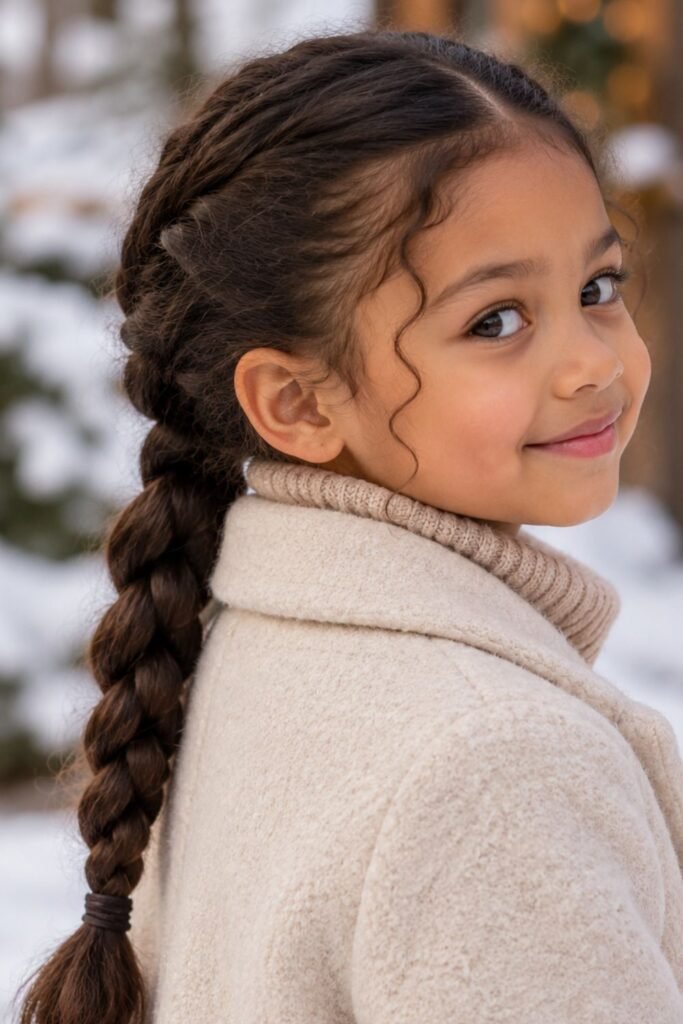
Loose Double Dutch Braids
Double Dutch braids are two three-strand plaits worked close to the head, with the outer sections crossed under the middle so each braid sits raised on top. Make a center part with a wide-tooth comb, mist the hair lightly with water or a detangling spray, and braid each side with relaxed hands. When both braids are done, gently pull the edges near the temples to soften them and take pressure off the hairline. Guide the braids down behind the ears so a beanie slides on without pressing a ridge into the scalp. Fabric-covered elastics grip the ends without snagging. On a school night, detangle and part the hair ahead of time so the morning braid goes faster.
Best suited to: Medium to long straight or wavy hair.
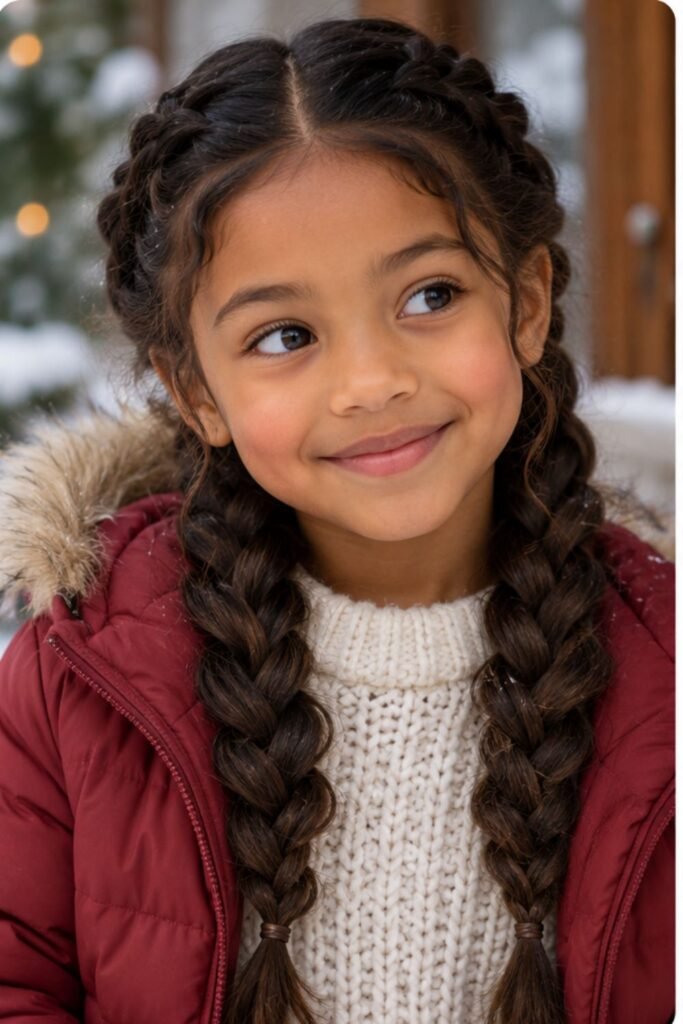
Classic Low Braided Pigtails
Low pigtails are one of the easiest winter braids for kids to wear all day, because nothing sits at the crown where a hat band presses. Detangle from the ends upward, part down the middle, and gather each side just behind the ear. Leave a little slack at the roots instead of smoothing every strand flat, then braid to the ends and finish with a soft elastic. For fine or slippery hair, a pea-sized amount of light styling cream helps the braid hold without feeling stiff. Low pigtails come out quickly at bedtime, so they suit children who dislike long styling sessions, and they stay neat under a knit hat or hood.
Best suited to: Shoulder-length or longer hair.
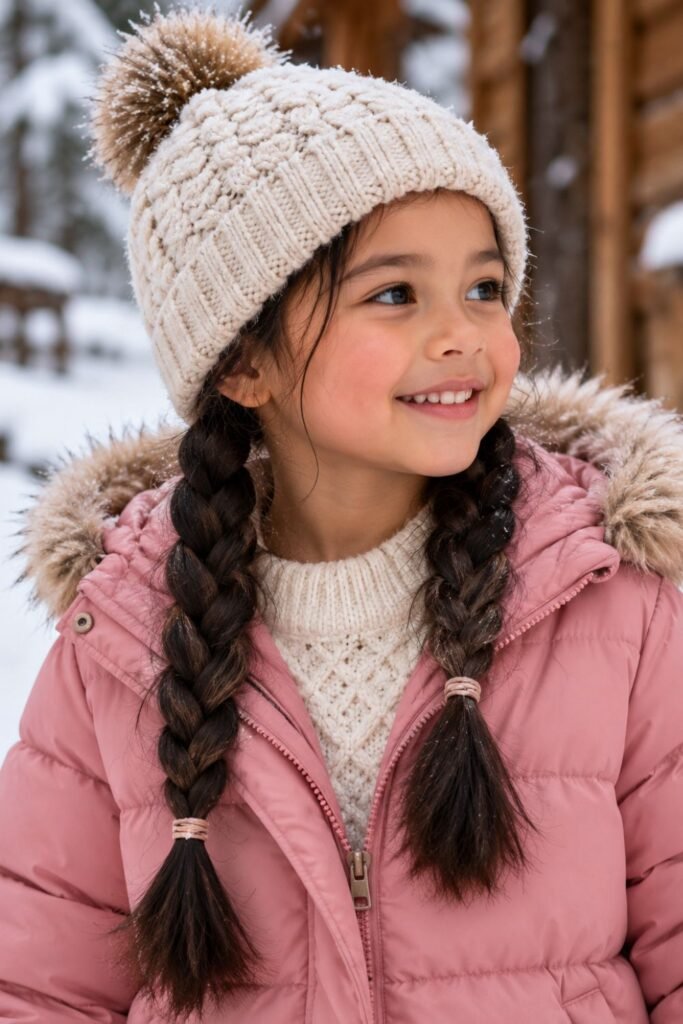
Side-Swept French Braid
A side-swept French braid starts at a side part and travels diagonally across the back of the head, picking up small sections as it goes. The finished plait rests over one shoulder, away from coat zippers and backpack straps. Match the section size to the child’s density: fine hair needs smaller pieces to grip, while thick hair can take larger ones. Brush through with a little leave-in conditioner first to calm frizz from dry indoor heat. Check comfort halfway, since diagonal braids can pull behind the ear. Tie it off with a covered elastic and leave a few face-framing pieces loose for a softer finish.
Best suited to: Medium to long straight, wavy or stretched curly hair.
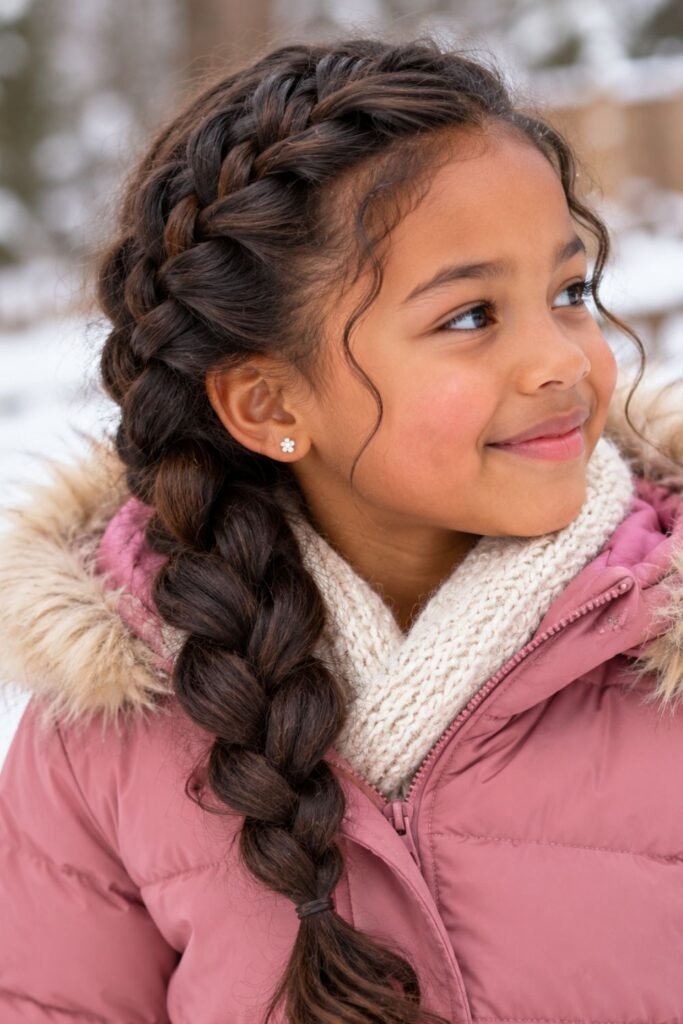
Low Cornrows With Loose Ends
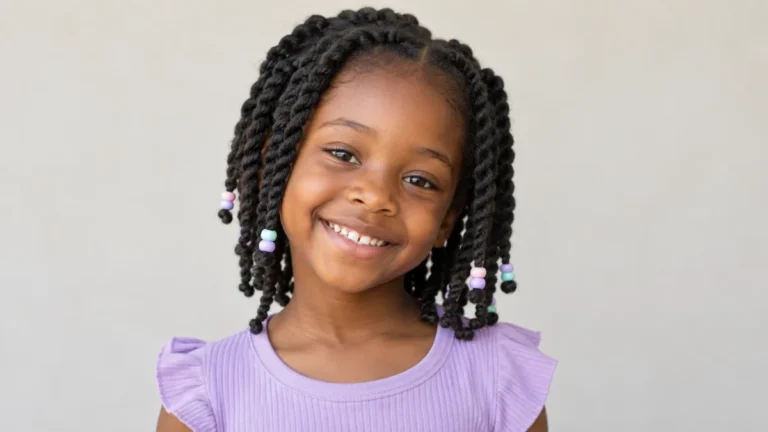
Cornrows are flat braids that run along the scalp, and for children they work best in larger sections with relaxed tension. Plan four to six straight-back rows, braid each one only to the nape, and let the lengths hang loose or finish them as short single plaits. The low profile slides under most winter hats and keeps textured hair from tangling against scarves. Apply a light leave-in to the lengths before braiding, and skip heavy gels along the hairline. If the child winces or the skin around a row looks red or bumpy, take that row out and redo it more loosely. For more protective ideas, browse these natural hairstyles for Black kids.
Best suited to: Curly and coily textures with enough length to braid.
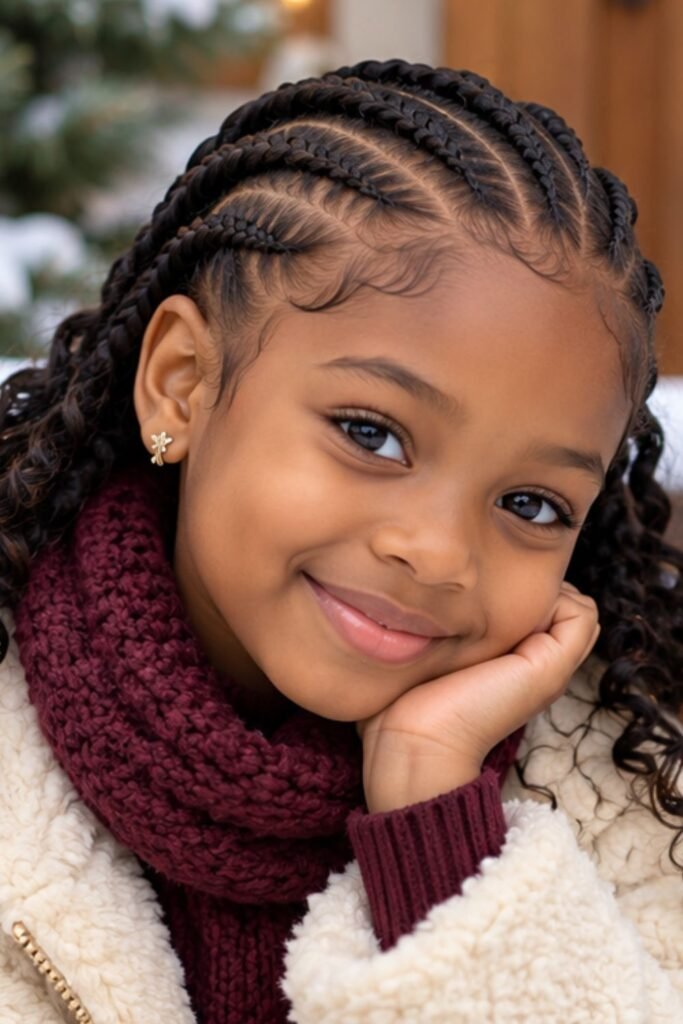
Braided Crown for Winter Parties
A braided crown wraps one or two plaits around the head like a halo, keeping long hair off party clothes and scarves. The gentlest method is to make two loose pigtail braids, cross them over the top of the head, and pin each end under the opposite braid. Slide small bobby pins along the braid instead of pressing them into the scalp, and keep pins away from the spots behind the ears where glasses and hats rest. The look is polished enough for holiday concerts and family gatherings and needs no heat. Let the child pick a small clip or flower to finish it. For more festive ideas, see our easy Christmas hairstyles.
Best suited to: Medium to long hair with sufficient length for a wraparound braid.
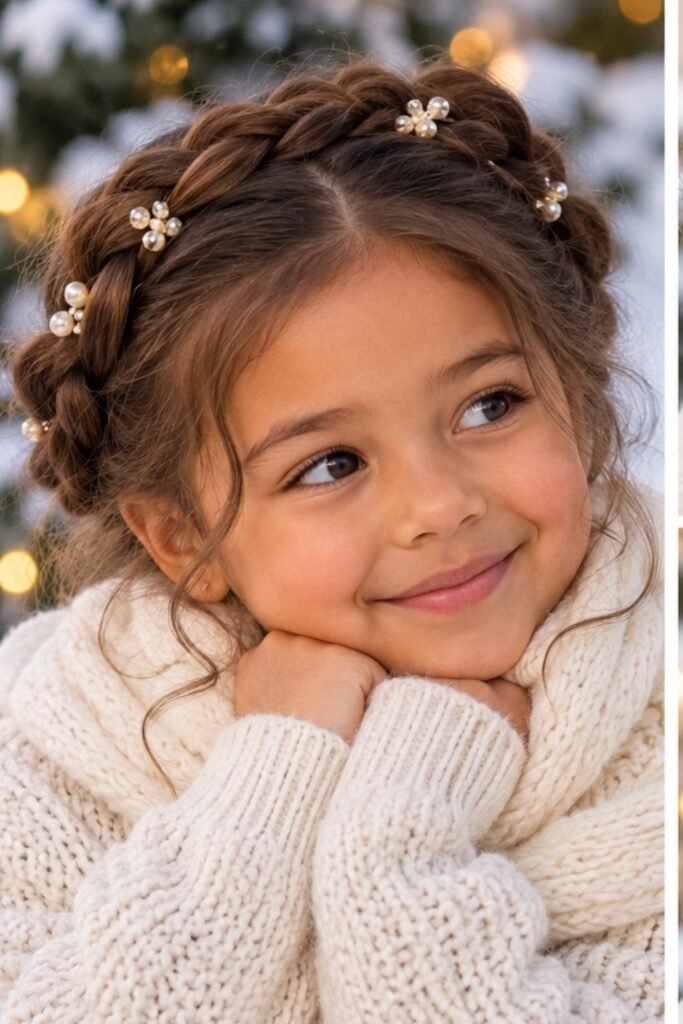
Half-Up Braided Headband
A braided headband suits children who want their hair down but out of their eyes. Take a two-inch section from above one ear, braid it loosely, lay it across the top of the head just behind the hairline, and pin it behind the opposite ear. The rest of the hair stays loose, so there is very little tension and almost no styling time. It works on chin-length hair once there is enough length to hold a small plait, and it keeps fringe pieces from tickling under a hat. Use pins with rubber-coated tips, and remove them before naps or bedtime so nothing presses into the scalp.
Best suited to: Chin-length or longer straight, wavy or curly hair.
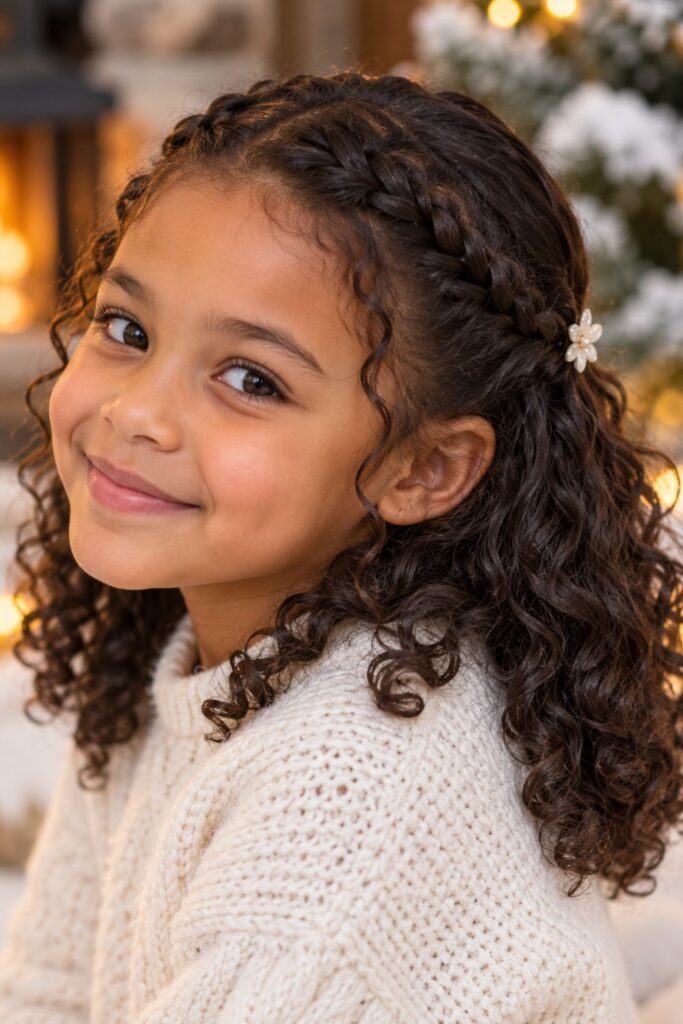
Chunky Knotless Box Braids
Knotless box braids begin with the child’s own hair at the root, with any extension hair fed in gradually, so there is no hard knot pulling at the scalp. For kids, ask the braider for medium to large parts, shoulder-length or shorter braids, and either no added hair or a very small amount of lightweight fiber. Fewer, chunkier braids mean a shorter appointment and less weight on the hairline. Bring snacks and a tablet for the sitting, and ask for breaks. Keep the scalp clean with a diluted shampoo rinse, and remove the braids promptly if you notice bumps, tenderness or thinning edges. Comfort always comes before making the style last longer.
Best suited to: Coily or tightly curly hair; consider natural hair only or very light additions.
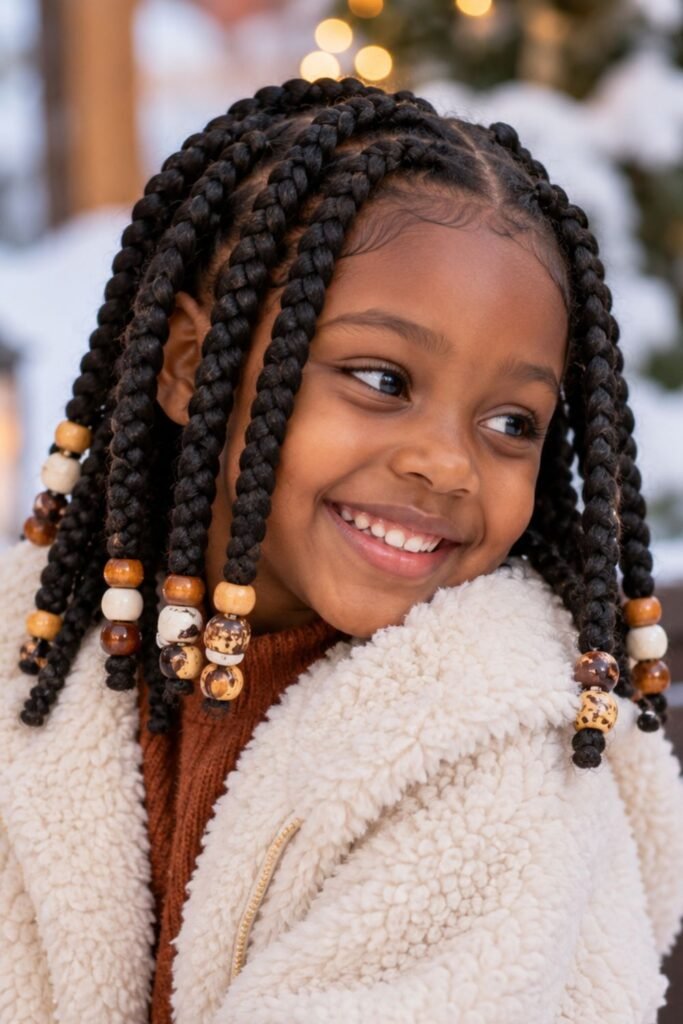
Twin Braided Low Buns
Twin low buns start as two low pigtail braids that are coiled and pinned at the nape. Tucking the ends away protects them from rubbing against wool scarves and collars, a common cause of dry, split ends in winter. Braid each pigtail loosely, wrap it around its base, and secure it with two or three U-shaped pins or a soft scrunchie. Place the buns low enough for a hat to sit above them; a very snug beanie may need the buns moved a little lower. This style holds well on medium to long hair and lasts through a full school day.
Best suited to: Medium to long hair.
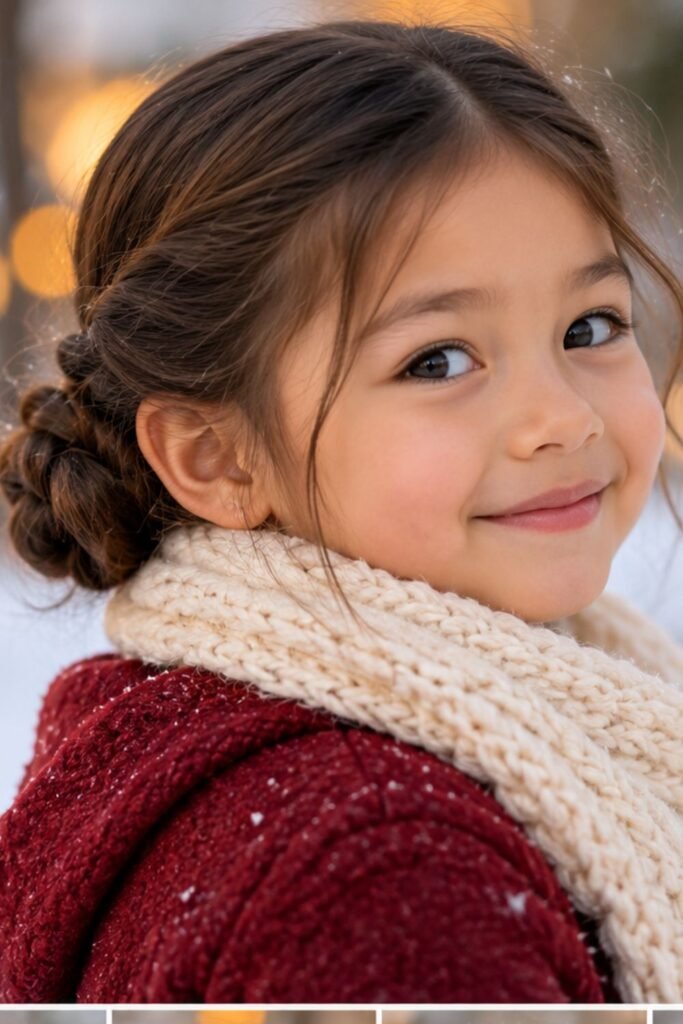
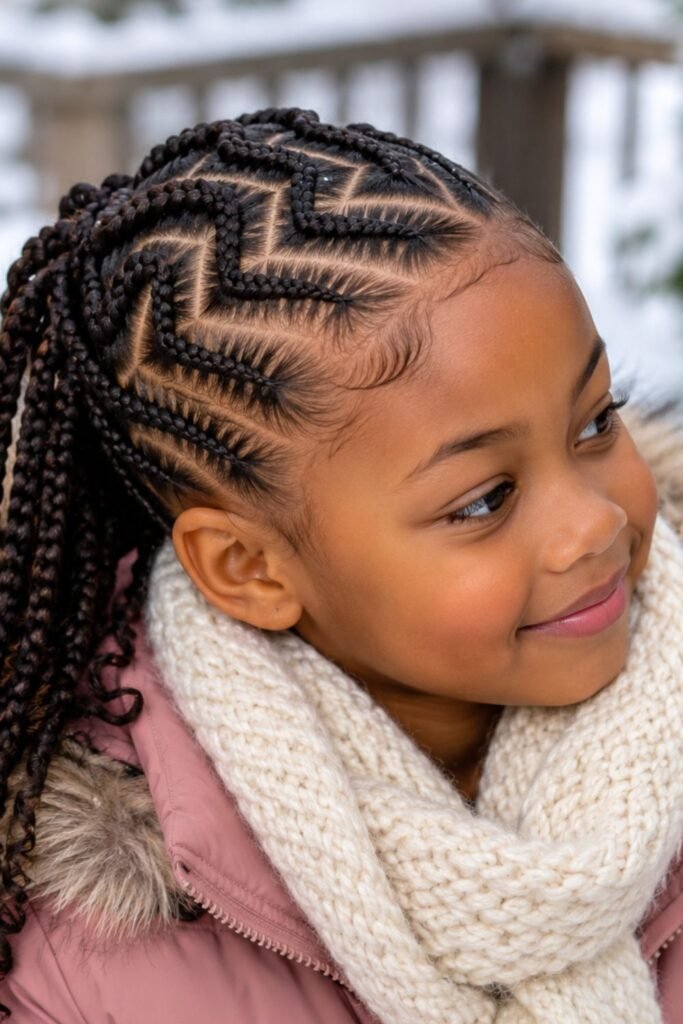
Zigzag-Part Cornrows
Zigzag parts add a playful design to simple cornrows without beads or extra weight. Use the tail of a rattail comb to draw a gentle zigzag from front to back, then braid straight-back rows on either side. Keep the zigzag wide and the rows medium-sized, since tiny sections take longer and pull more. Leave the edges soft instead of slicking them down hard with gel, and allow room around the hairline for a hat band. Children often enjoy choosing the pattern, which makes the styling session easier. Refresh the scalp with a few drops of light oil every few days and take the rows out if they itch or feel sore.
Best suited to: Curly and coily textures.
Braided Ponytail at the Nape
A nape ponytail with a braided tail is a quick choice for mornings when everyone is running late. Brush the hair back gently, gather it at the nape with a fabric-covered elastic, and braid the tail down to the ends. The low position sits under high coat collars and hood linings without creating a bump. Avoid wrapping the elastic too many times, because a tight band at the base causes the most strain. For thick or curly hair, smooth on a little leave-in conditioner before gathering so the hair comes together with less brushing. Shift the ponytail’s position slightly each day so the same spot is not stressed.
Best suited to: Long hair of most textures.
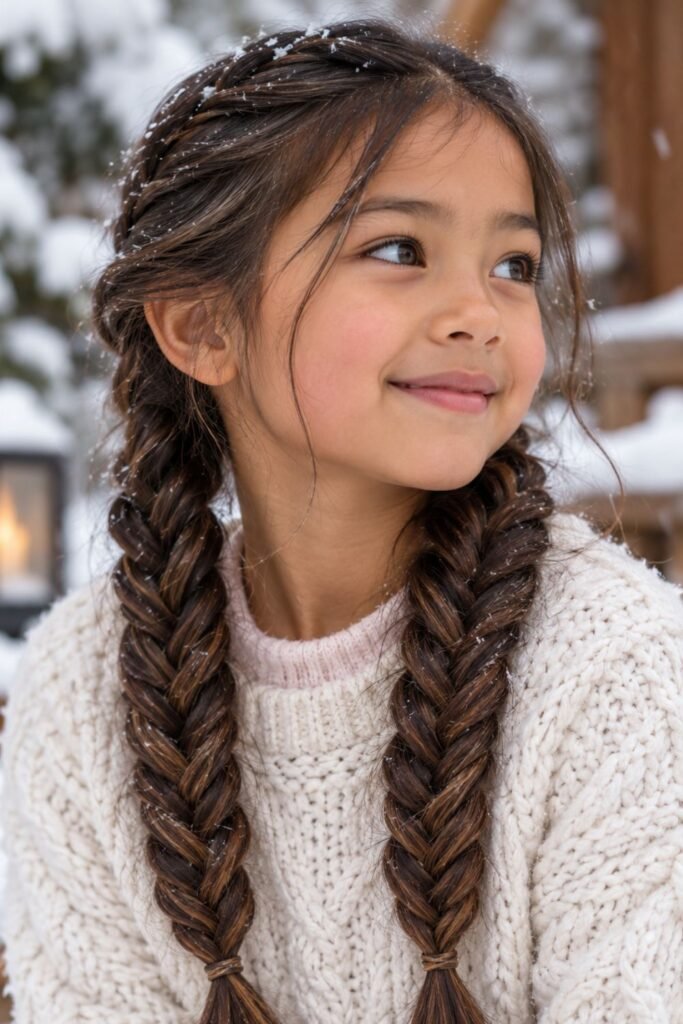
Two Fishtail Braids
Fishtail braids use two sections instead of three, crossing a thin piece from the outside of one section over to the other. The pattern looks intricate and holds well in straight or wavy hair that tends to slip out of standard plaits. Make a center part, gather each side low behind the ear, and work the fishtail down with small, even crosses. Keep the pieces relaxed so the braid has some give when the child turns their head. Once finished, gently tug the outer loops to widen the braid. Fishtails take a little longer to make, so practice them on a weekend before trying one on a busy school morning.
Best suited to: Long straight or wavy hair.
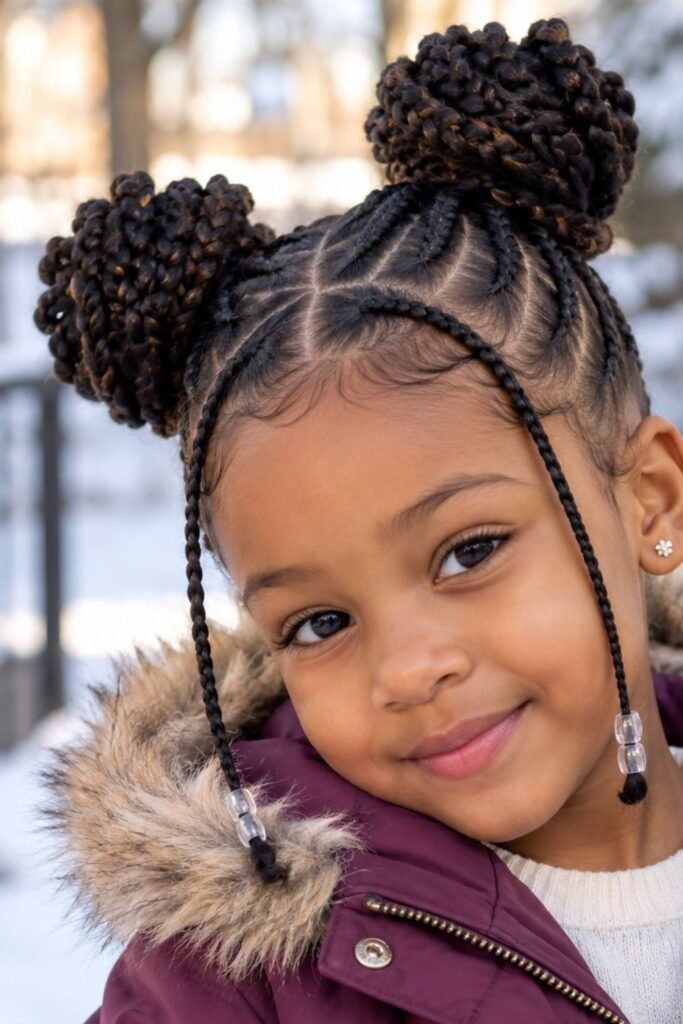
Braided Space Buns
Space buns sit high on either side of the head, so save them for hat-free days such as holiday parties, indoor play dates or family photos. Part the hair down the middle, make two pigtails toward the top, braid each one, and wrap it into a bun secured with a soft scrunchie or pins. Keep the pigtails slightly loose at the base to avoid pulling at the temples. They suit medium-length hair with enough volume to anchor the buns, and small ribbons or clips make them feel festive. Take the buns down before bed. For more playful ideas, look through our Halloween hairstyles for girls.
Best suited to: Medium-length hair with enough volume to anchor buns.
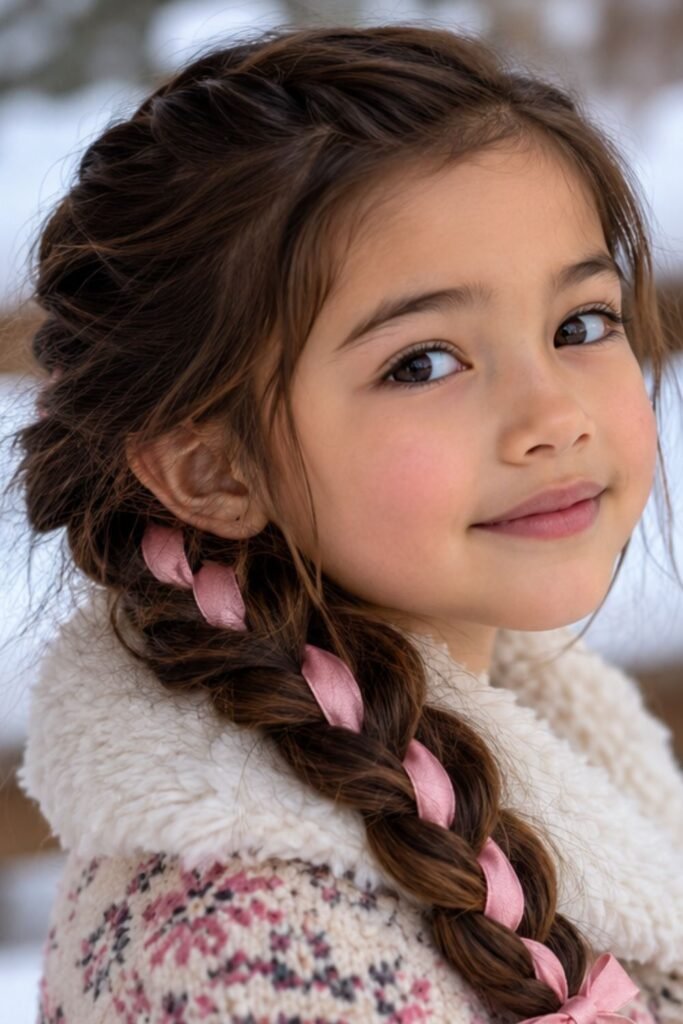
Ribbon-Woven Side Braid
Weaving a ribbon into a side braid adds color for holiday outings without extra tension. Choose a soft, washable satin or grosgrain ribbon about half an inch wide. Tie it around the base of a loose side ponytail, treat the ribbon as one of the three strands, and braid to the ends, knotting the ribbon over the elastic to finish. Starting the ribbon below the roots keeps it from rubbing the scalp. Let the child pick a color to match a sweater or party dress. Remove the ribbon before sleep, sledding or skating so it cannot catch or tangle.
Best suited to: Medium to long hair.
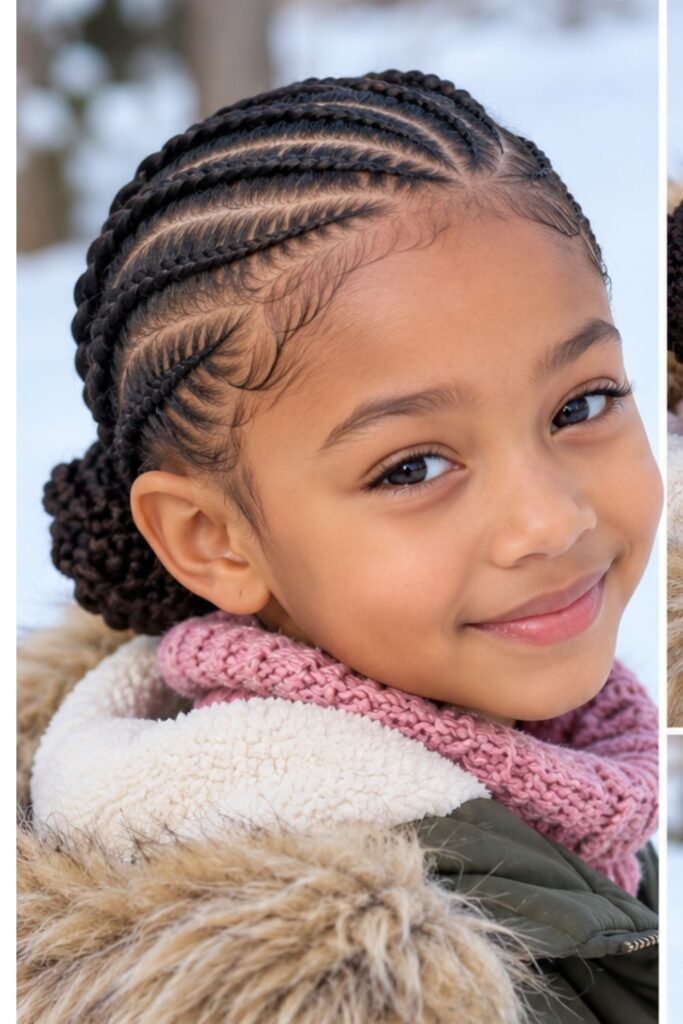
Curved Cornrows Into a Low Bun
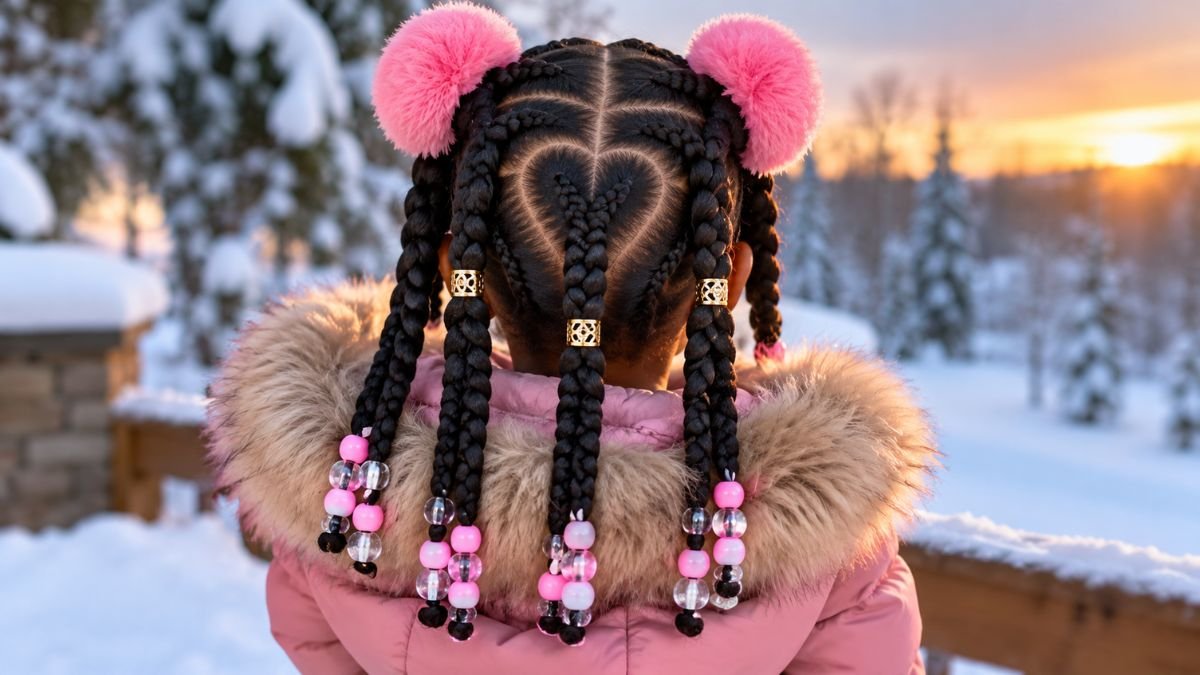
Curved cornrows sweep from the hairline toward the back of the head and meet in a low bun at the nape. The curves give the style its detail, and the low bun sits comfortably under a hood. Map out four to six wide, gently curving parts, braid each row with light tension, and gather the ends into a soft bun secured with a covered elastic or pins. Check the hairline and the area behind the ears, where curved rows tend to pull. Dense curly or coily hair holds this style for several days with a satin scarf at night. Keep the scalp comfortable with a light oil and loosen any row that feels tight.
Best suited to: Dense curly or coily hair.
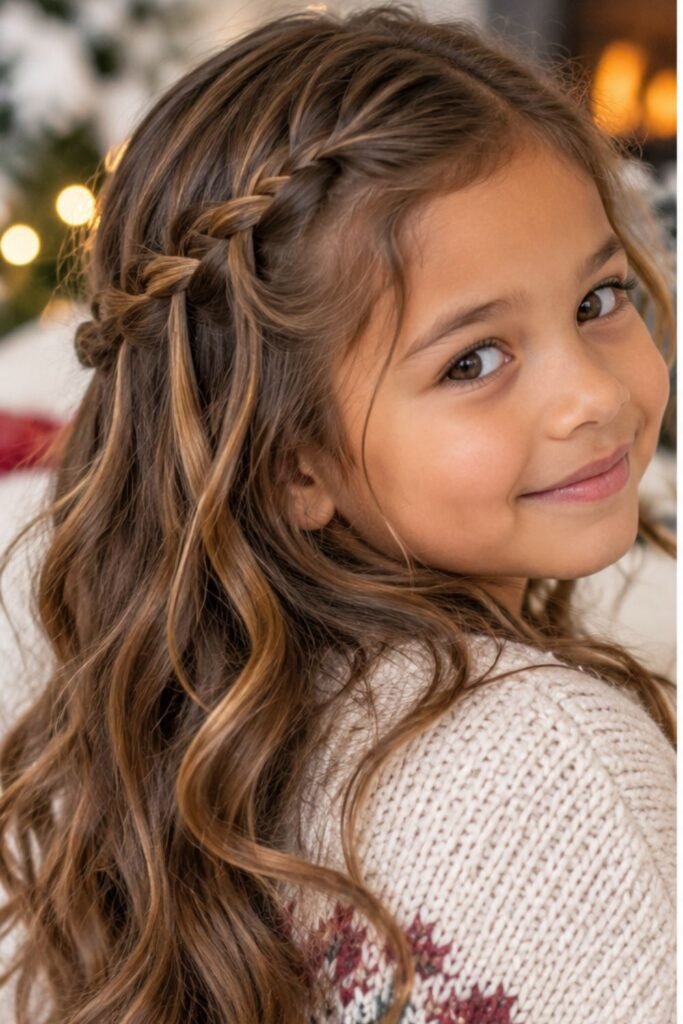
Waterfall Braid With Natural Waves
A waterfall braid runs across the head like a French braid, but each top strand is dropped and replaced, so loose pieces fall through the braid like water. It suits medium to long wavy hair and looks pretty for special occasions with the waves left down. Smooth the lengths with a little leave-in conditioner, braid from one temple to the back of the head, and pin the end under the hair. Because most of the hair stays loose, the scalp carries very little tension. Avoid wool scarves that snag the loose ends, and detangle the waves with fingers or a wide-tooth comb.
Best suited to: Medium to long wavy hair.
Choosing Winter Braids for Kids by Hat, Texture and Schedule
| Situation | Practical braid | Why it helps |
| Fitted winter hat | Low pigtails or loose cornrows | Minimal bulk at crown |
| Curly or coily hair | Medium knotless braids or broad cornrows | Less daily manipulation when installed gently |
| Quick school morning | Single low braid or pigtails | Simple sectioning and removal |
| Holiday event without hat | Braided crown or space buns | Decorative shape without heat |
Gentle Winter Hair Care for Children
Detangle damp hair patiently, starting at the ends. Conditioner is particularly useful for dry and curly textures. Avoid heavy extension hair, tiny tight parts, and accessories that press against the scalp. Remove or redo braids that cause pain, redness, stinging or visible pulling. A soft hat lining may reduce friction, but it cannot make a tight style safe.
For younger children with shorter, finer hair, our guide to toddler hairstyles for girls covers gentle pigtails and mini braids.
For more textured winter styling, browse these winter hairstyles for Black women and adapt the techniques to a child’s hair length and comfort, keeping the tension much lighter than you would for an adult.
Frequently Asked Questions
Which braids fit best under a winter hat?
Low braided pigtails, single low braids and broad, gently installed cornrows usually create less bulk at the crown than high buns or raised ponytails.
Are tight braids better for keeping hair neat?
No. Tight braids can cause discomfort and repeated tension may contribute to hair loss. Neatness should never require pain.
Can children with short hair wear braids?
Yes, small side braids or a braided headband can work once there is enough length to hold a comfortable plait. Avoid pulling short edges into tight sections.
Are knotless braids appropriate for children?
They can be, when the sections are not too small and any added hair is light. A child should be able to move their scalp comfortably throughout installation.
How can I stop braids catching on winter scarves?
Choose low braids, tuck ends into a low bun if comfortable, or use a smooth scarf fabric. Check for friction at the nape.
Should children sleep in braids?
Loose braids may be comfortable overnight for some children, but remove tight elastics and bulky ornaments. A satin pillowcase can help limit friction.
What if a braid causes scalp pain?
Loosen or remove it promptly. Persistent tenderness, bumps, or hairline thinning should be assessed by a healthcare professional.
How often should braids be changed?
There is no universal schedule for every child. Refresh simple daily braids as needed, monitor scalp comfort and cleanliness, and give hair breaks from tension.
Making Winter Braids for Kids Work in Real Life
The best winter braids for kids stay comfortable after the coat is zipped and the hat is on. Start with the simplest style that suits the child’s texture and schedule, keep the roots relaxed, and save elaborate braiding for days when there is time to do it gently. A hairstyle the child enjoys wearing and can take down without a struggle is always the right choice.
Sources for the scalp safety guidance: American Academy of Dermatology; Society for Pediatric Dermatology. These references support the comfort advice in this guide and do not suggest that any particular braid is medically protective.