
The best natural hairstyles for Black kids do two jobs at the same time: they look cute, and they protect the hair from unnecessary manipulation. That usually means styles that keep the ends tucked or organized, reduce daily combing, and stay comfortable enough for a child to wear to school, play, and family outings.
Comfort matters as much as style. A hairstyle can be protective in theory, but if it pulls too hard at the scalp, feels painful, or puts repeated stress on the hairline, it stops being a healthy option. For children, the strongest protective styles are usually the ones that balance neatness with softness.
Important care note: The American Academy of Dermatology warns that children can develop traction alopecia from repeated tight hairstyles such as braids, cornrows, buns, and ponytails. If a style hurts, feels too tight, or leaves bumps or irritation, it should be loosened or removed. See AAD guidance on traction from hairstyles
Quick Guide: Match the Style to the Child’s Hair and Routine
| If You Need | Strong Direction | Why It Works | Watch For |
|---|---|---|---|
| Fast morning styling | Double puffs or mini puffs | Quick to create and easy to refresh | Do not pull the elastics too tightly |
| A longer-lasting protective style | Mini twists or cornrow-front styles | Reduces daily manipulation | Avoid very tight edges or heavy add-ons |
| A dressier event style | Crown braid into a puff or braided ponytail | Looks polished while staying kid-friendly | Keep accessories lightweight |
| Low-tension everyday wear | Wash-and-go with a headband or flat twists into a puff | Keeps natural texture visible and comfortable | Moisture still needs refreshing |
| A style for dense coily hair | Chunky twist bob or Bantu knots | Keeps hair organized without constant detangling | Do not keep the style in too long without maintenance |
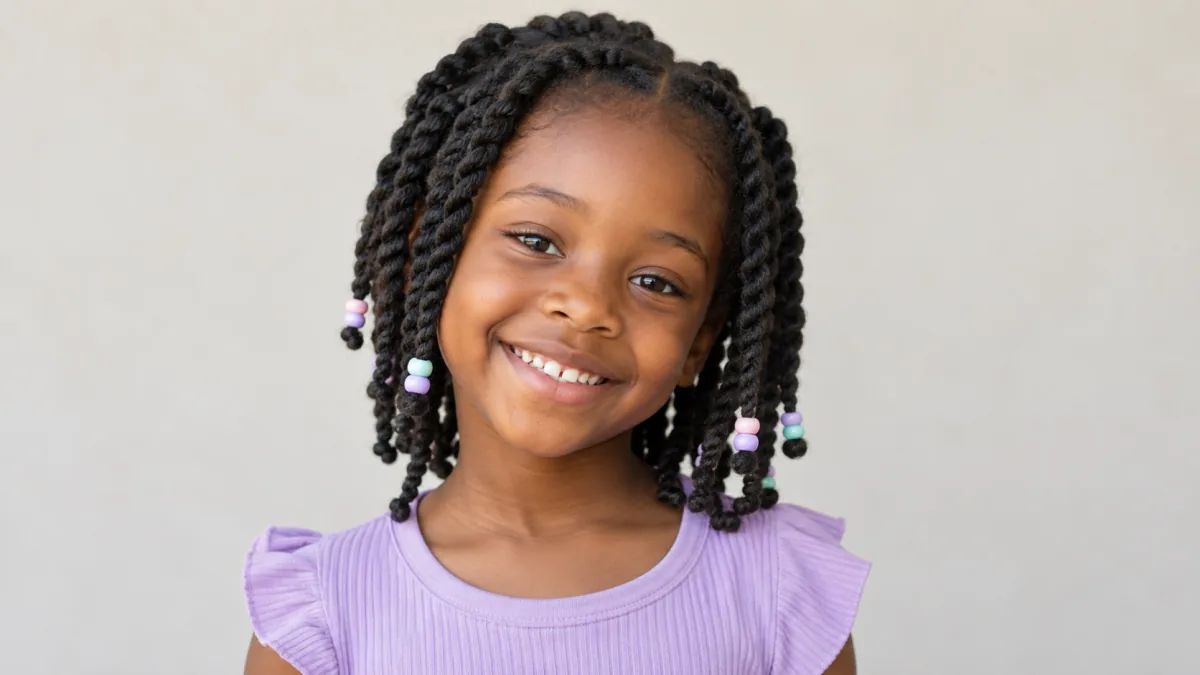
1. Medium Two-Strand Twists With Beads
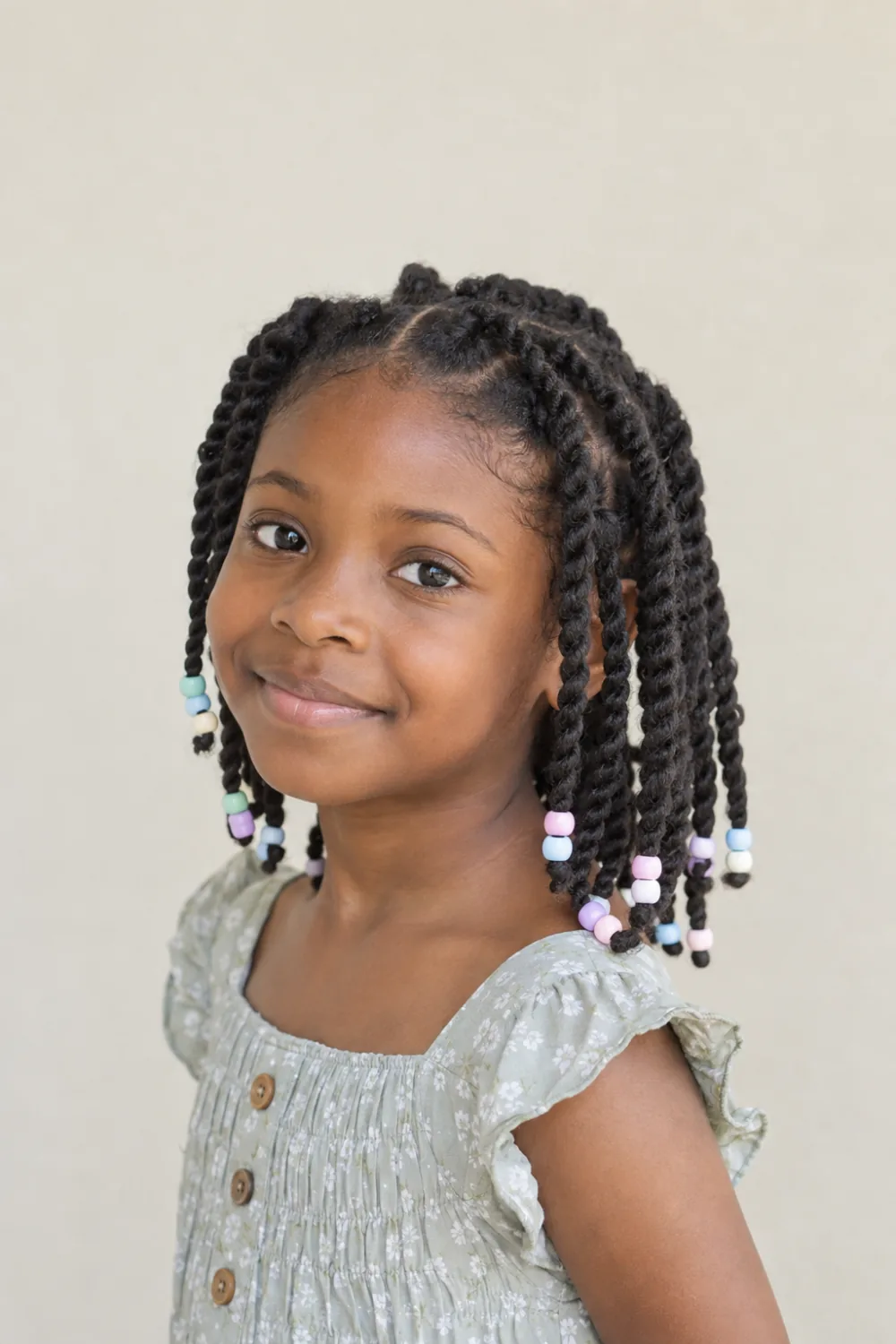
Two-strand twists are one of the most dependable protective styles for kids because they reduce daily manipulation while staying flexible and comfortable. A few beads add movement and personality without turning the style heavy.
Best for: Kids with coily and curly textures who need an everyday style for school and play.
2. Flat Twists Into a Puff
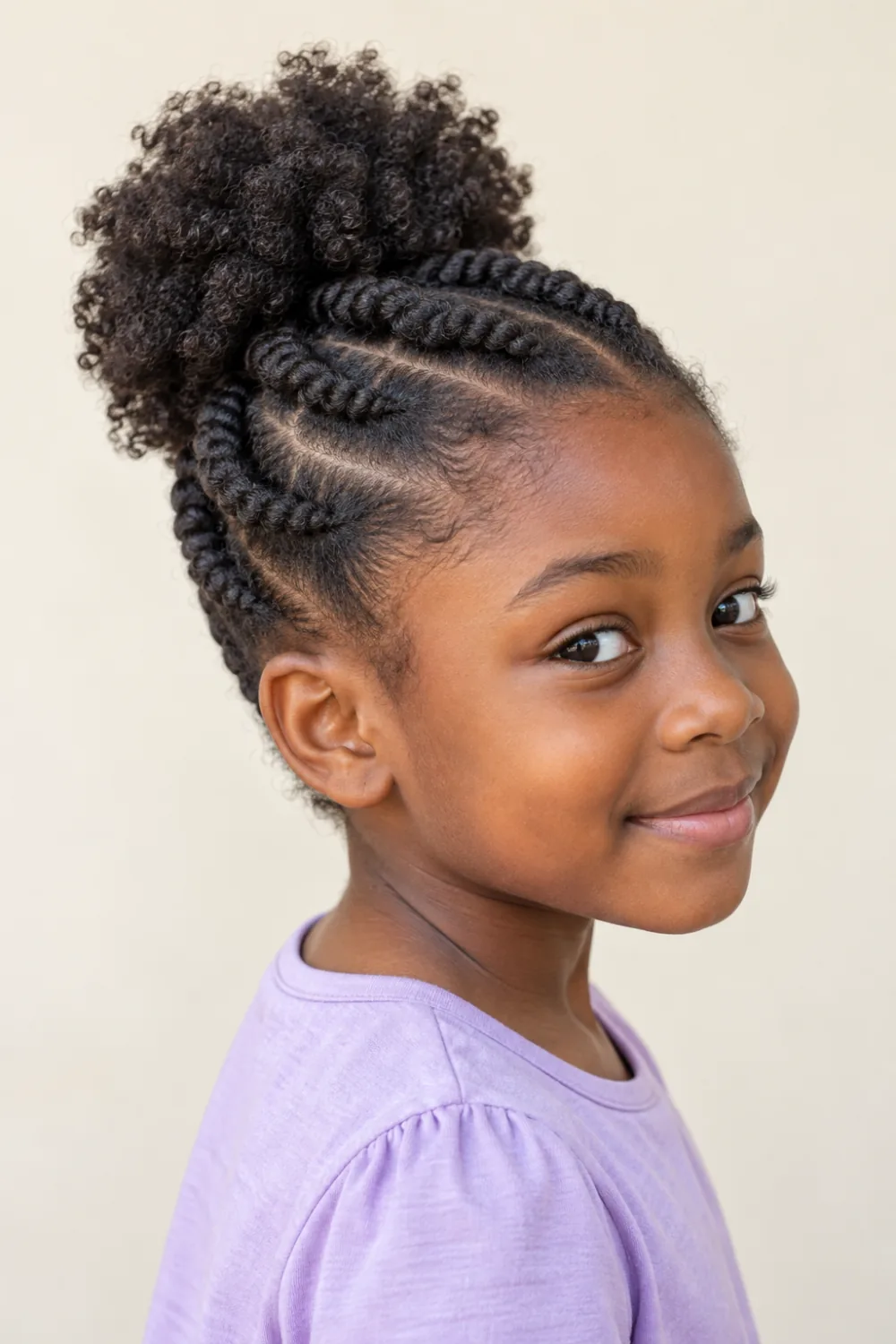
This style protects the front and sides while leaving the puff playful and easy to refresh. It also works well when you want something polished but not too time-consuming.
Best for: Kids who like their hair off the face but still want volume and softness.
3. Double Puff Sections
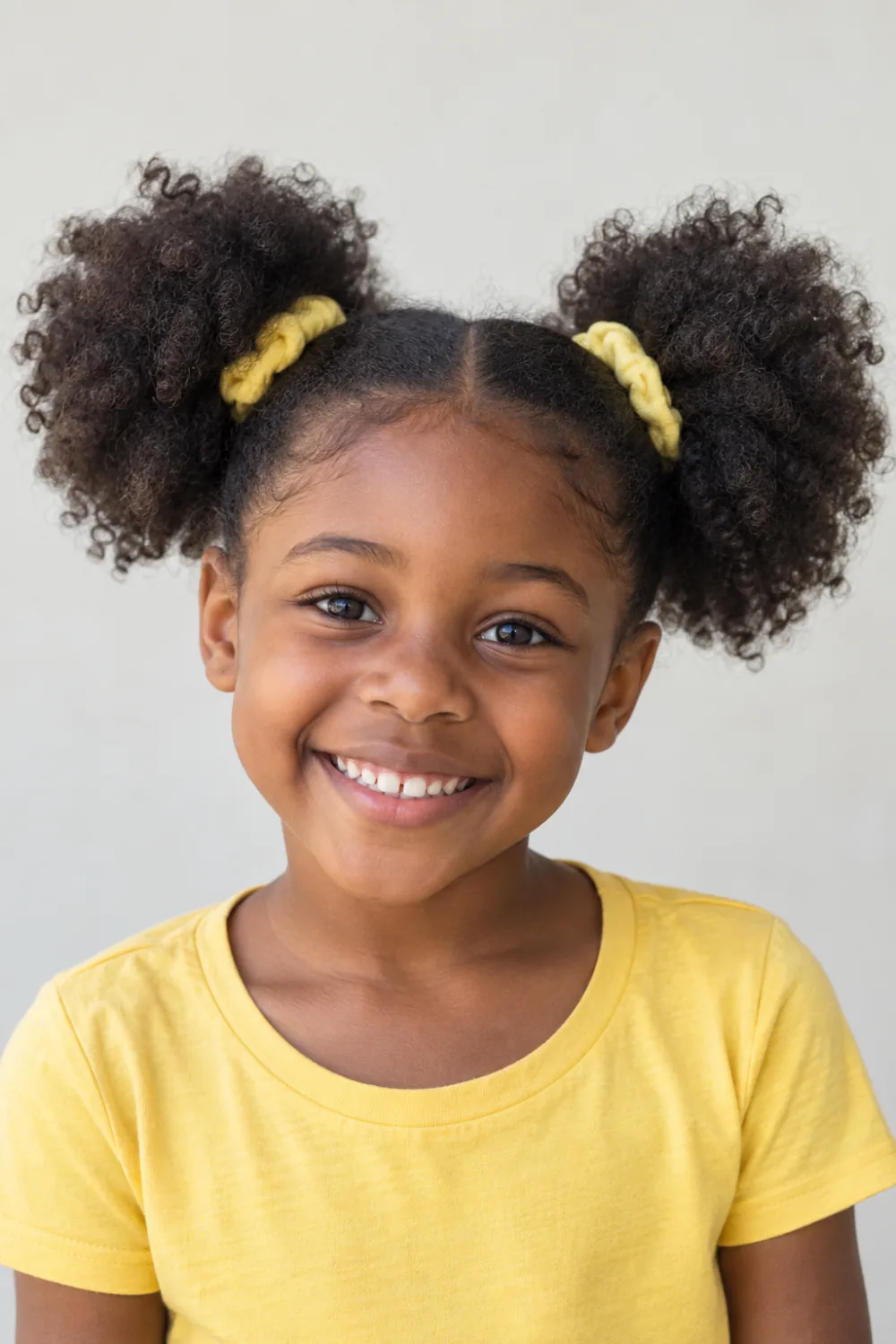
Double puffs are fast, cute, and toddler-friendly, but they also work for older kids. The style keeps natural texture on display while being easy to redo.
Best for: Short-to-medium natural hair and younger children who need quick styling.
4. Cornrow Front With Twisted Back
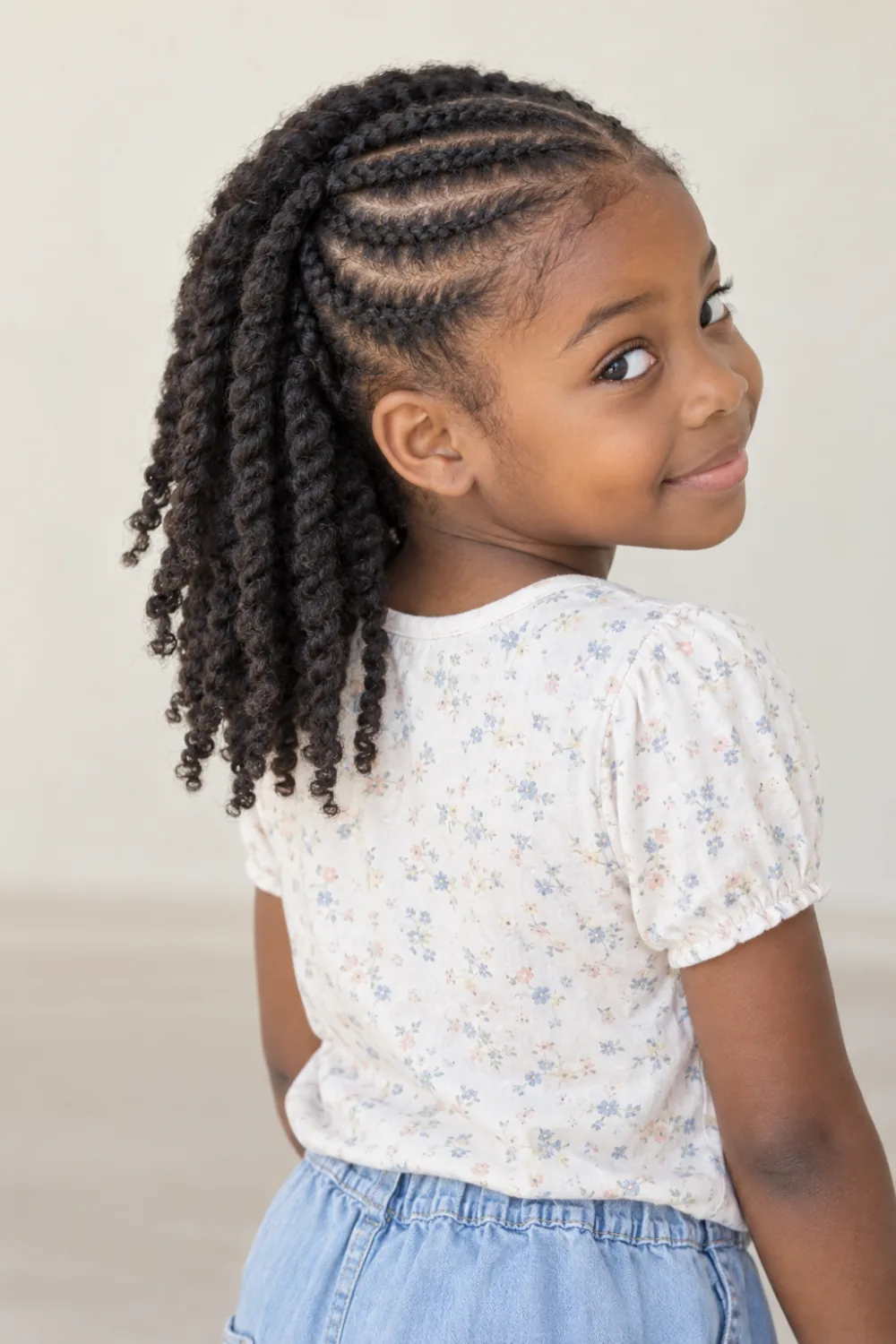
This is a nice bridge between a fully braided look and a softer twist style. The front stays neat longer, while the back remains lighter and easier on the scalp.
Best for: Families who want a longer-lasting protective style without braiding the entire head.
5. Mini Puffs All Over
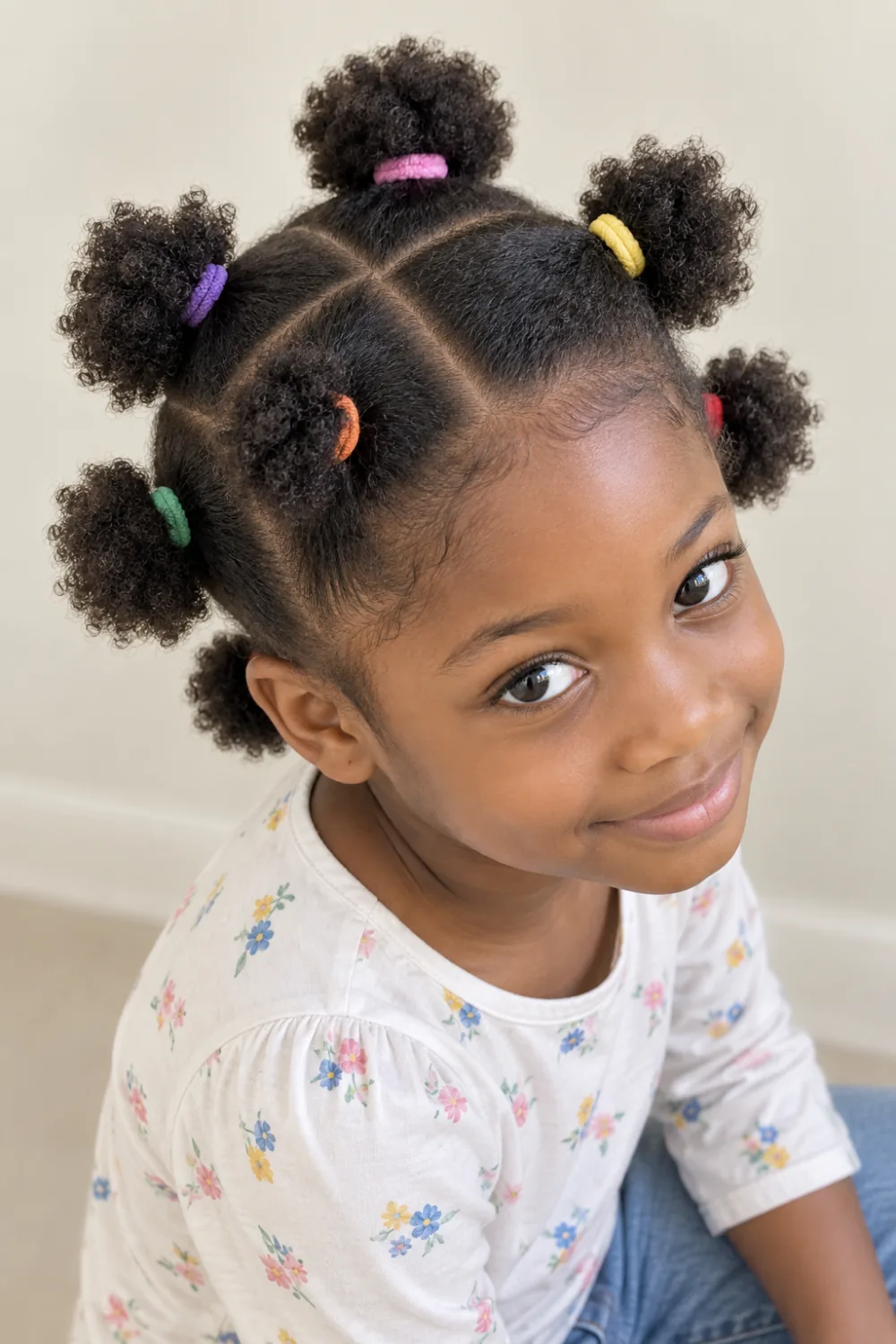
Mini puffs are playful and practical. They keep hair organized with less daily manipulation, and they are especially useful for active kids. The ends remain exposed, so this is a low-manipulation option rather than a fully tucked protective style.
Best for: Dense coily hair and children who enjoy colorful accessories.
6. Bantu Knots for Kids
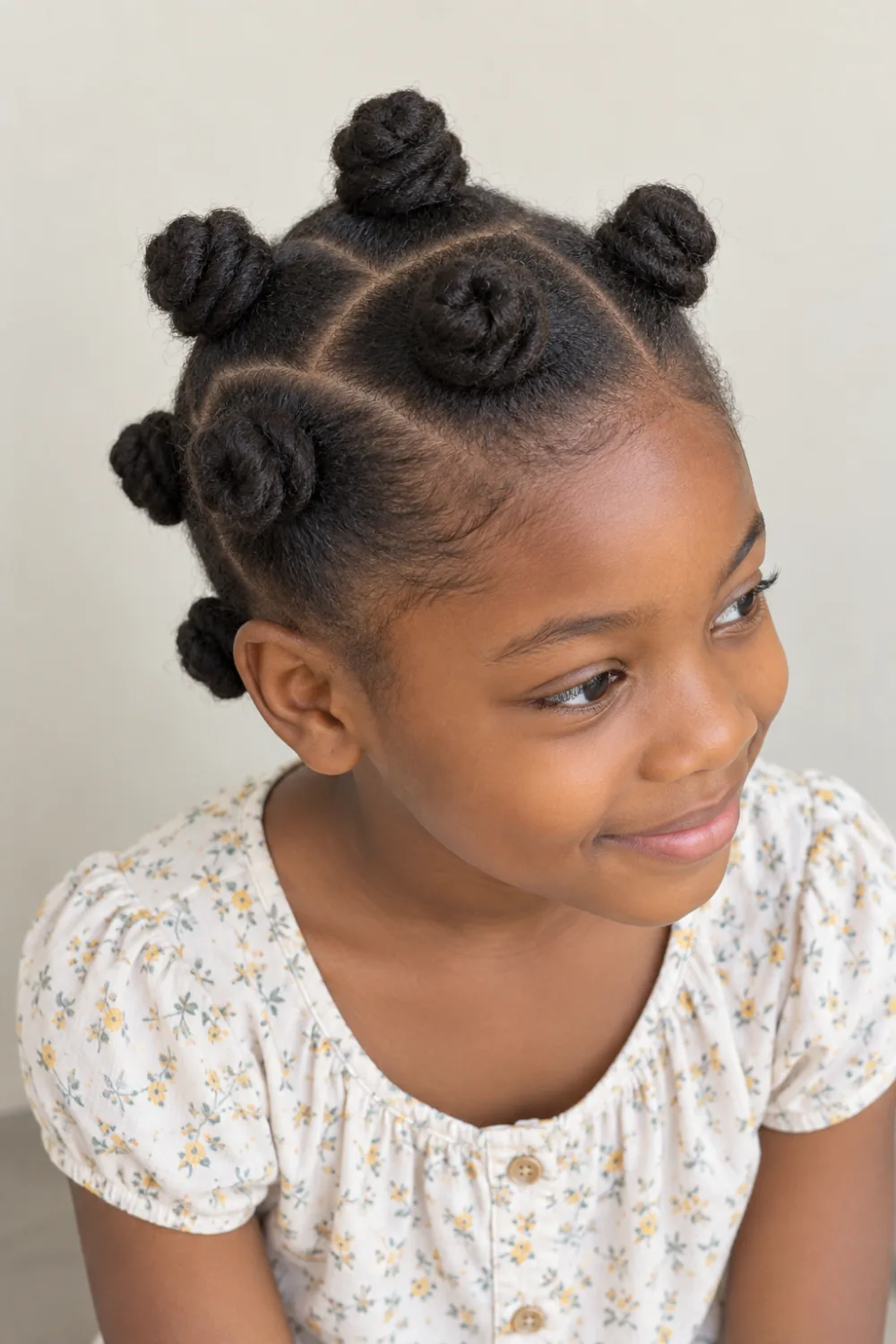
Bantu knots are protective, compact, and great for special occasions or a neat weekly style. They can also double as a set-up for a knot-out later.
Best for: Kids with coily textures and families wanting a tidy, low-manipulation style.
7. Chunky Twist Bob
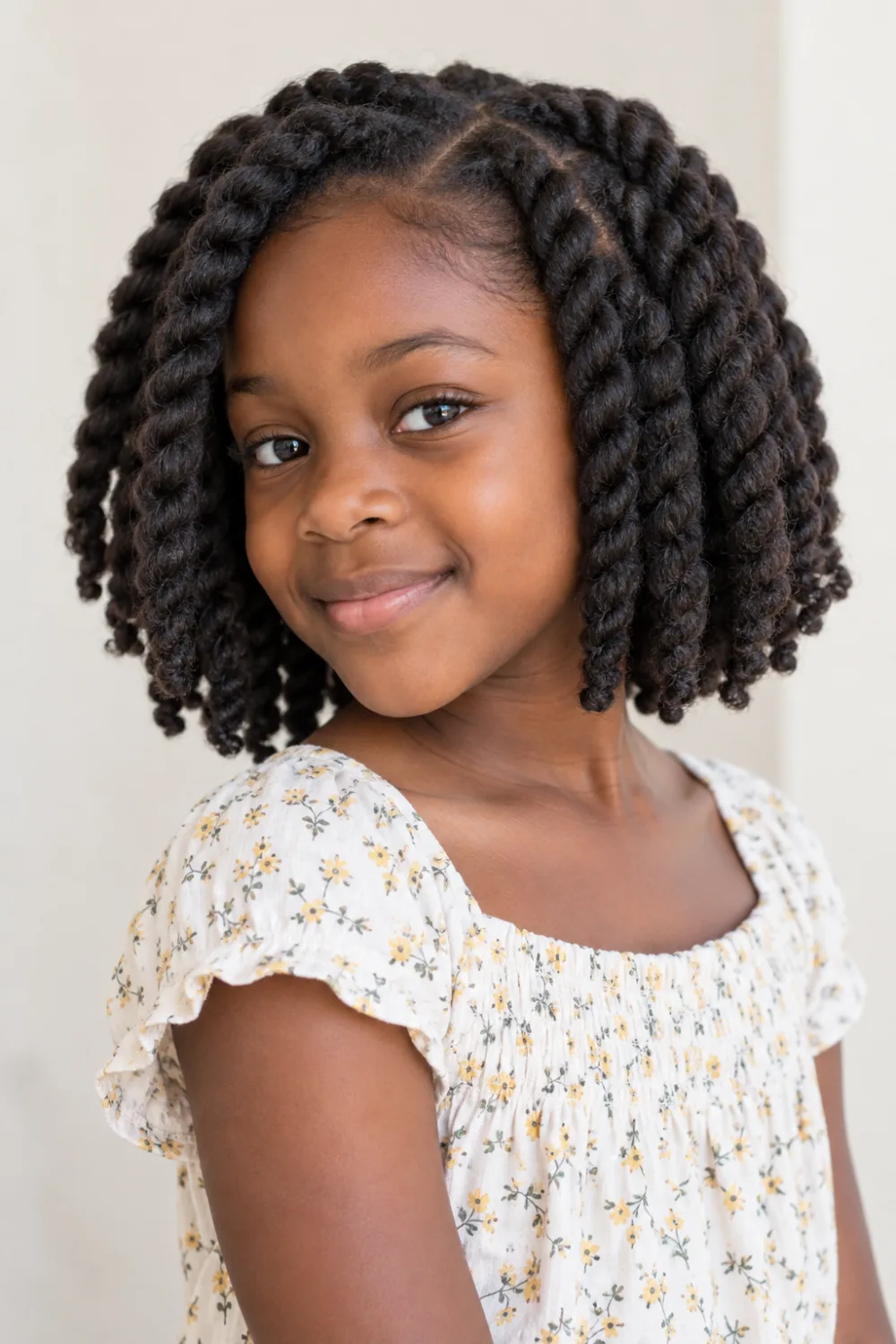
A chunky twist bob looks full and cute while cutting down styling time compared with very small twists. The shorter length also keeps the style lighter for children.
Best for: Kids who need a protective style that feels manageable and not too heavy.
8. Side-Part Flat Twists
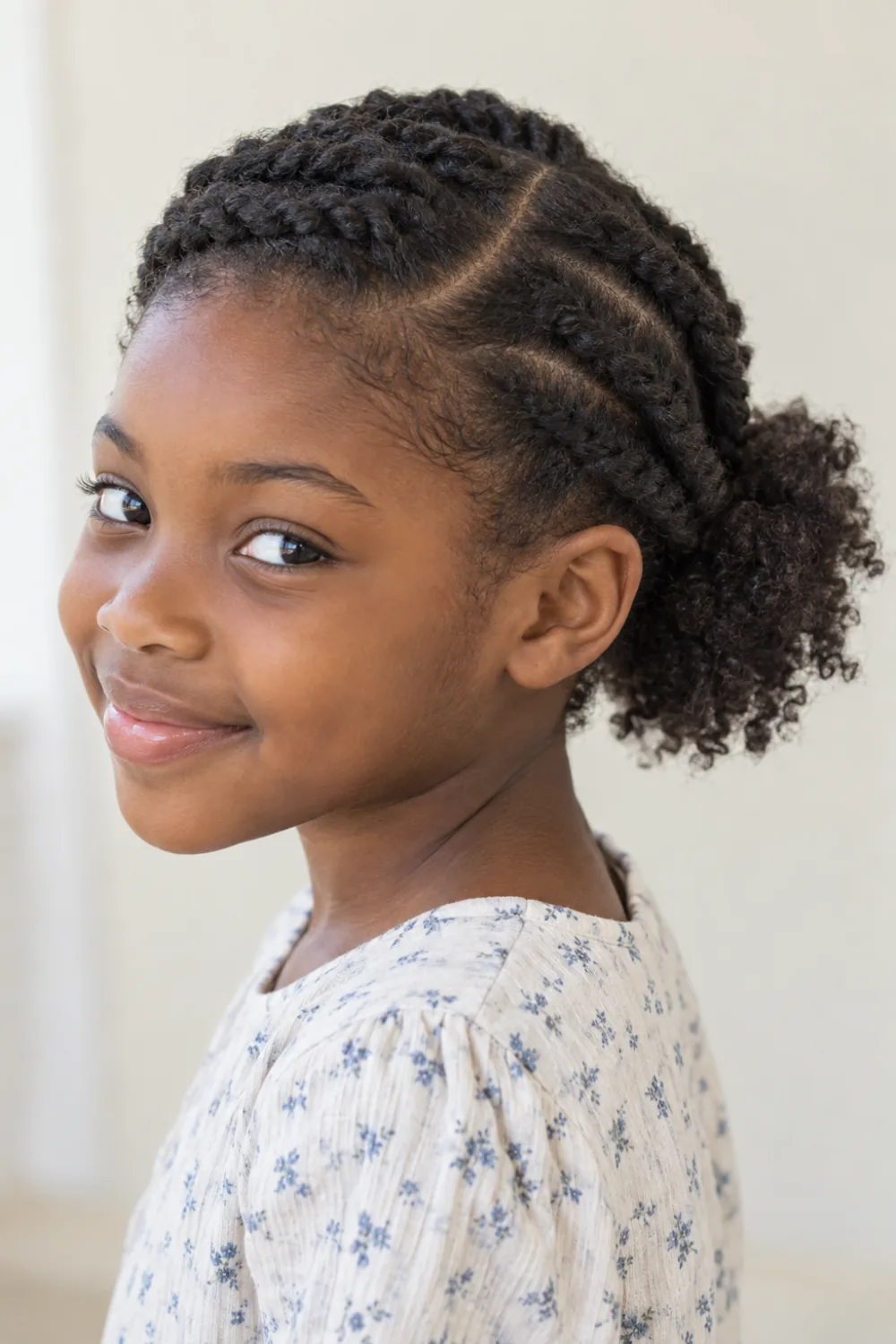
The side part adds shape and variety to a simple protective style. It feels dressed-up without requiring added hair or complicated detailing.
Best for: School, family events, and children who like styles with a clear parting pattern.
9. Wash-and-Go With a Headband
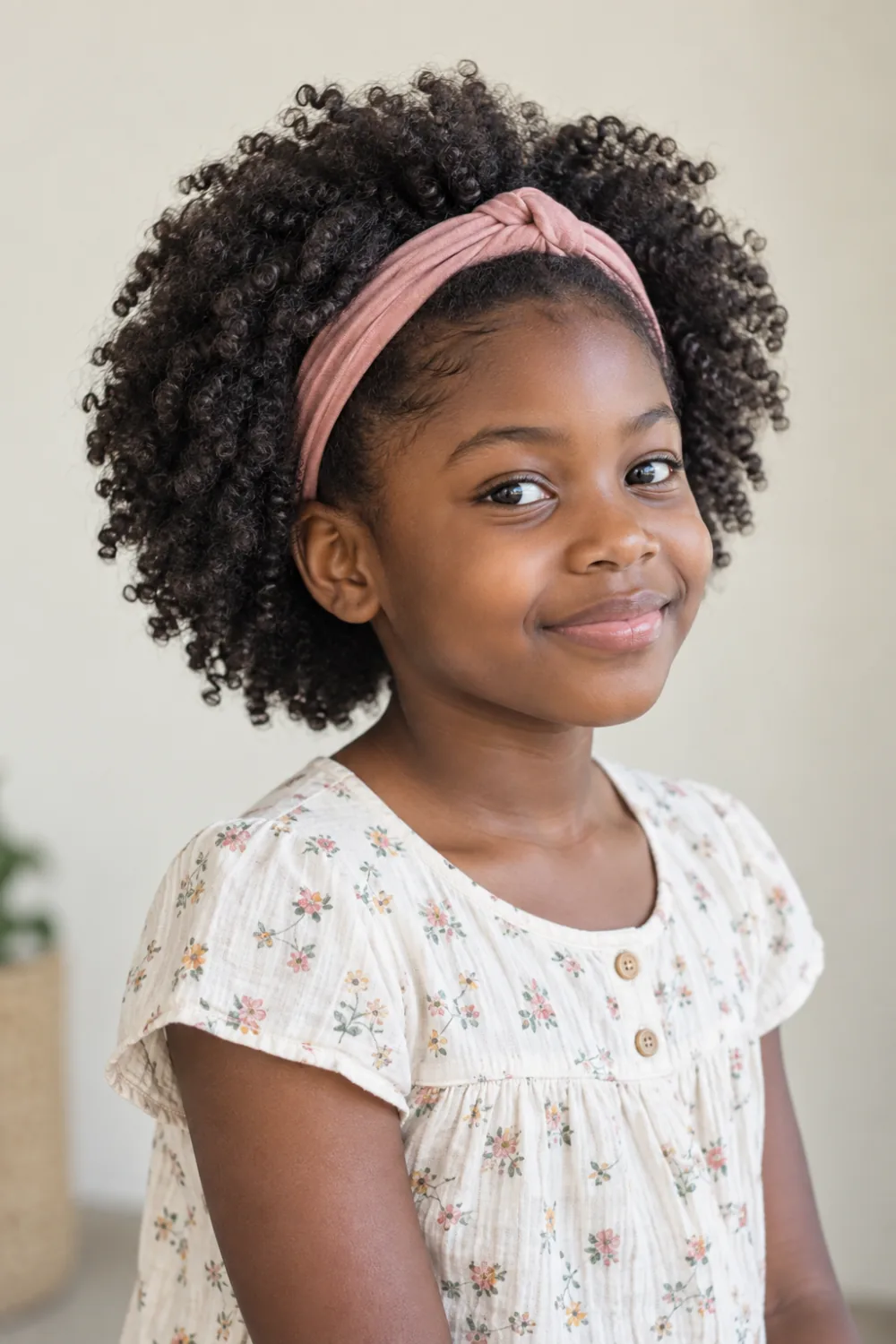
A wash-and-go with a gentle headband is a low-manipulation option between protective styles. It leaves the ends exposed, so focus on moisture, gentle detangling, softness, and minimal tension.
Best for: Children with shorter curls or families who prefer looser styling between longer protective sets.
10. Braided Ponytail With Beads
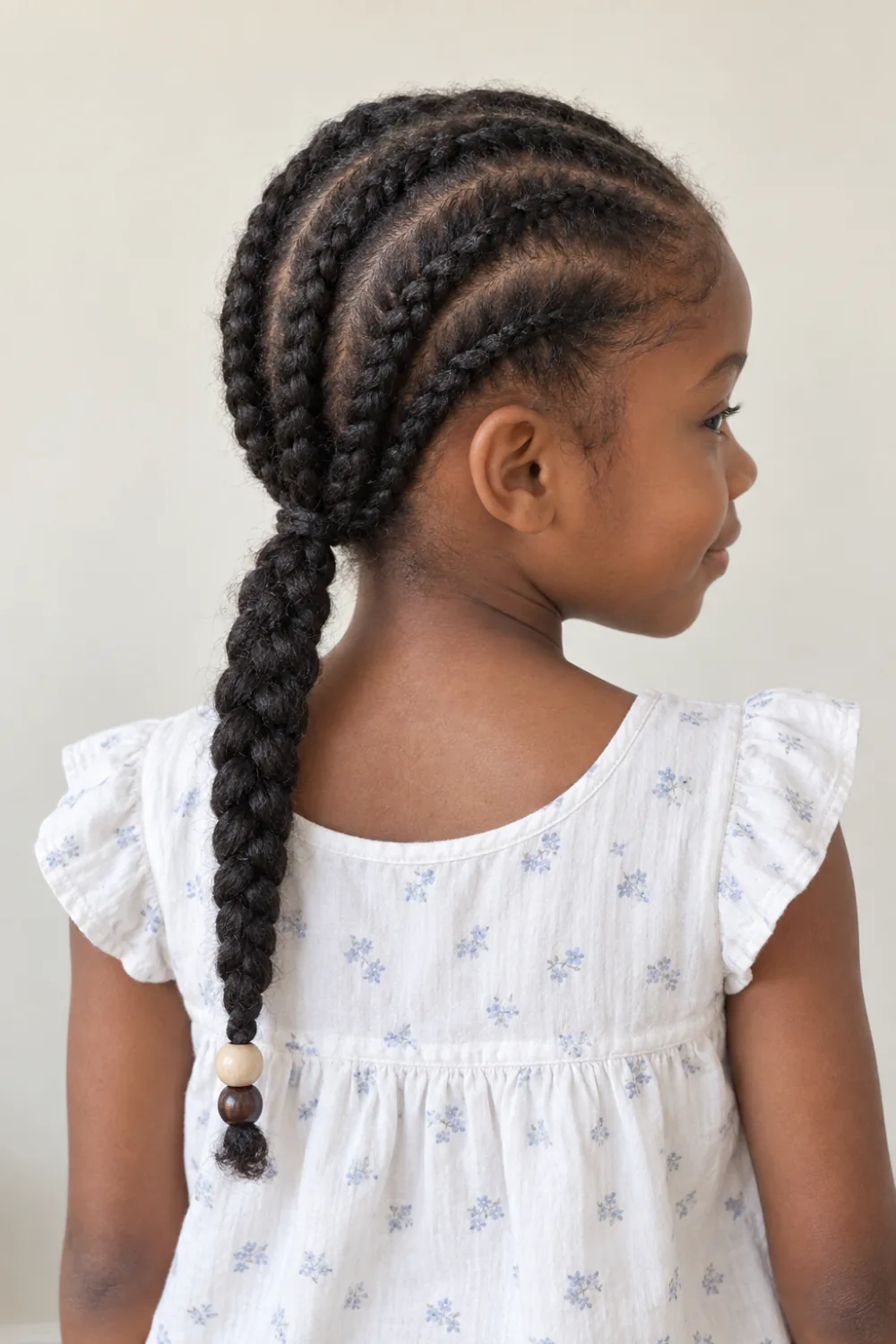
This style gives a neat shape without the tension of a very high ponytail. It is protective and easy to personalize while remaining child-appropriate.
Best for: Kids who want a slightly dressier look for school photos, birthdays, or church.
11. Mini Twists on Natural Hair
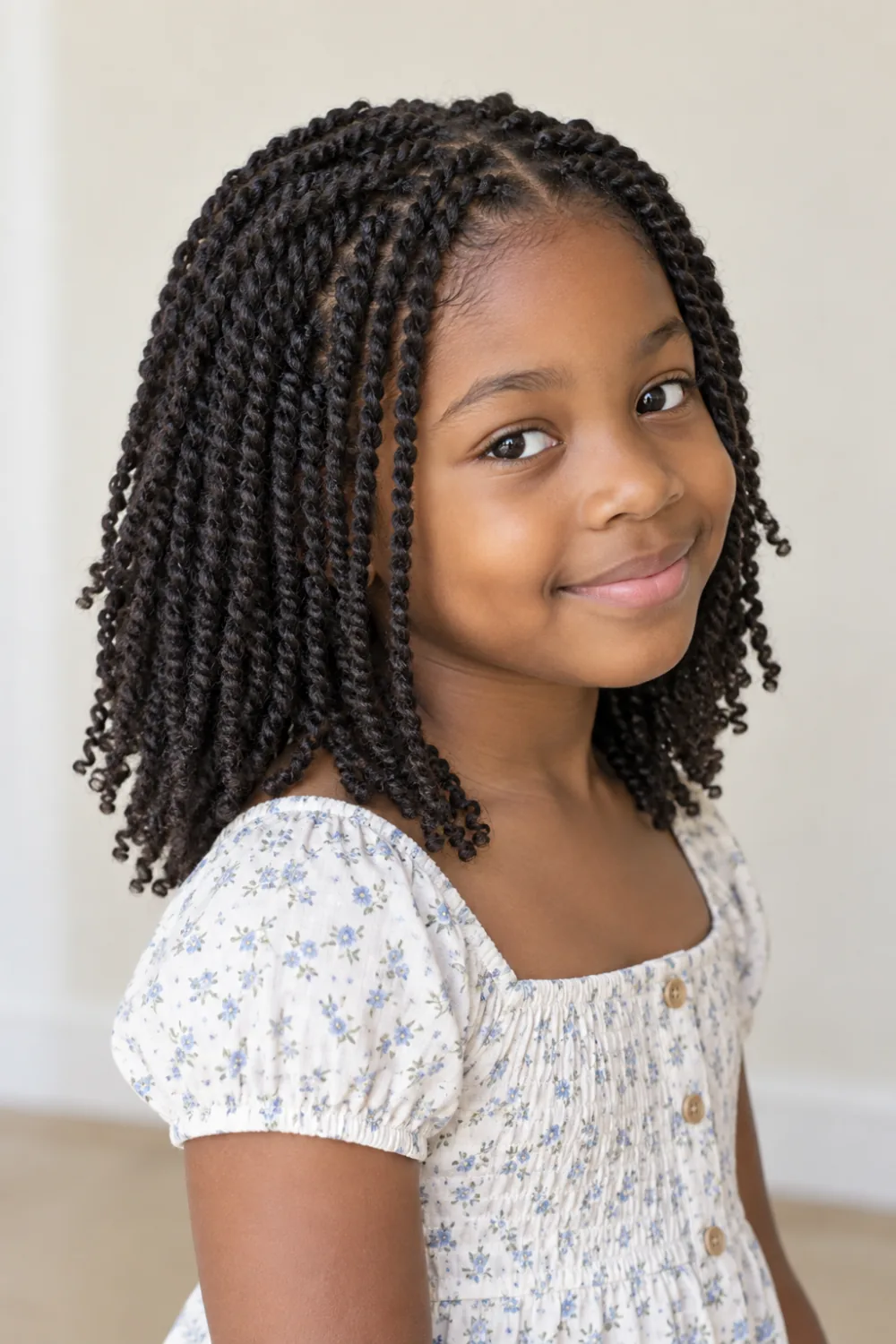
Mini twists last well, allow scalp access, and can be worn loose, pinned, or gathered into puffs later. They are one of the most versatile kid-friendly protective styles.
Best for: Children with medium-to-long natural hair and families who want versatility.
12. Crown Braid Into a Puff
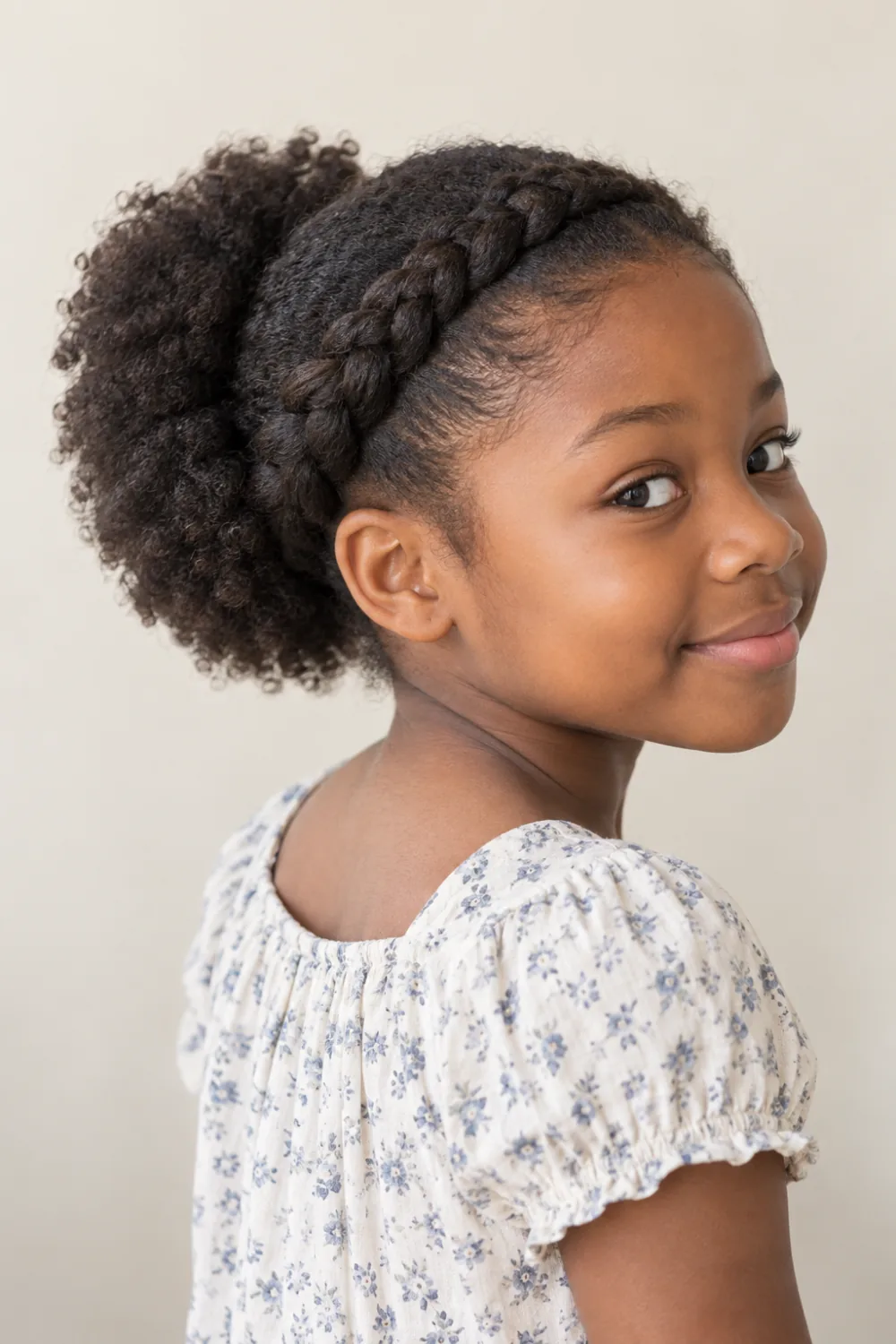
This creates a sweet, structured shape while still leaving some texture visible. It protects the perimeter and works well for events without feeling too formal.
Best for: Special occasions and kids who like polished but soft hairstyles.
13. Kid-Friendly Fulani-Inspired Braids
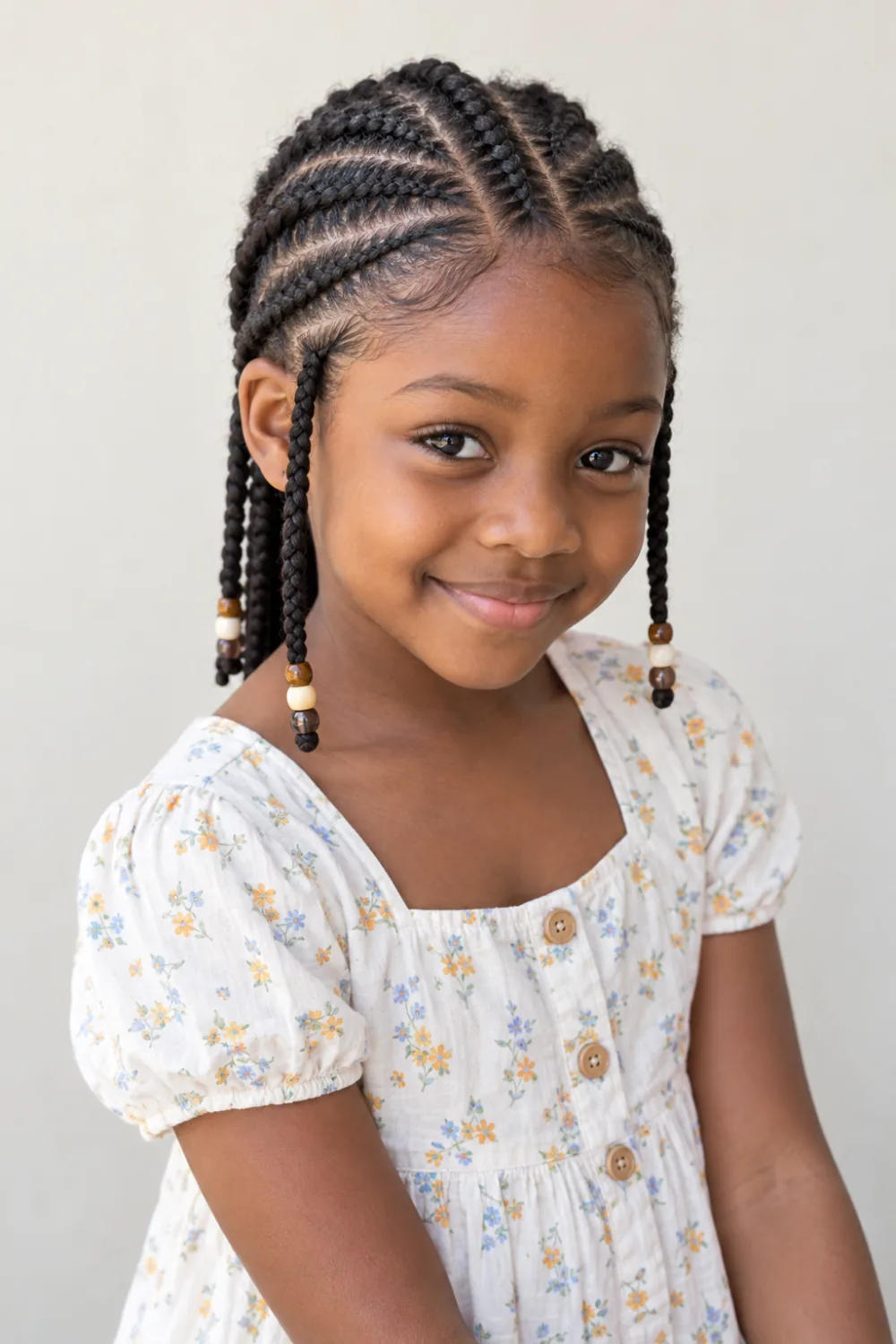
This offers a stylish cultural braid look while remaining practical for a child. The key is to keep the pattern lighter and not overload it with weight or very small tight braids.
Best for: Families looking for a distinctive braided style that still feels wearable for kids.
14. Twist-Out Puff
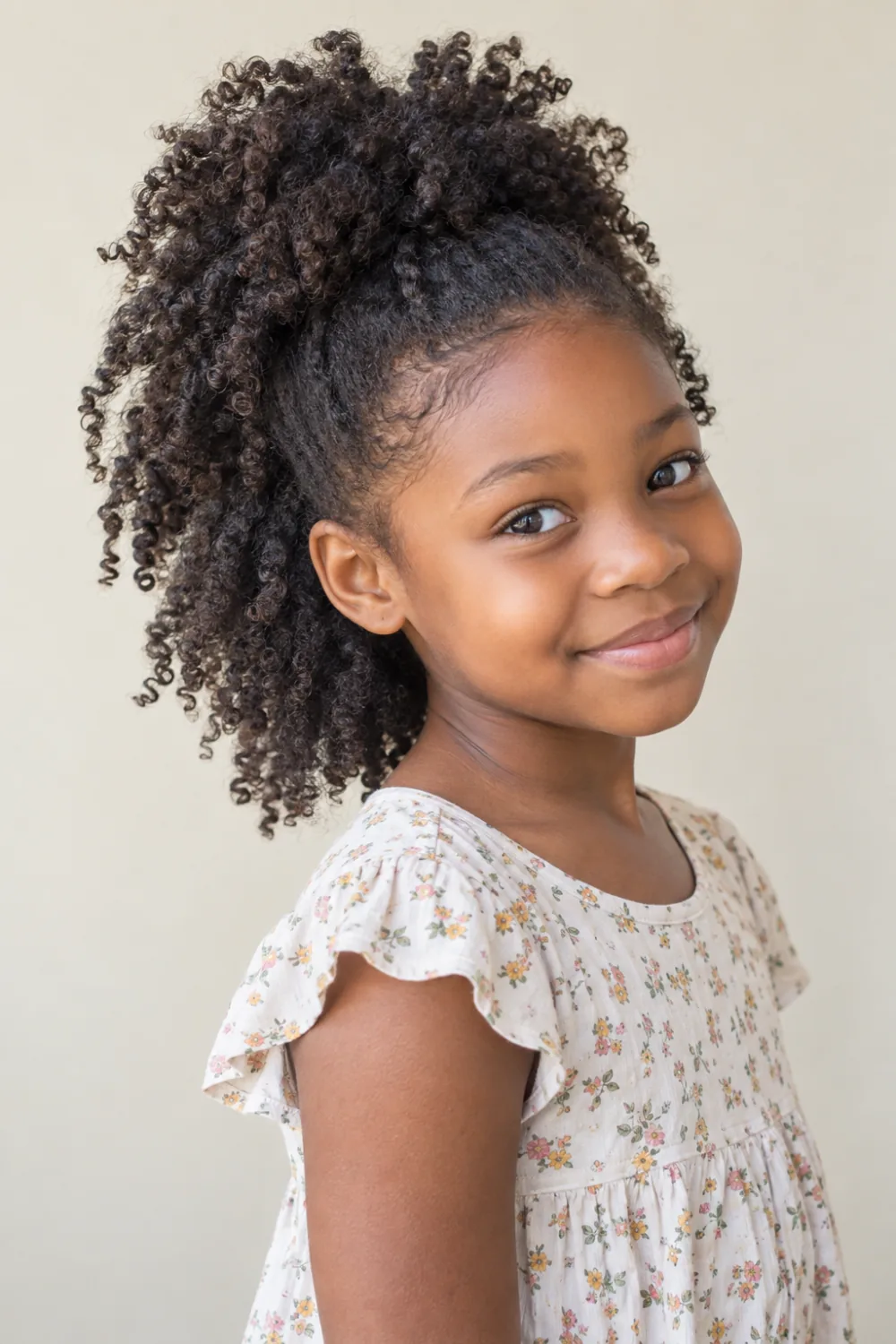
Opening older twists into a twist-out gives the child a second hairstyle without starting from scratch. A loose puff keeps it practical, although the exposed ends mean this is a low-manipulation look rather than a fully protective one.
Best for: Kids whose twists are nearing the end of their wear time but still look healthy.
15. Low Braided Buns
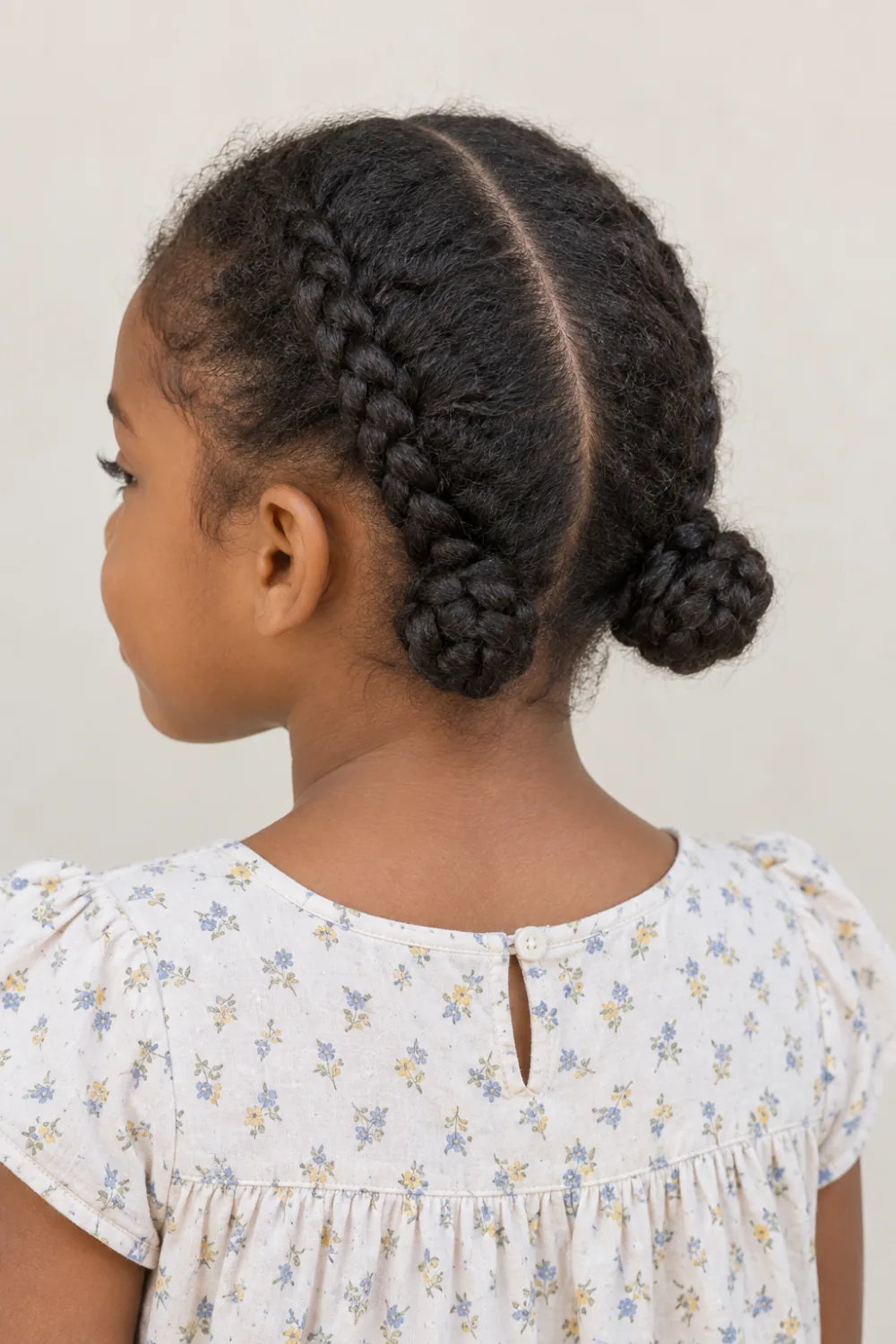
Low placement can feel comfortable, but tension depends on how loosely the braids and buns are secured. Keep the roots relaxed and the buns light for a neat, tucked-away style.
Best for: School days, dressier events, and children who need a tucked-away style.
What Makes a Kid’s Protective Style Actually Protective?
A true protective style lowers friction and manipulation while helping the hair stay moisturized. It should not pinch the scalp, strain the hairline, or rely on constant redoing. For children, lighter styles are usually better than very long, heavy, or extremely detailed styles.
That does not mean the hairstyle has to be plain. Beads, bows, barrettes, and creative parts can all work beautifully as long as the base style remains gentle. Healthy styling is about tension and weight, not about avoiding personality.
How Long Should Kids Wear Protective Styles?
There is no single perfect schedule for every child, because hair density, scalp sensitivity, activity level, and product buildup all matter. In general, the style should come out or be refreshed when the scalp becomes irritated, the roots begin matting, the parts lose all structure, or the style no longer looks or feels comfortable.
The AAD specifically recommends loosening braids around the hairline and avoiding frequent tight styling. For children, it also helps to rotate styles so the same areas are not under repeated tension week after week.
Useful Redounds Reads
For braid-focused inspiration, see Redounds’ kids cornrow hairstyles guide. For holiday-specific looks, Christmas hairstyles for baby girls offers more accessory-led styles.
Frequently Asked Questions
What is the best protective hairstyle for Black kids?
There is no single best style for every child. Mini twists, flat twists into puffs, mini puffs, gentle cornrow combinations, and chunky twist styles are all strong choices when they are comfortable and not too tight.
How do I know if a hairstyle is too tight?
If the child says it hurts, if the scalp looks red or bumpy, or if the hairline appears strained, the style is too tight. Pain is a clear sign that the hairstyle needs to be loosened or removed.
Are beads okay for kids’ protective styles?
Choose a few lightweight accessories that do not pull on the hair. Small or detachable beads can be a choking risk for young children; skip them when a child may put them in their mouth. Accessories should decorate the style without adding heavy tension.
How often should I moisturize natural hair in a protective style?
That depends on the child’s hair and products, but the hair should not be left dry. Focus on a gentle moisture routine for the scalp and lengths without soaking the style so heavily that buildup becomes a problem.
Can Black kids wear their natural hair loose and still keep it healthy?
Yes. A wash-and-go, puff, or loose twist-out can still be healthy if the hair is moisturized and handled gently. Protective styling is useful, but it does not have to be the only option all the time.
Do protective styles need extensions to work?
No. Many excellent protective styles for kids use only the child’s natural hair. In fact, lighter natural styles are often more comfortable and easier on the scalp than styles built with a lot of added hair.
Which protective styles are fastest for busy school mornings?
Double puffs, mini puffs, flat twists into a puff, and refreshed mini twists are among the easiest and quickest options for school-day routines.
Can boys wear these styles too?
Many of them, yes. Twists, braids, puffs, wash-and-go styles, and low-tension protective looks can work for any child depending on hair length, texture, and family preference.
The Practical Takeaway
Cute and protective natural hairstyles for Black kids work best when they protect the hair without stressing the scalp. Start with comfort, choose styles that fit the child’s routine, and keep the weight and tension low. A beautiful style should help the hair thrive, not just look neat for a few days.