
Toddler hairstyles for girls work best when they solve a practical problem without asking too much from fine, developing hair. At this age, the goal is usually simple: keep hair comfortable, reduce tangles, clear the face when needed, and make the style easy to remove at the end of the day.
That means toddler styling should look different from adult styling. Very tight ponytails, slicked edges, heavy extensions, and long-wear tension are not necessary for a neat result. The American Academy of Dermatology notes that children can develop traction alopecia from repeatedly tight hairstyles, and pain or stinging is a sign that a style is too tight.
Gentle-styling note: The American Academy of Dermatology recommends loosening braids and other pulled-back hairstyles and changing styles if they cause pain, stinging, crusting, or visible pulling at the scalp. Read the AAD guidance
Quick Guide: Match the Style to Hair Length and Texture
| Hair Situation | Easy Options | Helpful Tool | Avoid |
|---|---|---|---|
| Very short or fine hair | Side clip, half-up mini ponytail, mini top knot | Covered clip or soft elastic | Heavy accessories |
| Straight or wavy medium hair | Pigtails, bubble pigtails, loose braid | Soft fabric elastics | Very tight high ponytails |
| Curly hair | Two puffs, wash-and-go curls, front twists | Wide-tooth comb and soft ties | Brushing curls dry |
| Coily hair | Low puffs, wash-and-go, loose twists | Gentle detangling and soft ties | Tight edges or painful braiding |
| Active play days | Low ponytail, mini buns, loose braided pigtails | Simple snag-free elastics | Multiple heavy clips |
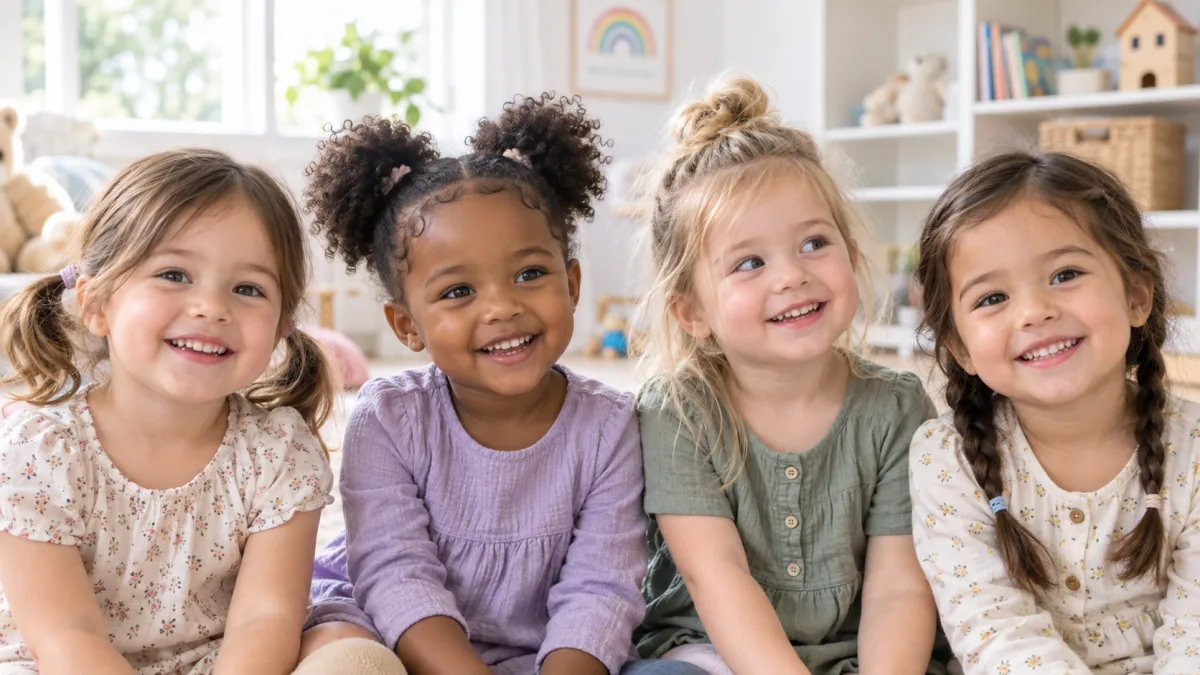
1. Soft Double Pigtails
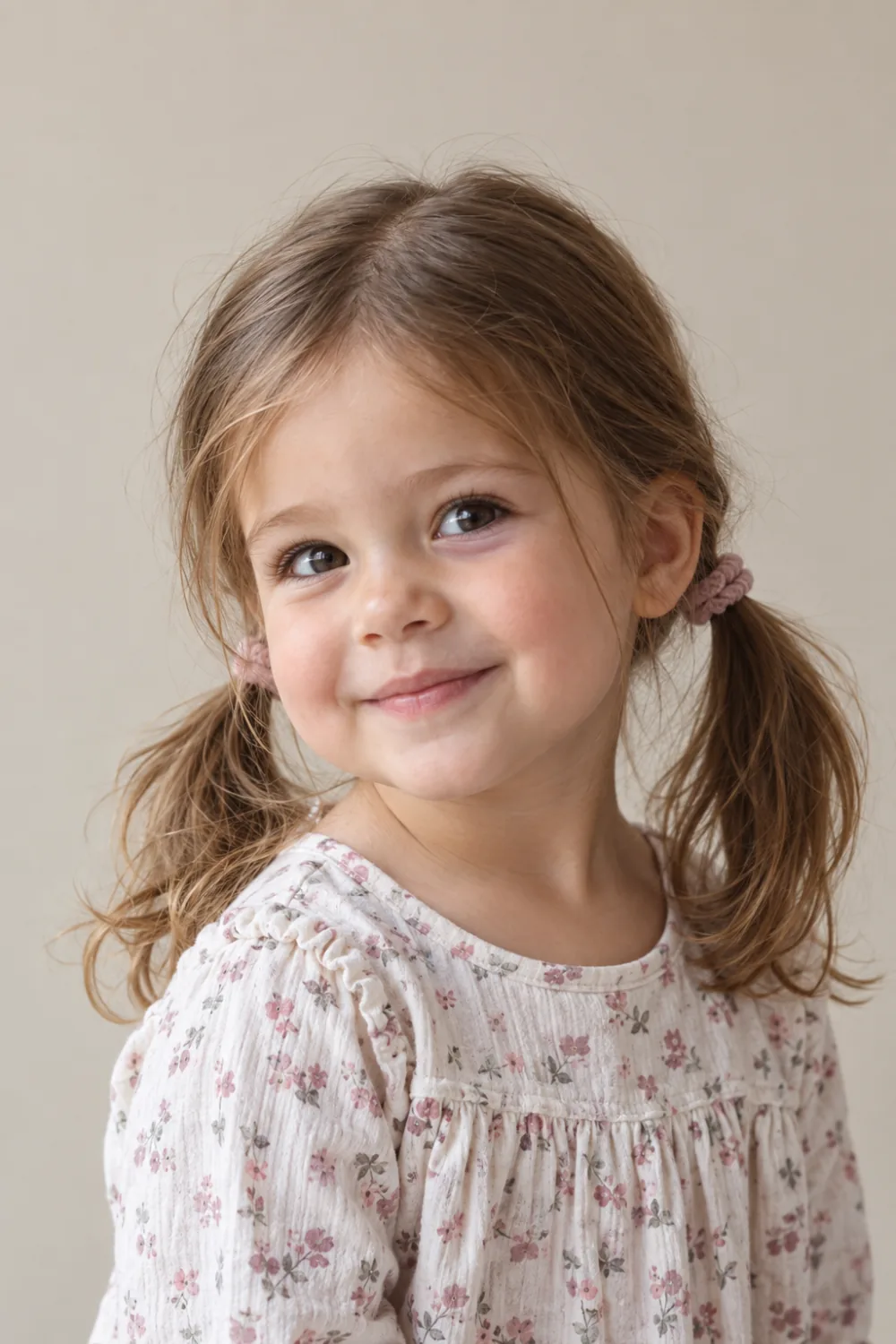
Double pigtails are practical because they keep hair away from the face without requiring complicated sectioning. Keep the elastics loose enough that the scalp is not pulled.
Best for: Straight, wavy, and fine-to-medium toddler hair.
2. Two Curly Puffs
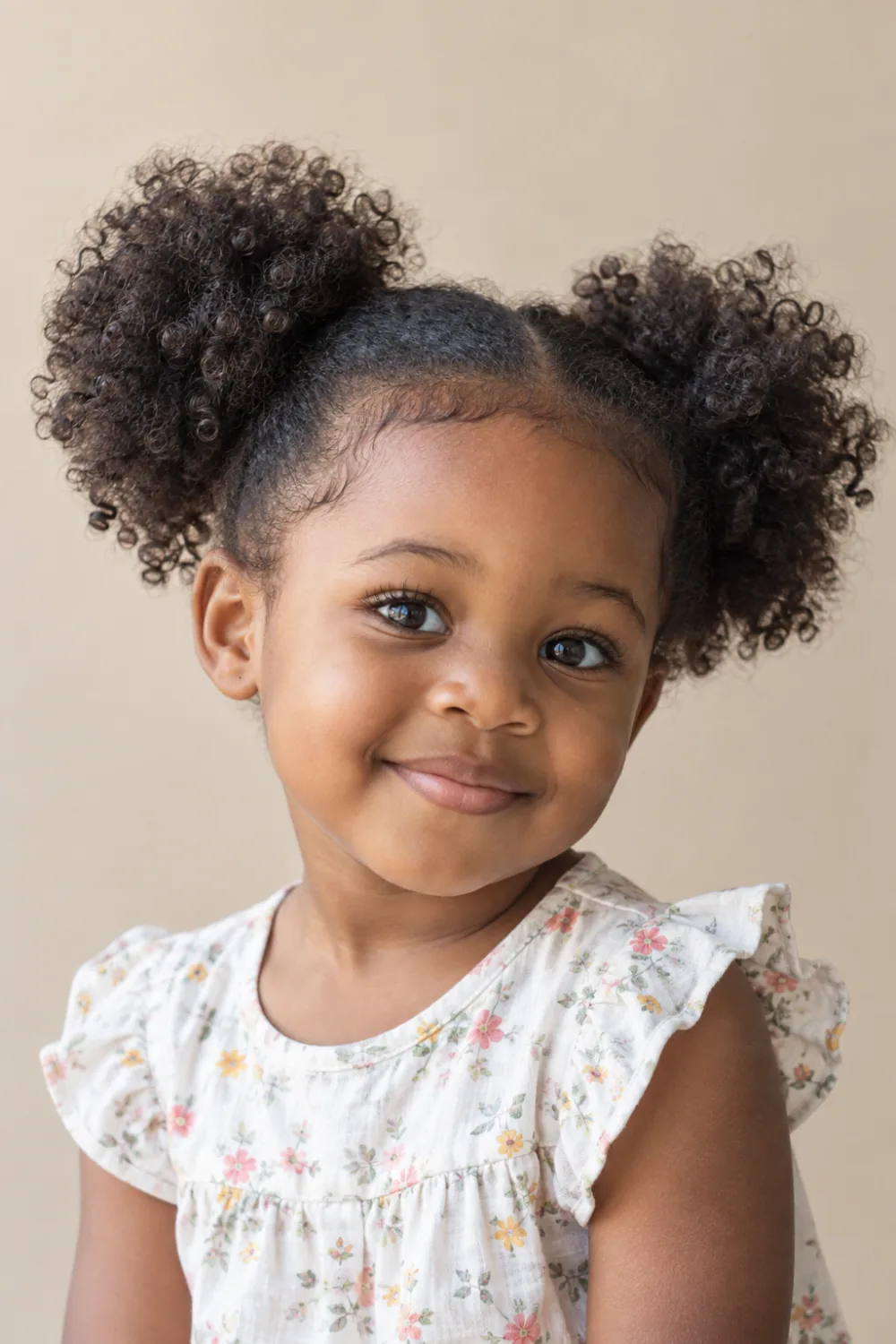
Two puffs celebrate natural texture while keeping the style simple. The key is gentle gathering rather than stretching the curls tightly at the roots.
Best for: Curly and coily hair with enough length to gather comfortably.
3. Half-Up Mini Ponytail
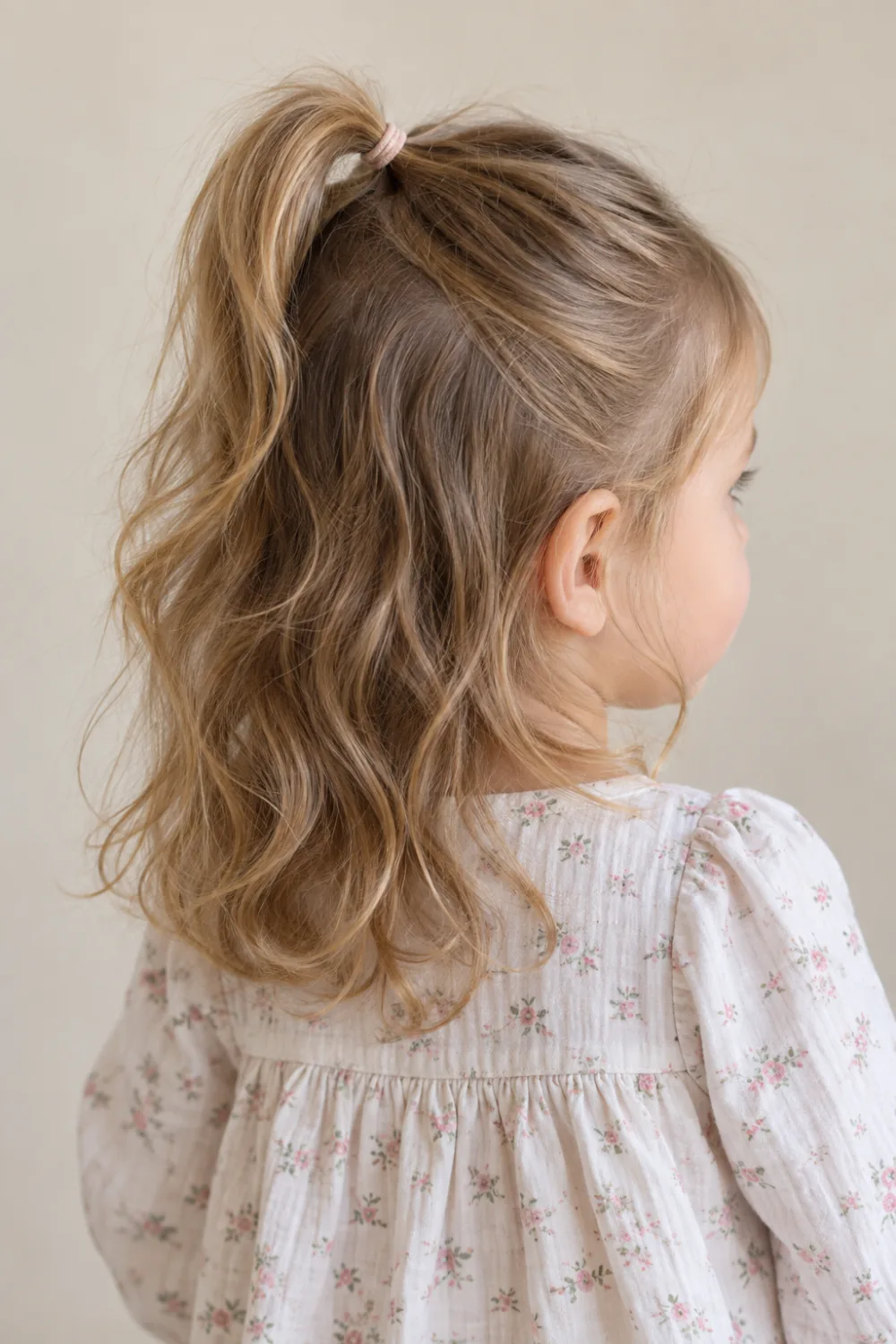
A half-up ponytail clears the face but leaves most of the hair untouched. It also works when a toddler does not have enough length for a full ponytail.
Best for: Short-to-medium straight, wavy, or curly hair.
4. Loose Braided Pigtails
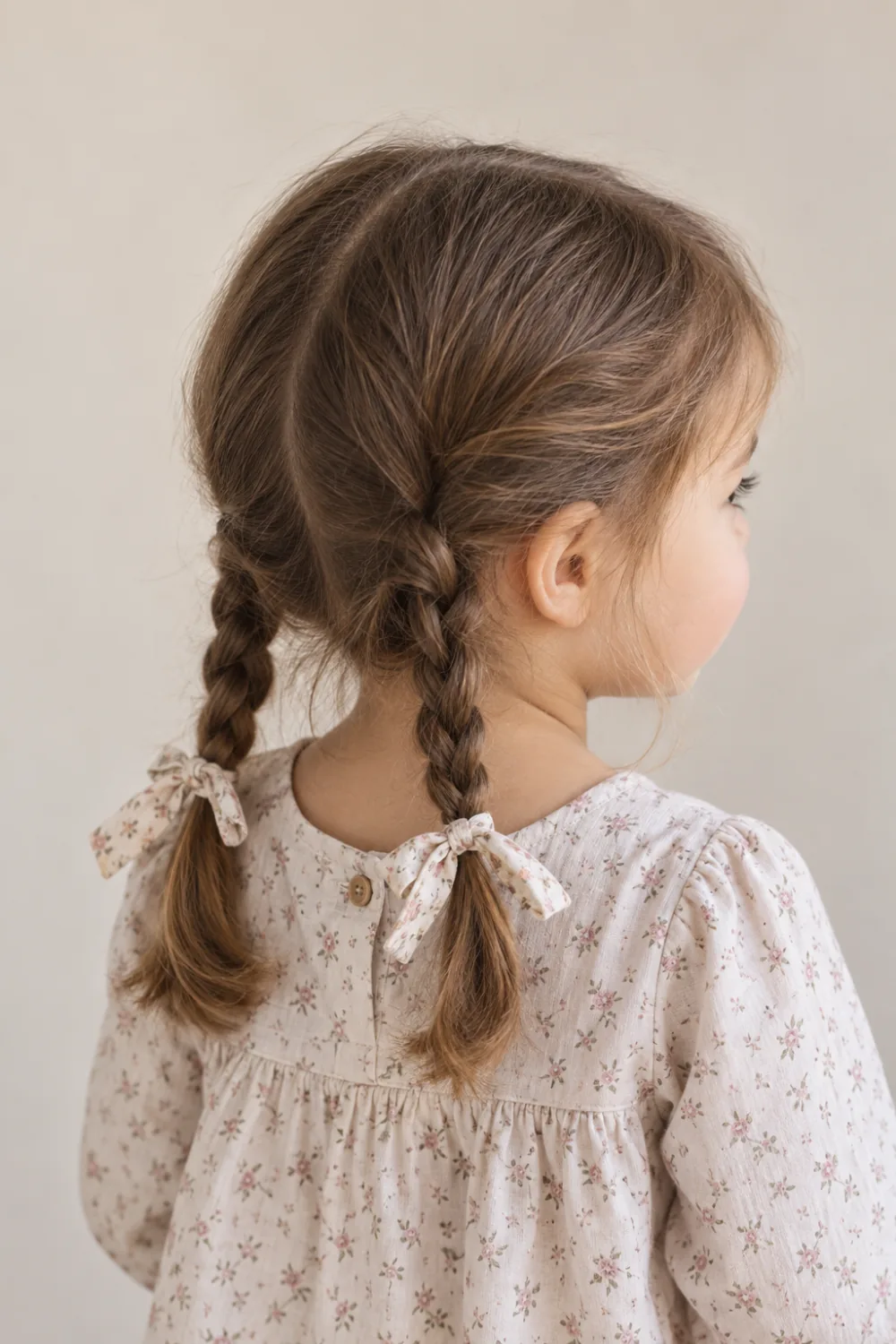
Braided pigtails stay neat longer than loose pigtails while still allowing a comfortable scalp. Starting the braid away from the hairline reduces pulling.
Best for: Medium to long hair with enough length for a three-strand braid.
5. Mini Top Knot With Loose Back
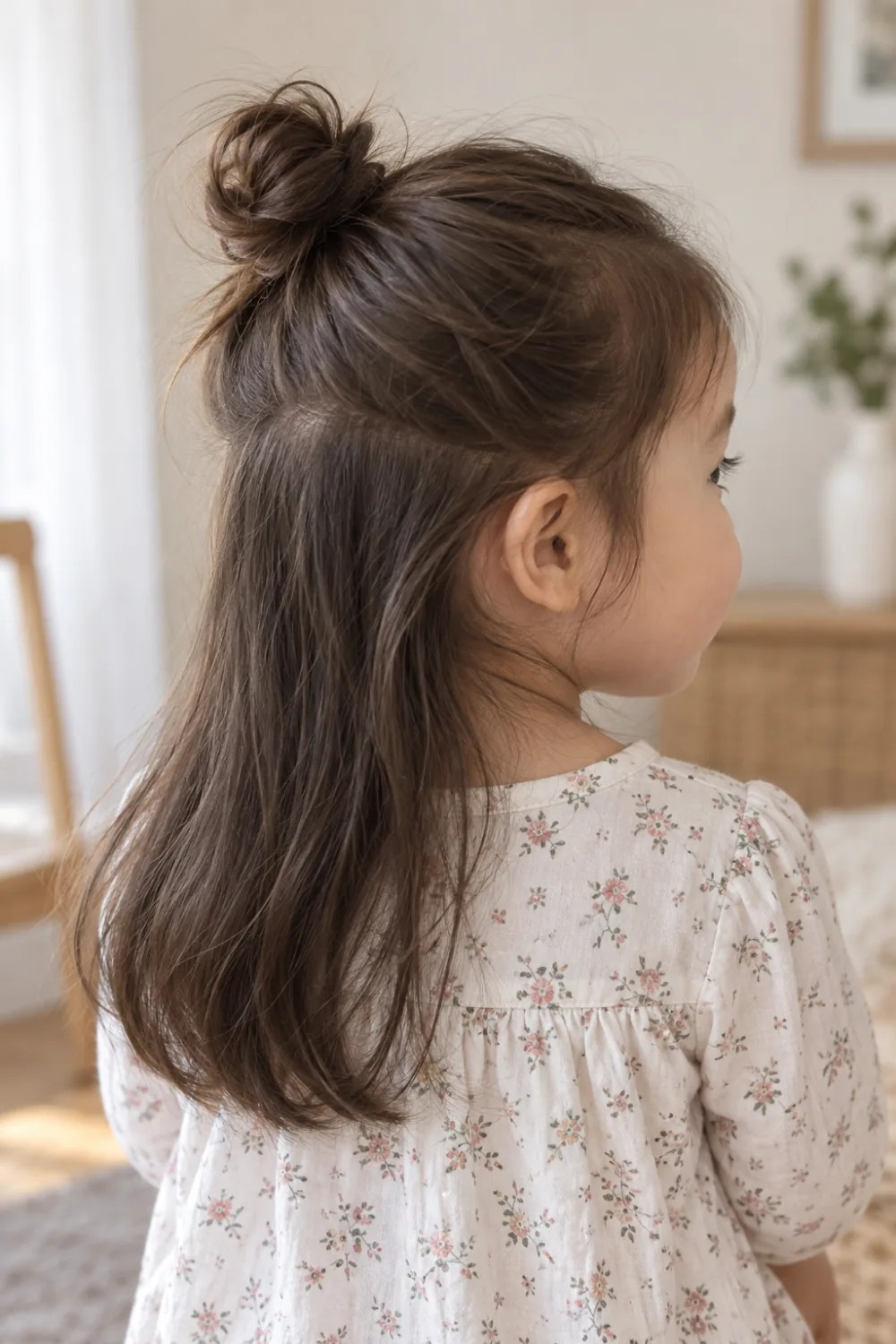
This is useful for fine toddler hair because only a small section needs to be gathered. It keeps shorter front pieces out of the eyes without forcing the entire head into an updo.
Best for: Fine, straight, wavy, or soft curly hair.
6. Bubble Pigtails
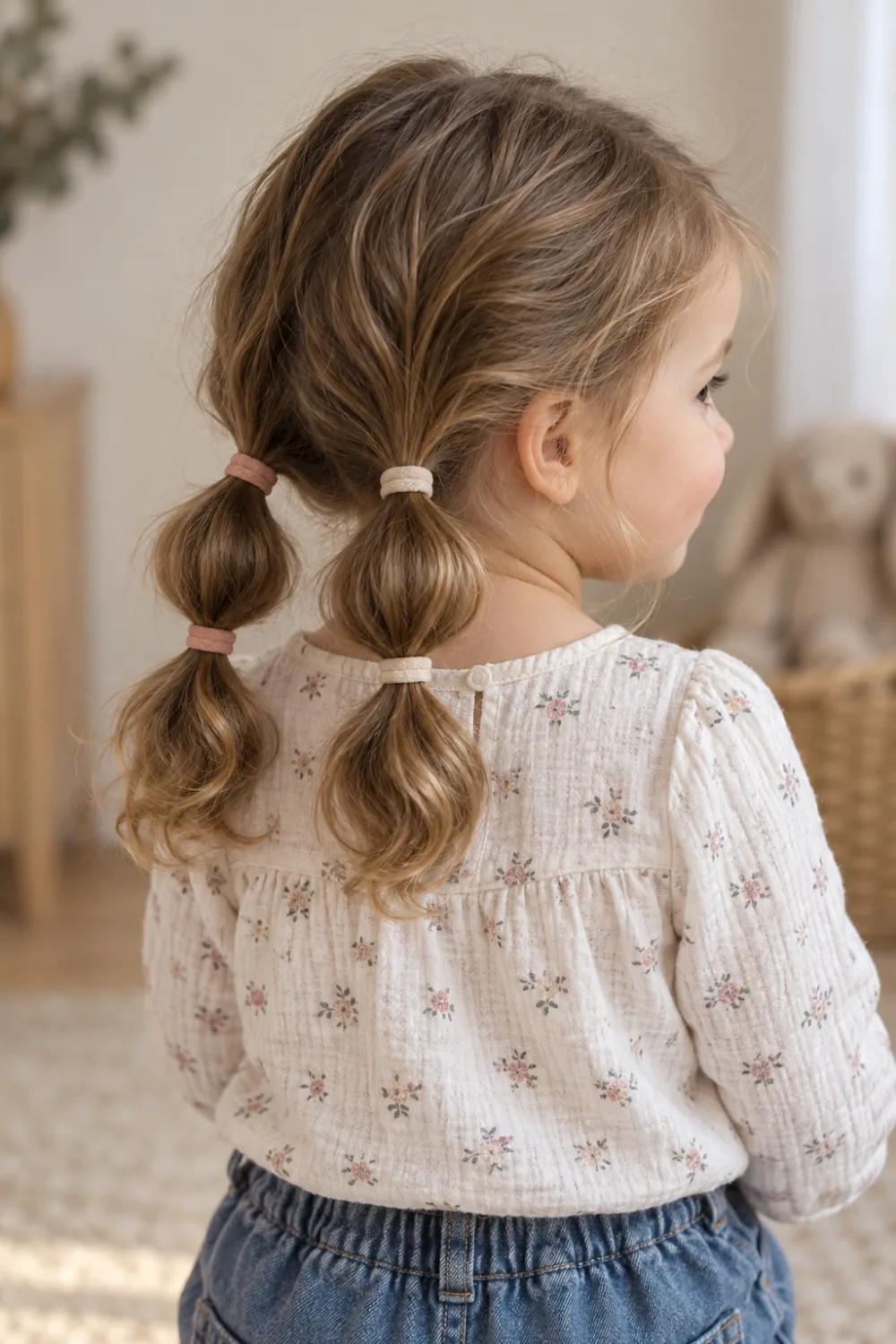
Bubble pigtails look playful without requiring braiding skill. Use very few elastics on toddler hair and avoid making each section tight.
Best for: Medium-length straight or wavy hair.
7. Side-Swept Clip Style
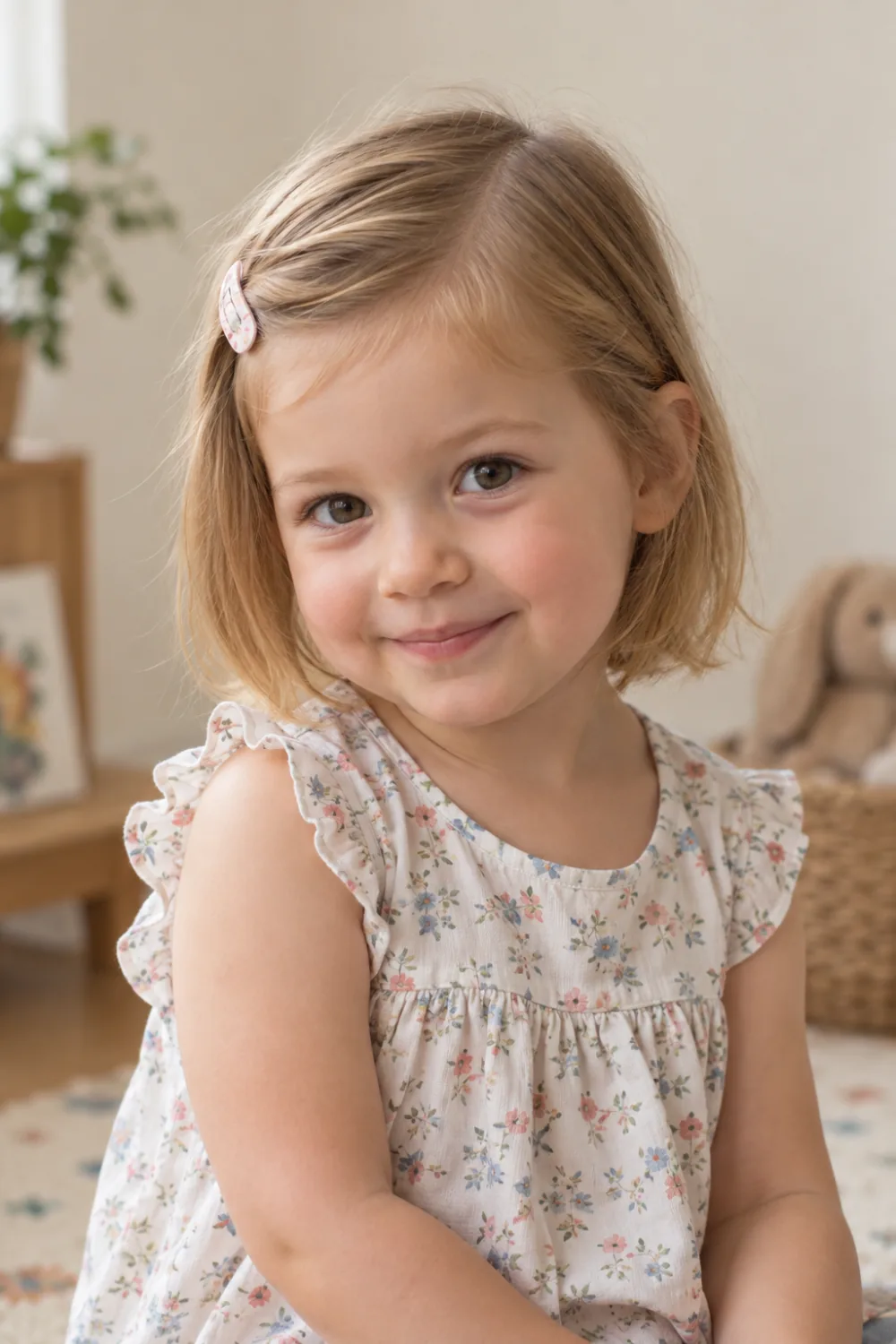
This is one of the simplest options for toddlers with short hair. It manages a growing fringe without pulling the whole head back.
Best for: Short bobs, fine hair, and growing bangs.
8. Single Low Ponytail
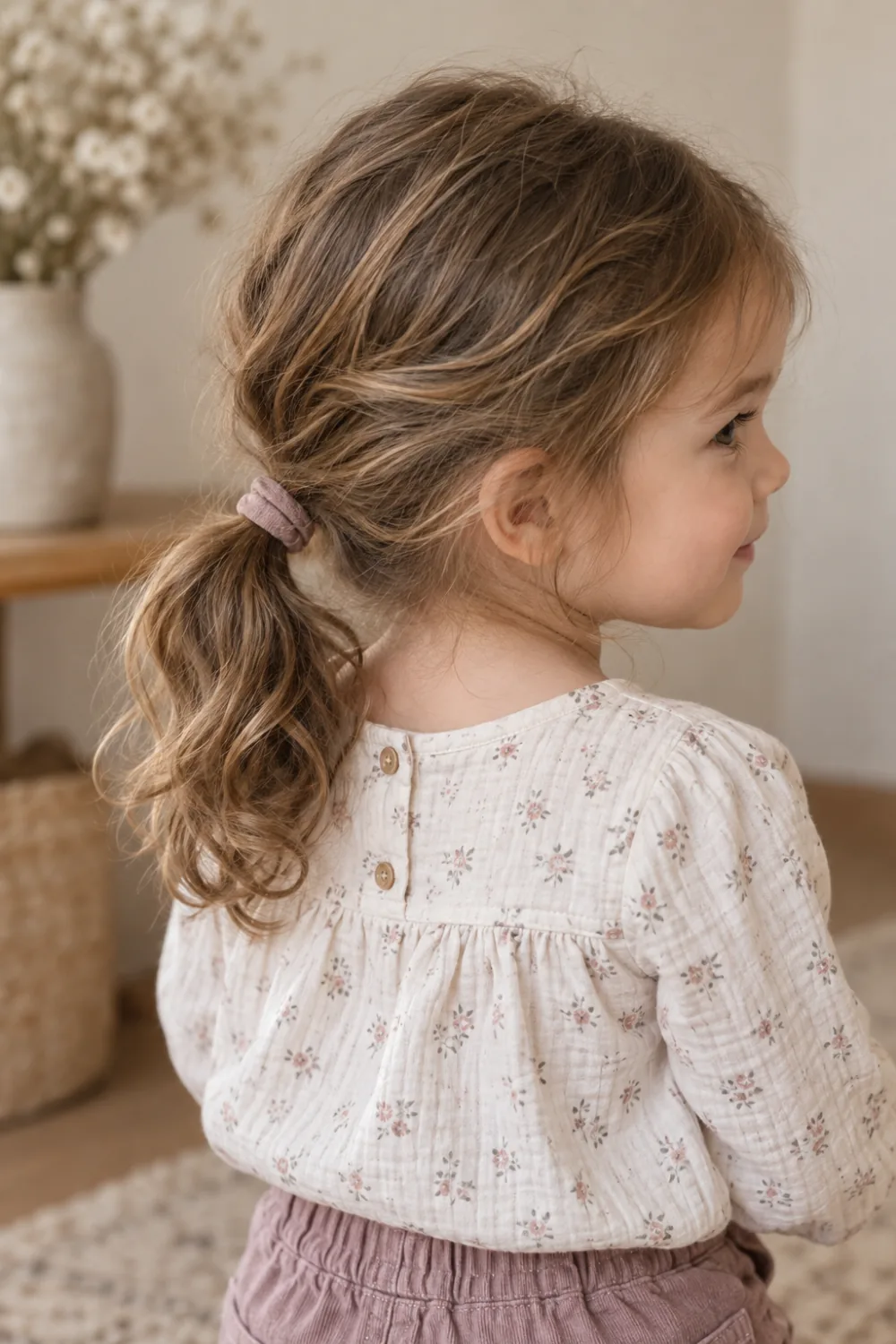
A loosely secured low ponytail can be comfortable and quick for busy mornings. Keep the elastic gentle: tension depends on how tightly the hair is gathered, not just where the ponytail sits.
Best for: Medium-to-long straight, wavy, and curly hair.
9. Two Mini Buns
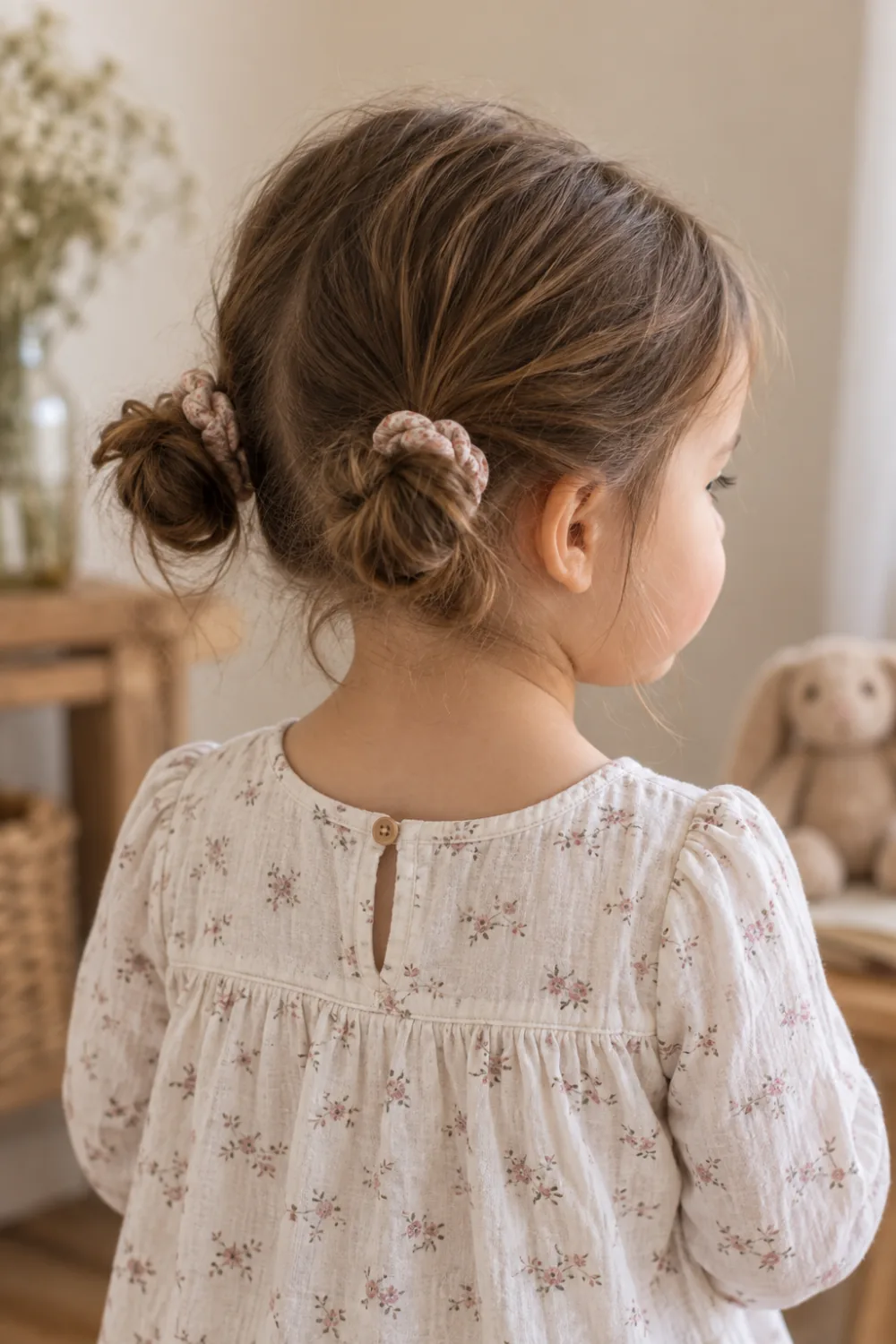
Mini buns keep hair contained for active play while still looking playful. They should feel soft at the scalp and come apart easily.
Best for: Medium hair with enough length to wrap once or twice.
10. Loose Side Braid
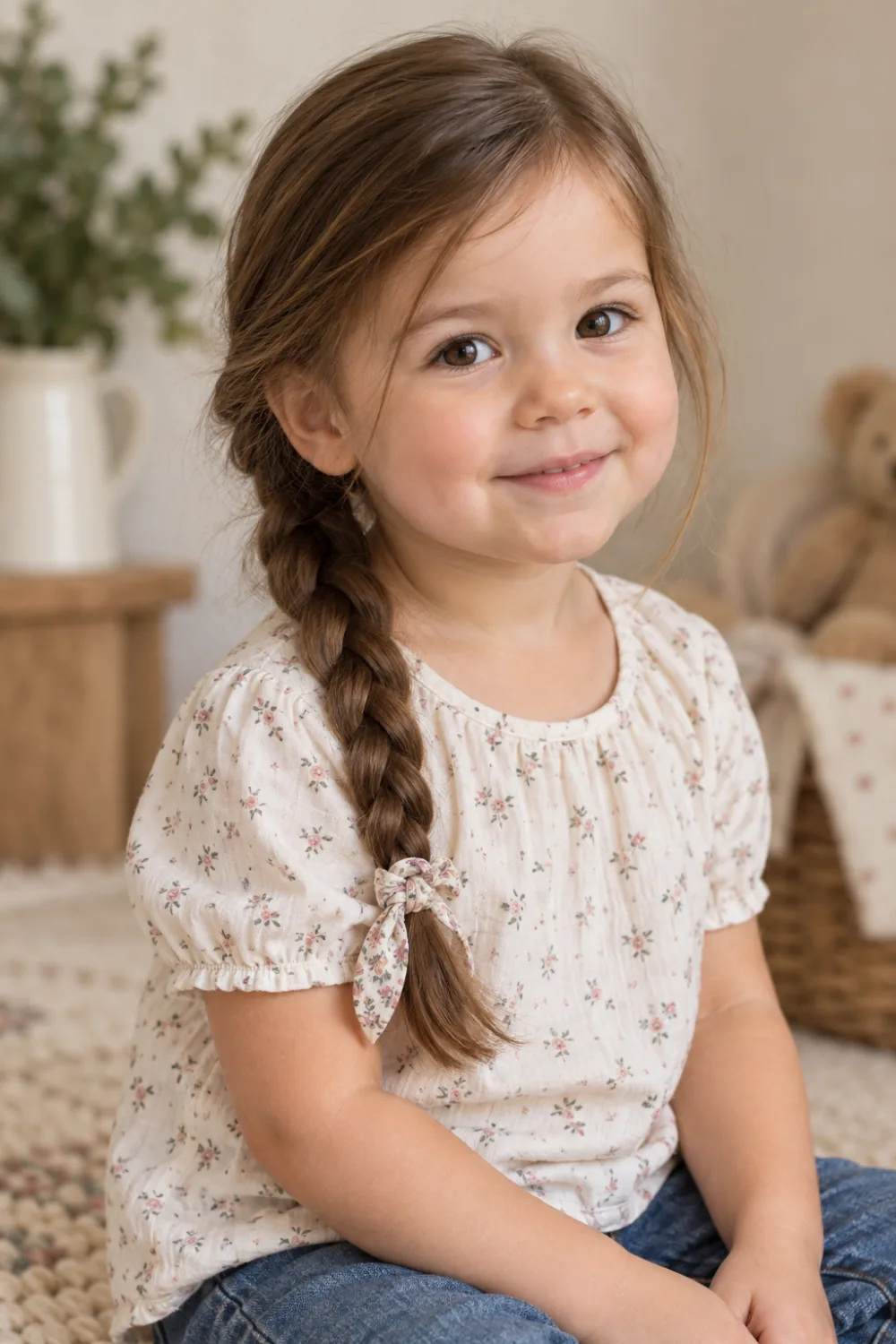
A side braid is easy to remove and puts most of the tension on the free length rather than the roots.
Best for: Medium-to-long hair that tangles easily during play.
11. Defined Natural Curls With a Headband
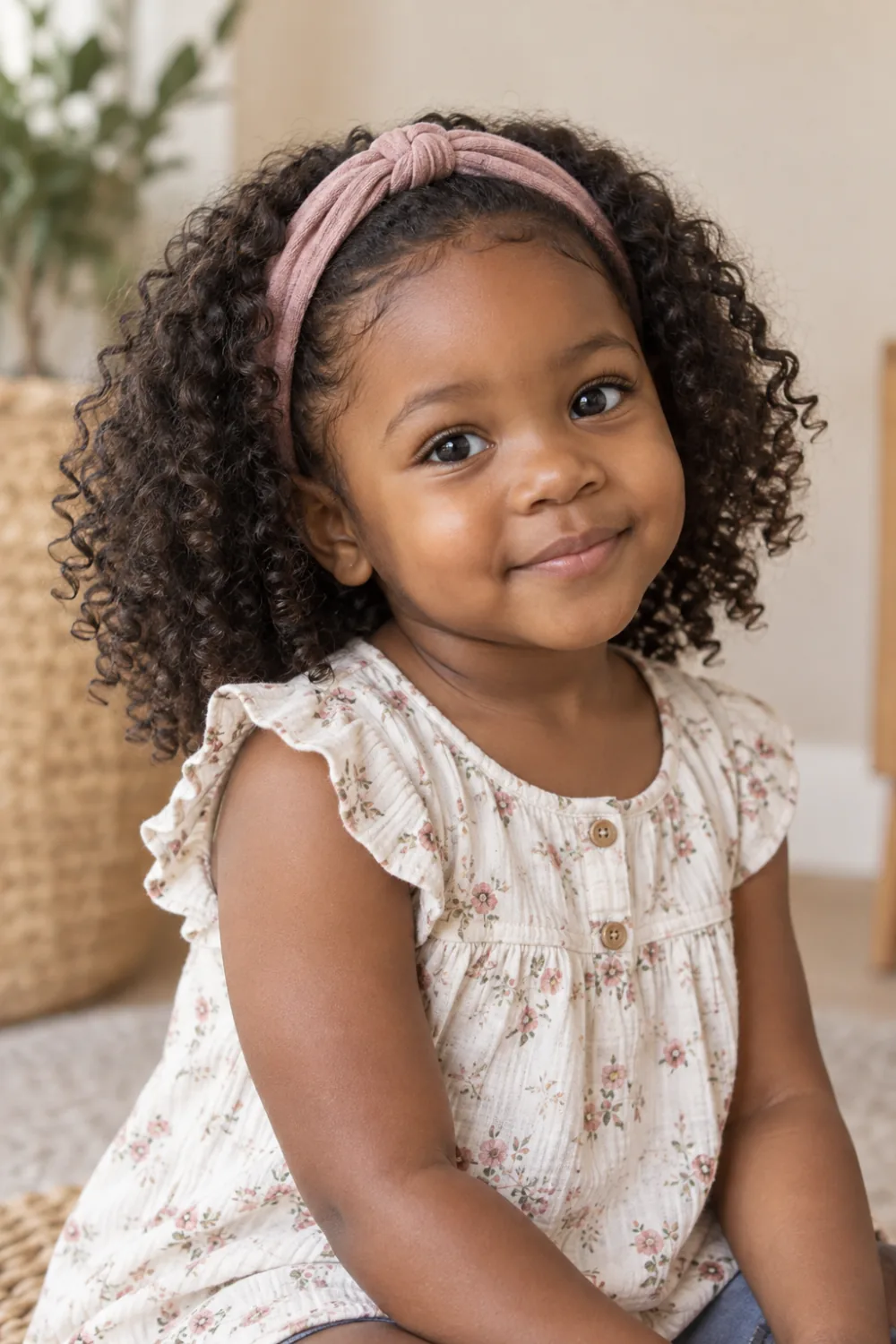
Not every toddler hairstyle needs tying or braiding. A soft headband can keep curls away from the face while leaving the scalp and curl pattern mostly untouched.
Best for: Curly and coily hair, especially on days between wash and detangle sessions.
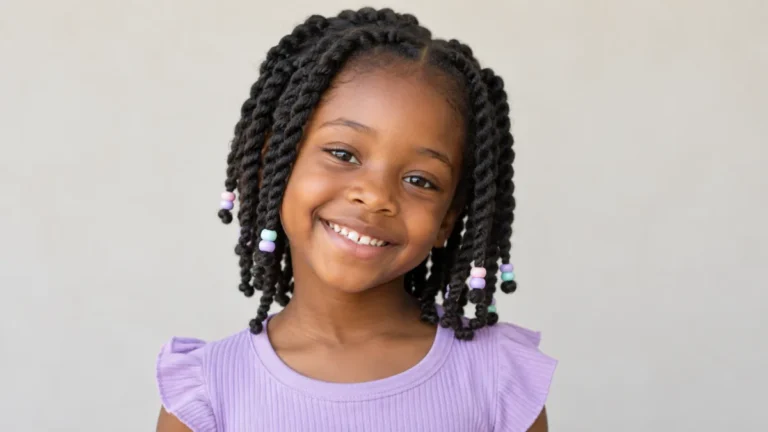
12. Mini Front Twists
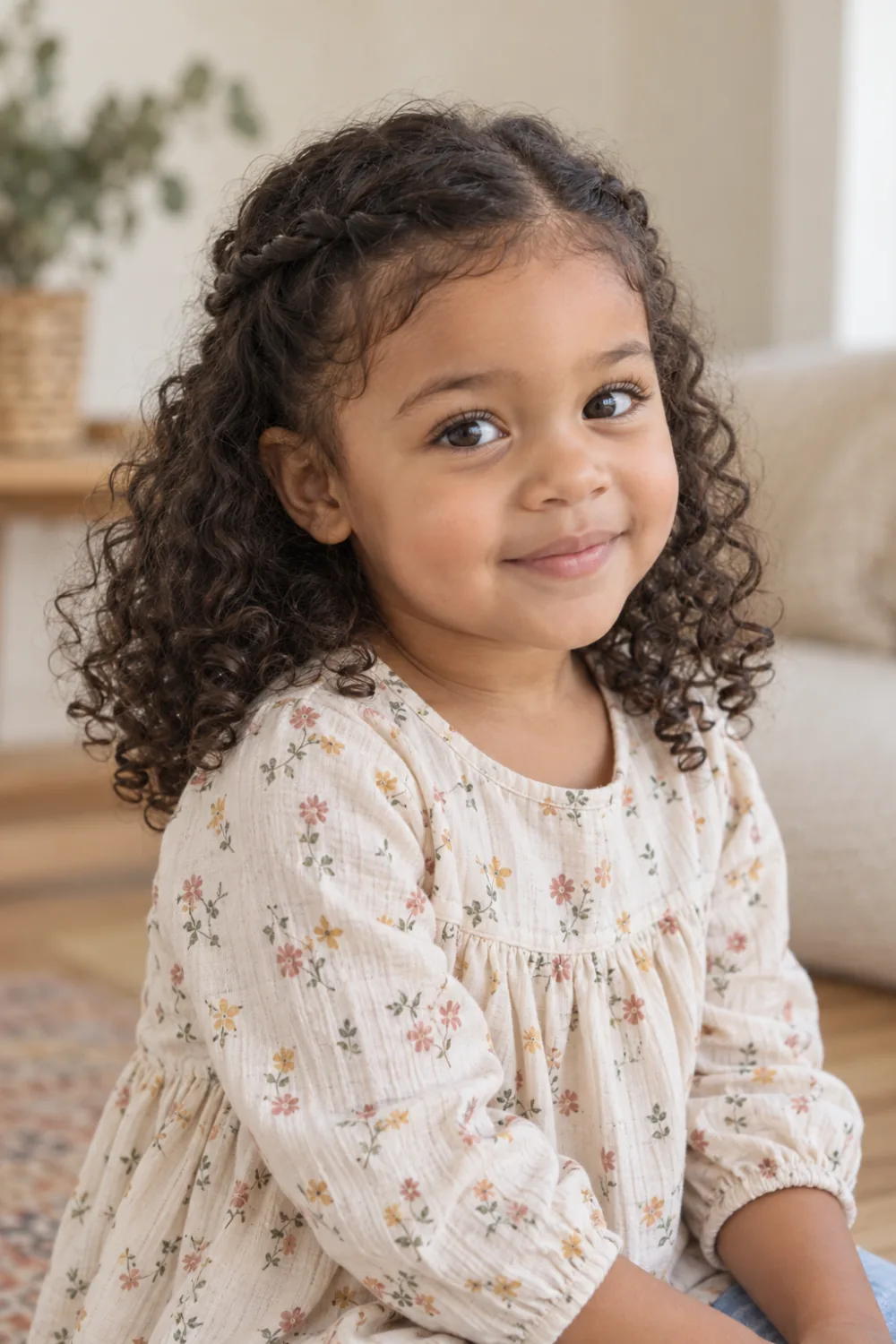
Front twists control short face-framing pieces without requiring a full braided style. Keep each twist loose enough that the child feels no pulling.
Best for: Short-to-medium wavy, curly, or coily hair.
13. Low Afro Puffs With Center Part
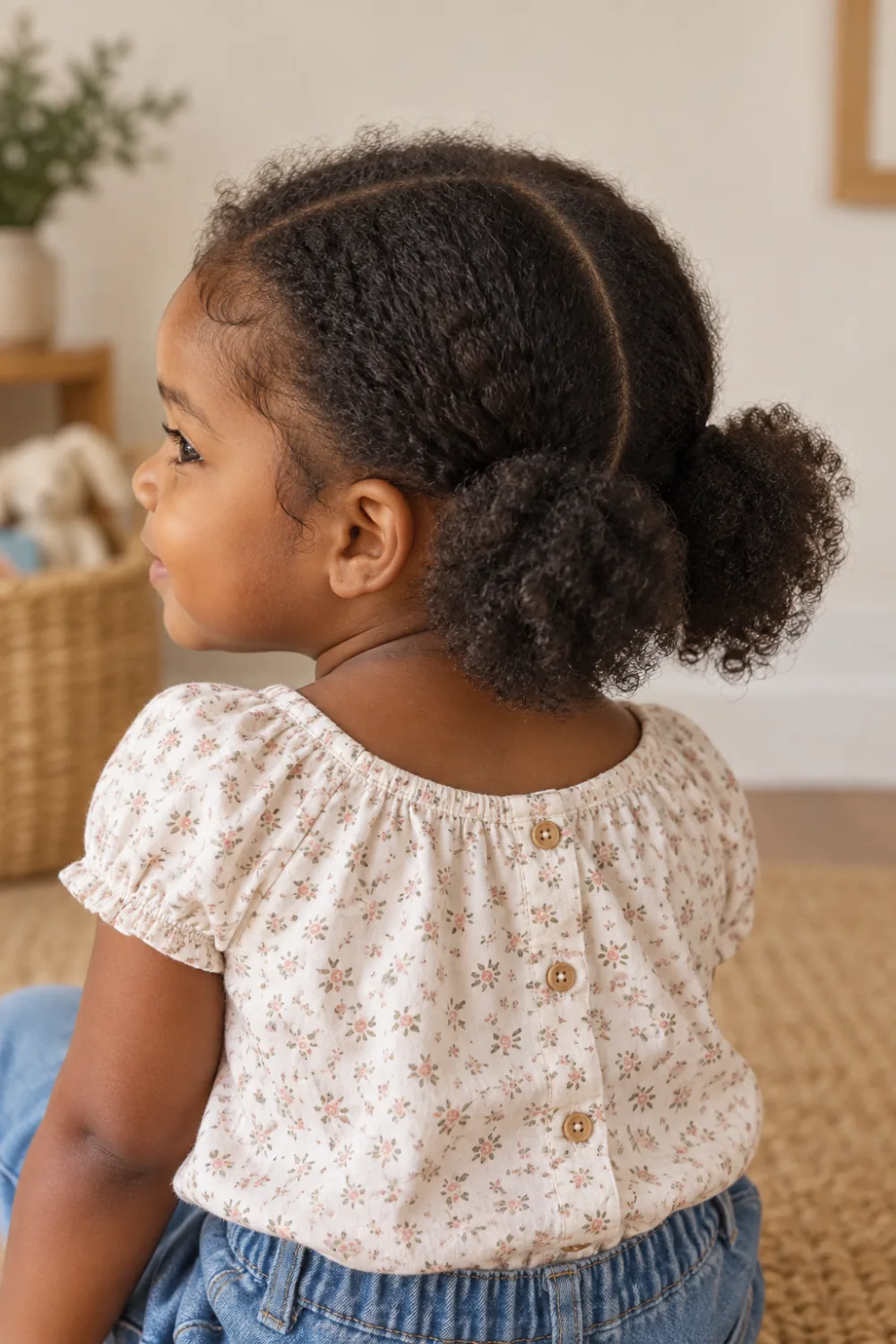
Lower placement can feel more comfortable than high puffs for some toddlers and works well under hats or hoods.
Best for: Curly and coily hair with medium density.
14. Half-Up Braided Crown Accent
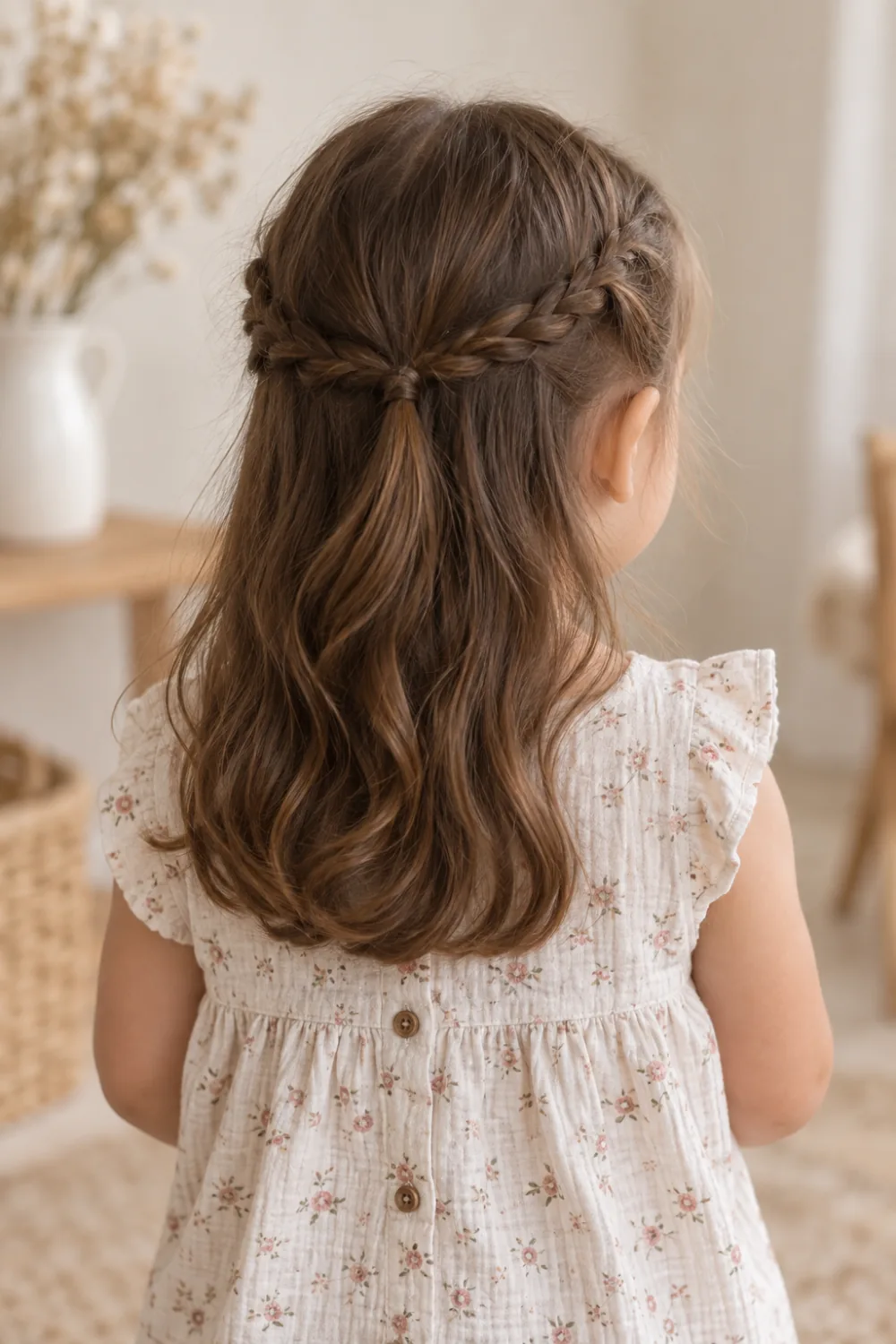
This gives a special-occasion feel without putting the full head into braids. The accent braids should be soft and sit away from the hairline.
Best for: Medium-length straight, wavy, or loosely curly hair.
15. Wash-and-Go Curls With One Side Clip
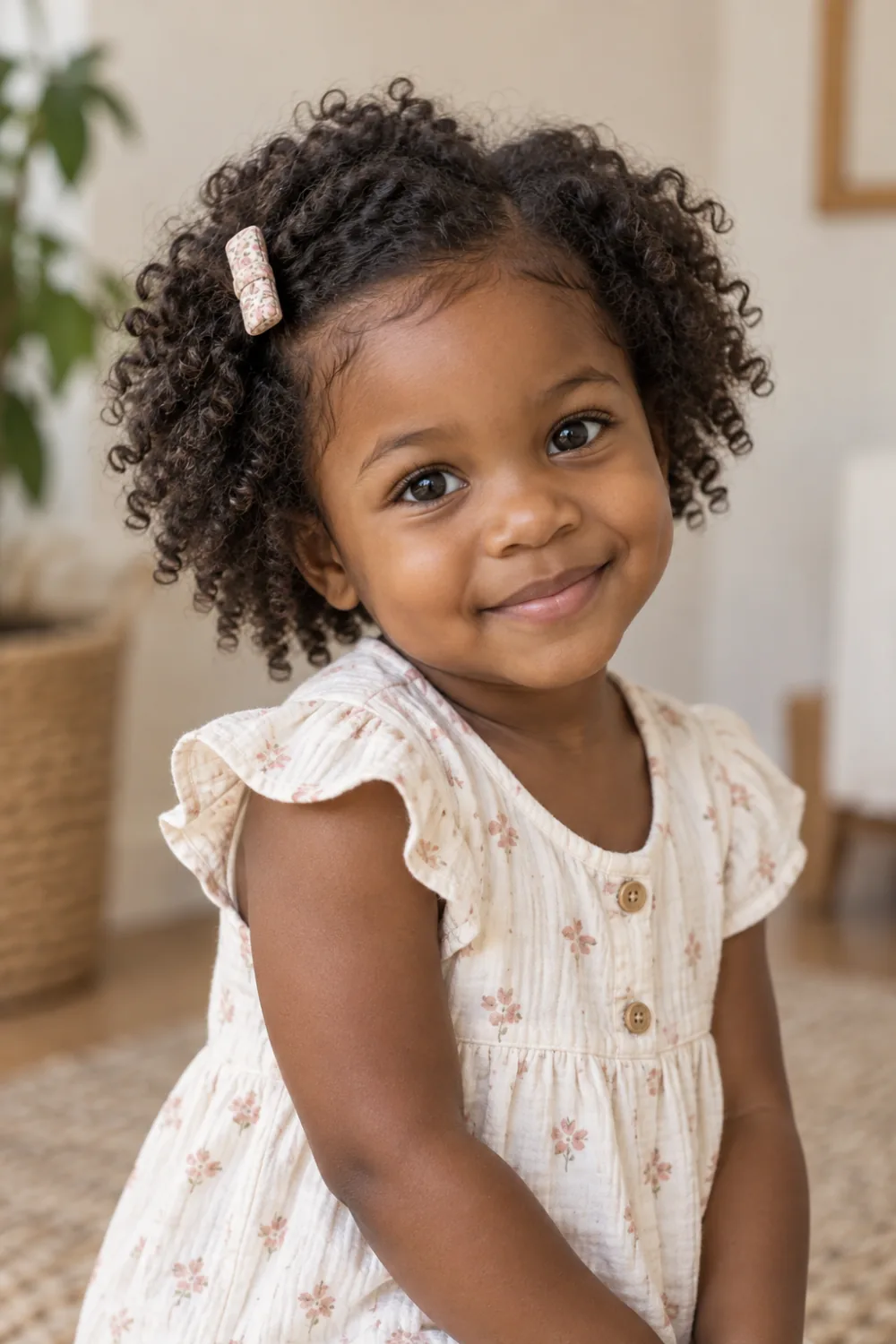
For toddlers, leaving healthy texture alone is often the simplest choice. A single clip adds control while minimizing manipulation.
Best for: Curly and coily hair, especially when the curl pattern already forms well naturally.
How Tight Is Too Tight for a Toddler Hairstyle?
A toddler hairstyle should not hurt during styling or afterward. If the child is pulling at the style, saying it hurts, or showing redness or visible tension around the hairline, loosen it or take it down. The AAD specifically warns that repeated pulling from tight ponytails, braids, buns, and cornrows can contribute to traction alopecia, including in children.
Soft fabric elastics, covered bands, and lightweight clips are usually easier on delicate hair than tight rubber bands. Remove accessories gently too, and carefully untangle a snagged elastic rather than pulling it through the hair.
Keep Heat and Heavy Product to a Minimum
Most toddler hairstyles do not need flat irons, curling irons, hot combs, or aggressive blow-drying. Natural texture, air-drying, and simple shaping are usually enough. If drying is necessary, keep the temperature low and avoid repeatedly heating the same sections.
Use only enough product to make detangling and styling comfortable. Heavy gels and edge products can make a toddler style look overly stiff and may encourage tighter brushing than the hair actually needs.
Useful Redounds Reads
For texture-specific protective styling, see Redounds' kids cornrow hairstyles. For festive little-girl styling, Redounds' Christmas hairstyles for baby girls includes holiday-focused options. Older children looking for school-day inspiration can also use Redounds' cute girl hairstyles for school as a separate age-group guide.
Frequently Asked Questions
What is the easiest hairstyle for a toddler girl?
Soft pigtails, a half-up ponytail, one side clip, or a low ponytail are among the easiest because they need little sectioning and can be removed quickly.
How do I keep toddler hair out of her face?
Use a lightweight clip, a soft headband, a mini half-up ponytail, or two loose front twists. You do not need to pull the entire head tightly backward.
Are tight ponytails safe for toddlers?
Repeated tight ponytails can place stress on the hair and scalp. The American Academy of Dermatology advises loosening pulled-back styles and changing any style that causes pain or visible tension.
What hairstyles work well for curly toddler hair?
Two loose puffs, wash-and-go curls, low puffs, and soft front twists work well because they keep the curl pattern visible while minimizing manipulation.
Should I use gel on toddler hair?
Usually only a small amount, if any, is needed. A light detangling or moisturizing product is often more useful than strong-hold gel for everyday toddler styles.
Can toddlers wear braids?
Yes, but braids should be loose and comfortable. Avoid painful tension at the scalp and hairline, and take the style down if the child shows discomfort.
How often should I change a toddler hairstyle?
Change it whenever it becomes messy, uncomfortable, or tangled. Rotating styles also prevents the same areas of the hairline from being pulled repeatedly.
What accessories are best for toddler hair?
Small covered elastics, fabric scrunchies, lightweight snap clips, and soft headbands are practical. Avoid heavy accessories, sharp edges, or pieces that can easily snag or create a choking hazard if removed.
The Practical Takeaway
The best toddler hairstyle is comfortable first and cute second. Choose a style that matches the child’s real hair length and texture, keep tension low, use lightweight accessories, and avoid forcing adult-level sleekness onto baby hair. A little softness and a few flyaways are completely normal at this age.