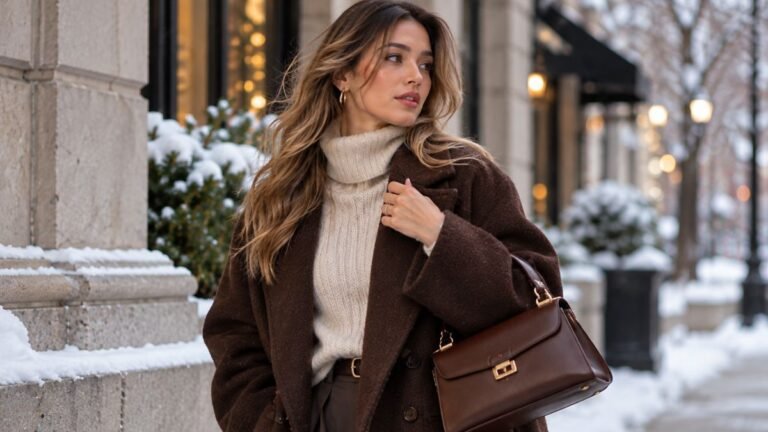


Winter 2026 knitwear is less about choosing between comfort and a polished outfit than about what the fabric itself can do. Recent runway and editorial coverage points to fine openwork, unconventional necklines, deliberate texture and more expressive layering. Familiar pieces are still present, but proportion and styling make them feel new. The following ten directions offer distinct ways to wear knits, with practical notes on coverage, warmth and how each piece works alongside a real winter wardrobe.
Sheer and Openwork Knits
An airy, fine-gauge openwork sweater adds surface detail without the visual weight of heavy cable knitting. Layer a thin camisole or fitted long-sleeve top underneath for coverage, then add a substantial coat outdoors. Open stitches admit air, so this is a styling layer rather than a substitute for insulation.
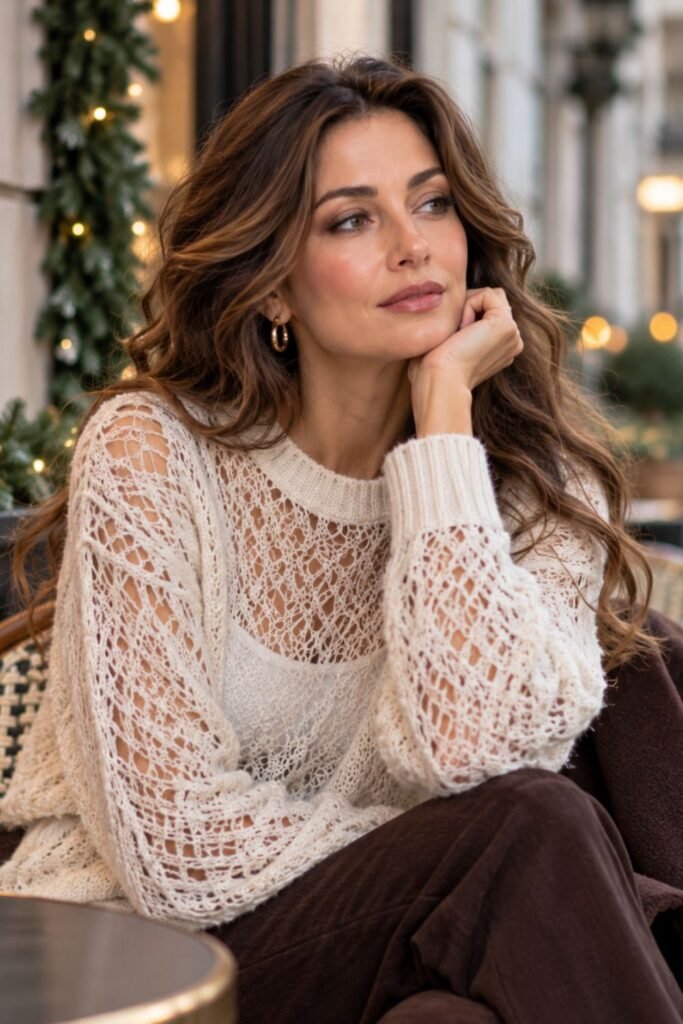
Exaggerated V-Neck Sweaters
A deep V creates space for a crisp shirt, high-neck base layer or contrasting fine-knit top. The neckline changes the outfit more than the yarn does: an otherwise plain pullover becomes a framing piece. Check that the shoulder seam stays in place and the opening lies flat when seated.
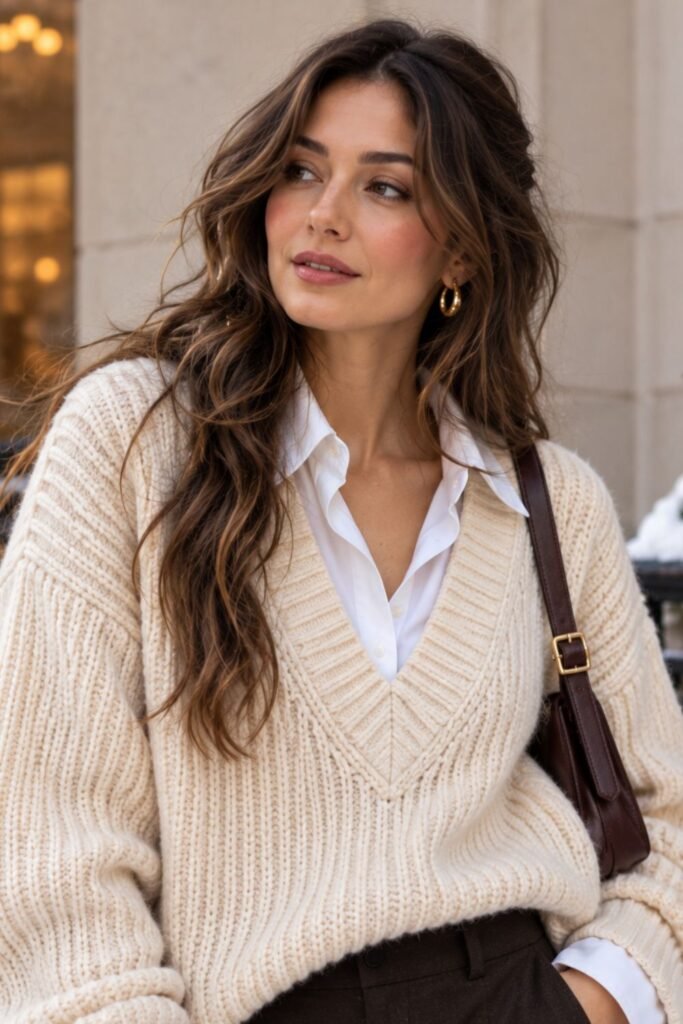
High and Slouchy Funnel Necks
The elevated collar has become a prominent alternative to the conventional rolled turtleneck. A soft funnel sits upright and gives a simple sweater a more architectural outline. Choose a collar that allows comfortable head movement, especially beneath a coat.
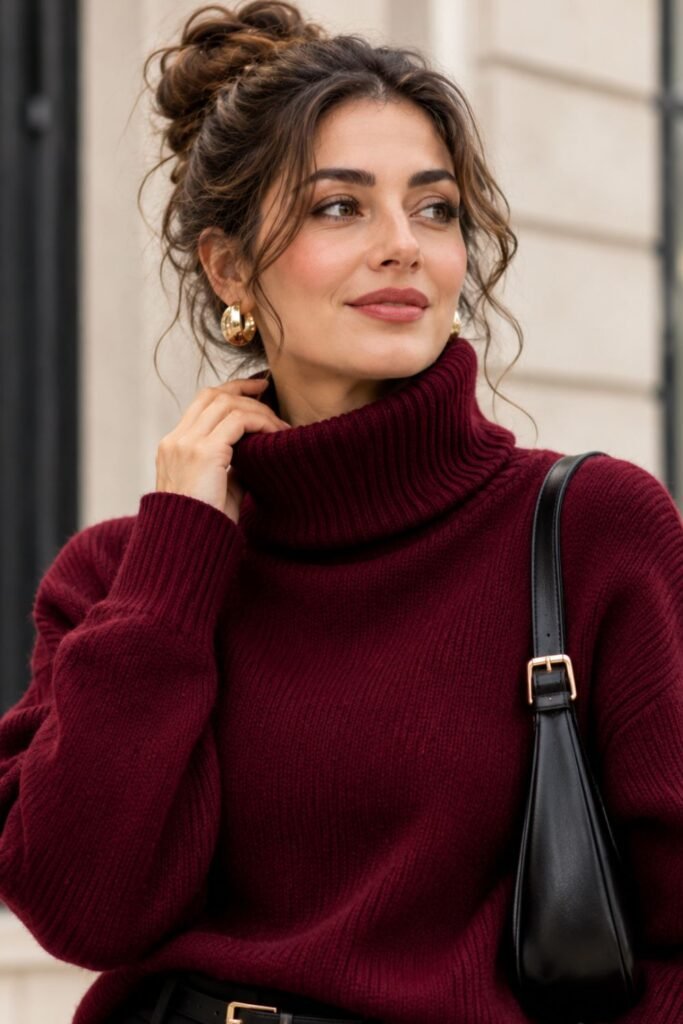
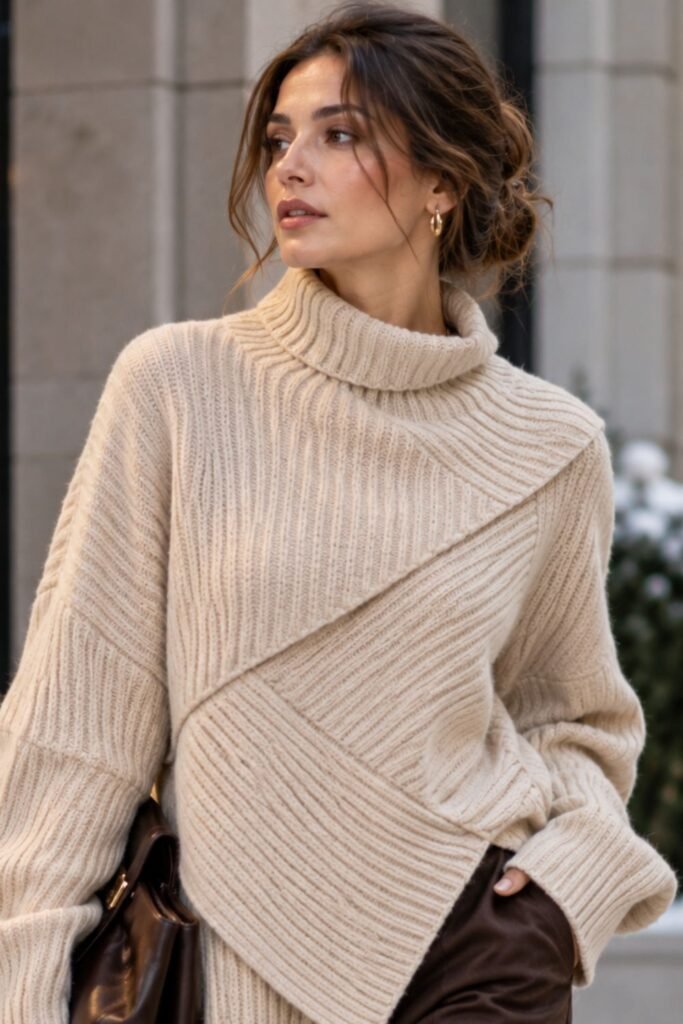
Asymmetric Seams and Hems
Diagonal seams, shifted ribbing and uneven hems make the knit itself the focal point. Keep the lower half comparatively straightforward, such as a column skirt or tailored trousers, so the construction remains visible. A balanced fit at the shoulders helps an asymmetric garment hang as intended.
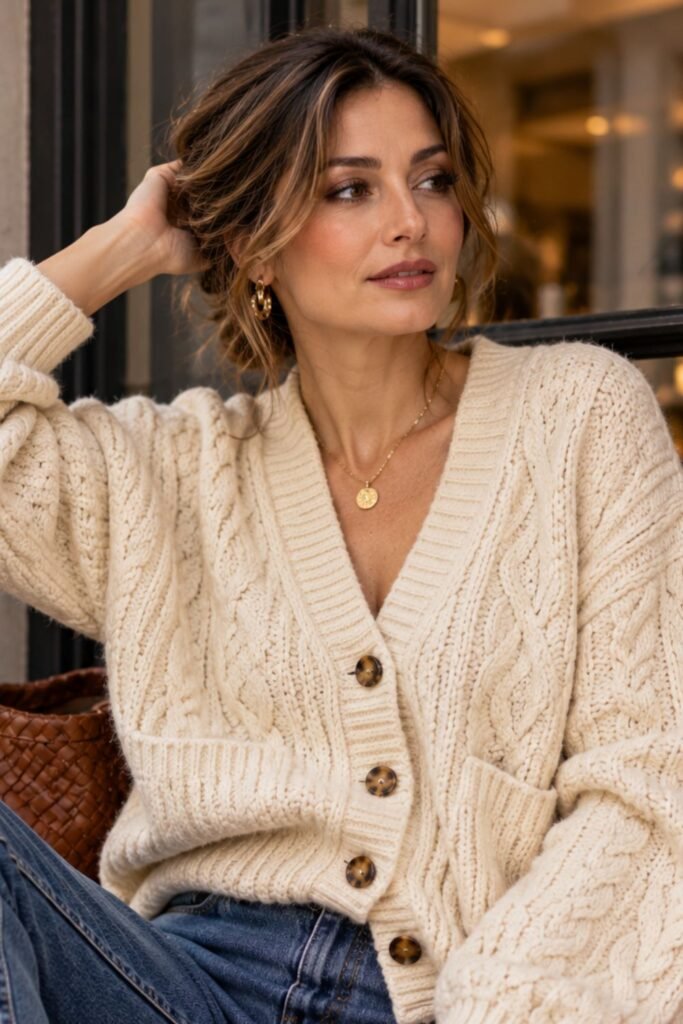
Chunky Cardigans With a Defined Shape
Substantial cardigans are returning in versions that feel more deliberate than oversized lounge layers. Look for firm button bands, well-positioned pockets and a hem that does not bunch over the waistband. Worn as a top, the cardigan can anchor jeans or a straight midi skirt.
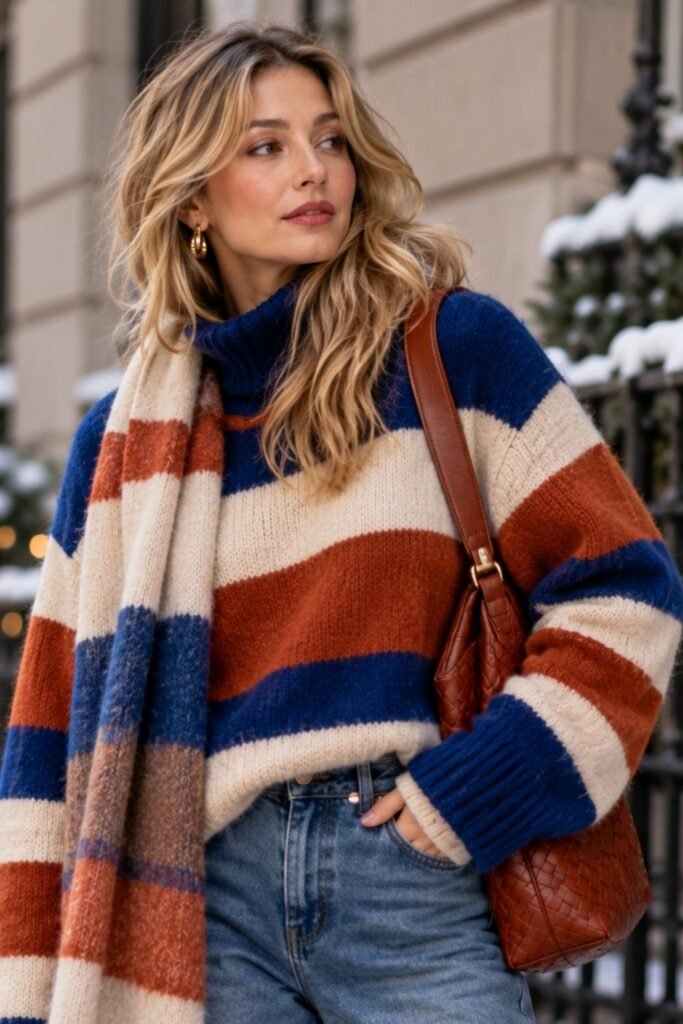
Statement Stripes and Color Blocking
Winter stripes are becoming bolder in both palette and scale. A strong horizontal band or unexpected combination of cobalt, rust and cream adds contrast to familiar denim. Let one of the stripe colors recur in a scarf or bag rather than matching every accessory.
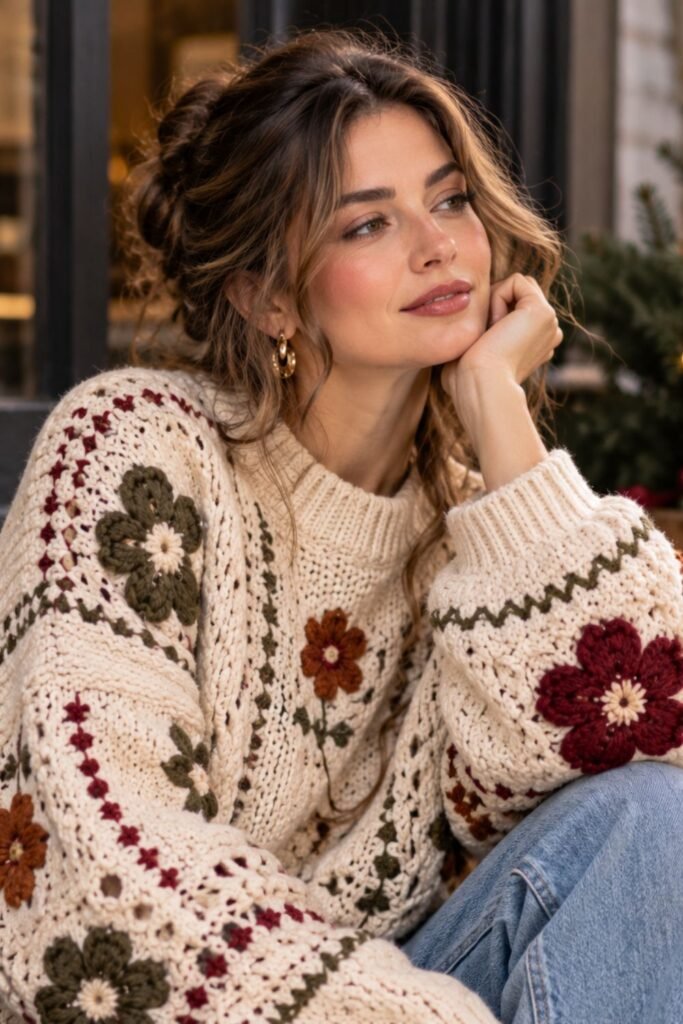
Craft-Led Texture and Decorative Stitches
Raised stitches, floral motifs, crochet panels and irregular surfaces offer a more tactile take on seasonal dressing. The detail should remain visible, so avoid burying a heavily worked sweater beneath a bulky scarf. For comfort, inspect interior seams and any embellishment that might catch on outerwear.
Knitted Vests Over Crisp Shirting
A vest supplies texture through the torso without adding sleeve bulk under a blazer. Fair Isle, ribbed and minimal fine-gauge versions give different effects. Leave a little shirt cuff and hem visible to clarify the layers, and avoid excessively thick fabric around the armholes.
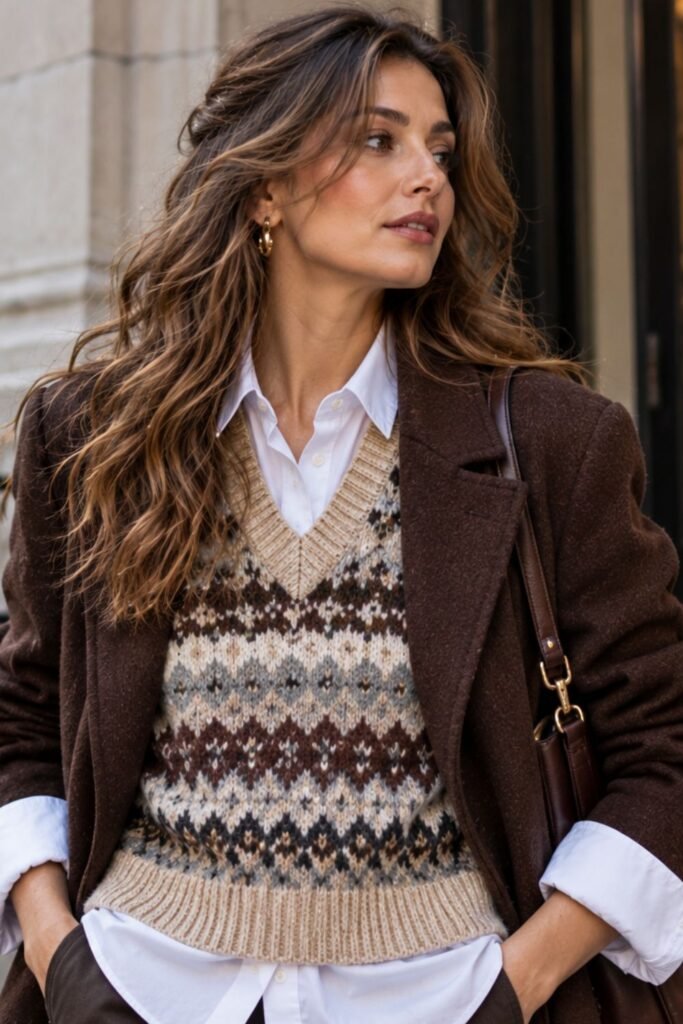
Lightweight Knits Styled in Multiples
Several thin layers can look more intentional than one oversized sweater. Try a fitted fine-gauge base, a contrasting crewneck and an open cardigan; keep enough ease through the arms for movement. Different yarn weights and visible edges make the combination legible rather than bulky.
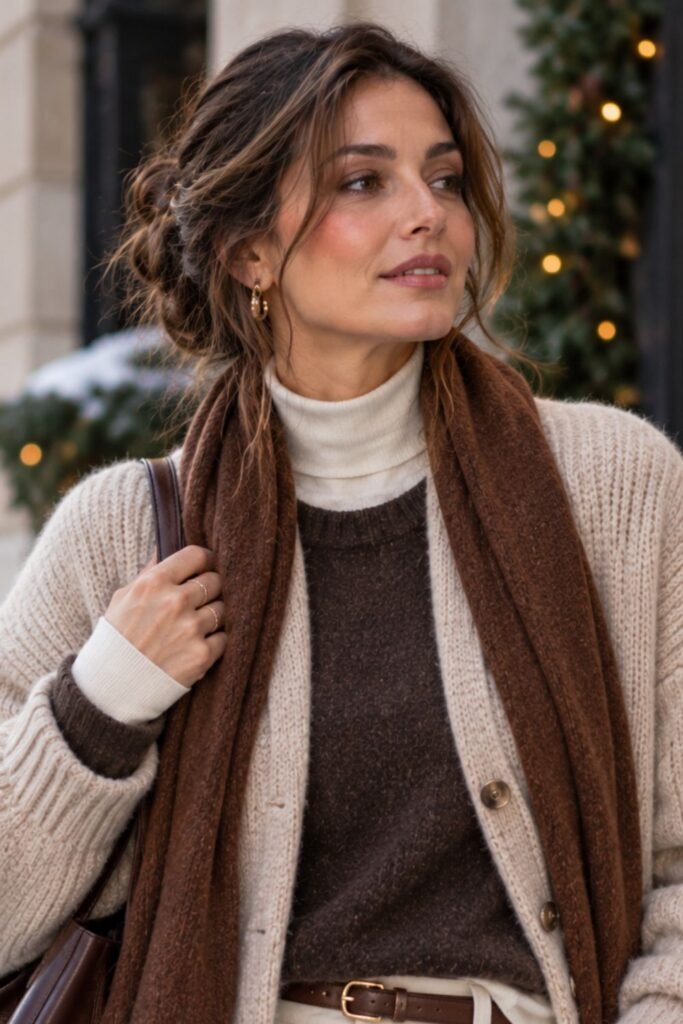
Coordinated Knitwear Sets
A matching knitted top and skirt or trousers gives winter dressing a consistent texture from shoulder to hem. The most useful sets also separate well: the top can work with denim, while the skirt takes a shirt or blazer. In cold weather, a lined or tightly knitted bottom and opaque tights help address transparency and warmth.
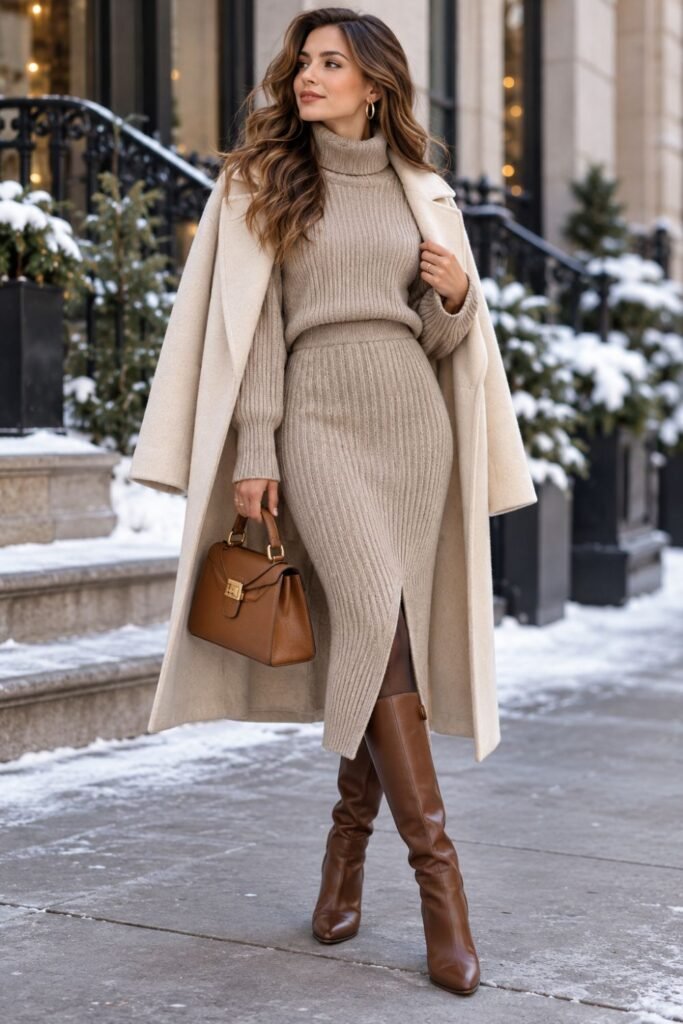
How to Choose Knitwear for Your Winter Climate
A loose, openwork knit can be attractive indoors but will not block cold wind. For exposed commutes, use a close-knit wool or other insulating middle layer beneath weather-appropriate outerwear. In heated offices, fine-gauge knits or a removable cardigan allow more flexibility. Check care labels, fiber composition and whether the garment stretches or pills with use.
Useful Redounds Reads
For a closer look at high collars, see Redounds’ guide to funnel-neck tops and how they layer under tailoring.
16 Funnel Neck Top Outfit Ideas for Women for Fall 2026 https://redounds.com/fashion/funnel-neck-top-outfit-ideas-for-women-for-fall/
For coordinating deep seasonal colors, see the Redounds guide to burgundy, chocolate and olive outfits.
16 Burgundy, Chocolate & Olive Fall 2026 Outfits for Women https://redounds.com/fashion/style-guide/burgundy-chocolate-olive-fall-2026-outfits-for-women/
Frequently Asked Questions
What knitwear is trending in winter 2026?
Current fashion coverage highlights sheer and openwork knits, exaggerated necklines, asymmetric construction, textured cardigans, bold stripes, knitted vests and inventive layering.
Can sheer knitwear work in cold weather?
Yes, as one part of an outfit. Add an opaque base layer and a protective coat; the open knit alone is unlikely to provide enough warmth outdoors.
Are matching knit sets practical?
They can be, especially when the pieces work separately. Check the bottom piece for stretch recovery, opacity and ease of movement before buying.
Which knit is easiest to wear to work?
A fine-gauge crewneck, funnel neck or structured cardigan generally layers cleanly beneath tailored jackets and offers better temperature control than a very bulky sweater.
How can I style a knitted vest in winter?
Layer it over a collared shirt or close-fitting long-sleeve top, then add outerwear appropriate to the temperature. Avoid armhole bulk under a narrow blazer.
What is the difference between openwork and sheer knitwear?
Openwork usually has visible spaces formed by its stitch construction. Sheer knits may be finely knitted from thin yarns that allow light and underlying layers to show through.
How do I keep chunky knitwear looking polished?
Pay attention to shoulder fit, button placement and hem length. Combining a substantial sweater with a simpler, more structured bottom keeps the outfit readable.
What should I check before buying a knit set?
Inspect opacity, waistband recovery, pilling tendency, laundering instructions and whether each piece still works with clothing you already own.
Making the Look Your Own
The most useful 2026 knitwear update may be a change in proportion rather than an entirely new wardrobe. A different neckline, one openwork layer or a cardigan with a stronger shape can refresh existing trousers and coats. Choose the direction that suits your climate and daily routine, then let fabric quality and fit decide which version deserves a place in rotation.