
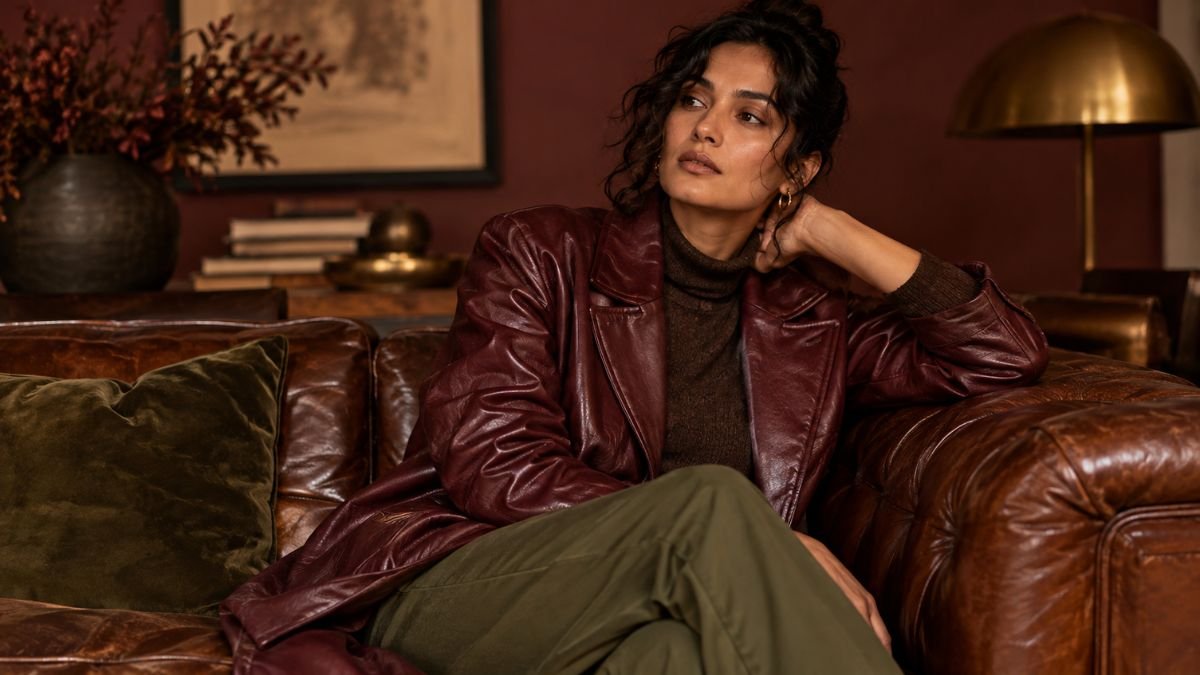
Fall 2026 is giving women a palette that feels rich without depending on black: burgundy, chocolate brown, and olive green. Each color is strong enough to lead an outfit on its own, but together they create a grounded autumn mix that works across tailoring, suede, knitwear, leather, satin, and outerwear.
The easiest way to wear the trio is not to divide the outfit into three equal color blocks. Let one shade dominate, use a second for structure or contrast, and reserve the third for a smaller piece such as footwear, a bag, scarf, or knit layer. That hierarchy keeps the palette refined rather than busy.
Quick Guide: How to Balance the Three Colors
| Dominant Color | Best Supporting Shade | Best Third Accent | Overall Effect |
| Burgundy | Chocolate | Olive | Rich, polished, slightly dressier |
| Chocolate | Olive | Burgundy | Grounded, luxurious, easy to wear |
| Olive | Chocolate | Burgundy | Earthy, modern, slightly utilitarian |
| Chocolate monochrome | Burgundy outerwear | Olive accessory | Low-risk way to wear all three |
| Olive monochrome | Burgundy footwear | Chocolate bag/coat | More directional without feeling loud |
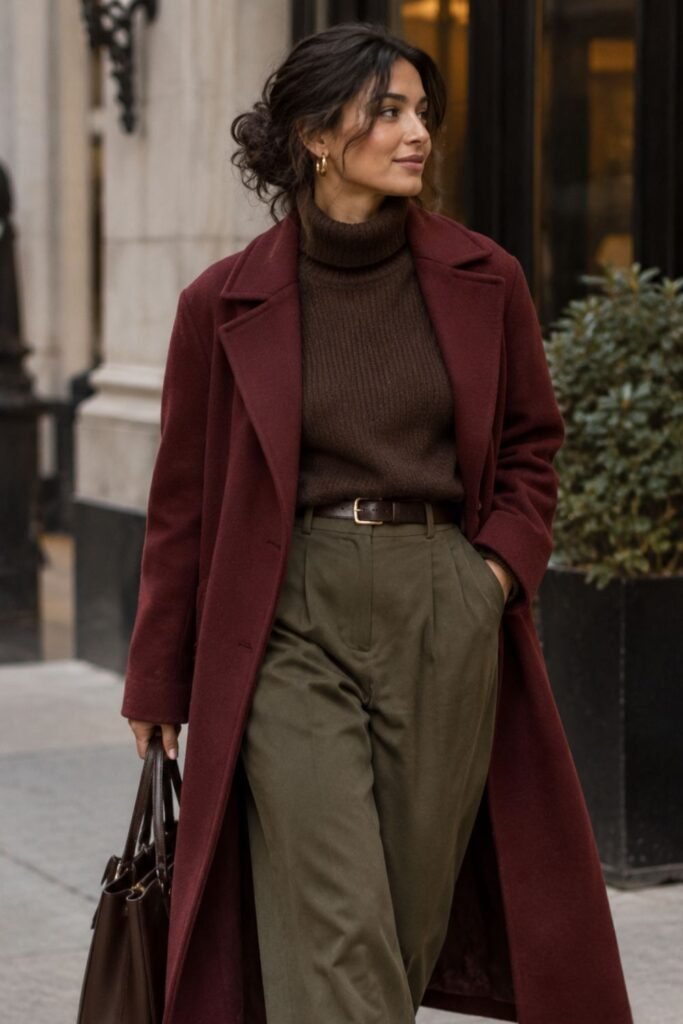
Burgundy Coat + Chocolate Knit + Olive Trousers
This is the clearest way to wear all three colors without looking over-coordinated. Burgundy acts as the statement layer, chocolate grounds the torso, and olive behaves almost like a neutral below the waist.
Best for: Workdays, city weekends, and polished daytime dressing.
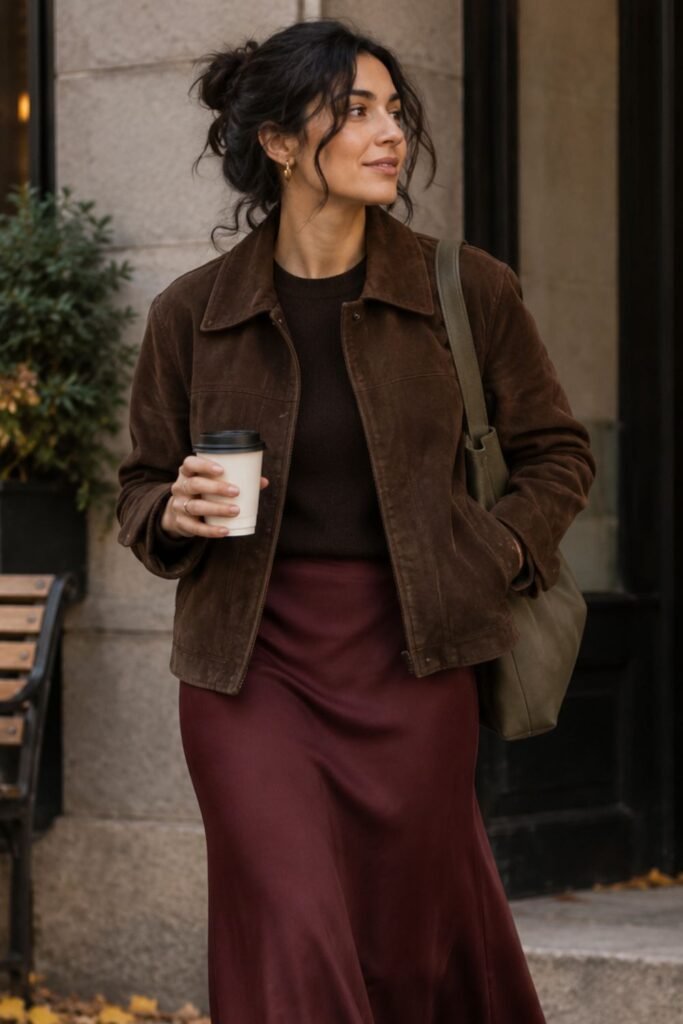
Chocolate Suede Jacket + Burgundy Midi Skirt
Suede gives chocolate brown depth, while the burgundy skirt keeps the outfit from turning into an all-neutral look. Olive works best here as a smaller accessory accent.
Best for: Brunch, lunches, and transitional fall days.
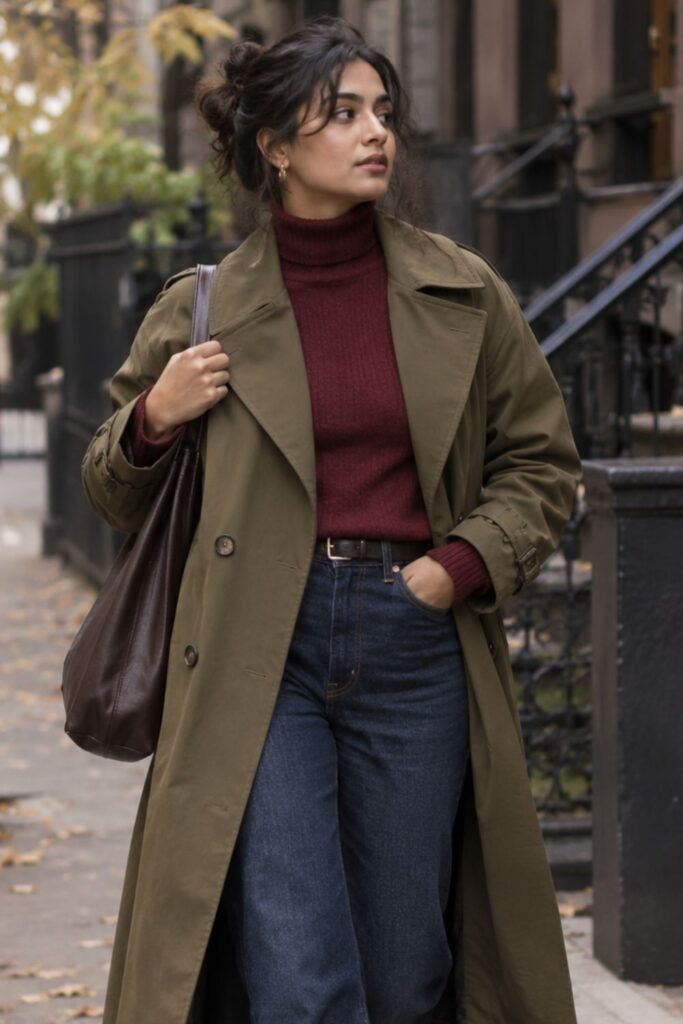
Olive Trench + Burgundy Turtleneck + Dark Denim
Dark denim gives the palette breathing room. The olive outer layer reads utilitarian, while burgundy near the face creates richer contrast.
Best for: Casual office days, errands, and weekend city outfits.
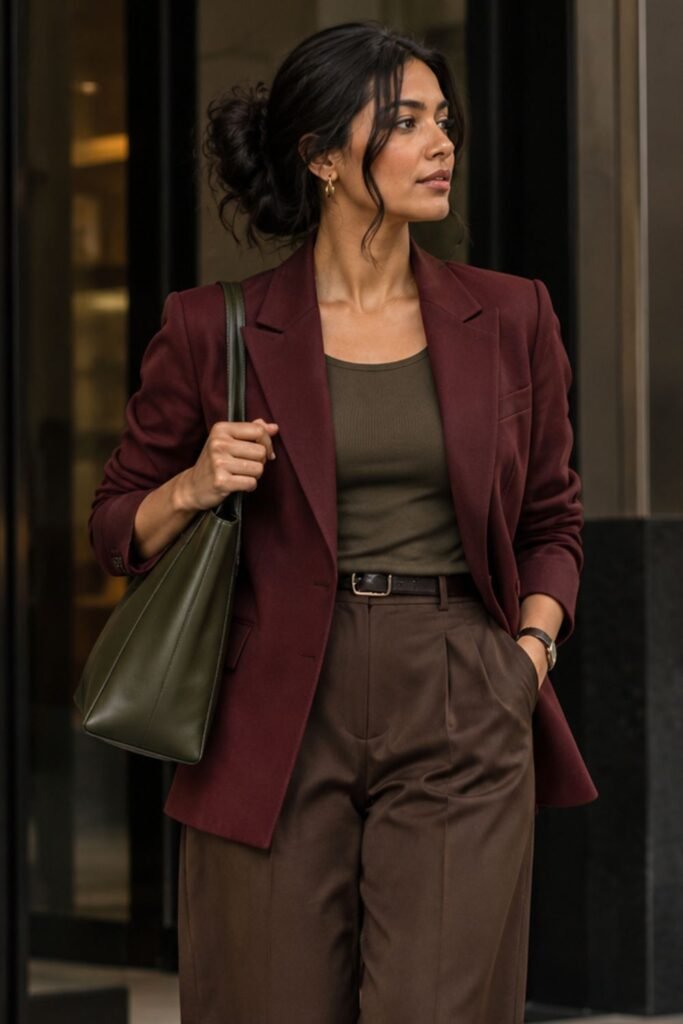
Burgundy Blazer + Chocolate Wide-Leg Trousers
The blazer-trouser contrast is strong enough to feel intentional but still office-ready. Keeping olive small prevents the palette from becoming visually heavy.
Best for: Professional settings and dinner after work.
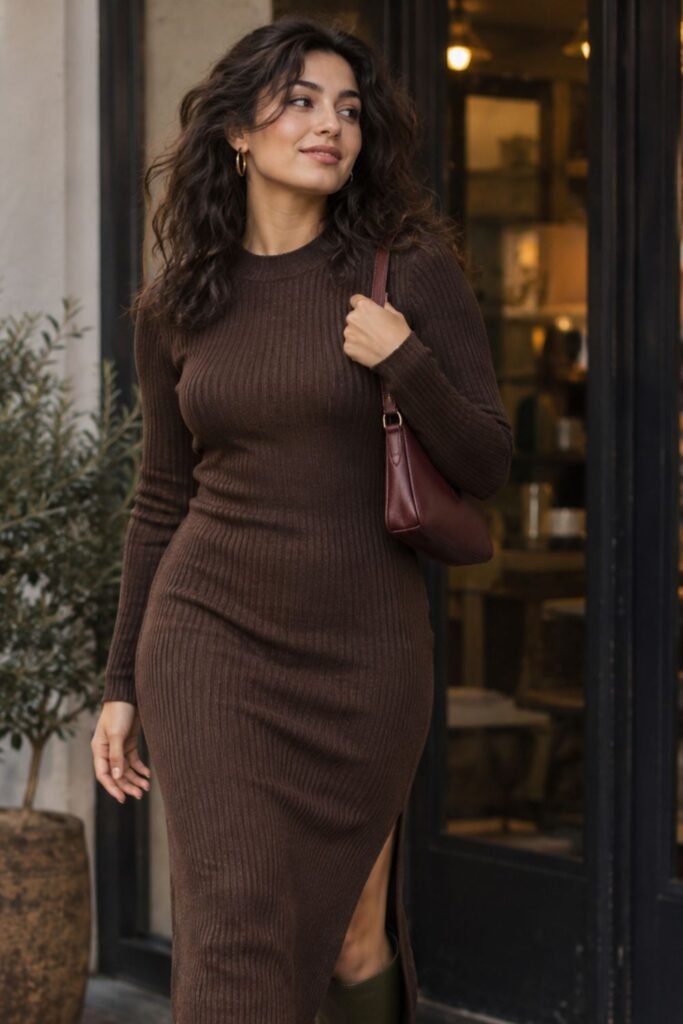
Chocolate Knit Dress + Olive Knee Boots
A one-piece brown base makes the color accents easy to control. Olive footwear is more unexpected than black, and burgundy adds a richer top note.
Best for: Lunches, date nights, and smart casual events.
Olive Suede Skirt + Burgundy Cardigan
This look uses texture to separate two deep colors that might otherwise blend together. The cardigan keeps the upper half soft, while suede gives the skirt structure.
Best for: Daytime events, creative offices, and fall weekends.
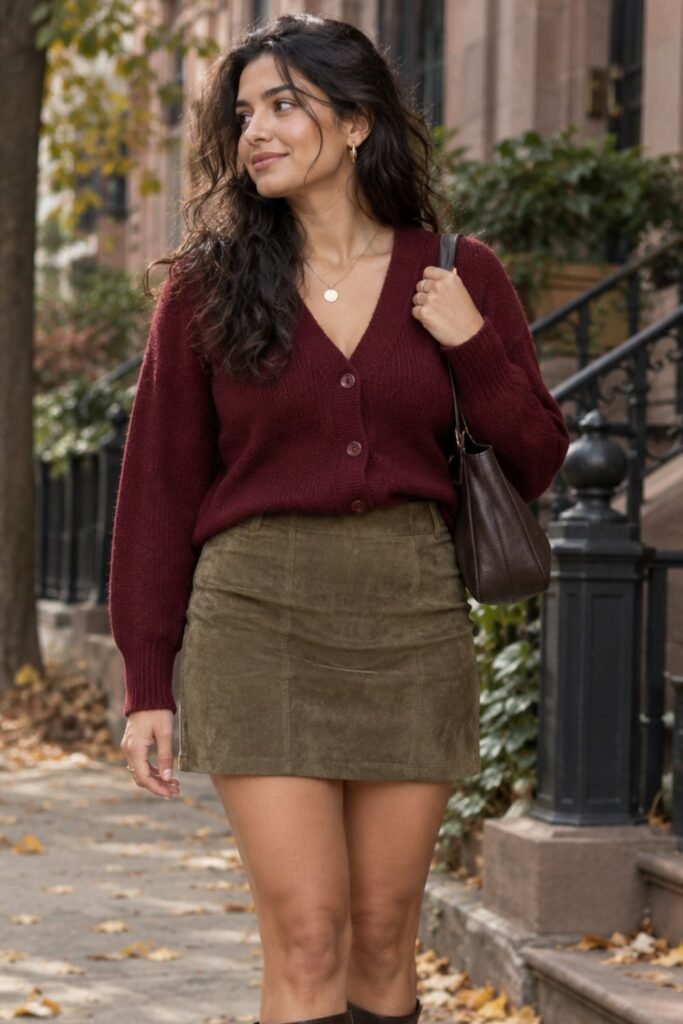
Chocolate Leather Jacket + Olive Column Skirt
Leather gives the chocolate shade visual weight, so the olive skirt should stay simple and clean. Burgundy works best as the smallest, sharpest accent.
Best for: Dinner, gallery visits, and city evening outfits.
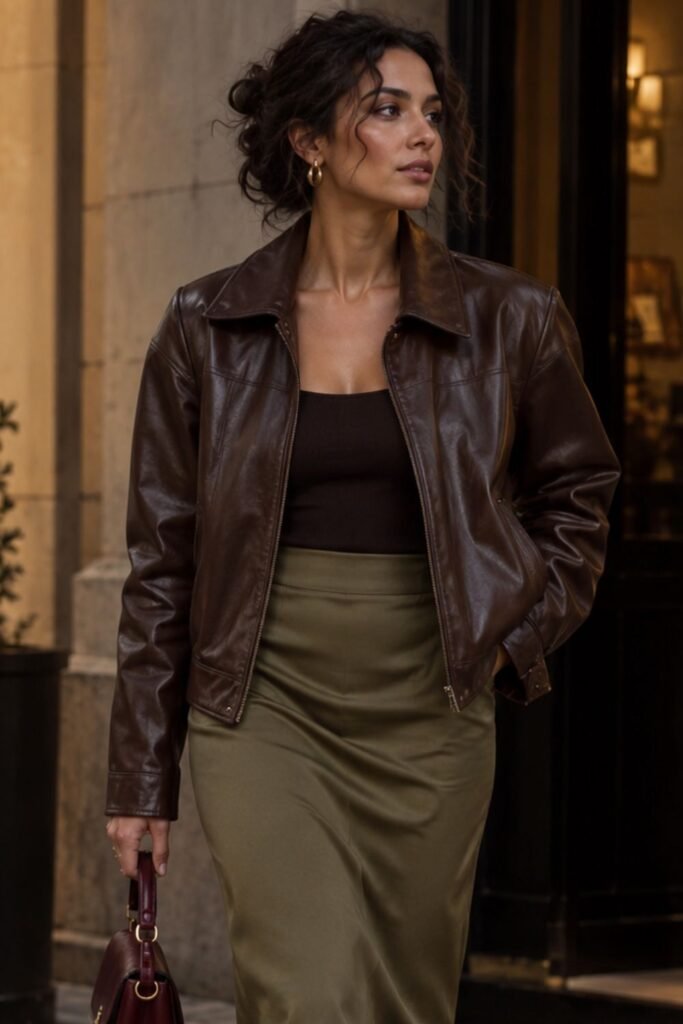
Tonal Burgundy Suit + Olive Knit
The suit supplies one dominant color story, while olive interrupts the expected black-or-cream base. Brown accessories soften the contrast and keep the look autumnal.
Best for: Work presentations, events, and polished day-to-evening dressing.
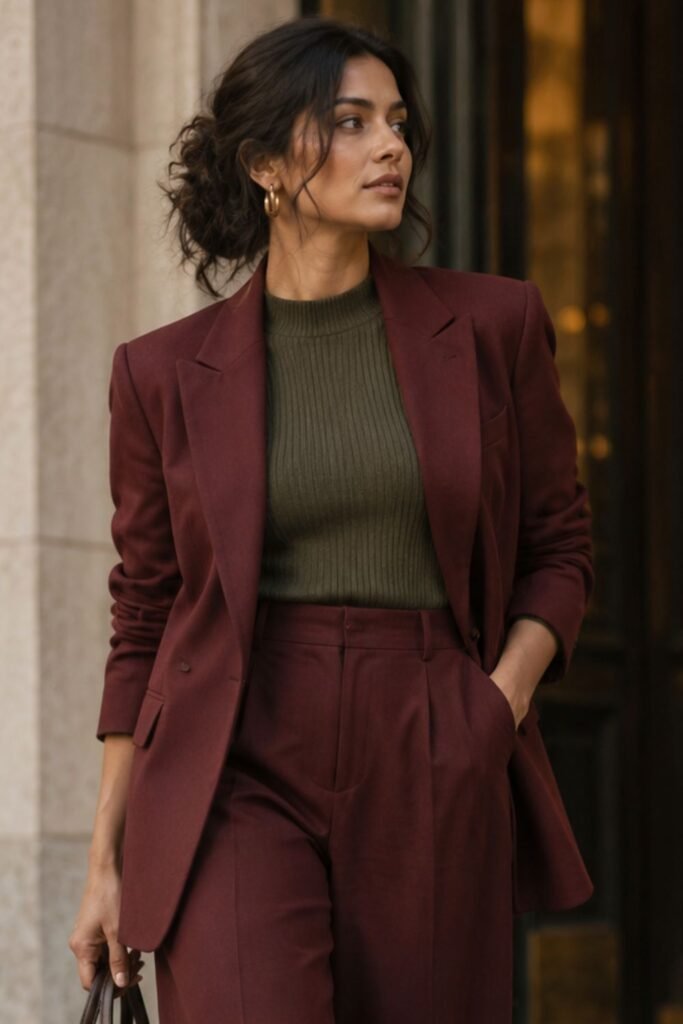
Olive Utility Jacket + Chocolate Satin Skirt
The contrast between practical outerwear and fluid satin makes the outfit feel current without relying on trend-heavy shapes. The burgundy accent gives it a sharper finish.
Best for: Transitional weather and casual dinners.
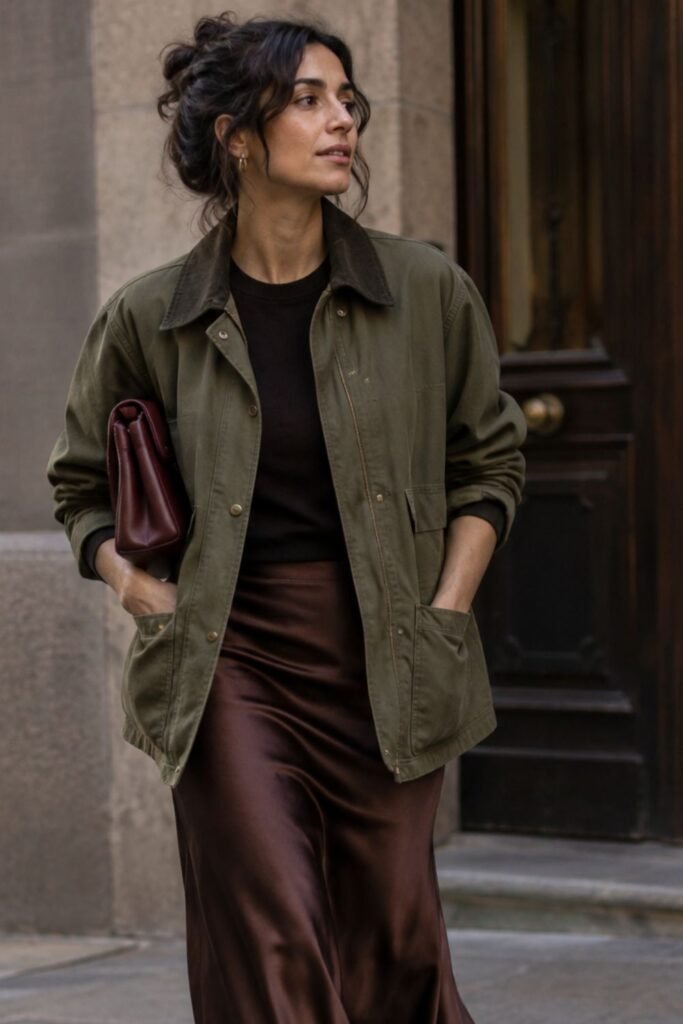
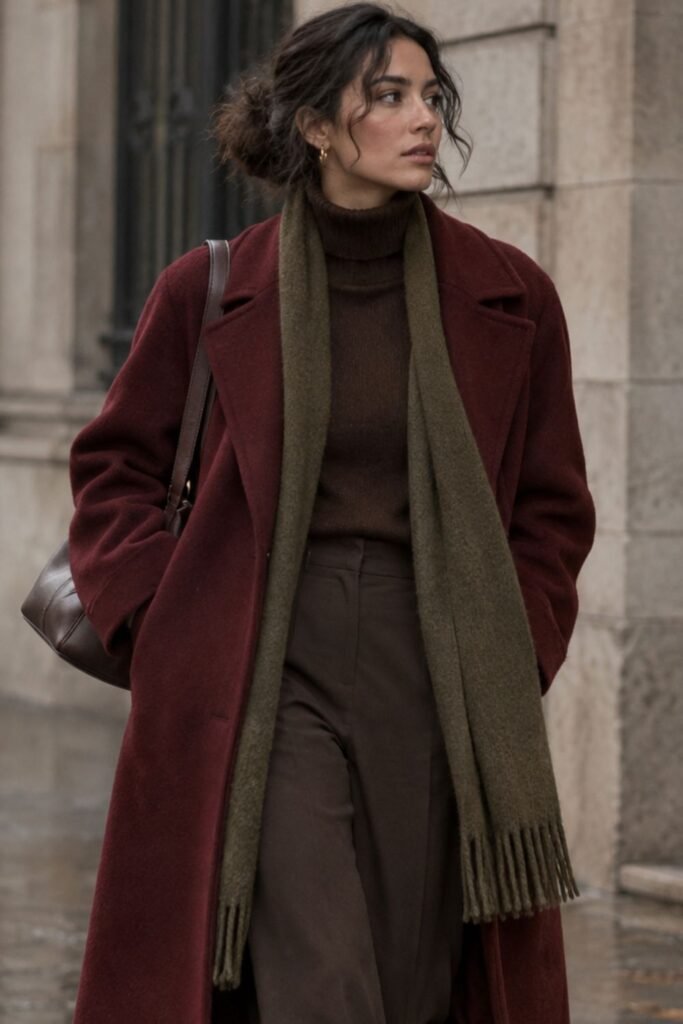
Chocolate Monochrome + Burgundy Coat
Tonal brown makes a sophisticated base and lets the burgundy coat carry the visual focus. Olive becomes an earthy bridge rather than a third competing statement.
Best for: Cold-weather commuting and polished everyday wear.
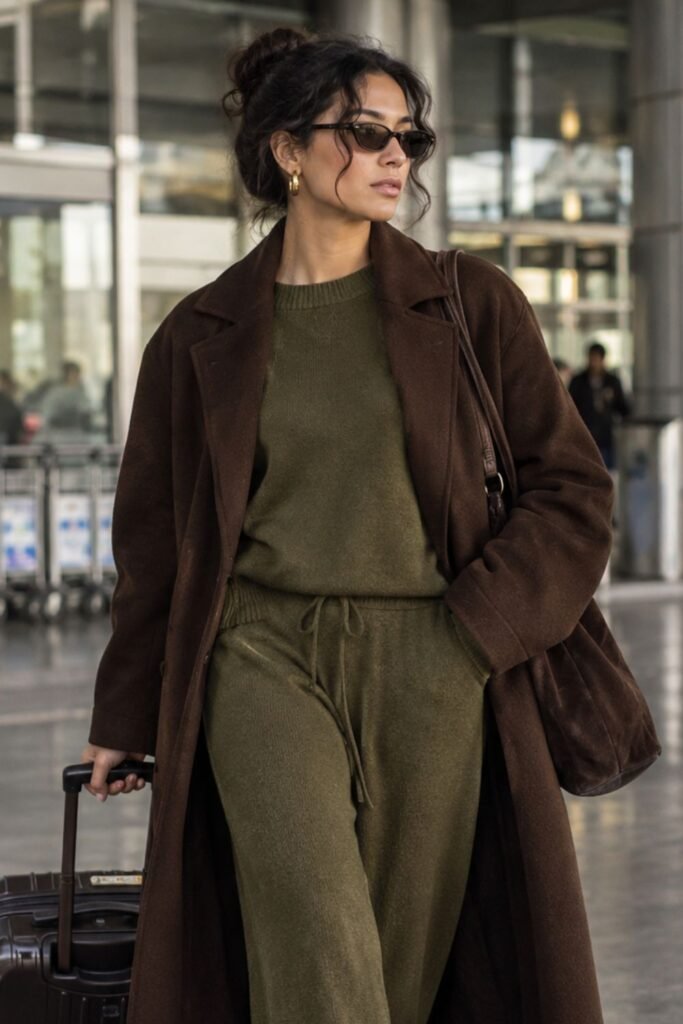
Olive Knit Set + Burgundy Boots
A monochrome olive base feels calmer than mixing all three colors across equal-sized pieces. Burgundy footwear adds contrast low on the body, while chocolate keeps the outer layer grounded.
Best for: Travel days, shopping, and comfortable polished dressing.
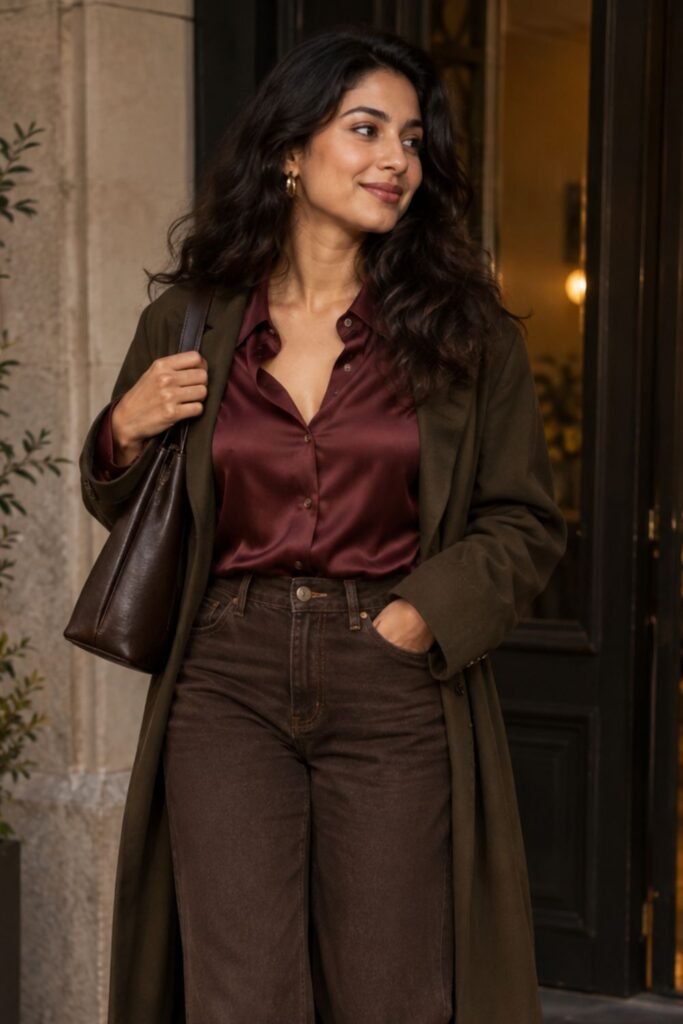
Burgundy Satin Blouse + Chocolate Denim
Satin gives burgundy enough light reflection to stand apart from the dark brown bottom. Olive outerwear adds depth without pushing the look toward black.
Best for: Dinner, casual offices, and evening plans.
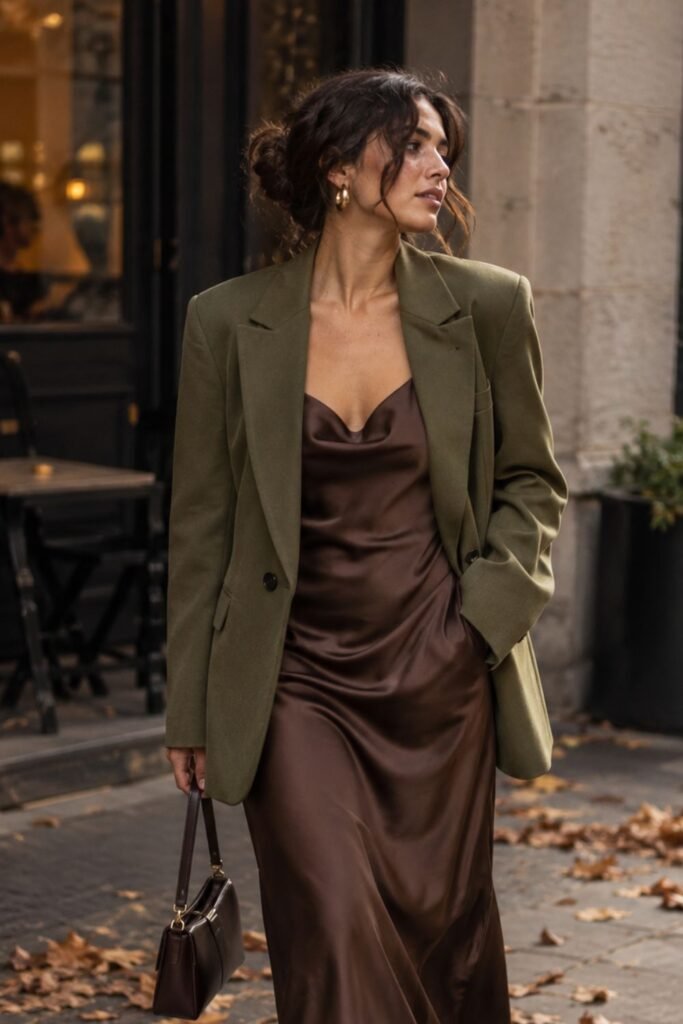
Olive Blazer + Chocolate Slip Dress
The fluid dress and structured blazer balance each other. The combination is especially useful when a slip dress needs more coverage for fall.
Best for: Date nights, dinners, and dressier autumn events.
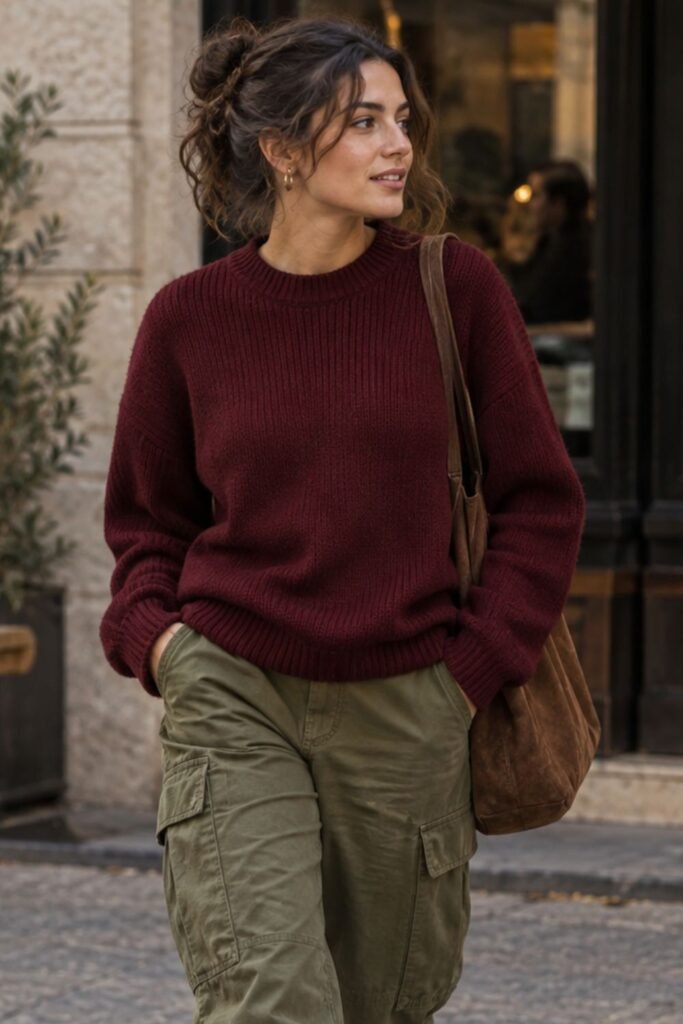
Burgundy Sweater + Olive Cargo Trousers
This is the most casual version of the palette. The key is choosing cargo trousers with a controlled leg shape so the outfit feels intentional rather than purely utilitarian.
Best for: Weekends, travel, and casual fall days.
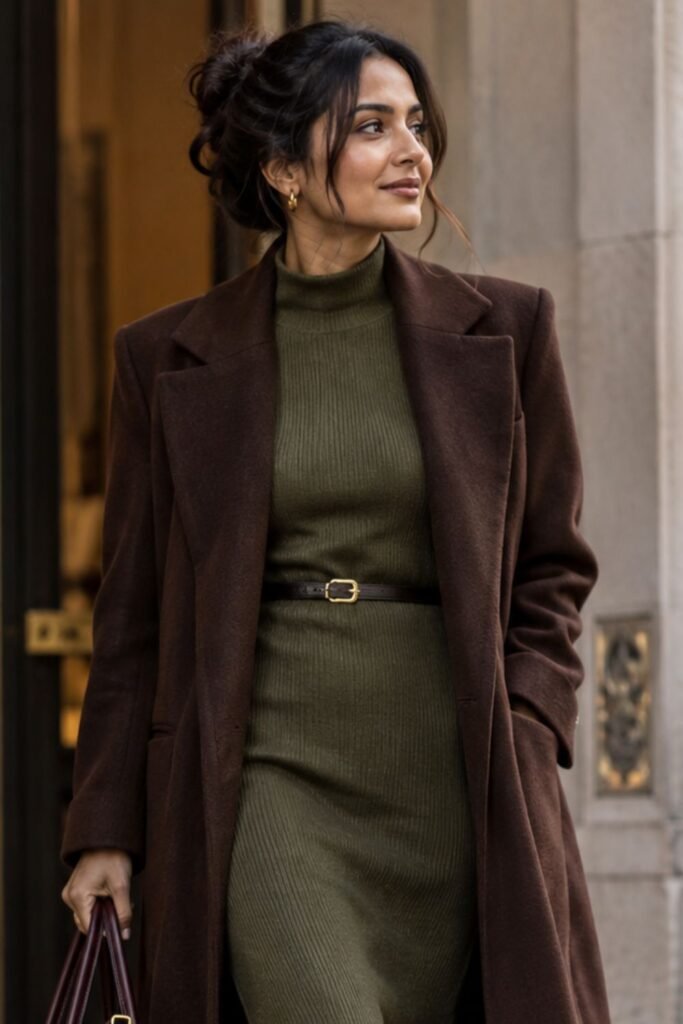
Chocolate Coat + Olive Dress + Burgundy Bag
This look keeps every piece in a single strong block of color. The result feels refined because the palette is rich but the silhouettes are uncomplicated.
Best for: Office events, dinners, and cooler autumn days.
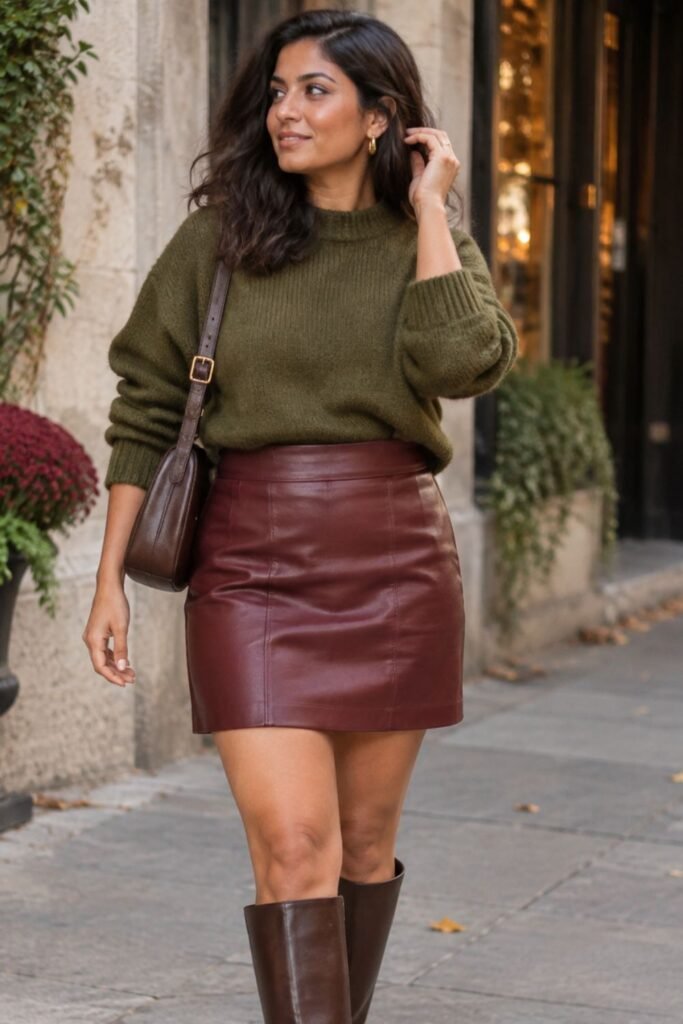
Burgundy Leather Skirt + Olive Sweater + Chocolate Boots
Leather gives burgundy a different surface from the matte knit, which keeps two saturated colors from competing. Brown boots visually connect the outfit to the season.
Best for: Weekend dinners, date nights, and polished casual looks.
Why These Colors Work Together
All three sit in a muted, deep part of the autumn spectrum. Burgundy brings red depth, chocolate supplies a near-neutral brown base, and olive adds an earthy green counterpoint. Because none of them is especially bright, they can coexist without producing the hard contrast you would get from primary colors.
Texture makes the combination more convincing. Chocolate suede, burgundy leather, olive wool, and satin all reflect light differently. That variation helps adjacent dark shades stay visually separate even when their values are similar.
Fabric and Proportion Matter More Than Matching Perfectly
Do not chase exact color matches across pieces. A slightly warmer chocolate coat can sit beautifully beside a cooler burgundy bag, while muted olive often works better than a brighter military green. What matters more is keeping the garment proportions intentional: structured outerwear with straighter trousers, a fluid skirt with a firmer jacket, or a fitted knit under a fuller coat.
Movement matters too. Satin and bias-cut skirts need enough room to drape; suede and leather carry more visual weight; chunky knits can overwhelm a full skirt if both pieces are bulky. The palette is forgiving, but the silhouette still needs hierarchy.
Shoes and Accessories: The Easiest Entry Point
If wearing all three colors feels too deliberate, introduce the third shade through shoes or a bag. Burgundy loafers with chocolate trousers, olive suede boots under a brown dress, or a chocolate tote with an olive coat all create the same palette connection with less commitment.
Gold and antique-brass jewelry generally complement these warm, earthy tones, while silver can work if the outfit leans cooler or more minimal. The jewelry should support the clothes rather than become a fourth competing color story.
Useful Redounds Reads
For a more neutral-led wardrobe, see Redounds’ old money outfit ideas. For daytime autumn layering, Redounds’ fall brunch outfits provides practical combinations using blazers, knits, skirts, and boots. If you want a richer red dress direction, dark cherry red dress ideas is the closest color-specific companion article.
Frequently Asked Questions
Do burgundy, chocolate brown, and olive green actually go together?
Yes. All three are deep, muted autumn colors, so they share similar visual weight. The combination works best when one color leads and the other two appear in smaller supporting pieces.
Which color should I wear closest to my face?
Choose the shade that suits your coloring best. Burgundy can add richness, chocolate can feel softer and more neutral, while olive varies widely from yellow-green to gray-green. A scarf or knit is an easy way to test the effect.
Can I wear all three colors to work?
Yes. Keep the silhouettes tailored and limit the number of statement textures. A burgundy blazer, chocolate trousers, and olive bag is more office-friendly than three oversized or highly embellished pieces.
What shoes work with this palette?
Chocolate-brown boots and loafers are the easiest, but burgundy and olive footwear are also current. Black works too when you need a cleaner, more formal finish.
Can these colors work for evening outfits?
Yes. Shift the fabrics rather than the palette: burgundy satin, chocolate leather, olive silk, velvet, and polished accessories make the same colors feel more evening-appropriate.
Is olive green still a trend for Fall 2026?
Yes. ELLE identifies olive as one of Fall 2026’s strongest color directions, with the shade appearing in outerwear, dresses, accessories, footwear, and suede.
Is burgundy still fashionable in Fall 2026?
Yes. Vogue includes burgundy in its Fall 2026 color trend report and notes its runway presence across houses including Miu Miu, Gabriela Hearst, Chanel, Louis Vuitton, and Proenza Schouler.
How do I keep a three-color outfit from looking too busy?
Use a 60-30-10 approach informally: let one color dominate, use the second on a substantial supporting piece, and keep the third to an accessory, shoe, or small layer.
The Practical Takeaway
Burgundy, chocolate, and olive work best when they behave like an autumn neutral system rather than three separate trends. Start with one dominant shade, vary the fabrics so the colors stay distinct, and let shoes or accessories carry the third tone when the outfit already has enough visual weight.