

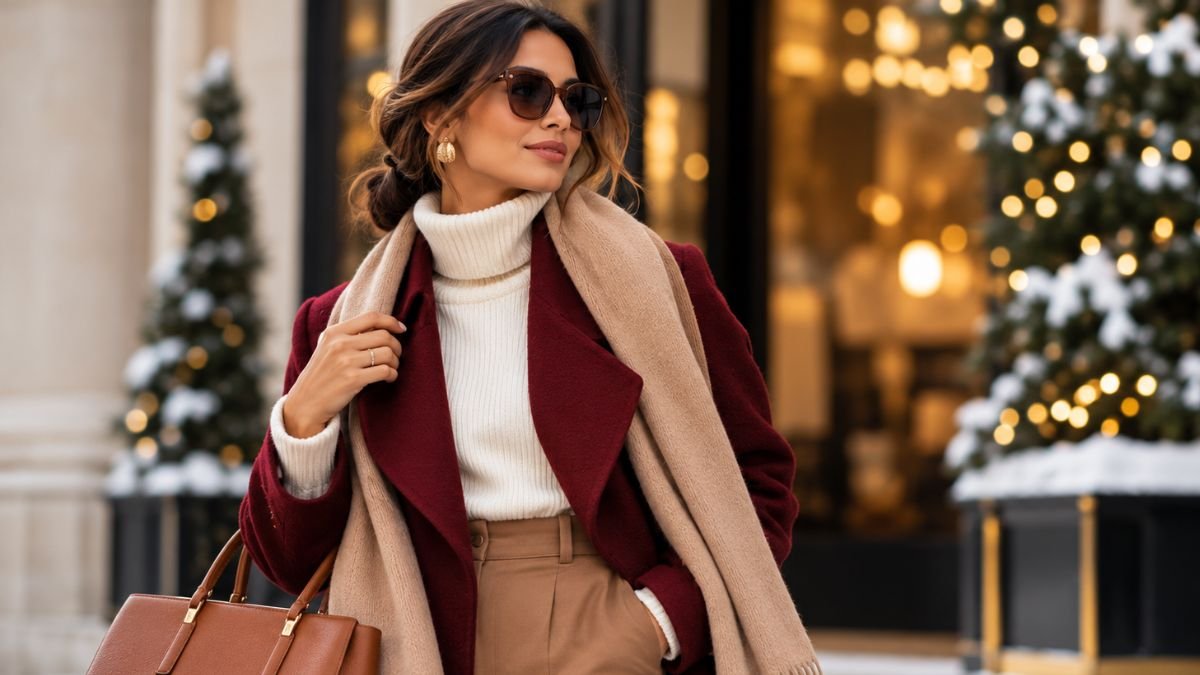
Winter color combinations do most of the work in a cold-weather wardrobe. Deep brown, burgundy, and charcoal remain dependable foundations, and brighter shades such as cobalt, poppy red, chartreuse, and purple give those familiar pieces a fresh partner. You rarely need a new wardrobe to make the change. One existing coat, knit, or pair of trousers paired with a new companion color is usually enough. These 12 pairings turn the season’s richer palette into outfits you can wear to work, on weekends, and out to dinner.
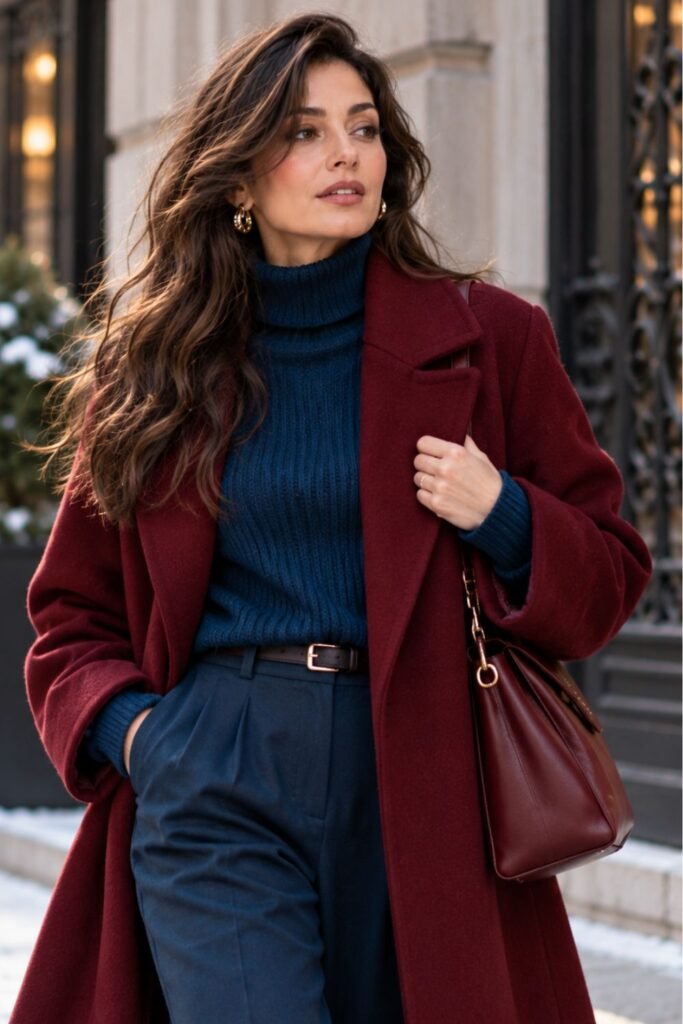
Burgundy and Petrol Blue
Petrol blue is a deep blue with a green cast, and its cool depth keeps burgundy from looking too traditional. Let the coat carry the warmer color and wear a fine-gauge petrol knit underneath so the layers sit flat beneath tailoring. Dark denim or charcoal trousers keep the lower half quiet, and burgundy loafers or a petrol scarf can repeat one of the two shades to tie the outfit together. The pairing flatters most skin tones because both shades are deep and muted. It looks best in wool, cashmere, or brushed cotton.
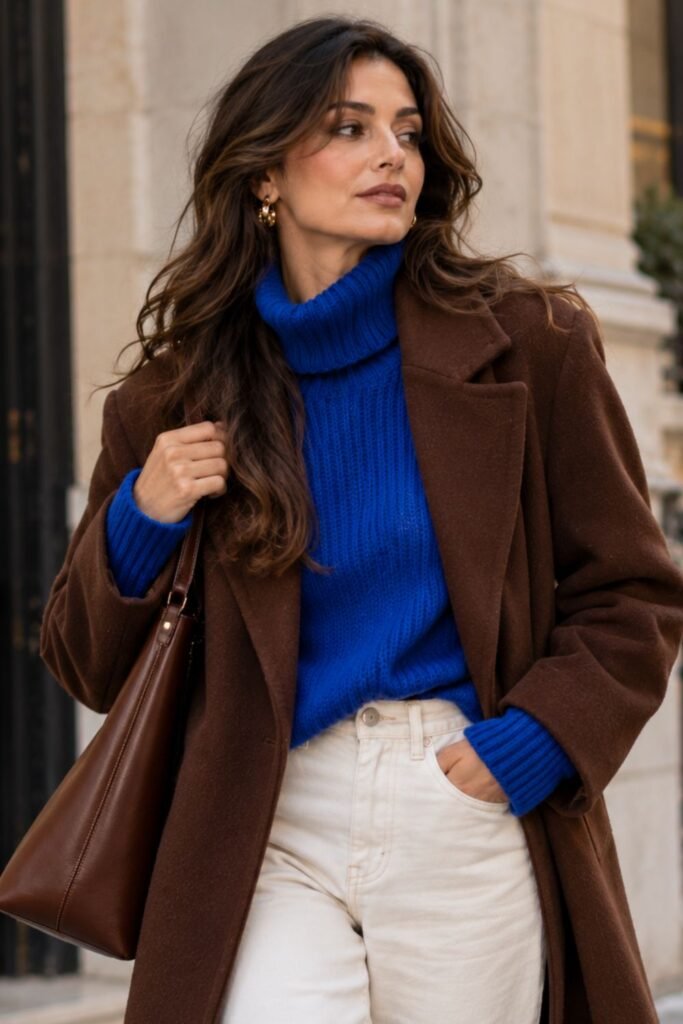
Chocolate Brown and Cobalt Blue
Cobalt makes chocolate tailoring look sharper without requiring a second bold garment. A cobalt crewneck or shirt under a chocolate blazer or coat is the simplest version, and ecru denim adds separation between the saturated top and the dark outer layer. Keep accessories in brown suede or dark leather so the blue stays the single focal point. If cobalt feels too strong near your face, move it to a bag, gloves, or socks peeking above loafers. This combination is especially useful on grey days, when an all-brown outfit can look flat.
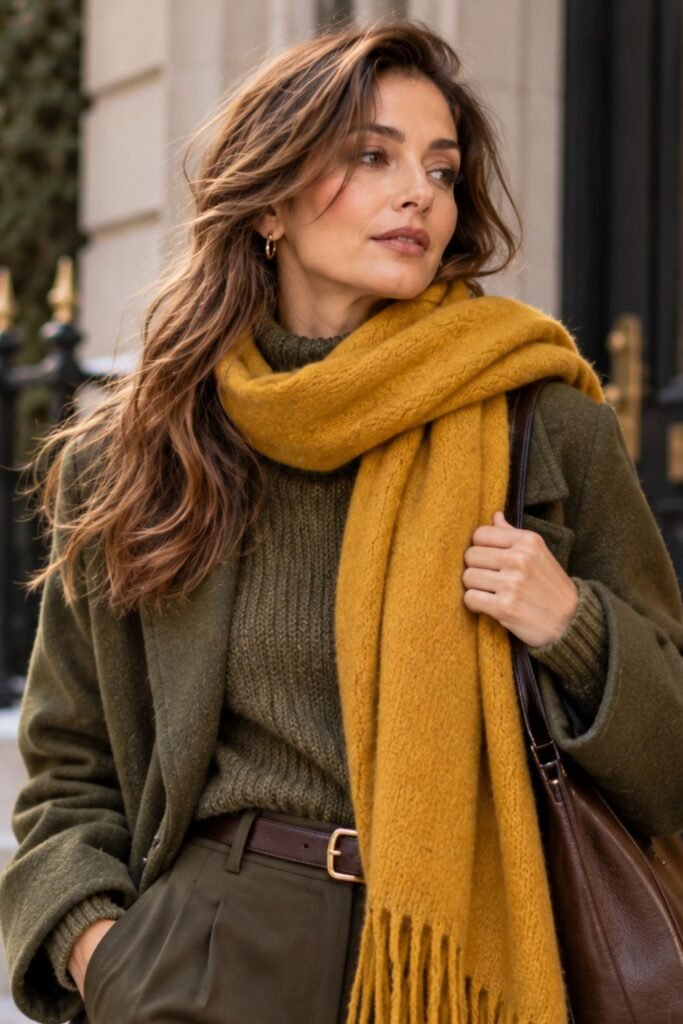
Olive Green and Mustard Yellow
A muted olive base gives mustard room to stand out without overwhelming the look. Start with a mustard scarf, a beanie, or one of this season’s winter bonnets before investing in a bright coat. Brushed wool, corduroy, and chunky ribbing help both colors look substantial in cold weather, while thin, shiny fabrics can make mustard look cheap. Olive cargo trousers with a mustard turtleneck make a relaxed weekend outfit, and an olive wool coat over a mustard midi skirt is a dressier option. Finish with brown or black boots, since tan can blur into the mustard.
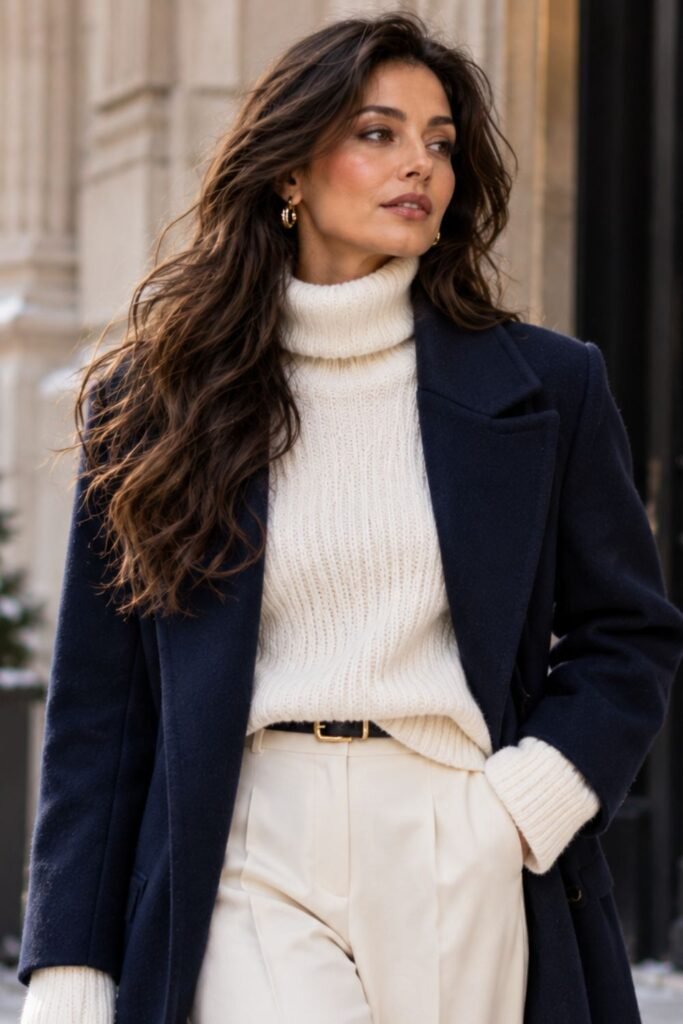
Navy Blue and Off-White
This high-contrast neutral pairing looks considered without feeling as stark as black and white. Choose an off-white with a soft ivory undertone, which flatters more complexions than optical white. A cream cable knit with navy wide-leg trousers, or a navy peacoat over ivory jeans, covers most weekday plans. Check that light knits are thick enough to stop darker layers from showing through. Gold jewelry warms the palette, and a cognac belt or bag adds a third tone if the outfit feels too crisp. It also photographs cleanly, which makes it a reliable travel combination.
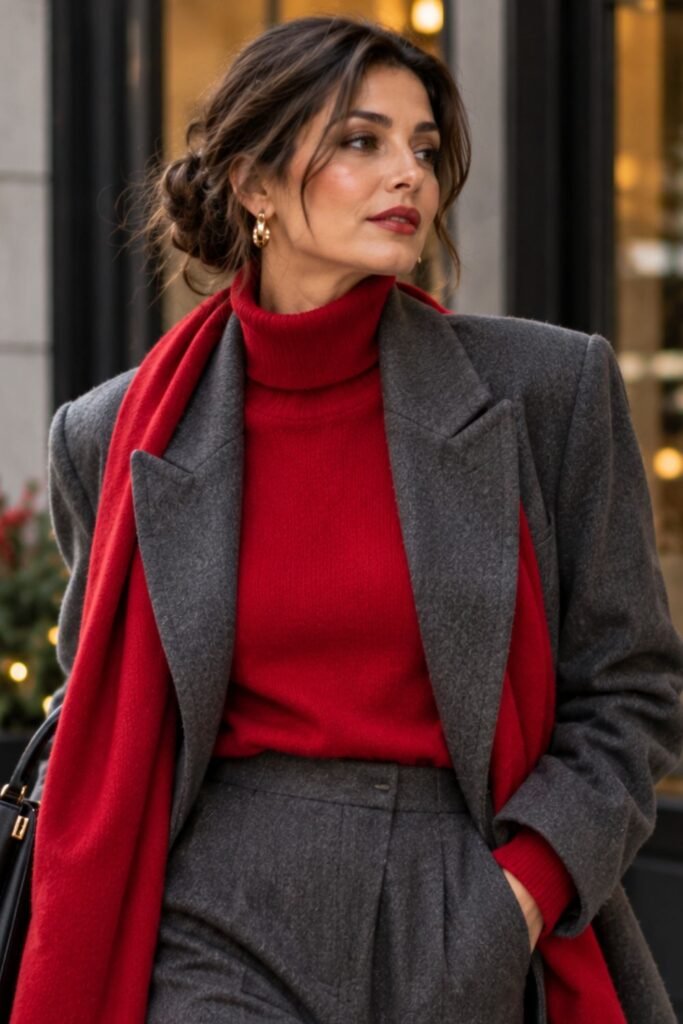
Charcoal Gray and Poppy Red
Poppy red gives gray tailoring a clear focal point. Keep the red near your face with a knit, blouse, or scarf, and keep accessories dark so the outfit can move from the office to dinner. Charcoal is softer than black, so the red reads warm and lively instead of harsh. A charcoal suit with a poppy red fine-knit top is an easy starting point, and a red lip can stand in for the garment if you prefer a quieter version. Avoid mixing poppy with burgundy or bright pink in the same outfit, as the competing reds tend to clash.
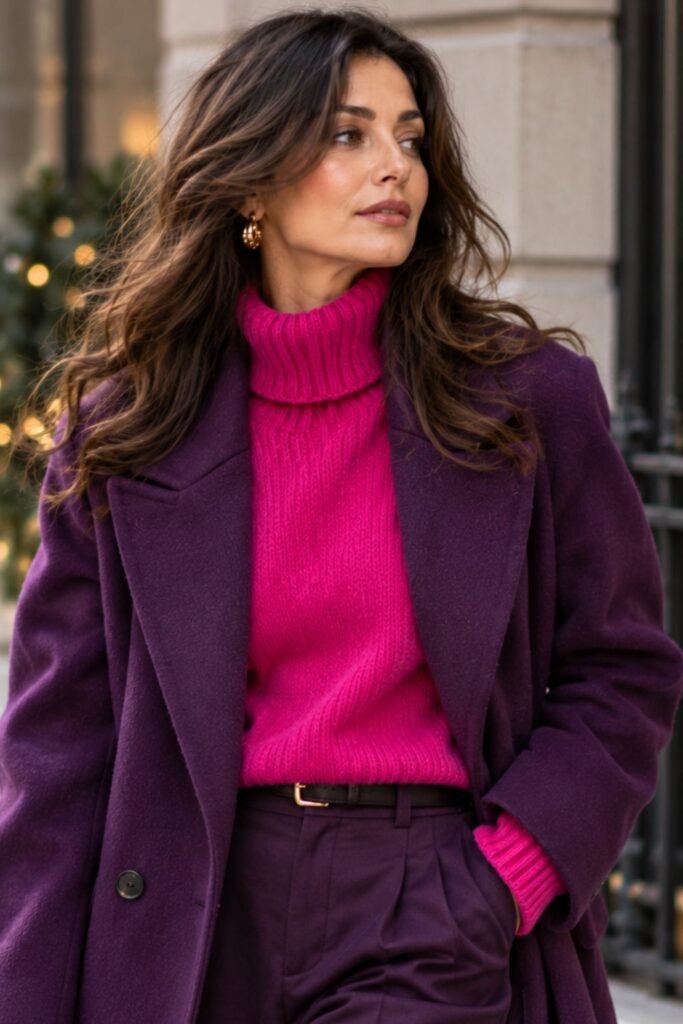
Purple and Fuchsia Pink
Two saturated shades can work together when their visual weights are different. Let purple cover the larger surfaces, such as a coat, dress, or trousers, and keep fuchsia to a controlled accent at the neckline, on a bag, or on your shoes. Matching the depth matters: plum or aubergine pairs best with hot fuchsia, while lighter lilac needs a softer pink. Keep everything else neutral, ideally black or charcoal, so the two colors stay the focus. This pairing suits holiday parties and anyone who already enjoys wearing bright color.
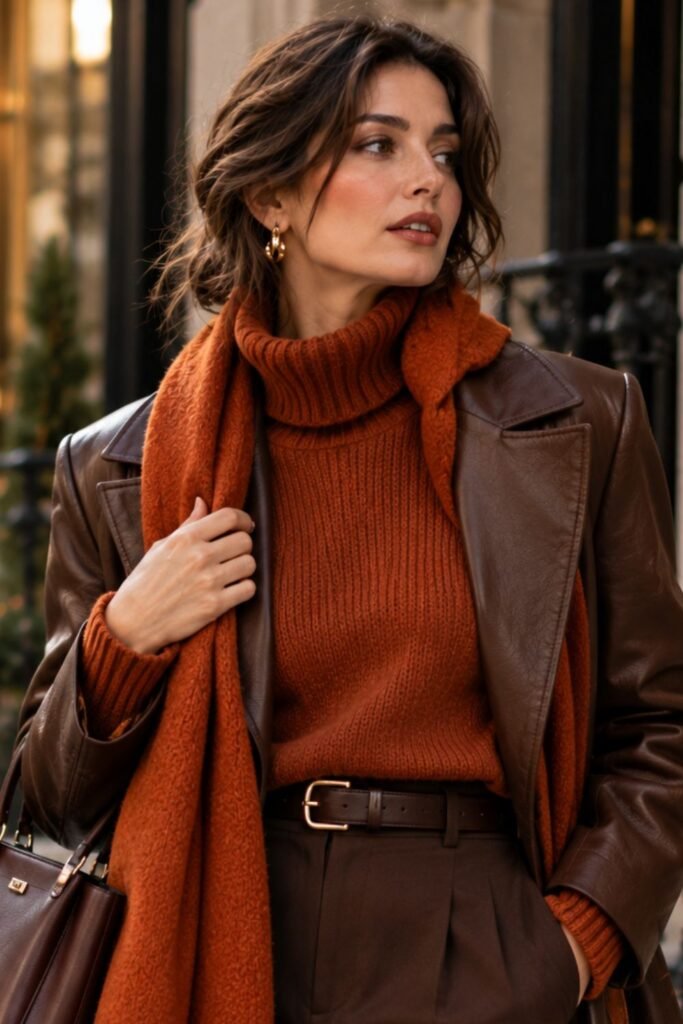
Rust Orange and Espresso Brown
Rust warms a dark brown outfit while keeping the palette earthy and easy to wear. The contrast is most visible when the rust piece has a matte surface, such as a wool sweater or suede shirt, set against smooth espresso leather outerwear. Try a rust turtleneck with espresso trousers and a brown leather jacket, or an espresso knit dress with rust tights for something less expected. Gold hardware and tortoiseshell accessories suit this pairing. It also bridges autumn and deep winter well because it uses colors many people already own.
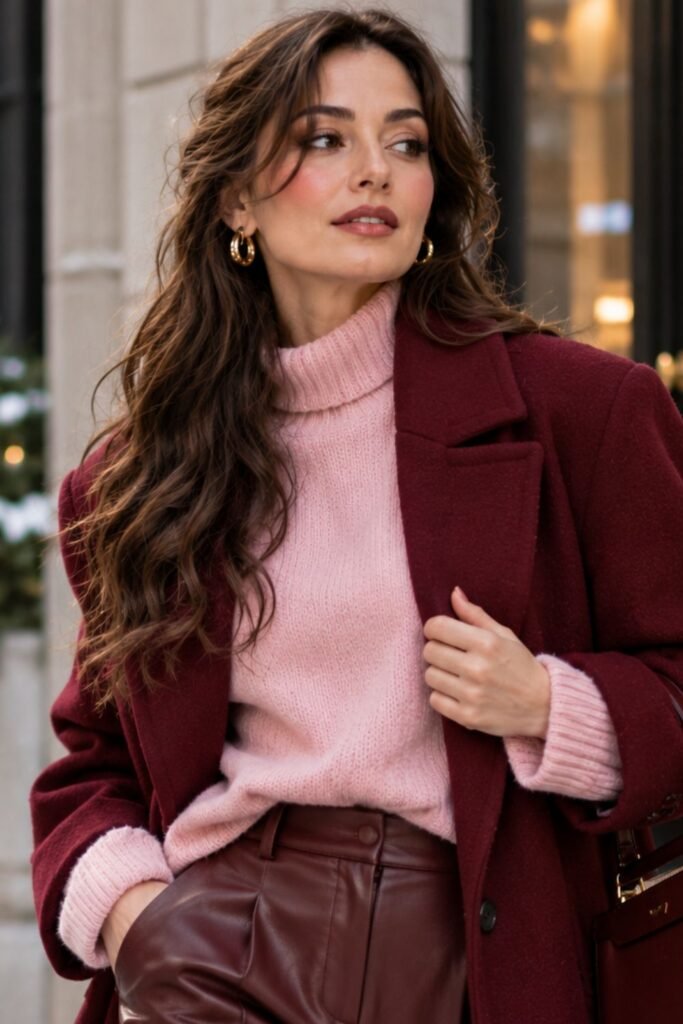
Oxblood and Soft Pink
A pale knit breaks up the intensity of oxblood and keeps the outfit from looking heavy. Choose a dusty or powdery pink for a quieter, romantic result, or a more saturated pink if you want a deliberate color-blocked look. Oxblood leather trousers or a skirt with a soft pink sweater is the classic route, and an oxblood coat over a pink knit dress works well for evenings. Repeat oxblood in a bag or boots so the pink does not float on its own. Silver and pearl jewelry suit cooler pinks, while gold suits warmer blush shades.
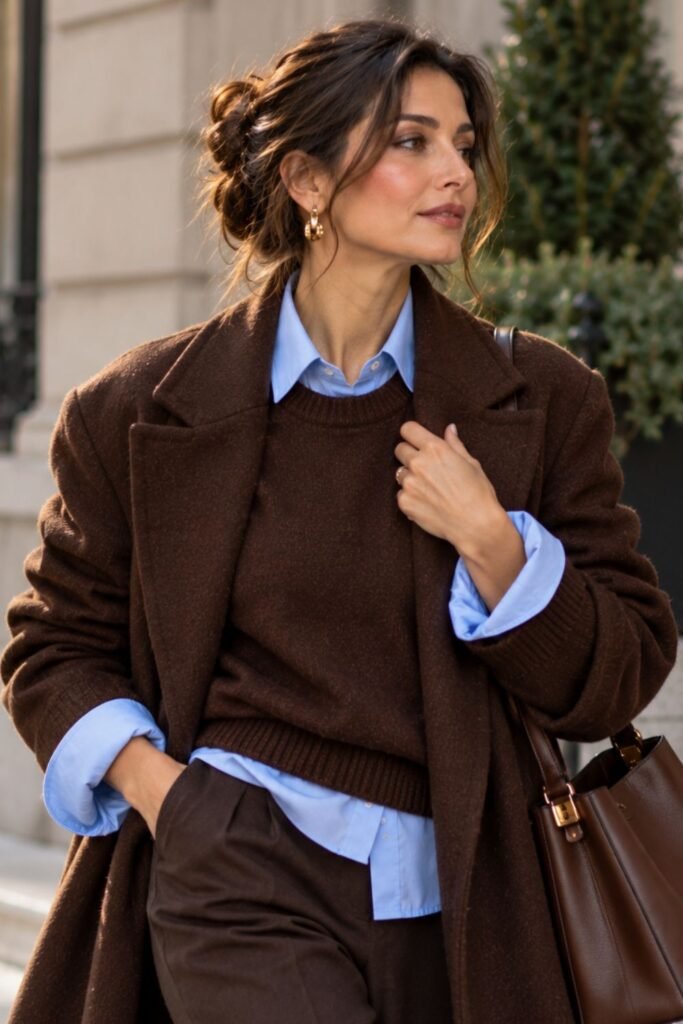
Sky Blue and Dark Chocolate
A glimpse of sky blue at the collar and cuffs brings freshness to brown-on-brown layering. Wear a pale blue Oxford shirt under a chocolate crewneck, or a sky blue knit beneath a dark brown coat. It is one of the easiest winter color combinations to try, because it makes an existing sweater look new without buying a statement coat. Light blue denim can repeat the shade on the lower half for a relaxed weekend look. Keep the blue soft and slightly dusty so it stays wintry and avoids looking like a summer outfit.
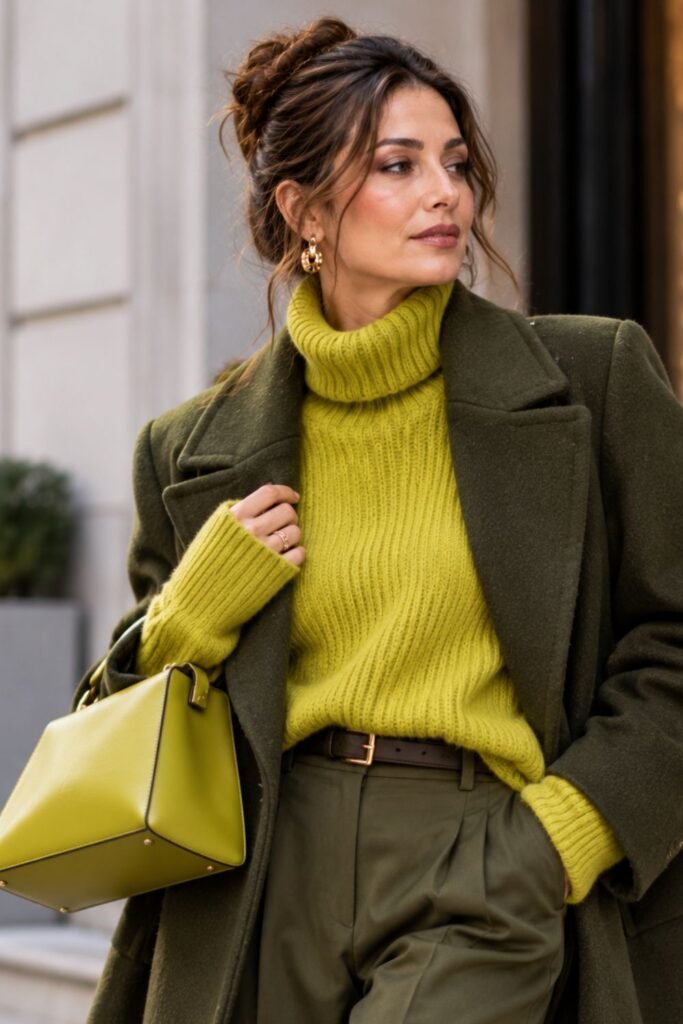
Chartreuse and Deep Olive
Chartreuse is easier to wear in small doses than across an entire coat. Against deep olive, the green-yellow accent looks connected to the rest of the outfit because both shades share a yellow base. Start with a chartreuse beanie, scarf, socks, or a slim knit under an olive jacket. If you like the effect, a chartreuse bag inspired by the latest winter handbag trends is a practical next step. Keep the remaining pieces in olive, khaki, or black, and skip other bright colors. This pairing suits warm and olive skin tones particularly well.
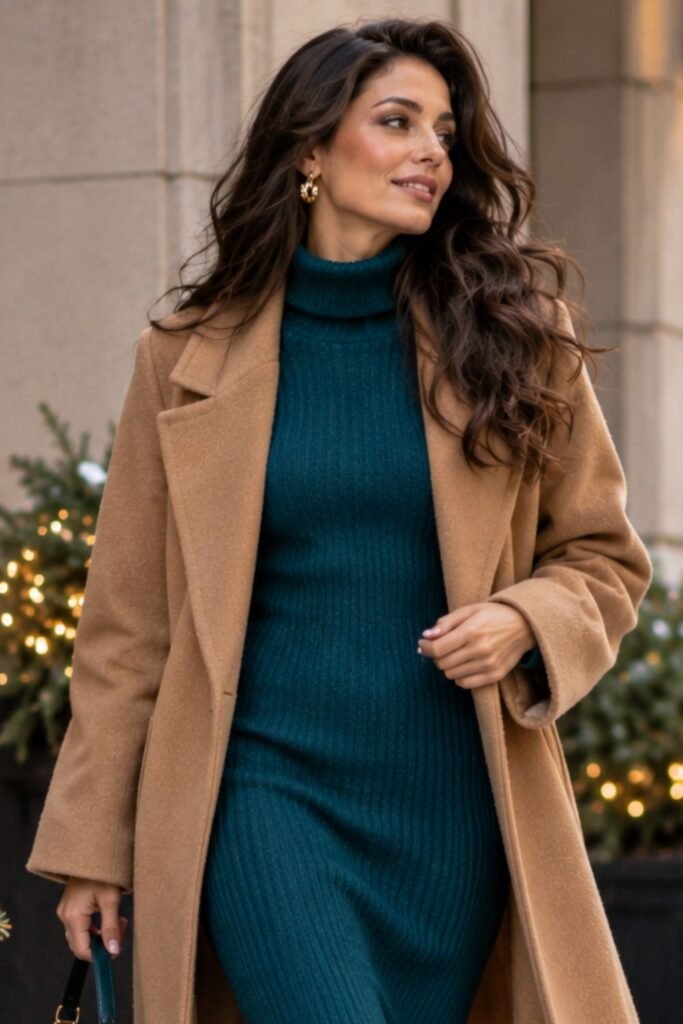
Camel and Deep Teal
Camel softens the impact of teal, while the deeper blue-green shade gives familiar neutral outerwear a new direction. A teal knit dress or sweater under a camel coat is an easy way in, and teal trousers with a camel turtleneck work for the office. If you wear a dress with boots, check the hem against the boot shaft so the proportions look intentional; a hem that meets or overlaps the boot looks cleaner than a few inches of bare leg. Brown or cognac leather accessories link the two colors smoothly.
Midnight Blue and Silver Gray
Silver gray creates a gentle contrast with inky midnight blue. The result is especially useful for office wardrobes, where bright color blocking may feel too strong. Pair a midnight blue suit or knit dress with a silver gray sweater, or wear a pale gray coat over head-to-toe navy. Soft metallic textures, such as a silver-thread knit or a satin skirt, make the pairing work for winter evenings as well. Silver jewelry and gray suede boots keep the palette cool and polished from morning to night.
How to Choose Winter Color Combinations
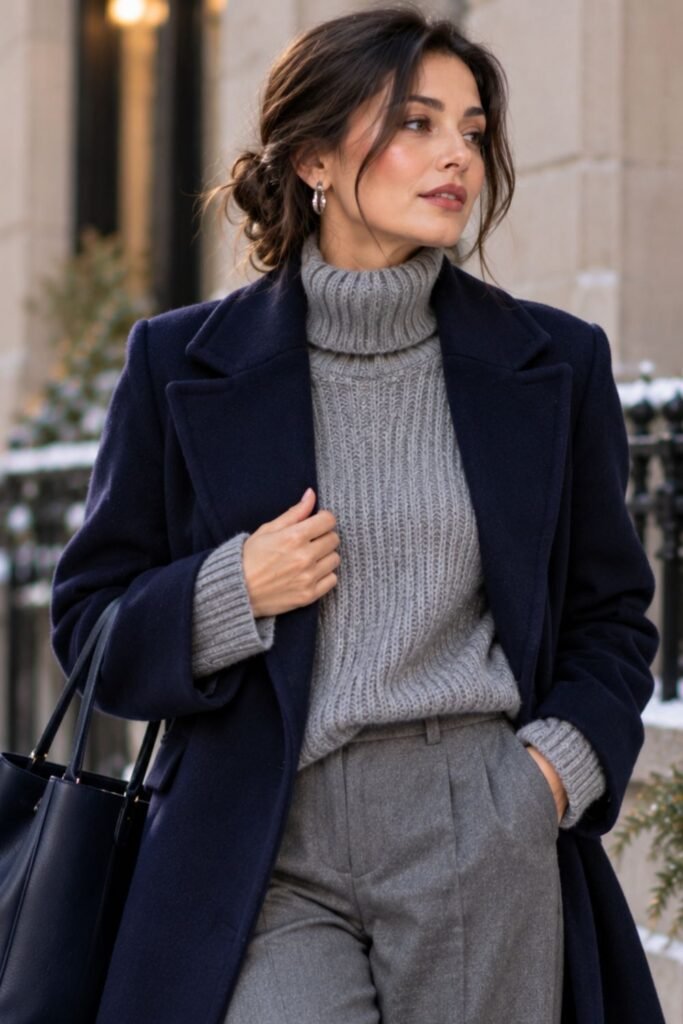
Begin with the piece you wear most often, usually a coat, trousers, or a substantial sweater. Introduce a contrasting color in a smaller knit, scarf, or shirt before committing to a new outerwear purchase. Compare colors in daylight and account for texture, since matte wool, glossy leather, velvet, and satin can make the same shade look different. The cozy winter staples every woman should own make good foundation pieces for these pairings.
For a deeper three-color approach, see our burgundy, chocolate, and olive outfit ideas, which focus on a narrower earthy palette. For layering inspiration, explore these cozy winter outfit ideas for women and adapt the palettes to the warmth and coverage your climate requires.
Frequently Asked Questions
What colors are fashionable for winter 2026?
Burgundy, chocolate, olive, navy, cobalt, purple, poppy red, and chartreuse are all strong choices this winter. Deep shades still form the base of most cold-weather wardrobes, with brighter accents used to lift them.
Does brown go with blue in winter?
Yes. Chocolate brown works with both sky blue and saturated cobalt. A blue shirt or knit under a brown coat is a straightforward starting point.
Can I wear pink in winter?
Yes. Soft pink can lighten oxblood or charcoal, while brighter fuchsia works as a stronger contrast against purple.
How many colors should a winter outfit include?
Two dominant colors are usually enough. A third neutral in footwear or accessories can connect the pieces without adding visual clutter.
Is navy better than black for winter outfits?
Neither is universally better. Navy produces softer contrast with off-white and silver gray, while black creates sharper contrast with red or white.
What is the easiest bright accent for a neutral coat?
A scarf, fine-knit top, or bag lets you test cobalt, red, or chartreuse without replacing an expensive coat.
Do different fabrics change how colors look?
Yes. Texture and reflectivity influence how a color appears. Compare wool, satin, and leather together in natural light before deciding.
Can these combinations work for office outfits?
Yes. Try navy and off-white, charcoal and poppy red, or sky blue and chocolate in tailored trousers, structured coats, and fine-gauge knits.
Making the Palette Your Own
The best winter color combinations are the ones that fit the clothes you already reach for. Start with one reliable dark layer and add a second color with a clear purpose. Fabric texture will supply depth, and the season’s bolder shades become easy to wear every day without sacrificing comfort.