
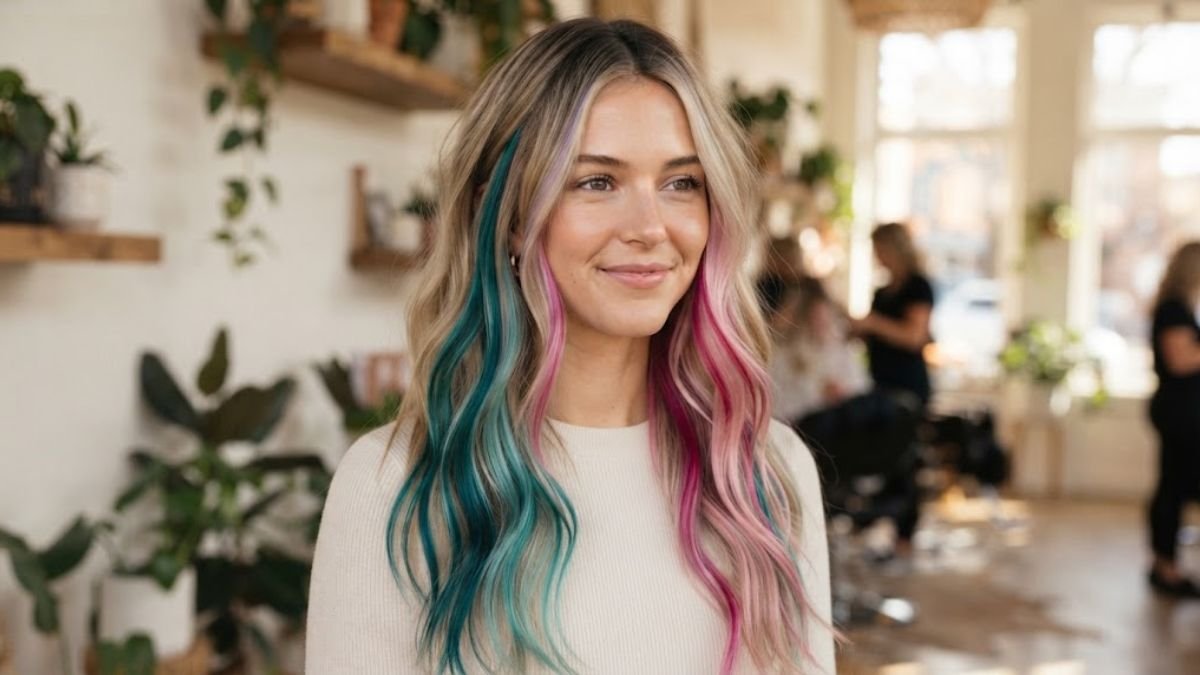
Teal and pink streaks are one of the easiest ways to turn grown-out blonde into a deliberate color choice. Visible roots and lived-in blonde have become a normal part of how people wear color, and a few ribbons of fantasy shade can make several inches of regrowth look planned. The look works best on blonde that is light enough to act as the canvas, because teal and pink only read cleanly over pale, fairly even lengths.
The strongest versions do not try to disguise every inch of regrowth. They use the darker root as contrast, leave enough blonde visible to keep the palette readable, and place the fashion shades where they can grow out without creating another high-maintenance root line.
Recent trend coverage, including Vogue’s piece on unexpected highlight placement and Allure’s 2026 hair color roundup, has leaned toward bolder sections and softer pastel tones. Teal and pink streaks apply that thinking to blonde that has already grown out.
Quick Guide: Choose the Placement Before the Color
| If You Want | Placement | Color Intensity | Maintenance |
| Barely-there color | Peekaboo or nape | Pastel/muted | Lower visibility as it fades |
| Strong face framing | Money piece + side streaks | Medium to vivid | Front color needs more frequent refresh |
| Maximum graphic impact | Halo, panels, zigzags | Vivid | Placement must stay crisp |
| Easy future removal | Mid-lengths and ends | Any intensity | Can often be trimmed gradually |
| Texture-led color | Selected curl clumps/layers | Medium | Refresh placement, not every strand |
Teal and Pink Peekaboo Ribbons
Peekaboo placement puts the color in the under layers, so your natural regrowth stays untouched on top and the teal and pink only flash through when your hair moves, is tucked behind an ear, or goes up in a ponytail. Ask your colorist for two or three horizontal panels about an inch wide, starting below the temple line, with teal on one side and pink on the other or stacked in alternating ribbons. Because the top layer shields the color from the sun, these sections tend to hold their tone longer. Style with loose waves or a half-up twist to show them off.
Best for: Medium to thick straight, wavy, or loosely curly hair; someone who wants visible color without a full-head commitment.
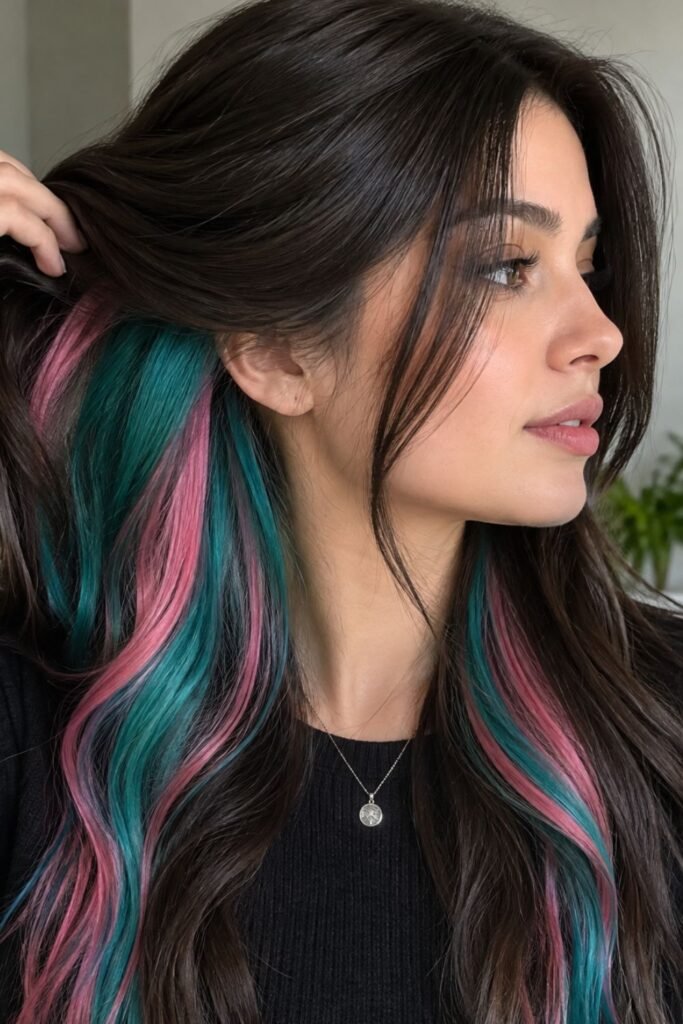
Face-Framing Pink With Teal Underlayers
Splitting the colors by zone keeps this look tidy. Pink sits in the two front sections, where its warmth brightens the complexion, while teal is woven through the layers underneath to add depth when the hair moves. Ask for the pink to start an inch or two below the root so the grow-out line stays soft, and keep the teal to the back and lower sides. Pink near the face fades quickest from touching and washing, so a pink color-depositing conditioner once a week helps. Curtain bangs or long face-framing layers show the pink best.
Best for: Shoulder-length and longer cuts with face-framing layers.
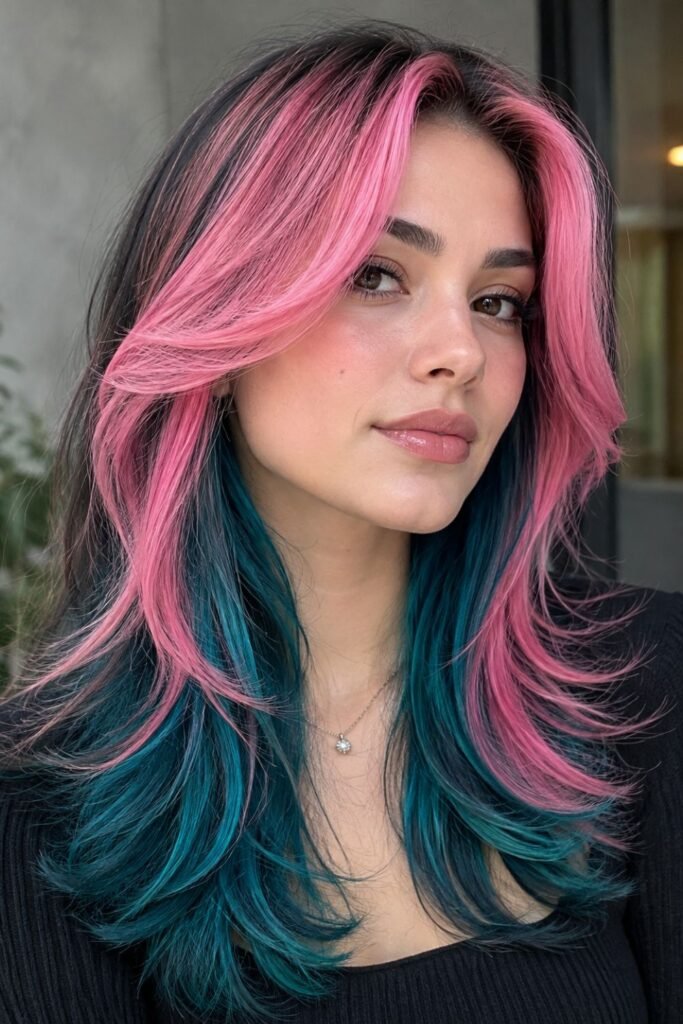
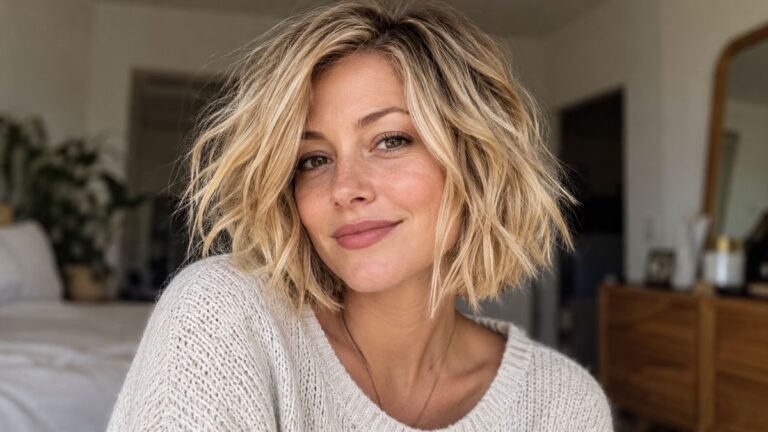
Micro Streaks Through a Rooty Blonde Bob
On a bob, small streaks read strongly because there is less length to dilute them. Ask for fine babylights of teal and pink, roughly pencil width, scattered through the top and sides and started at slightly different heights so the regrowth blends in. Keeping each section fine protects the blunt outline, which is what makes a bob look sharp. If you want more cut ideas before booking, our short bob haircuts guide covers lengths that suit this placement. Book color refreshes alongside your trims so the outline and the streaks stay crisp together.
Best for: Straight or softly wavy bobs; fine to medium density.
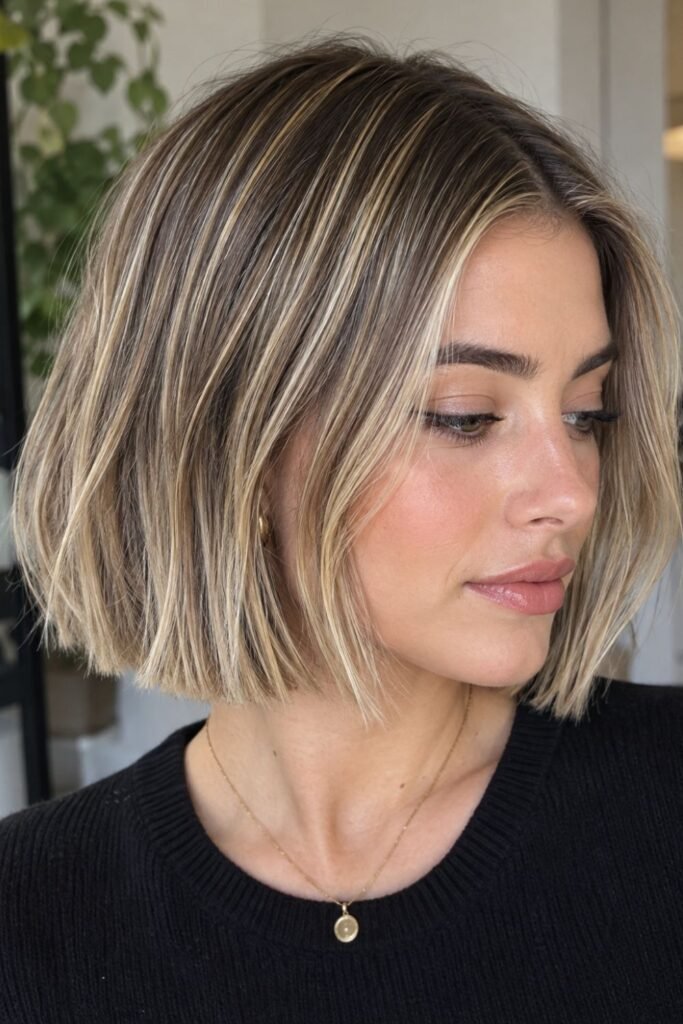
Pink and Teal Ends on Grown-Out Champagne Blonde
Keeping the fashion color on the last few inches leaves the root zone alone and makes the grow-out easy to live with. Ask for teal and pink painted onto the bottom third of the hair, either in alternating vertical sections or as a soft pink band that melts into teal tips. Champagne blonde is pale and slightly cool, so both shades develop cleanly without turning muddy. The color can also come out over two or three trims whenever you want a change. Use a leave-in conditioner on the ends, since previously lightened tips are often dry.
Best for: Long hair, especially if the ends are already light enough to accept semi-permanent color.
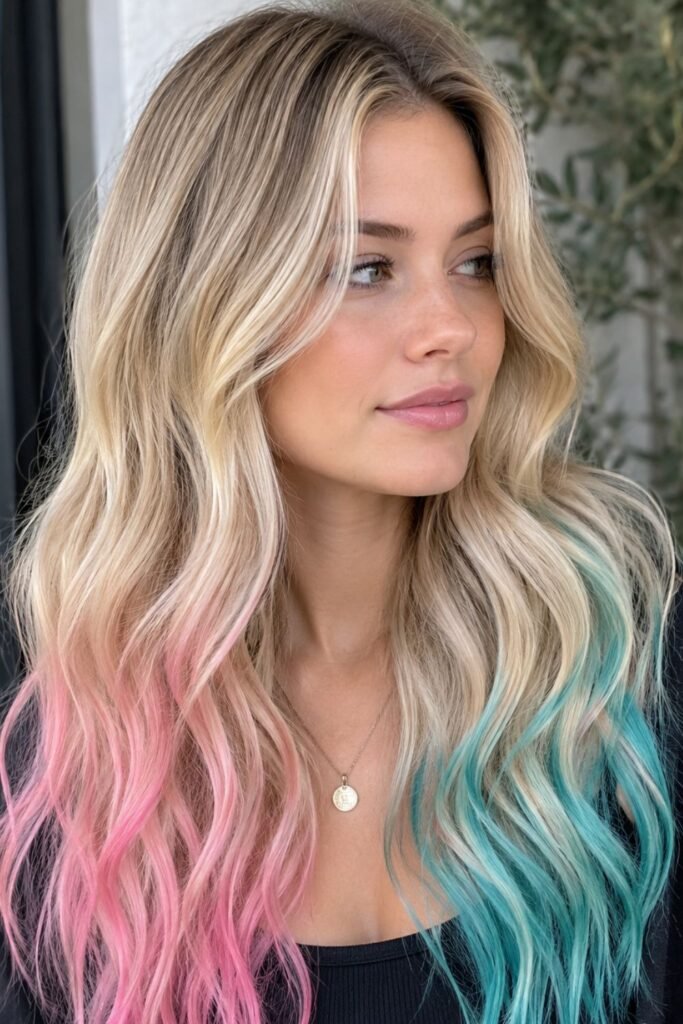
Teal Money Piece With Pink Interior Streaks
A teal money piece is deliberately high contrast, so the pink works better in narrower, more dispersed streaks through the interior. That balance stops the front from feeling heavy. Ask for two face-framing sections about an inch wide on either side of your part, colored teal from just below the root, then a handful of thin pink slices through the crown and sides. If you like the shape but want a quieter shade, our ash brown money piece ideas show the same placement in natural tones. The front pieces fade fastest, so refresh them between full appointments.
Best for: Medium to long hair with a center or soft side part.
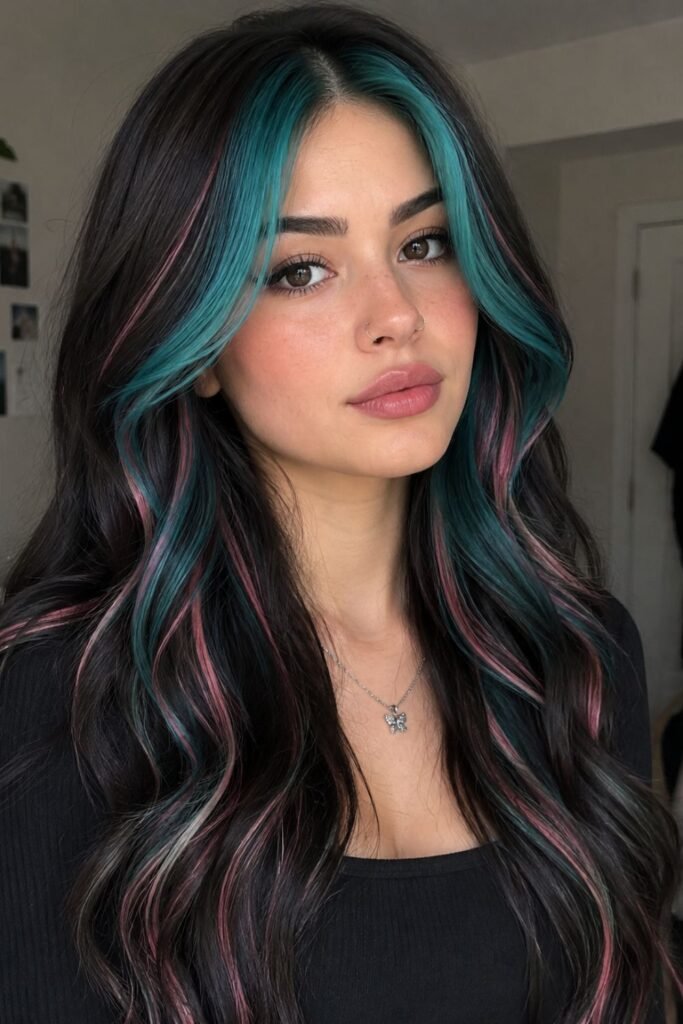
Alternating Pink and Teal Zigzag Highlights
Zigzag sectioning creates a broken, slightly graphic pattern, and staggering where each streak begins helps the regrowth blend into the design. This is the boldest option here, so spacing matters more than the number of colors. Ask your colorist to weave sections from a zigzag part and alternate pink and teal, leaving at least one blonde section between each pair so the shades do not bleed into purple where they meet. Sleek straight styles show the pattern most clearly, while a loose wave softens it for everyday wear. Expect the edges to blur slightly as the color fades.
Best for: Straight or wavy hair where sectioning can be seen clearly.
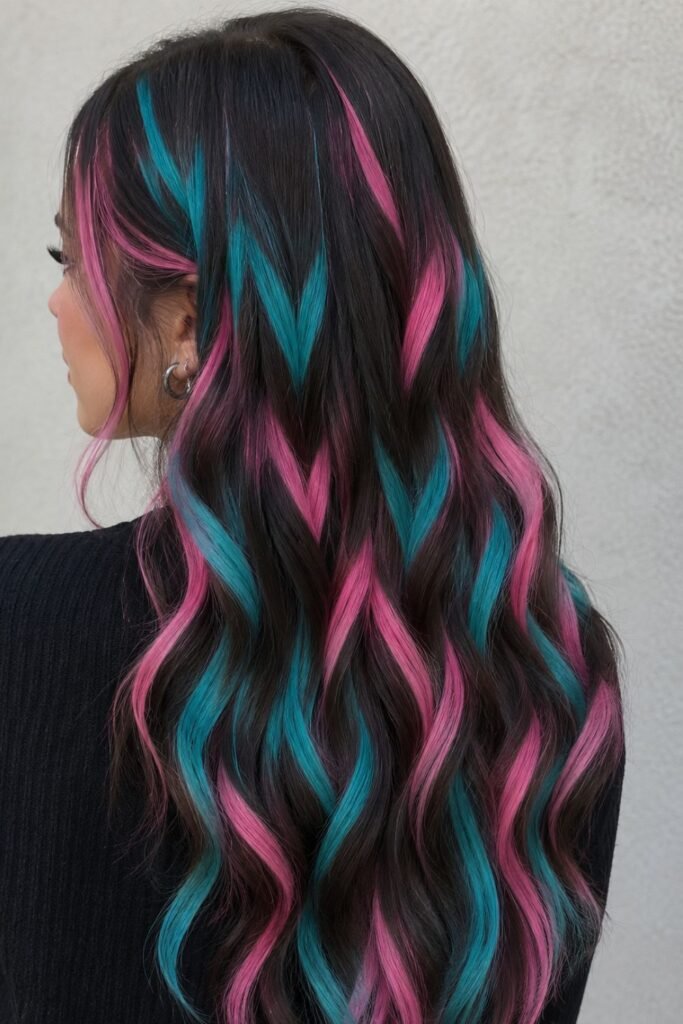
Soft Pastel Teal and Blush on Beige Blonde
Pastels need a very light blonde canvas to read cleanly. On warmer or darker blonde, the same dyes can look muddy or barely show up. Beige blonde sits in a good middle ground: light enough for a seafoam teal and a soft blush to appear, while still looking natural from a distance. Ask for wide, soft-edged sections so the pastel has enough surface to show. Pastel shades fade quickly, so wash with cool water and a sulfate-free shampoo to stretch the result, and expect to top them up more often than a vivid color.
Best for: Pale blonde lengths in relatively good condition; low-contrast color lovers.
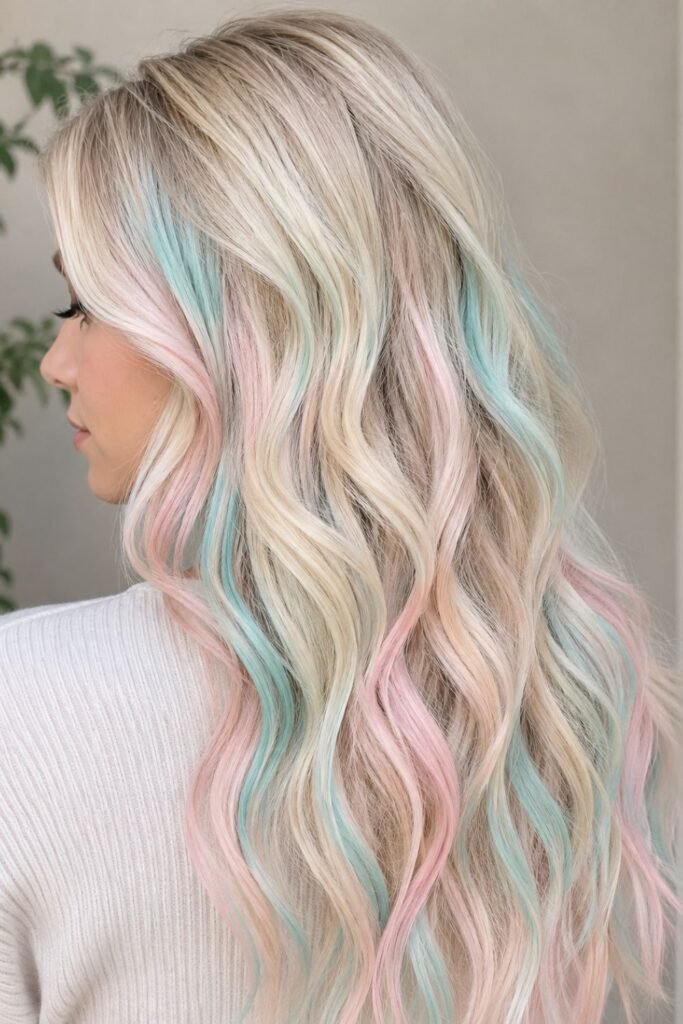
High-Contrast Jewel Teal With Hot Pink Accents
Deep jewel teal and hot pink are the most saturated pairing in this list, and the blonde left between them keeps the look from turning into all-over fantasy color. A few larger sections usually look cleaner than many small neon streaks. Ask for three to five chunky panels, about two inches wide, with teal as the dominant shade and hot pink in one or two accent sections near the part. Saturated shades tend to bleed in the first few washes, so use a dark towel and an old pillowcase at first. Bold eyeliner or a bright lip suits the energy of this color.
Best for: Thick or high-density hair that can visually support chunkier placement.
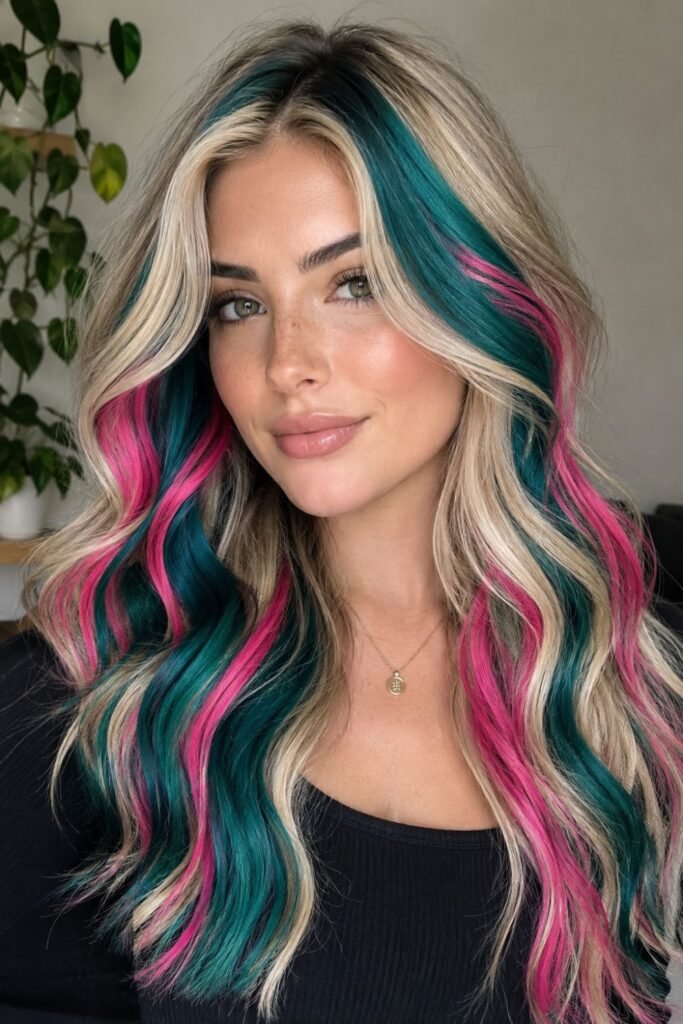
Hidden Teal Nape With Pink Side Streaks
This is one of the most flexible placements because the teal nape panel disappears when the hair is down. The pink side streaks give a smaller hint of color for everyday styling, so you decide how much shows from day to day. Ask for a horizontal teal panel across the nape, from ear to ear and about two inches deep, plus one or two pink streaks behind each temple. A high ponytail, a bun, or a sleek top knot reveals the teal fully. It suits anyone with a conservative workplace who still wants visible color on weekends.
Best for: Medium to long hair; readers who need some control over how visible the color is.
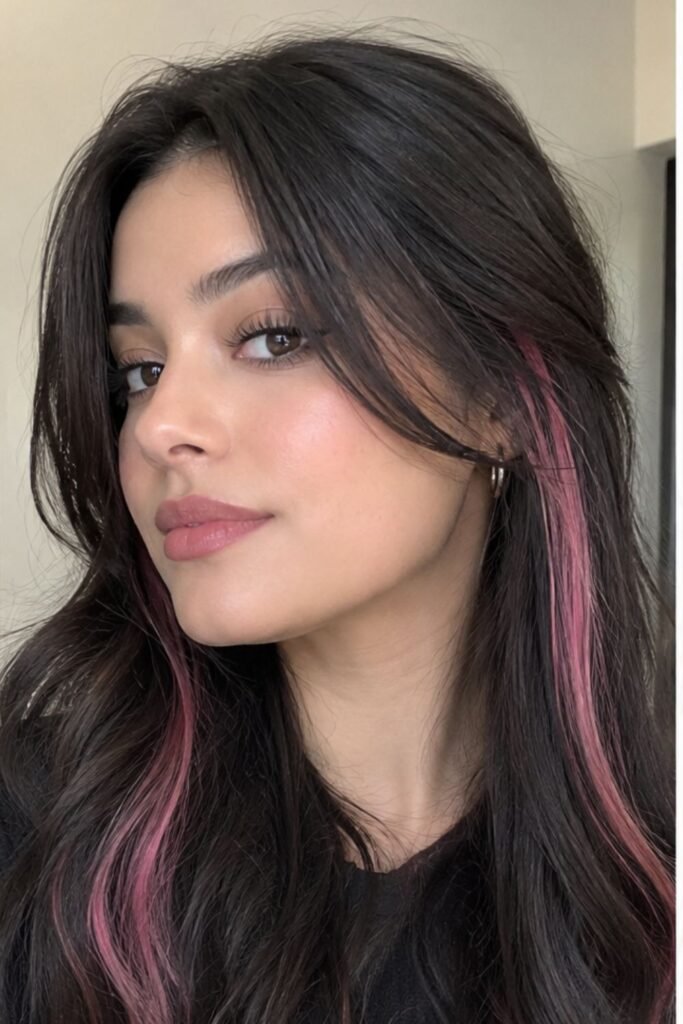
Pink Halo With Teal Interior Ribbons
Halo highlighting places color in a ring around the crown, roughly where a headband would sit, so it shows on the top layer while the hair beneath stays softer. Here the halo is pink, and teal ribbons sit in the interior layers to add depth when the hair moves. Ask for the pink ring to begin about an inch below the root, which leaves room for regrowth, with three or four teal ribbons placed underneath. Loose waves expose both layers best. Because the halo sits on the most sun-exposed part of the head, a UV protection spray helps keep the pink from fading.
Best for: Medium to thick hair, especially loose waves that expose multiple layers.
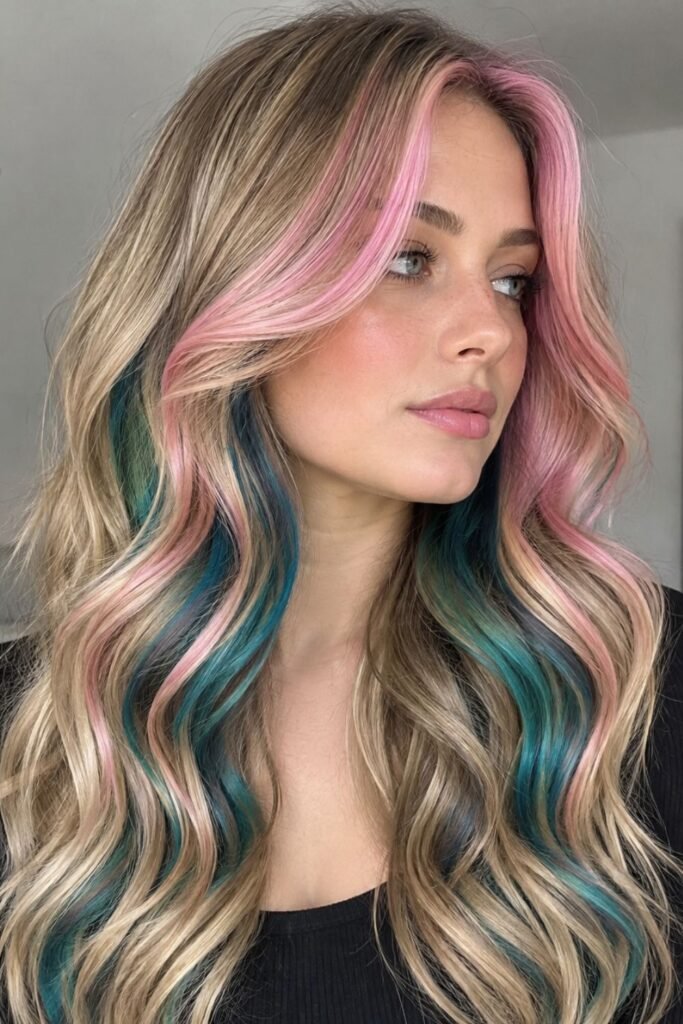
Teal-to-Pink Gradient Streaks
Each colored section becomes its own mini gradient, moving from teal near the top of the streak to pink at the ends. It needs an even blonde underneath so both shades stay clear, since patchy or brassy areas can turn the middle of the blend murky. Ask your colorist to hand-paint each section and overlap the two shades only slightly where they meet, which avoids a muddy purple band. Keep the streaks about half an inch to an inch wide and spaced through the top layer. Smooth blowouts and big barrel curls both show the gradient well.
Best for: Long straight or wavy hair; medium or high density.
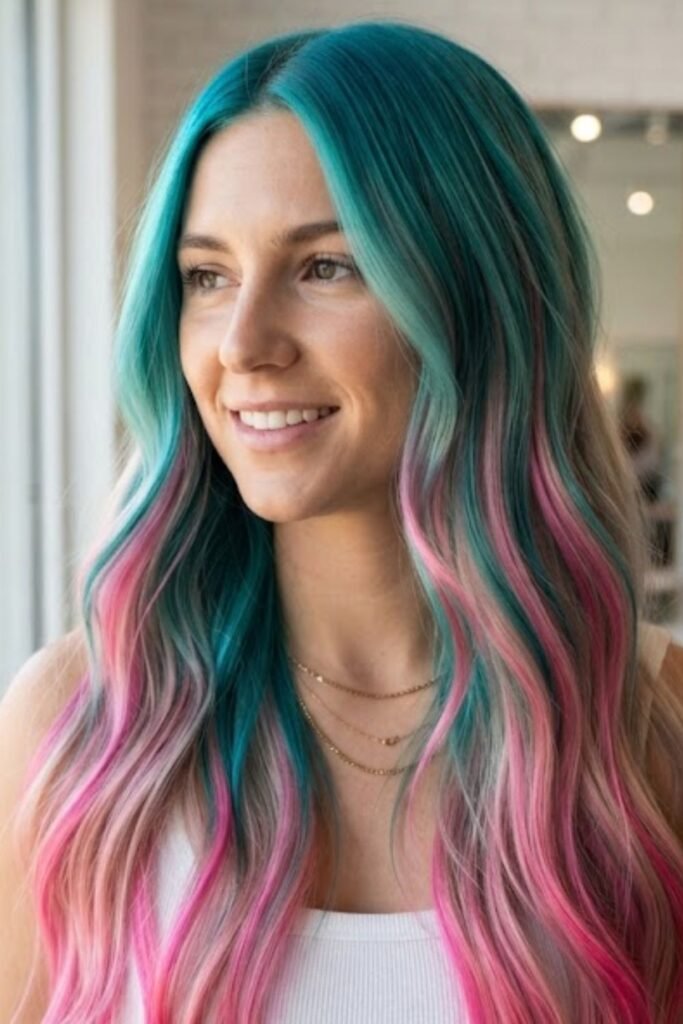
Dusty Pink Panels With Deep Teal Tips
Deep teal can overpower pale blonde, so keeping it to the ends creates balance. Dusty pink acts as the softer bridge between the blonde and the teal. Ask for wide panels of muted rose starting at mid-length, with the last two or three inches dipped in deep teal. Muted pink is forgiving as it fades, softening toward a pale blush, and the teal tips can be trimmed off whenever you want a fresh start. On a lob or shoulder-length cut, both color zones stay visible even when the hair is tucked behind the ears. Finish with a smoothing cream to keep the ends glossy.
Best for: Lobs and shoulder-length cuts with enough length to show two color zones.
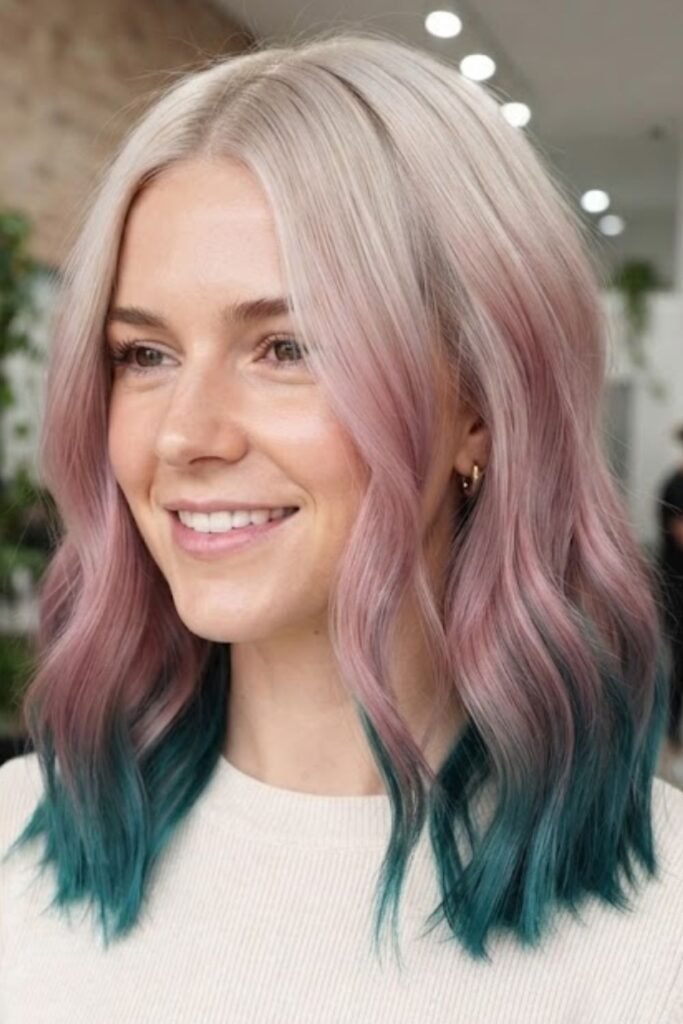
Curly Grown-Out Blonde With Scattered Color Pops
On textured hair, placement should follow your natural curl groupings so the color stays readable after shrinkage. Too many tiny sections can vanish once curls spring back. Ask for color applied to whole curl clumps, ideally with your hair styled the way you usually wear it, so the colorist can see where each pop will land. Five to eight teal and pink clumps spread around the crown and sides usually read clearly. Curly hair loses moisture easily and extra color processing adds to that, so a weekly deep conditioning mask and a leave-in with good slip help keep curls defined.
Best for: Curly and coily blonde hair that is healthy enough for additional color processing.
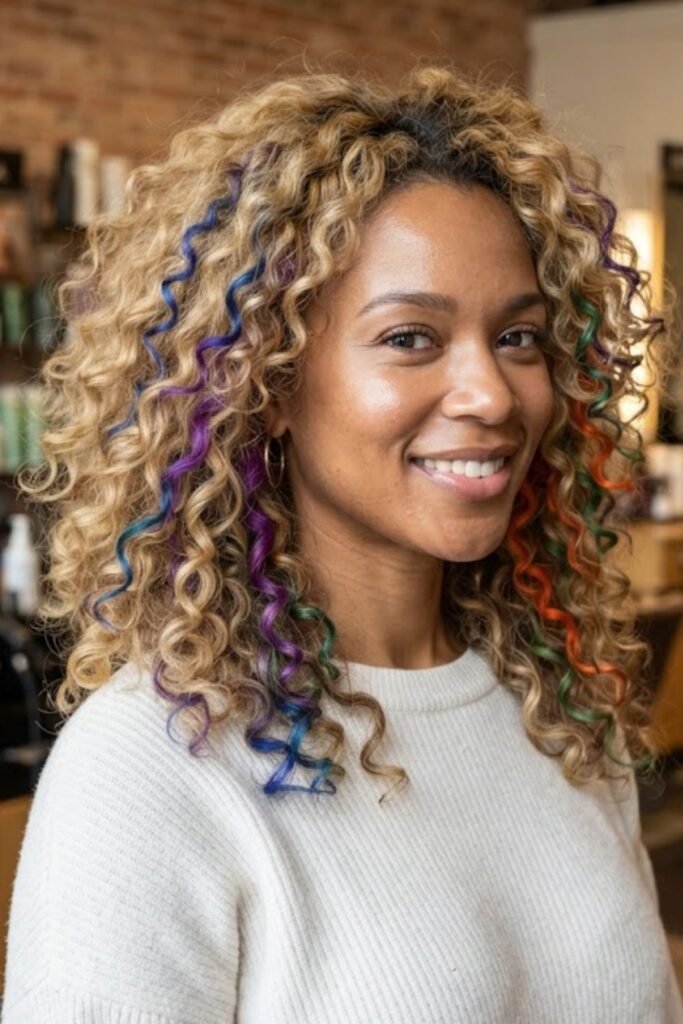
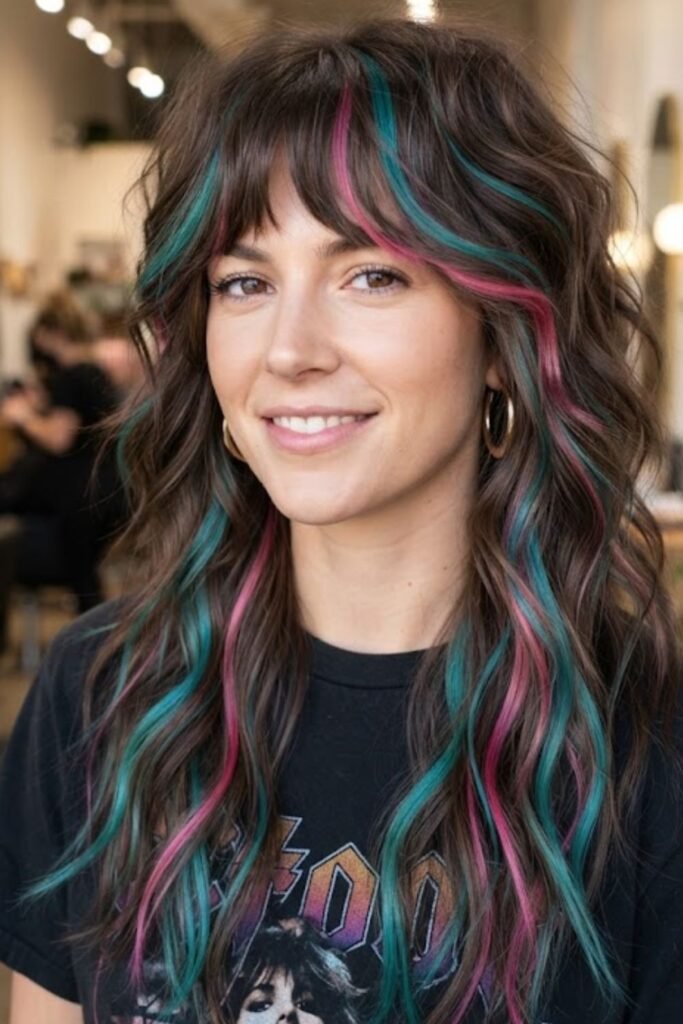
Teal and Pink Streaks Through a Grown-Out Shag
A shag already has plenty of movement, and staggered color placement makes those layers easier to see. Keep the streaks selective so the cut stays the focus. Ask for color on the ends of the shortest layers around the crown and on a few longer pieces through the sides, alternating teal and pink so each layer has its own accent. A texturizing spray and a quick scrunch bring out both the cut and the color. If you are still deciding on length, our short shag haircuts roundup shows how choppy layers can carry this kind of placement.
Best for: Wavy or straight shags with visible layering.
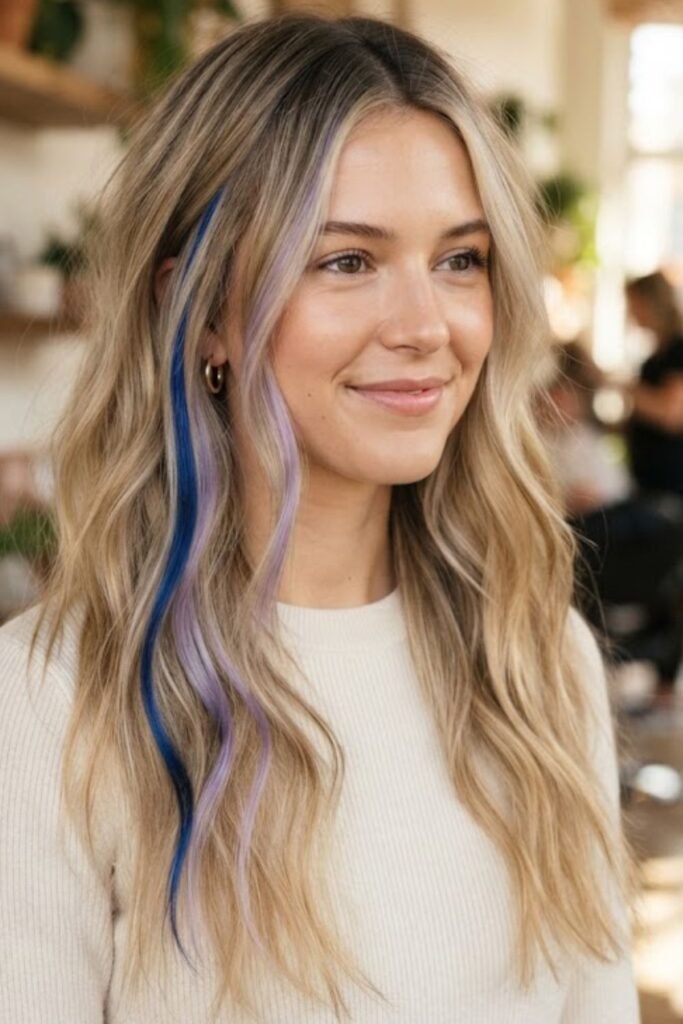
Two-Color Accent Streaks on Folklore Blonde
This is the most restrained version. It starts with lived-in blonde, with soft roots and natural-looking brightness, and adds just enough fantasy color to make the grow-out look designed. Ask for one teal streak and one pink streak, each about half an inch wide, placed close to the part on opposite sides or tucked behind the front layers. That small amount of color is easy to hide, easy to trim away, and inexpensive to refresh. It is a sensible first step if you are curious about teal and pink but not ready for a bigger commitment.
Best for: Anyone who likes lived-in blonde but wants a small creative shift.
Why Teal and Pink Streaks Work on Grown-Out Blonde
The contrast does useful visual work. A darker natural root separates the scalp area from the fantasy shades, while the blonde mid-lengths give teal and pink enough brightness to read clearly. You do not need a freshly lightened root before adding color, because a good colorist can treat the regrowth as part of the design. For more base-shade inspiration, browse our butter blonde hair ideas.
That does not mean every grown-out blonde is immediately ready for vivid color. Uneven porosity, old bleach, banding, or very warm blonde sections can change how teal and pink develop. A strand test is especially useful when the lengths have been lightened more than once.
What to Ask for at the Salon
Bring a reference that shows both the shade and the placement. “Teal and pink streaks” can mean anything from two hidden ribbons to a full color-blocked panel. Specify whether you want the roots untouched, where the color should begin, how much blonde should remain visible, and whether the finished result should look pastel, dusty, jewel-toned, or neon. Our guide to caramel highlights on brown hair is a useful visual reference for how ribbons, money pieces, and face-framing sections change the overall effect.
If your blonde has several inches of natural regrowth, ask whether a root smudge is actually necessary. In many lived-in versions, keeping the natural root produces the lower-maintenance contrast you wanted in the first place.
Keeping Teal and Pink From Fading Too Fast
Fashion shades fade. Water, frequent washing, heat, UV exposure, and friction all contribute to pigment loss. Lukewarm water, a color-safe shampoo, and heat protection before styling all help slow visible fading, and Wella Professionals’ color-fading guidance goes into more detail.
The blonde underneath also matters. If the base becomes very yellow or brassy, pale teal and blush pink can shift visually. Use toning products only when your colorist recommends them for your exact combination; heavily pigmented toners can alter fantasy shades as well as the blonde.
Frequently Asked Questions
Can teal and pink go directly over blonde hair?
They can when the blonde is light and even enough for the desired shade. Pastels generally need a paler canvas than deeper jewel tones. Previously bleached hair can also be porous, so a strand test helps predict how strongly each pigment will grab.
Do I need to bleach my roots first?
Not for a grown-out look. The entire point can be to leave the natural root untouched and place color only on existing blonde lengths. Additional lightening is only needed if the sections receiving teal or pink are too dark for the target result.
Which fades faster, pink or teal?
The exact fade rate depends on the formula, starting canvas, washing, heat, and porosity. Both are fashion shades and will soften over time. Teal can sometimes leave a blue-green cast, while pink may fade toward peach or a very pale blush.
Will teal stain blonde hair?
It can leave residual blue-green pigment, especially on highly porous or very pale blonde. Anyone planning to return quickly to a clean blonde should discuss removal and fade-out expectations with a professional colorist before committing.
Is this look suitable for short hair?
Yes. On a bob or lob, use fewer, more deliberate streaks because each colored section occupies more of the visible haircut. Micro streaks, a small peekaboo panel, or a single color-block section usually reads more clearly than many scattered ribbons.
How do I keep the grown-out roots looking intentional?
Keep the regrowth cleanly separated from the fantasy color and avoid starting every streak at the same height. A staggered mid-length placement, a root shadow, or a naturally darker root makes the transition look deliberate and planned.
Can I use temporary color instead of dye?
Yes, especially if you want to test the placement first. Temporary sprays, color mascaras, hair makeup, or clip-in extensions can show whether teal and pink suit your blonde without committing to a semi-permanent shade. Our roundup of temporary hair ideas includes several wash-out options worth trying.
How often will I need a refresh?
There is no universal schedule because vivid shades fade at different rates. Refresh when the color no longer looks the way you want. Washing frequency, heat styling, sun exposure, and hair porosity all change the timeline.
Final Thoughts on Teal and Pink Streaks
Teal and pink streaks look strongest on grown-out blonde when the placement is edited. Leave enough blonde showing to create contrast, let the natural root do some of the visual work, and choose a color intensity your hair’s current condition can support. If you are unsure, start with a peekaboo panel or a couple of accent streaks, then build toward bolder sections once you know how the shades wear on your blonde.