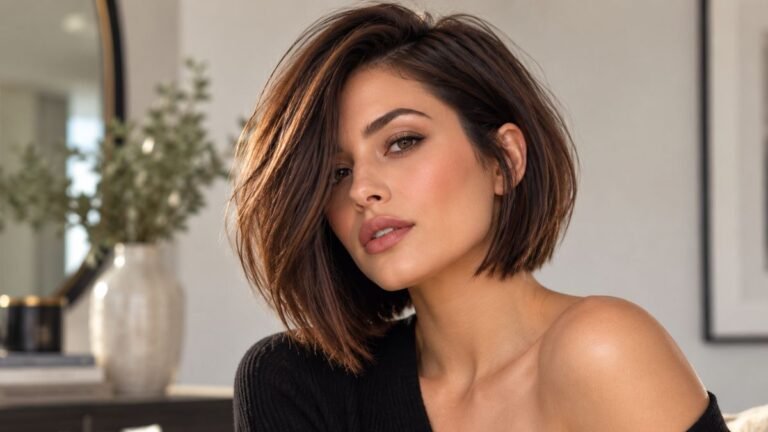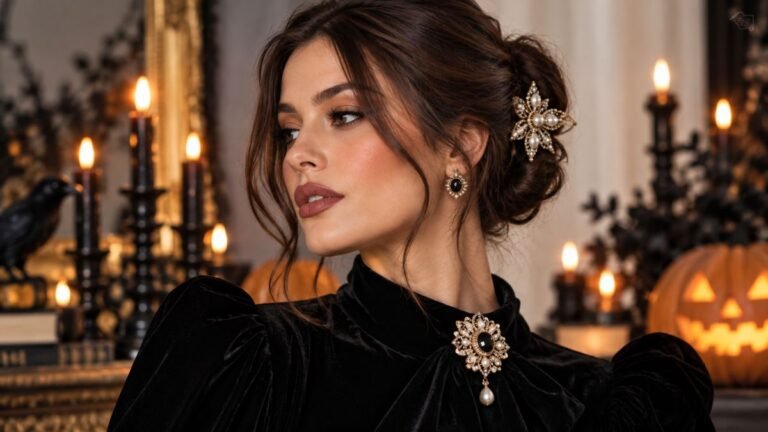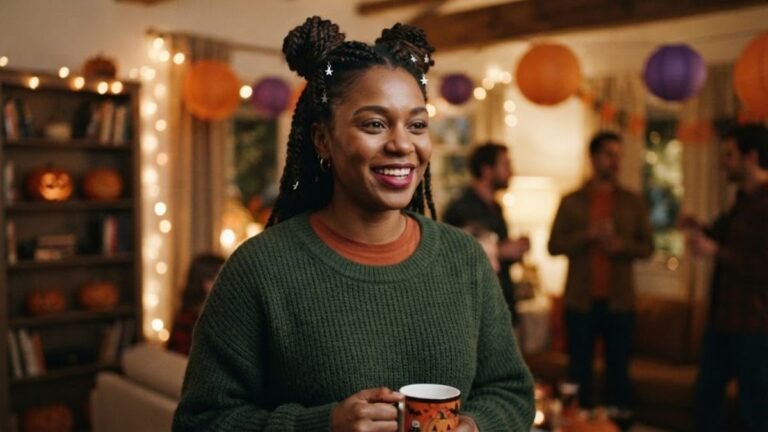

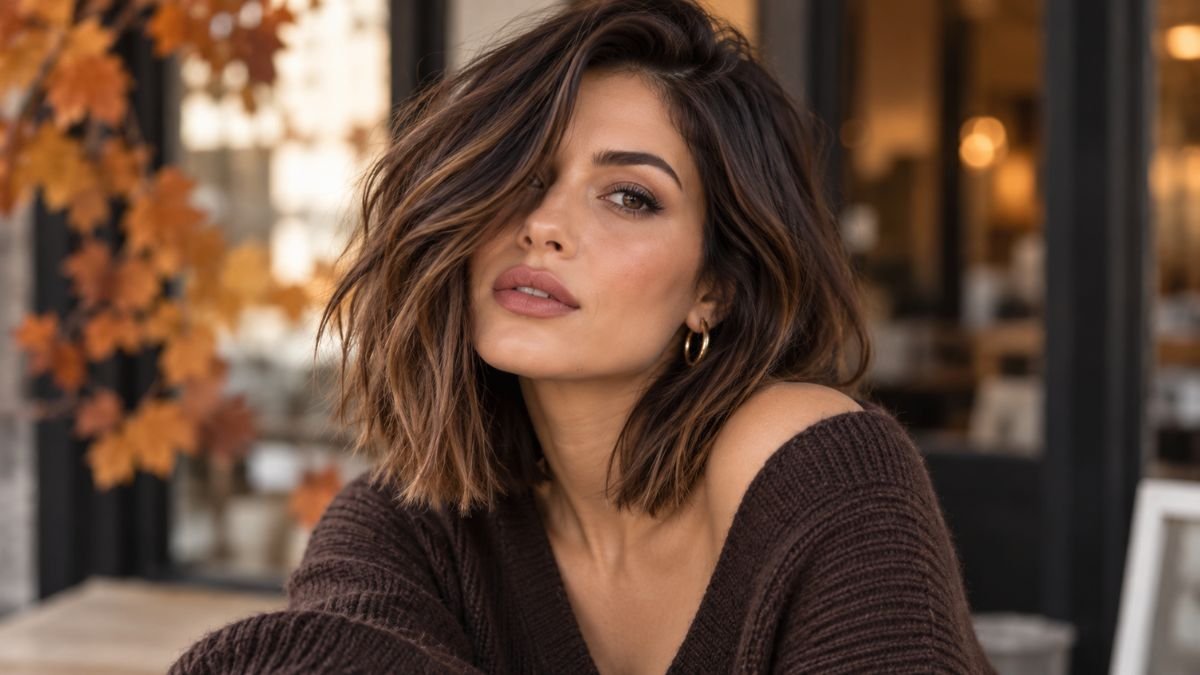
A lived-in espresso lob combines two of Fall 2026’s strongest hair directions: richer brunette color and softer, more wearable medium-length cuts. Espresso brunette is deep and glossy without needing to read as jet black, while the lob sits between a bob and longer hair, usually somewhere from the chin to the collarbone.
The lived-in part matters just as much as the color. Instead of stiff styling, obvious highlight stripes, or a freshly cut geometric shape that needs daily precision, the best versions use soft bends, restrained layers, natural root depth, and low-contrast brunette dimension.
Quick Guide: Choose the Cut Before the Finish
| Hair Situation | Strong Lob Direction | Color Approach | Watch For |
| Fine or low-density | Blunt or soft-luxury lob | Solid-looking espresso or subtle gloss | Too many layers can remove density |
| Thick hair | Internal-texture lob | Espresso with hidden mocha depth | Heavy perimeter without weight removal |
| Naturally wavy | Air-dried or tousled lob | Natural root + dimensional espresso | Over-styling the texture |
| Curly/coily | Dry-shaped curly lob | Deep espresso with broad tonal depth | Ignoring shrinkage |
| Old summer highlights | Grown-out transitional lob | Deepen highlights to mocha/espresso | Erasing all existing dimension |
Soft Luxury Espresso Lob
This version connects the two strongest 2026 directions: deeper brunette color and the fuller, softer lob. The compact perimeter keeps the cut polished while the understated bends stop it from feeling severe.
Best for: Fine to medium hair that benefits from a stronger baseline.
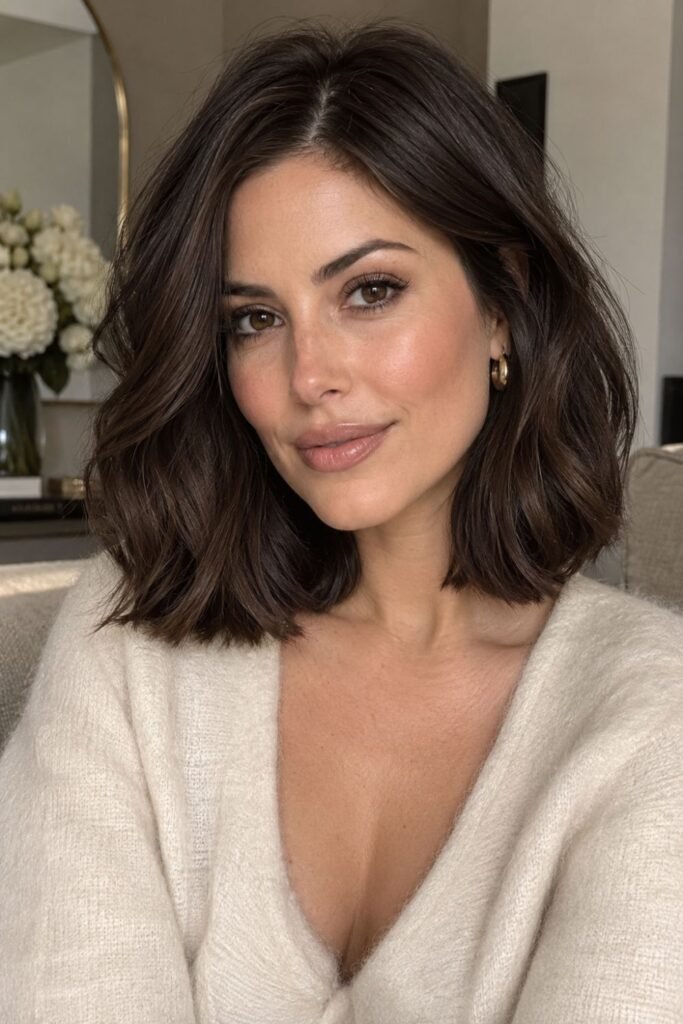
Center-Part Espresso Lob With Barely-There Layers
The color does most of the visual work here. Minimal layering preserves density, while a center part gives the lob a simple architectural line that still feels relaxed.
Best for: Straight and slightly wavy hair; medium density.
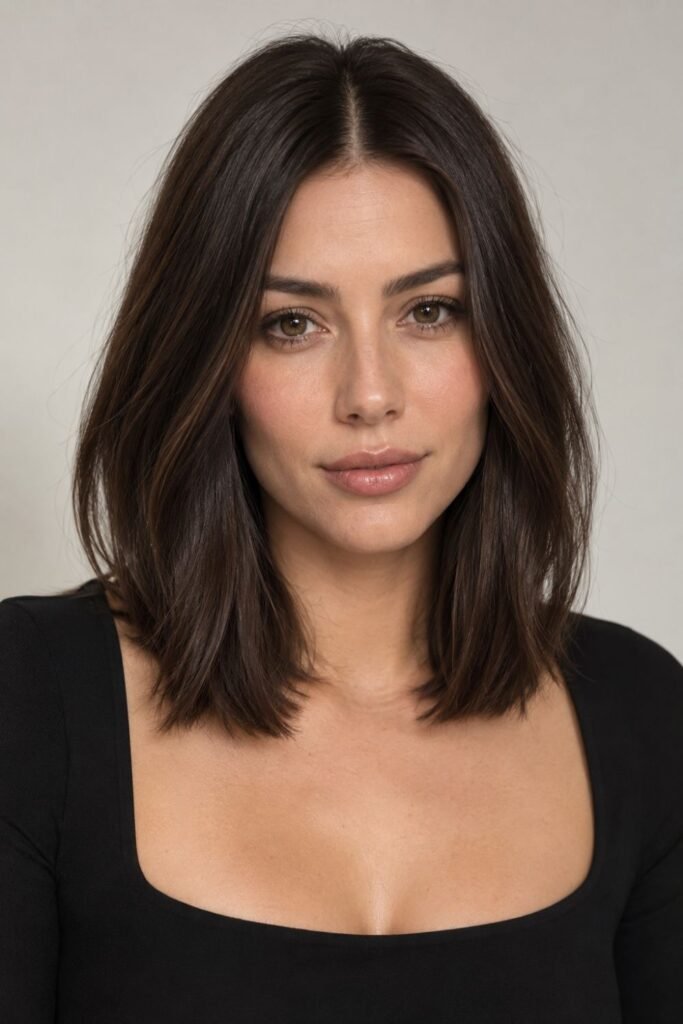
Lived-In Espresso Lob With Face-Framing Pieces
Face-framing layers add movement without turning the haircut into a full layered style. They also give a dark espresso shade more visible motion near the face.
Best for: Medium to thick hair and readers who want softness around the cheekbones.
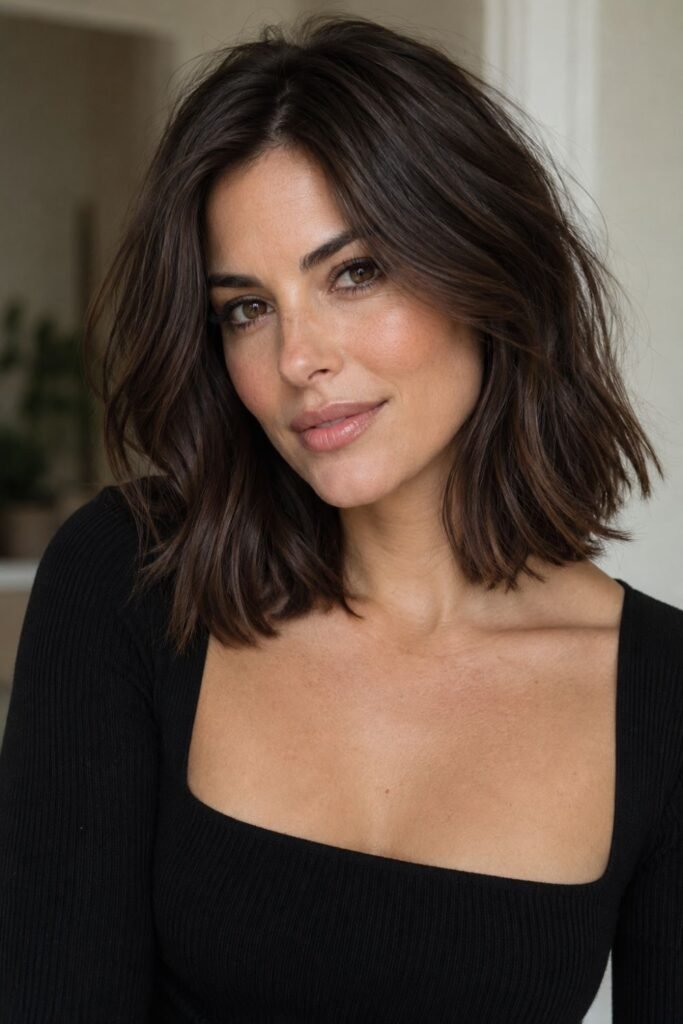
Glossy Espresso Lob With Blunt Ends
A blunt outline makes dark brunette look especially dense and reflective. This is one of the strongest options for fine hair when the goal is visual fullness.
Best for: Fine to medium straight hair.
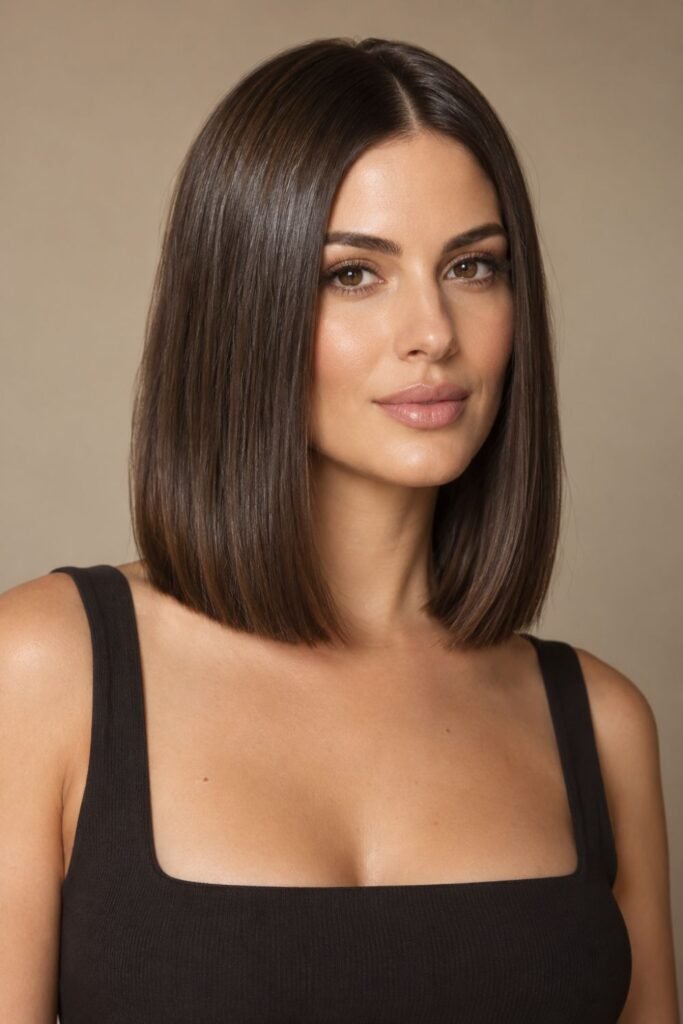
Tousled Espresso Lob With Soft Root Depth
A little root depth makes the color easier to grow out and reinforces the lived-in effect. The uneven bends give movement without requiring a perfectly styled finish.
Best for: Wavy or straight hair that holds soft bends.
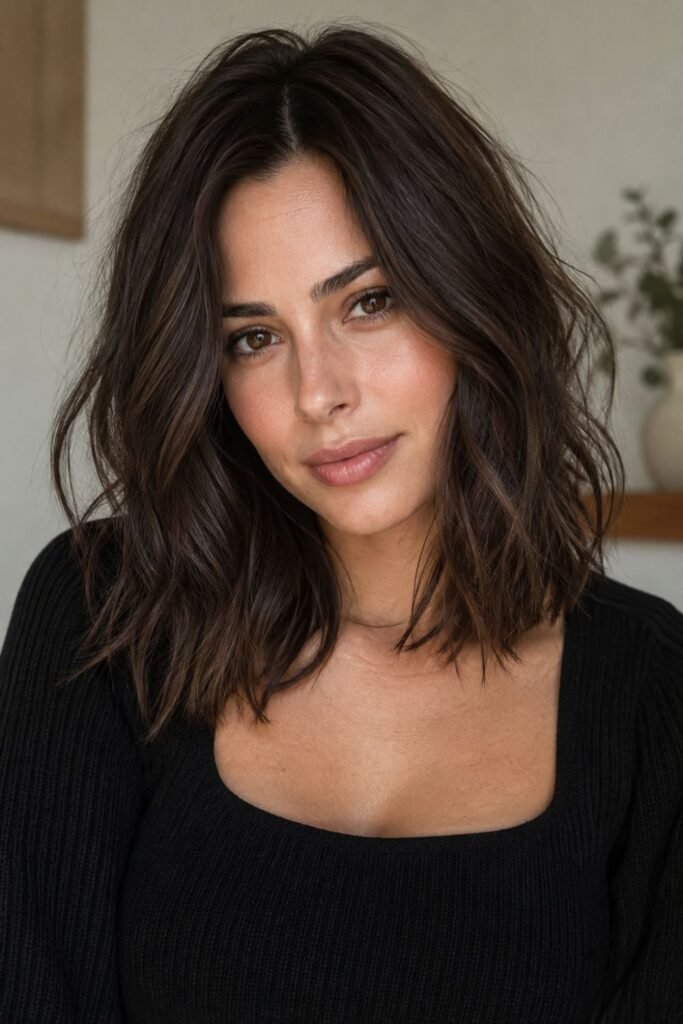
Espresso Lob With Wispy Curtain Fringe
Wispy fringe fits Fall 2026’s softer, lower-commitment bang direction. It changes the face framing without demanding a dense, high-maintenance full fringe.
Best for: Straight, wavy, and medium-density hair.
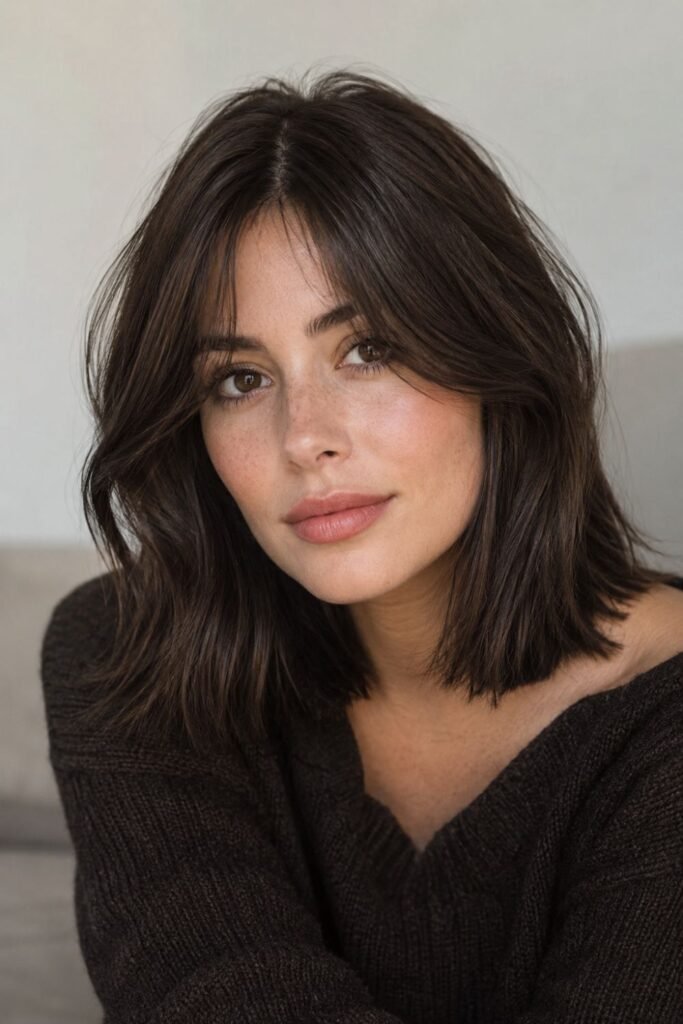
Air-Dried Espresso Lob
This is the lowest-styling version. The lob should work with the hair’s natural movement rather than depend on a round-brush finish every day.
Best for: Naturally wavy hair and readers prioritizing ease.
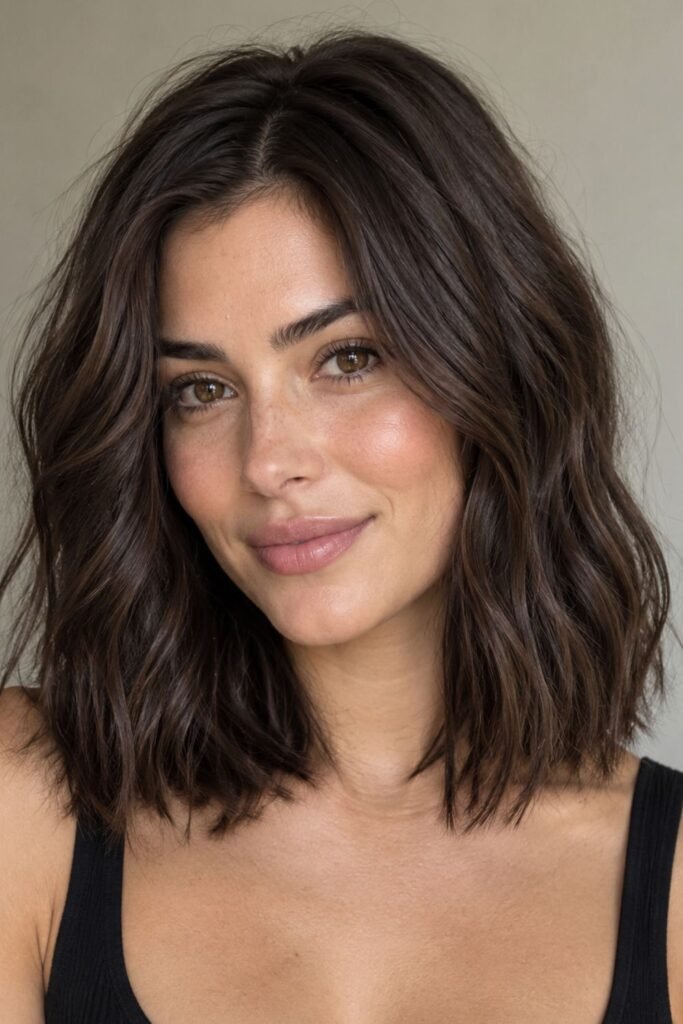
Espresso Lob With Hidden Mocha Ribbons
The hidden dimension stops a very dark brunette from reading as flat while preserving the espresso identity. The lighter pieces should appear only when the hair moves.
Best for: Naturally dark brunettes wanting soft dimension.
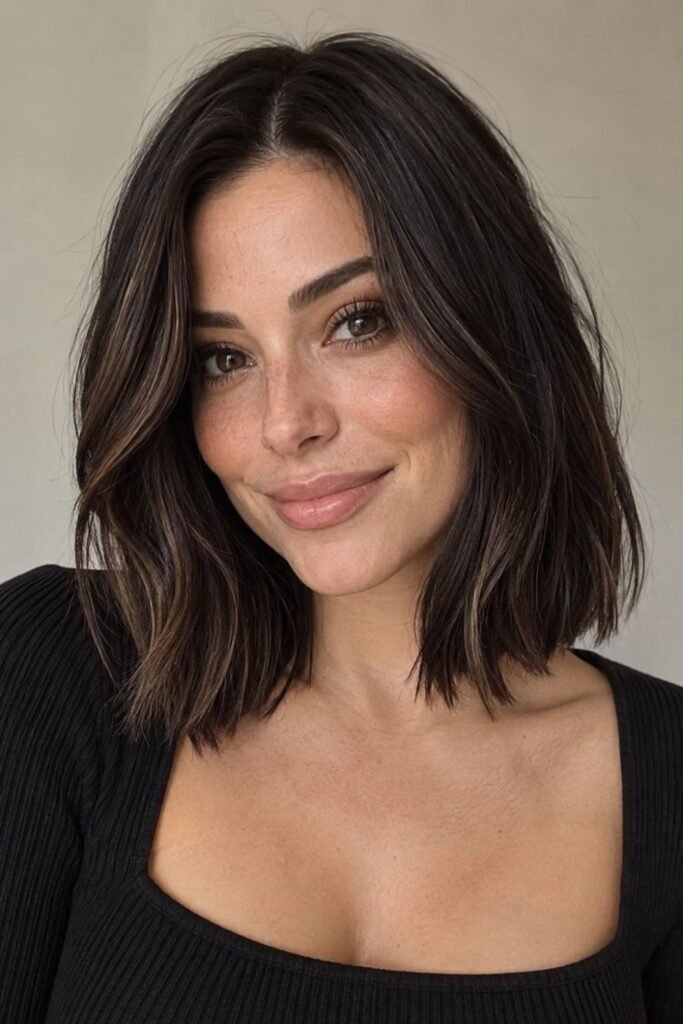
Side-Part Espresso Lob With Polished Bend
A side part changes the volume distribution and creates instant movement without extra layers. The single bend adds polish while remaining easier to reproduce than a full blowout.
Best for: Fine to medium hair and anyone who wants more root lift on one side.
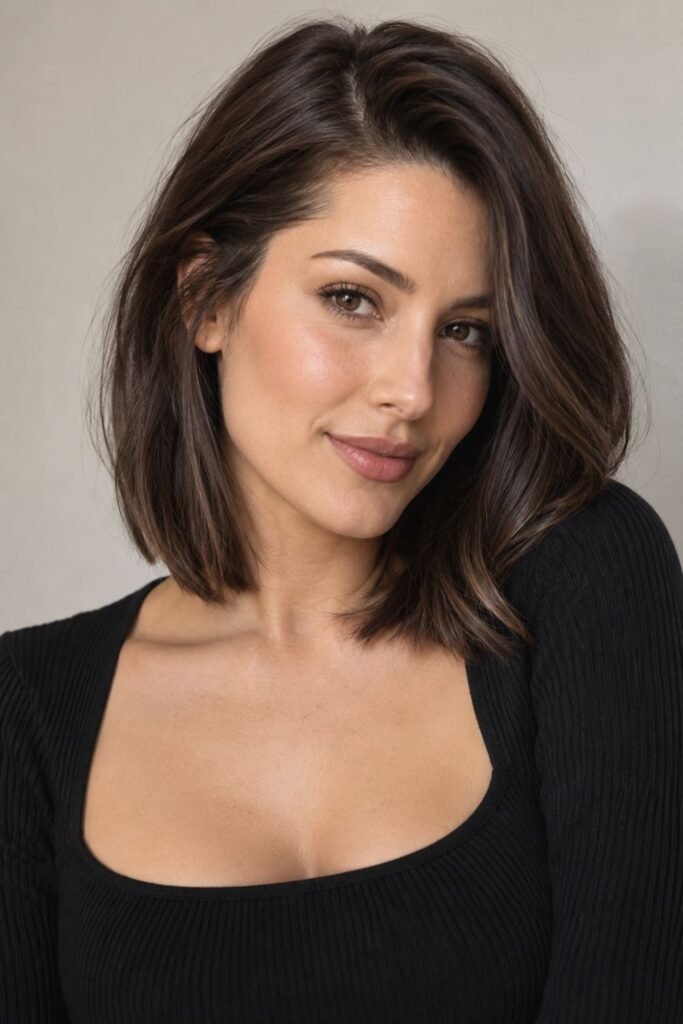
Textured Espresso Lob for Thick Hair
Thick hair needs enough internal removal to prevent the lob from forming a heavy triangle. Keeping the outside line intact preserves the luxurious, fuller shape.
Best for: Thick straight, wavy, or loosely curly hair.
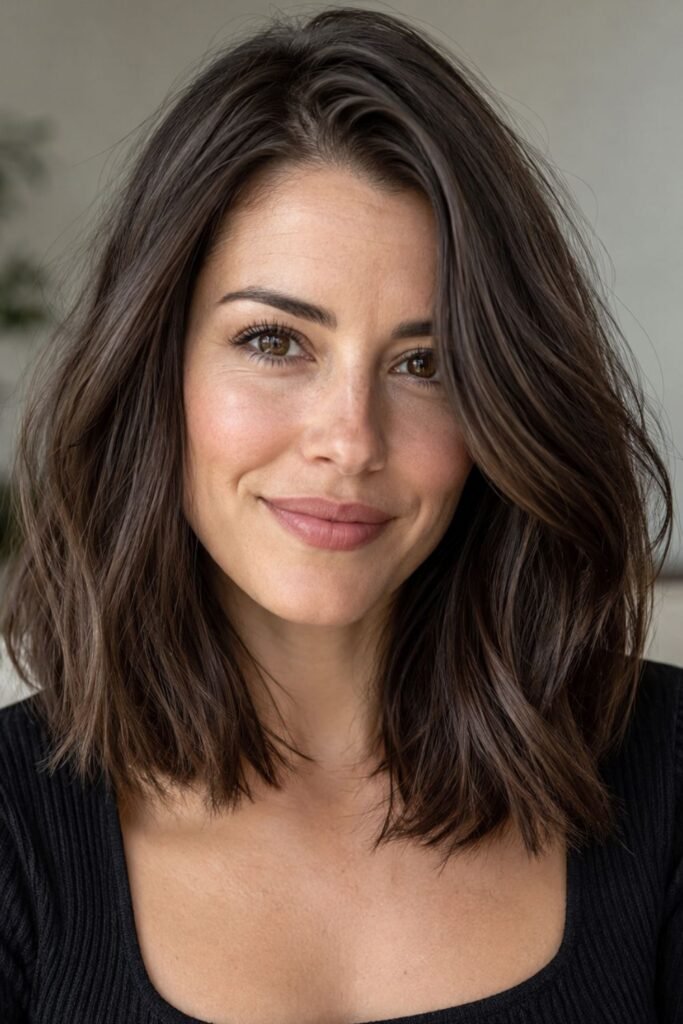
Curly Espresso Lob
A lived-in lob does not have to be straight. On curls, the key is cutting for the dry silhouette and placing depth where it will still show after the hair contracts.
Best for: Curly and coily hair with enough length to land near the shoulders after shrinkage.
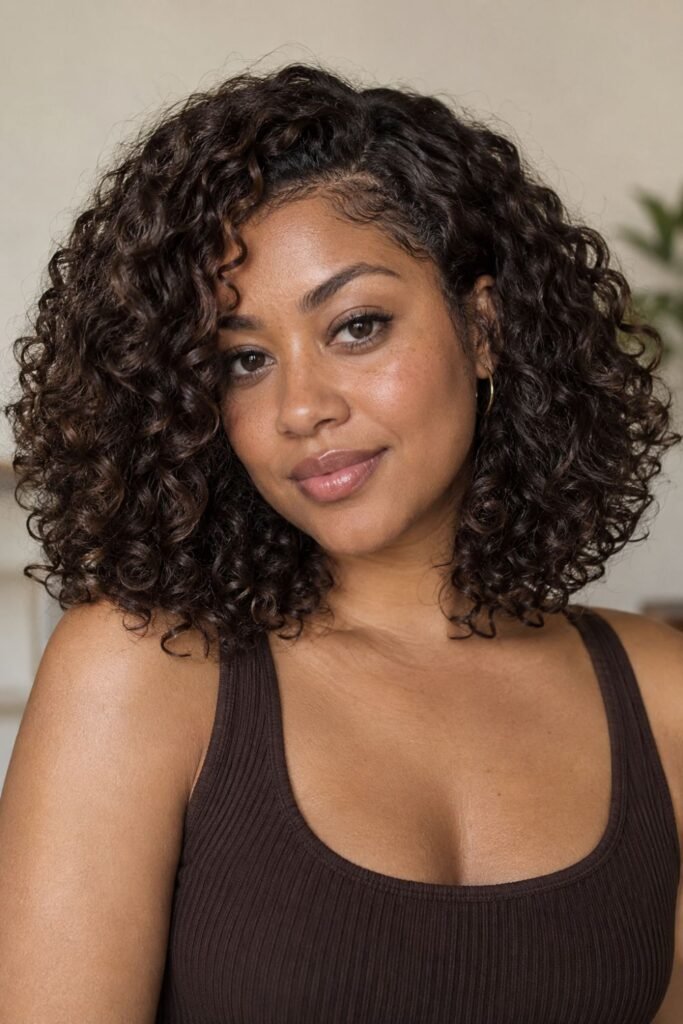
Espresso Lob With Grown-Out Summer Highlights
This is one of the most realistic fall transitions. Instead of rebuilding the color from zero, a colorist can deepen the overall brunette while allowing selected lighter pieces to remain as subtle dimension.
Best for: Previously highlighted brunettes and brondes.
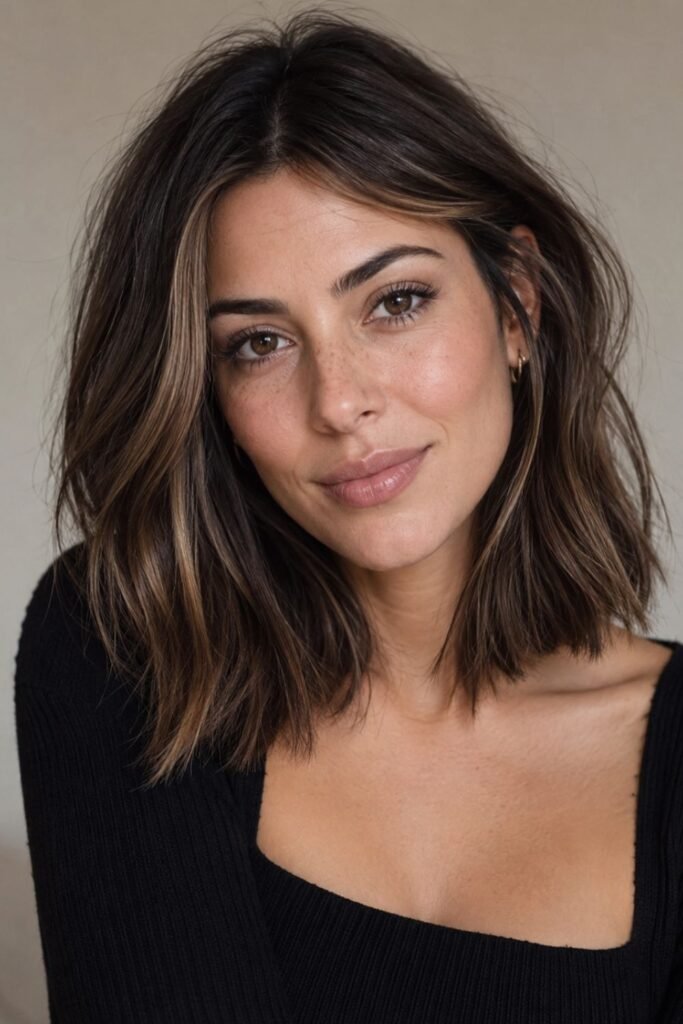
Espresso Lob With Rounded Ends
Rounded ends give the lob a softer, more classic finish than tousled texture. It works well with Fall 2026’s interest in polished hair that still moves naturally.
Best for: Straight to wavy hair and fuller perimeters.
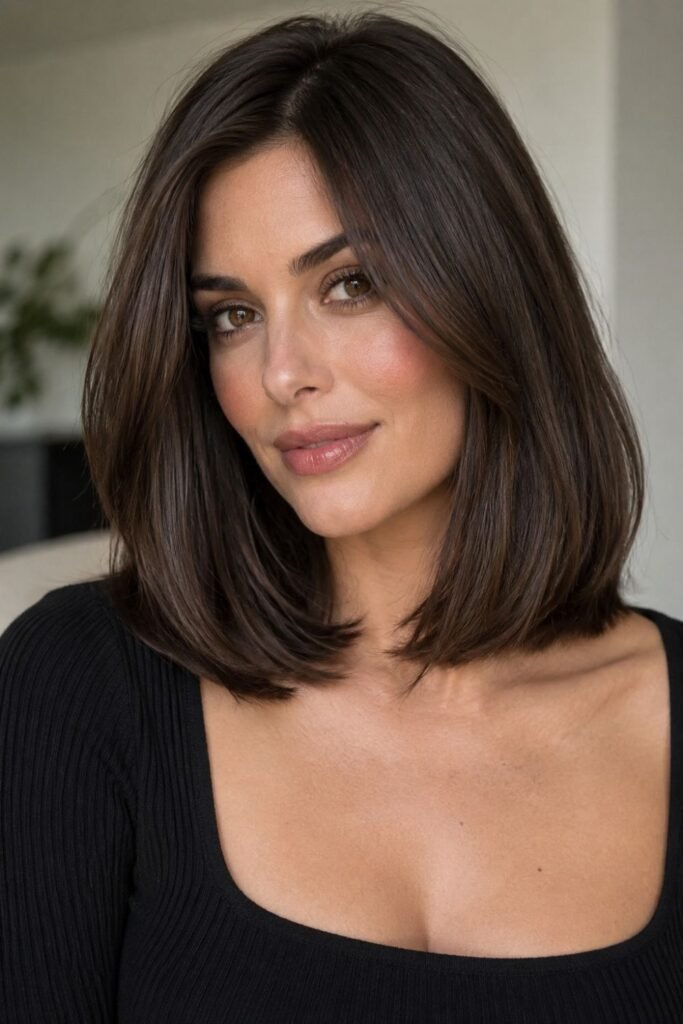
Choppy Espresso Lob With Controlled Texture
Choppiness can keep a lob from looking too formal, but it needs restraint. The strongest version places texture near the perimeter while preserving enough weight for the dark color to look rich.
Best for: Medium-density straight or wavy hair.
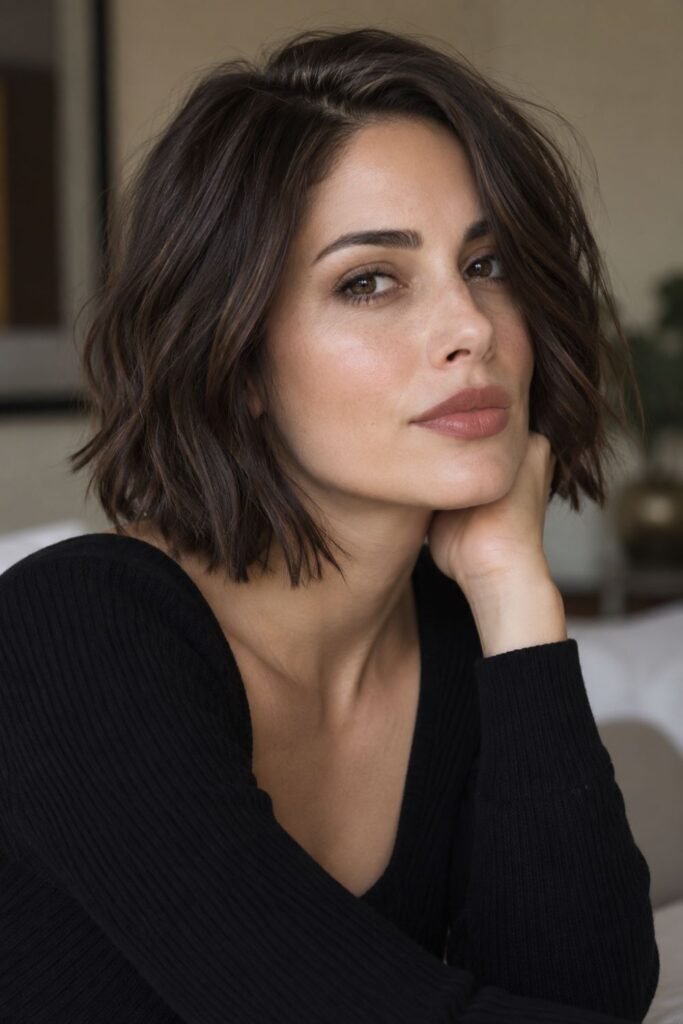
Espresso Lob With Long Side-Swept Fringe
The longer fringe gives movement without the upkeep of short bangs. It also creates an easy route for anyone growing out an older fringe into the lob.
Best for: Medium-length hair with a natural side part or flexible front section.
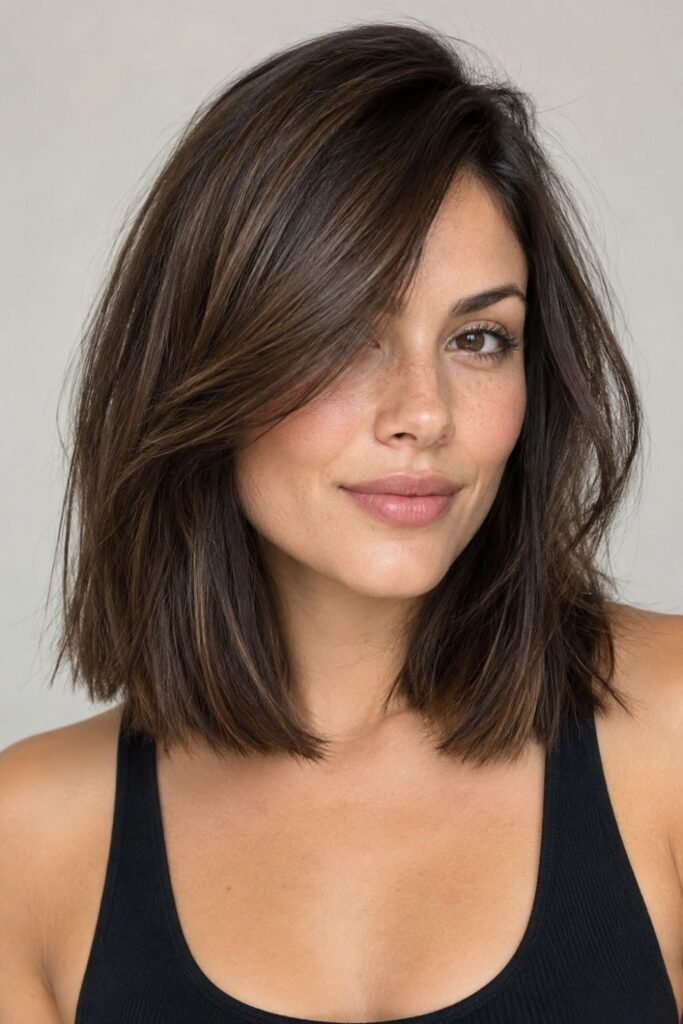
Gloss-Refreshed Espresso Lob
Not every fall update needs new highlights or a new cut. A gloss can make an existing lob look more intentional by restoring depth, neutralizing unwanted warmth, and increasing reflectivity.
Best for: Existing brunette lobs that have faded or warmed through summer.
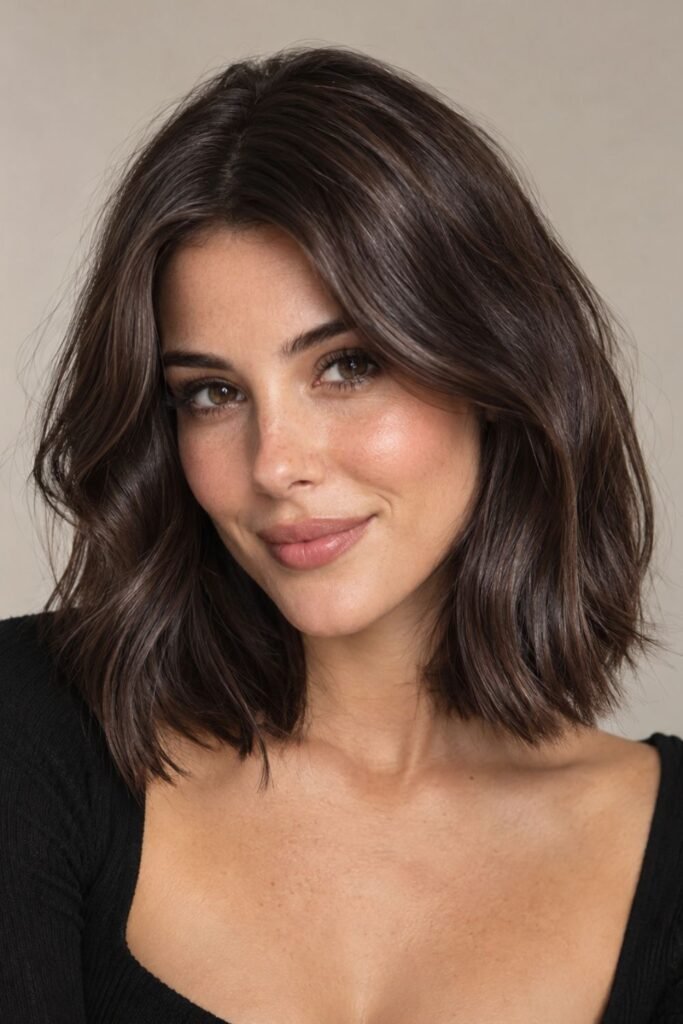
What Makes the Espresso Lob Look Lived-In?
A lived-in finish comes from controlled softness, not messiness. The root can remain slightly deeper, the brunette dimension stays close in level, and the cut moves without requiring every strand to sit in a fixed place. Soft face framing, interior weight removal, and irregular bends all help.
The effect is especially useful in dark hair because espresso shades can look flat when they are too uniform. Small tonal shifts and natural movement give the color enough light reflection to stay dimensional.
What to Ask for at the Salon
Ask for a lob that lands at the point you can realistically style and maintain. Chin-length, shoulder-skimming, and clavicle lobs behave differently, especially on waves and curls. If density is important, request minimal exterior layering and keep most weight around the perimeter.
For the color, describe espresso as deep brunette with neutral or slightly warm richness, not blue-black. Bring a reference showing how much dimension you want. If your hair already has highlights, ask whether they can be toned darker rather than covered completely.
How to Maintain the Espresso Tone
Dark brunette looks best when it reflects light, so shine and condition matter. Excessive heat, repeated washing, and old porous highlights can make espresso fade warmer or duller. Color-safe cleansing, heat protection, and an occasional salon or at-home gloss can help maintain the finish.
If your natural roots are close to the final shade, the color can be relatively forgiving because there is no sharp light-to-dark regrowth line. That is one reason espresso brunette works particularly well as a lived-in fall transition.
Useful Redounds Reads
For more medium-length cut structure, see Redounds’ medium-length layered haircuts. For everyday styling options at this length, Redounds’ medium-hair hairstyle guide includes textured lobs, blunt cuts, curtain bangs, and shoulder-length waves.
Frequently Asked Questions
What color is espresso brunette?
Espresso brunette is a deep brown that sits close to black but should still read clearly brown in natural light. Modern versions often include subtle neutral, coffee, or mocha variation so the color does not look flat.
Is a lob shorter than shoulder length?
A lob generally falls between the chin and collarbone, so some versions sit above the shoulders while others touch or pass them slightly. The exact length should account for natural texture and shrinkage.
Is an espresso lob low maintenance?
It can be relatively low maintenance when your natural base is already brunette and the cut works with your natural texture. Lighter starting colors, dense bangs, or highly precise blunt shapes usually require more frequent upkeep.
Does espresso brown suit warm skin tones?
It can. Espresso does not have to be strongly cool. A colorist can keep more chocolate or neutral warmth in the formula if a blue-black or very ashy result would look too severe.
Can fine hair wear a lived-in lob?
Yes. A blunt or lightly layered lob can preserve the appearance of density. Fine hair often benefits from keeping the perimeter stronger and avoiding too much internal removal.
Can thick hair wear an espresso lob?
Yes, but internal weight removal may be necessary. Thick hair can become triangular at lob length if the perimeter remains very heavy and the interior has no movement.
How do I make a dark lob look less flat?
Use low-contrast tonal dimension, face framing, soft bends, or controlled internal texture. A reflective gloss can also help because dark hair looks most dimensional when it catches light.
What is the difference between espresso brown and black hair?
Espresso remains brown, even when it is very deep. Black hair absorbs more visible warmth and usually reads darker in most lighting. A good espresso formula should reveal brown richness in daylight.
The Practical Takeaway
The strongest lived-in espresso lob balances density, movement, and shine. Keep the cut long enough for your natural texture, avoid unnecessary layers if fullness matters, and let the brunette stay dimensional rather than flat. For fall, the effect should feel richer and more polished without becoming rigid or high maintenance.