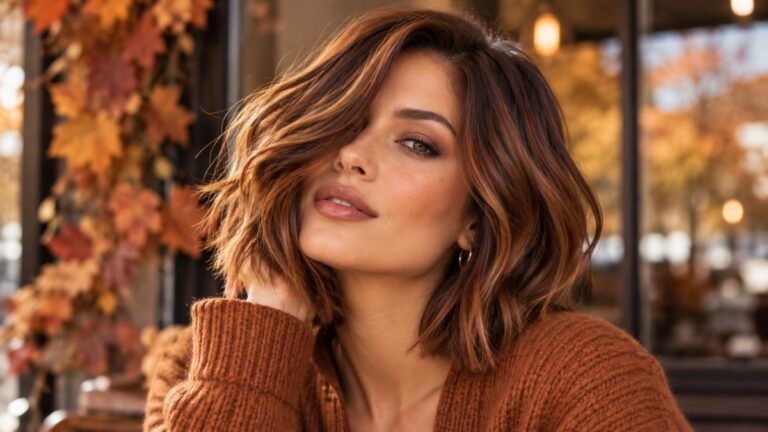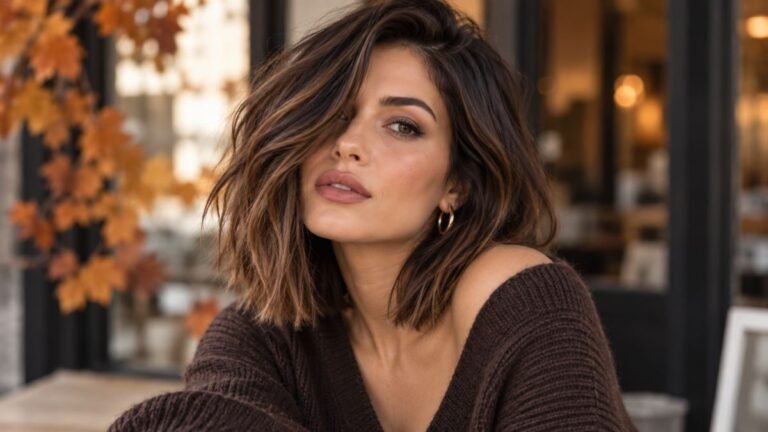


Bottleneck bangs sit between a classic fringe and curtain bangs. The center is shorter and narrower, then the shape widens through the outer eyes and curves into longer pieces around the cheekbones. That graduation is what gives the cut its distinctive bottle-like outline and makes it easier to personalize than a straight horizontal fringe.
For 2026, that custom geometry matters. Allure’s current bang report describes curtain-style fringes as increasingly tailored to individual facial structure, while ELLE’s Fall 2026 guide still includes bottleneck bangs among the softer, lived-in options. “Architectural fringe” is therefore useful here as an editorial description of the shape, not as a separate industry name for the trend.
Current context: Allure’s 2026 bang trends emphasize customized fringe shapes, while ELLE’s Fall 2026 bangs guide includes bottleneck bangs among current seasonal options.
What Makes Bottleneck Bangs Different?
The shortest point sits near the center of the forehead. From there, the fringe gets progressively longer toward the temples and cheekbones. Curtain bangs usually open more clearly from the center and often start longer overall; bottleneck bangs keep a more obvious short central section before widening outward.
That distinction gives a stylist more control over where the eye is drawn. A brow-skimming center emphasizes the eyes, while longer side pieces can land at the upper cheekbone, lower cheekbone, or closer to the jaw depending on the desired frame.
Quick Guide: Choose the Bottleneck Shape by Hair Behavior
| Hair Situation | Strong Direction | Cutting Priority | Watch For |
| Fine hair | Airy or piecey bottleneck | Use a smaller fringe section | Removing too much density from the front |
| Thick hair | Full, internally softened bottleneck | Debulk ends without losing the outline | A center section that becomes too heavy |
| Wavy hair | Soft natural bend | Cut for dry wave pattern | Straightening the fringe into a different texture |
| Curly/coily hair | Graduated curl clusters | Allow for shrinkage and spring | Cutting the center too short while wet |
| Cowlick/side part | Slightly side-swept bottleneck | Work with growth direction | Forcing a perfectly centered split |
1. Classic Brow-Skimming Bottleneck Bangs
This is the clearest bottleneck silhouette: narrow through the center, wider toward the cheekbones. The soft graduation gives more movement than a blunt fringe while still keeping enough hair over the forehead to read as bangs.
Best for: Straight or softly wavy hair; anyone trying the shape for the first time.
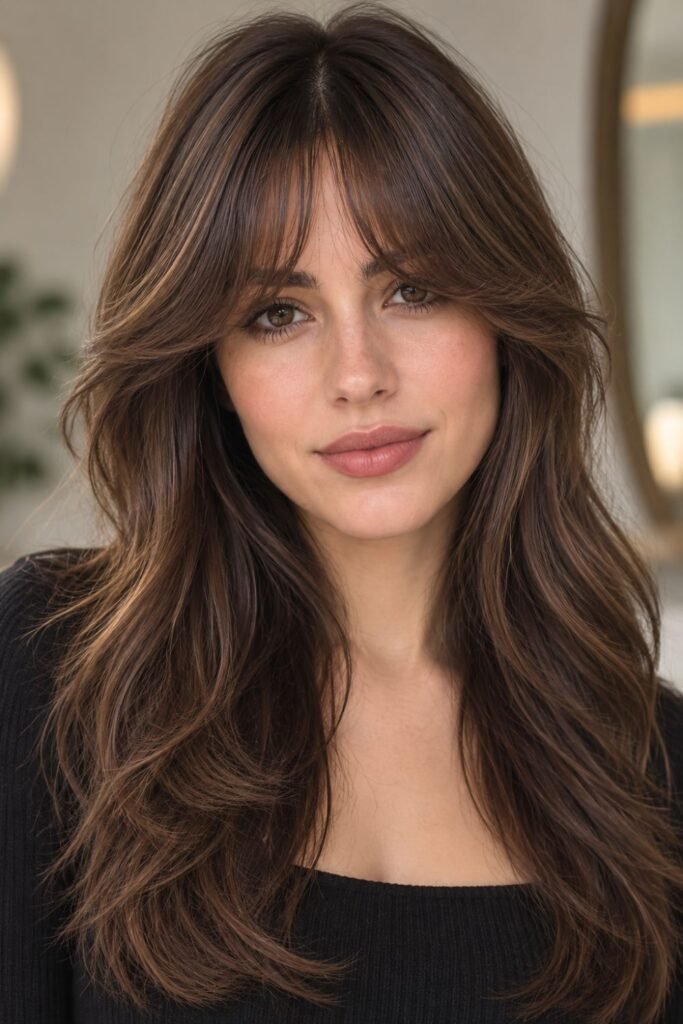
2. Airy Bottleneck Bangs for Fine Hair
Fine hair does not need a large triangular fringe section to create the shape. A smaller, carefully graduated section preserves density through the rest of the haircut while the longer side pieces create the bottleneck outline.
Best for: Fine hair with enough front density to support a soft fringe.

3. Full Bottleneck Bangs for Thick Hair
Thick hair can carry a denser version, but removing bulk at the ends keeps the center from becoming too heavy. The longer sides are what preserve movement and stop the fringe from reading as blunt bangs.
Best for: Thick straight or wavy hair that can support a fuller fringe.
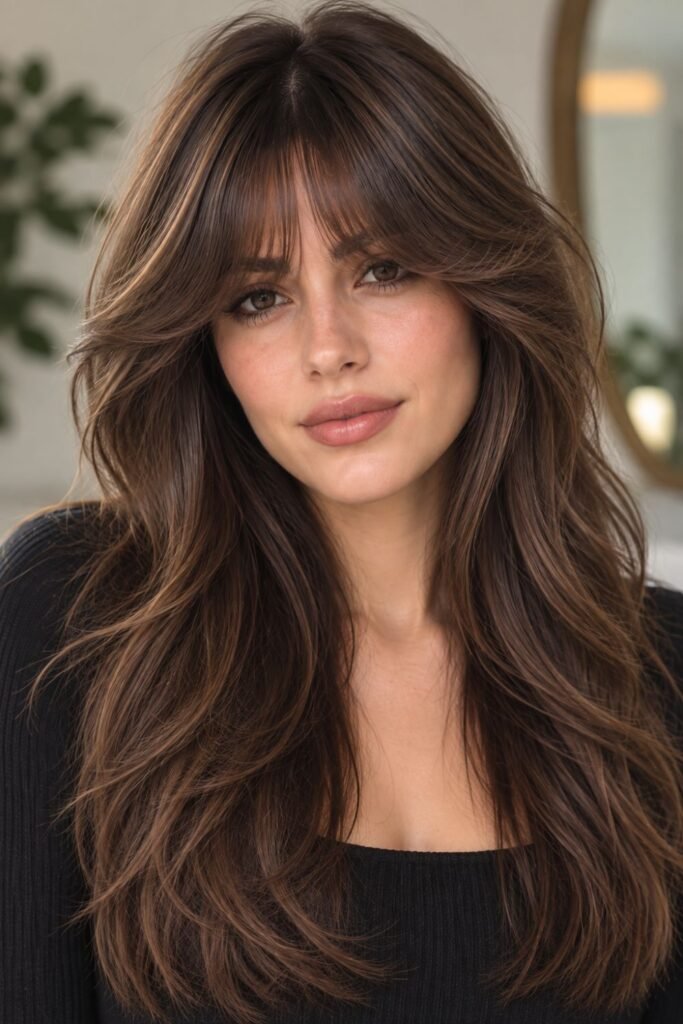
4. Long Grown-Out Bottleneck Bangs
A longer version is useful if you want the geometry without a short commitment. As the center grows, the whole fringe can transition naturally into face-framing layers or curtain bangs.
Best for: Readers who want a lower-risk fringe or are already growing out bangs.

5. Short-Center Bottleneck Bangs
Shortening only the center exaggerates the bottle-neck shape. It creates more visual structure around the eyes while leaving enough length at the sides to soften the effect.
Best for: Straight or wavy hair; people comfortable with a more visible fringe.
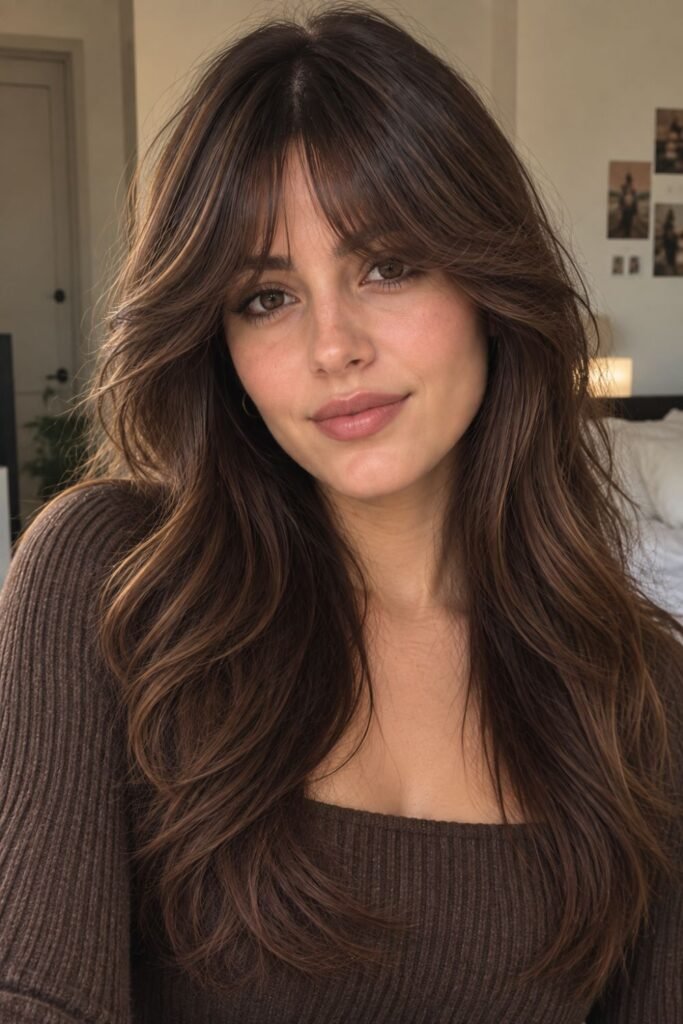
6. Seventies Bottleneck Bangs With a Rounded Bend
The rounded bend gives the fringe a clear 1970s influence without turning it into oversized curtain bangs. Keep the root lift controlled so the center still sits close enough to frame the eyes.
Best for: Medium to thick hair that holds a round-brush bend.

7. Bottleneck Bangs on a Blunt Bob
The curved fringe softens the strong horizontal line of a blunt bob. Keeping the bob itself simple makes the fringe architecture more obvious and prevents the haircut from becoming visually busy.
Best for: Straight or lightly wavy bobs with medium density.

8. Bottleneck Bangs With a Shag
A shag already contains multiple lengths, so bottleneck bangs can blend into the haircut almost invisibly. The key is preserving the shorter center so the fringe does not disappear into generic shag layers.
Best for: Wavy, straight, or textured hair that benefits from layered movement.
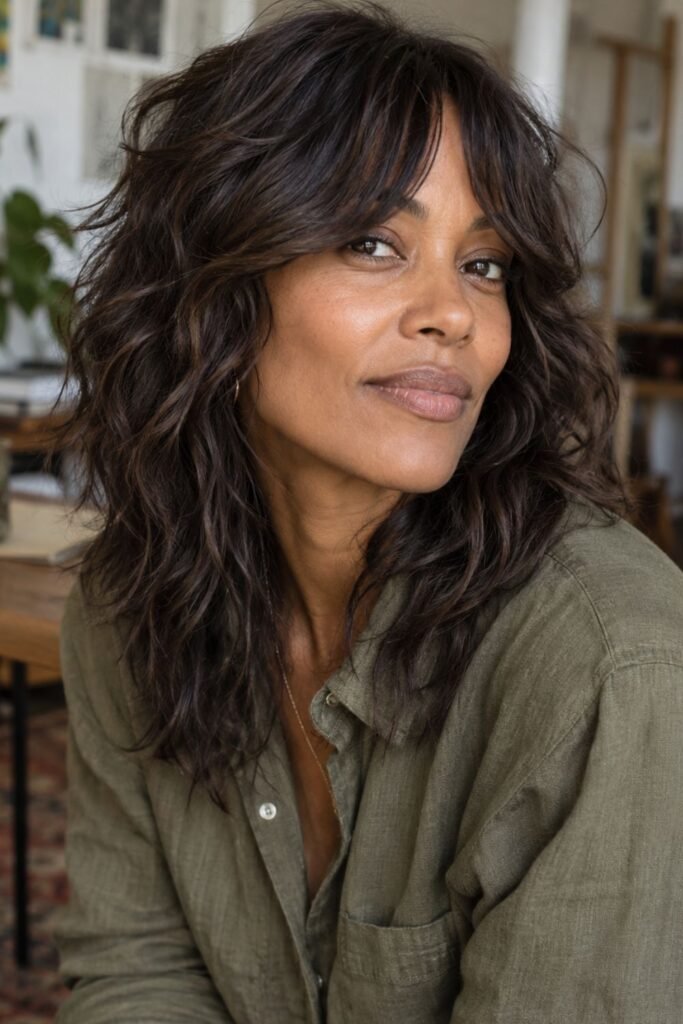
9. Bottleneck Bangs With Long Face-Framing Layers
Extending the outer fringe into longer layers creates a clear visual path from forehead to cheekbone to jaw. It is one of the easiest ways to make bottleneck bangs feel integrated into long hair.
Best for: Long straight, wavy, or blow-dried hair.

10. Soft Wavy Bottleneck Bangs
Allowing the wave pattern to remain visible keeps the fringe connected to the rest of the hair. The cut should account for how much the wave springs up once dry, especially through the shortest center section.
Best for: Type 2 waves and anyone who prefers air-dried texture.

11. Curly Bottleneck Bangs
The bottleneck shape can work on curls, but the geometry comes from graduated curl length rather than a smooth blowout. Cutting with shrinkage in mind is essential so the center does not end up much shorter than intended.
Best for: Curly hair with a stylist experienced in dry or curl-aware fringe cutting.
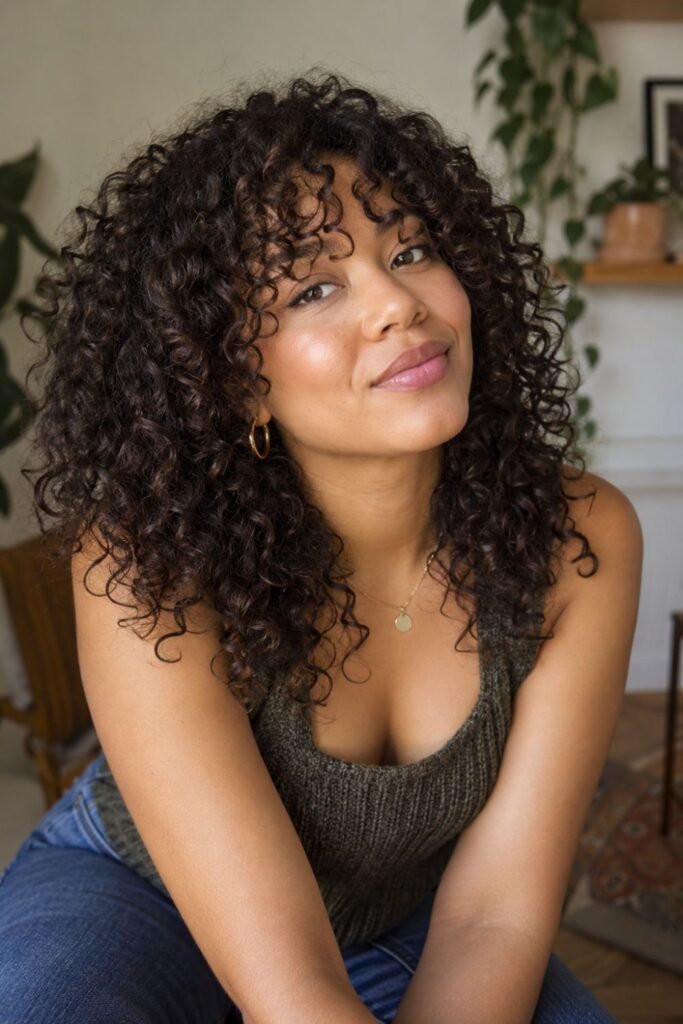
12. Coily Bottleneck Fringe With Sculpted Sides
On coily hair, the silhouette matters more than making every strand fall in the same direction. A slightly shorter central zone plus longer temple coils can create the bottleneck structure while respecting natural volume.
Best for: Coily textures when shrinkage, density, and growth direction are considered in the cut.
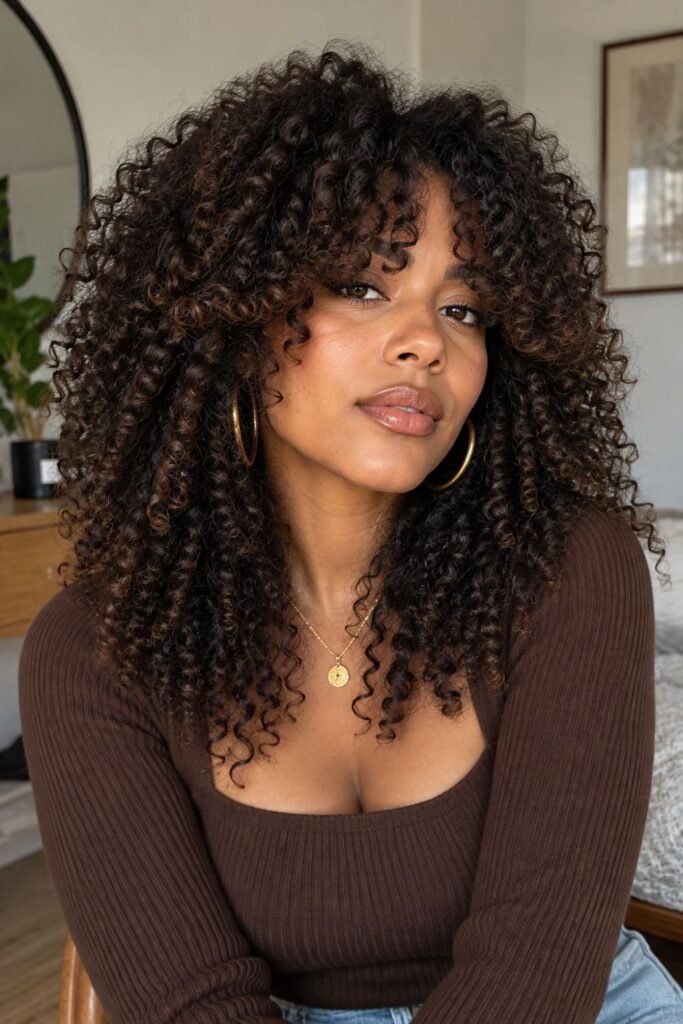
13. Piecey Bottleneck Bangs With a Center Split
A small center split makes the fringe easier to style on second-day hair and lets the eyes show through. The shorter central pieces are what keep it distinct from standard curtains.
Best for: Straight to wavy hair; readers who dislike a fringe sitting fully forward.

14. Side-Swept Bottleneck Bangs
The cut does not have to be worn in a mathematically centered part. A slight side sweep can accommodate cowlicks or preferred parting while preserving the underlying graduation.
Best for: Hair with a natural off-center part or a mild front cowlick.

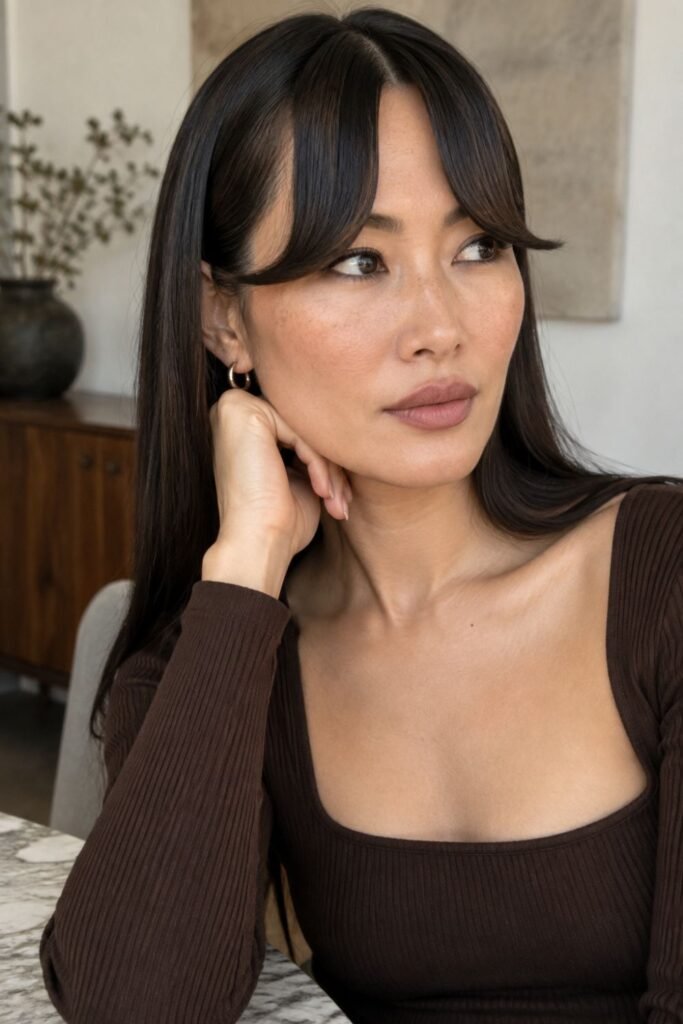
15. Polished Architectural Bottleneck Bangs
This is the most sculpted interpretation. The impact comes from proportion and line rather than tousled texture, which makes the narrow-center-to-wide-side geometry especially easy to see.
Best for: Straight hair or a polished blowout; readers who prefer structured styling.
How Bottleneck Bangs Should Be Cut
The defining instruction is gradual length. Tom Smith, the stylist associated with naming the bottleneck-bang shape, described a shorter central section that becomes progressively longer toward the edges and cheekbones. A soft, choppy cutting line keeps the fringe from looking rigid.
Ask the stylist to decide the shortest central point only after considering your natural texture, hairline, cowlicks, and shrinkage. A dry or nearly dry check is especially useful for wavy, curly, or coily hair because the final length can sit noticeably higher than it appears when stretched.
How to Style the Fringe Without Losing the Shape
The goal is to preserve the narrow center and curved sides, not to inflate the entire fringe. On straight or wavy hair, direct the center forward with a small round brush or flat brush, then turn the outer sections away from the face. Too much root lift can make the style resemble full curtain bangs instead.
For curls and coils, define the fringe in its natural pattern and avoid stretching every section into the same length. Lightweight curl cream or mousse can help the shorter center and longer temple pieces remain visually separate without creating stiffness.
How Often Do Bottleneck Bangs Need Trimming?
There is no single schedule because the shortest center determines when the shape starts to change. If you like the brow-skimming version, you may notice the geometry soften sooner. Longer versions can grow into curtain bangs or face-framing layers with less obvious disruption.
Instead of trimming by calendar alone, book a refresh when the center no longer lands where you want or the side sections stop connecting cleanly to the cheekbone layers.
Useful Redounds Reads
For a softer, lighter alternative, compare this shape with Redounds’ layered wispy bangs guide. If you want the fringe to blend into a longer cut, Redounds’ medium-length layered haircut ideas show how face-framing layers can carry the shape beyond the cheekbones.
Frequently Asked Questions
Are bottleneck bangs the same as curtain bangs?
No. Bottleneck bangs keep a shorter, narrower center before widening into longer sides. Curtain bangs usually open more clearly from the middle and can be longer through the central area.
Do bottleneck bangs work on fine hair?
Yes, if the fringe section is not made too large. A lighter, airy bottleneck can create shape around the eyes without removing too much density from the rest of fine hair.
Can thick hair wear bottleneck bangs?
Yes. Thick hair can support a fuller version, but internal weight may need to be softened so the center moves naturally and the longer sides do not become bulky.
Do bottleneck bangs work on curly hair?
They can. The stylist should cut for the curl pattern and expected shrinkage, creating a shorter central group of curls and progressively longer curls toward the temples and cheekbones.
What face shape suits bottleneck bangs?
The cut is highly adjustable, so the more useful question is where the shortest center and longest side pieces should land on your features. A stylist can change those points to emphasize the eyes, brows, cheekbones, or jaw.
Are bottleneck bangs low maintenance?
They are often easier to grow out than a blunt fringe because the sides are already long and layered. The shortest central section still needs styling and occasional trimming if you want to preserve the original geometry.
Can I wear bottleneck bangs with a side part?
Yes. A slight side sweep can work well when the cut still keeps its graduated short-center-to-long-side structure. This can also help accommodate a natural cowlick or preferred part.
What should I tell my stylist?
Ask for a soft bottleneck shape with a shorter central fringe and progressively longer pieces around the outer eyes and cheekbones. Bring a photo showing the exact center length and side length you prefer.
Before Your Appointment
Decide how short you are willing to go in the center before you sit in the chair. That one measurement changes the entire character of the cut. Bring a reference with a similar texture to your own, show your stylist how your front hair naturally falls, and choose the cheekbone or jaw point where you want the outer fringe to finish. The best bottleneck bangs look designed for the person wearing them, not copied from a diagram.