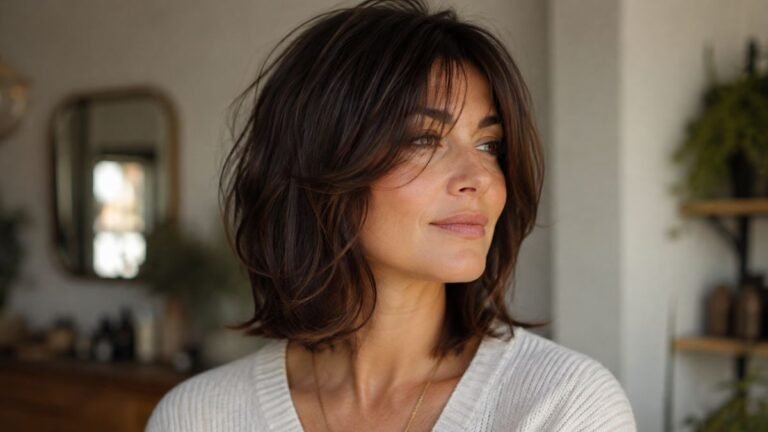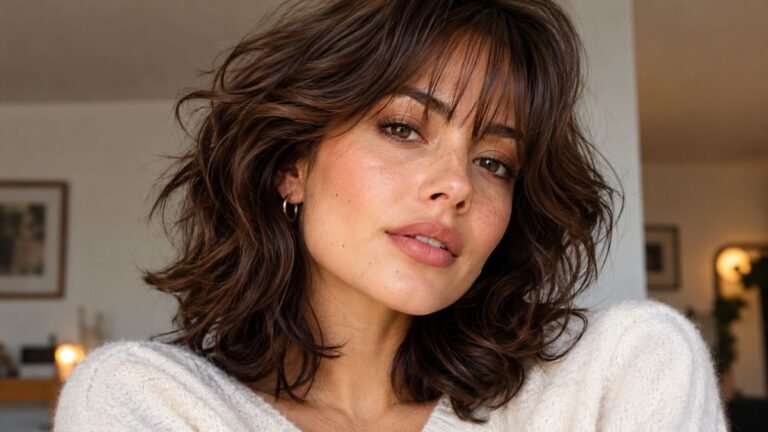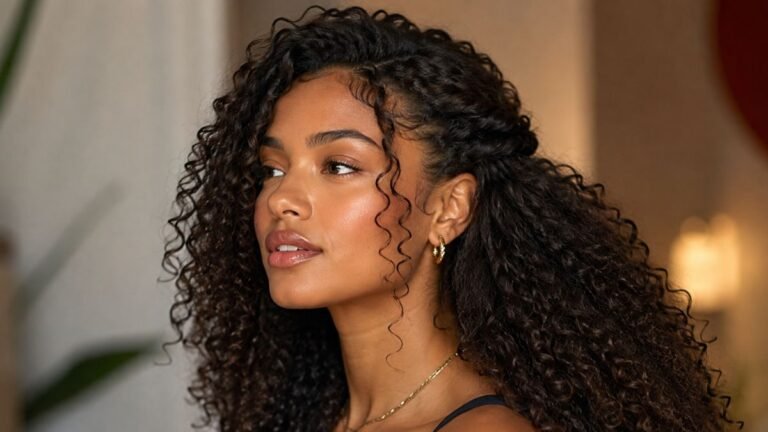

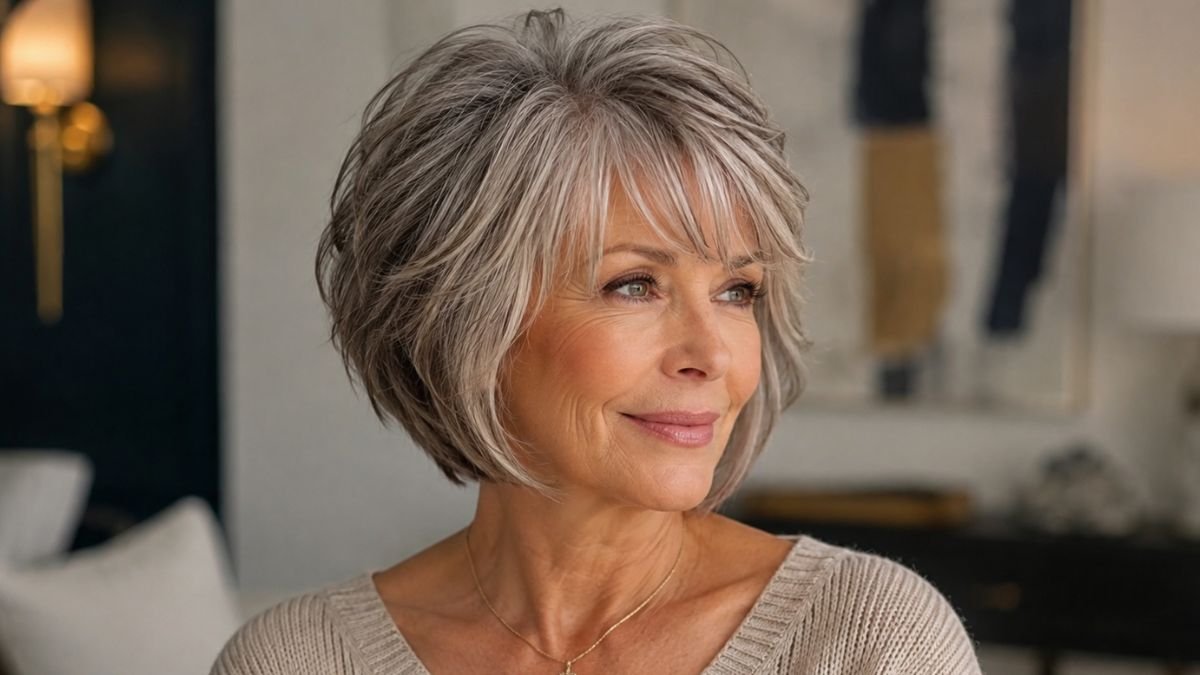
Thin hair over 60 behaves differently from thin hair at any other age. Density usually drops most at the crown and along the part, the strands become finer and often drier, and heat does damage faster than it did a decade or two ago. The cuts and products that gave you lift at 40 may fall flat on hair whose structure has changed. The best hairstyles for thin hair over 60 work with those changes instead of fighting them.
The 15 styles below are grouped by length, from short crops to occasion updos. For each one you’ll find what to ask your stylist for, which products help fine strands hold their shape, and how much upkeep to expect. A short section at the end covers the techniques that make the biggest daily difference.
Short Hairstyles for Thin Hair Over 60
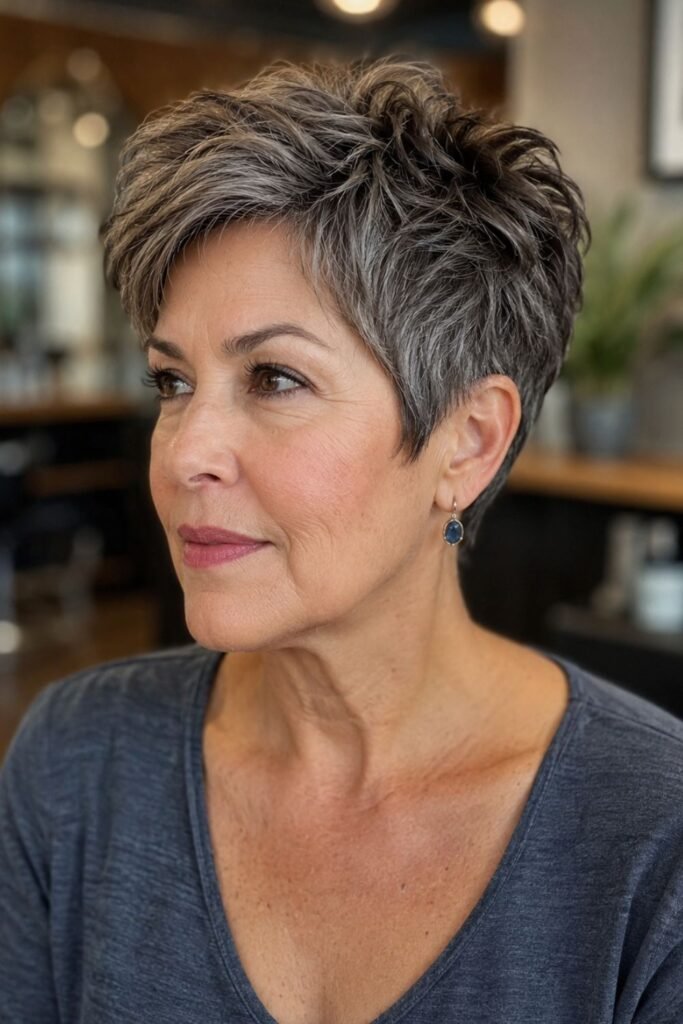
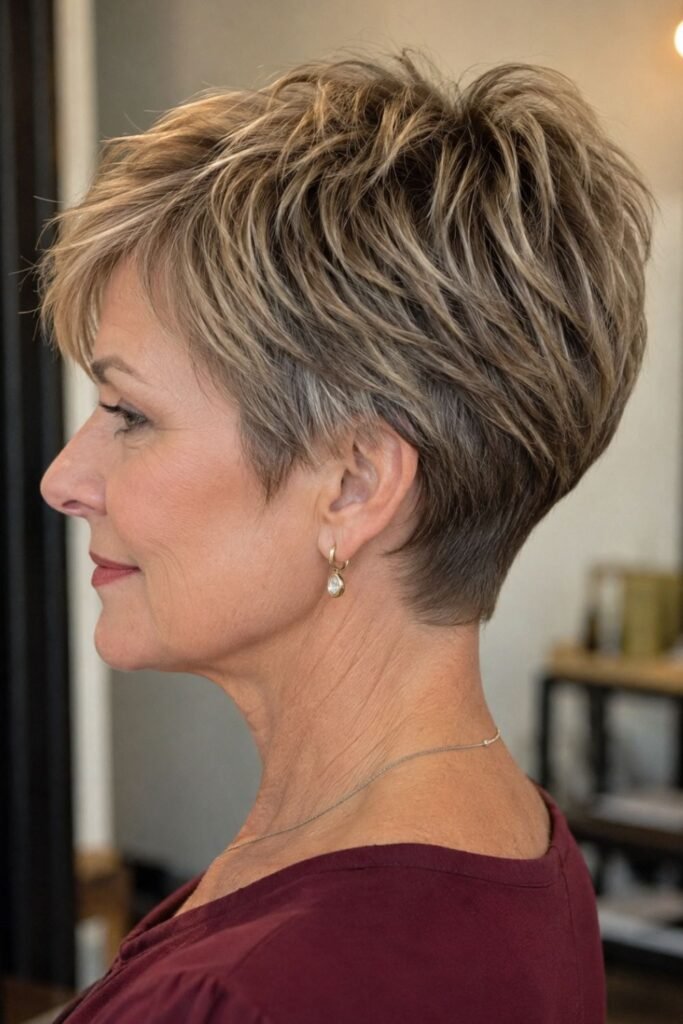
Textured Pixie with Volume at the Crown
A pixie on thin hair over 60 works best when it is built around the crown. Ask your stylist to leave the crown section longer than the sides and back, roughly two to three inches, so it can be lifted away from the head. The shorter sides and back remove weight and make the top look fuller by contrast, which matters because the crown is usually where density drops first.
Work a golf-ball-sized amount of volumizing mousse into damp roots, then blow-dry the crown up and back with a small round brush. Finish with a light-hold hairspray so the shape stays put without feeling stiff. Plan on a trim every five to six weeks to keep the proportions right. For more cropped options, see our guide to short haircuts for women over 60.
Short Silver Bob with Soft Layers
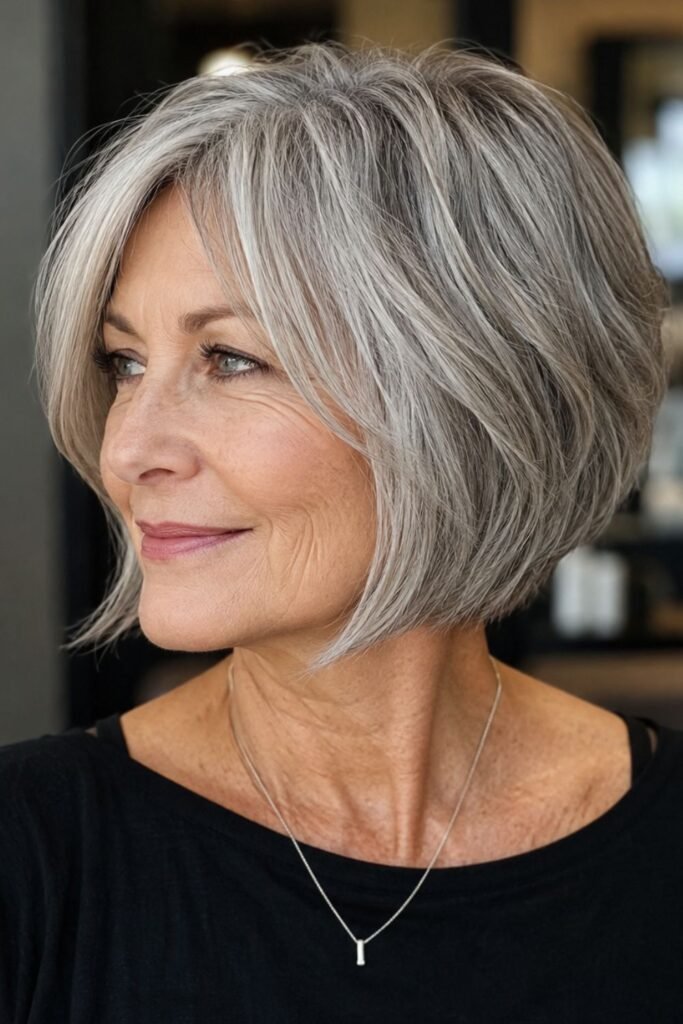
A short bob that ends just below the ear, with soft internal layers, moves well and never sits flat against the head. The layers take bulk out of the middle section without sacrificing length, so the hair has enough movement to look fuller than its actual density.
Ask for slight graduation at the back, where the underneath is cut shorter than the outer surface. That stacking pushes the top layer outward and builds the look of thickness at the nape. On silver or grey hair, use a purple or blue toning shampoo once a week to cancel the yellow cast that hard water and heat leave behind, then condition the mid-lengths and ends to keep them soft. Our roundup of bob haircuts for older women shows more lengths and partings to bring to your appointment.
Chin-Length Bob with Wispy Ends
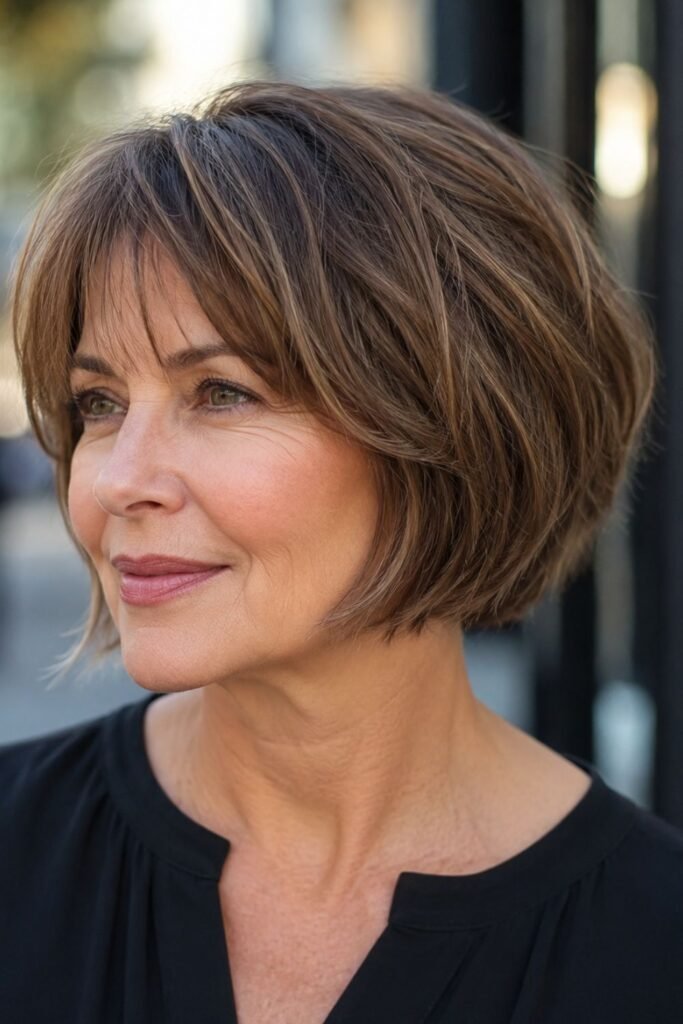
A chin-length bob suits thin hair over 60 best when the ends are point-cut to a soft, wispy finish. A blunt line on fine hair creates a flat, heavy edge that makes the thinness obvious. Point-cutting breaks up that edge so the length looks lighter and fuller.
Blow-dry the ends under with a round brush to create a gentle curve that adds width at the jaw. A small amount of volumizing foam worked through damp hair gives fine strands enough grip to hold the shape all day. Skip heavy serums and oils on the ends, which weigh fine hair down and collapse the volume within hours. This cut flatters oval, heart, and square face shapes and needs a trim every six to eight weeks.
Short Shag with Crown Layers
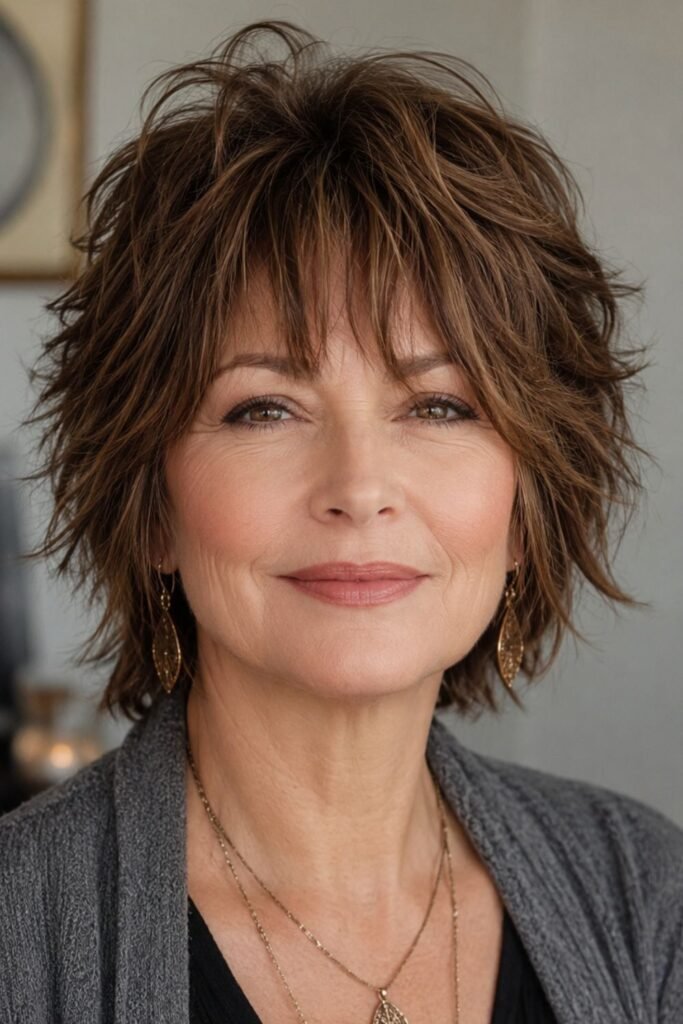
A short shag is one of the most effective cuts for creating the look of density. Layering at the crown builds height where hair is flattest, and the textured ends make the whole shape look fuller than a smooth, one-length cut on the same amount of hair.
Shag layers also take weight out of the mid-section, so thin hair moves freely instead of hanging limp. Ask for crown layers about two to three inches long so there is enough length to lift. To style, scrunch a texturizing spray into dry hair and rough-dry with your fingers. The cut suits natural waves especially well and grows out gracefully, so you can stretch trims to eight weeks.
Tapered Nape Cut with Soft Top
A tapered nape cut keeps the hair very close at the nape and gradually lengthens toward the crown. The shape draws the eye upward to the fullest part of the style and away from the nape, where thin hair often looks sparse. The longer top can be blow-dried with lift while the nape stays clean and neat.
Choose a stylist who is confident with clipper and scissor-over-comb work, since the taper needs precision. Once it is in place, the cut is very low maintenance. The close nape grows out cleanly, so a quick nape tidy every four weeks between full cuts keeps it looking intentional. A pea-sized amount of matte paste rubbed through the top adds piecey texture without weight.
Medium Hairstyles for Thin Hair Over 60
Layered Lob for Fine Hair
A collarbone-length lob with soft internal layers is the most versatile medium cut for thin hair over 60. It is short enough to avoid the stringy ends that very long fine hair develops, and the layers through the mid-section add movement so the hair looks fuller from every angle.
The key instruction for your stylist: remove weight from the interior of the lob and leave the surface intact. Interior layers, often called ghost layers, keep the outer length while giving the inner sections lift. Visible surface layers on thin hair can expose the scalp when the hair moves, which makes it look thinner. Style with a root-lift spray and a large round brush, and trim every eight weeks.
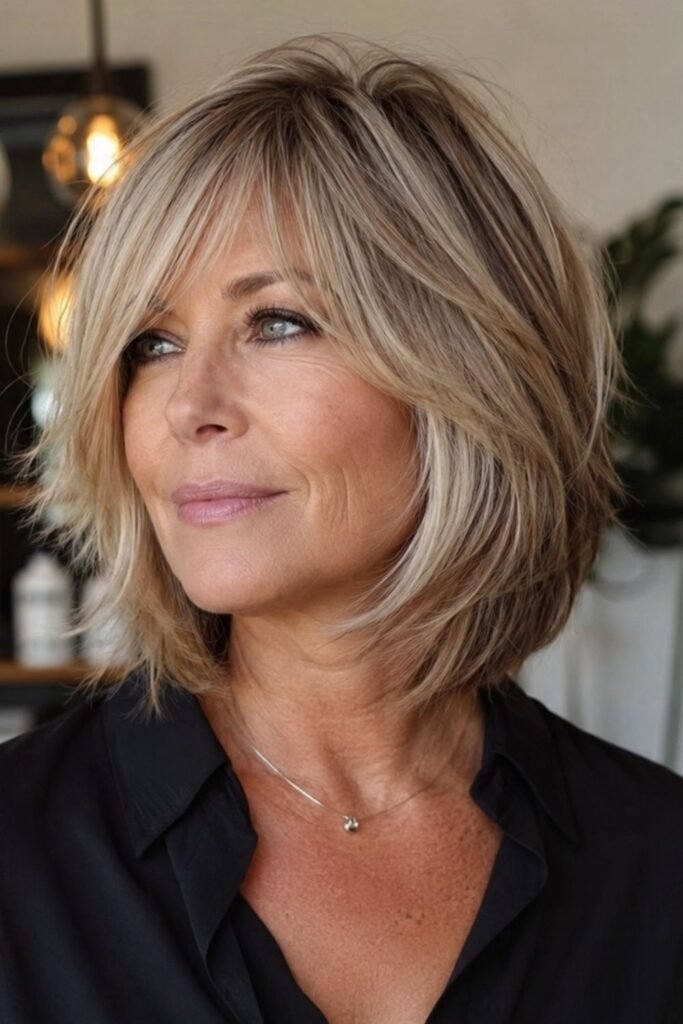
Medium Bob with Curtain Bangs
Curtain bangs on a medium bob frame the face and draw attention to the eyes and away from the part, where thinning often shows most. The bang section also adds visible hair at the front of the face, which is the area people notice first.
Ask for curtain bangs cut long and wispy, landing between the nose and the lip, so they blend into the face-framing layers. A heavy, dense bang on thin hair contrasts with the lighter lengths behind it and highlights the difference. To style, blow-dry the bangs with a small round brush, rolling each side away from the face, then mist lightly with a flexible hairspray. Bangs need a quick trim every three to four weeks.
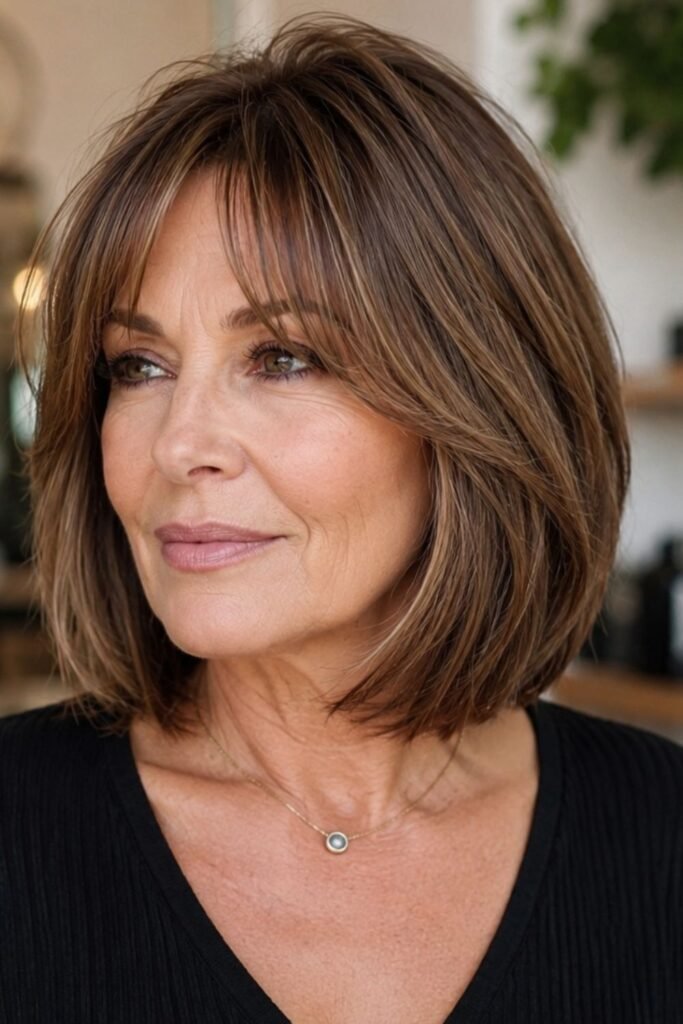
Shoulder-Length Soft Wave Style
Shoulder-length thin hair needs some wave or curl to look its best, because straight fine hair at this length tends to hang flat and reveal sparse ends. Soft waves fill the space between strands and give the impression of more hair than is actually there.
Apply a light-hold mousse to damp hair, then set it on large velcro rollers or wrap sections around a large-barrel curling iron. Let the waves cool completely before releasing them. Once set, lift the roots gently with your fingertips and finish with a fine-mist hairspray. Avoid brushing through, which splits the waves into individual strands and collapses the shape. On day two, refresh the look by re-curling only the front sections.
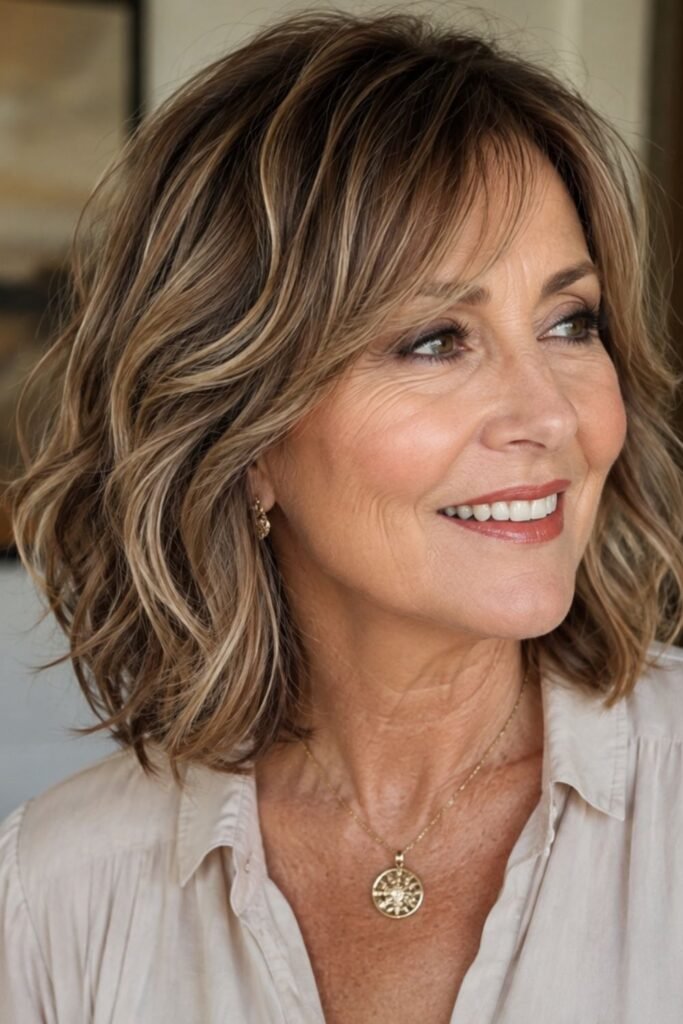
Medium Length with Caramel Highlights
Color creates the look of density on thin hair because contrast between highlights and the base shade adds dimension. A flat single-process color has no depth, so it reads thinner. Our guide to caramel highlights on brown hair covers placement and tone in detail. For thin hair specifically, ask your colorist for fine, closely spaced highlights instead of chunky sections. Fine placement spreads dimension evenly and avoids visible gaps between colored and uncolored strands.
Book a toning gloss every six to eight weeks to keep the caramel warm and add shine. Dull hair looks thinner than hair with a healthy sheen, so add a moisture treatment at the same appointment. Caramel suits warm and neutral skin tones and blends softly into grey regrowth, which stretches the time between color visits.
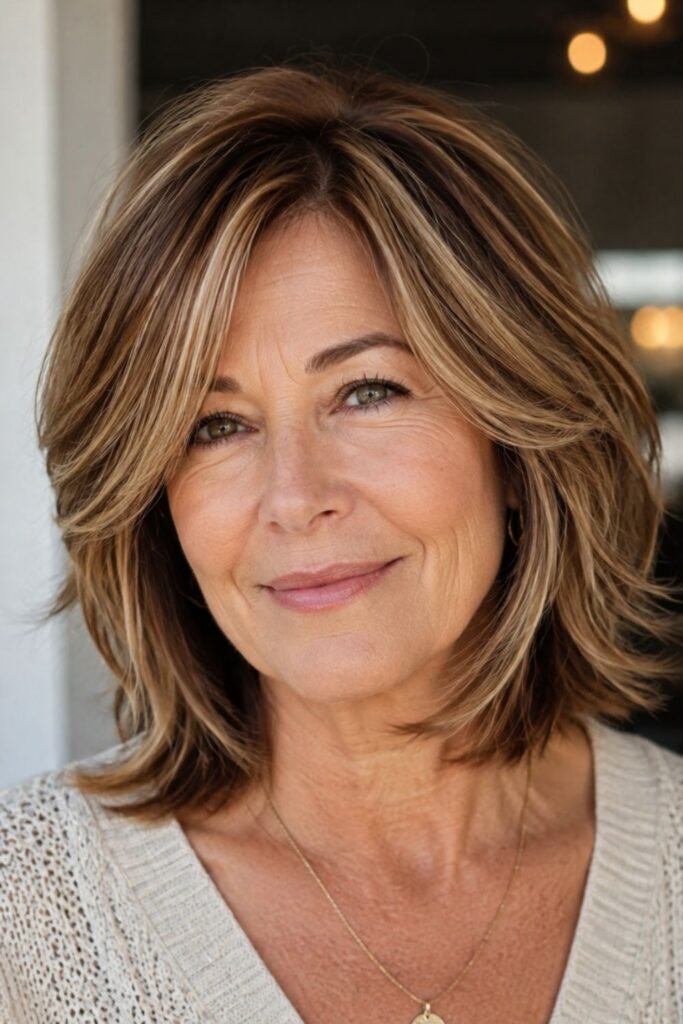
Medium Silver Style with Side Part
A deep side part on medium-length silver or grey hair makes thinning at the part far less visible. A center part exposes the scalp in a straight, symmetrical line. Moving the part to one side shifts that line out of the spotlight and sweeps more hair across the crown.
Train the new part for two to three weeks by applying a little light-hold pomade along it each morning and blow-drying the hair toward the heavier side. After that, it should fall into place without product. Keep the length between the chin and the shoulders so the swept section has enough weight to stay put. For more ways to wear natural silver, browse our grey hair ideas for women over 50.
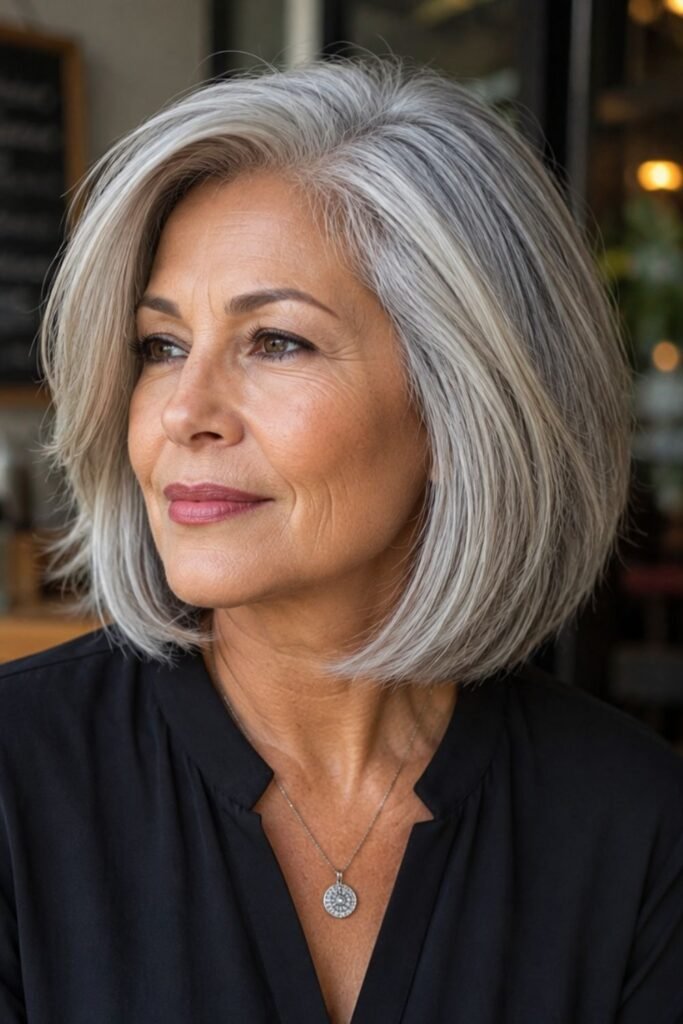
Long Hairstyles for Thin Hair Over 60
Long Layers with Face-Framing Highlights
Long thin hair needs layers to avoid the heavy, flat look that uncut fine hair develops at length. Keep the layers in the mid-lengths and away from the surface, so they add movement without exposing the scalp. Face-framing layers that start at the cheekbone bring shape to the front, where it shows most.
Pair those face-framing layers with a few fine highlights around the face. The highlights add color dimension at the same points where the layers add movement, so the front of the hair looks noticeably fuller. Keep the overall length no lower than the shoulder blades, since thin hair below that point usually looks sparse at the ends. Trim every eight to ten weeks and use a lightweight leave-in conditioner on the ends only.
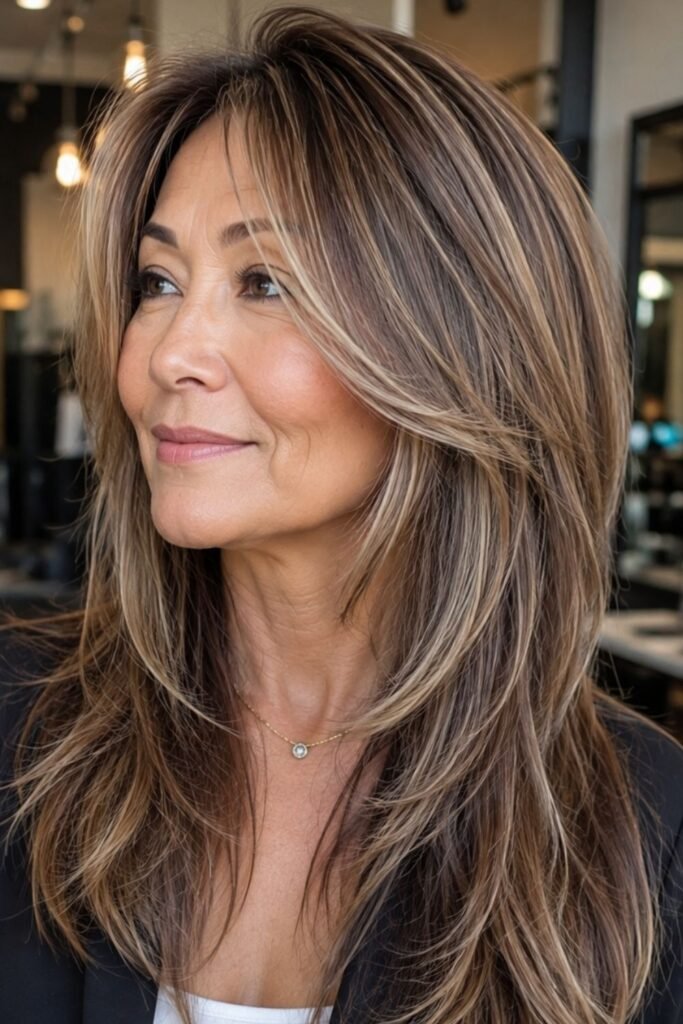
Long Soft Waves on Fine Silver Hair
Long silver hair with soft waves is a striking look, and it works on thin hair because the wave fills the space between strands and creates volume through movement. Silver hair also reflects light along each curve of the wave, which adds richness that helps make up for lower density.
Use a large-barrel curling iron, at least one and a half inches, for waves that look soft instead of tight. Apply a heat protectant first, since fine hair over 60 is more prone to heat damage. Wrap alternating sections toward and away from the face for a natural pattern, then rake through gently with your fingers. A weekly deep conditioning treatment keeps the strands supple and reduces breakage.
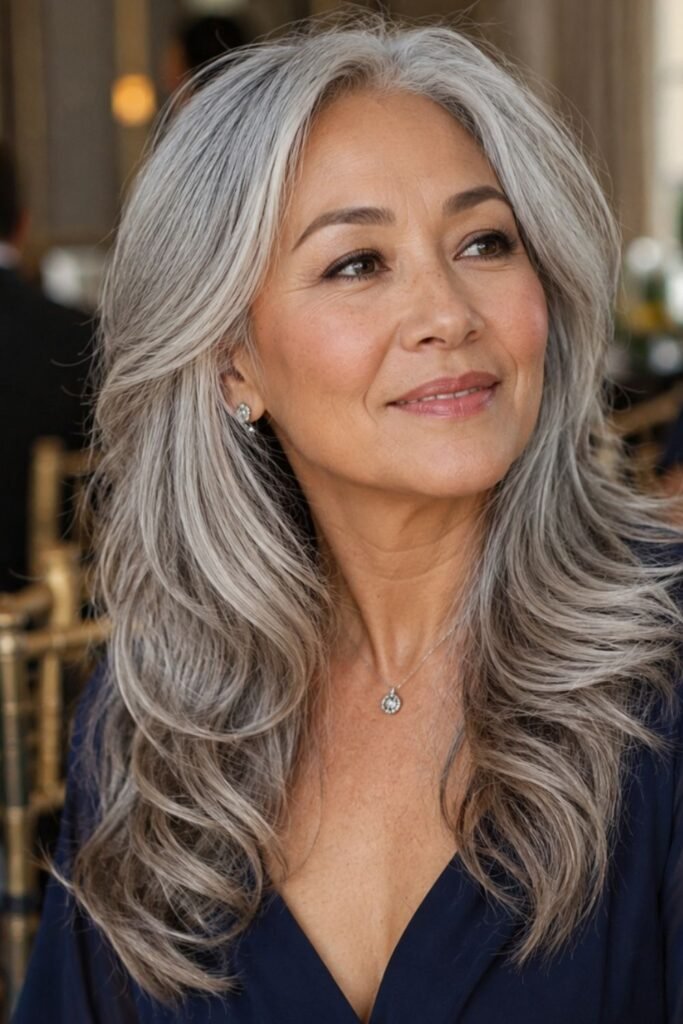
Occasion and Updo Styles for Thin Hair Over 60
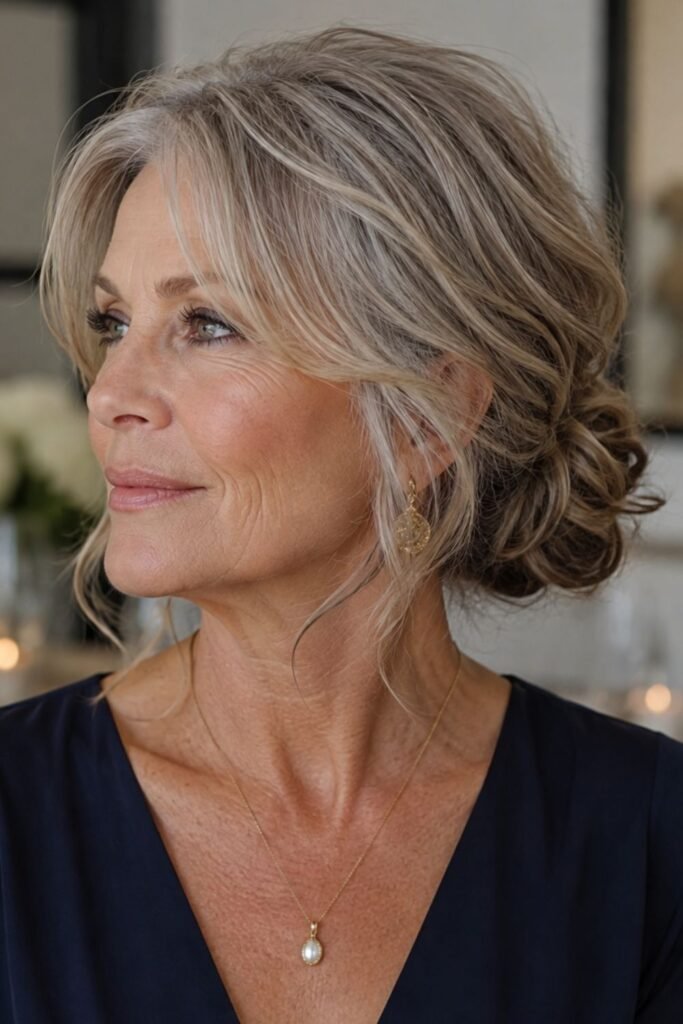
Loose Low Bun with Soft Pieces
A loose low bun flatters thin hair more than a tight, sleek one because the softer shape suggests more hair gathered at the nape. A tight bun shows exactly how little hair is there. A softly gathered bun with a few face-framing pieces left out creates fullness through its shape. Our collection of long hair updos includes more low bun variations that work on fine hair.
Tease very lightly at the crown before gathering the hair to add height. Mist a texturizing spray through the lengths before pinning so fine hair has more grip. Bobby pins hold better on fine hair when you cross two of them in an X, which stops the bun from slipping loose through the evening. Shoulder-length hair is long enough for this style.
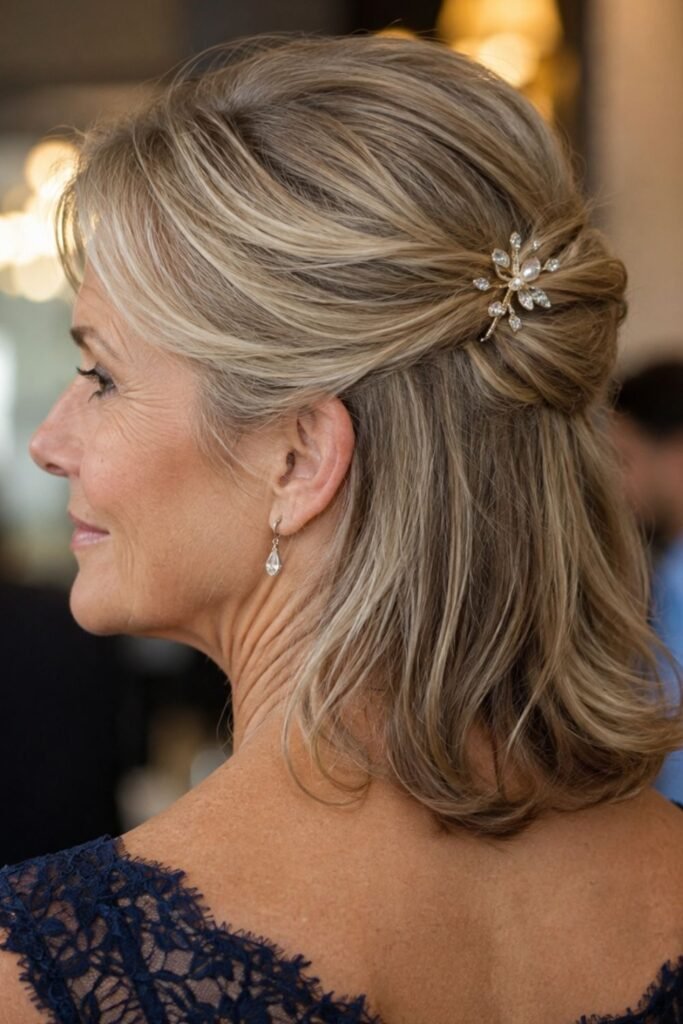
Half-Up Twist with a Decorative Pin
A half-up twist gathers the top section into a loose twist at the crown and secures it with a jeweled or pearl pin, leaving the rest of the hair down. The gathered section adds height at the top, and the loose lengths below show off any wave you have set.
This style works on hair from chin length down and takes about five minutes. Backcomb the crown section lightly, twist it once or twice, and anchor it with two crossed bobby pins before sliding the decorative pin over them. The pin makes the style look finished and intentional. Choose a pin that suits your hair color: pearl and silver for grey hair, gold for warmer shades.
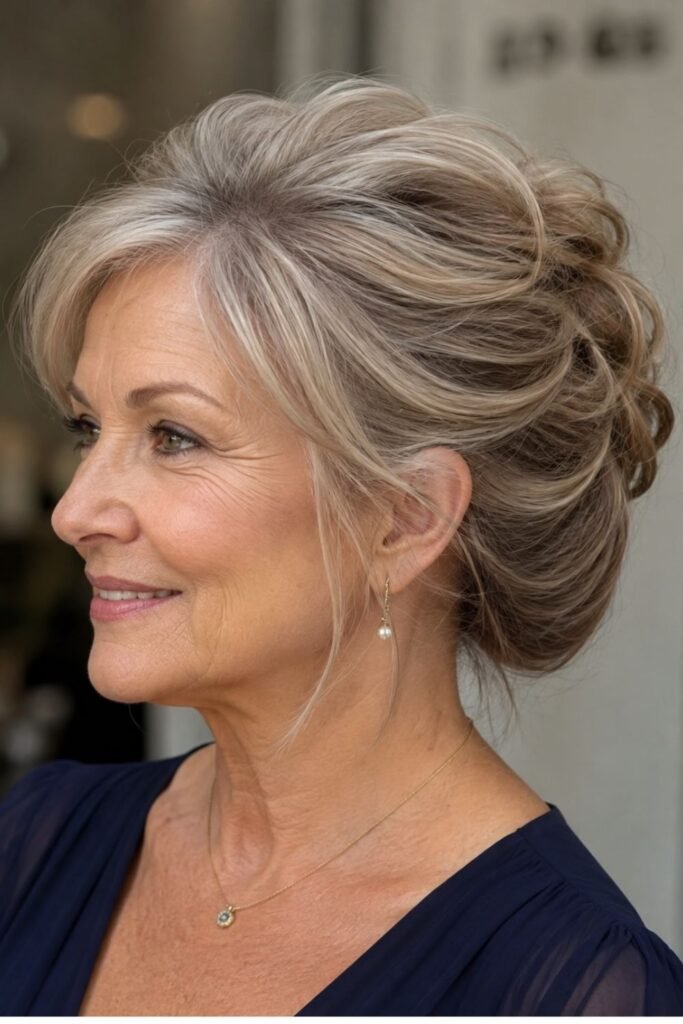
Soft Pinned Style with Volume at the Crown
For a formal event, build volume at the crown first, then pin loosely at the sides and back to hold the shape. Start with a volumizing blow-dry, tease lightly at the roots, and pin section by section. Pulling everything tightly back at once flattens the crown, while selective pinning keeps the lift through the evening.
Leave the face-framing pieces loose so they fall softly at the temples and cheeks. These pieces soften the face and do more for the overall look than any accessory. A shine spray misted from arm’s length adds polish without weighing the hair down. Set the finished style with a flexible-hold spray so it can move without coming apart.
Products and Techniques That Make the Most Difference
Switch to a Volumizing Shampoo and Keep Conditioner Off the Roots
Conditioner at the roots weighs fine hair down before styling even starts. Use a volumizing or thickening shampoo, apply conditioner only from the mid-lengths to the ends, and rinse thoroughly. The scalp supplies the roots with enough natural oil on its own. This one change makes a visible difference to how much lift you get from a blow-dry.
Blow-Dry Upside Down for Root Volume
Flipping your head upside down while blow-drying lifts the roots away from the scalp in every direction at once. When the hair is about 80 percent dry, flip upright and use a round brush or your fingers to shape the crown. This method gives thin hair over 60 noticeably more lift than drying upright, and a low heat setting keeps damage down.
Use Dry Shampoo as a Styling Tool
Dry shampoo sprayed at the roots of clean hair adds the texture and grip that fine strands lack. Spray at the roots, wait 30 seconds, work it in with your fingertips, then go over it with a blow-dryer on low to activate the texture. The added grit helps roots hold their lift much longer.
Frequently Asked Questions
What is the best haircut for thin hair over 60?
Short and medium cuts usually work best because they remove the weight that pulls fine hair flat. A textured pixie with crown volume, a layered lob with interior layers, and a chin-length bob with wispy ends are the most reliable options. The right choice depends on your face shape, how much time you spend styling, and how much length you want to keep.
Should women over 60 with thin hair avoid long hair?
No, but long thin hair takes more work to look full. Very long fine hair tends to hang flat and look sparse at the ends. If you prefer length, ask for internal layers through the mid-lengths, set waves regularly, and consider fine highlights to add dimension.
What hair color is best for thin hair over 60?
Colors with dimension and contrast look fuller than flat single-process shades. Caramel highlights on brown or grey bases, soft balayage, and face-framing highlights all add depth. Flat, all-over dark colors can make thin hair look limp and show more scalp. Natural silver and grey reflect light well and look full when the cut is right.
How do I add volume to thin hair over 60 without heat damage?
Set damp hair on velcro rollers and let it dry completely for heat-free lift, applying volumizing mousse first for hold. Dry shampoo at the roots adds texture without any heat. If you blow-dry, flip your head upside down and use a low or cool setting to limit heat exposure.
How often should thin hair over 60 be trimmed?
Trim short cuts every six to eight weeks and medium or long cuts every eight to ten weeks. Split ends show more on thin hair because each strand is visible, and regular trims stop the fraying that makes ends look sparse. If you are growing your hair out, ask for a dusting, which removes only split ends without taking length.
Final Thoughts
The best hairstyles for thin hair over 60 start with a cut that suits how your hair behaves now, followed by a routine built for fine, changing strands. None of these styles hide your hair. They work with the density you have and make it look as full and polished as possible.
Start with the cut, because a good haircut does more than any product. Then build your routine around root volume and keep heavy products off the lengths. With those two pieces in place, daily styling gets quicker and the results last longer.