
Deep wine and burgundy nails are one of autumn 2026’s clearest color directions. Vogue, Cosmopolitan, Glamour UK, and Who What Wear all feature burgundy, wine, oxblood, or dark-cherry families in current seasonal nail coverage. The appeal is not limited to one flat shade: the same deep red can look clean in a glossy cream, smoky in a jelly, dimensional under magnetic pigment, or sharper as a micro-French. The 15 ideas below keep the palette cohesive while changing shape, finish, placement, and technique, so each manicure gives the color a different role rather than repeating the same set with minor decoration.
Why Deep Wine and Burgundy Work So Well in Autumn
Burgundy sits in the deep red family, often with purple or brown undertones, while “wine” is a broader salon description that can range from merlot and bordeaux to oxblood. That depth makes these shades visibly darker than summer cherry reds without pushing all the way to black. Current fall 2026 reporting repeatedly places wine and burgundy beside chocolate brown, olive, plum, and other saturated seasonal colors.
Redounds already covers burgundy as part of its broader fall nail trends guide; this article narrows the focus to how deep wine can change through finish, shape, and placement.
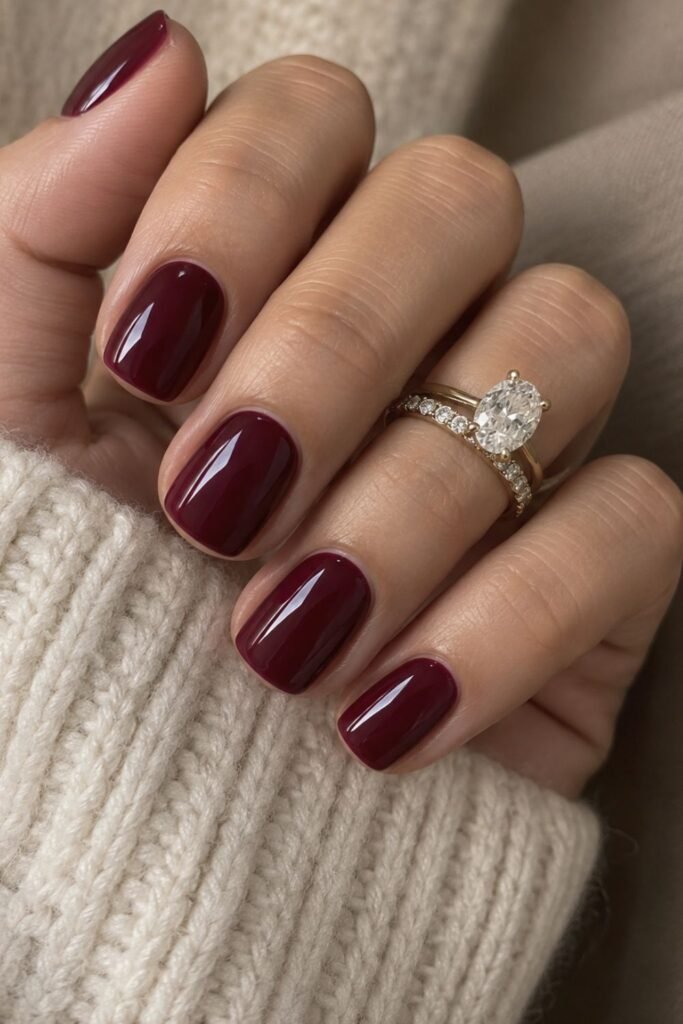
1. Glossy Merlot Short Squares
A clean glossy merlot is the easiest way to let a deep wine shade do all the work. On short square or squoval nails, the dark color looks compact and deliberate rather than overly dramatic.
Choose an opaque cream formula and keep the corners slightly softened if your natural nails catch easily. A high-shine topcoat makes the burgundy read richer by reflecting a clean line of light across the surface.
Best for: short natural nails and a low-detail everyday manicure.
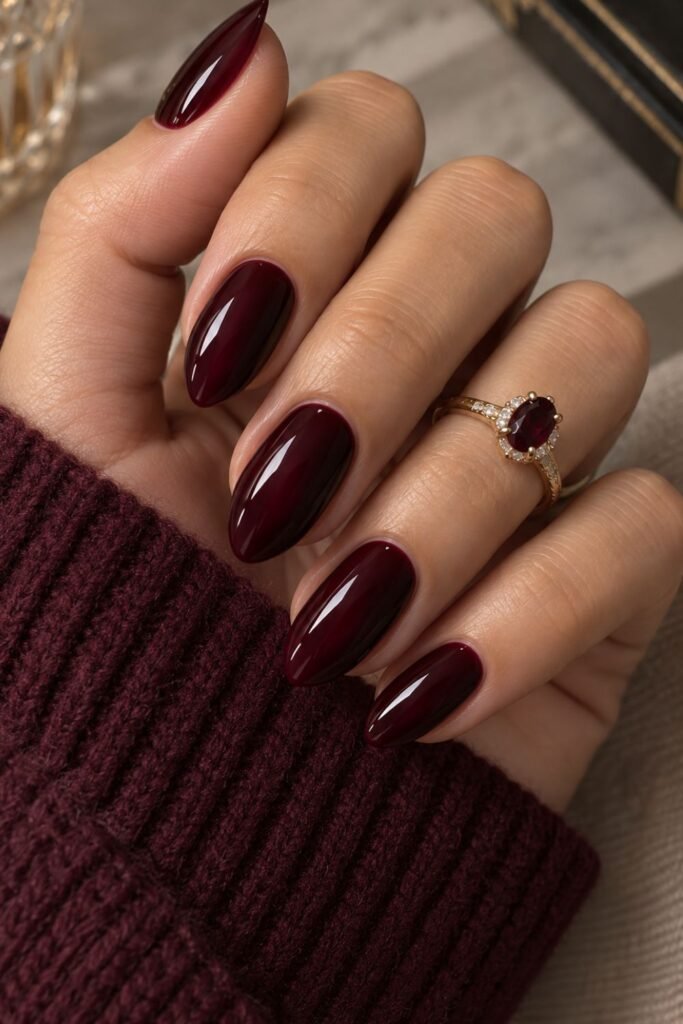
2. Oxblood Almond Nails
Oxblood pushes burgundy toward its darkest side, with enough brown or near-black depth to look almost black in low light. Almond shaping gives the shade a longer, more tapered silhouette.
Ask for a color that still flashes red when it catches daylight. If it stays flat black in every light, the wine character disappears; if it turns bright scarlet, it is too light for this particular look.
Best for: medium-length nails and a more dramatic single-color set.
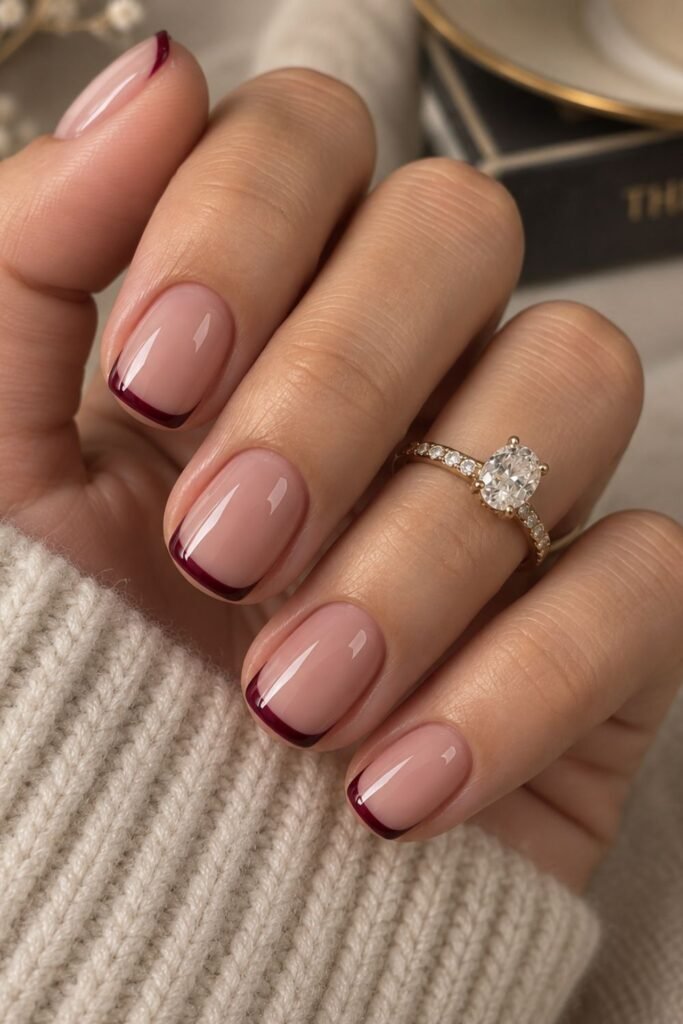
3. Burgundy Micro-French
A micro-French confines burgundy to a very narrow strip at the free edge, leaving most of the nail sheer. That contrast makes a dark shade feel lighter and works especially well on short nails.
Keep the line thin enough to follow the natural edge rather than creating a thick block of color. A sheer pink, beige, or clear base gives the tip a cleaner boundary than a fully opaque nude.
Best for: short square, squoval, and softly rounded nails.
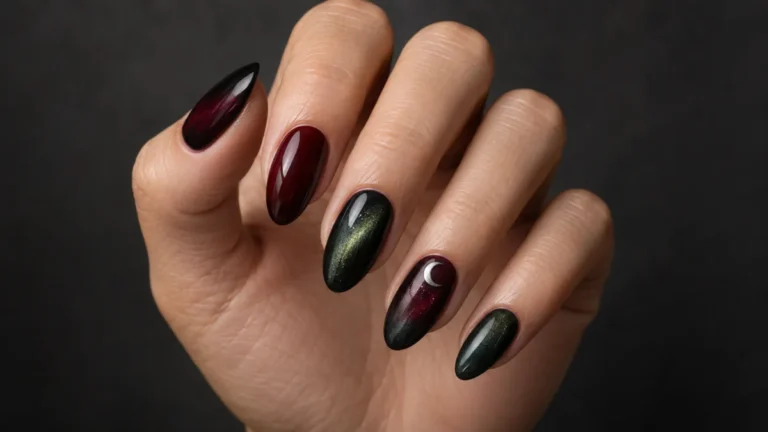
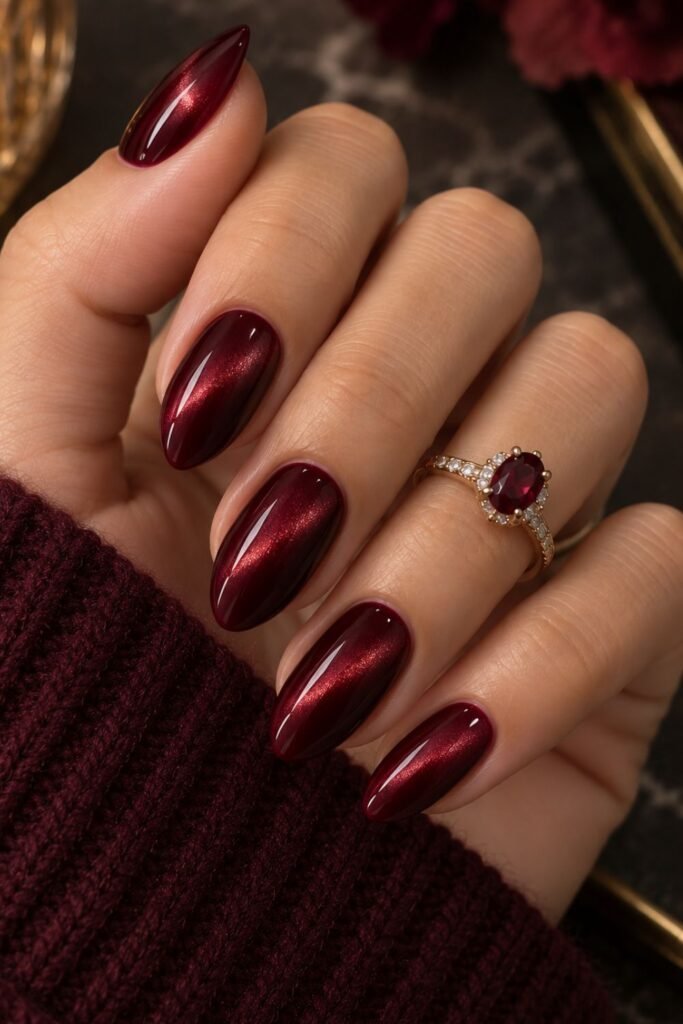
4. Velvet Wine Cat Eye
Magnetic pigment can make wine red look almost liquid. A diffused velvet band creates a moving highlight through the center while the outer edge stays deep burgundy, so the manicure changes as the hand moves.
This look depends on magnet placement before the gel is cured. A soft centered or diagonal pull usually reads more like velvet; a very narrow beam creates a sharper cat-eye stripe.
Best for: medium almond nails and evening manicures.
For more magnetic technique ideas, see Redounds’ dark cherry red nail designs where black-cherry magnetic finishes show how deep reds change under reflective pigment.
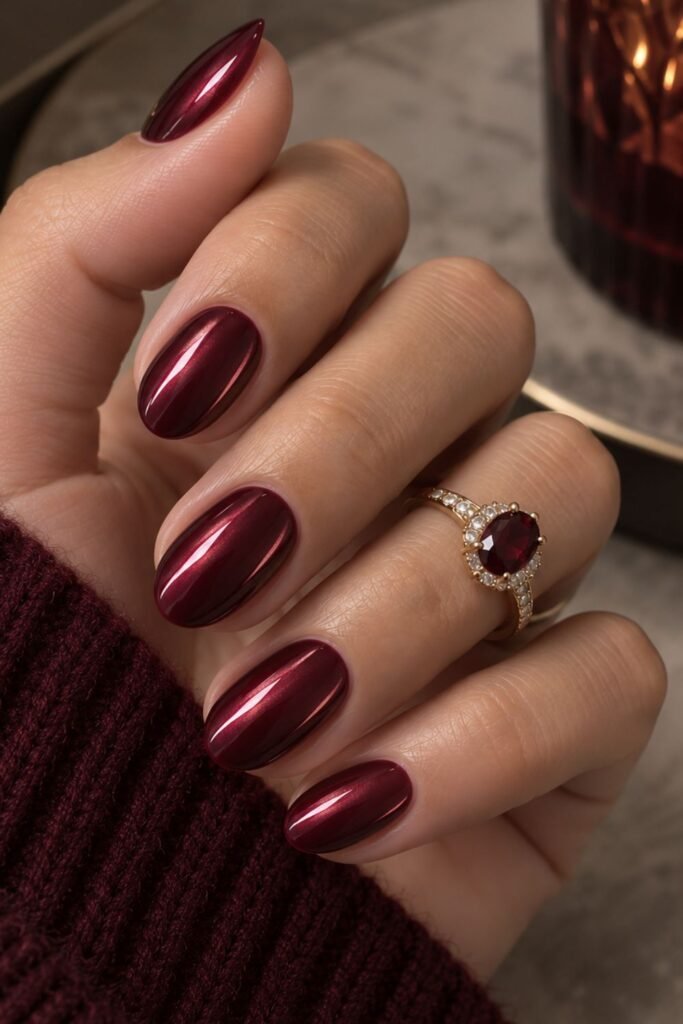
5. Burgundy Chrome Glaze
Chrome does not have to turn burgundy silver. A translucent pearl or red-shifting powder over a wine base can preserve the color while adding a thin reflective skin across the surface.
The base shade matters because sheer chrome amplifies what sits underneath it. Use a dark burgundy gel if you want a moody result; a lighter berry base will move the manicure closer to rose or magenta.
Best for: anyone who wants metallic shine without losing the wine-red base.
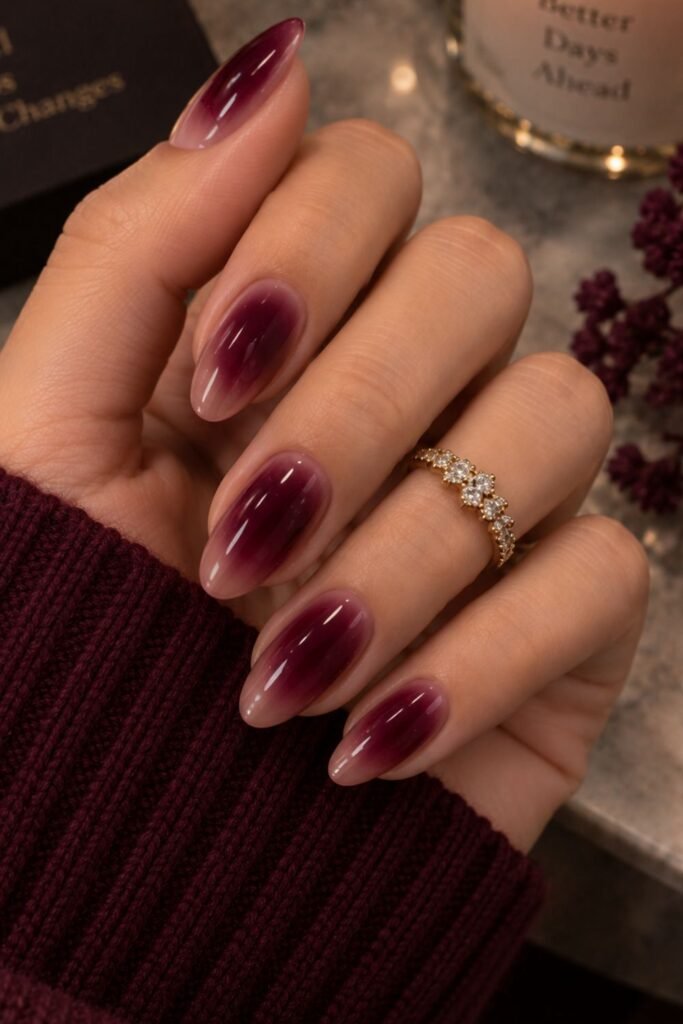
6. Deep Wine Aura Nails
Aura placement gives wine red a soft center rather than a hard-edged design. The darkest pigment sits in the middle of the nail and diffuses toward a smoky nude or translucent perimeter.
The effect is easiest to read on medium-length nails because the gradient has enough room to open up. Keep the halo blurred and tonal; an abrupt red circle on a pale base looks more graphic than atmospheric.
Best for: medium oval or almond nails and dimensional art without glitter.
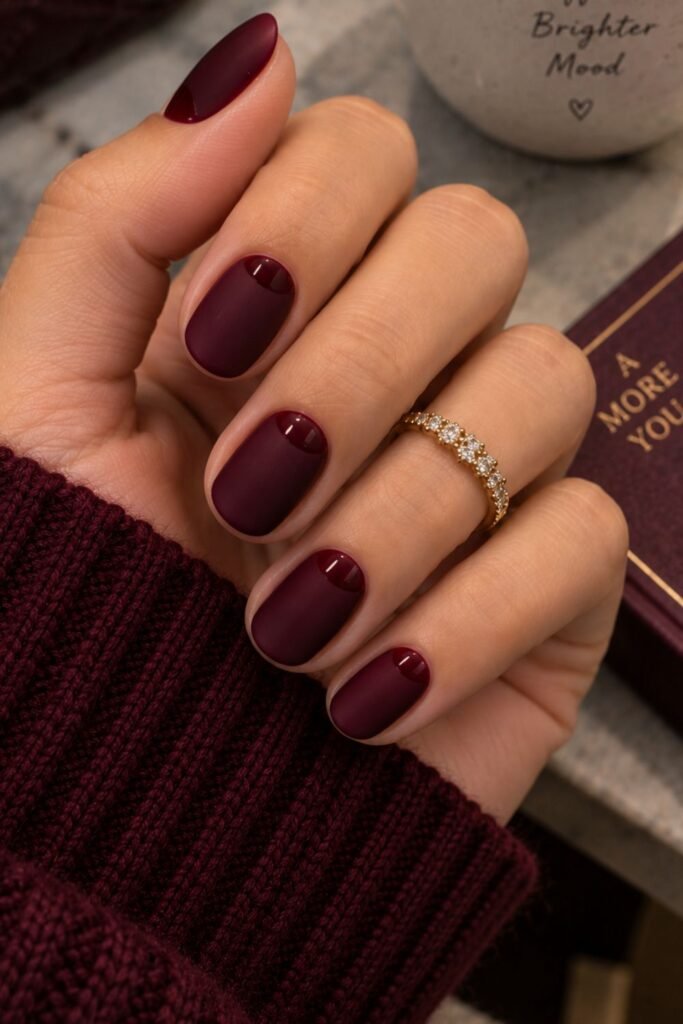
7. Matte Burgundy With Glossy Half Moons
Using one burgundy shade in two finishes creates detail without adding another color. A flat matte surface makes the glossy crescent at the cuticle appear almost embossed when light hits it.
Apply the full manicure first, seal it matte, then paint the half moons with clear glossy topcoat. The crescents need similar height across all ten nails because uneven sizing is more noticeable in a minimal design.
Best for: minimalists who want texture rather than extra decoration.
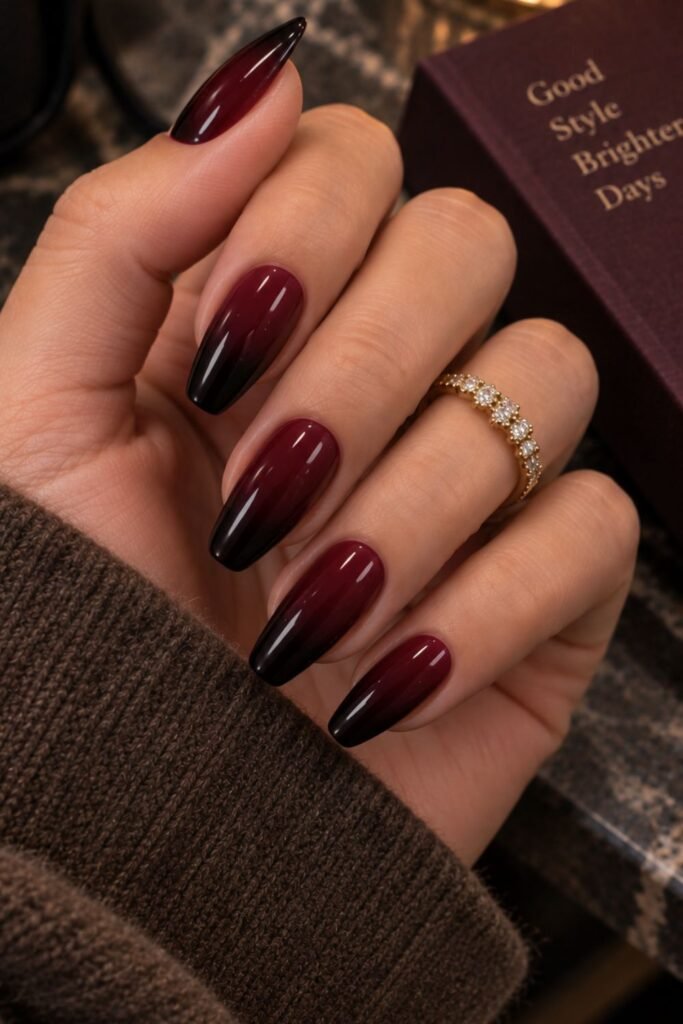
8. Wine-to-Black Ombre
A wine-to-black gradient takes the color deeper toward the free edge while preserving warmth near the cuticle. It feels more tonal and sophisticated than a high-contrast bright-red-to-black fade.
Blend the transition in several thin passes so no gray or muddy stripe forms between the two colors. Almond and coffin shapes provide enough length for the gradient to develop gradually.
Best for: medium-to-long nails and a darker autumn manicure.
For another deep-red gradient reference, Redounds’ red nail designs includes red ombre among its broader color treatments.
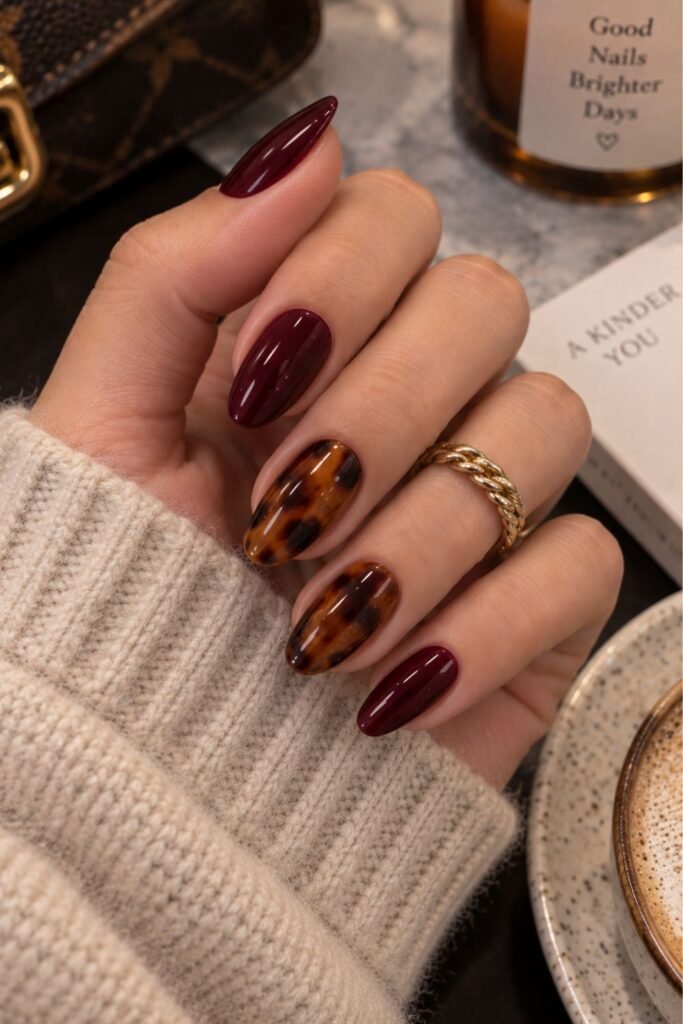
9. Burgundy and Tortoiseshell Accent Set
Tortoiseshell brings amber, caramel, and brown into the same warm visual family as burgundy. Limiting the pattern to one or two accent nails keeps the manicure wearable and lets the solid wine color frame the translucent print.
The tortoiseshell should look layered rather than painted as hard spots. Build light amber first, then float darker brown patches in irregular positions before sealing with a glossy coat.
Best for: autumn sets that need pattern without obvious seasonal motifs.
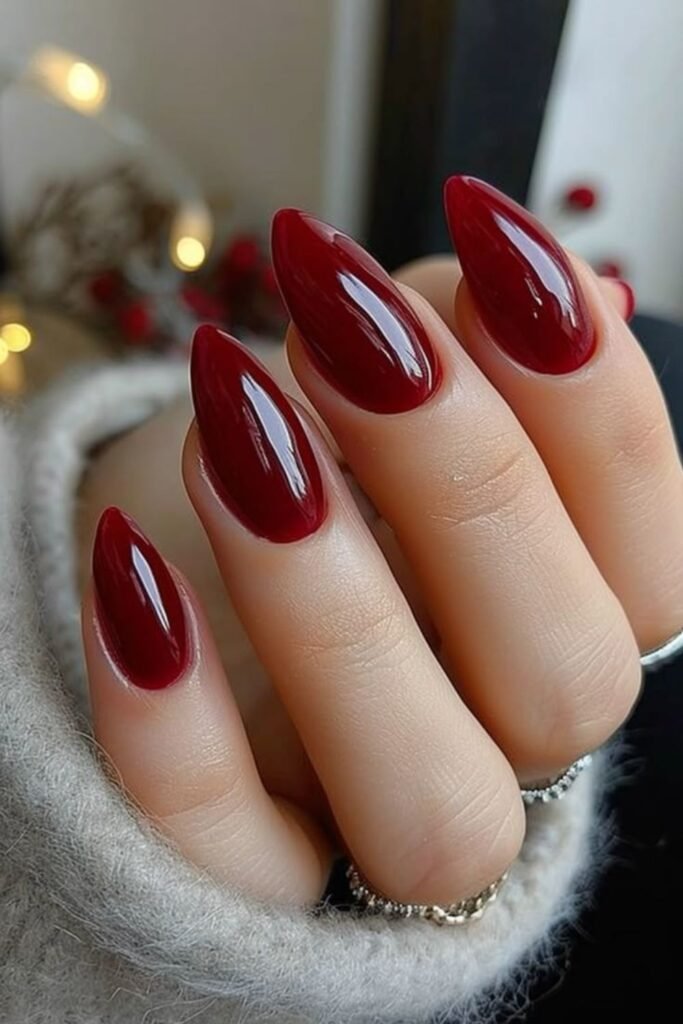
10. Bordeaux Jelly Nails
A bordeaux jelly is sheer enough to let light pass through the color, giving deep red a stained-glass effect. It looks softer and more dimensional than an opaque burgundy cream even when the hue itself is equally dark.
Build the depth with multiple thin coats instead of one heavy layer. Stop before the nail becomes fully opaque if you want the transparent edge and layered color to remain visible.
Best for: short-to-medium nails and glossy, translucent color.
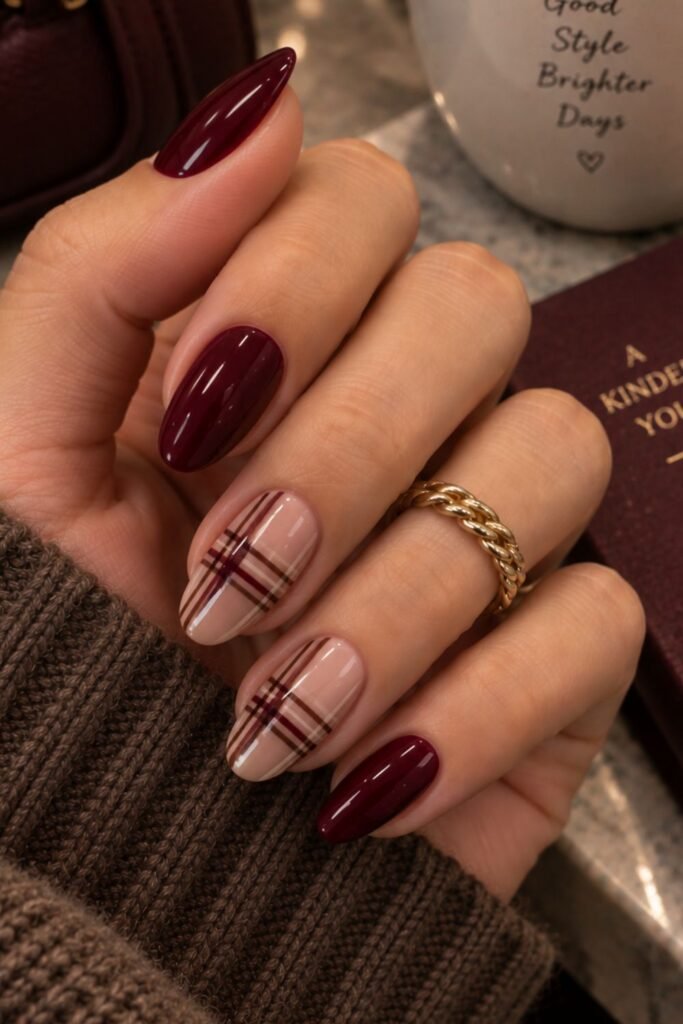
11. Burgundy Plaid Accent Nails
Plaid can make burgundy feel autumnal without relying on leaves or pumpkins. Fine wine, espresso, and cream lines over a milky base reference woven fabric while the surrounding nails stay solid and simple.
Use the pattern on one or two nails only and vary line width slightly so it resembles textile rather than a perfect grid. Very thick stripes can overwhelm short nail beds.
Best for: preppy autumn manicures and accent-nail sets.
Redounds’ fall nail trends also covers plaid as a recurring autumn design direction.
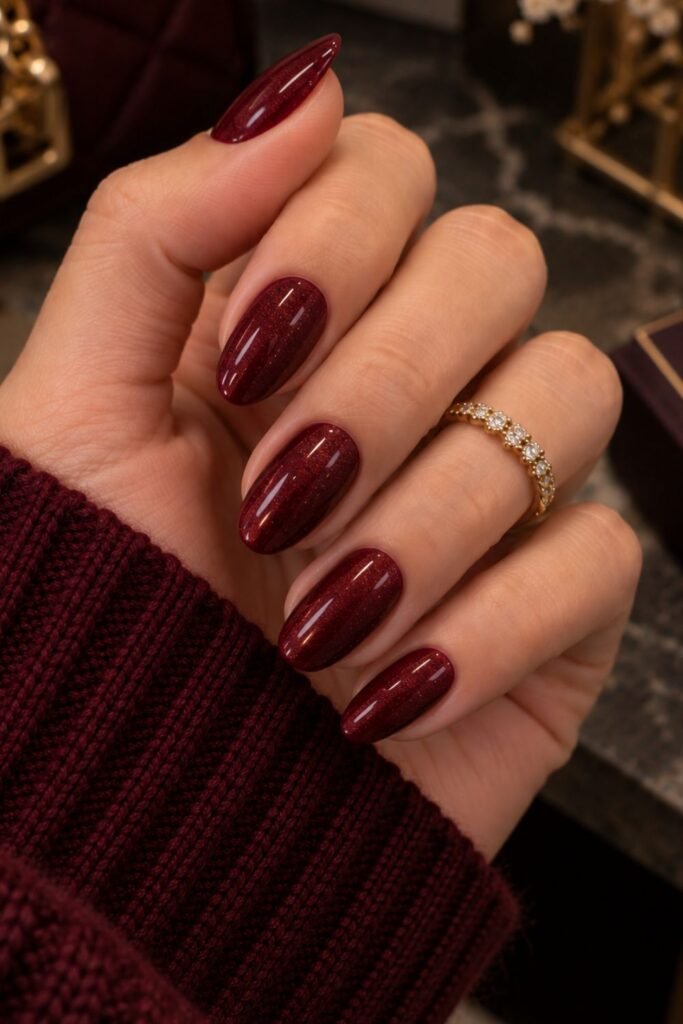
12. Mulled-Wine Shimmer
Fine shimmer changes burgundy most under movement. Indoors, the manicure still reads as a deep wine cream; under direct light, copper-red or soft gold particles appear through the base.
Microshimmer is easier to wear than chunky glitter because the surface remains visually smooth and the dark color stays dominant. Look for shimmer suspended within the polish rather than large pieces sitting on top.
Best for: anyone who wants sparkle that still reads as a color manicure.
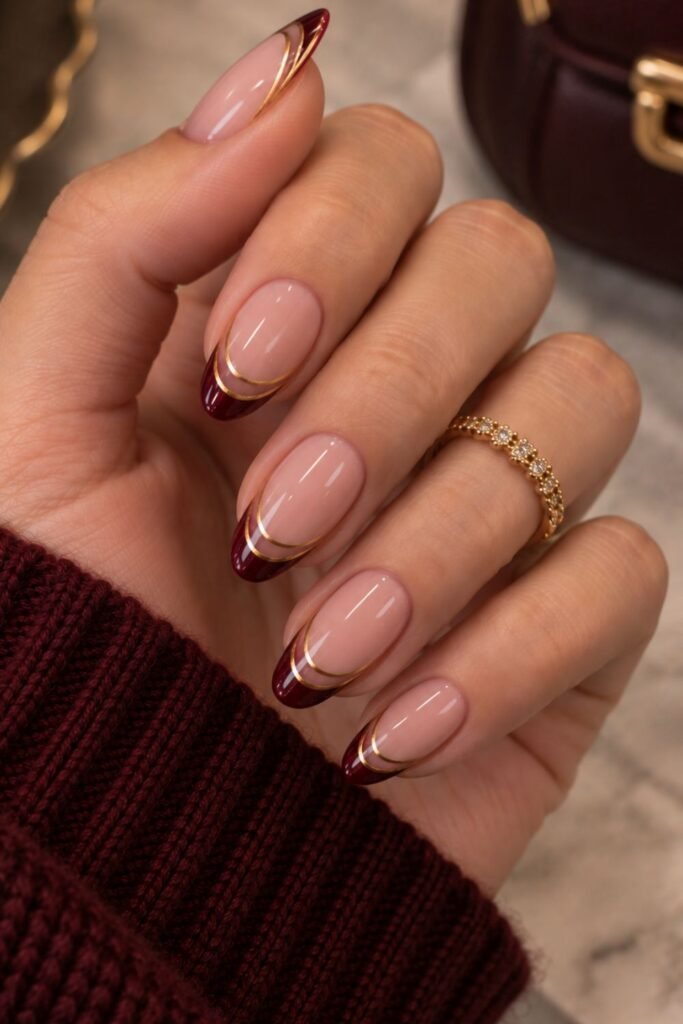
13. Burgundy Double French With Gold
A double French pairs burgundy with a narrow metallic line rather than covering the whole nail in gold. The wine tip supplies the seasonal color, while the second line gives the edge a jewelry-like finish.
Keep both arcs thin and leave a sliver of base visible between them if the nail length allows. On shorter nails, use the gold as an even finer underline so the tip does not become visually heavy.
Best for: medium almond nails, dinners, and event manicures.
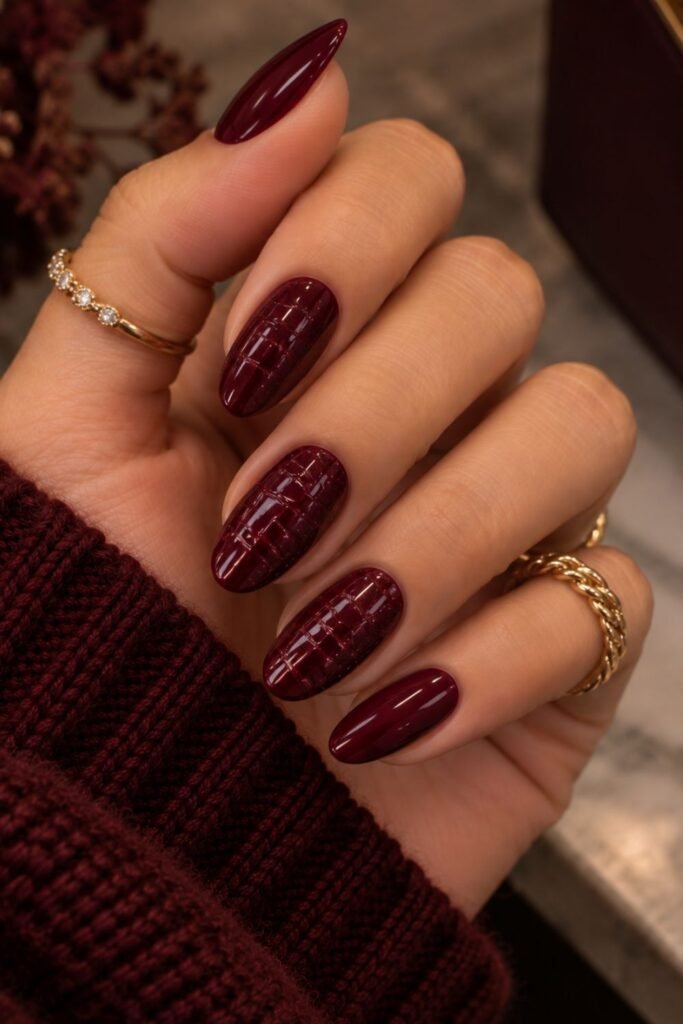
14. Wine Crocodile Texture
Tonal crocodile texture adds dimension without introducing a contrasting color. Raised gel catches the light over a deep wine base, so the pattern becomes visible through shadow and gloss instead of a dark outline.
Use it on accent nails and keep the relief low enough that the surface still feels practical. Solid burgundy on the other nails prevents the texture from becoming visually crowded.
Best for: salon sets and anyone who prefers tactile nail art.
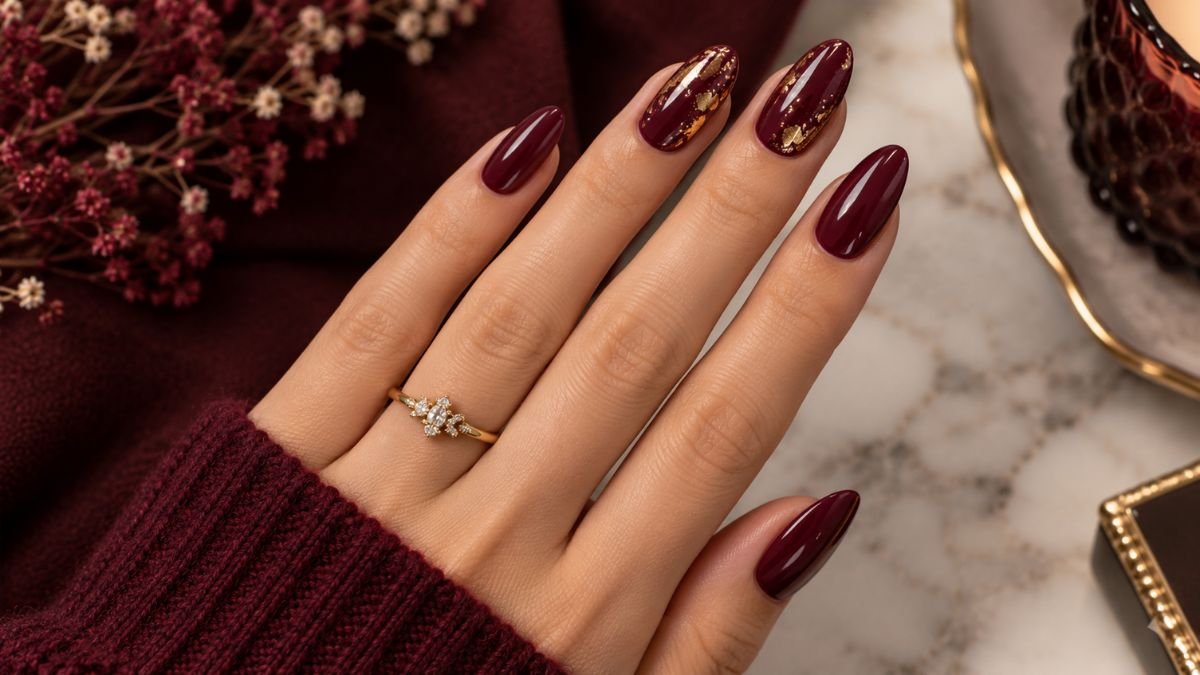
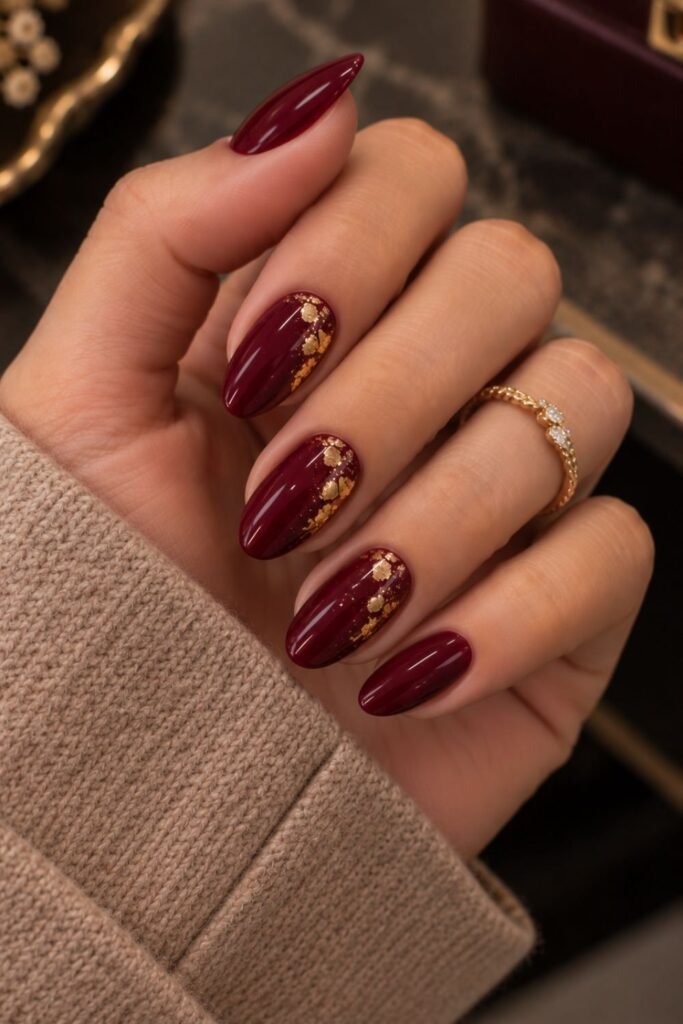
15. Burgundy With Fine Gold Foil
Small pieces of gold foil warm a burgundy manicure without turning it into a full metallic set. The most controlled version concentrates foil near one side, the cuticle, or only on accent nails.
Press thin irregular fragments flat into a tacky layer and seal them completely. Sparse placement usually looks more refined than covering every nail with equal amounts of foil.
Best for: short or medium nails that need a dressier autumn finish.
If you prefer linework instead of foil, Redounds’ swirl nail ideas show how deep red can be broken up with controlled curves and negative space.
Quick Guide: Choose Your Burgundy Finish
| Design Direction | Best Length | Finish | Difficulty |
| Glossy merlot / oxblood | Any length | High-shine cream | Easy |
| Micro-French / half moon | Short to medium | Glossy or mixed matte/gloss | Moderate |
| Aura / ombre / jelly | Medium preferred | Translucent or gradient | Moderate |
| Velvet cat eye / chrome | Medium to long | Magnetic or reflective | Salon-friendly |
| Plaid / crocodile / gold foil | Medium | Patterned or textured | Moderate to advanced |
How to Choose the Right Deep Red
Start with how dark you want the manicure to read. Merlot and bordeaux usually show more visible red, while oxblood and black cherry sit closer to brown, purple, or near-black. There is no universal undertone rule that determines what you are “allowed” to wear; compare swatches against your skin and wardrobe in daylight and choose the version you prefer.
Finish changes the color almost as much as the shade. Gloss makes burgundy look clearer and deeper, matte softens reflected light, jelly creates translucency, chrome adds a reflective film, and magnetic gel can produce a moving band of lighter pigment.
What to Ask for at the Salon
Bring a reference image and describe both the color family and the finish. “Deep bordeaux jelly on short ovals” or “burgundy velvet cat eye on medium almonds” gives a nail technician more useful information than simply asking for dark red.
For gel, chrome, magnetic, or raised designs, follow the product manufacturer’s curing and removal instructions. Avoid getting uncured gel on the surrounding skin, and do not peel cured product off the natural nail because that can remove surface layers with it.
Frequently Asked Questions
Are burgundy nails in style for autumn 2026?
Yes. Current autumn 2026 coverage from Vogue, Cosmopolitan, Glamour UK, InStyle, and Who What Wear repeatedly features burgundy, wine, oxblood, or closely related deep reds among the season’s prominent nail colors.
What is the difference between wine, burgundy, and oxblood nails?
Wine is a broad descriptive family for deep reds. Burgundy typically leans red-purple or red-brown, while oxblood is usually darker and browner. Brand formulas vary, so the exact undertone matters more than the label.
Do burgundy nails work on short nails?
Yes. Glossy cream, jelly, micro-French, shimmer, and negative-space designs translate especially well to short nails because they do not require a large surface for detailed artwork.
Which nail shape looks best with deep wine polish?
Deep wine works on every common nail shape. Short square and squoval shapes make it look compact and modern, while almond and coffin shapes provide more room for gradients, chrome, magnetic bands, and detailed tips.
Is burgundy the same as dark cherry?
Not exactly. Dark cherry usually preserves a clearer red or cherry character, while burgundy often carries more purple or brown. Very deep formulas can overlap visually, especially under low light.
What finish makes burgundy look darkest?
An opaque oxblood or blackened-burgundy cream can appear darkest, especially with a glossy surface. Matte may look softer, while jelly and cat-eye finishes reveal more internal light and therefore more visible color variation.
Can I combine burgundy with gold or silver?
Yes. Gold tends to emphasize the warm, wine-like side of burgundy, while silver can make the same base feel cooler. Treat that as a styling choice rather than a fixed matching rule.
How do I stop dark red polish from staining around the nail?
Use thin coats, leave a controlled gap at the cuticle, and clean edges before the polish fully sets. A base coat can also reduce direct pigment contact with the natural nail plate, depending on the product system you use.
Choosing Your Version
Begin with finish rather than decoration. Glossy merlot and bordeaux jelly keep the color central; micro-French and half moons introduce controlled negative space; cat eye, chrome, crocodile texture, and foil add more movement or surface detail. The strongest autumn sets keep the wine family recognizable, then use one technique to change how light, texture, or placement affects it.