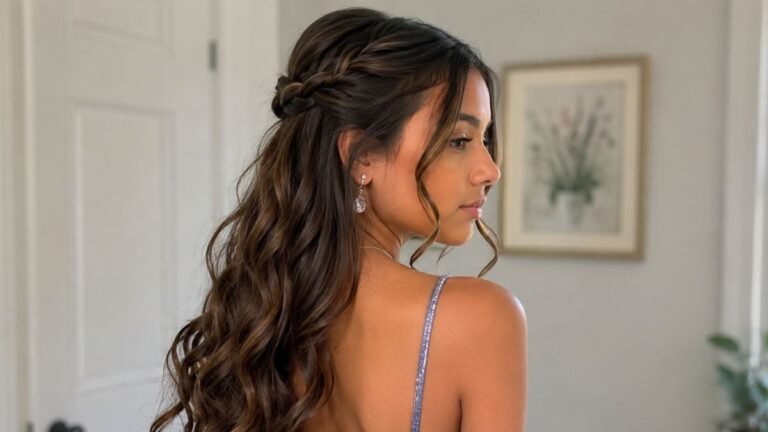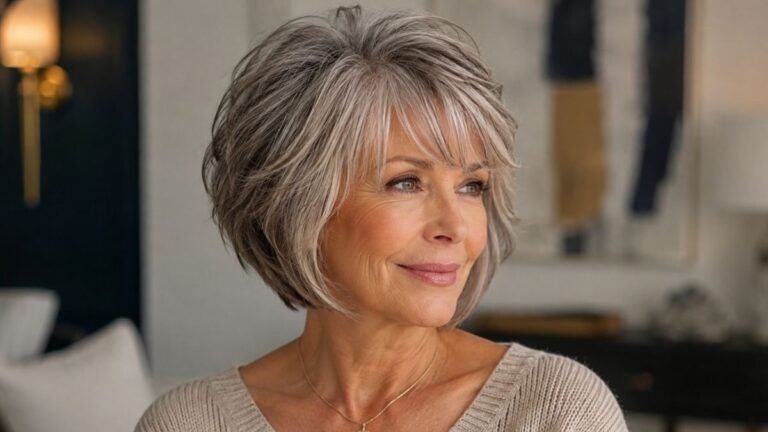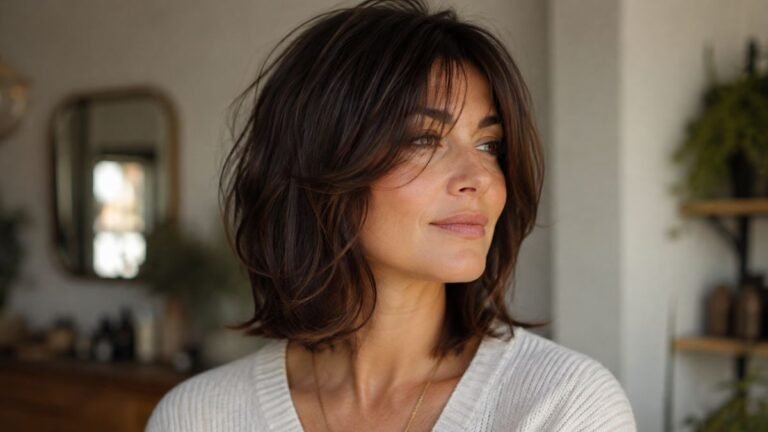

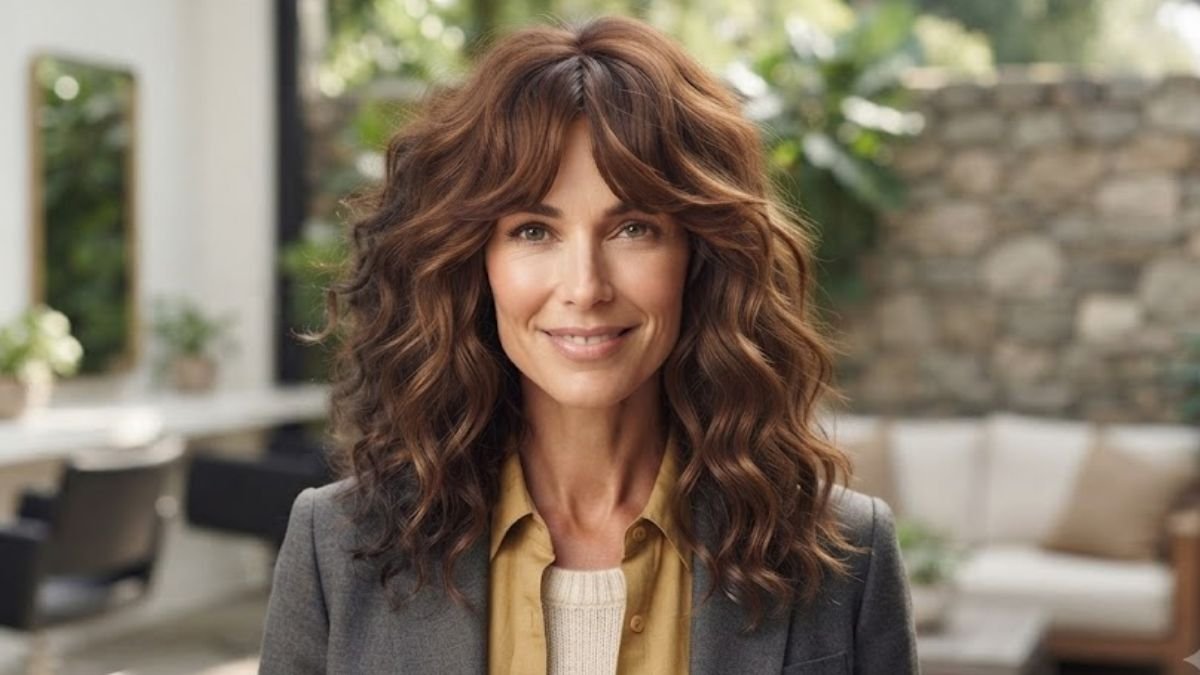
The soft wolf cut takes the volume and shaggy texture of the original wolf cut and smooths out the choppy edges. You still get lift at the crown, movement through the lengths, and piecey ends, but the layers are blended so the shape grows out gently and needs very little daily effort.
The result frames the face and works with your natural texture, so it looks finished whether you air-dry it or spend twenty minutes with a diffuser. The 15 variations below are grouped by length and styling, with notes on how to ask for each one, which products help, and who each version suits best.
Soft Wolf Cuts for Long Hair
Long Soft Wolf Cut with Curtain Bangs
The curtain bang is the most natural pairing for a long soft wolf cut because both are built on the same principle: layers that frame the face and blend into the length below without a hard line anywhere. The bangs part down the center and sweep outward, merging into the face-framing layers of the wolf cut without a visible transition.
This length suits women who want the wolf cut silhouette without losing significant length. The layers start high at the crown to build volume and taper through the mid-lengths into soft, wispy ends. If you like the movement but prefer layers that are harder to spot, ask about ghost layers, which are cut underneath the top section and pair well with long curtain bangs. Book a bang trim every four to six weeks so the fringe keeps sweeping to the sides.
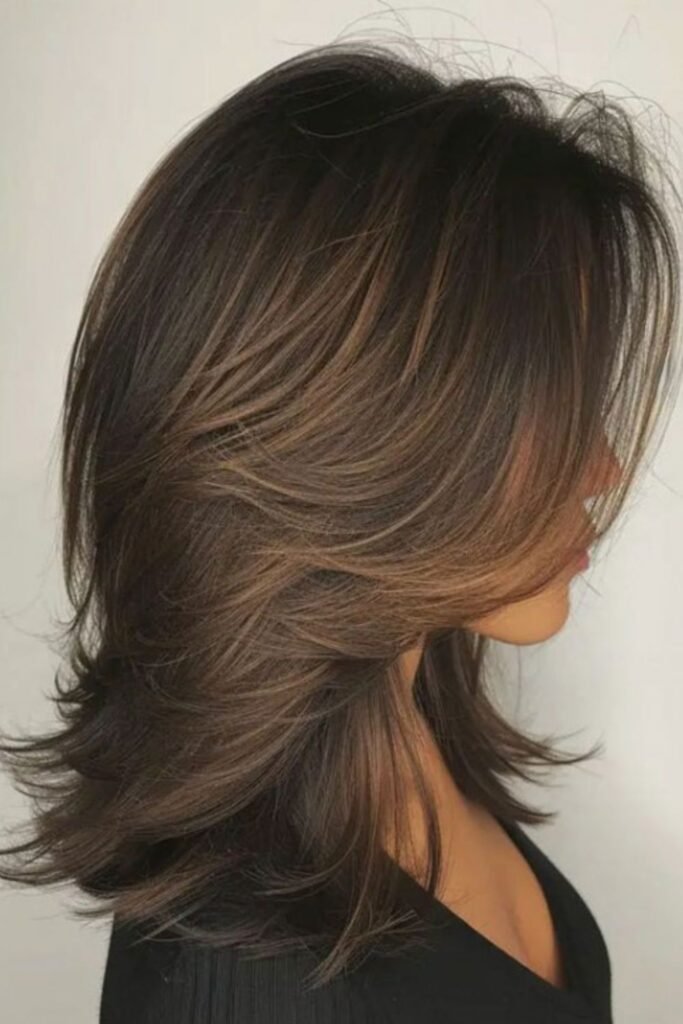
Long Wolf Cut with Face-Framing Layers
Without bangs, the long soft wolf cut relies entirely on its face-framing layers to do the structural work around the face. These layers begin at the cheekbone or jaw and blend into the rest of the hair below, creating a frame that flatters most face shapes by adding width at the cheekbones and drawing attention away from the jaw.
Ask your stylist for layers that start no higher than the cheekbone if you are trying the wolf cut for the first time. Layers that begin too high at the temple can be difficult to grow out gracefully. Point-cutting through the ends keeps them soft rather than blunt, which is what separates a soft wolf cut from a standard layered cut.
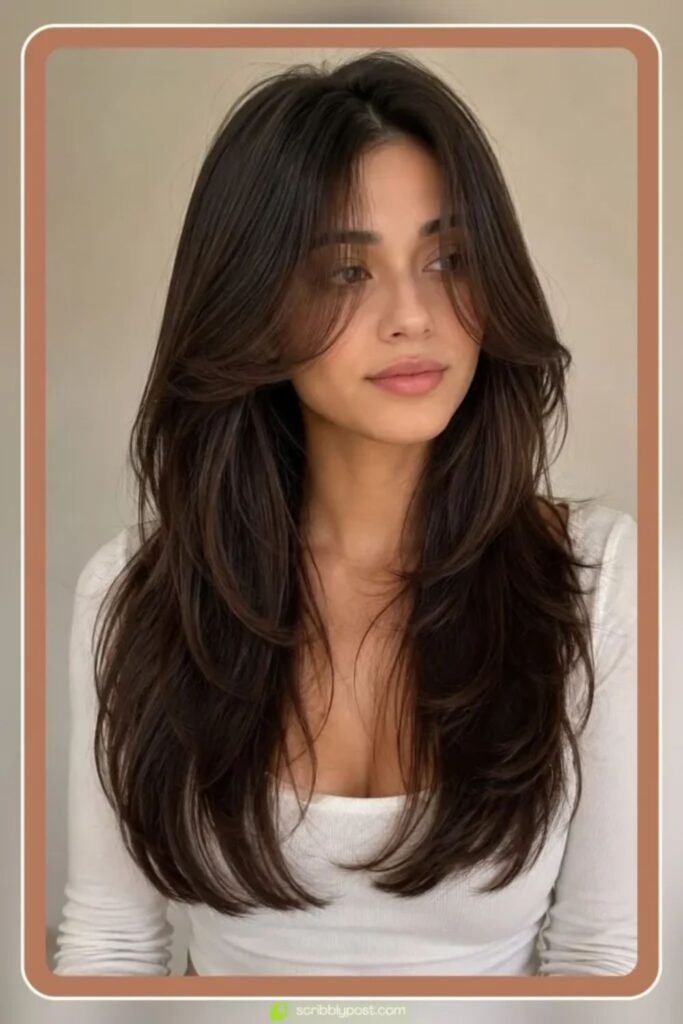
Long Wolf Cut on Wavy Hair
Wavy hair is arguably the best texture for a soft wolf cut because the natural bend in the hair fills out the layers and creates movement that straight hair requires heat styling to replicate. The crown layers on wavy hair get extra lift from the wave pattern, and the ends develop a lived-in, undone texture that looks deliberate.
Diffuse on low heat with a curl cream or wave-enhancing mousse to encourage the wave pattern through the layers instead of letting them dry flat. The whole routine takes about fifteen minutes. On second-day hair, mist the lengths with water, scrunch in a small amount of cream, and let it air-dry to revive the bend without washing.
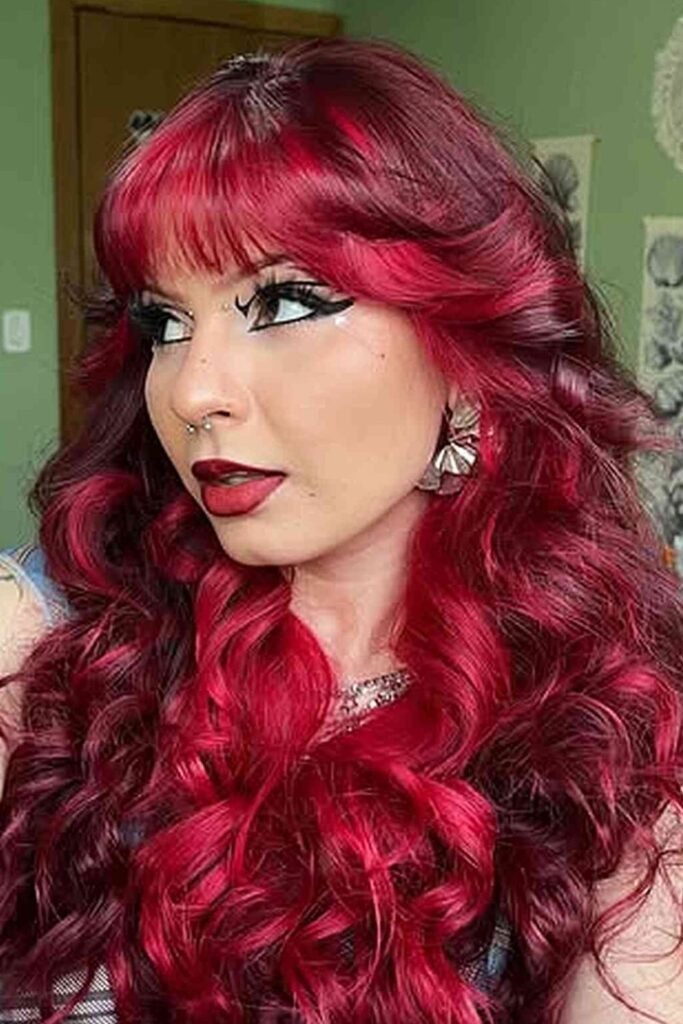
Long Wolf Cut with Dark Cherry Red Color
Color transforms a soft wolf cut from a haircut into a full hair look. Dark cherry red is one of the best colors for this cut because the depth of the shade emphasizes the shadow created between layers, making the cut look more dimensional and intentional than the same shape in a flat, one-process color. The red catches light through the lengths in a way that makes the movement of the layers visible even in still photographs.
This color needs a bleach base on darker hair to achieve a true cherry tone, or a direct dye on pre-lightened hair for depth without lift. Talk to a colorist before committing: the maintenance schedule for cherry red is roughly every six to eight weeks, and the fade between appointments can be managed with a color-depositing conditioner in a matching shade.
Soft Wolf Cuts for Medium Hair
Shoulder-Length Soft Wolf Cut
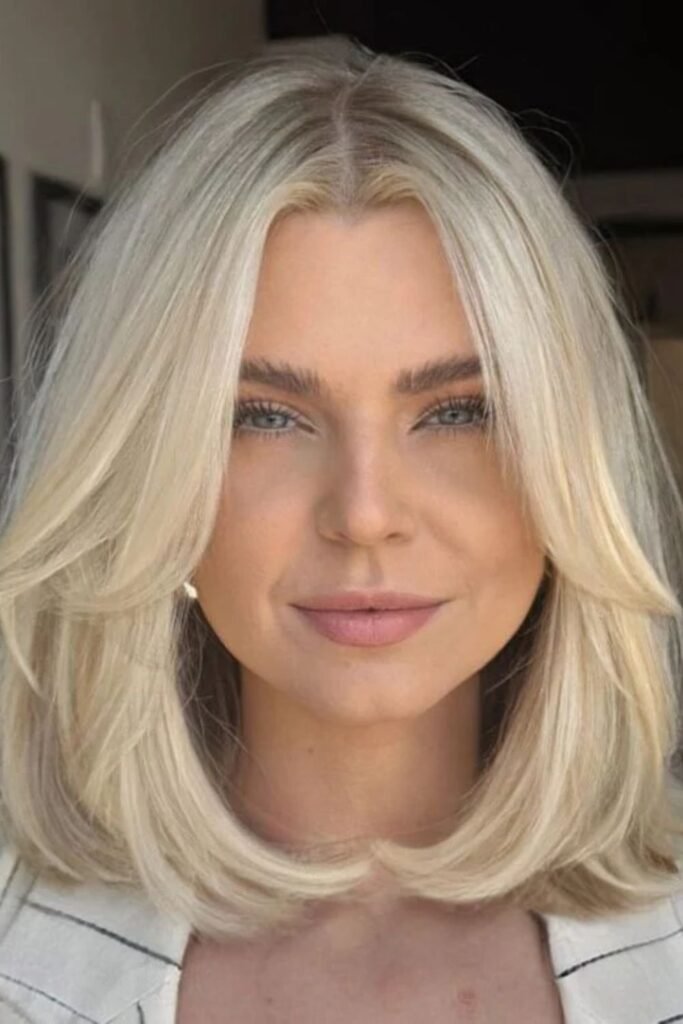
The shoulder-length wolf cut is where the shape reads most clearly because the layers at the crown have enough length to create visible volume and the ends have enough length to show movement without disappearing into a short silhouette. This is the length most stylists recommend for a first wolf cut because it is easier to adjust and grow out than a shorter version.
The key measurements to bring to your stylist: shortest layers at the crown sitting roughly at the top of the ear or above, mid-length layers blending from the jaw downward, and ends point-cut for softness. Show reference photos from multiple angles because the back of the wolf cut is where most stylists make the defining decisions about how much volume to build.
Medium Wolf Cut on Straight Hair
Straight hair requires more effort to make a wolf cut look its best because the layers do not get natural lift from a wave or curl pattern. The right products and a diffuser or round brush make a significant difference. A volumizing mousse applied at the roots before blow-drying, combined with a round brush used to lift the crown layers away from the head as they dry, gives straight hair the volume the cut needs to read correctly.
Ask your stylist for slightly shorter crown layers on straight hair than they might suggest for wavy hair, because straight layers sit closer to the head and need more length differential to create visible volume. A texture spray applied to dry hair after styling separates the ends and adds the piece-y finish that defines the wolf cut silhouette.
Medium Wolf Cut with Wispy Bangs
Wispy bangs on a medium wolf cut are cut longer than standard bangs, roughly nose to lip length, and blended into the face-framing layers so there is no clear separation between the bang and the layer. The result is a fringe that moves with the rest of the hair rather than sitting as a separate panel across the forehead.
This version suits oval, heart, and diamond face shapes particularly well because the wispy fringe narrows the forehead visually while the face-framing layers add width at the cheekbones. For more fringe inspiration, these layered wispy bangs show how different bang lengths blend into long and medium layers.
Medium Wolf Cut with Caramel Highlights
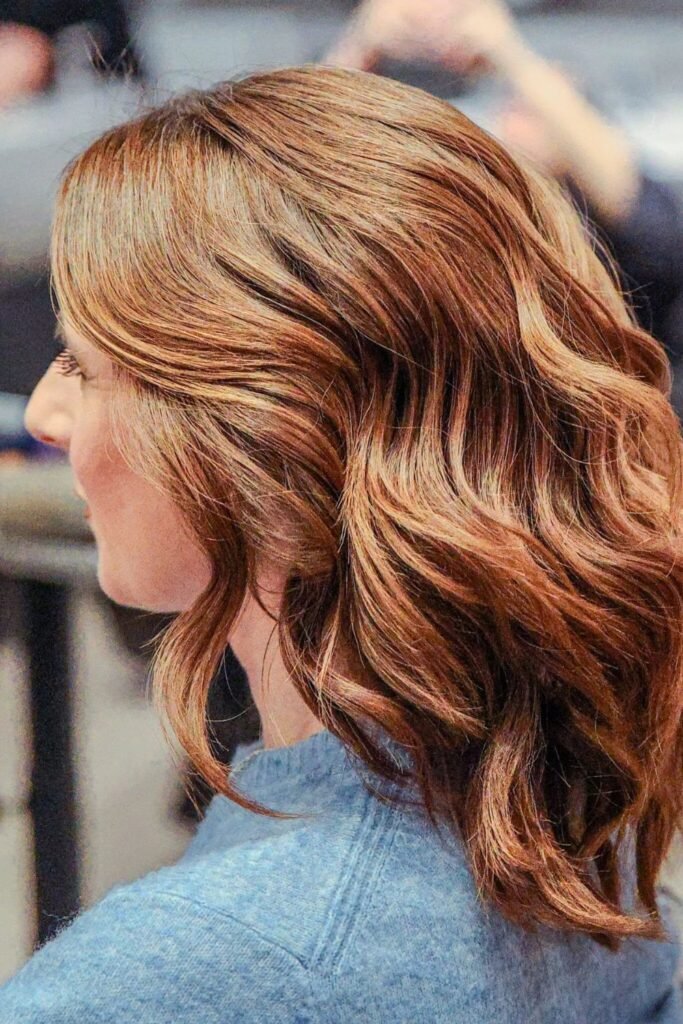
Caramel highlights placed through the face-framing layers and mid-lengths of a medium wolf cut add dimension that makes the layering visible from across a room. The highlights catch light in the sections that move most, so the color and the cut work together. Our guide to caramel highlights on brown hair covers placement, tone selection, and maintenance in detail and is worth reading before your color appointment.
Ask for a balayage application rather than foil highlights for the most natural result on a wolf cut. Foil highlights create more uniform bands of color that can look stripy through heavily layered sections. Balayage follows the natural movement of the hair and blends more softly through the layers.
Soft Wolf Cuts for Short Hair
Short Soft Wolf Cut at Collarbone
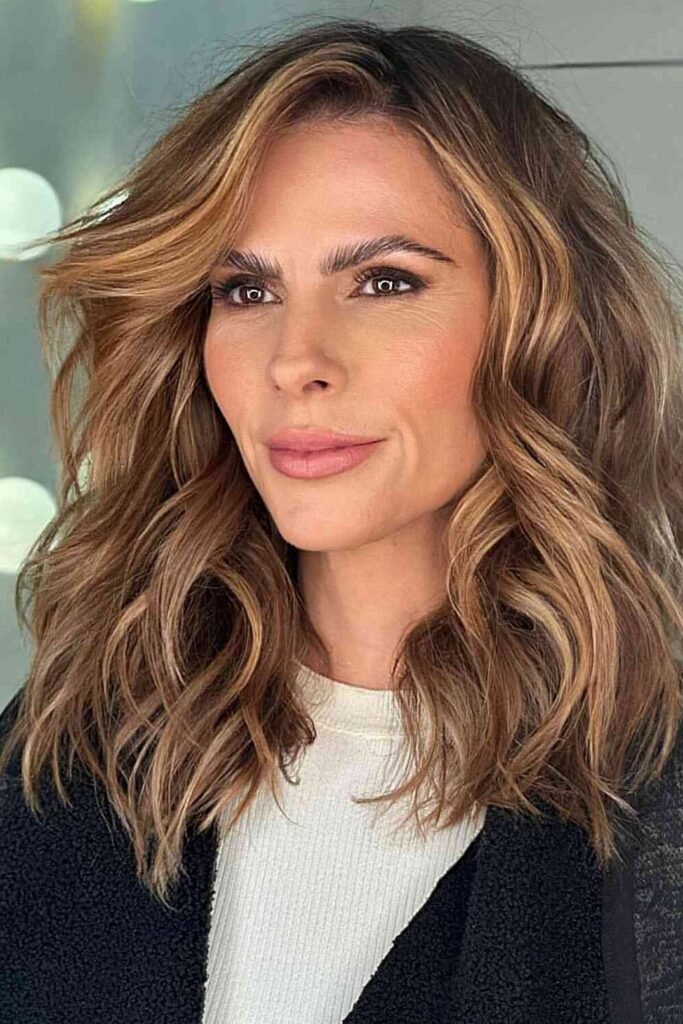
At collarbone length, the wolf cut sits at the point where the shortest crown layers are about ear-height, creating a significant length differential between the crown and the ends. This produces the most dramatic version of the wolf cut silhouette on shorter hair: visible volume at the top, movement through the middle, and soft textured ends that graze the collarbone.
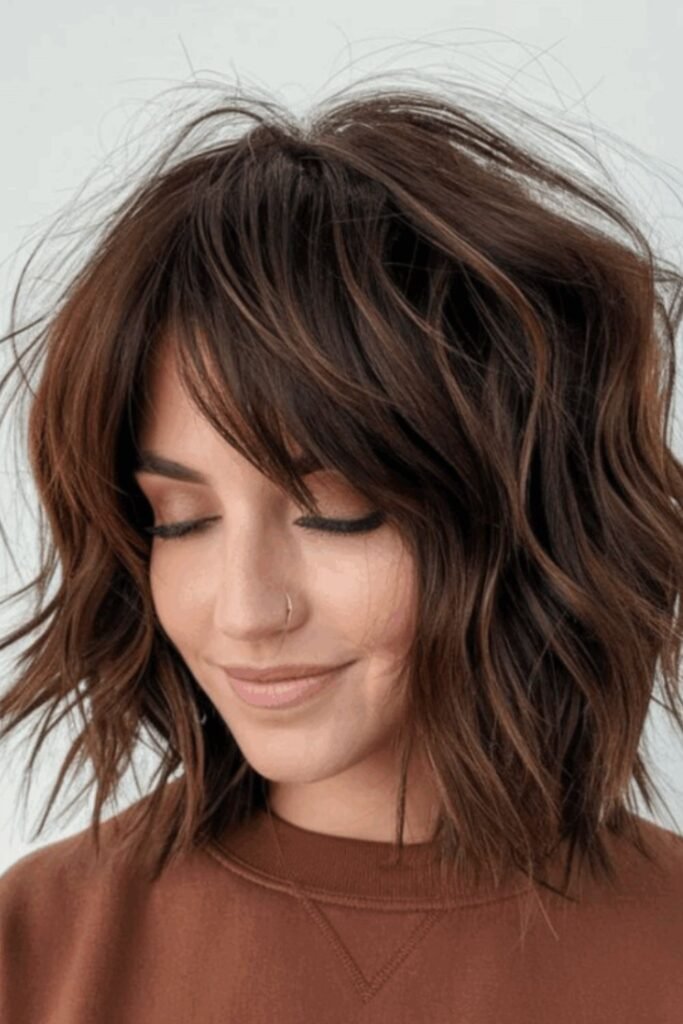
This length requires more styling effort than longer versions because the crown layers are short enough to need product and a diffuser or round brush to stay lifted. Without that step, the crown can sit flat and the cut loses its defining volume. A salt spray or volumizing mousse is a practical daily product at this length.
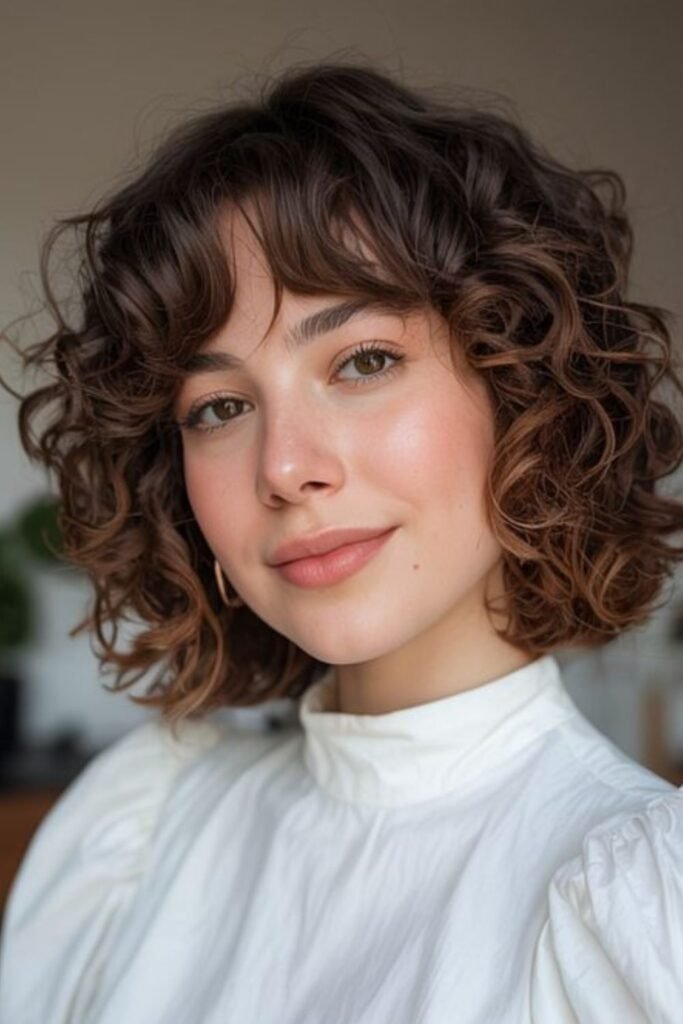
Short Wolf Cut with Curtain Bangs on Curly Hair
Curly hair shrinks significantly when dry, which means a wolf cut on curly hair should be cut longer than the intended finished length. What looks like a shoulder-length cut on wet hair may sit at the collarbone or above once fully diffused and dry. This is a conversation to have explicitly with your stylist before any cutting begins.
Curtain bangs on curly hair need to be cut dry, or diffused to their natural state before the stylist trims them, because the curl pattern determines where the bang actually sits. Bangs cut on wet curly hair almost always come out shorter than intended. If you have type 3 or 4 curls, look for a stylist experienced in dry, curl-by-curl cutting for this specific cut.
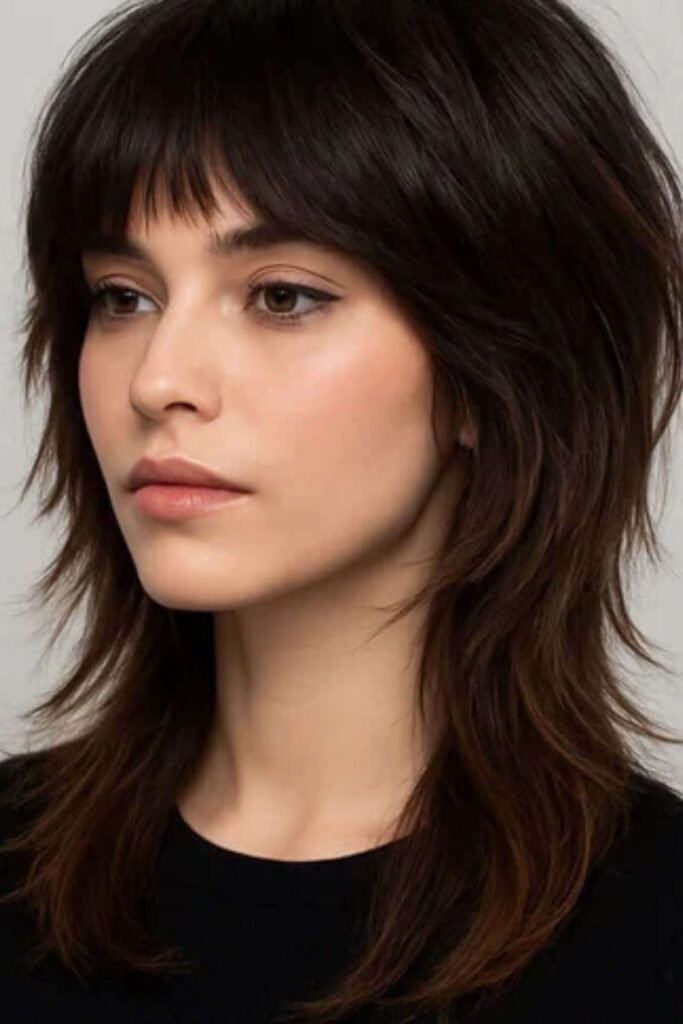
Chin-Length Soft Wolf Cut
At chin length, the wolf cut becomes its most dramatic: the shortest crown layers sit at or above the ear, the face-framing sections end at the jaw, and there is almost no length below the chin. This creates a silhouette that reads more as a shag than a traditional wolf cut, but the soft, blended finish distinguishes it from the choppy shag of the 1970s it references.
Styling at this length is the fastest of all the wolf cut variations because there is simply less hair to work with. A diffuser on low heat with a curl cream for wavy and curly textures, or a round brush lift at the crown for straight hair, is all it takes. Plan on a trim every six to eight weeks, since the shortest layers lose their shape first at this length.
Styled Variations of the Soft Wolf Cut
Soft Wolf Cut Worn Half-Up
A soft wolf cut at medium or long length worn half-up shows off the volume and texture of the cut while keeping hair off the face. The crown layers create natural height when the top section is pulled back, and the face-framing pieces left loose at the front keep the style soft. For pinning techniques at different lengths, browse these long hair updos and half-up styles, most of which adapt easily to wolf cut layers.
Use a claw clip or a ribbon rather than a tight elastic for the half-up section so the crown retains its volume. Pull the section back loosely rather than smoothing it, because the texture of the wolf cut layers reads better when the half-up section has some natural movement rather than a sleek finish.
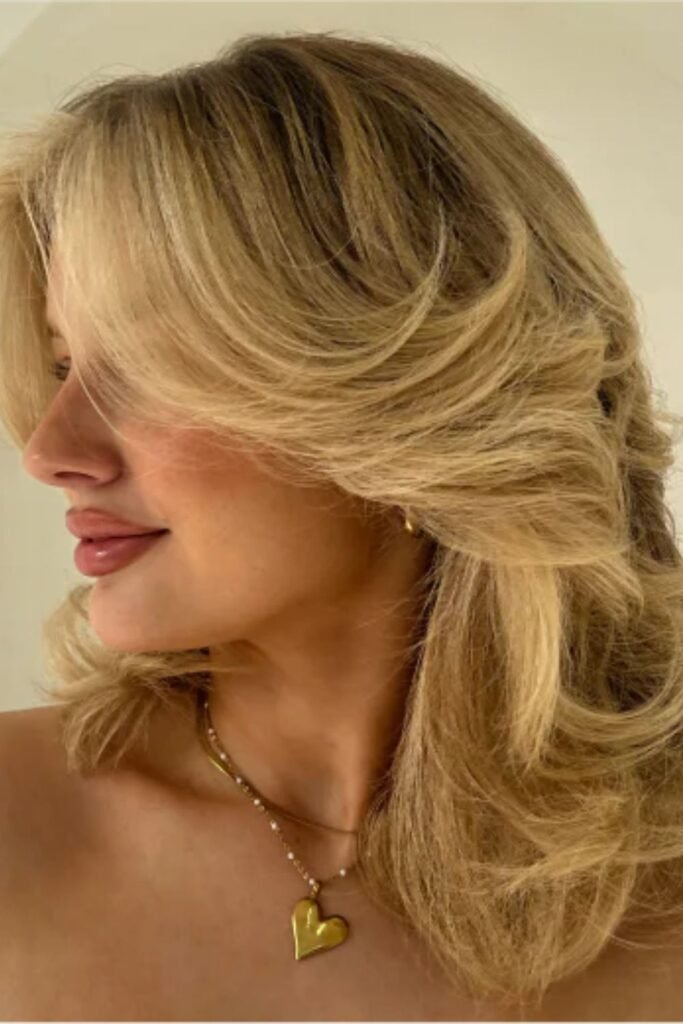
Soft Wolf Cut with Curtain Bangs Styled as Waves
Curtain bangs on a wolf cut, styled with a small-barrel iron to create a soft outward wave at the ends, is the version that photographs best. The waved bangs frame the face and add deliberate shape to an otherwise relaxed style. On longer cuts, you can carry the same technique through the lengths, alternating the direction of each section for a looser finish.
Wrap the bang sections outward around a three-quarter-inch barrel and hold for five seconds. Release and allow to cool before touching. The wave should curve away from the face, not toward it, so the parting opens up and shows the forehead rather than closing over it. A light-hold spray sets the wave without stiffening the curtain bang movement.
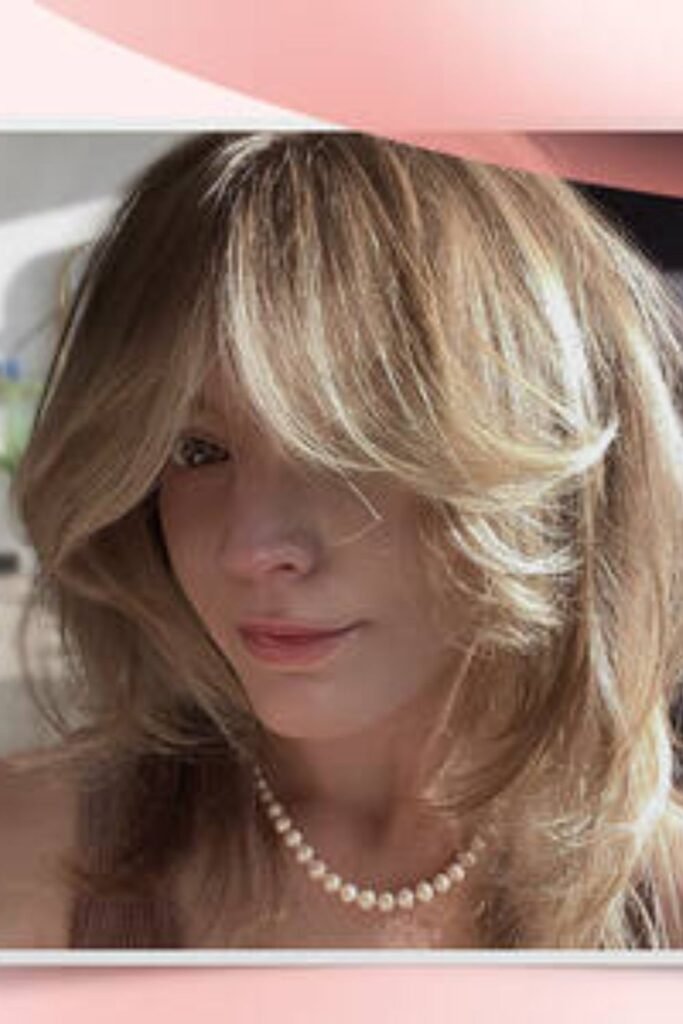
Soft Wolf Cut Air-Dried
The air-dried wolf cut is the version that sells most people on the cut in the first place. Apply a curl cream or wave spray to damp hair, scrunch gently through the lengths, clip the crown sections for volume while drying, and remove the clips once the hair is eighty percent dry. The natural texture fills out the layers without any heat.
The product choice is the most important variable in an air-dried wolf cut. A curl cream adds definition and hold for wavy and curly textures. A wave spray or salt spray gives straight hair more grip and texture to work with. Both should be applied to soaking wet hair, not damp, for the most even distribution through the lengths.
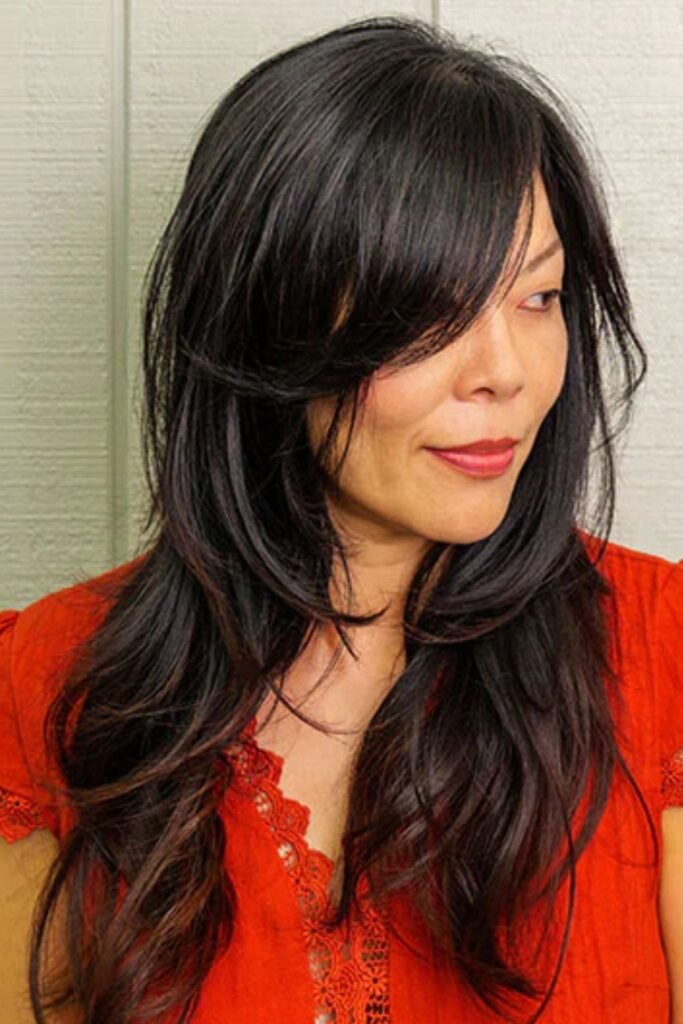
Soft Wolf Cut with Ombre Color
An ombre color treatment on a soft wolf cut, moving from a darker root through the mid-lengths to lighter ends, emphasizes the layering because the color change follows the length differential of the cut. The ends are the most textured and piecey part of the wolf cut, and lightening them makes them the most visible element of the silhouette. This option suits brunettes who want a brighter look with soft, forgiving regrowth.
A soft ombre on a wolf cut works best when the transition point sits in the mid-lengths rather than sharply at the ends, so the color blends through the layers rather than creating a clear line across the cut. Ask your colorist to feather the transition upward through the face-framing layers specifically, so the lightest pieces are the ones closest to the face.
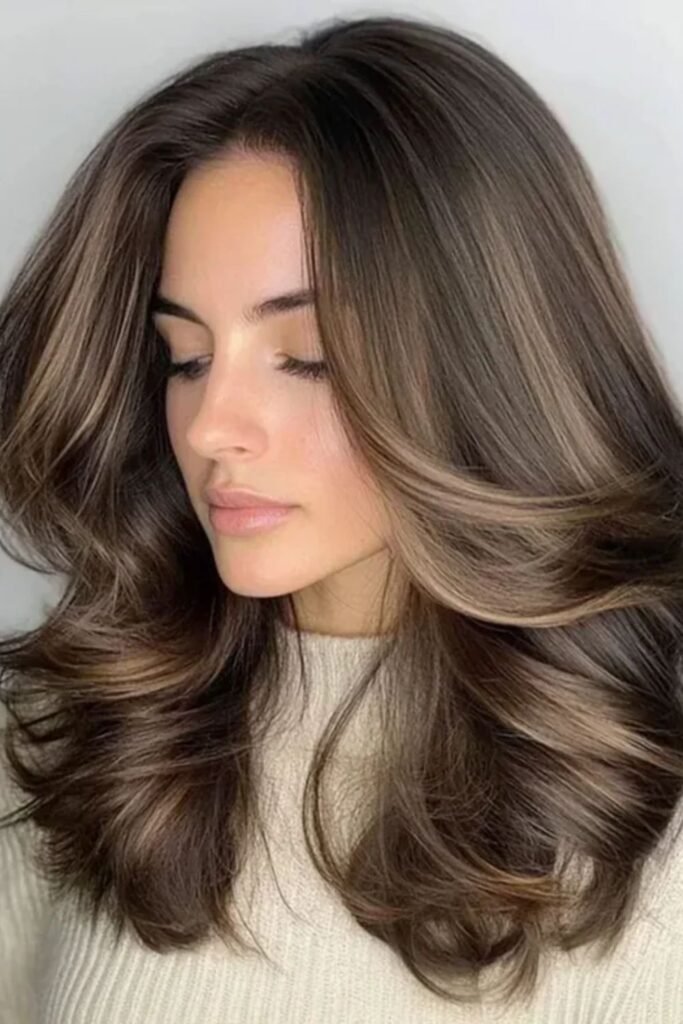
How to Ask for a Soft Wolf Cut
Know the Difference Between a Wolf Cut and a Shag
Both the wolf cut and the shag use heavy layering and texture through the ends, but the wolf cut builds more volume at the crown and has a more defined face-framing section. A classic short shag haircut distributes layers more evenly from root to tip and tends to sit flatter at the crown. When you ask for a soft wolf cut, specify crown volume and face-framing layers along with overall texture.
Bring Reference Photos from Multiple Angles
The back of a wolf cut is where most of the structural decisions happen, and it is the angle most people forget to reference. Bring photos that show the back and sides as well as the front. Tell your stylist your hair texture, how much daily styling time you actually have, and whether you use heat regularly. The cut has to suit the routine you actually follow on a busy morning.
Ask for Point-Cutting Through the Ends
The soft finish of this cut comes entirely from point-cutting, where the stylist cuts into the ends at an angle rather than straight across. This removes bulk and creates the feathered, blended finish that distinguishes a soft wolf cut from a standard layered cut. If your stylist uses only horizontal cuts through the ends, the result will be blunter and heavier than the soft wolf cut silhouette requires.
Frequently Asked Questions
What face shapes suit a soft wolf cut?
The soft wolf cut suits oval, heart, and diamond face shapes particularly well because the face-framing layers add width at the cheekbones and the curtain bang option narrows the forehead visually. Round face shapes can also work well with a wolf cut if the layers start below the cheekbone and add height at the crown. Square face shapes benefit from the softness of blended layers at the jaw.
How often does a wolf cut need trimming?
Every eight to twelve weeks for most people. The crown layers and the curtain bangs grow out faster than the rest of the cut because they are the shortest sections. If you go longer than twelve weeks without a trim, the face-framing layers lose their definition and the cut starts to look like a standard layered style rather than a wolf cut.
Does the soft wolf cut work on fine hair?
Yes, with the right approach. Fine hair benefits from wolf cut layering because removing bulk through the lengths makes the hair move more freely. The key is not to cut the crown layers too short, because very short layers on fine hair can be difficult to style with enough volume. Ask your stylist for a longer version of the crown layers and use a volumizing mousse daily at the roots.
What is the difference between a soft wolf cut and a regular wolf cut?
The standard wolf cut has sharper, more defined layers and choppier ends that create a more edgy, high-contrast silhouette. The soft wolf cut uses the same layering structure but with blended, point-cut ends and smoother transitions between the layers. The result is a style that has movement and texture but reads as wearable and polished rather than deliberately undone.
Can I get a soft wolf cut on natural or textured hair?
Yes. Natural and textured hair often produces the most striking wolf cut results because the curl and coil patterns naturally fill out the layers and create volume at the crown without any additional styling. The important consideration is cutting the hair in its natural dry state so the stylist can see how the curl pattern interacts with the layering, rather than cutting on wet hair and guessing at the shrinkage.
Final Thoughts
The soft wolf cut works because it is built around movement and texture, so it adapts to your hair type, grows out gradually, and needs less daily effort than most cuts with the same visual interest. The 15 variations here cover a wide range, from a chin-length curly version to a long ombre style worn air-dried.
Before your appointment, save reference photos of the front, sides, and back, be honest with your stylist about your morning routine, and ask for point-cut ends. Those details decide whether your soft wolf cut looks blended and easy or heavy and choppy.