
Hair changes after 50 in ways that most haircut guides ignore. The texture gets finer, density thins at the crown, and natural oils travel less evenly down each strand, so the ends feel drier and the roots sit flatter than they did a decade ago. Shag haircuts for women over 50 tackle each of those changes directly: the layering removes weight from the mid-lengths, short crown layers build volume where density has dropped, and point-cut ends make fine hair look fuller instead of sparse.
The modern shag also looks relaxed and current without trying too hard. It works with your hair as it is now, and the 15 variations below show how far the cut adapts, from cropped pixie shags to long silver layers.
Short Shag Haircuts for Women Over 50
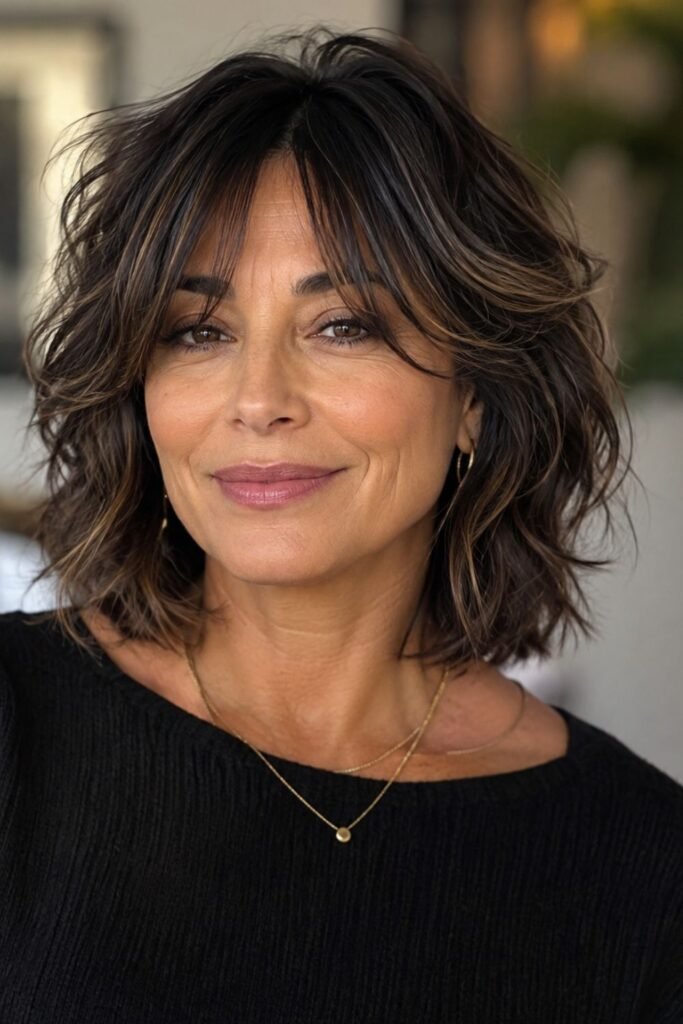
Chin-Length Shag with Curtain Bangs
At chin length, the shag creates a strong silhouette with short crown layers sitting at or above the ear, face-framing pieces ending at the jaw, and curtain bangs that open the face rather than covering it. For women over 50 dealing with a higher or receding hairline, curtain bangs fill in the front section without the weight of a blunt fringe.
Ask for the curtain bang to sit at nose length or longer so it sweeps to the sides on its own without daily styling, and have your stylist blend it into the face-framing layers instead of cutting it as a separate section. A small round brush and two minutes of blow-drying at the front is all the upkeep this cut needs. For choppier takes on the same length, our guide to short shag haircuts shows more textured versions.
Pixie Shag
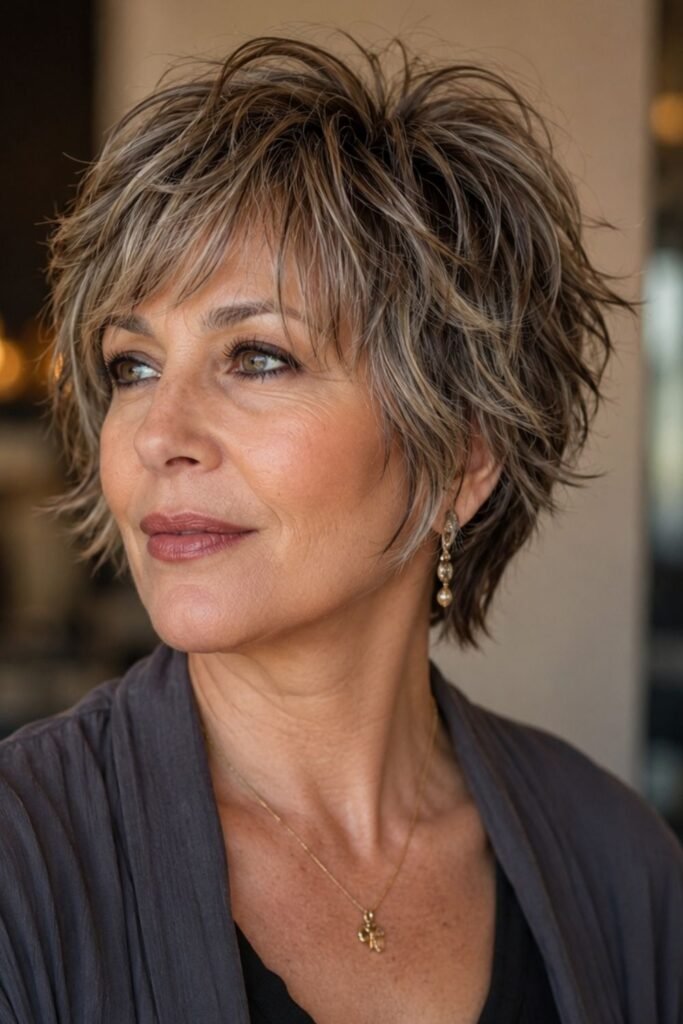
The pixie shag sits shorter than a chin-length cut, with the layers distributed from the crown downward and the ends heavily textured so the cut does not read as blunt or severe. It keeps length around the face and at the nape rather than cutting everything equally short, which gives women over 50 a modern short style that still frames the face.
The pixie shag suits fine hair particularly well because the layering at the crown creates visible volume that a standard pixie cut cannot produce on its own. Ask your stylist to leave extra length at the nape and sideburns if you want more softness. Avoid a very tight, uniform cut through the sides, which reads older rather than modern.
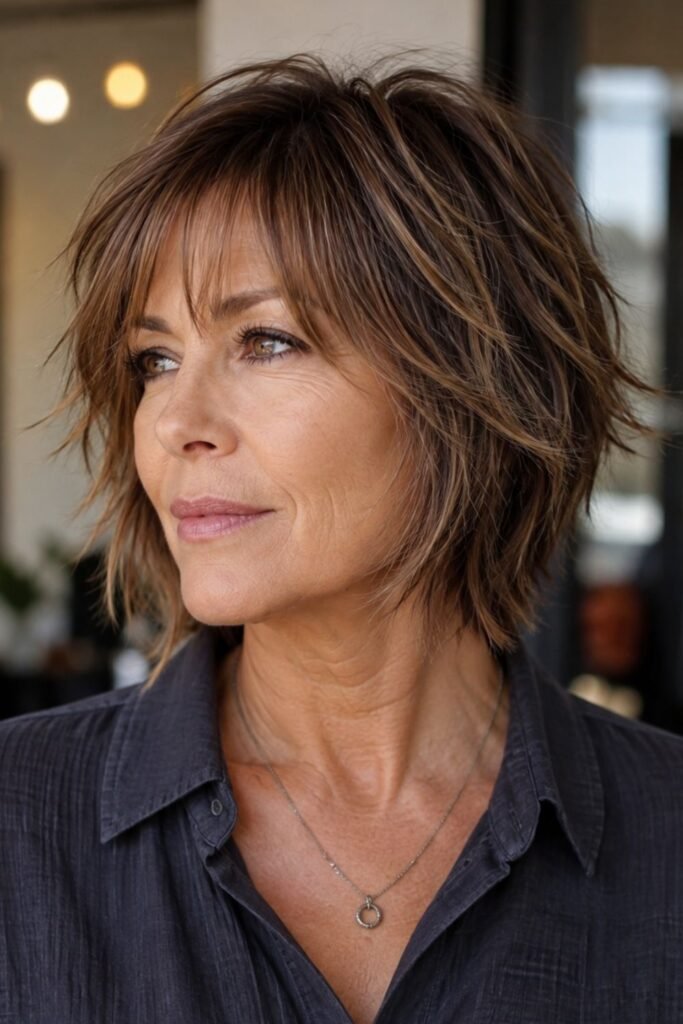
Short Shag with Wispy Ends on Fine Hair
Fine hair benefits from a short shag more than almost any other cut because the layering removes weight that fine hair cannot support, and the wispy, point-cut ends make the hair look deliberately textured rather than thin. The volume at the crown is built by the layers rather than by the hair density itself.
Use a volumizing mousse applied at the roots on damp hair before blow-drying, then diffuse or use a round brush to lift the crown sections away from the head while they dry. A texture spray applied to the dry finished style separates the ends and maintains the piece-y, lived-in look that defines a good short shag on fine hair.
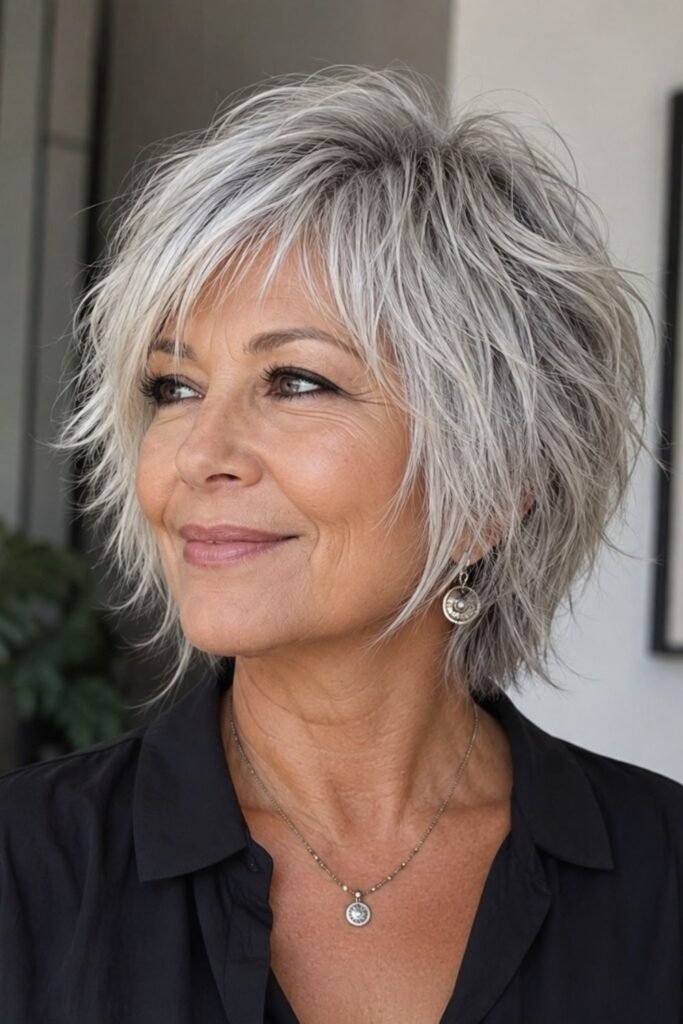
Short Silver Shag
Silver and grey hair has a natural coarseness that responds well to shag layering. The layers distribute the coarser texture evenly through the cut so it does not sit heavy at the ends, and the textured finish suits the natural sheen of grey hair in a way that blunt, structured cuts sometimes do not.
A silver shag looks best with minimal styling: a light-hold cream worked through damp hair and left to air-dry, or a diffuser on low heat if your natural texture has some wave. A purple shampoo once a week keeps the silver bright, and a trim every eight weeks stops the coarser ends from looking frayed. If you are still deciding how to transition, these grey hair ideas for women over 50 show blending and toning options that pair well with a textured cut.
Medium Shag Haircuts for Women Over 50
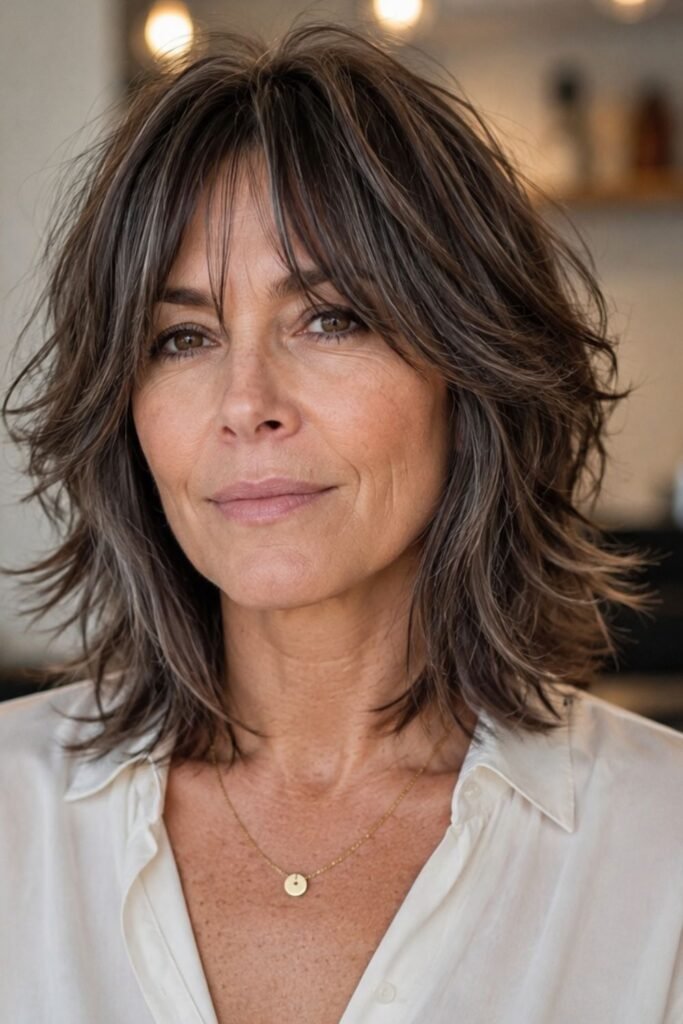
Collarbone Shag with Face-Framing Layers
At collarbone length, the shag sits at the point where the crown layers have enough length to create genuine movement rather than just volume, and the face-framing pieces are long enough to soften the jawline rather than stopping sharply at it. For women over 50, this length is also practical: long enough to pull back on busy days, short enough to feel modern and manageable.
On a collarbone shag for women over 50, the face-framing layers should start at the cheekbone instead of the temple. That placement is gentler on a mature face, while layers beginning at the temple tend to draw attention to the forehead and upper face. Add soft, warm highlights through the front pieces and the layering picks up the color, so both the cut and the shade look more deliberate.
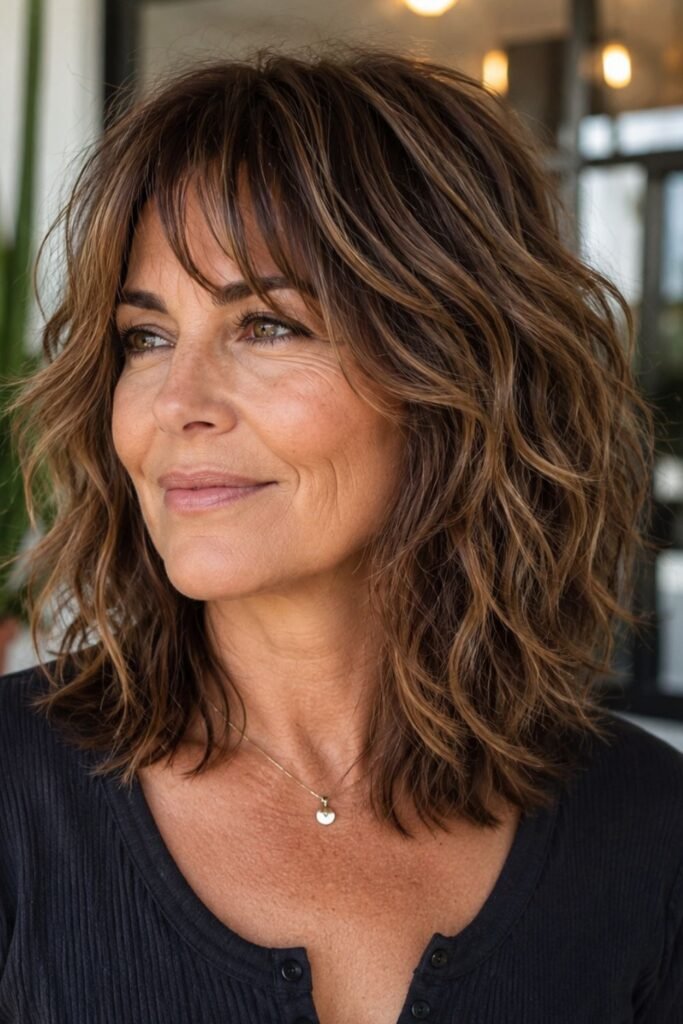
Medium Shag on Naturally Wavy Hair
Naturally wavy hair at medium length is where the shag produces its best results with the least effort. The wave pattern fills out the layers automatically, the crown sections get lift from the natural texture, and the ends develop a soft, undone movement that product alone cannot replicate. This is the version of the shag that most closely matches the effortless results you see in reference photos.
Resist the urge to blow-dry straight before assessing the shag. The cut is designed for movement. Scrunch a curl cream or wave enhancer through damp hair, diffuse on low heat until eighty percent dry, then let the rest air-dry. A lightweight finishing oil smoothed over the surface tames any coarser sections without weighing down the layers.
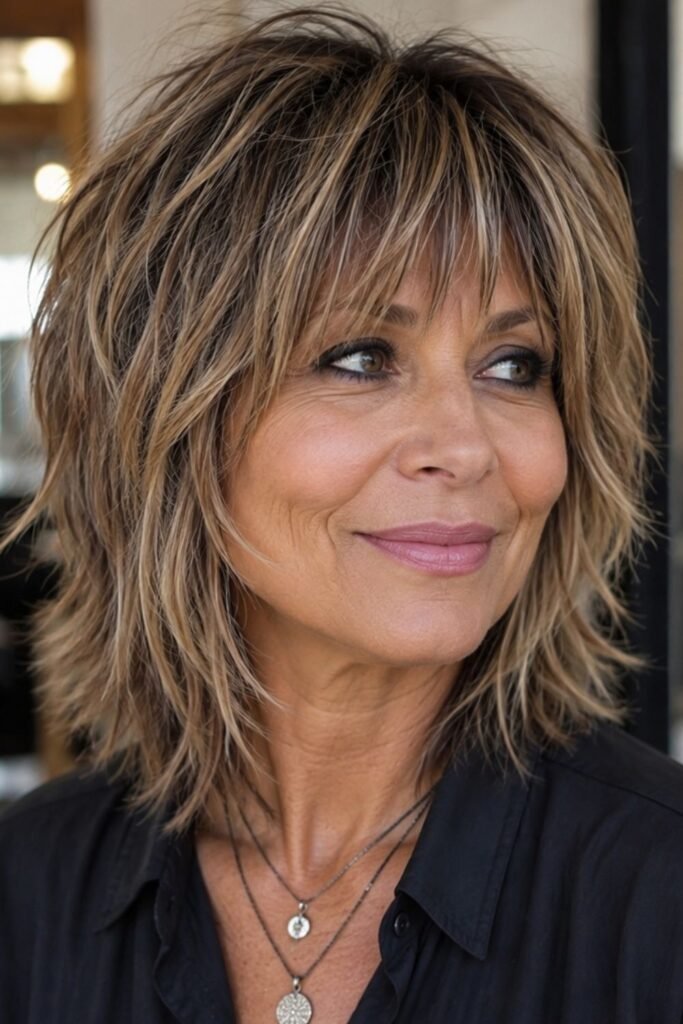
Medium Shag with Wispy Bangs and Highlights
Wispy bangs on a medium shag, paired with face-framing highlights, brighten the front of the face and draw attention to the eyes instead of the jaw or neck. The lighter pieces at the front catch the light in photos and add dimension. Our guide to caramel highlights on brown hair explains placement and tone in detail; for a medium shag, ask your colorist to concentrate the highlights in the face-framing layers and the bang section instead of spreading them evenly throughout.
Keep the wispy bang long, sitting between the eyebrows and the tip of the nose, so it moves with the face-framing layers and blends into them. A fine-tooth comb and a light-hold spray set the direction each morning in under a minute.
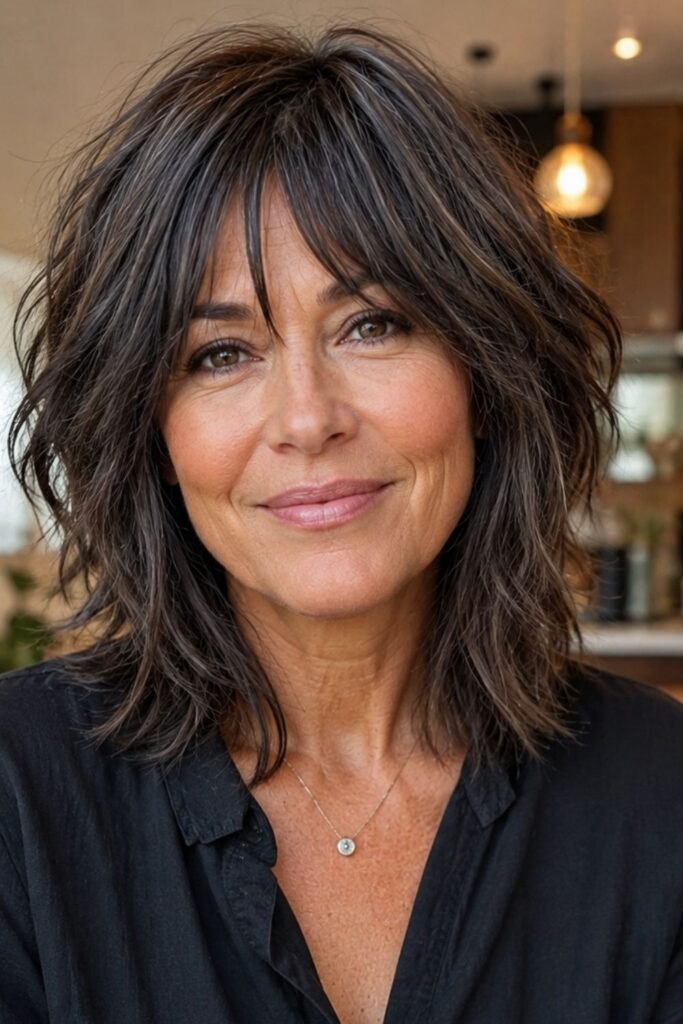
Medium Shag on Thick Hair
Thick hair over 50 is a genuine advantage for the shag because there is enough density to support dramatic layering. A shag on thick hair should have significant weight removal through the mid-lengths and ends, with the bulk distributed upward toward the crown rather than sitting heavy at the bottom of the cut.
Ask your stylist to use thinning shears through the mid-lengths to reduce bulk before point-cutting the ends. Without this step, the shag on thick hair can puff out at the sides rather than falling in controlled layers. The ends should be cut dry so the stylist can see exactly how the thickness distributes and remove weight accordingly.
Long Shag Haircuts for Women Over 50
Long Shag with Curtain Bangs
Long hair past the shoulders with shag layering through the mid-lengths, curtain bangs at the front, and soft texture through the ends is one of the most flattering long styles for women over 50. It keeps the femininity of length while adding movement, and it fixes the heavy, flat look long hair can take on as density drops with age. The layers also make pinned styles easier to hold, and these long hair updos translate well to shag layers for half-up and occasion looks.
The layering on a long shag should start at the collarbone or below, not at the crown, to avoid the disconnected appearance that can result when long hair has very short layers high up. The curtain bangs should be blended into the face-framing layers without a visible line of separation.
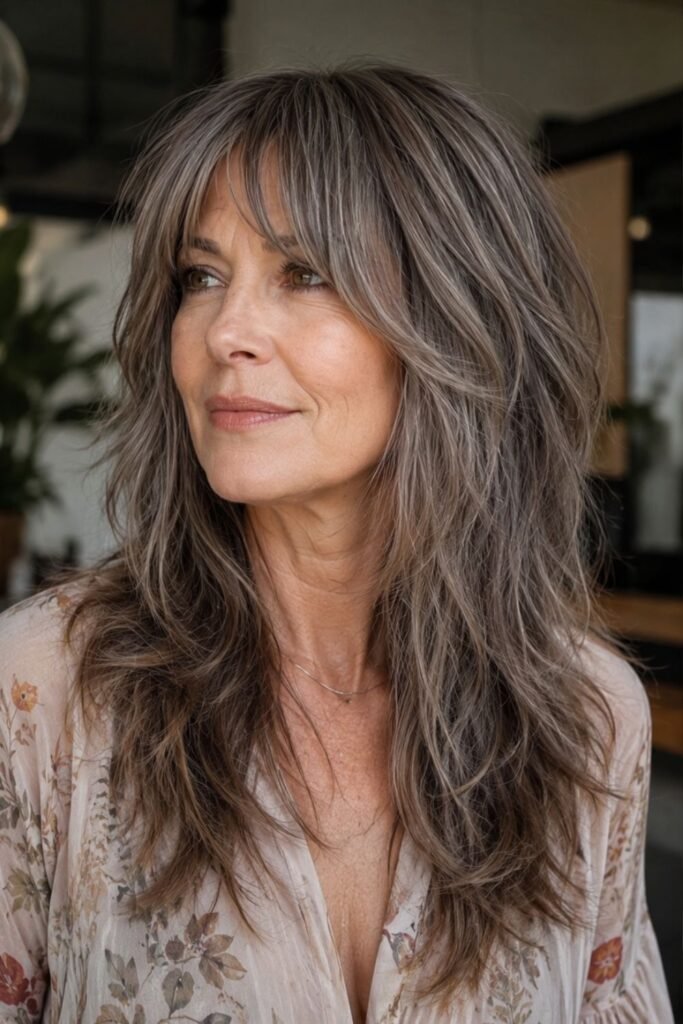
Long Silver Shag with Deep Side Part
A long silver shag worn with a deep side part creates an asymmetrical silhouette that reads as deliberately modern rather than simply grown-out grey. The deep part shifts volume to one side, which counteracts the flat-crown effect that many women over 50 deal with as hair density changes at the parting.
Train the part to one side consistently for two to three weeks before it sits naturally without product. A light-hold pomade or wax worked along the parting line keeps it in place without looking stiff. The silver tone benefits from a purple or blue toning shampoo used once a week to prevent yellowing from hard water and heat styling.
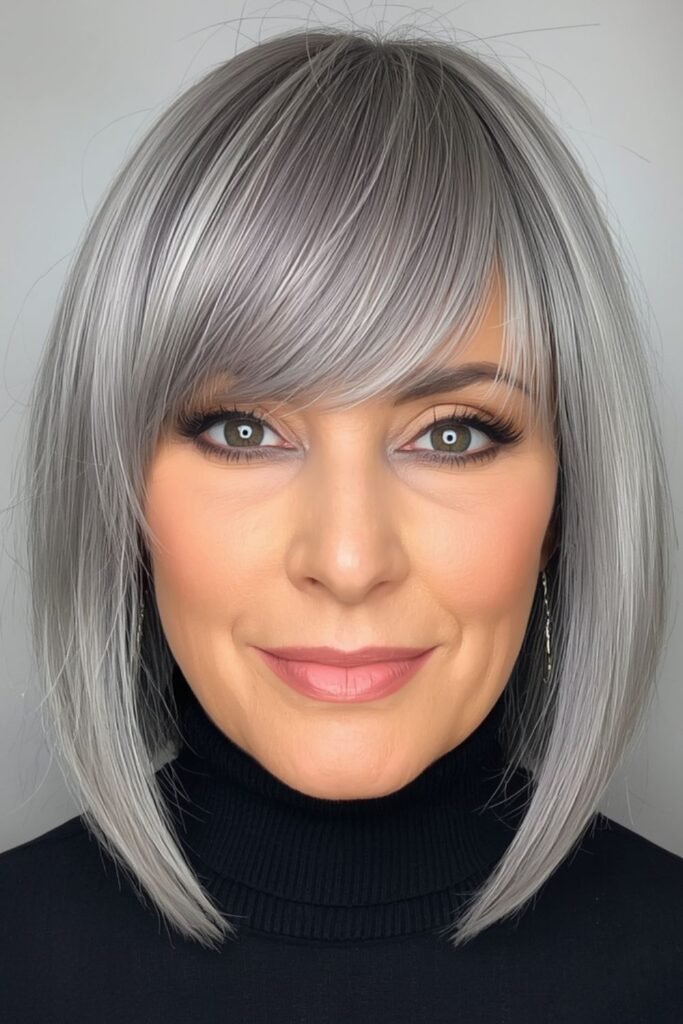
Long Shag with Dark Cherry Red Color
Long hair after 50 is a confident style choice, and a dark cherry red hair color makes the layers of a long shag far more visible because the depth of the shade creates shadow between each layer. A flat, single-tone color hides that structure. The result looks dimensional and finished, with none of the grown-out look that long hair can sometimes have.
Dark cherry red takes differently on grey or white hair than on brown or black hair. Grey strands have little or no natural pigment, so red dye can turn out brighter and more vivid than expected. Talk this through with your colorist and ask for a strand test if a large share of your hair is grey before committing to a full application. Red also fades faster than most shades, so plan on a color-depositing conditioner and a gloss every four to six weeks.
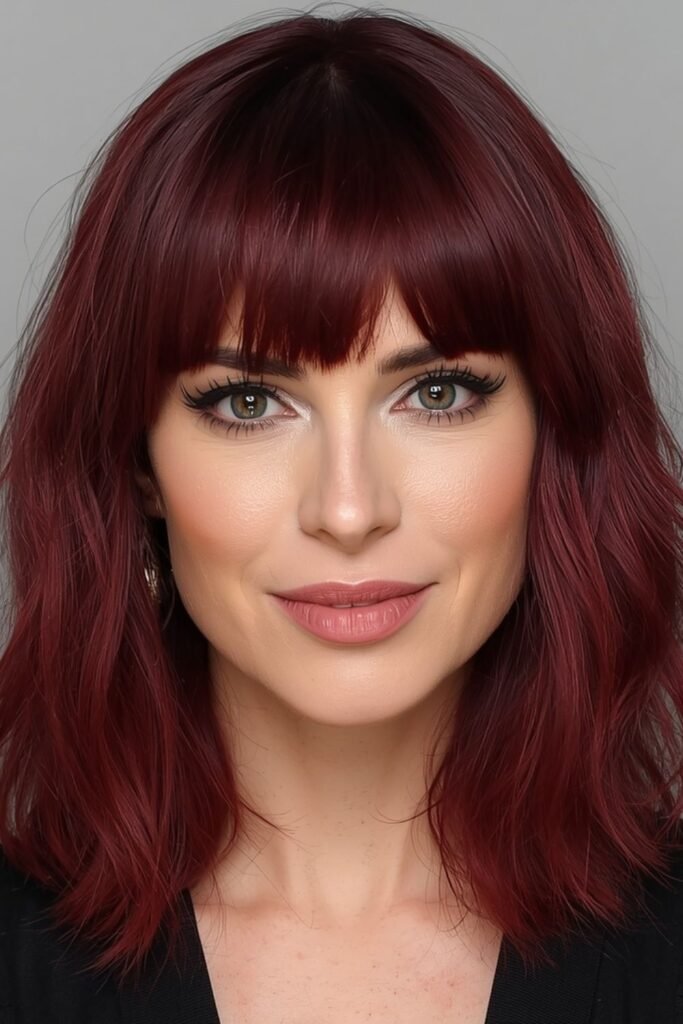
Styled Variations of the Shag for Women Over 50
Shag Worn as a Relaxed Half-Up
A medium or long shag pulled into a loose half-up at the crown, with the face-framing layers and curtain bangs left down at the front, is a practical daily style that puts the layering to work. The crown layers create natural height when gathered, and the loose front pieces frame the face with no extra styling. It takes under two minutes and holds well through a full day.
Use a claw clip or a scrunchie rather than a tight elastic so the crown retains its natural volume. Pull the half-up section back loosely and let some pieces fall forward at the temples. The textured ends of the shag make this style look more intentional than the same half-up on a non-layered cut.
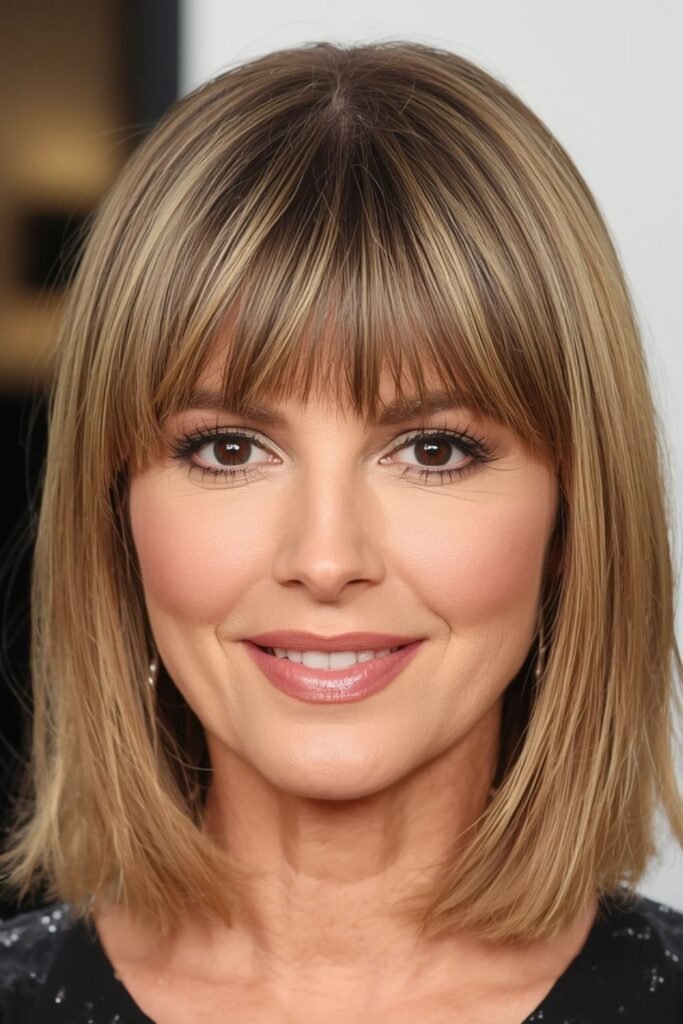
Short Shag Styled with a Headband
A short shag dressed with a thin velvet or elasticated headband sitting behind the curtain bangs or wispy front pieces is a polished daily look for women over 50 who want the practicality of a short style with something that reads as deliberate rather than bare.
The headband goes on after styling, not before, so the crown retains its volume from the blow-dry or diffuse step. A headband with grip teeth on the inside sits more securely on fine hair. Velvet headbands do not slip as much as satin or fabric-covered versions, which is worth knowing if your hair is layered and does not provide much natural grip.
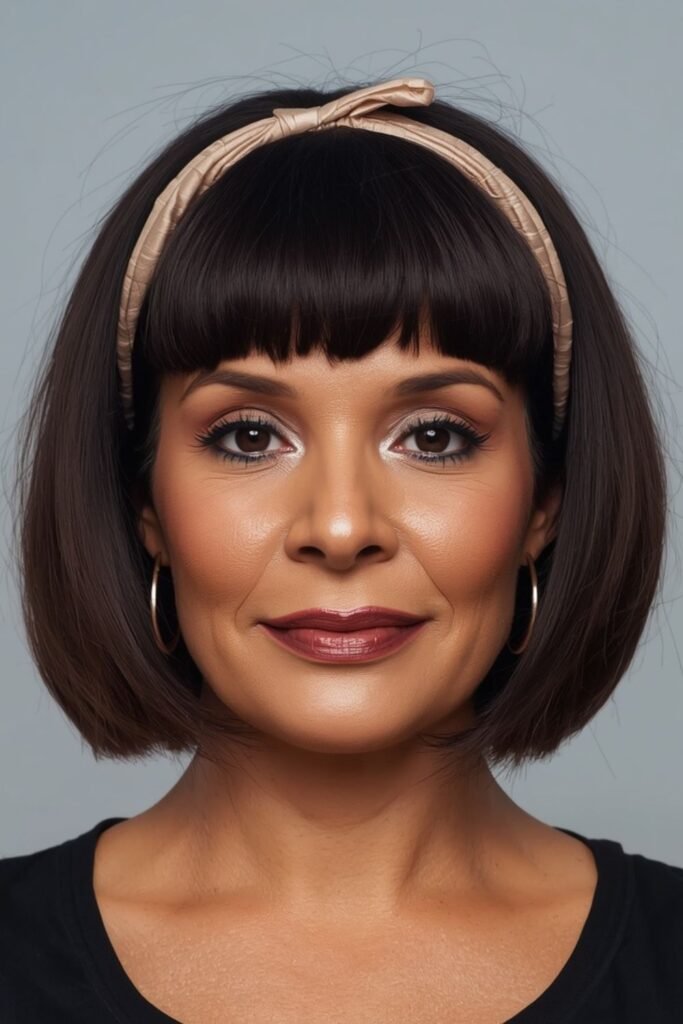
Medium Shag on Natural Grey Texture
Wearing natural grey texture in a medium shag is a deliberate, modern choice for women over 50. The coarser texture of grey hair suits shag layering because it creates separation between layers on its own, something finer hair needs product to achieve. Keep the cut fresh with a trim every eight to ten weeks so the textured ends stay crisp and the shape stays defined.
Grey hair benefits from a moisture-rich shampoo and conditioner because the natural oil distribution along the hair shaft changes with age and the texture can become coarser and drier. A leave-in conditioner worked through the mid-lengths and ends before air-drying keeps the layers soft rather than frizzy.
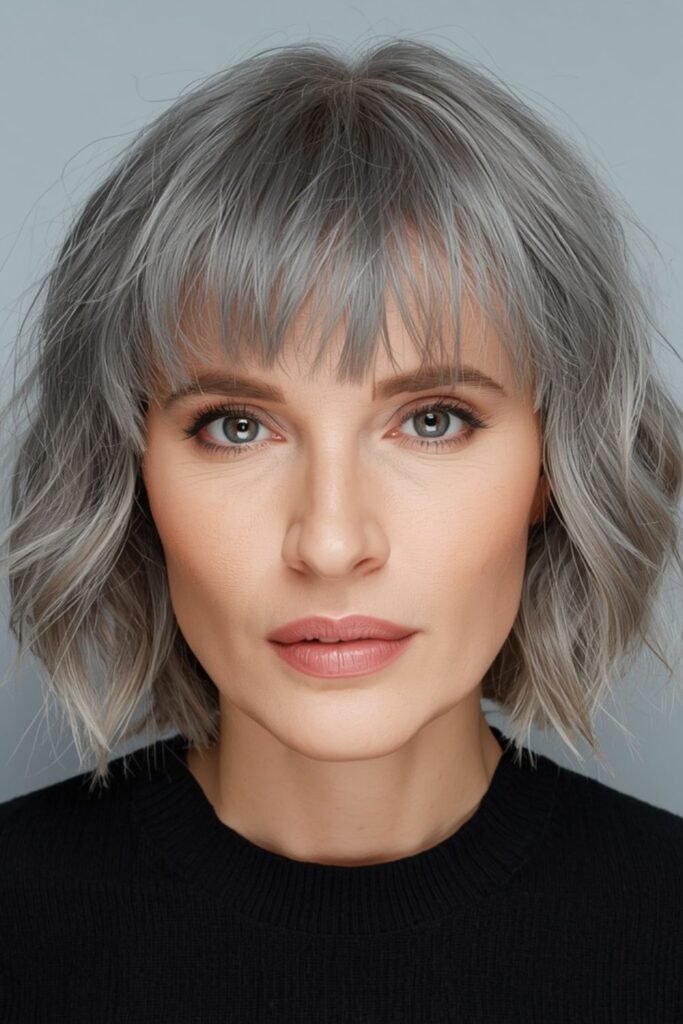
Long Shag with Soft Waves Styled for an Occasion
A long shag styled with a large-barrel curling iron becomes a complete evening look for women over 50, so your everyday haircut works for a dinner, an event, or a formal occasion without a separate salon appointment. The layers catch the waves differently at each length, creating natural movement that a straight or one-length cut cannot match. Keep accessories simple, such as small earrings and a neat manicure, so the hair stays the focus.
Apply a heat protectant before curling and use sections no wider than two inches for waves that hold through an evening. Brush through lightly with a paddle brush after curling to loosen and blend the waves through the layers. A light-hold finishing spray over the completed style keeps the movement without stiffening.
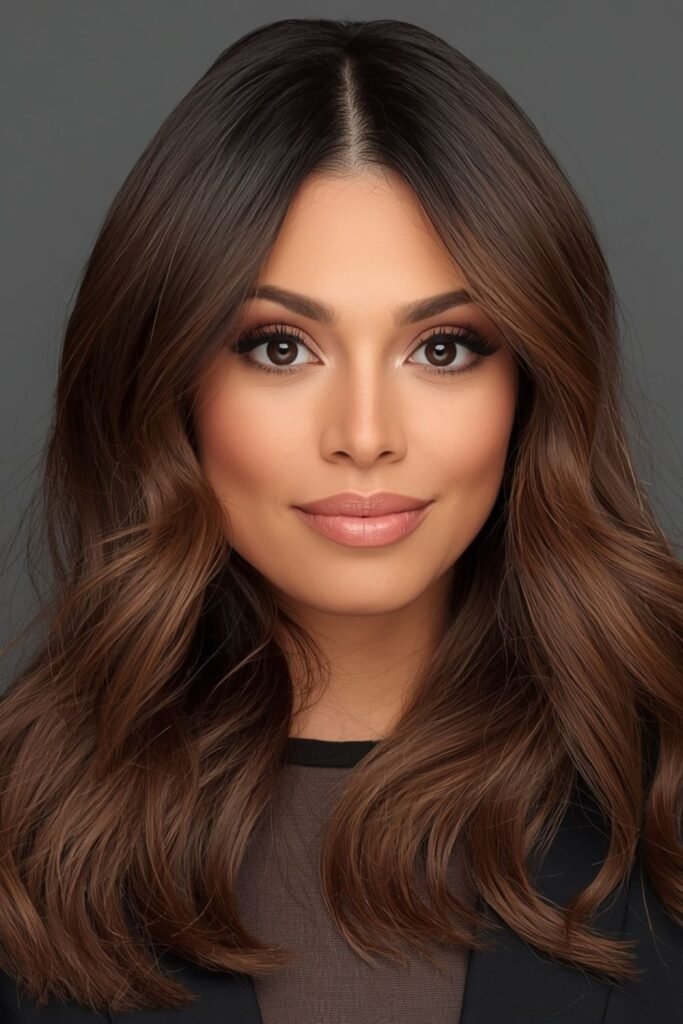
How to Ask for a Modern Shag Over 50
Be Specific About Your Hair’s Current Condition
A good stylist will ask about density, texture changes, and whether your hair has become finer or drier in recent years. If they do not ask, volunteer this information. It directly affects where the layers should start, how much weight to remove, and which sections need the most attention. A shag cut on hair that has thinned at the crown needs different decisions than the same cut on hair that is still dense throughout.
Ask for Layers That Start at the Cheekbone, Not the Temple
Layers beginning at the temple can emphasize the upper face and the forehead in ways that become less flattering as the face changes with age. Layers that start at the cheekbone are more universally flattering for women over 50 because they add width at the mid-face, where volume tends to reduce, rather than at the forehead.
Request Point-Cutting Through the Ends
The modern shag is distinguished from an older, dated version of the same cut by point-cutting rather than blunt horizontal cuts through the ends. Point-cutting removes bulk and creates the feathered, piece-y finish that reads as current. Ask your stylist explicitly to point-cut through the ends rather than using horizontal scissors through the last few inches.
Frequently Asked Questions
Does a shag haircut work on thinning hair over 50?
Yes, and it is one of the better cuts for thinning hair specifically. The layering removes weight from the mid-lengths so the hair that remains can move more freely and appear fuller. The crown layers build volume where density has reduced. Point-cut ends look deliberately textured rather than sparse. The key is asking your stylist to avoid removing too much length, which can make thinning hair look even finer.
What is the difference between a shag and a wolf cut for women over 50?
The shag distributes layers more evenly from root to tip and tends to create a flatter crown with more emphasis on texture through the lengths. The wolf cut builds more concentrated volume specifically at the crown and has stronger face-framing sections. For women over 50 dealing with crown thinning, the wolf cut’s crown volume is often the more targeted solution. The shag suits women who want overall texture and movement without the drama of a high-volume crown.
How often does a shag need trimming over 50?
Every eight to ten weeks. The shorter crown layers and any bangs grow out faster than the rest of the cut and lose their definition first. Waiting longer than ten weeks means the cut starts to lose its shape before you get back to the salon. If budget is a consideration, ask your stylist to trim just the crown and bang sections between full cuts.
Can I get a shag haircut on natural grey or white hair?
Yes. Grey and white hair often has a natural coarseness that suits shag layering well because the texture creates natural separation between layers. The main consideration is moisture: grey hair tends to be drier and benefits from a hydrating shampoo, leave-in conditioner, and a finishing oil through the ends to prevent the textured layers from looking frizzy rather than deliberate.
What face shapes suit a modern shag over 50?
Oval and heart face shapes are the most straightforward fit. Round face shapes benefit from a shag with longer face-framing layers that create vertical lines rather than width. Square face shapes suit the soft, textured ends of the shag because they soften the jawline. Oblong or long face shapes do well with a shag that has a curtain bang and face-framing layers that add horizontal width at the cheekbones.
Final Thoughts
Shag haircuts for women over 50 work because they solve real problems: flat crowns, thin ends, heavy mid-lengths, and hair that has changed texture and needs a cut built around those changes. The modern version handles all of that while still looking relaxed and current.
Pick a length that suits your actual routine, bring reference photos taken from the angle that concerns you most, and tell your stylist how your hair has changed since your forties. The more detail you give, the better the cut will fit. If you want something even shorter and easier to manage, browse these short haircuts for women over 60 for low-maintenance ideas.