
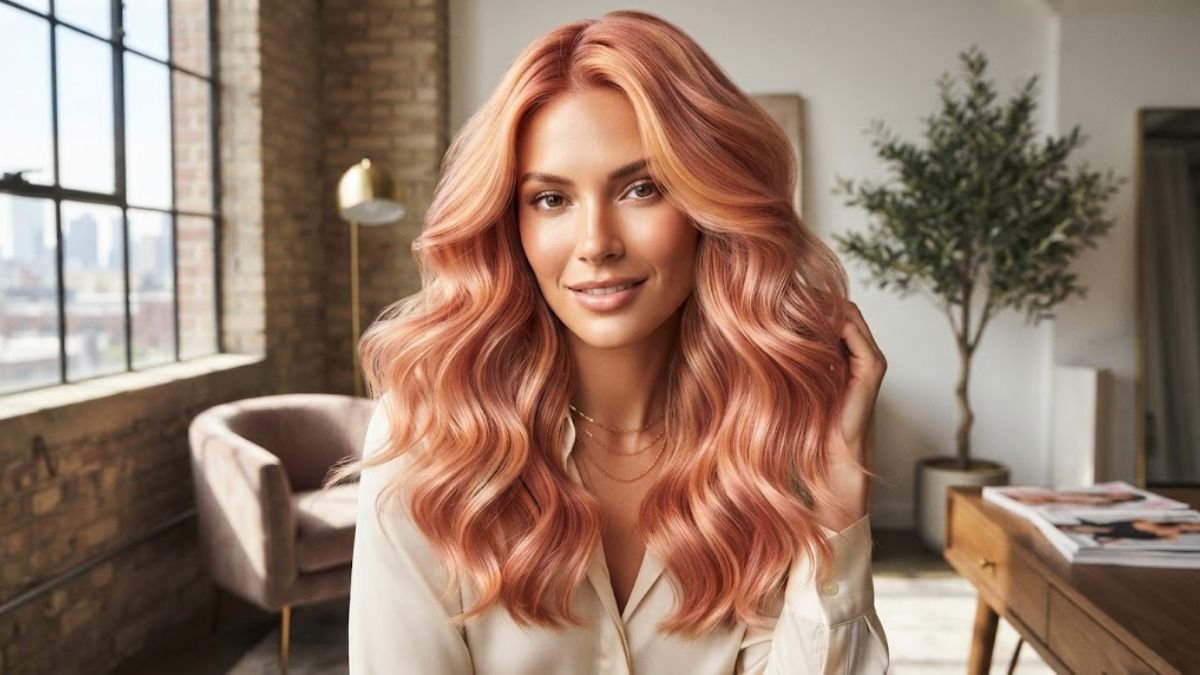
Rose gold hair is back in a softer, more adaptable form than the heavily metallic pastel versions of earlier years. Today it shows up as translucent blush over blonde, warm peach-rose blends, low-commitment glosses, and dimensional placements that keep natural depth visible.
The strongest versions treat rose gold as a spectrum rather than one fixed formula. Pink, champagne, copper, peach, beige, and mauve can all shift the result, which means the same idea can work very differently on pale blonde, bronde, brunette, or naturally warm red hair.
For more context, see Allure’s story on Martha Stewart’s rose gold hair and Byrdie’s fall hair color trends.
Quick Guide: Matching Rose Gold Hair to Your Base Color
| Starting Hair | Strong Direction | Intensity | Main Consideration |
| Pale blonde | Champagne or blush rose gold | Soft | Pastels show most clearly on a light, even base |
| Dark blonde/bronde | Balayage or money piece | Medium | Keep enough natural depth for contrast |
| Brunette | Copper-rose ribbons | Deeper | Some lightening may be needed for visible pink |
| Curly/coily | Broader curl-led placement | Medium | Account for shrinkage and porosity |
| Existing warm blonde/red | Rose-gold gloss | Low | Best low-commitment route |
Classic Champagne Rose Gold
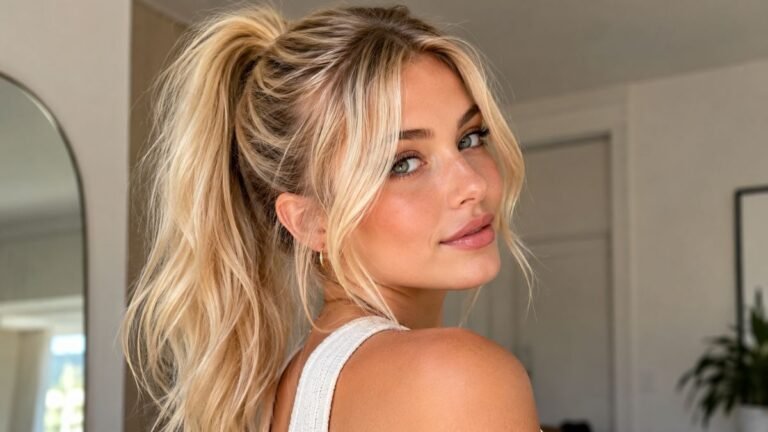
This is the lightest and most recognizable rose gold hair shade: a pale champagne blonde washed with translucent pink. The pink should stay sheer enough for the blonde and gold underneath to show through. Ask your colorist for a very light blonde base toned with a rose gold or pastel pink gloss, and bring a photo so you agree on how pink the finish should look. Pastel toners fade within a few weeks, so plan on a gloss refresh about every four to six weeks. Washing with cool water and a sulfate-free shampoo slows the fade.
Best for: Light blonde hair in relatively even condition.

Rose Gold Balayage on Dark Blonde
Balayage lowers the commitment because the pink starts away from the scalp, so regrowth blends in. It also gives rose gold more depth than an all-over pastel wash. Your colorist hand-paints lightener through the mid-lengths and ends, then tones the lightened sections rose gold while leaving the darker blonde root natural. Ask for soft, blended sections around the face for brightness. Touch-ups can stretch to three or four months, with a toner refresh in between. Soft waves show the contrast between the dark blonde and the pink best.
Best for: Dark blonde or bronde hair.
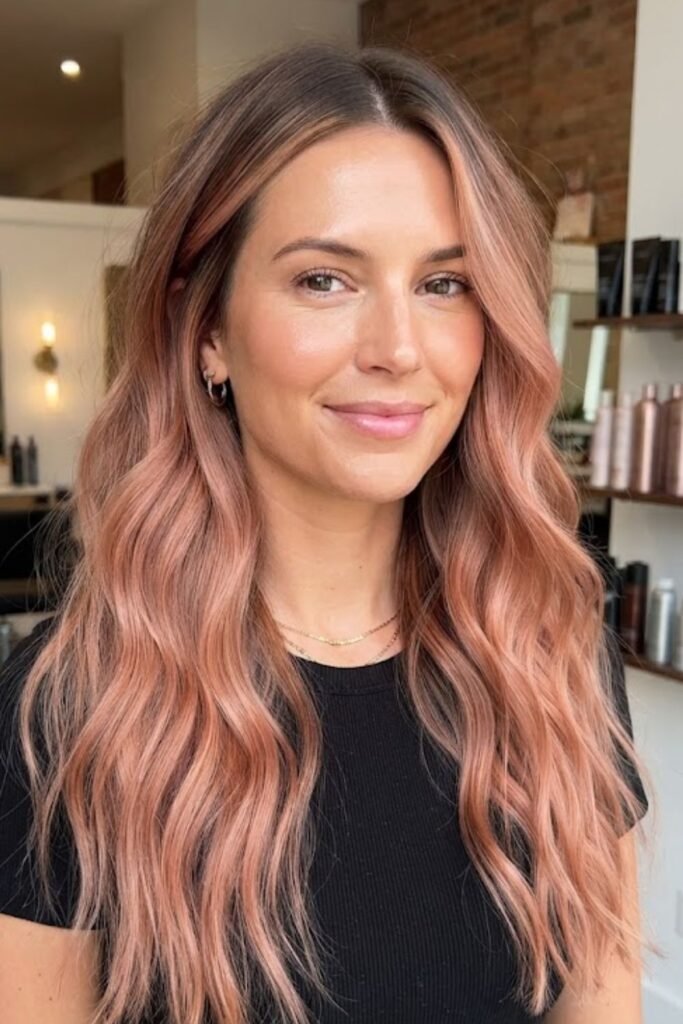
Copper-Rose Gold Brunette
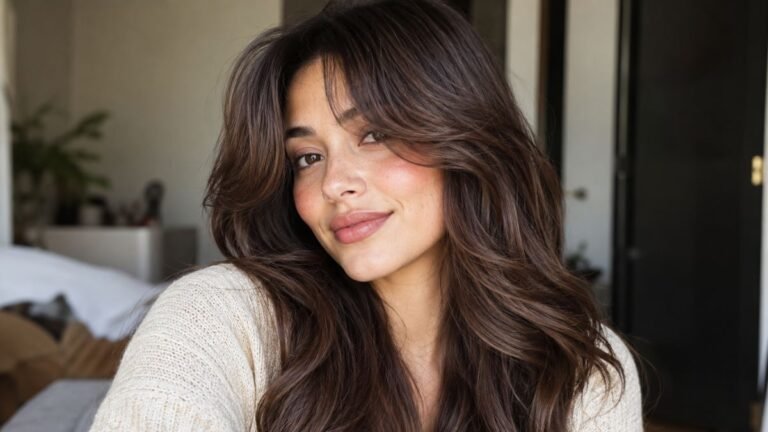
A brunette base pushes rose gold into a richer, autumnal direction, with copper bridging the gap between dark brown and pink. The colorist lifts sections of the hair to a warm caramel level, then glazes them with a copper-rose tone that reads pink in sunlight and warm copper indoors. It needs far less bleaching than pastel rose gold, which keeps the hair in better condition. If you like the copper side of this shade, these copper pumpkin hair color ideas push the warmth further. Medium brunettes get the most natural-looking result.
Best for: Medium brunettes who want a deeper result.
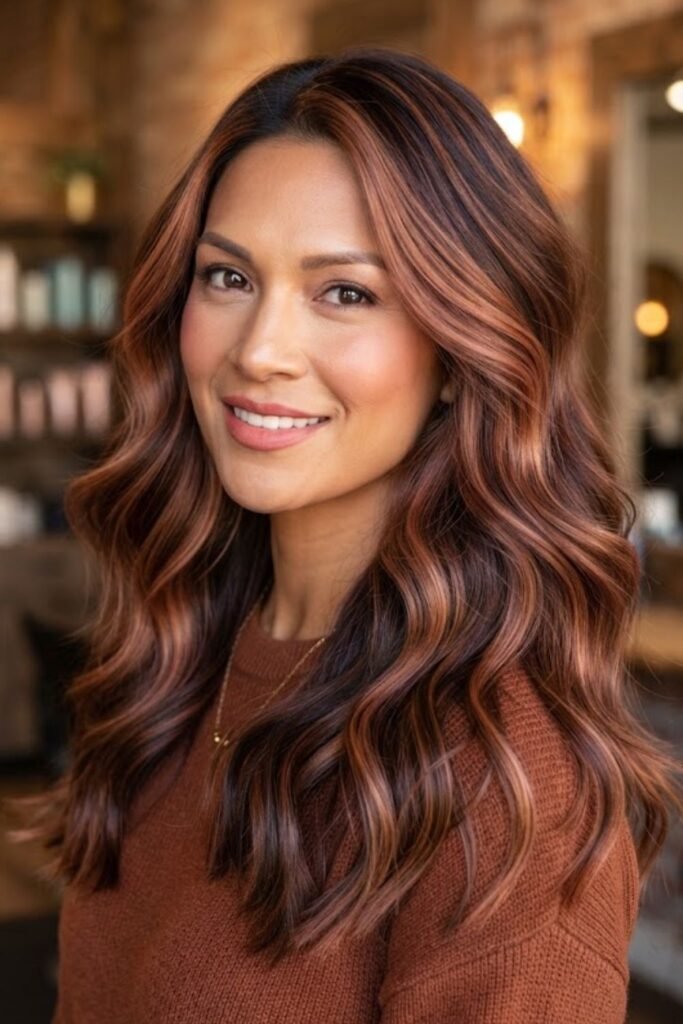
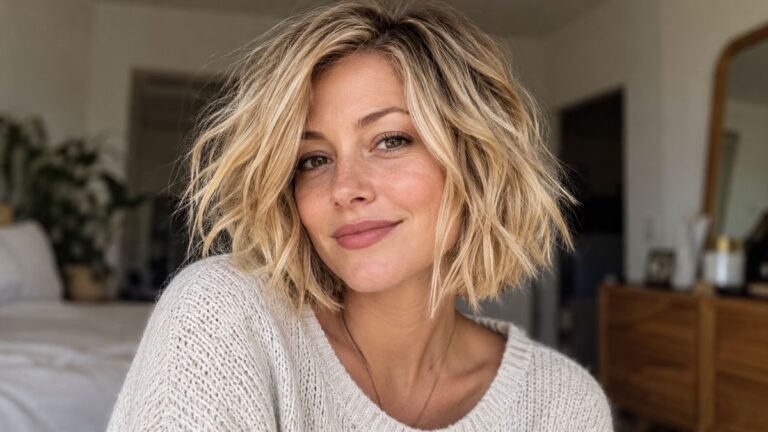
Soft Blush Rose Gold Lob
A compact lob shape keeps pastel color from looking too whimsical, and a root shadow makes the grow-out more forgiving. Ask for a collarbone-length cut with soft layers and a blush rose gold toner over light blonde, with the root kept one or two shades deeper. Style with a flat iron for loose bends so the color shows on both the surface and the underside. Shorter hair also means less lightened length to keep healthy, and you can refresh the blush tone at home with a pink color-depositing conditioner once a week.
Best for: Lobs and shoulder-length blonde hair.

Strawberry Rose Gold
This version sits between strawberry blonde and classic rose gold. It suits anyone who wants warmth without an obviously pink result. Ask for a golden blonde base with a soft copper-pink gloss that leans more red than pastel. It looks natural on warm blondes and light redheads, and it fades gently toward strawberry blonde over time instead of washing out to yellow. If you would like to start from a creamy warm base, these butter blonde hair ideas show shades that take a rose gloss well.
Best for: Warm blondes and light redheads.
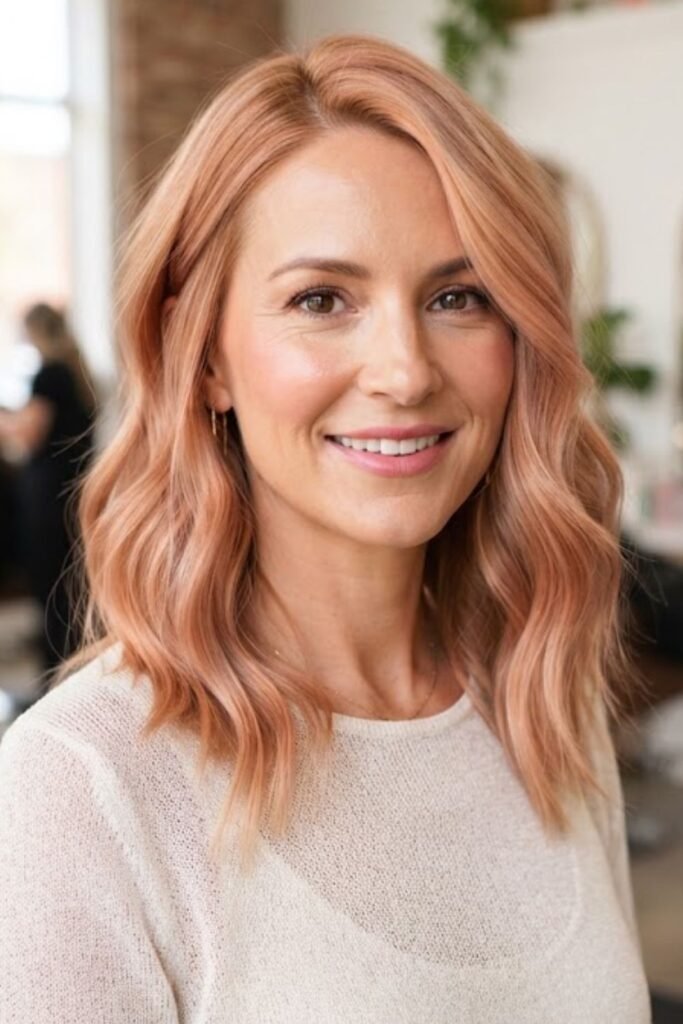
Dusty Rose Gold With Shadow Root
Root depth makes this color easier to maintain and gives the pastel lengths more contrast. Dusty pigment, with a touch of gray or beige mixed in, feels softer than vivid pink. Ask for a shadow root one or two shades darker than the lengths, blended down a few inches, and a dusty rose toner on the lightened mid-lengths and ends. It works especially well over grown-out blonde or old balayage, since the root shadow hides the regrowth line. Plan to refresh the toner every six to eight weeks.
Best for: Grown-out blonde or balayage.
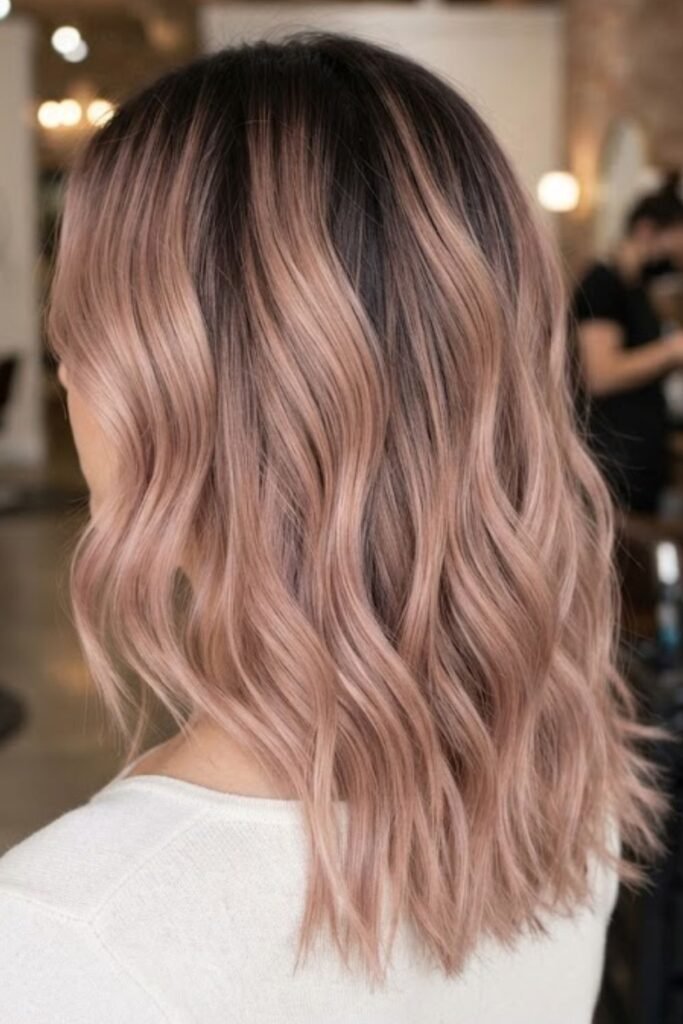
Peach-Rose Gold Waves
This variation leans more peach than pink, which helps if cool blush tones feel too stark against your skin. The wave pattern separates the warm layers of color, so you see peach, rose, and gold in different light. Ask for a golden blonde base toned with a peach-rose gloss. Curl the hair with a 1.25-inch iron, alternating directions, then brush the waves out loosely. Peach tones tend to fade more gracefully than pastel pink, settling toward a warm apricot blonde. It suits golden blondes and warm or neutral complexions.
Best for: Golden blonde and warm-neutral complexions.
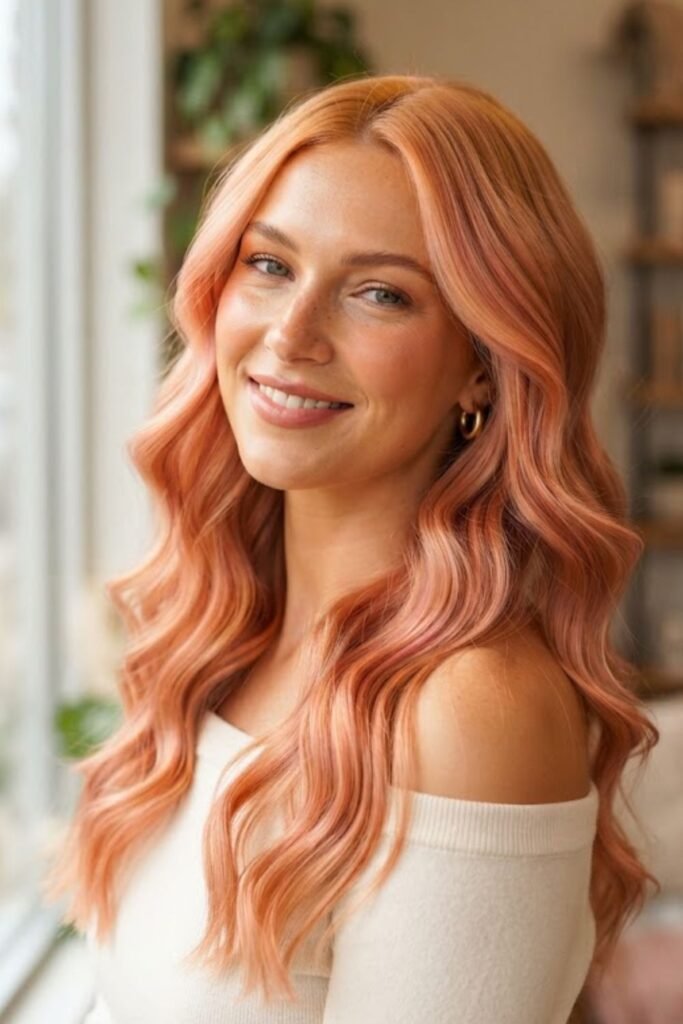
Rose Gold Money Piece
A money piece brightens the two front sections around the face, so the color shows right where people look first. It gives the shade a small, visible focal point without committing the whole head to fashion color. Ask for half-inch to one-inch sections at the hairline to be lightened and toned rose gold, with the rest of the hair left natural or lightly glossed. It is easy to refresh at home with a pink color-depositing mask on just those pieces. A clear center or side part shows it off best on medium to long hair.
Best for: Medium to long hair with a clear part.
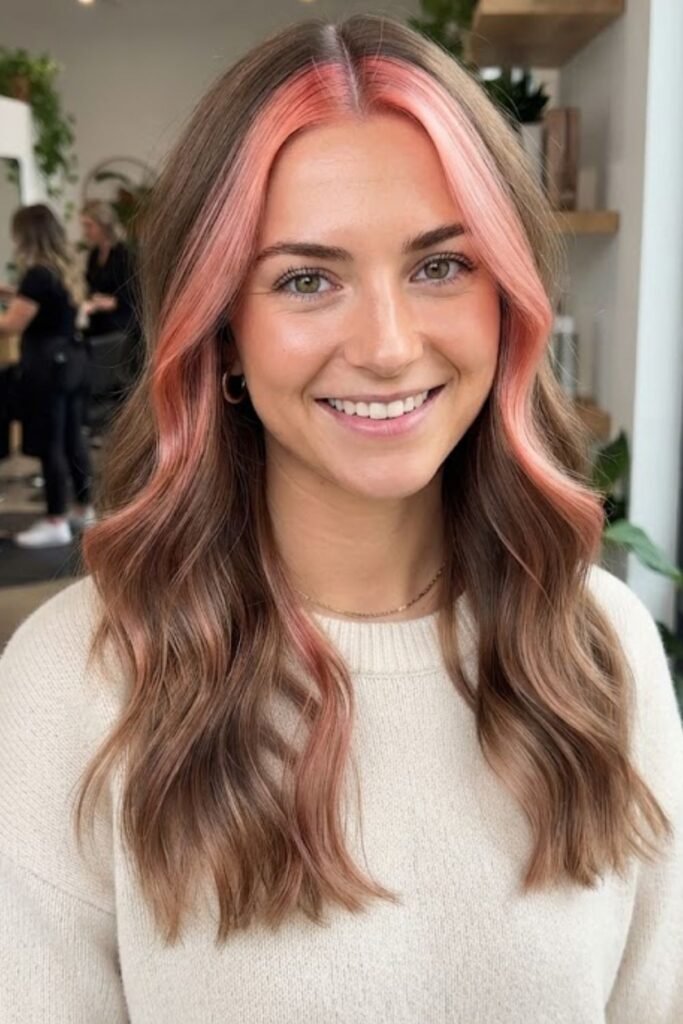
Hidden Rose Gold Underlayer
An underlayer, sometimes called peekaboo color, puts rose gold in the lower section of hair beneath the surface. You control how much shows: wear it down for a hint, or pull it into a ponytail or half-up style for a full flash of pink. Ask your colorist to section a horizontal panel from ear to ear at the nape and lighten only that area. The top layer shields the color from sun, which slows fading. It suits medium to thick hair that can fully cover the panel and works well with conservative workplace dress codes.
Best for: Medium to thick hair.
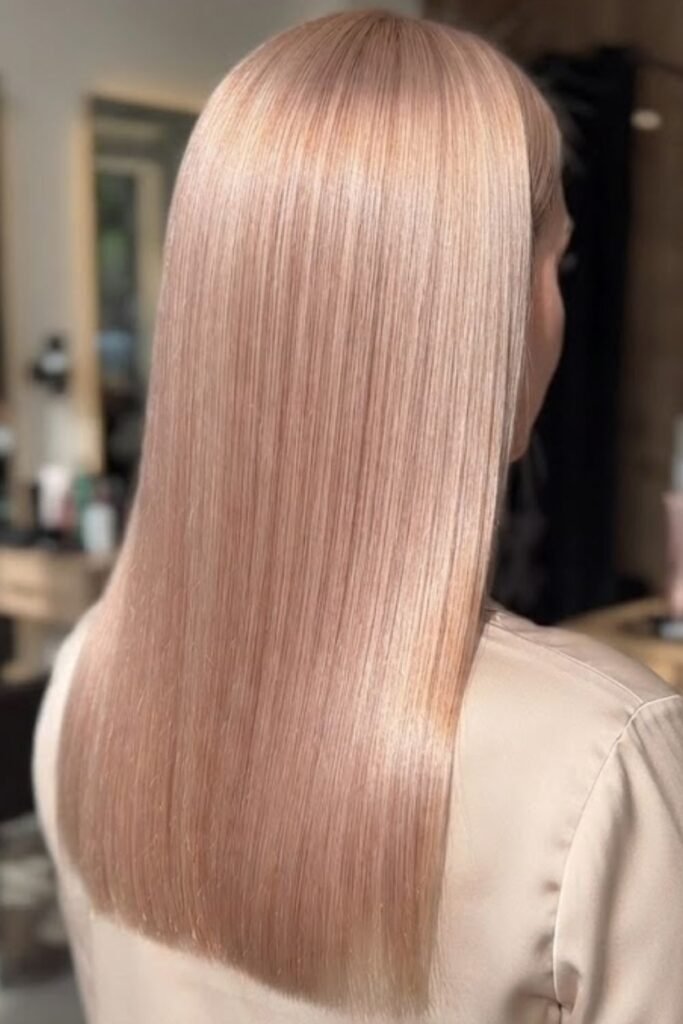
Metallic Rose Gold Gloss
A reflective finish makes rose gold look polished and keeps it from looking powdery. Shine matters most when pale fashion shades risk looking dry. After the color is toned, ask for a clear or rose-tinted gloss to seal the cuticle and add reflection. At home, use a lightweight shine serum on the mid-lengths and ends and blow-dry with a paddle brush so the hair lies flat and reflects light. Heat protection is essential, since high temperatures fade pink pigment quickly. Straight and blow-dried hair shows the metallic finish best.
Best for: Straight, wavy, or blow-dried blonde hair.
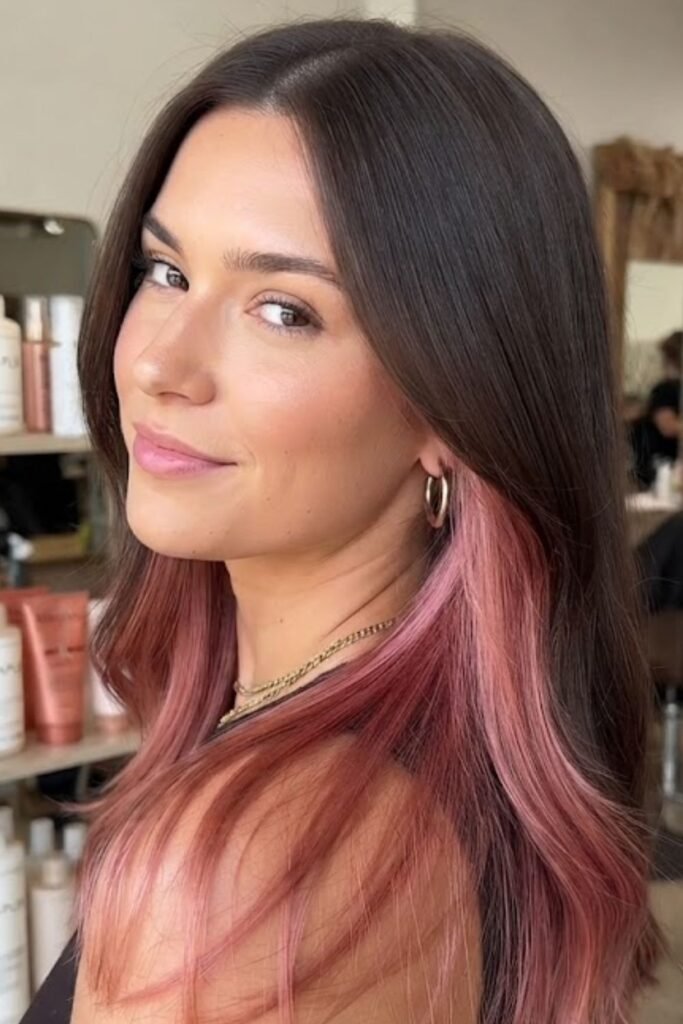
Rose Gold on Curly Hair
On curls, color should follow the curl structure so it stays visible after shrinkage. Broad, curl-led sections generally show more clearly than tiny pastel highlights, which can disappear inside the curl pattern. Look for a colorist experienced with textured hair who can paint the color curl by curl on dry hair. Curly and coily hair is often more fragile, so a bond-building treatment during lightening is worth requesting. At home, use a moisturizing curl cream and a weekly deep conditioning mask, and refresh the tone with a pink color-depositing conditioner.
Best for: Curly and coily hair that can safely support lightening.
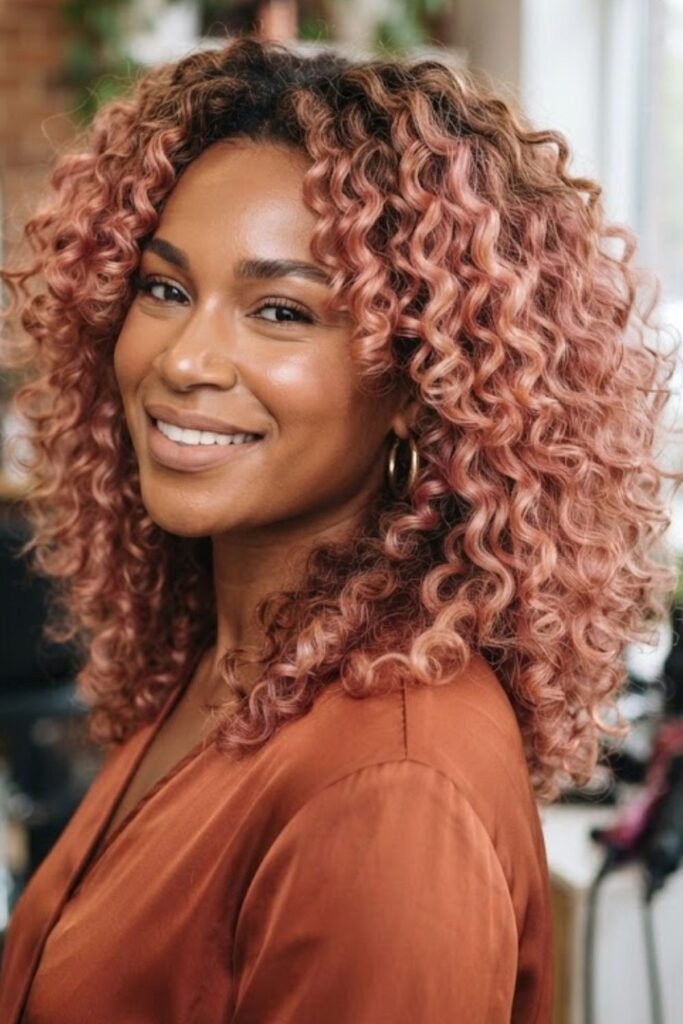
Mauve Rose Gold
Mauve adds a hint of purple, which cools the color slightly and makes rose gold feel more subdued. It is a useful alternative to the peachier, warmer versions on this list. Ask for a toner that mixes rose and violet over a light blonde base, and bring a photo, since mauve can drift toward lilac or pink depending on the formula. It flatters neutral and cool-leaning complexions and pairs well with gray, navy, and black clothing. For a deeper, moodier alternative, browse these dark cherry red hair color ideas.
Best for: Neutral or cool-leaning blondes.
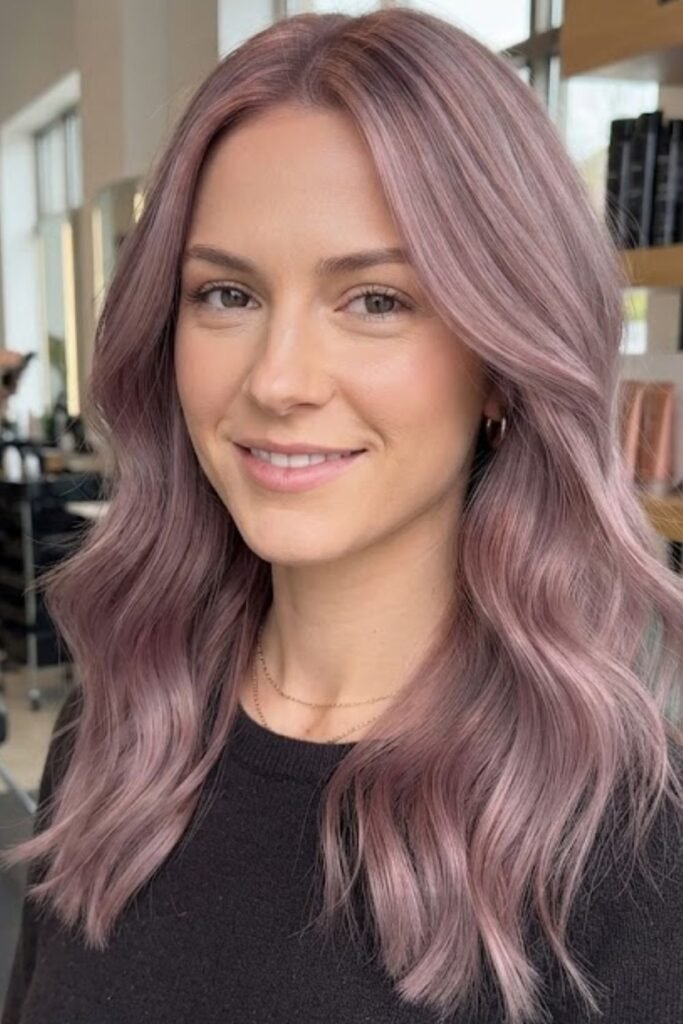
Rose Gold Ends
Keeping the color on the ends removes root upkeep entirely and lets you trim it away gradually. Ask for the bottom three to six inches to be lightened and toned rose gold with a soft blend into your natural shade, or a sharper line if you want a dip-dyed look. Ends are the oldest and most porous part of the hair, so they grab pink pigment quickly and can lose it quickly too. Use a pink color-depositing conditioner every few washes. This option suits long hair and anyone testing fashion color for the first time.
Best for: Long hair and lower-commitment color changes.
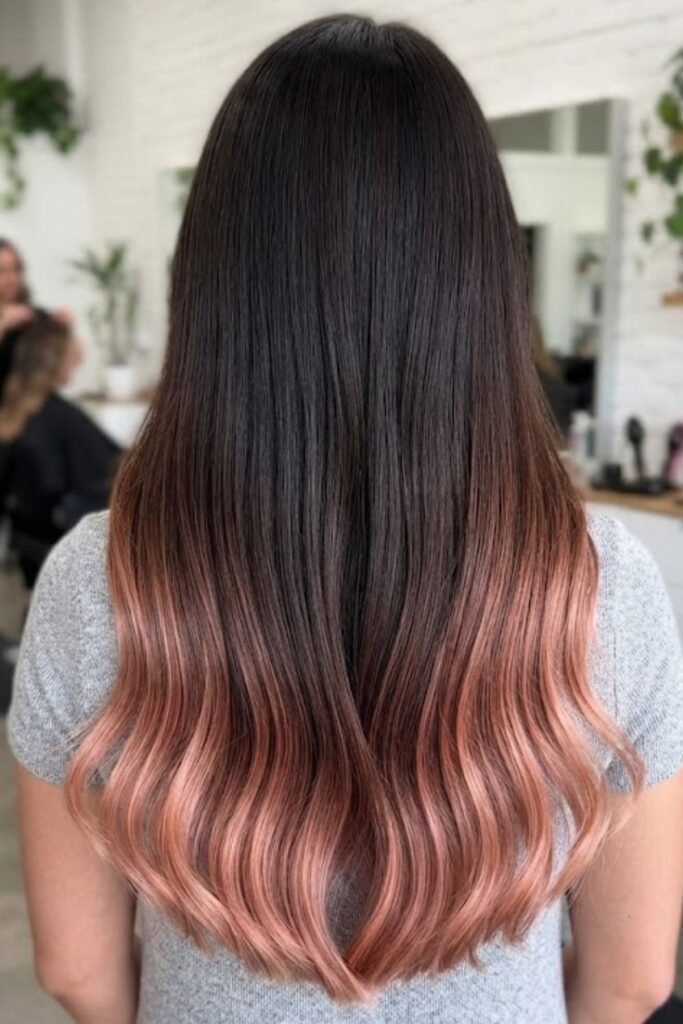
Rooted Rose Gold Bob
A deeper root gives the pastel shade structure and makes a short cut feel sharp instead of sugary. Ask for a chin-length or jaw-length bob, lightened through the mid-lengths and ends, with a darker root melted down about an inch. A bob shows color evenly because there is less length for the pink to fade unevenly. Style with a flat iron for a sleek finish or a texture spray for movement. Bobs need trims every six to eight weeks, which keeps the ends healthy and the most saturated color on show.
Best for: Bobs with enough lightness through the lengths.
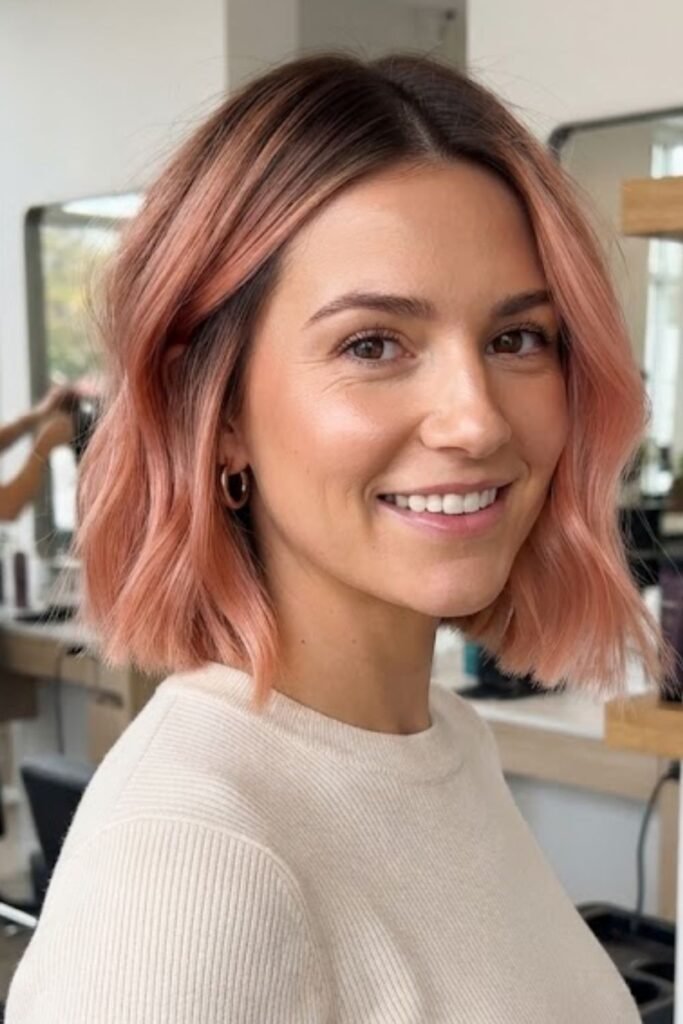
Reverse Rose Gold Balayage
Reverse balayage adds depth back into hair that has become very pale. Your colorist paints lowlights between the existing blonde, then tones the lighter pieces rose gold, which makes the color look richer and more dimensional. This is a smart transition for bright blondes heading into autumn who want something softer without going fully dark. Ask for lowlights one or two shades deeper than your natural base. For another dimensional approach built on warm ribbons of color, these tiger eye hair ideas use a similar placement.
Best for: Bright blondes transitioning into a softer fall palette.

Rose Gold Gloss Refresh
A gloss is the easiest entry point if your base is already warm. It changes the tone and shine of the hair more than the depth, so the result feels new without a full recolor. A salon gloss is a quick service and usually lasts four to six weeks. Ask for a demi-permanent rose gold gloss over existing warm blonde, strawberry blonde, or light red hair. You can also try an at-home pink color-depositing mask for a lighter, temporary tint. This is the lowest-commitment way to try rose gold hair.
Best for: Existing warm blondes and light redheads.
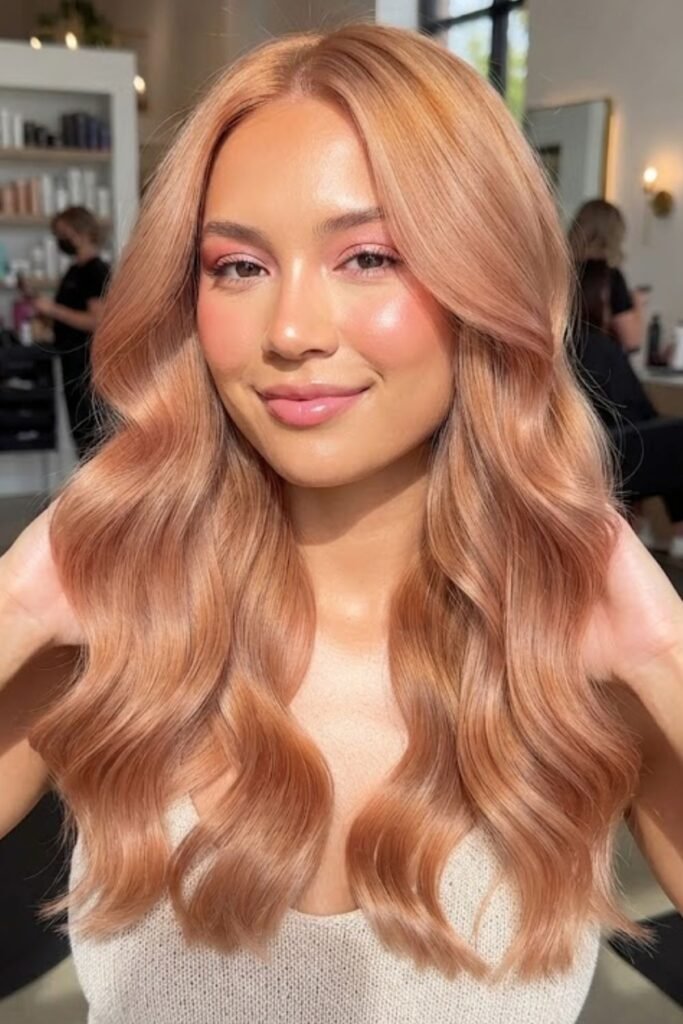
Why Rose Gold Is Easier to Wear in 2026
The current version is less dependent on a perfectly uniform pastel base. Root melts, balayage, glosses, and partial placements let colorists keep natural depth and customize how pink, peach, or copper the result becomes. That makes rose gold easier to adapt to different maintenance preferences and starting colors.
It is still a fashion shade, though. Very dark hair may need lightening before rose-gold pigment will read clearly, and heavily bleached hair can absorb pink unevenly if porosity varies from section to section.
What to Ask for at the Salon
Bring a reference photo that shows the exact balance you want. Rose gold can mean pale champagne pink, warm peach, copper rose, dusty mauve, or a deeper brunette blend. Tell your colorist how visibly pink you want the finished hair to look and whether you want the root left natural.
Also discuss fade-out before the service. Pink pigments can soften quickly, while copper or peach undertones may remain longer. Your starting canvas and previous color history will affect what the shade becomes as it fades.
Maintaining Rose Gold Without Over-Toning It
Use a color-safe shampoo, wash in cool water, apply heat protection, and skip unnecessary washes to help the tint last longer. Rose gold depends on a careful balance of pink and warmth, so strongly pigmented purple or blue shampoos can shift the tone toward lilac or ash.
A gloss or color-depositing refresh can be useful once the shade becomes too pale, but the right product depends on whether your rose gold is peachy, champagne, mauve, or copper-led.
Frequently Asked Questions
Is rose gold hair actually trending again in 2026?
Rose gold is turning up again in salons and seasonal color roundups, usually in softer, more personalized versions than the bright metallic pastels of past years. It sits alongside other dimensional, warm shades as one option among many.
Does hair need to be blonde for rose gold?
Not always, but lighter hair shows pastel rose gold most clearly. Brunettes can use deeper copper-rose or selectively lightened placements if they want visible pink without becoming fully blonde.
Is rose gold warm or cool?
It can be either. Peach and copper-rose formulas lean warm, while dusty pink and mauve versions feel cooler. Champagne rose gold often sits near the middle.
How fast does rose gold fade?
There is no fixed timeline. Pastel and fashion pigments fade according to washing, heat, UV exposure, porosity, and the formula used. Pale pink generally needs more refreshing than permanent brunette shades.
Can curly hair wear rose gold?
Yes. Broader, curl-led sections usually keep the color more visible after shrinkage. Hair condition matters because textured hair that has already been heavily lightened may need a more conservative approach.
What is the lowest-maintenance rose-gold option?
A gloss over an already warm blonde or light red base is usually the simplest route. Hidden underlayers, ends, or a money piece also reduce root maintenance compared with all-over pastel color.
What is the difference between rose gold and strawberry blonde?
Strawberry blonde is primarily a natural-looking blonde-red family. Rose gold adds a more visible pink or blush component, often with champagne, peach, or metallic reflect.
Can rose gold be done without bleach?
Sometimes. Warm blondes and light redheads may only need deposit or glossing. Darker hair generally needs some lightening if the goal is a clearly visible pastel or pink-toned result.
What Matters Most
Rose gold hair works best when the formula matches your starting color. Pale blonde supports a translucent blush, bronde benefits from balayage or face-framing placement, and brunette hair needs deeper copper-rose dimension. Decide how pink, how warm, and how much upkeep you want, then choose the placement around that decision.